Published : 2026-11-17
Beijing is the capital of China and a city that symbolises national sovereignty. But on the eve of the founding of the People's Republic of China (PRC), alongside Beijing, 10 other cities were put forward as potential sites for the capital, with one city in the northeast even emerging as an early "frontrunner".
Why, then, was Beijing ultimately chosen as the capital of China?
China's 11 contenders for the capital
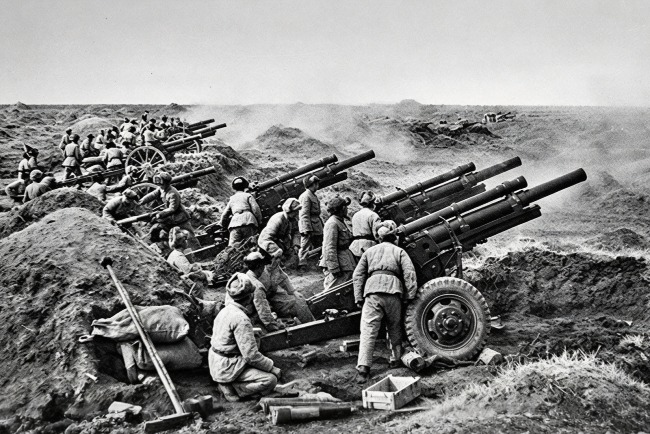
Turning back the clock to 1948, the tide of the Chinese Civil War was gradually turning, the People's Liberation Army (PLA) was gaining the upper hand on the battlefield, and Mao Zedong and other leaders of the Communist Party of China (CPC) began to consider the establishment of the nation, including the choice of a capital.
According to media reports, at that time, 11 cities were proposed by various circles as potential capitals: Beiping (北平, now Beijing) in North China, Harbin (哈爾濱) in Northeast China, Xi'an (西安) and Yan'an (延安) in Northwest China, Kaifeng (開封) and Luoyang (洛陽) in Central China, Nanjing (南京) and Shanghai (上海) in East China, Chongqing (重慶) and Chengdu (成都) in Southwest China, and Guangzhou (廣州) in South China.
These included ancient capitals with a rich heritage spanning millennia, important political and economic centres, industrial and commercial cities that had only recently emerged, and Yan'an, which was a highly symbolic revolutionary holy land.
Among the candidate cities, Beiping and Harbin were considered the two most qualified.
Beiping had long been the national political and cultural centre since the Yuan Dynasty (1271-1386 BC) and had many reasons to become the capital of New China, or the PRC, but how did Harbin in the northeast also become a popular choice?
At the end of the 19th century, Harbin was just a small fishing village on the banks of the Songhua River.
In 1896, Tsarist Russia forced the Qing government to sign the "Sino-Russian Secret Treaty" (《中俄密約》), gaining the special right to build railways in Northeast China. Harbin, chosen as a railway hub, then developed rapidly.
By the early Republican period, Harbin had already become an international metropolis with a relatively complete range of industries, a developed commercial sector, expatriates from more than 30 countries, and consulates from 19 countries, earning it the nickname "the Moscow of the East".
Harbin's location was close to Soviet Union
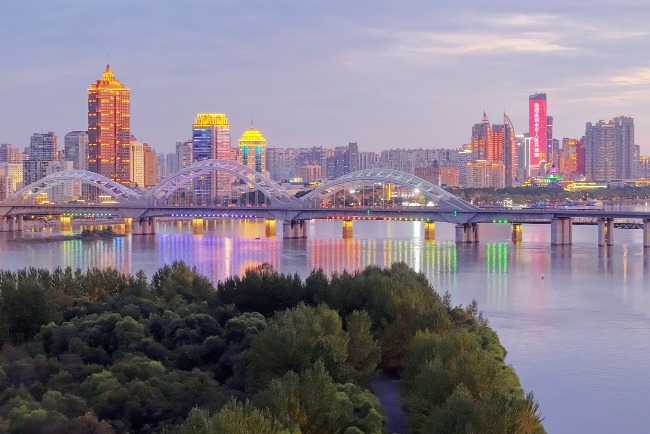
On the other hand, Harbin was occupied by the invading Japanese army in 1932. Towards the end of the Second World War in August 1945, the Soviet Union declared war on Japan, sent troops into Northeast China, quickly defeated the Japanese army, and stationed forces in cities including Harbin.
After the Soviet army withdrew in April 1946, the Northeast Democratic United Army, led by the Communist Party of China (CPC), entered Harbin. This made Harbin the first major city controlled by the CPC, which had a solid base of popular support there.
Furthermore, Harbin is close to the northern border. Given the international situation at the time, choosing this city as the capital would have made it more convenient to receive support from the Soviet Union.
For this very reason, the CPC once planned to invite representatives from various democratic parties to Harbin in the autumn of 1949 to hold a political consultative conference, to discuss the establishment of a democratic coalition government, and was prepared to announce the founding of the PRC there.
Why then did not Harbin become the capital?
The reason was that the war progressed much faster than anyone had expected, especially after the People's Liberation Army's (PLA) victories in the "Three Great Campaigns" (namely the Liaoshen, Huaihai, and Pingjin Campaigns from September 1948 to January 1949), the Kuomintang's total collapse was only a matter of time.
Under these circumstances, Mao Zedong believed it was no longer necessary to make the remotely located Harbin the capital of New China. A new choice should be made from among the candidate cities, and he was more inclined towards Beiping, which had already been considered in detail.
Regarding the question of where to establish the capital, Mao exchanged opinions with many people, and a conversation he had with Wang Jiaxiang (王稼祥) is often mentioned by the media.
The public psychologically more willing to accept Beijing
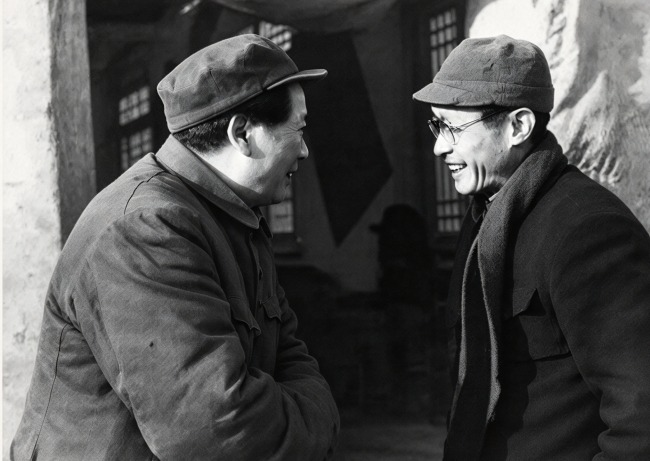
In late February 1949, Wang Jiaxiang, who was then the Head of the Urban Work Department of the Northeast Bureau of the CPC Central Committee, went for a meeting to Xibaipo in Hebei Province, where the CPC Central Committee was located. During his visit, he went to see Mao Zedong.
During their conversation, Mao Zedong asked, "With national victory in sight, where would be a good place for the capital of New China?"
Wang had also given this deep thought. After careful selection, he analysed several cities in detail: Nanjing, the capital of the Kuomintang government, was too close to the southeast coast, which was a major disadvantage considering the international situation;
Xi'an was too far to the west. With China's economic centre of gravity now in the coastal areas and Jiangnan, Xi'an no longer had the characteristics of a central location geographically.
Ancient capitals like Kaifeng and Luoyang were in the Central Plains, but their underdeveloped economic situation could not be changed in the short term. Combined with problems like transport and the flooding of the Yellow River, they were also unsuitable.
Wang Jiaxiang believed that from a political perspective, the liberated areas were mainly in the north, so Beiping should be the first choice.
He analysed that Beiping was located in a coastal region and belonged to the economically developed circle. It also guarded the strategic passage connecting the Northeast with the area inside the Shanhai Pass (山海關), making its strategic position very important.
Although it was relatively close to the sea, the Bohai Sea is China's internal waters, and it is protected by the Liaodong and Shandong peninsulas, making it strategically safer.
Furthermore, as Beijing was the imperial capital of the Ming and Qing dynasties, the public was also psychologically more willing to accept it.
Passed by vote at National CPPCC Conference
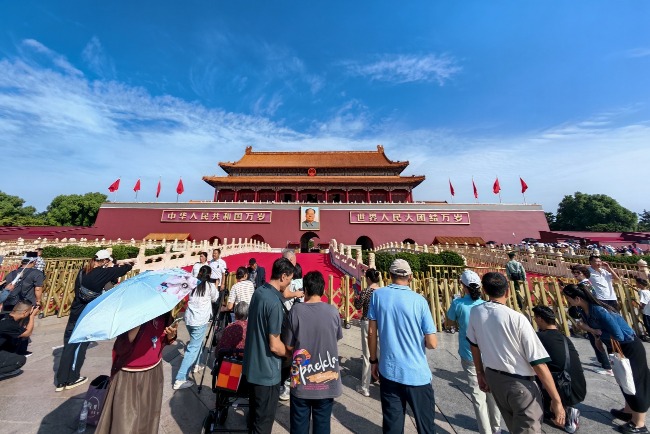
After listening, Mao Zedong said happily, "That makes sense... your analysis is exactly what I was thinking."
The advantages and disadvantages of each city were already clear to Mao Zedong, and Wang Jiaxiang's coinciding views made him even more determined to choose Beiping, which had already been peacefully liberated.
In March of the same year, at the Second Plenary Session of the Seventh Central Committee of the CPC held in Xibaipo, Mao Zedong explicitly stated that a political consultative conference would be convened in Beiping, a coalition government would be established, and the capital would be established in Beiping.
On 23 March, the central organs of the CPC left Xibaipo, and on the 25 March, they moved into Xiangshan in Beiping.
By 14 September, a subgroup of the Preparatory Committee of the New Political Consultative Conference, after discussion, proposed establishing the capital in Beiping and renaming Beiping to Beijing.
This proposal was passed by a resolution voted on by the First Plenary Session of the CPPCC on the 27 March.
On 1 October, 1949, the PRC held its founding ceremony in Beijing. Mao Zedong announced the establishment of the Central People's Government of the PRC from the Tiananmen Gate Tower.
From then on, Beijing became the capital of China.
Read more:
"Beijing Time" doesn't come from Beijing?
What is China's national flower? Many people get the answer wrong
Beijing's Shougang Park enters vibrant new chapter after Olympics