Published : 2025-12-17
Would you believe it if you were told that nearly half of the world's diamonds are produced in a small Chinese county? It is indeed true.
Although the diamonds we are talking about here are not mined from the ground but are "grown" in a factory, they are all real diamonds.
What exactly are "lab-grown diamonds"? And where is this small county that has turned diamonds "as cheap as cabbage"?
The research and development of lab-grown diamonds began in the late 19th century
Any discussion of lab-grown diamonds must begin with natural diamonds.
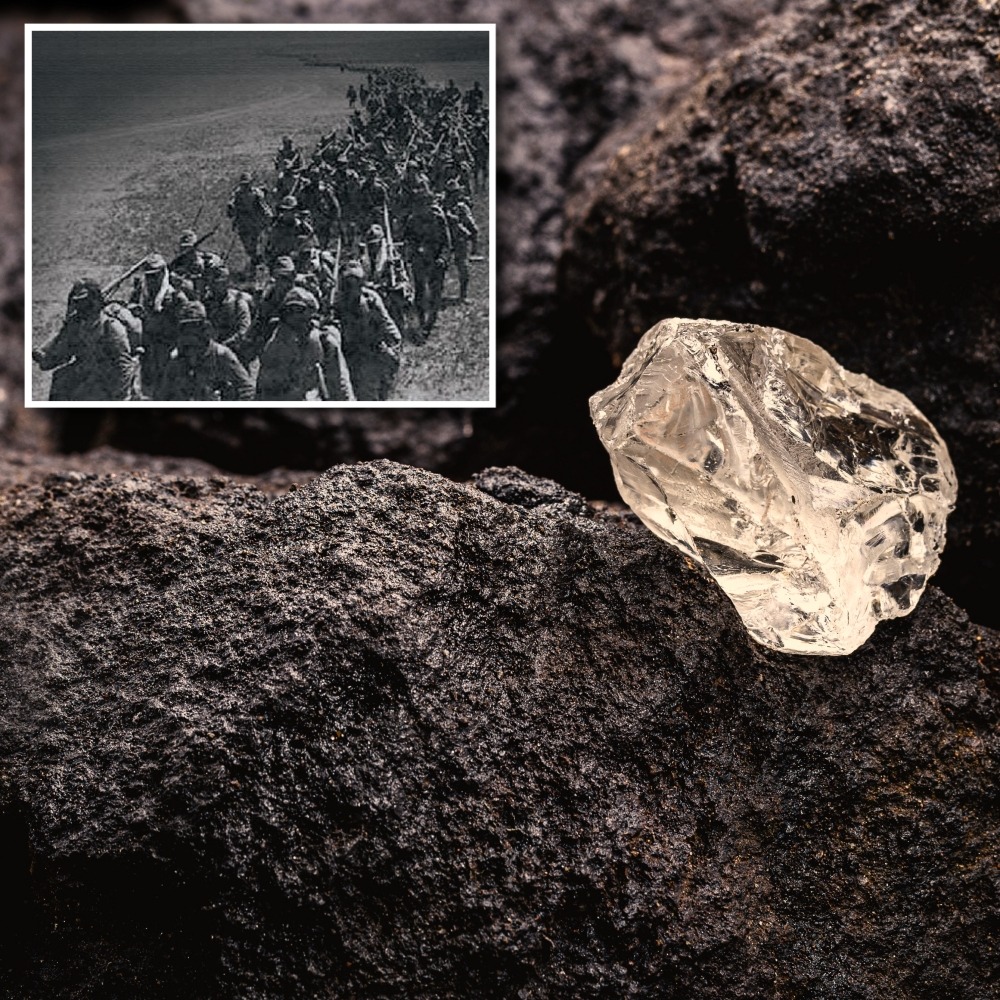
Natural diamonds are formed from carbon elements deep underground over hundreds of millions of years under high temperatures and high pressures. As it is the hardest natural mineral, as well as being pure and beautiful, it has been regarded in the West as a symbol of eternal commitment and sincere love since the Middle Ages.
Of course, a greater number of diamonds that are not of gem quality are used for industrial purposes, for example, being crushed into powder to make cutting, grinding, and drilling tools.
Natural diamonds are a non-renewable resource and have a certain scarcity, so since the late 19th century, scientists have been researching their formation mechanism, hoping to replicate the conditions to artificially grow diamonds.
In the 1950s, the technology saw a major breakthrough. A team at General Electric in the United States, by mimicking the high-temperature and high-pressure environment of the Earth's mantle, finally created the first "laboratory diamond", also known as a lab-grown diamond.
However, the quality of early lab-grown diamonds was relatively poor, far from reaching gem-grade, and they could only be used for industrial purposes. It was not until the late 20th century, with continuous technological advancements, that it became possible to grow more transparent and clear gem-grade diamonds.
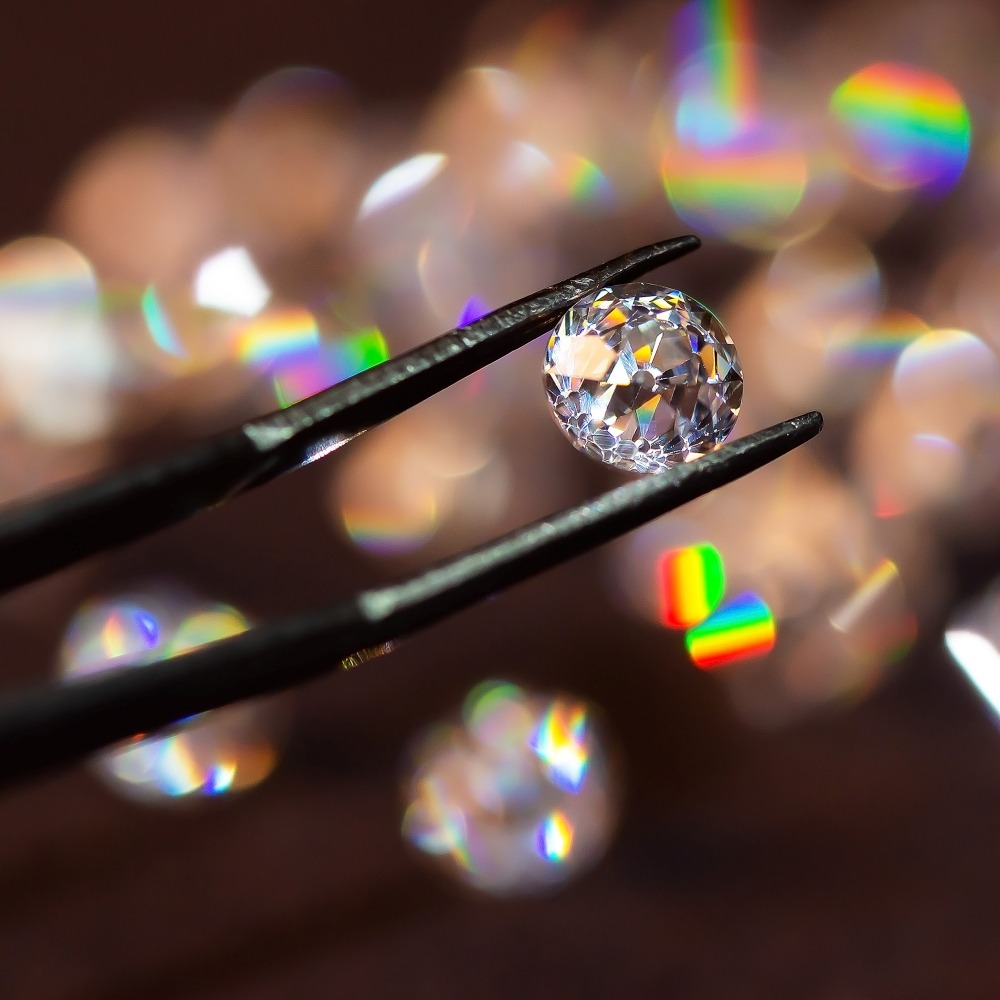
In fact, gem-quality lab-grown diamonds are now nearly indistinguishable from natural diamonds to the naked eye or with ordinary tools. To enable identification, producers are required to laser-inscribe the girdle of lab-grown diamonds with the marking "Laboratory Grown" or "LABGROWN".
Chemical composition and physical properties are exactly the same
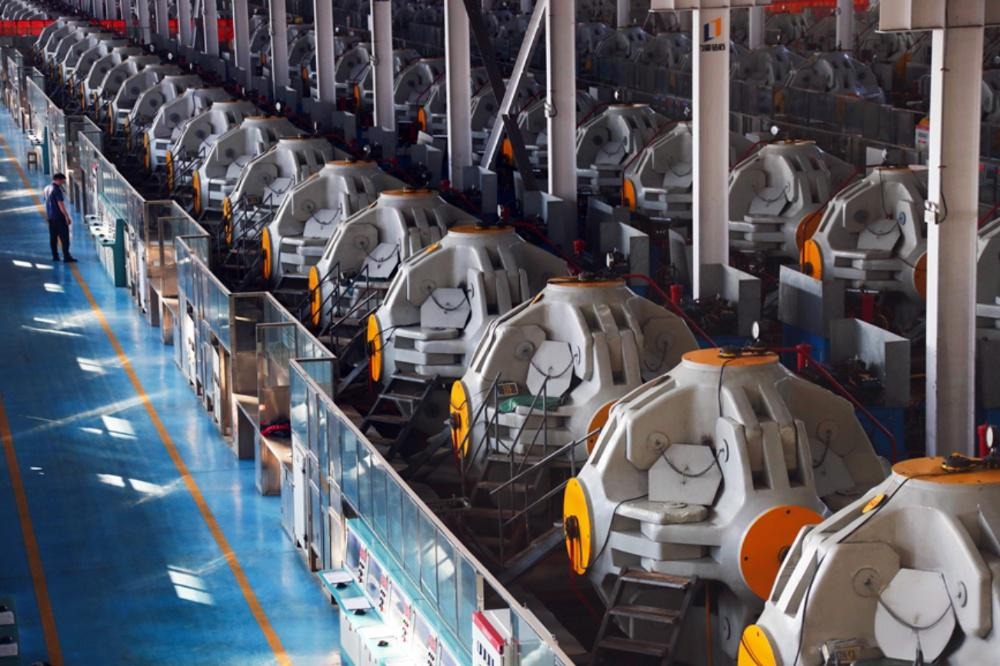
It should be noted that the chemical composition and physical properties of lab-grown diamonds are exactly the same as those of natural diamonds. The only differences between the two lie in their growth environment and formation time, just like ice frozen in the natural world versus ice frozen in a refrigerator.
Furthermore, the formation process for a lab-grown diamond takes only a few days to a few weeks, allowing for mass production, which also leads some people to feel psychologically that it lacks the rarity of a natural diamond.
In any case, because their quality has been continuously improving, lab-grown diamonds have since been gradually accepted by the international jewellery industry, with some appraisal organisations also issuing certificates for lab-grown diamonds. The U.S. Federal Trade Commission also classified lab-grown diamonds into the broader category of diamonds in 2018.
As public figures like Lady Gaga have worn them on important occasions, lab-grown diamonds have also become known to more and more people. A report from China Central Television's website stated that in the global diamond jewellery market of 2025, the sales share of lab-grown diamonds has exceeded 40%, an increase of more than eight times compared to 2019.
Read more: Which province in China has the largest diamonds reserves?
Zhecheng, the Diamond Capital
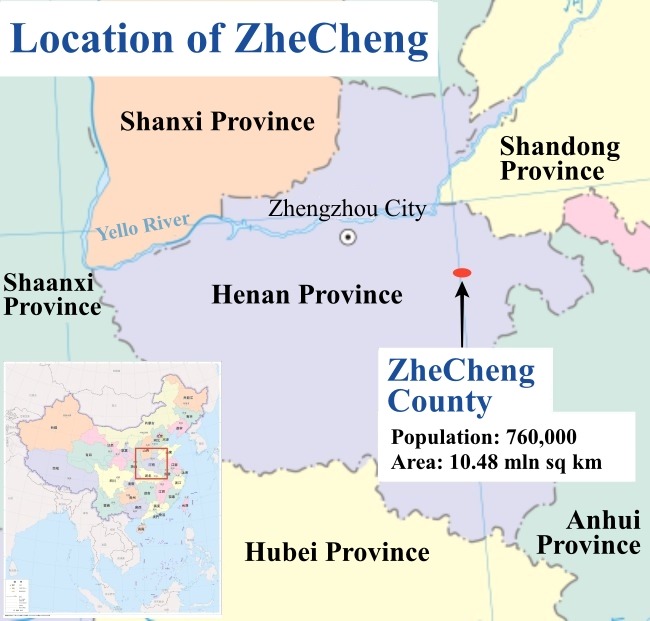
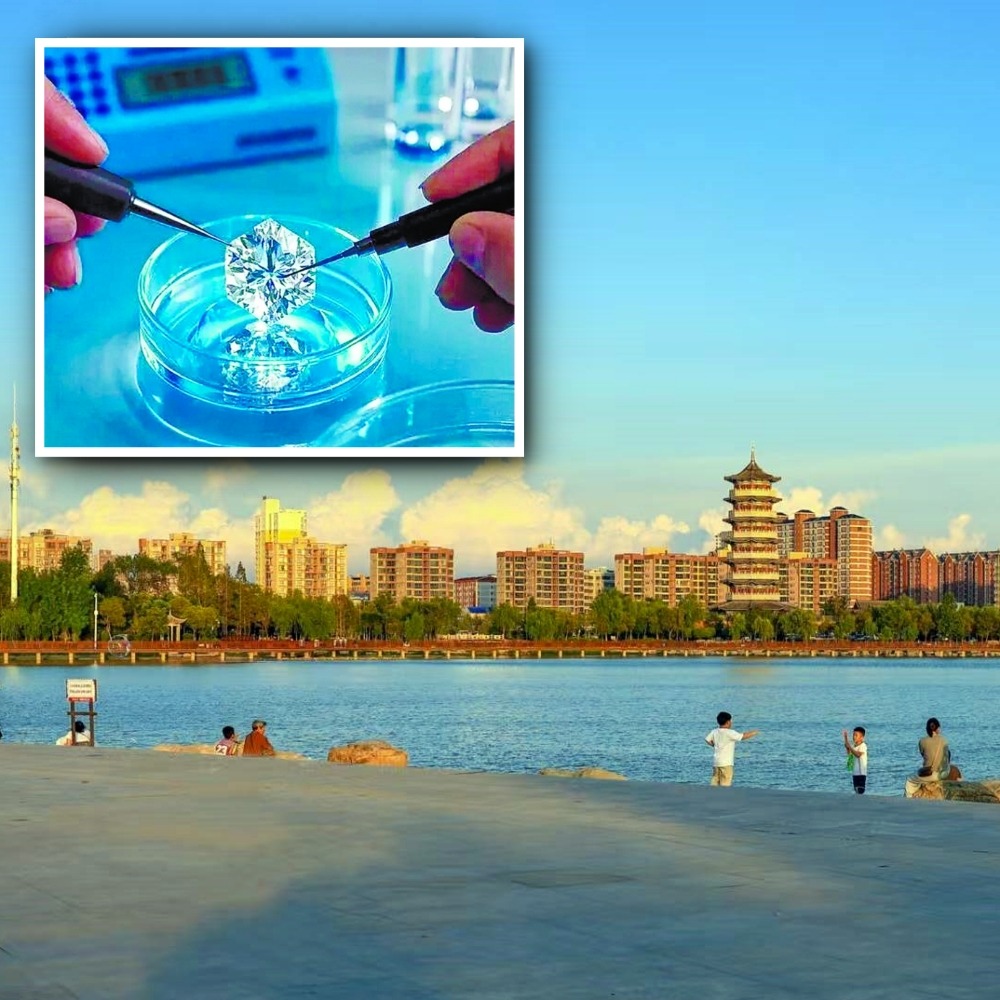
Having discussed the background of lab-grown diamonds, which small Chinese county is it that abounds in their production? It is Zhecheng County (柘城縣), located in eastern Henan Province and administered by Shangqiu City (商丘市), with a population of just over 600,000.
Going back to the 1950s, as China sought to develop its manufacturing industry, a factory specialising in abrasive tools was established in Zhengzhou (鄭州), the capital of Henan Province. At the time, the industrial diamonds required for these tools were largely imported, and domestic reserves were limited.
Consequently, the authorities decided to independently research and develop lab-grown diamonds. By 1965, China's first "six-anvil press" was created in Henan, which produced the country's very first synthetic diamond.
From that point on, Henan established a leading position in the field of ultra-hard materials, with related enterprises now accounting for half of China's total output in this sector.
In a blink of an eye, the 1980s arrived, and an engineer surnamed Feng, who had previously been engaged in lab-grown diamond research in Zhengzhou, responded to a call to return to his hometown and opened the first local lab-grown diamond factory. His hometown was Zhecheng.
Although Feng passed away a few years later, the factory had already trained a group of technicians for Zhecheng, who then went on to start their own businesses, developing lab-grown diamond enterprises of all sizes, starting from family workshops.
Zhecheng County, previously known for its specialities of chilli peppers and beef cattle, was also transformed into the "Diamond Capital", possessing the most advanced lab-grown diamond technology and astonishing production output.
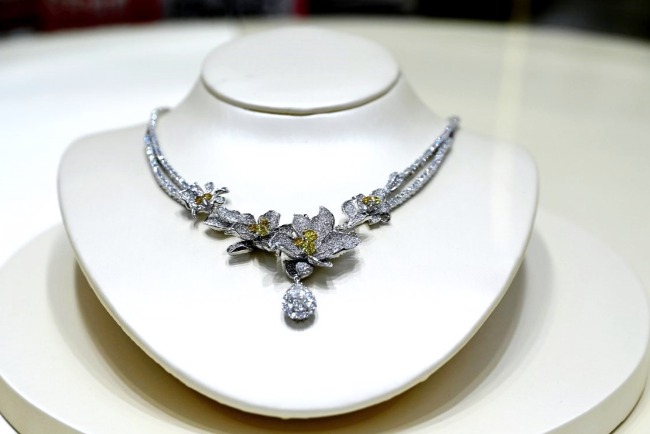
Diamond-set karat gold rings
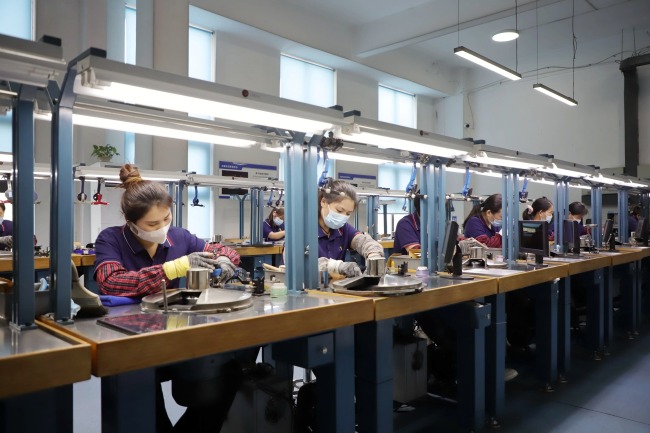
How astonishing is Zhecheng's lab-grown diamond output?
According to media reports, China's lab-grown diamond production capacity accounts for about 70% of the global total, and in the small county of Zhecheng alone, the lab-grown diamond output is expected to increase to 12 million carats in 2025, accounting for 60% of China's total.
The media claims that Zhecheng's production of moulds and gauges has made diamonds "as cheap as cabbage". Currently, the price of a lab-grown diamond is only a fraction of a natural diamond's, or even tens of times cheaper.
A one-carat lab-grown diamond is commonly priced online at just 1,000 to 2,000 RMB, much cheaper than the 18K gold ring setting it is mounted on.
A Zhecheng enterprise also grew a "giant" rough diamond in 2025, which, at a weight of 156.47 carats, broke the world record.
By the way, 156.47 carats is the current "ceiling" for lab-grown diamonds, but when compared with natural diamonds, even just within China, it still cannot claim the top spot, only ranking third.
As for how large China's biggest diamond is and what stories are behind it, that will be told in another article.