Published : 2025-12-18
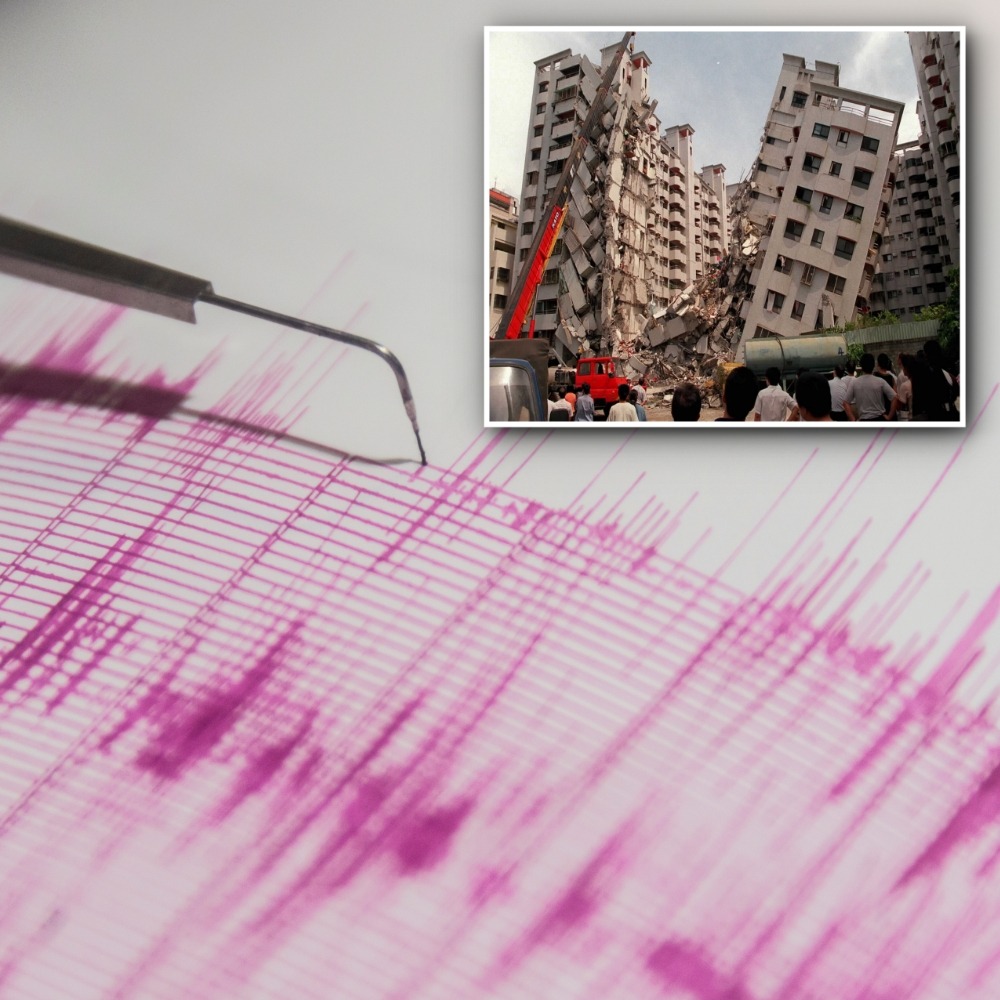
Have earthquakes ever occurred in Guangdong and Hong Kong? Yes, definitely, and quite frequently, it's just that the vast majority are small-scale earthquakes that go unnoticed by people.
In fact, a massive earthquake of magnitude 7.3 once occurred in Guangdong , causing a great disaster. Hong Kong was also affected, and there were casualties. A traditional prestigious school even had to relocate because its campus was severely damaged.
Guangdong averages over a thousand earthquakes a year
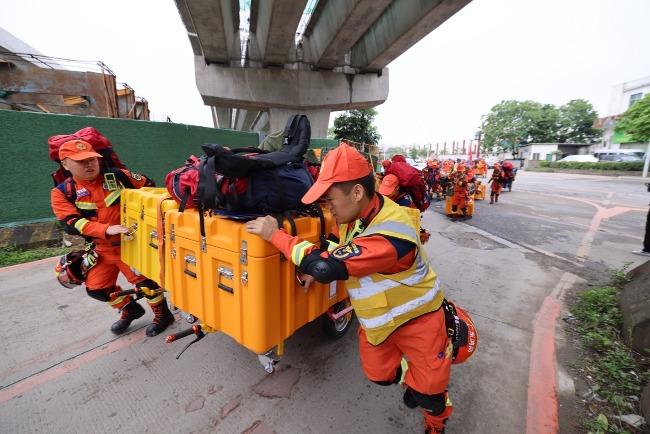
According to reports, in the 50 years from 1970 to 2019, Guangdong occurred as many as 58,633 earthquakes, averaging over 1,100 per year, and over 99% of these earthquakes were below magnitude 4.
Data shows that earthquakes of less than magnitude 3 are generally not easily felt by people, unless the epicentre is particularly shallow. As for earthquakes greater than magnitude 3 and less than or equal to magnitude 4.5, although people can feel them, they generally do not cause damage.
What about the situation in Hong Kong? Statistics show that from 1979 to October 2025, there have been 9 earthquakes with epicentres within Hong Kong's territory, the most recent one on 11 March 2023, with the epicentre near Mui Wo, Lantau Island, and a magnitude of 2.0. As for the one on 11 May 1995 with its epicentre in the waters east of Lantau Island, its magnitude was considered the highest, but it was only magnitude 3.1.
In fact, Hong Kong is small and not on an active seismic belt, so for the earthquakes that residents can feel, the vast majority of epicentres are outside Hong Kong. For example, on 23 June 2025, over a hundred Hong Kong residents reported feeling an earthquake to the Observatory, and the epicentre of that earthquake was in Qingyuan, Guangdong, 180 kilometres away, with a magnitude of 4.3.
The great Nan'ao earthquake caused heavy casualties
As for the magnitude 7.3 earthquake mentioned above, it is the most intense earthquake ever recorded in Guangdong.
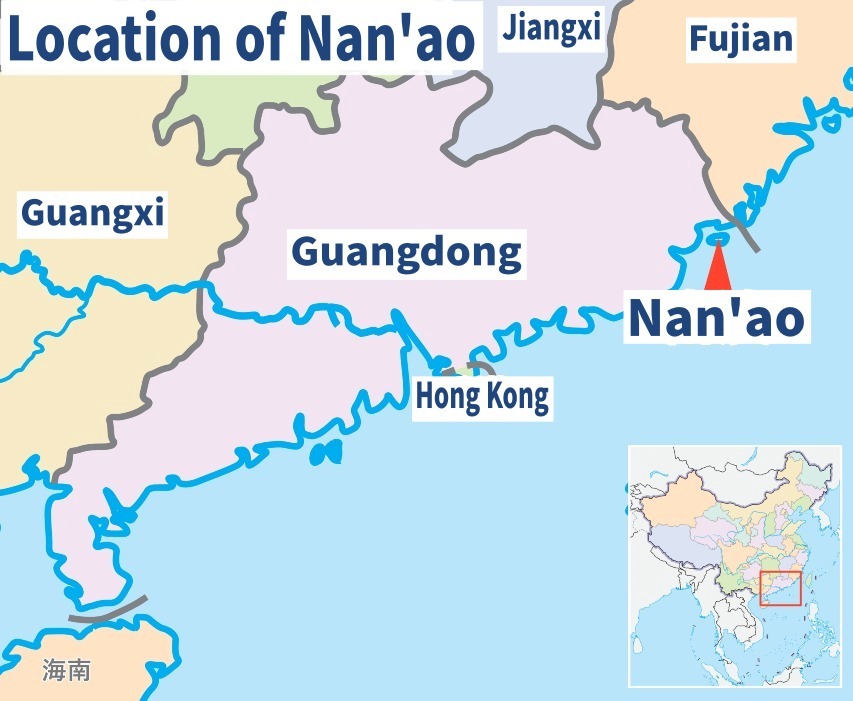
It occurred on 13 February 1918 (the third day of the Lunar New Year), with the epicentre on the northeast side of Nan'ao Island in Guangdong, near Fujian.It is known in history as the "Great Shantou Earthquake" or the "Great Nan'ao Earthquake".
Nan'ao Island in Shantou City, which has become famous in recent years for attractions such as Qing'ao Bay Beach and Asia's largest island wind farm. A century has passed, and many Chaoshan local people may not know that their hometown has such a piece of history.
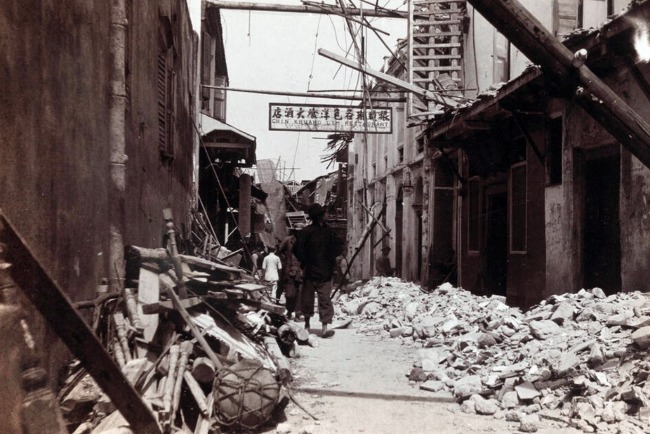
As for how many casualties the "Great Nan'ao Earthquake" caused, there seem to be no complete and specific statistics, but the Hong Kong Observatory website quotes a newspaper report from the time stating, "in Shantou city, the houses of local people were almost all destroyed, the residences and buildings of foreigners were also severely damaged. A theatre full of spectators collapsed, with none of the audience or actors spared. The ground cracked in many places, and large amounts of hot water and steam spewed from the fissures".
It affected Fujian, Jiangxi, Zhejiang, and Jiangsu
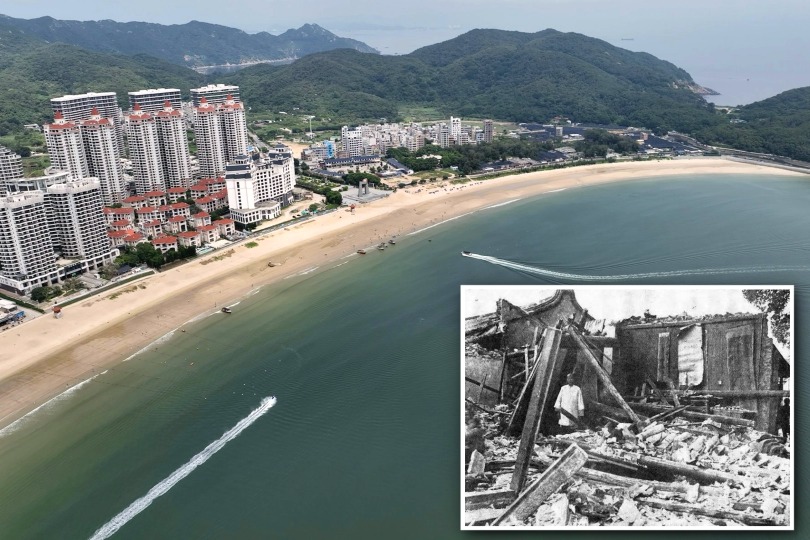
Media in the Chinese Mainland, on the other hand, cited the records of renowned geologist Weng Wenhao, stating: '(The earthquake caused) ground fissures and landslides, the sea surged, houses overturned, and hundreds of people died. The affected area covered eight provinces, including Min (Fujian), Yue (Guangdong), Xiang (Hunan), Gan (Jiangxi), Zhe (Zhejiang), Su (Jiangsu), Wan (Anhui), and E (Hubei), with an area of over 500,000 square kilometres.'
Weng Wenhao also mentioned: 'What was truly tragic was Nan'ao County, where all the houses were razed to the ground, eight-tenths of the population were killed or injured, bodies were crushed under ruined walls with no one to bury them, how sorrowful.'
As the 'Great Nan'ao Earthquake' affected multiple provinces, Hong Kong, 300 kilometres from the epicentre, inevitably felt the shock.
Media reports at the time pointed out that, 'when the earthquake occurred, the tremors were felt throughout Hong Kong, and almost all buildings were shaking. There was particular panic in the Central district, with many people rushing out of the violently shaking buildings and onto the streets, and some women and children fainting from fright'.
The reports also stated that 'a girl in Yau Ma Tei was injured as the panicked crowd rushed into the street, and she later died of her injuries after being taken to hospital'.
'(During the aftershock on the following day) someone fell from a bunk bed and injured their foot, and teahouses suffered losses as diners fled', and 'multiple buildings were damaged in the earthquakes over those two days, and several cracks also appeared in the walls of the upper-floor rooms of the Observatory headquarters'.
A prestigious Hong Kong Island school was damaged and needed to relocate
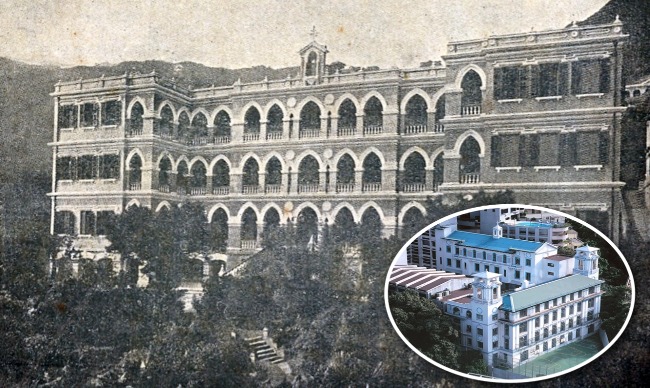
At the same time, 'St. Joseph's College, then located on Robinson Road, had to be relocated due to severe damage'. St. Joseph's College is a traditional prestigious school in Hong Kong with a history of over 150 years.
After the earthquake, it moved to its current location on Kennedy Road, a fact clearly recorded in the school's history.
Finally, to add some more information: in 1605, an earthquake estimated to have reached a magnitude of 7.5 occurred in Qiongshan, Hainan, a higher magnitude than the Great Nan'ao Earthquake. At that time, Hainan was under the jurisdiction of Guangdong; it became a separate province in 1988.
In addition, over the past century, Guangdong has experienced 12 earthquakes of magnitude 6 or above. Besides the 'Great Nan'ao Earthquake', the magnitude 6.1 and 6.4 earthquakes in Heyuan in 1962 and Yangjiang in 1969 also caused some destruction and casualties.
Finally, another earthquake topic related to Guangdong and Hong Kong is 'reservoir-induced earthquakes'. What 'reservoir-induced earthquakes' are will be described in another article.
Read more: China experiences 30+ earthquakes of magnitude 5+ annually
Read more: China built the world's strongest earthquake early warning project