Published : 2026-02-24
China needs to import large quantities of petroleum every year, but it actually produces petroleum itself. How much petroleum does China actually have? Which provincial administrative region has the largest reserves and highest production volume?
The place with the highest oil production today is one that many people would not expect.
Concentrated in the "Eight Great Basins"
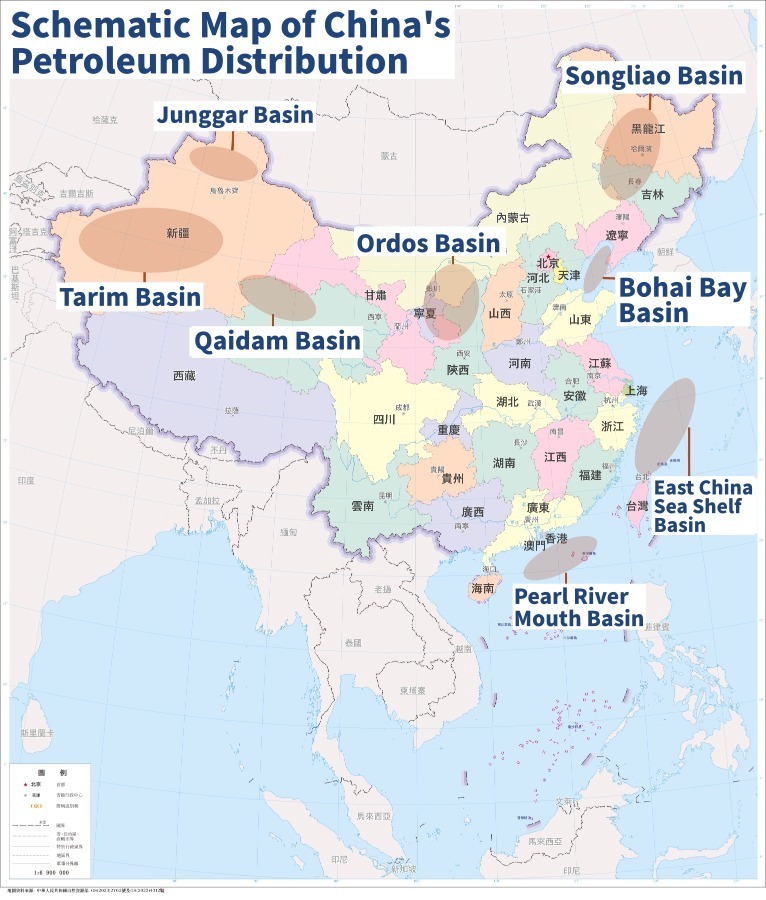
There is a lot of public information about China's petroleum, and the data from different sources often varies. When it comes to the areas with the most concentrated proven petroleum reserves, they are invariably the 'Eight Great Basins', namely the basins of Bohai Bay, Songliao, Tarim, Ordos, Junggar, Pearl River Mouth, Qaidam, and the East China Sea Shelf.
Some of the eight great basins are onshore and some are offshore, and their recoverable petroleum resources account for more than 80 per cent of the country's total.
So, how much petroleum resources does China have in total? According to reports from Chinese Mainland media in 2024, China's remaining technically recoverable petroleum reserves amount to 3.85 billion tonnes, ranking 13th globally and accounting for about 1.58% of the world's total reserves.
Does 3.85 billion tonnes sound like a lot? However, based on China's crude oil production level of 200 million tonnes, this is only enough for about 19 years of extraction.
If calculated based on China's petroleum consumption of over 750 million tonnes in 2023, the domestic reserves are only sufficient for about 5 years of self-sufficiency, a situation that is more than just tight.
For this very reason, China must continue to import large quantities of crude oil and expand its import channels. At the same time, China urgently needs to develop new and alternative energy sources, but that is a topic for another time.
Tianjin's production accounts for nearly 20%

Returning to the question of the top petroleum-producing region. When it comes to the provincial administrative region with the highest petroleum production, many people, based on traditional mindset, would guess Heilongjiang, where the Daqing Oilfield is located; Xinjiang, home to the Karamay Oilfield; or Shandong, where the Shengli Oilfield is situated.
The three mentioned oilfields are particularly well-known due to their historical context, with the Daqing Oilfield in the Songliao Basin being especially a household name.
However, new oilfields have been successively discovered and exploited across China, and among them are plenty of rising stars.
Currently, how many provincial-level administrative regions in China (including provinces, centrally administered municipalities, and autonomous regions) have the capacity for crude oil production?
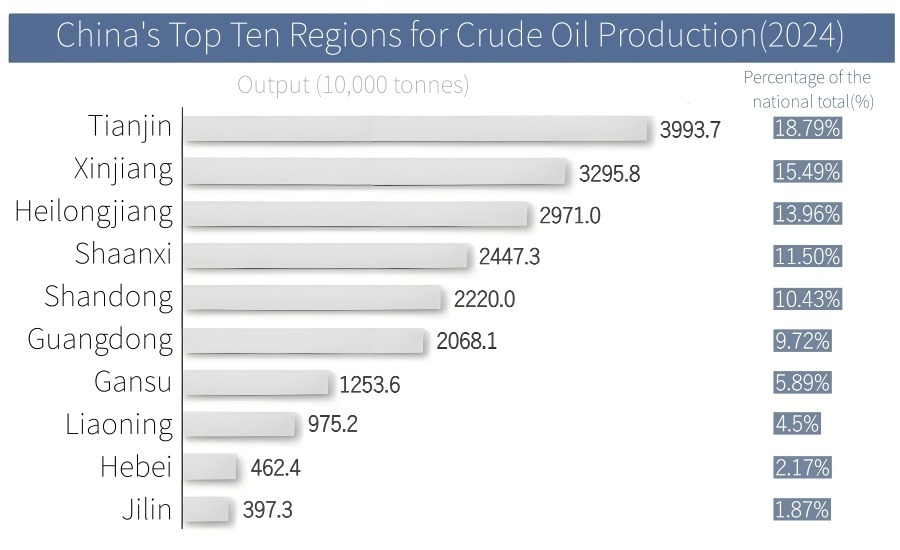
It turns out there are as many as 21, of which 11 have an annual production of over 10 million tonnes, and the one with the largest output is Tianjin, a place many people would not expect.
Tianjin has maintained its position as the top crude oil producer in the country since 2020. In 2024, the centrally administered municipality produced 39.985 million tonnes of crude oil, accounting for 18.79% of the national output, playing a pivotal role.
Read more: Are petroleum and crude oil different? Does China measure in barrels?|China Petroleum Ⅰ
Read more: Does China have oil? Is China a major oil-producing country?|China Petroleum Ⅱ
Home to China's largest offshore oilfield
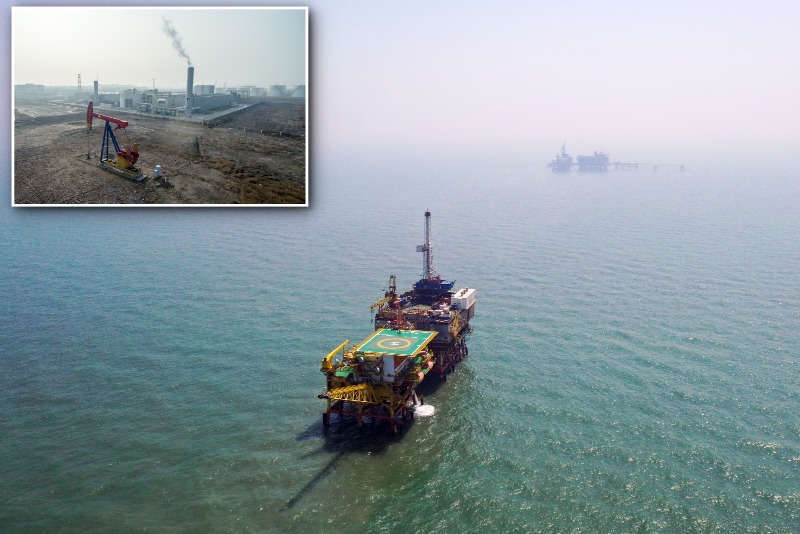
Tianjin borders the Bohai Sea to the east and is adjacent to the capital, Beijing, to the west. It has an area of less than 12,000 square kilometres, accounting for just over 1% of the country's total area, roughly the size of 10 Hong Kong. How can such a small place have so much petroleum?
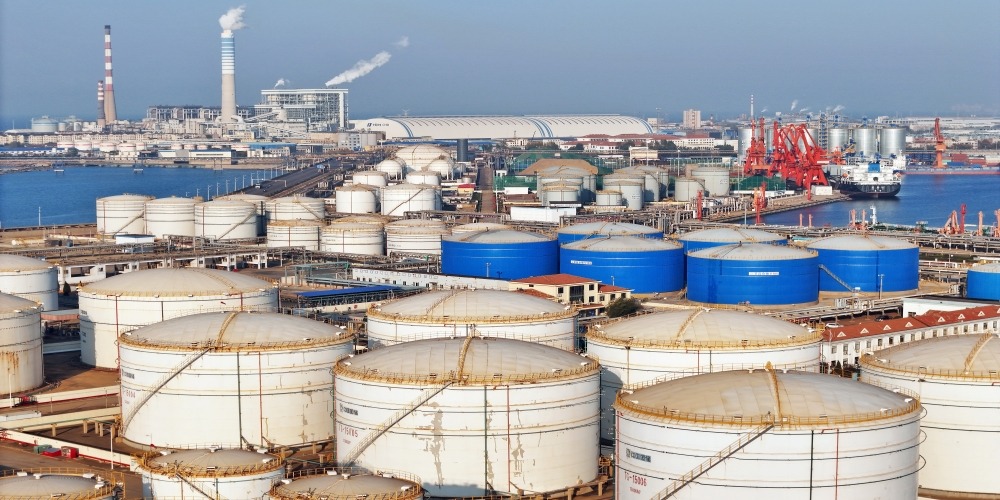
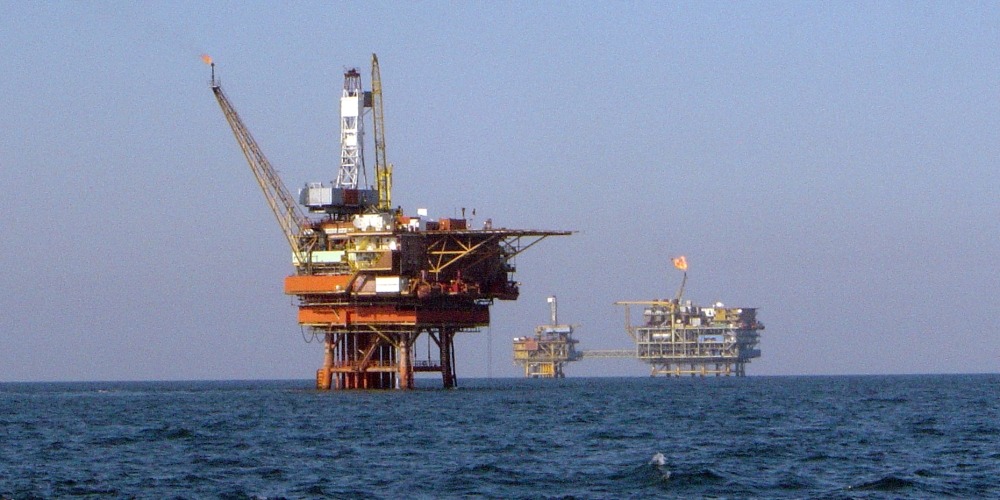
Although Tianjin is not large, the core area of the Dagang Oilfield, once China's third largest, is within its territory. The key development area of the Bohai Bay Oilfield, currently China's largest offshore oilfield, is also in the waters off Tianjin.
This is the foundation for it to become the largest-producing provincial administrative region for oil.
After Tianjin in terms of crude oil production in 2024 are the previously mentioned Xinjiang and Heilongjiang. As for Shaanxi, where the Changqing Oilfield is located, it ranks fourth in the country.
This oilfield has oil as well as abundant natural gas resources. If calculated as an oil and gas field, it is currently the largest in China.
One point must be made clear: Tianjin's annual production of nearly 40 million tonnes is still some distance from China's highest record.
Heilongjiang's Daqing Oilfield alone once produced over 50 million tonnes of crude oil annually for 27 consecutive years, propping up half of China's crude oil supply.
After more than half a century of extraction, the resources of the Daqing Oilfield have diminished, and its current annual production is below 30 million tonnes.
Where is Guangdong's petroleum hidden?
Additionally, on the 2024 list, most of China's major oil-producing provincial administrative regions are in the north.
The only southern province to make it into the top ten is Guangdong, which ranks sixth. Its output of 20.681 million tonnes accounts for nearly 10% of the national total.
It is widely recognised that Guangdong is China's most populous province and its largest economy, with developed industries such as technology and manufacturing. But is it surprising that it also abounds in petroleum?
And where is Guangdong's oil hidden? We just mentioned the "eight major basins" where China's oil reserves are most concentrated.
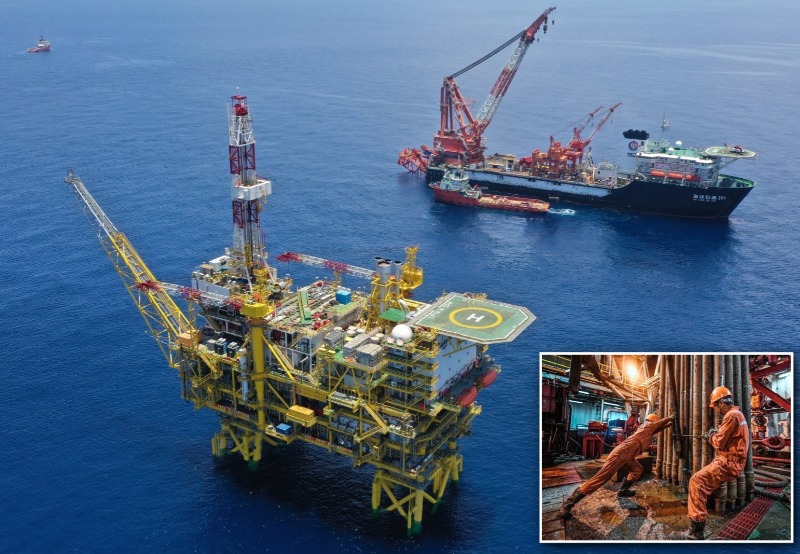
One of them is the Pearl River Mouth Basin, located off the coast of Guangdong in the northern South China Sea. Guangdong's oil-producing area is right here.
The scope of the Pearl River Mouth Basin is much larger than the Pearl River Delta in the traditional sense. Its area reaches 147,000 square kilometres, which is equivalent to more than half of Guangdong's land area.
Currently, dozens of offshore oilfields have been discovered or have begun production in this sea area. Some offshore oilfields are only about 100 kilometres away from Hong Kong and Shenzhen.
Read more: How much does China spend on petroleum annually?|China Petroleum Ⅲ
Read more: Which countries does China get its oil from?|China Petroleum Ⅴ