Published : 2025-12-15
In the top international academic journal Nature's 10 people who shaped science in 2025, two Chinese were selected.
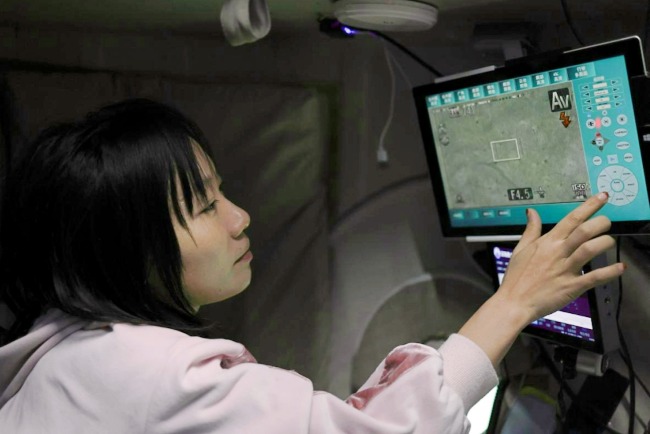
Among them, Liang Wenfeng of DeepSeek is no stranger to everyone, so who is the other one, the "Deep Diver" Du Mengran? How did she "witness unprecedented scenes in the scientific world" in the 9,000-metre-deep abyss?
Du Mengran: Especially happy to see the sea for the first time
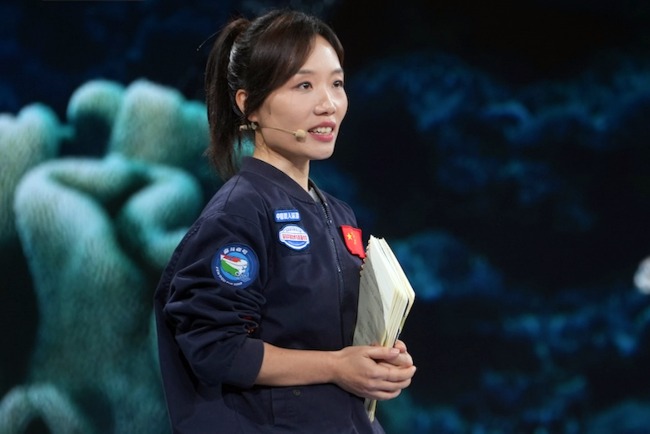
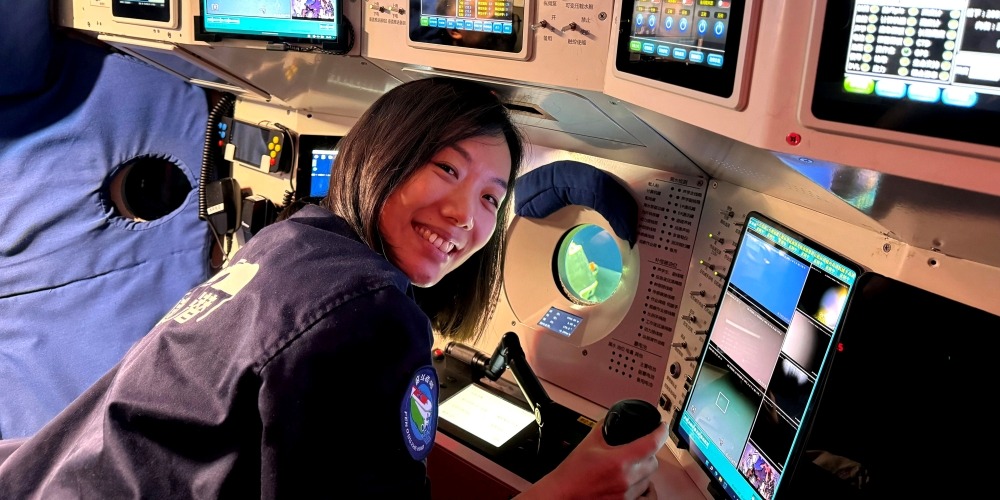
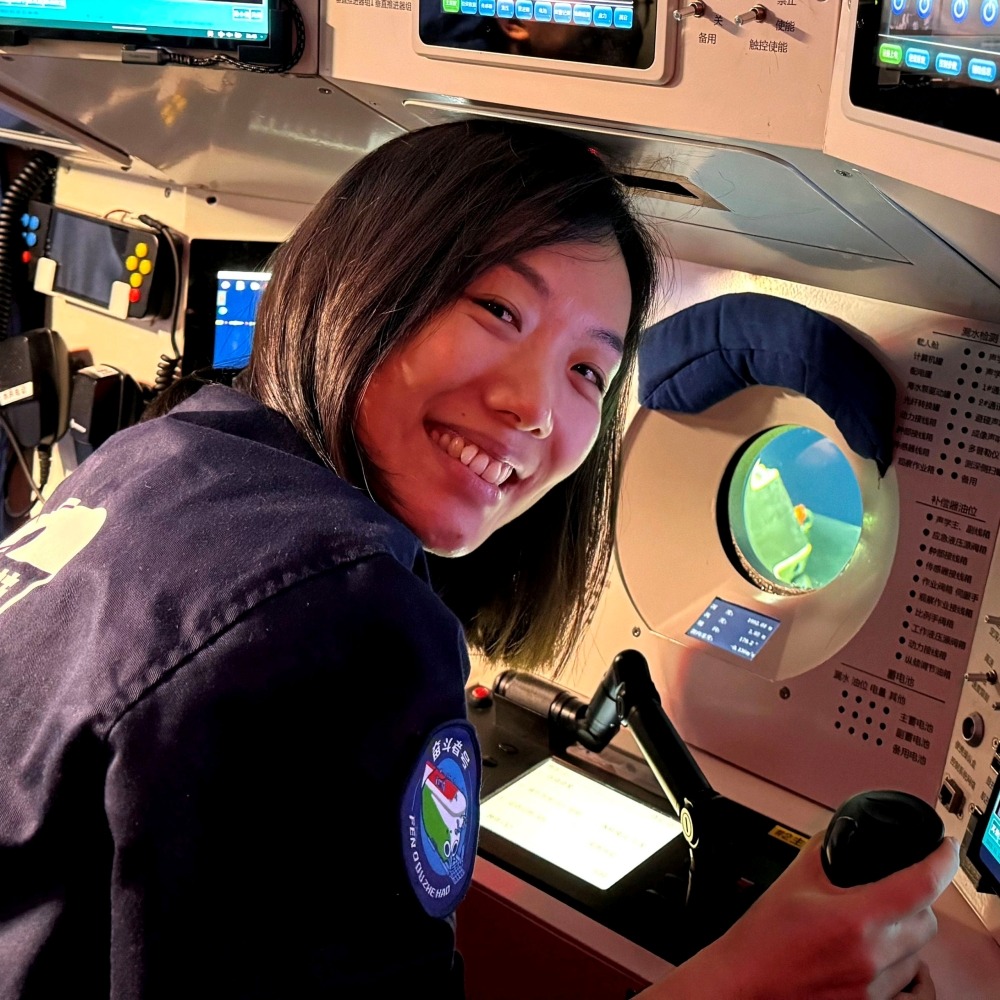
Du Mengran (杜夢然) was born in 1987 and is from Bozhou (亳州), Anhui Province. Her connection with the sea began with a trip to Beidaihe (北戴河) when she was a child.
'"I was only four or five years old then, and I was especially happy to see the sea for the first time. I wanted to stay by the seaside forever, so I later chose to study marine chemistry at the Ocean University of China."
Du completed her master's studies at university, then went to the United States to for a doctoral degree. She later joined the Institute of Deep-sea Science and Engineering, Chinese Academy of Sciences (CAS) in 2014, where she began her exploration of the abyss "full of unknowns and romance".
What is the abyss? The regions of the ocean with a depth of over 6,000 metres are called the "abyss", accounting for about 1.2% of the ocean's total area.
The abyss is not only completely dark, but the water pressure also reaches 1,000 kg per square centimetre, making it extremely difficult for humans to reach, and our understanding of the abyss is very limited.
Du Mengran rewrote human understanding of deep-sea life
In fact, before the 2010s, there were very few scientists in the world studying the abyss, and related research was sporadic and unsystematic.
Du Mengran was very fortunate because she came along at a good time.
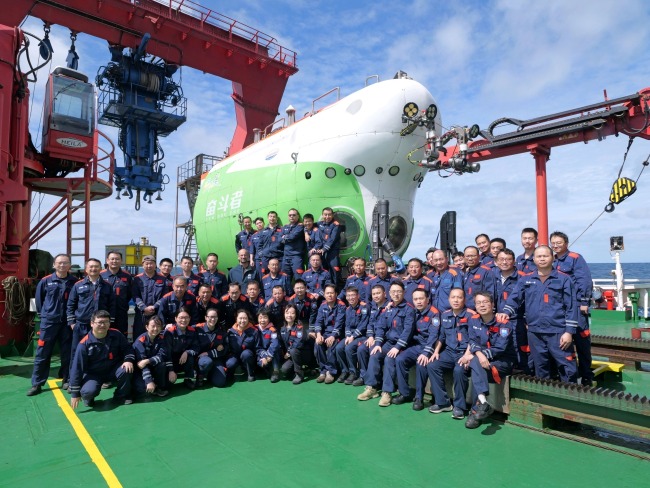
When she joined the research team, China had successively developed manned submersibles like the Jiaolong (蛟龍號) and Fendouzhe (奮鬥者號), which could reach the abyss and even the deepest parts of the ocean.
The conditions for scientific research became increasingly superior, and China had gradually taken a leading position in the field.
In the following 10 years, Du took manned submersibles to dive deep into various oceans more than 30 times, including multiple ventures into the mysterious world more than 9,000 metres deep. Her research rewrote human understanding of deep-sea life.
Discovering the deepest known animal ecosystem on Earth
Du Mengran mentioned an exploration in 2020 during an interview, "I was stunned when our team discovered a whale fall at a depth of 1,600 metres in the South China Sea. After a whale sinks to the seabed, it can sustain an ecosystem for up to a century. For example, some bone-eating worms can digest the whale bones, which in turn become food for other species. A whole cycle of life grows based on a single whale fall, completing the circle of life..."
She also talked about her experience in the Puysegur Trench in New Zealand in the first half of 2025. "No research vessel or manned submersible has ever operated here in history. We were the first. The sights we saw, the footage we captured, and the new species we recorded are all firsts in human history."
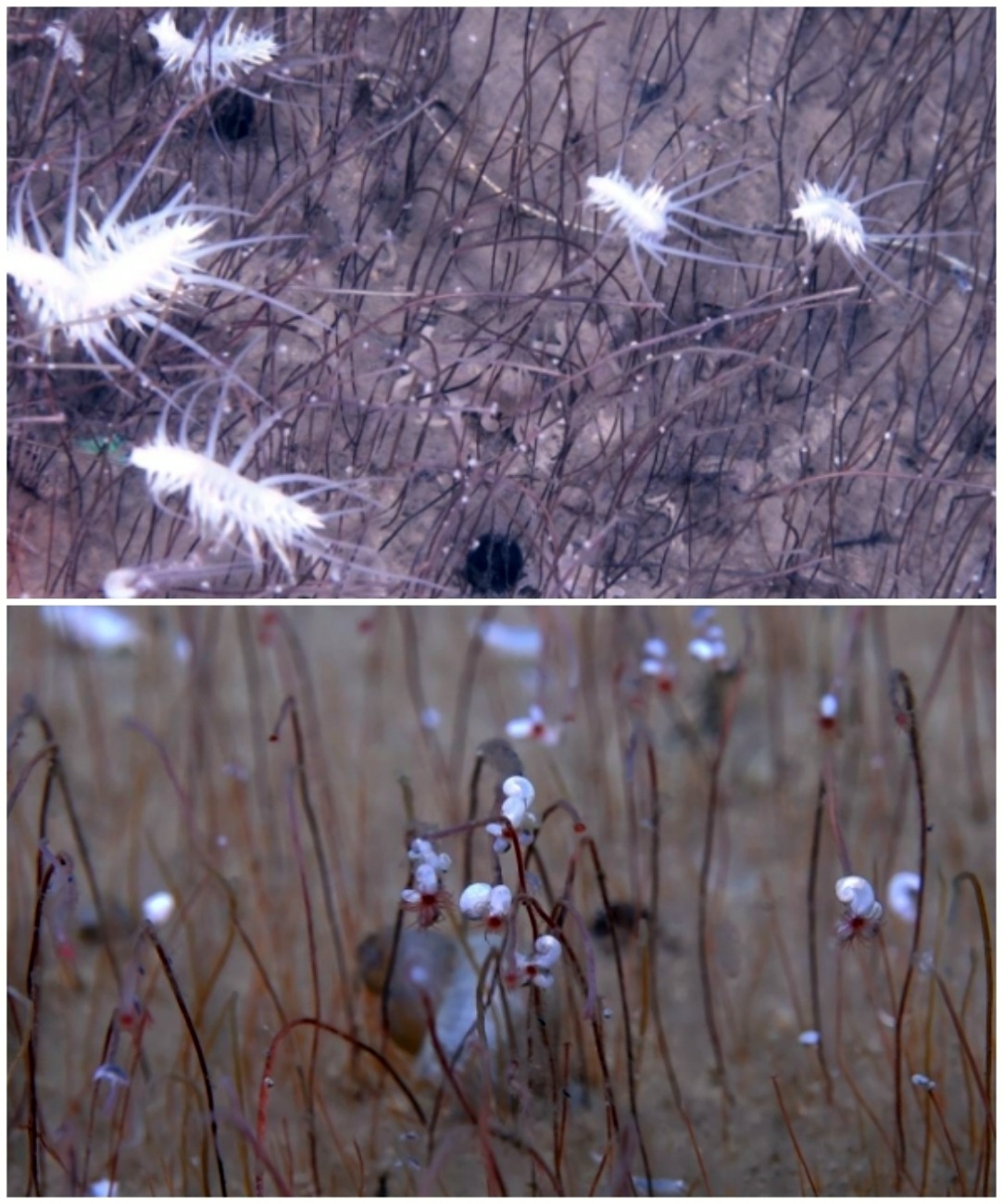
Du Mengran and the team also travelled aboard the Fendouzhe into the northwestern Pacific, to the bottom of the Kuril-Kamchatka Trench at a depth of over 9,000 metres, and discovered the deepest known animal ecosystem on Earth.
Selected for Nature's 10
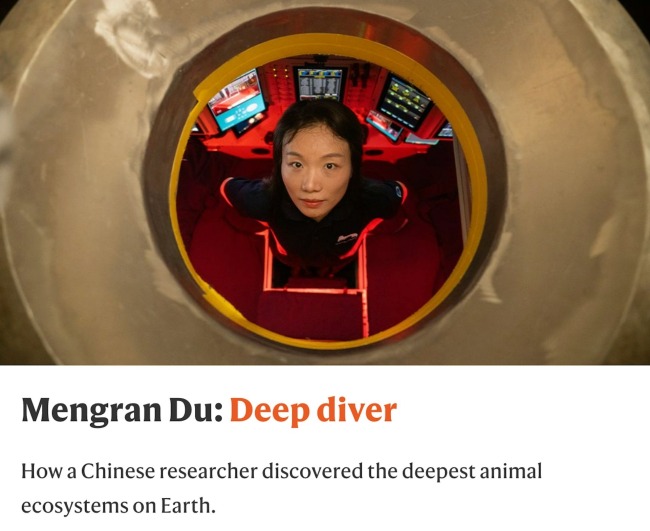
Du Mengran said that every time she descends to the seabed in a manned submersible, the underwater scenery is different. "Whether it's strange creatures or unique geology, anything we haven't seen or don't understand attracts us to find answers, compelling us to dive into the sea again".
On 8 December 2025, Nature magazine announced its annual list of 10 people who shaped science, and Du Mengran, China's first female chief scientist on a manned deep-sea dive mission and only 38 years old, was listed along with DeepSeek founder Liang Wenfeng (梁文鋒). Nature magazine called her the "Deep Diver", for "witnessing sights unprecedented in the scientific community" in the deepest parts of the ocean.
When the news broke, Du Mengran was on a research vessel. She said this was a recognition of China's hadal science team.
Read more: Diving 10,000 metres into the deep sea, "Fendouzhe" conquers the Earth's fourth pole