
Published : 2026-01-02
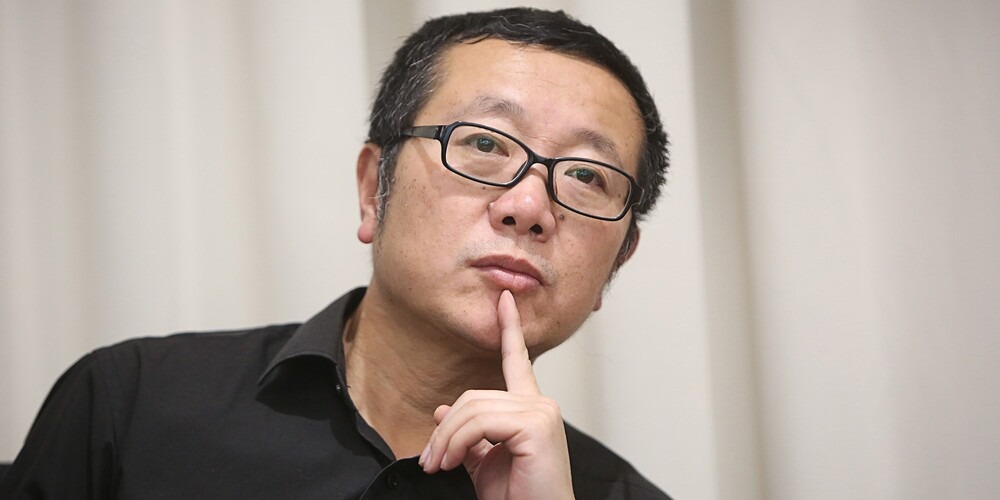
Liu Cixin, author of the bestselling science fiction novel The Three-Body Problem, has brought Chinese-style sci-fic to the whole world.
Originally a power plant engineer, how did Liu embark on the path of writing and become the "Master of Science Fiction" in China?
Seeing a Chinese satellite, Liu Cixin: A sense of yearning arose
Liu Cixin (劉慈欣) was born in Beijing in 1963. His father was an official at the Beijing Coal Design Institute, and his mother was a demobilised soldier.
After the outbreak of the Cultural Revolution, his parents were sent down to Yangquan (陽泉), Shanxi Province, due to "historical" issues, and Liu Cixin spent most of his time thereafter living in this small city.
Speaking of where he lived, it is worth mentioning Liu Cixin's ancestral home in Luoshan, Henan Province. At that time, Yangquan was a severely affected area for "violent struggles", so Liu Cixin was once sent back by his parents to live in rural Luoshan.
One evening when he was seven years old, a crowd of people gathered by a pond, excitedly looking up at the night sky, and a curious Liu Cixin joined them.
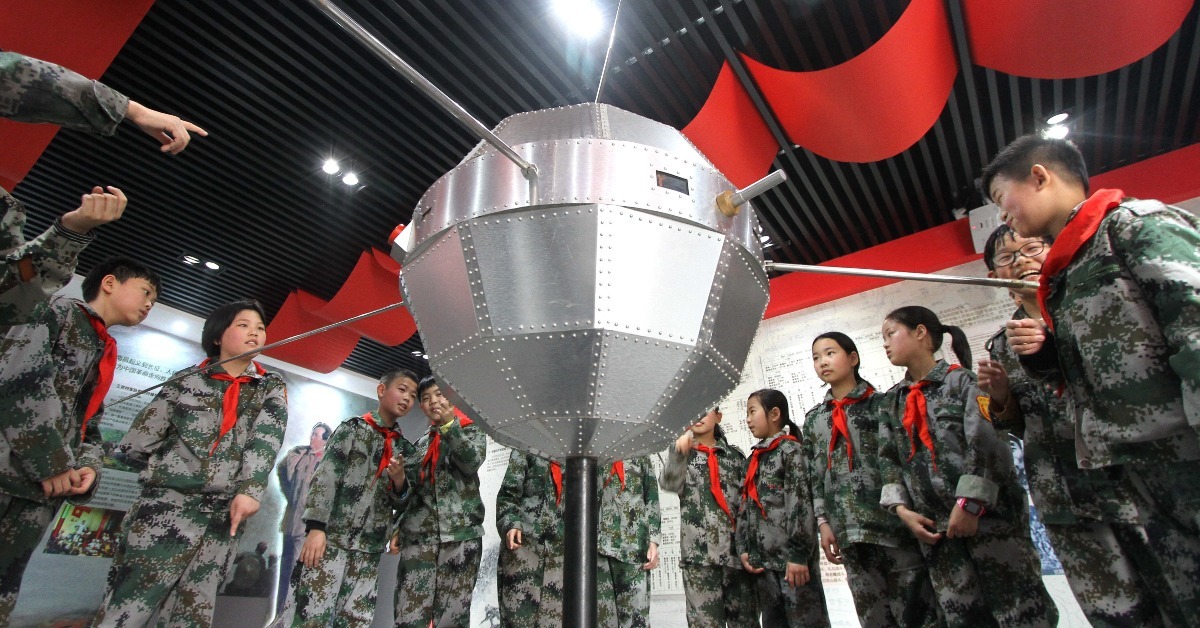
Before long, a small star slowly flew across the pitch-black canopy of the sky, and cheers immediately rose one after another. That small star was China's first man-made satellite, Dongfanghong-1 (東方一號).
At this moment, Liu Cixin felt "an inexplicable sense of yearning arise spontaneously, as irrepressible as the 'hunger in my belly' at that time".
Liu Cixin was later asked about his creative path and said, "I went from being a science fiction fan to taking the path of science fiction creation". The origin of his fascination with science fiction literature was reading Journey to the Centre of the Earth, which his father had secretly brought from Beijing.
"Suddenly there was a kind of excitement I had never felt before... it felt as if a window had been suddenly opened in a dark room".
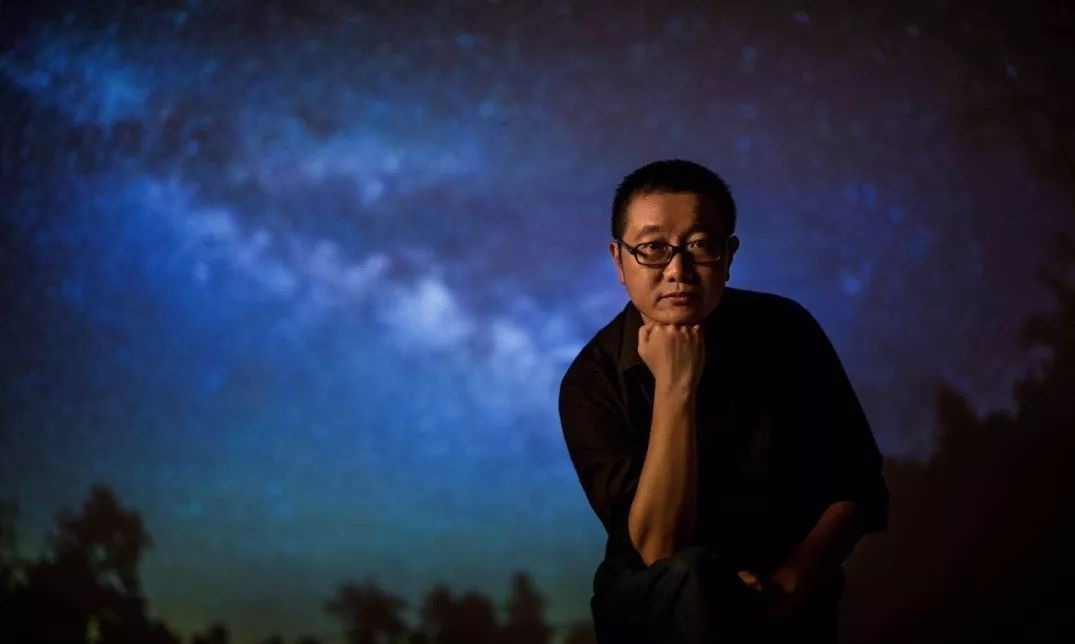
Liu Cixin also read foreign science fiction novels such as Stronger than Time and The Andromeda Nebula, which his father hid in a small wooden box, and one of his favourites was the American female author Rachel Carson's Silent Spring. This book later appeared in his novels.
Losing 800 RMB in one night of mahjong
Finally, the Cultural Revolution ended, and many foreign science fiction works once considered "feudalist, capitalist, and revisionist" ("封資修") were unbanned.
Liu read classic science fiction novels such as Twenty Thousand Leagues Under the Sea. He also read the newly published Little Smarty Roams the Future (《小靈通漫遊未來》) by Chinese author Ye Yonglie (葉永烈).
Seeing a science fiction novel written by a Chinese person, the 15-year-old Liu Cixin was greatly encouraged and began to learn to write and submit manuscripts, but at that time his works were still crude and were either rejected or disappeared without a trace.
Liu Cixin's academic performance was good, but for university he did not choose a subject related to literature. Instead, in order to "be assigned a good job", he chose the hydraulic engineering department at the North China University of Water Resources and Electric Power.
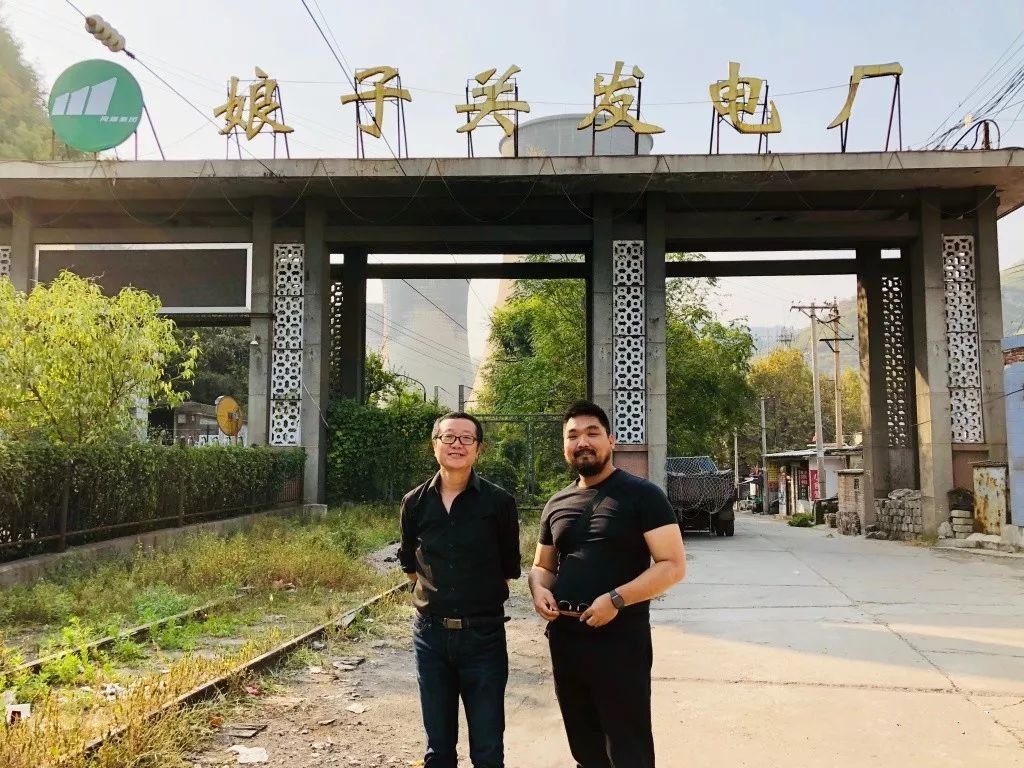
Upon graduating in 1985, he returned to Yangquan and became a computer engineer at the Niangziguan Power Plant (娘子關電廠). Thereafter, he got married, had a child, and lived a rigid, ordinary life.
How did Liu Cixin transform from an engineer into a science fiction writer?
A Chinese Mainland media outlet mentioned an incident: while working at a power plant far from the city, many employees would play mahjong after work, and Liu Cixin also participated. One night he lost 800 RMB, which was his monthly salary.
After wasting time losing money, Liu immediately felt a deep sense of guilt. He reflected on his painful experience and decided to pull himself together.
He decided to pick up the pen he had put down for many years, pursue his dream of writing science fiction novels, and turn his thoughts to the vast universe. From then on, Liu Cixin read, thought, and wrote ceaselessly.
He felt that his "thinking was a bit more flexible" while walking, so he would often think as he walked. Sometimes, without noticing, he would walk for over 10 kilometres.
Liu Cixin secretly wrote novels at work
Liu Cixin would also use every available moment to write, even during his working hours.
He once confessed on a television programme, "A job like one in the power system requires you to be at work on time and to remain at your post. While remaining at your post, you can write, and a considerable part of my writing time was completed at this post... I feel like I was taking advantage of the organisation."
Later, the official Weibo account of the State-owned Assets Supervision and Administration Commission of the State Council (SASAC) even half-jokingly "named and responded": "Mr Liu, the reason for deepening reform is precisely because the phenomenon of being overstaffed and underworked that you mention existed to a certain extent in the past. It is still better with reform. Companies can concentrate on development, and you can concentrate on writing your novels..."
In any case, Liu Cixin's science fiction output became unstoppable, his boundless imagination gushing like a spring.
His debut works, Supernova Era (《超新星紀元》) and China 2185 (《中國2185》), were soon completed, and his subsequent works, Whale Song (《鯨歌》) and The End of the Micro-Era 《微觀盡頭》, were published for the first time in Science Fiction World (《科幻世界》) magazine in 1999.
In the same year, he won the first prize of the China Galaxy Award for With Her Eyes《帶上她的眼睛》, which was his first major award.
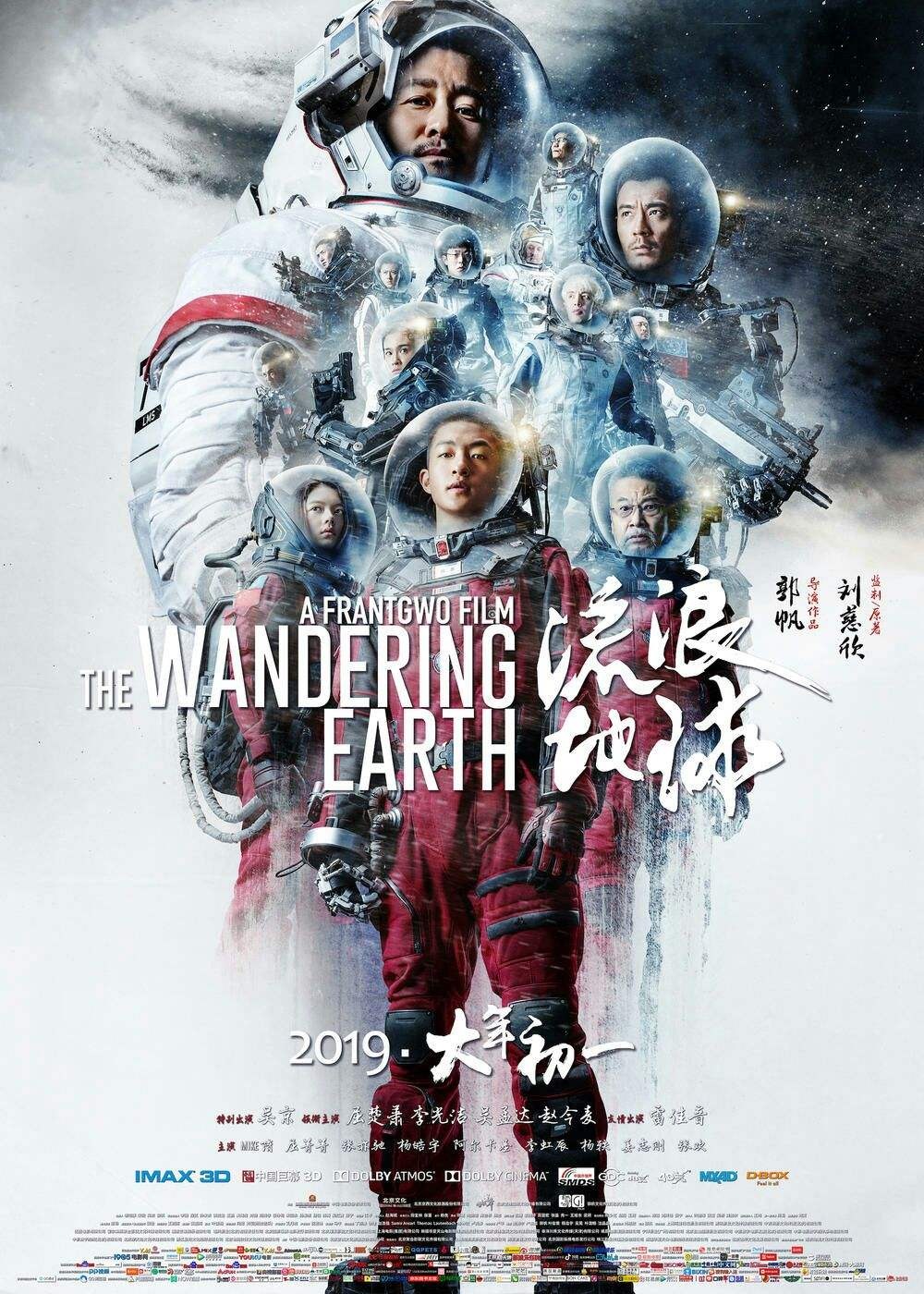
Thereafter, more of Liu Cixin's works were published one after another, including The Wandering Earth 《流浪地球》, which was adapted into a blockbuster film of the same name many years later.
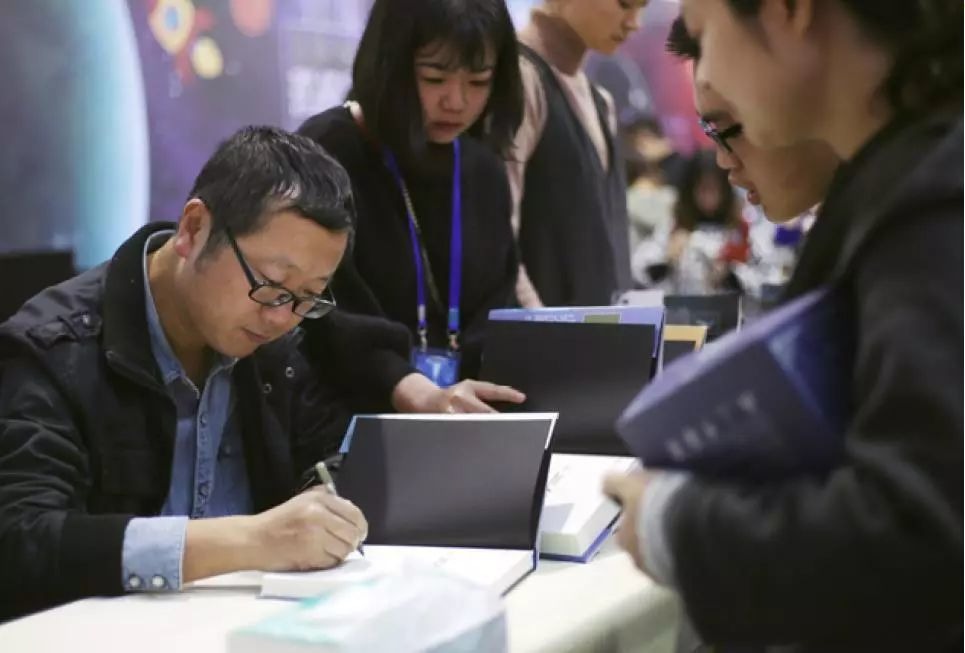
These novels broke through the framework of imagination, with their dramatic and twisting plots and a wealth of philosophical reflection.
After publication, they received a tide of rave reviews and won countless awards, and Liu Cixin became a "Great God" and the "Master of Sci-Fi" in the eyes of Chinese science fiction fans.
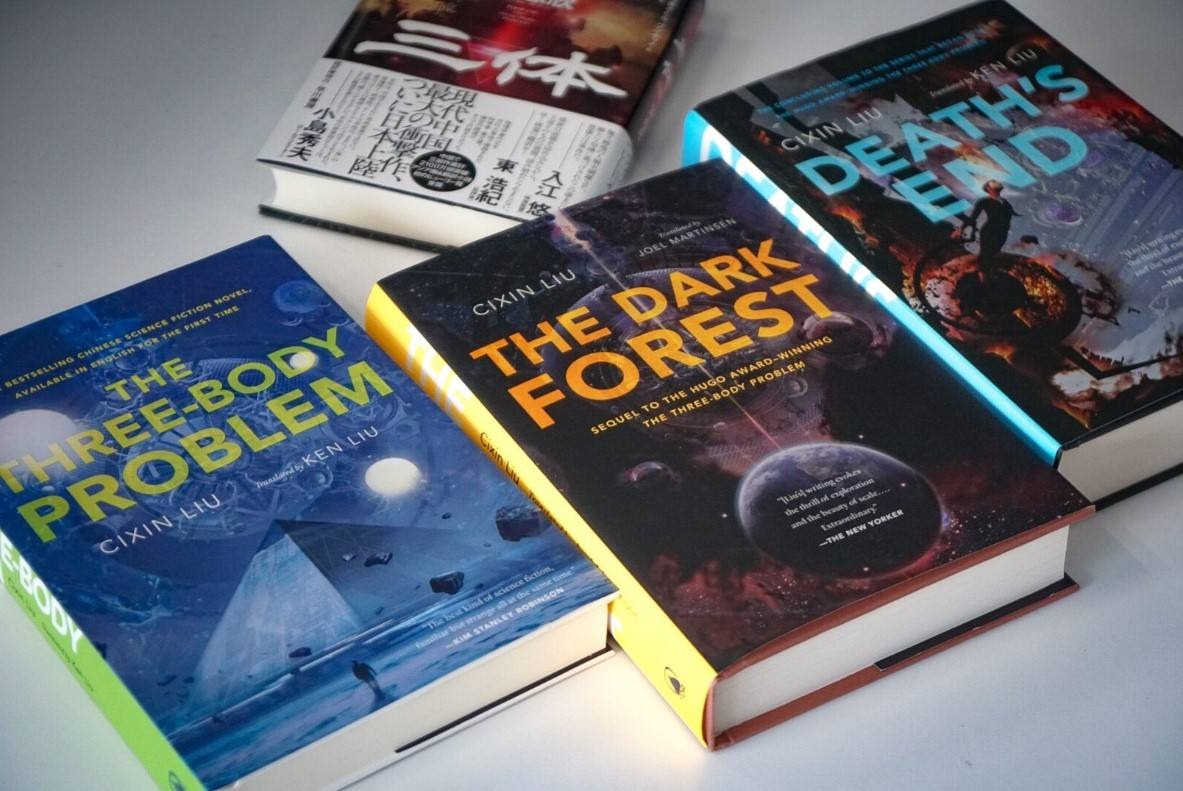
When speaking of Liu's works, one must mention the series of novels The Three-Body Problem (《三體》) , which he wrote while working at the power plant and began publishing in 2006.
It tells of the information exchange and life-and-death struggle between Earth's human civilisation and the alien "Trisolaran" civilisation, as well as the history of the rise and fall of the two civilisations in the universe, which also contains Chinese-style humanistic sentiments and philosophical thought.
Obama became a Liu Cixin Fan
This work broke the boundaries of Liu Cixin's readership. When it was serialised in Science Fiction World, The Three-Body Problem was not only fervently pursued by sci-fi fans but also attracted countless "readers from outside the genre".
Even staff from the aerospace department left comments on book review websites, discussing the inspiration The Three-Body Problem provided for China's space programme.
The Three-Body Problem later brought Chinese science fiction to the world stage.
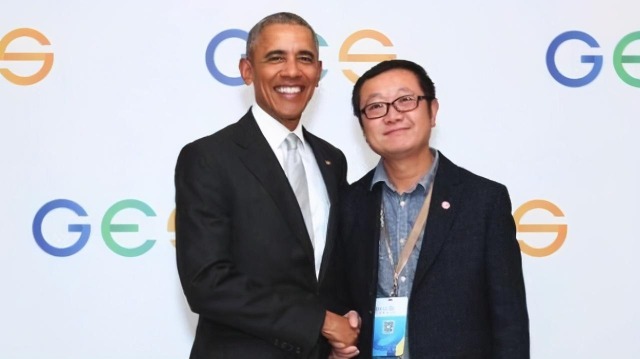
It has been translated into multiple languages, gaining countless fans overseas. Former U.S. President Barack Obama and Facebook founder Mark Zuckerberg are both fans of The Three-Body Problem.
This novel series was later adapted by Netflix into an original English-language series.
In 2015, Liu Cixin won the Hugo Award, known as the "Nobel Prize of the science fiction world", for The Three-Body Problem, becoming the first person from Asia to win the award.
Yan Feng (嚴鋒), a professor in the Department of Chinese Language and Literature at Fudan University, once said that after reading almost all of Liu Cixin's works, "I have no doubt that this person, single-handedly, has elevated Chinese science fiction literature to a world-class level."
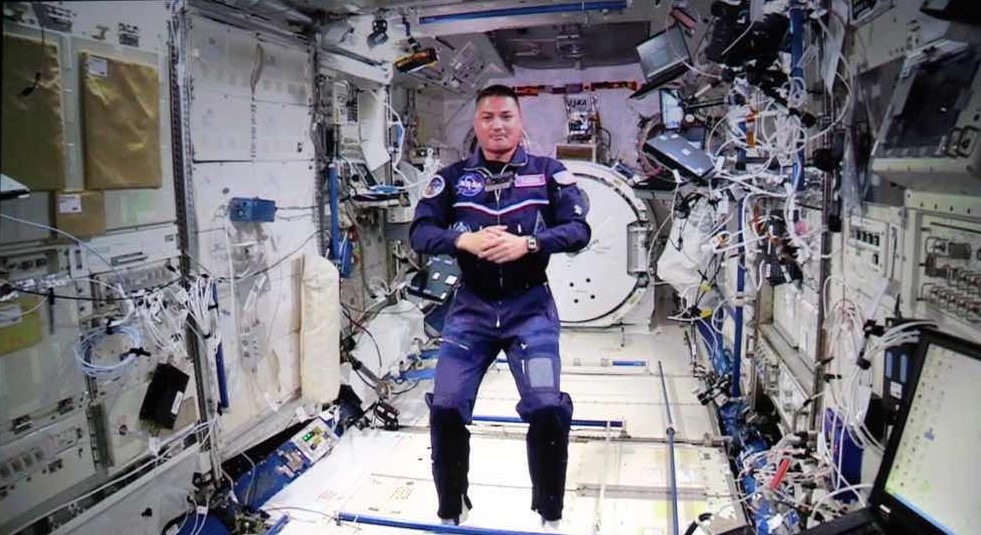
Now, Liu Cixin has long since left the power plant to become a professional writer, continuing on his creative path and constantly pushing the boundaries of the imaginative world of science fiction novels.
In Liu Cixin's own words, "For me, science fiction creation is a hobby," and "my own science fiction path is also a path of searching for a home."
He also wants to travel to space and float on a space station. If there were a time machine, he would also want to go to the future, the farther the better...