Published : 2025-12-18
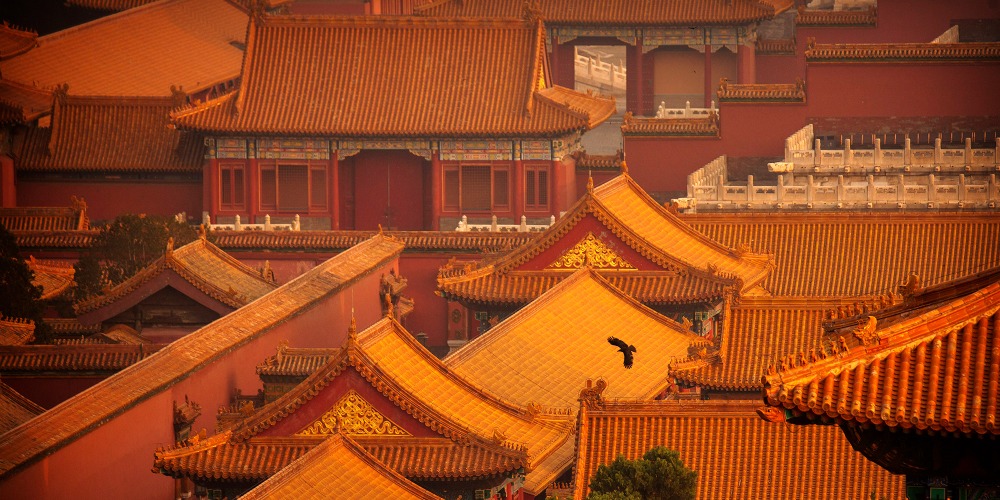
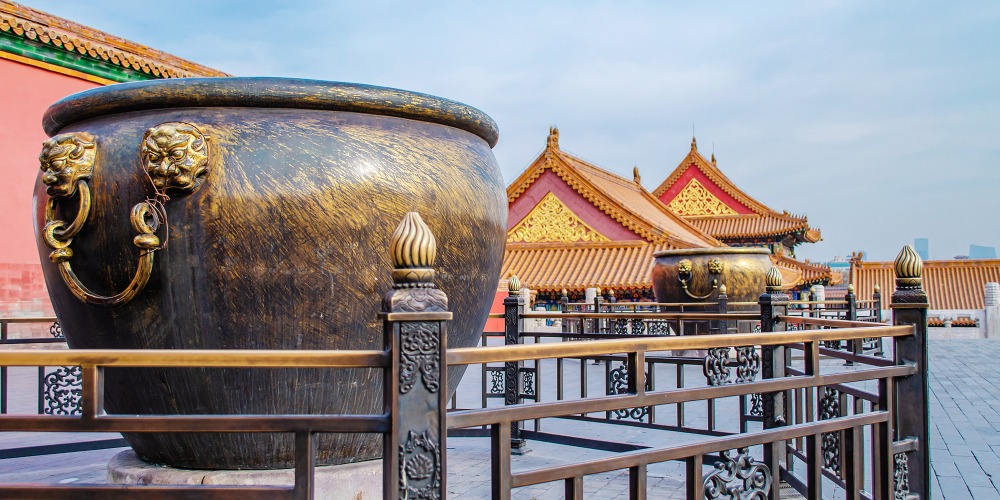
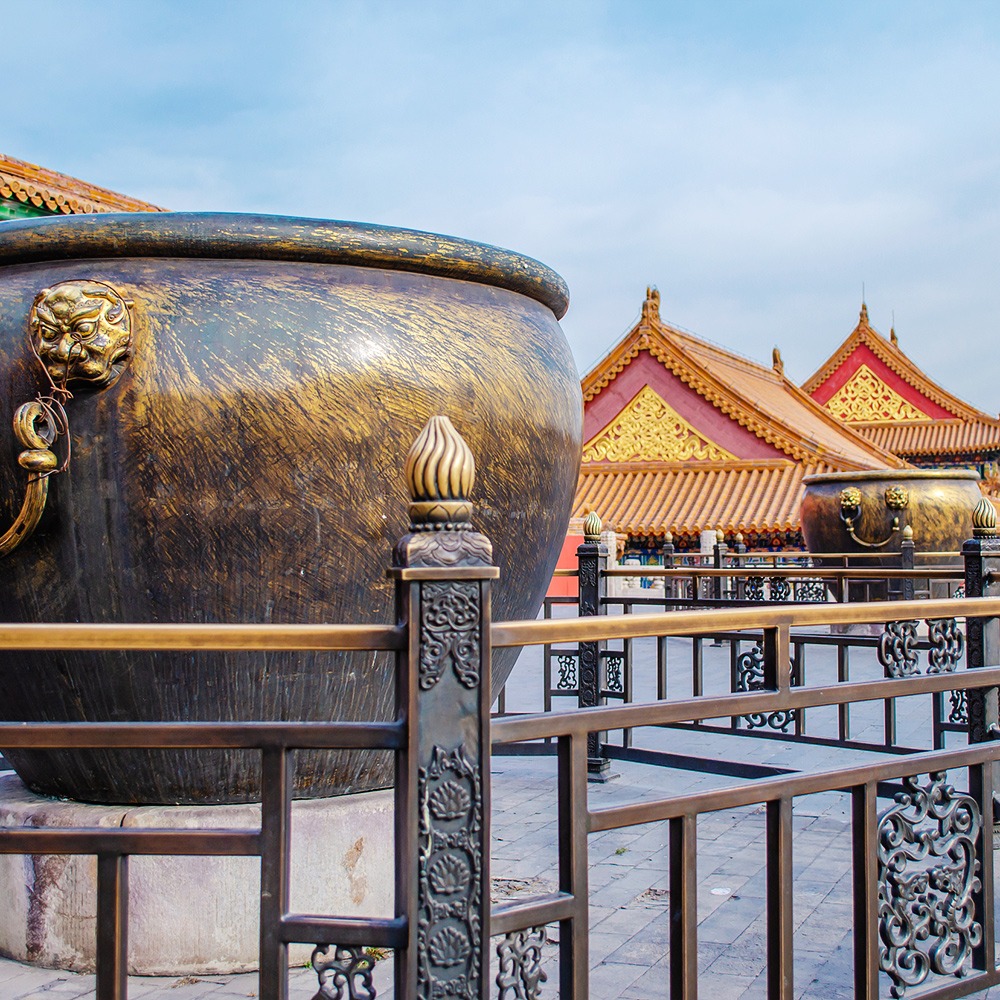
Within the Forbidden City in Beijing, amidst the magnificent ancient architecture, one can also find a multitude of water vats in various shapes and sizes.
But exactly how many of these vats are there in the Forbidden City, and what was their original purpose?
What is the truth behind the Forbidden City's water vats not freezing for 600 years?
In ancient China, placing large vats in courtyards often held auspicious meanings, such as guarding the house and improving one's fortune, and royal palaces were no exception. However, the real purpose of the water vats in the Beijing Forbidden City was for fire prevention.
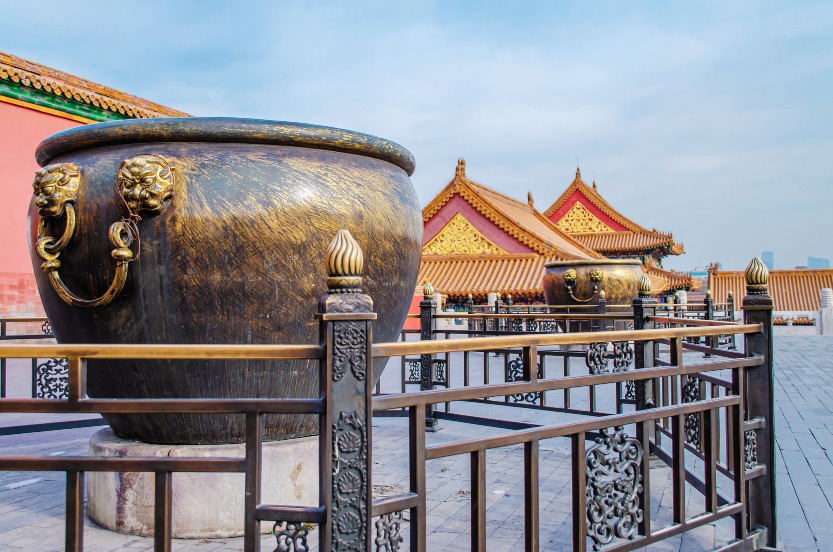
The architecture of the Forbidden City is predominantly of wooden construction, making fire the greatest safety hazard. Therefore, large water vats were placed in every courtyard of the Forbidden City, kept full of water all year round. They contained from several hundred to several thousand litres, which is equivalent to the water output of a small fire engine.
If a fire broke out in the palace, people could fetch water from nearby to extinguish it. These large vats are also referred to as "Menhai" (門海, Gate Sea) or "Auspicious Vats" (吉祥缸) and "Taiping Vats" (太平缸, Peace Vats).
In the winter, to prevent the water in the large vats from freezing, palace staff would place burning charcoal in the hollow stone plinths underneath the vats. They would also add lids to the large vats and put "cotton jackets" on them, wrapping the water vats in cotton covers to keep them insulated.
The 18 gilt-bronze vats: The highest-ranking Forbidden City water vats
So then, how many large water vats are there in total in the Forbidden City?
According to the records of the Collected Statutes of the Great Qing (《大清會典》), there were once a total of 308 large vats in the Forbidden City, but as times have changed, only 231 remain preserved today.
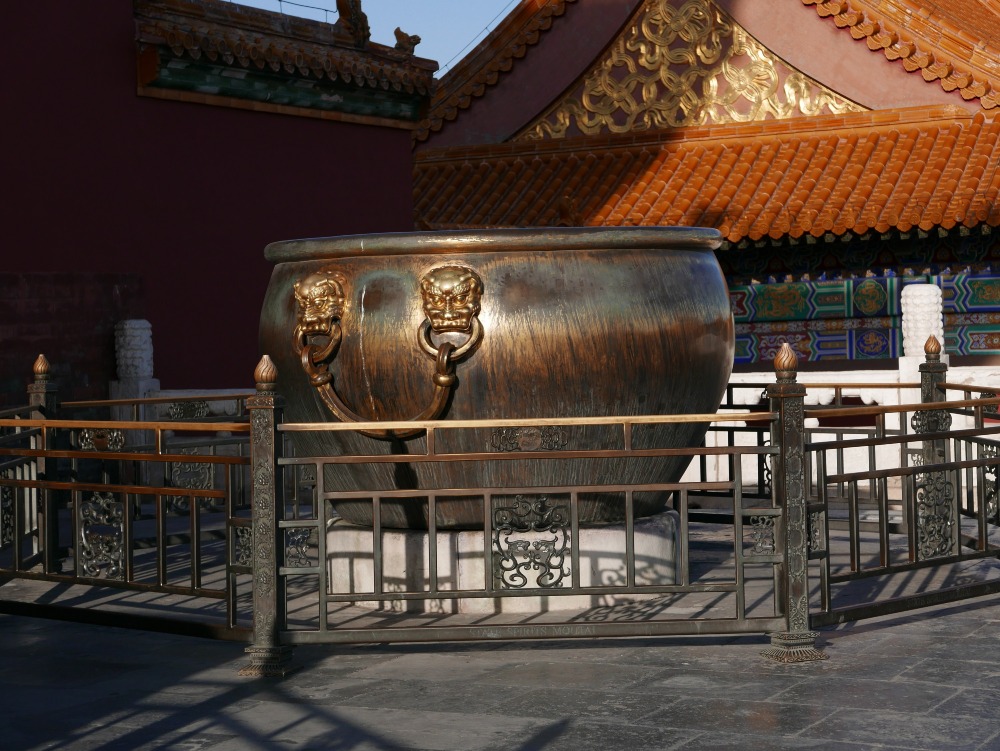
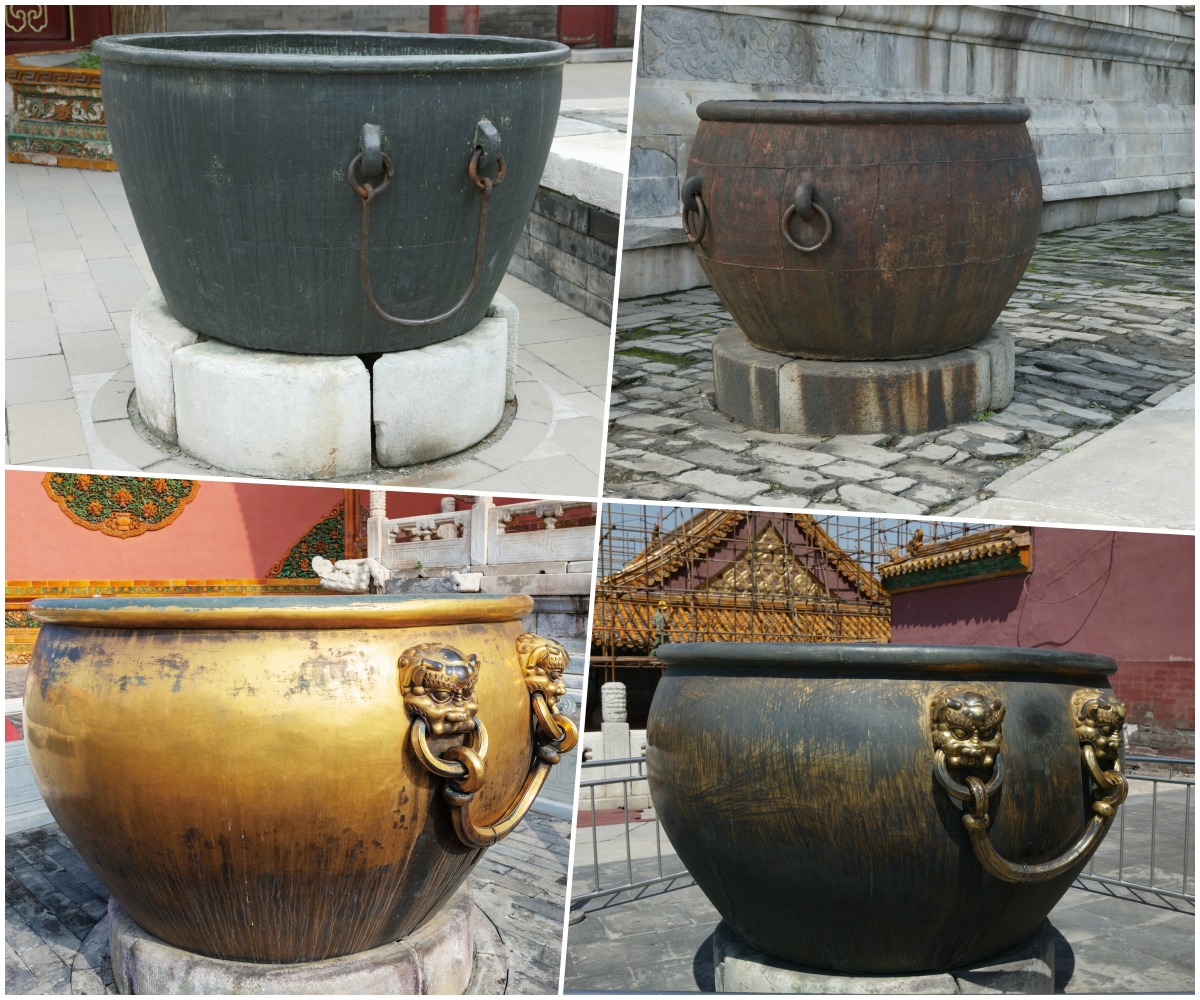
These large vats are broadly divided into three types: bronze, iron, and gilt-bronze. During the Ming dynasty (1368-1644 AD), most of the large vats were made of iron, and by the Qing dynasty (1644-1911 AD), gilt-bronze vats had appeared.
The gilding process is exquisite and complex, which involves dissolving gold in mercury, applying it to the surface of the bronze vessel and then heating it. The mercury evaporates while the gold remains firmly attached to the bronze surface, resulting in a brilliant golden appearance.
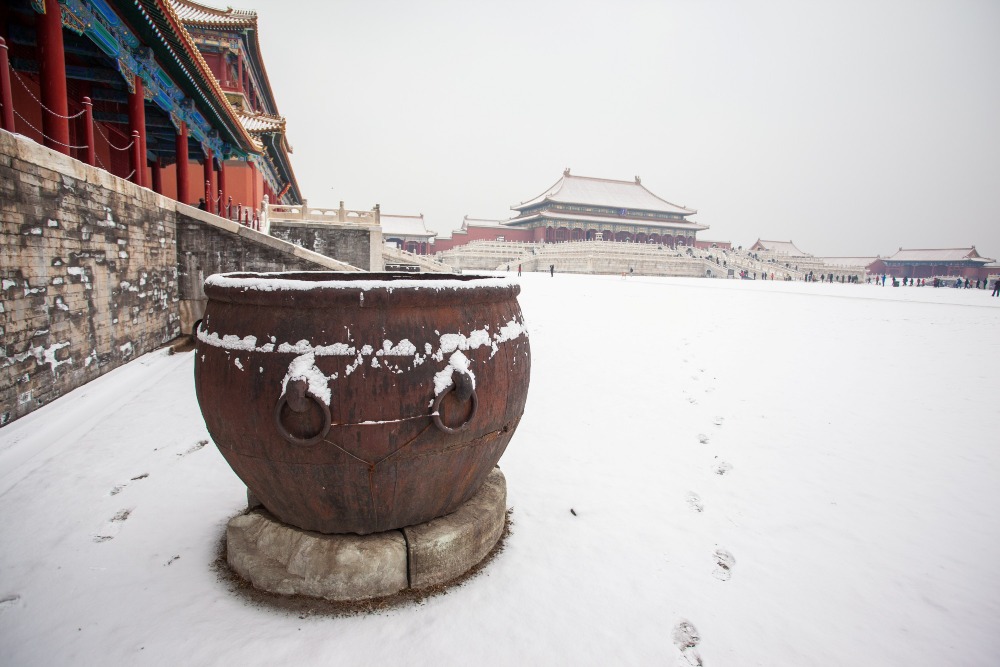
The hierarchy of the Forbidden City's architecture is strict, and the water vats are no exception.
Gilt-bronze vats are the highest-ranking water vats. Only 18 of them survive today, placed at the entrances of important palaces such as the Hall of Supreme Harmony and the Hall of Preserving Harmony; only iron or bronze vats could be placed by ordinary palaces and along the roads.
These gilt-bronze vats were extremely expensive to make. In the late Qing dynasty, invaders broke into the Forbidden City, and since the vats were too heavy to move, they scraped the gold off the gilt-bronze vats with their bayonets.
Today, on the Forbidden City's gilt-bronze vats, one can still see the bayonet marks left from that time.