Published : 2025-12-23
Sichuan's Sanxingdui, is one of China's most mysterious archaeological sites, and possibly the one with the most "technological" elements.
The bronze masks unearthed at Sanxingdui have been described as looking like "aliens", and "space capsules" have even appeared at the archaeological site. What is this all about?
What secrets do the Sanxingdui "space capsules" hold?
In September 2023, the Hong Kong Palace Museum hosted a special exhibition of Sanxingdui, featuring 120 precious cultural relics.
Nearly half of these were important artifacts recently unearthed within the preceding three years. Once again, the mysterious Sanxingdui has captured the public's attention.
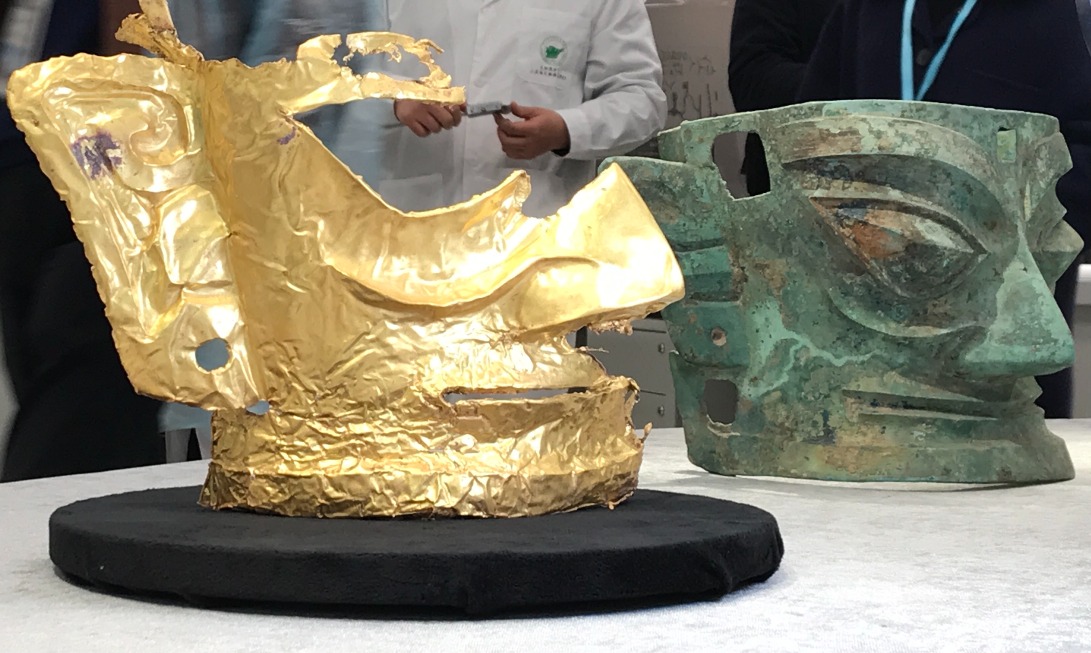
In 2020, archaeological excavation work at the Sanxingdui site was resumed.
By 2022, nearly 13,000 cultural relics from the ancient Shu civilization—including a gold mask, a bronze sacred tree, and silk fragments—had been unearthed from six newly discovered "sacrificial pits," astounding the world.
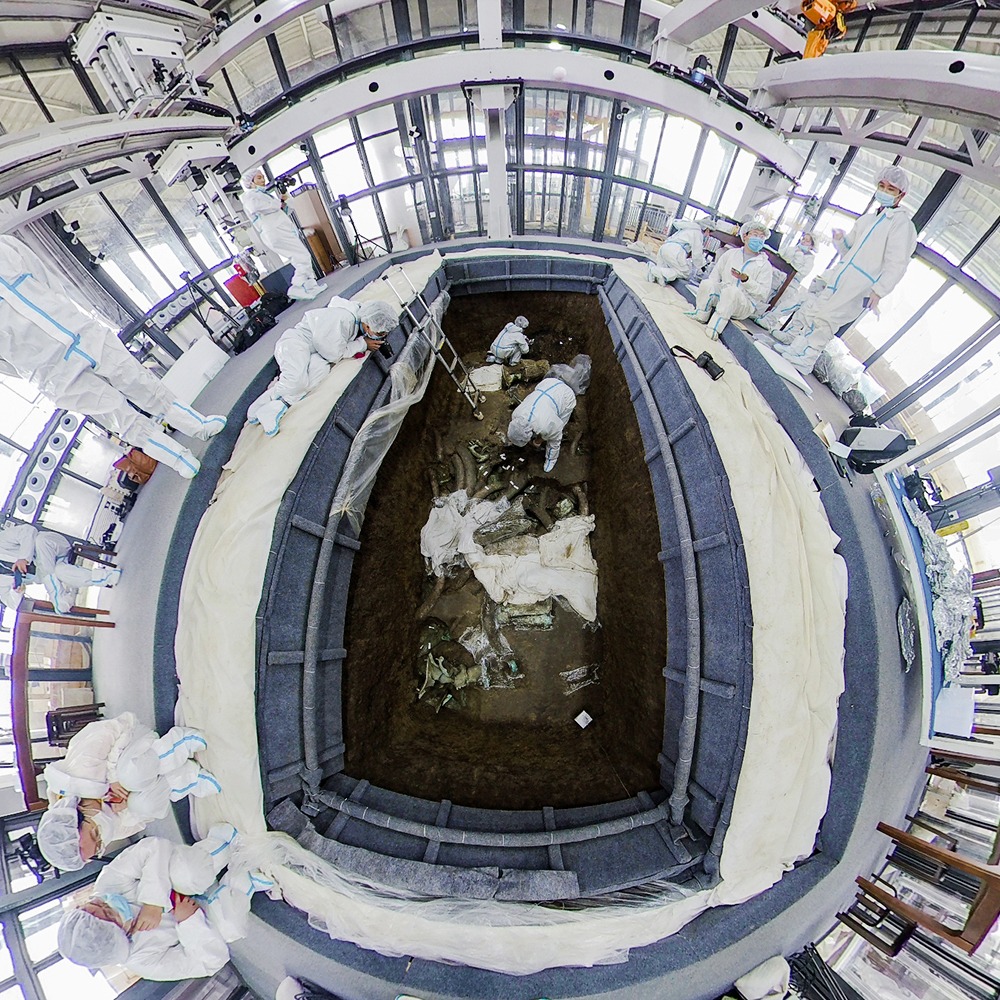
Equally astonishing were the "space capsules" that appeared at the Sanxingdui archaeological site.
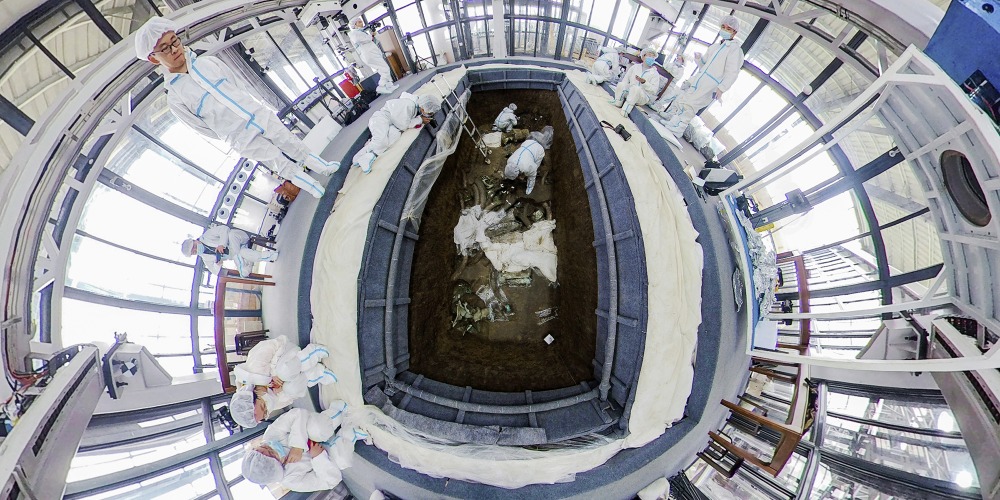
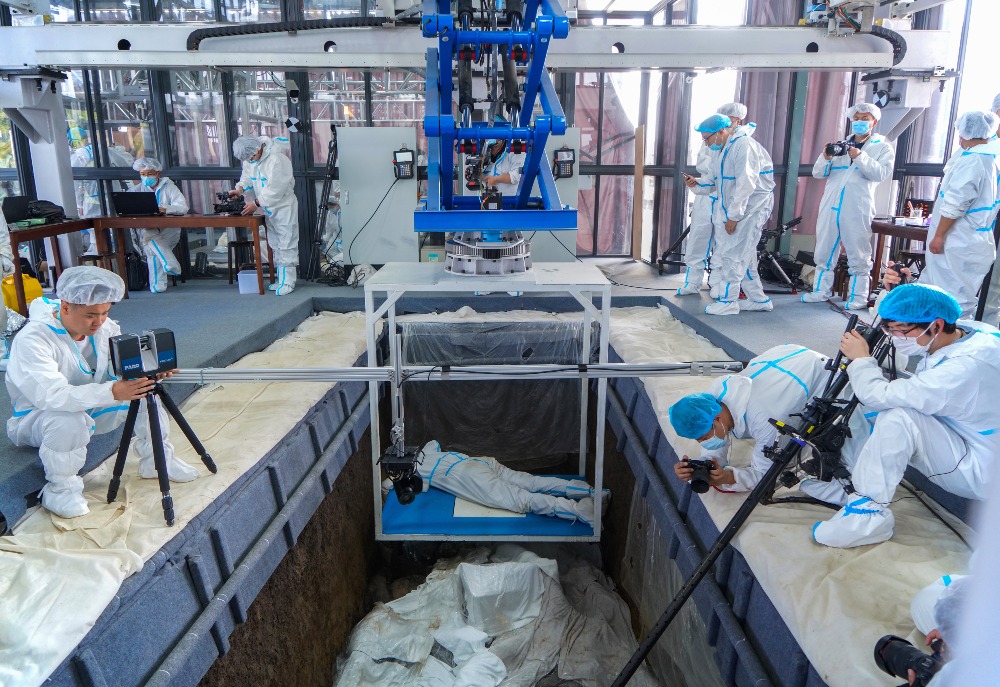
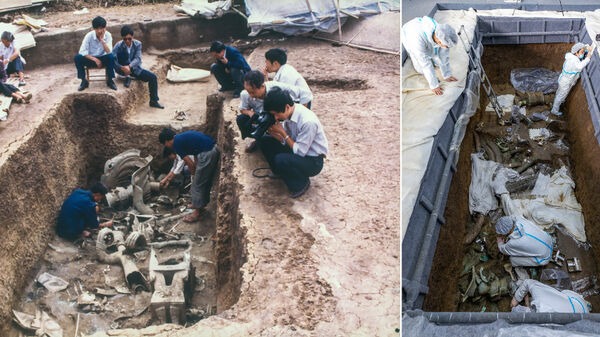
These are work cabins used for the first time by the archaeological team, equipped with technological facilities such as a small variable-frequency environmental control system and a high-pressure micro-mist humidification system, to achieve a constant temperature and humidity.
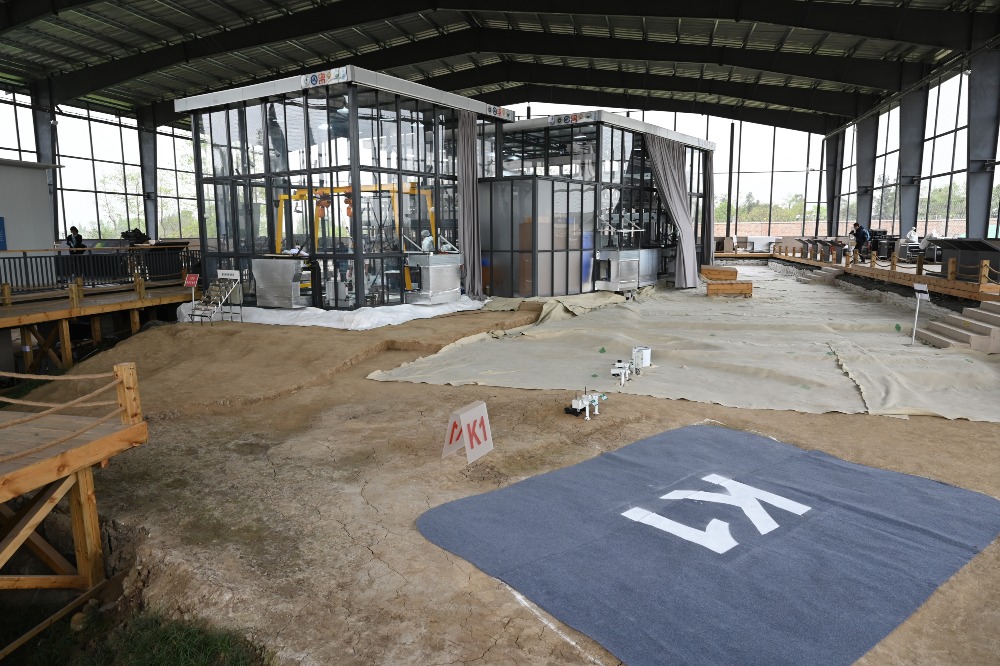
The work cabins are built over the sacrificial pits that need to be excavated, completely enclosing the entire sacrificial pit within the cabin, essentially turning the archaeological site into a laboratory.
The cabins are equipped with manned workstations that can be automatically raised and lowered, carrying archaeological staff and artefacts into and out of the pits.
Staff can also lie prone on the workstations, suspended in the air to clean the artefacts within the pit, making the working environment for archaeologists more comfortable and also more conducive to the protection of the artefacts.
Electromagnetic induction and hyperspectral analysis
The "black tech" applied in the Sanxingdui archaeology goes far beyond just this—it runs through the entire archaeological process.
Before excavating artifacts, survey work must first be carried out. Electromagnetic induction technology helps the archaeological team detect the locations of underground metal relics.
Hyperspectral analysis scanning technology can scan the soil layer by layer, helping archaeologists to discover some "unexpected" artefacts, such as silk textiles.
The archaeology team will adjust the excavation plan according to the scanning results.
Artefacts that have been buried underground for thousands of years are relatively fragile, such as silk, lacquerware, and ivory, and can be damaged at any time during extraction.
The archaeology team has set up multiple on-site emergency conservation laboratories, including organic, inorganic, and emergency analysis laboratories, to 'rescue' the artefacts immediately. This is also a groundbreaking initiative.
3D-Printed "protective cases" for artefacts
3D digital and 3D printing technologies are used to create "protective cases" for artefacts.
The archaeology staff first 3D-scan the artefact, creating a 3D image on a computer. They then use 3D printing technology to produce an identical model, and a silicone protective case is made for the artefact based on the model.
When the artefact is unearthed, a protective case is applied, then it is wrapped in plaster and carefully removed for restoration, preventing the artefact from oxidising upon contact with the air.
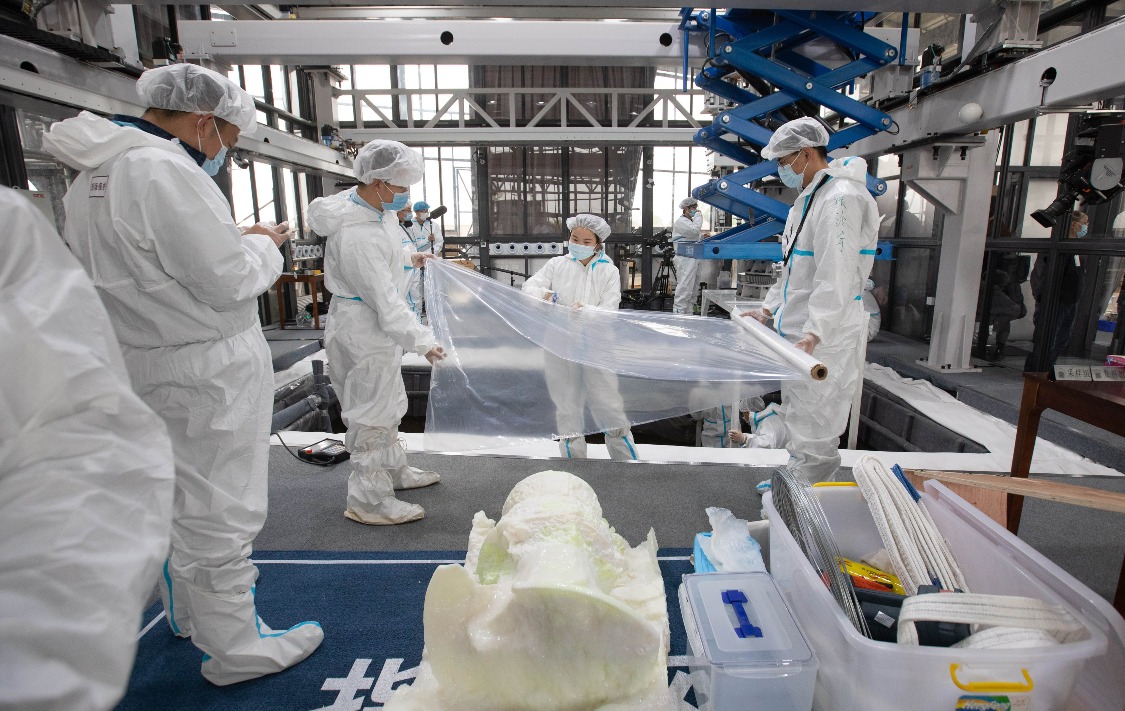
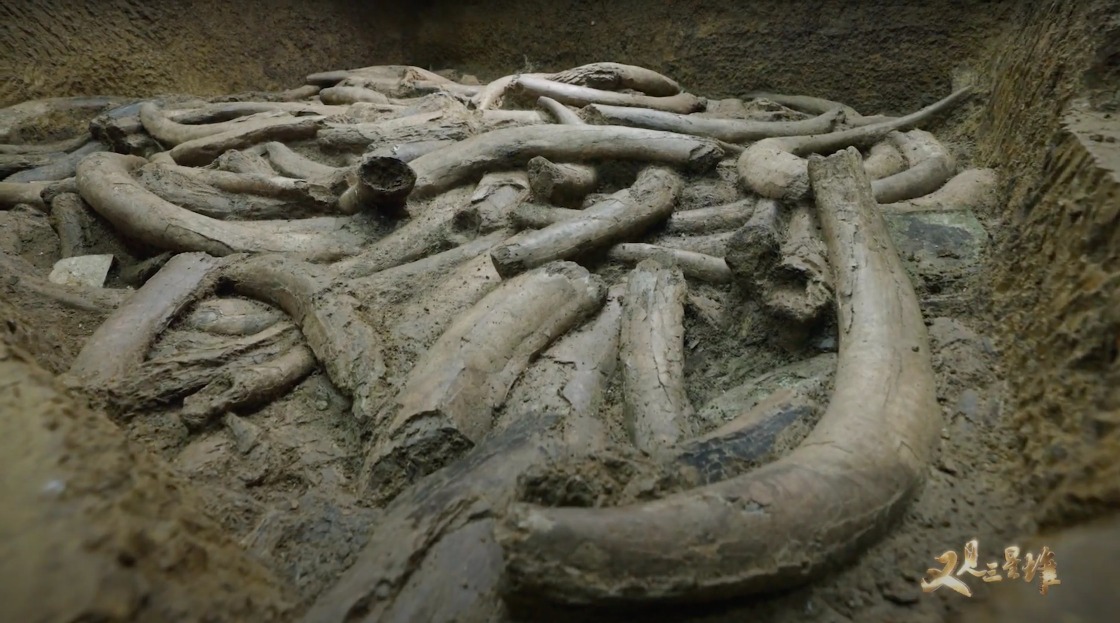
The emergency conservation of unearthed ivory poses a major challenge in the excavation work, often described as "a race against time".
For the first time, the archaeological team employed new techniques such as polymer bandages: first, a wire is threaded with cotton string and gauze to pass through the gaps between the ivory pieces; then, the ivory is wrapped in cling film to prevent it from powdering and crumbling; next, dampened polymer bandages are applied around the ivory.
Once the bandages harden and solidify, the cotton string and gauze are tied to them, enabling the intact extraction of the ivory.
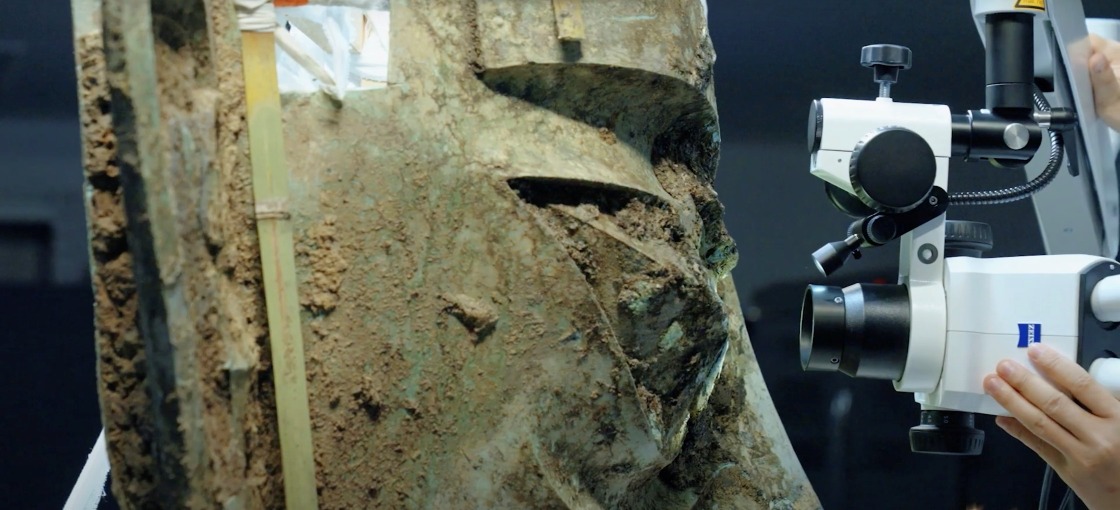
The details on artefacts hide a great deal of important information, which ordinary microscopes may not be able to capture. This is where the "super-depth-of-field microscope" comes in.
This type of microscope can magnify artefact samples thousands of times while simultaneously performing 3D scans and capturing 3D images.
When archaeology staff found residual traces of what appeared to be textiles on-site, they immediately used the super-depth-of-field microscope for observation and saw clear patterns, proving that silk was already in use in the Sanxingdui area more than 3,000 years ago.
Sanxingdui archaeology's high-tech approach set to become a new industry benchmark
A total of eight sacrificial pits has been discovered at Sanxingdui to date. The archaeological excavation work was suspended for over 30 years due to technical issues and did not resume until 2020.
The application of a series of the latest scientific and technological methods has overturned the public's impression of traditional archaeology work as being "covered in dirt and dust".
Wang Wei, President of the Society for Chinese Archaeology, believes that the Sanxingdui archaeology adopts a variety of modern scientific and technological methods, creating a new model for on-site conservation at archaeological excavations.
"It can be said that this sets a new benchmark for future archaeological excavation and research."
Currently, the excavated area at Sanxingdui is less than 20,000 square metres, accounting for only two-thousandths of the entire site's area.
In the future, what other surprises will this vast site from the ancient Shu civilisation reveal? What new 'black technologies' will emerge at the Sanxingdui archaeology site? Everyone is eagerly waiting to see.
Read more: How did ancient China make "latte art"?