Published : 2025-10-20
Updated : 2025-10-21
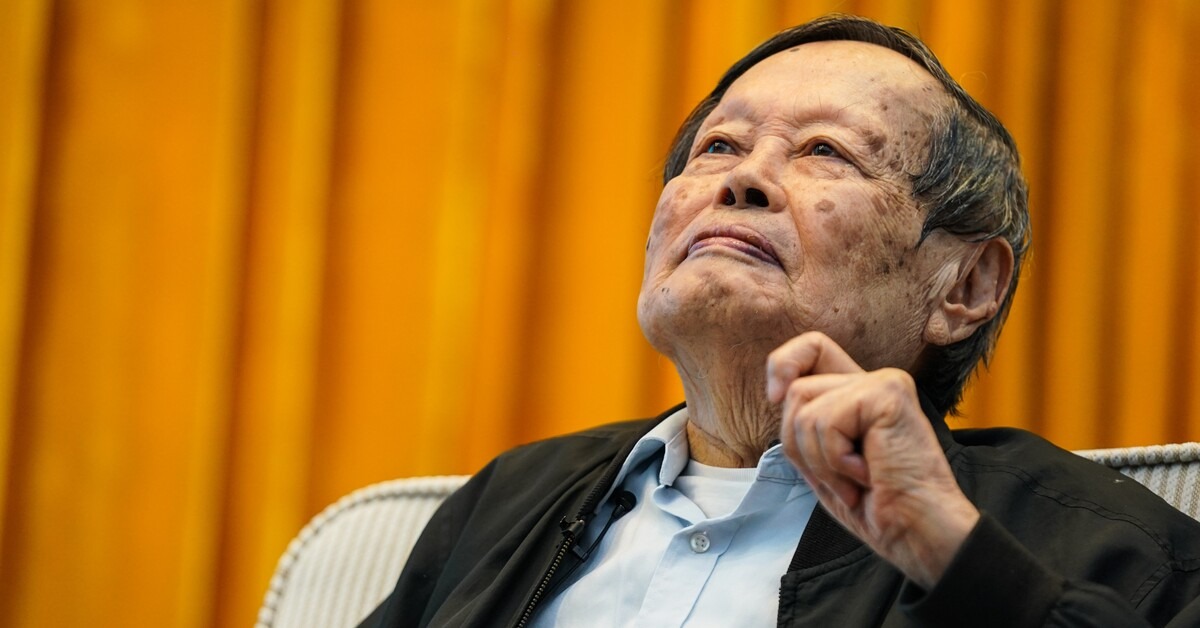
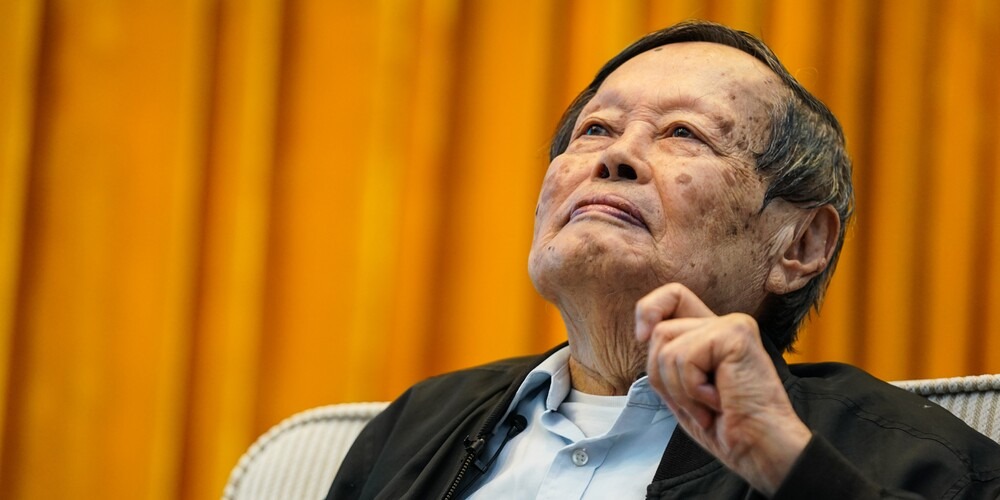
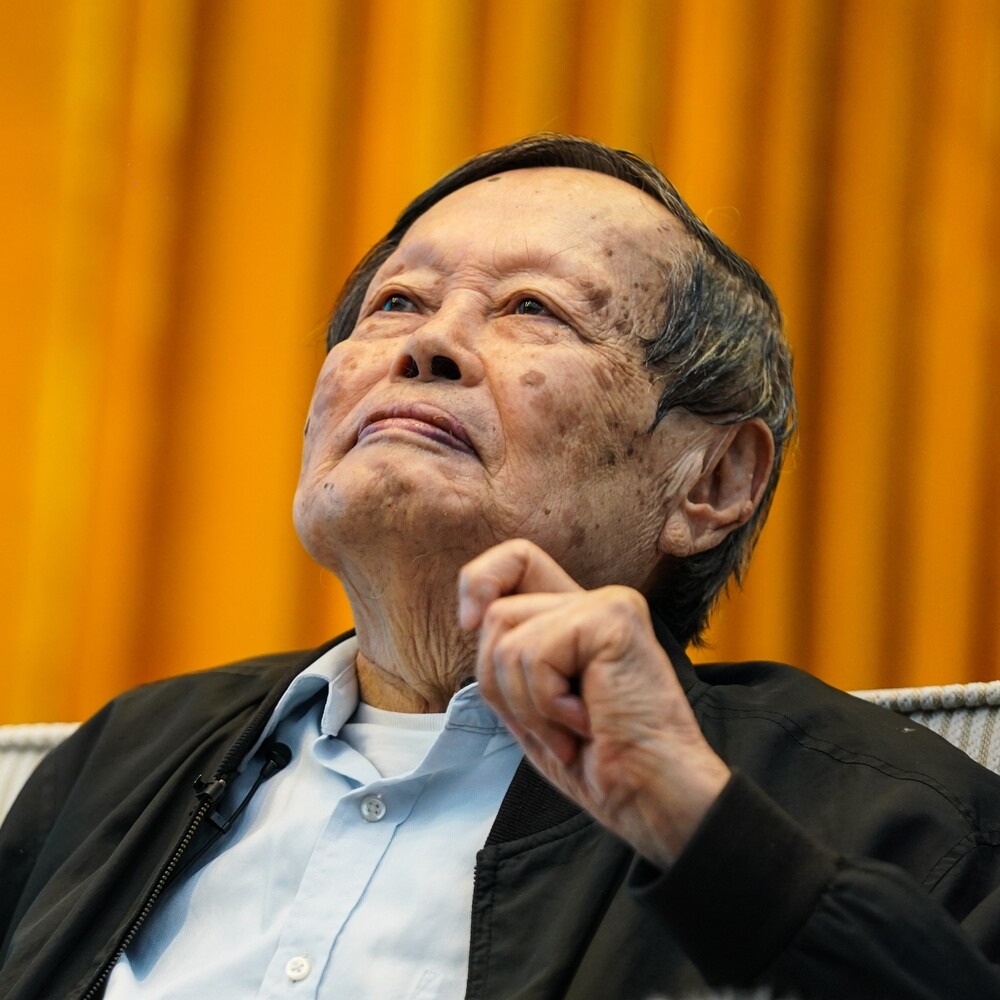
Yang Chen-Ning (楊振寧) is the first Chinese person to win the Nobel Prize.
Not many people might really understand his academic achievements, but what the general public knows more about is the patriotism of the greatest physicist of his time.
Setting great ambitions at age of 12
Yang Chen-Ning, also known as C. N. Yang, or Yang Chen-Ning, was born on 1 October 1922 in Hefei, Anhui, to a scholarly family.
His father, Yang Wu-zhi (楊武之), was a PhD holder who had studied in the U.S. and a famous mathematician and educator. Shiing-Shen Chern (陳省身) and Hua Luogeng (華羅庚) were both his students.
Because his father was hired to teach at Tsinghua University, Yang Chen-Ning moved with his family to Beijing at the age of 7, living on the Tsinghua campus. Here, Yang Chen-Ning was introduced to physics.
One day, at the age of 12, he found the book The Mysterious Universe written by the British physicist James Jeans in the library, and was astonished to learn how miraculous the physical structure of the universe was.
He, who had originally loved mathematics, became fascinated with physics from then on; "One day in the future, I will win the Nobel Prize," he said to his father.
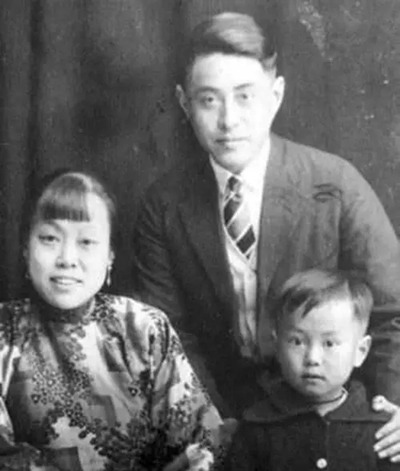
Of course, his father did not take this statement to heart at that moment. A year later, he noticed that his son was indeed talented, and wrote the assertion "Chen-Ning seems to be exceptionally gifted" on a photograph.
In 1937, the Marco Polo Bridge Incident broke out, and the three universities of Tsinghua, Peking University, and Nankai relocated inland.
The following year, they formed the National Southwestern Associated University (NSAU) in Kunming, Yunnan, and at this time, Yang Chen-Ning also followed his father and made his way there.
That year, the authorities allowed all students to apply for university entrance exams based on equivalent academic qualifications, without needing a diploma. Yang Chen-Ning, who was only 16 and had only studied up to the second year of high school, signed up for the NSAU's entrance exam, and was admitted with outstanding results.
He had not formally studied physics in high school and had applied for the chemistry department. But after enrolling, he discovered his interest was always in physics, so he transferred to the physics department.
At that time, the physics department at the NSAU was filled with master scholars. Yang Chen-Ning was like a fish in water, and after completing his undergraduate studies, he went on to pursue a master's degree.
Yang Chen-Ning won the Nobel Prize in 1957
"During my seven years at the NSAU, the most important influence on my life was that in my judgement of the whole field of physics, I had already developed my 'tast'." This is how Yang Chen-Ning described those days.
In 1945, Yang won a government scholarship to study in the United States, and enrolled at the University of Chicago. Three years later, he obtained his doctoral degree.
Afterwards, he went to the Institute for Advanced Study (IAS) in Princeton for his postdoctoral research, beginning his academic golden age.
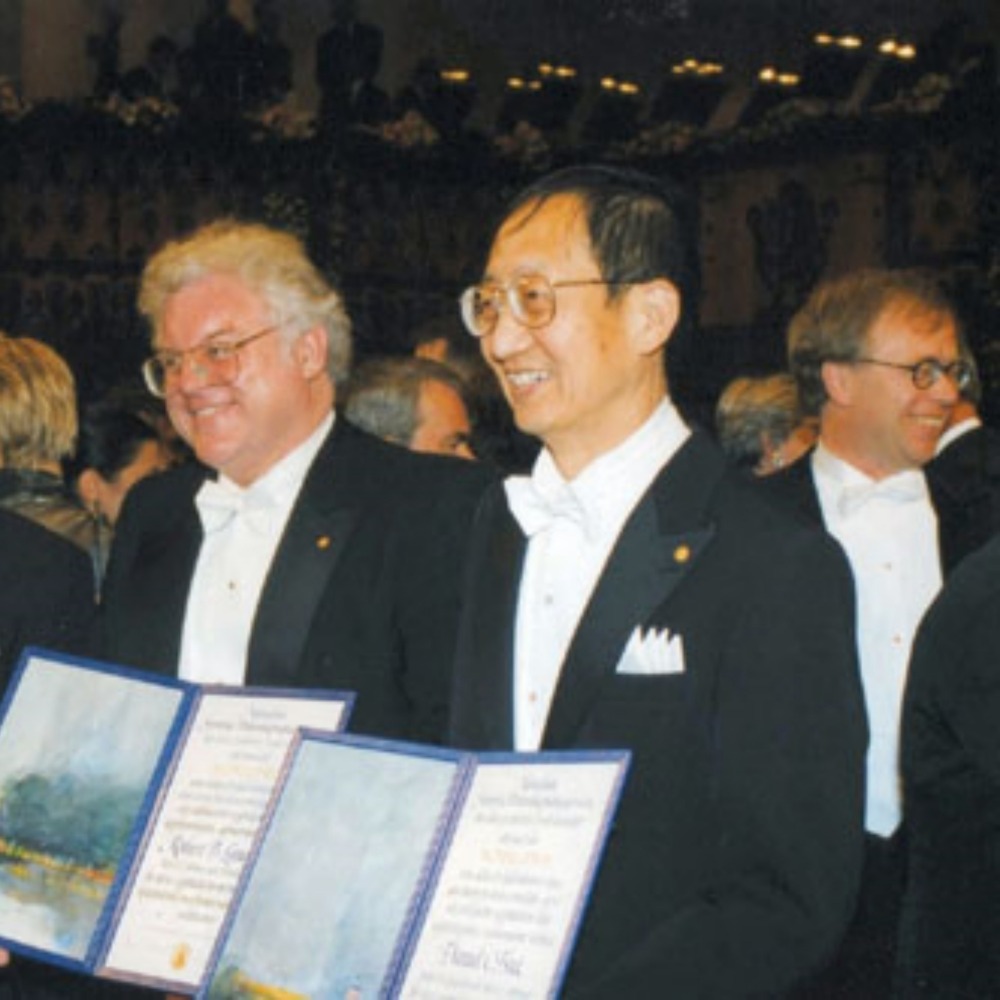
At the IAS, he collaborated with Lee Tsung-Dao (李政道), a junior fellow alumnus who also came from the NSAU, and proposed the theory of parity non-conservation in weak interaction, which caused a sensation in the physics world.
For this, the two were awarded the 1957 Nobel Prize in Physics.
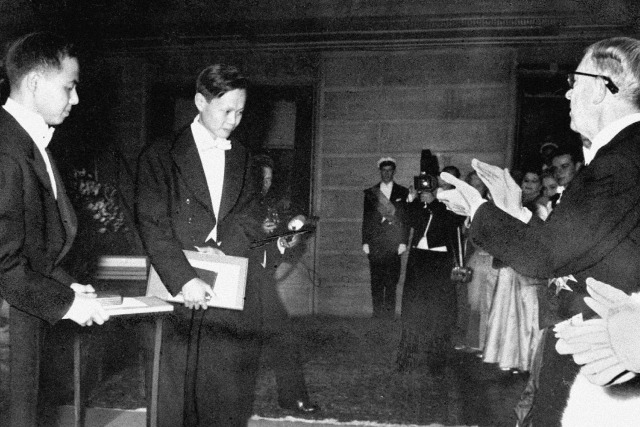
They also became the first Chinese people to win the Nobel Prize, letting the world know that the Chinese are second to none.
Yang Chen-Ning has other academic achievements, but like parity non-conservation, these studies are also very profound. Most people cannot understand them, nor can they know how great his contributions to humanity are.
However, a selection by the authoritative international academic journal Nature might "quantify" this.
In 2000, the journal selected the greatest physicists of the past millennium. More than 20 people were on the list in total. Yang Chen-Ning was ranked 18th, and was the only living physicist on this list at that time.
In 1971, the deadlock in China-U.S. relations was finally broken by "Ping-Pong Diplomacy". Yang decided to take this opportunity to return to the land of China he had always dreamt of. Although he had been away for 26 years, he had always deeply loved his motherland.
Yang Chen-Ning made an ice-breaking return to China in 1971
After winning the Nobel Prize, Yang Chen-Ning became a U.S. citizen in 1964 for the convenience of his work and academic exchanges in various places.
He also became the first prominent American scholar to visit the People's Republic of China (PRC), so his trip was closely watched, and this journey also changed the trajectory of his life.
After returning to China, Yang visited his parents in Shanghai and met his childhood friend Deng Jiaxian (鄧稼先), one of the pioneers of the "two bombs and one satellite" project, in Beijing. He was also received by Premier Zhou Enlai and was arranged to visit several universities and scientific research institutions.
What he saw and heard during his visit, especially the PRC's independence and scientific and technological development, profoundly moved him. Yang hoped to contribute to the construction of the PRC.
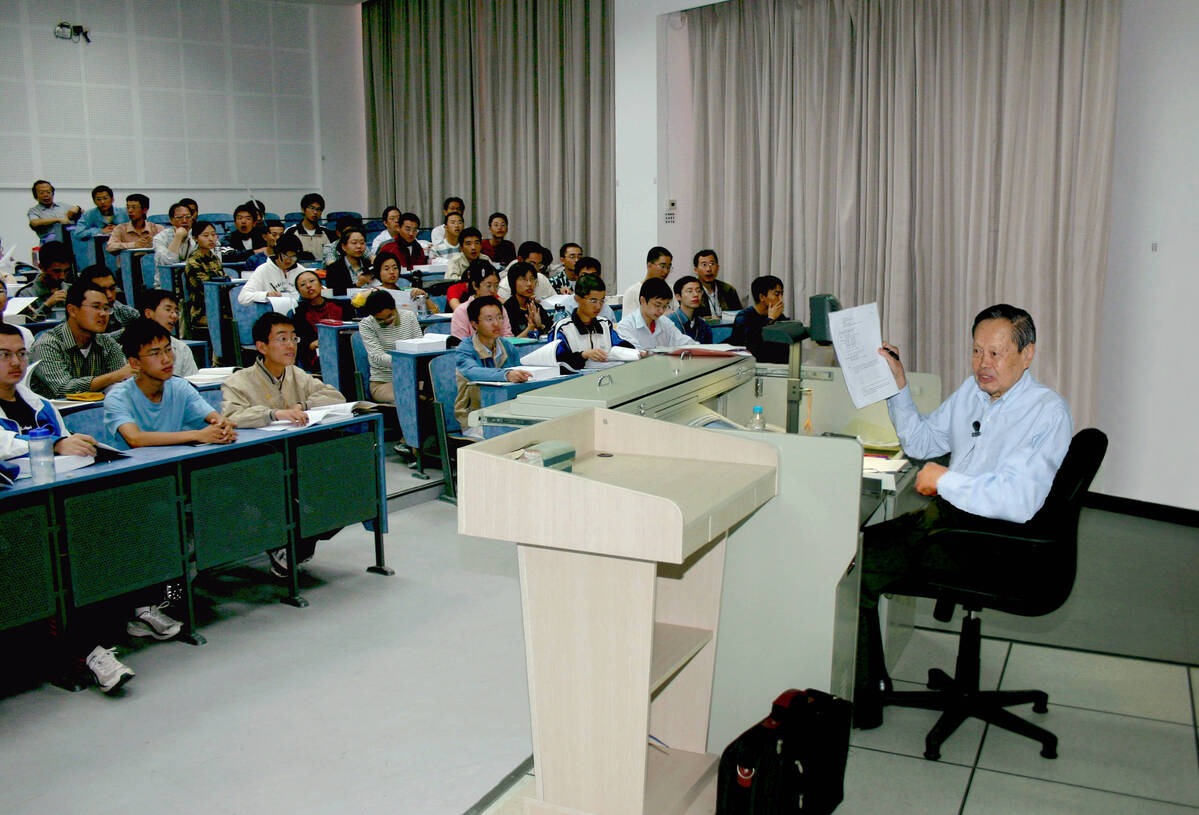
From then on, Yang Chen-Ning returned to China every year, promoting China-U.S. exchanges at different levels.
When lecturing in the United States, Europe and other places, he would always take the opportunity to introduce the situation in the PRC; under his influence, more overseas Chinese scholars also returned to their motherland one after another to visit relatives and joined the effort to promote exchanges.
Yang Chen-Ning also contributed ideas and efforts, including financial support, to China's scientific and technological development and education.
In the early 1970s, he suggested that China strengthen its basic research, a proposal that had a profound impact. The Centre for Advanced Study he founded at Tsinghua University in 1997 with a 4 million USD donation (later renamed the Institute for Advanced Study, Tsinghua University), is now a strategic high ground for basic research in China.
Yang Chen-Ning restored Chinese citizenship and settled in Beijing
What is less known is that Yang Chen-Ning also worked towards the establishment of China-U.S. diplomatic relations.
In 1977, the National Association of Chinese-Americans (NACA), which he co-founded, published "An Open Letter to U.S. President Carter" in The New York Times. The eight Chinese characters next to the English text, "亡羊補牢,猶未為晚" (meaning "it is not too late to mend the fence"), are regarded classic.
At the end of 2003, after retiring from Stony Brook University, State University of New York, Yang Chen-Ning left everything in America behind and returned to China to live permanently. He named his residence on the Tsinghua campus "Gui Gen Ju" (歸根居, meaning "Residence of Returning to the Roots").
"My life can be considered a circle; I started from one place, travelled far, and now I have returned," he said.
In 2015, Yang Chen-Ning renounced his American citizenship and restored his Chinese citizenship.
He once said that because he renounced his Chinese citizenship, "my father never forgave me for the rest of his life", and at that moment he said: "Although my father is no longer here, his blood, the blood of Chinese culture, flows in my body."
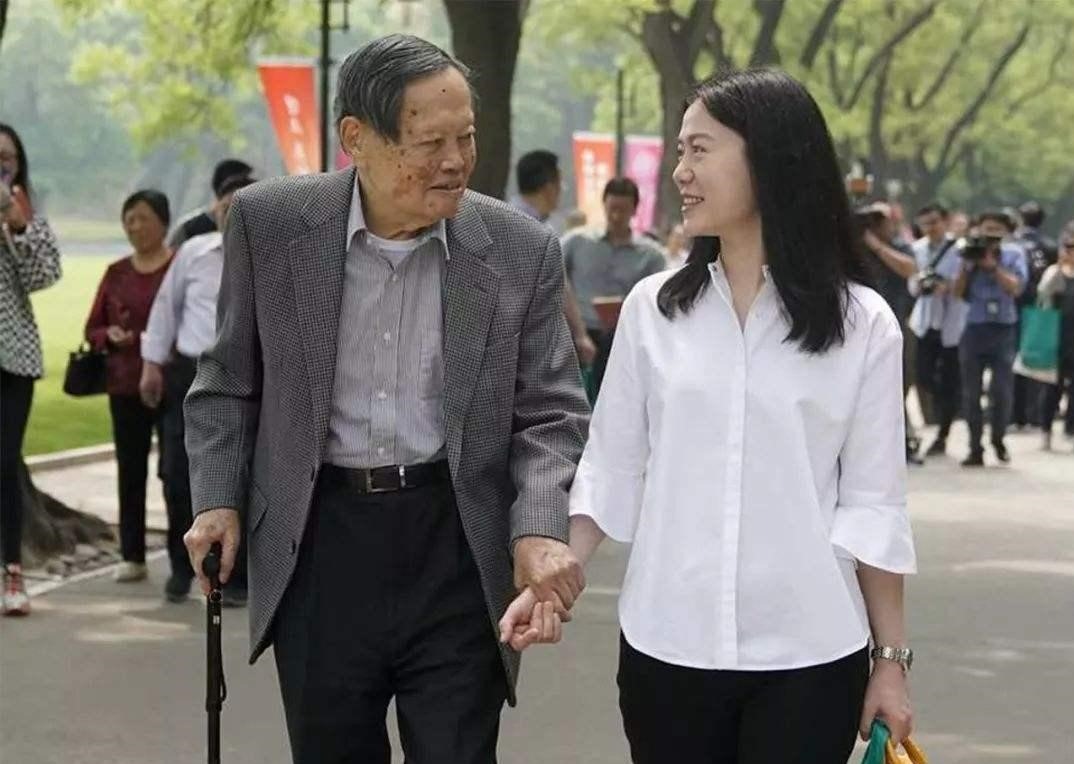
Yang Chen-Ning's "homecoming" drew some criticism, with some questioning why he did not return and even changed his nationality when a large number of scientists like Qian Xuesen (錢學森) and Deng Jiaxian were returning to help build the nation.
But Yang Chen-Ning's patriotism and contribution to the country are certain, and his choice in that unique environment should no longer be disputed.
In March 2022, the centenarian Yang Chen-Ning was chosen as a Touching China Annual Person of the Year.
The award citation read: "Standing at the intersection of science and tradition, you are exceptionally brilliant. What you have contributed to the world is so profound, and few understand it; what you have devoted to the motherland is so pure, and we all understand it. You once stood at the forefront of the world; now, you move toward the future with the nation."
On 18 October 2025, Yang Chen-Ning passed away in Beijing at the venerable age of 103.