Published : 2026-02-26
Upon closer look, ancient pagodas in China are not always solitary. A unique sight emerges: twin pagodas standing in pairs. They guard cities, grace landscapes, and have watched over centuries.
Today, let's journey across China to see four distinct ancient twin pagodas, appreciating their symmetrical beauty and enduring tales.
Shuangta Mountain, Chengde, Hebei
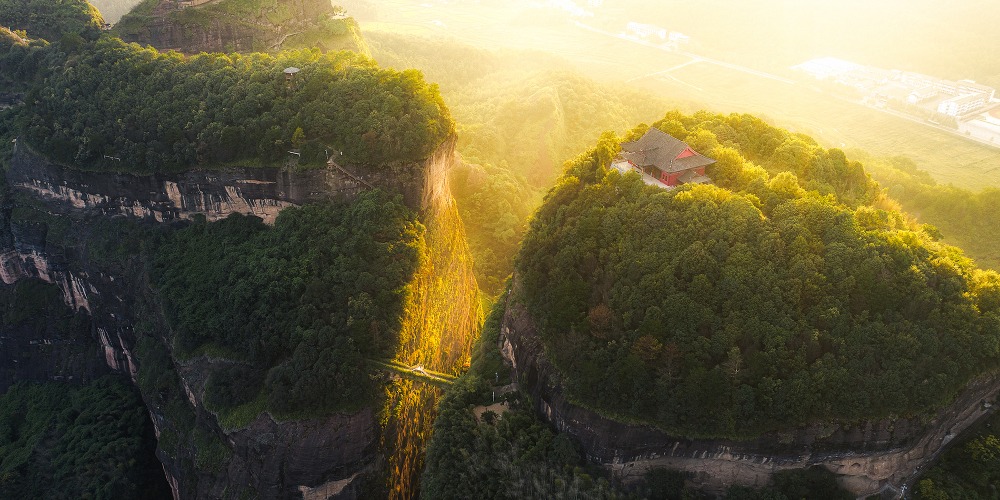
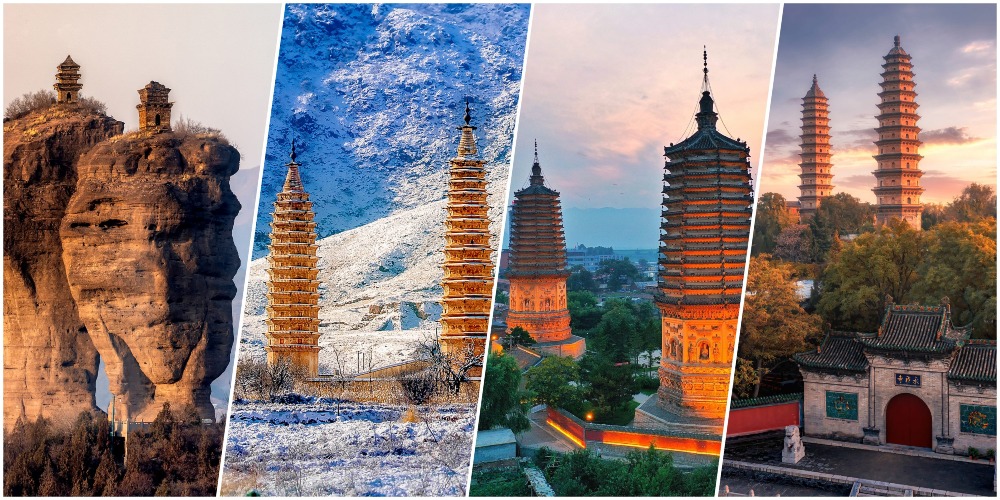
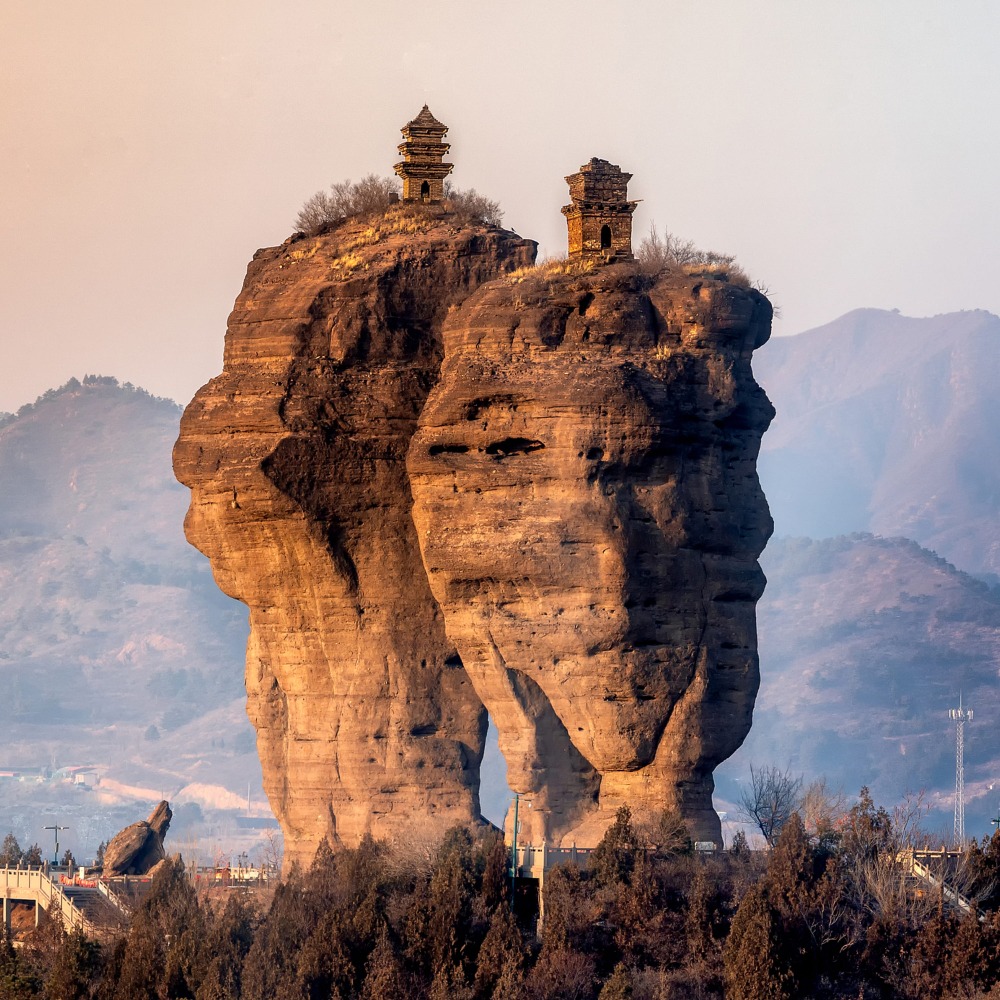
In the city of Chengde, Hebei, two massive rock pillars about 40 metres high stand side-by-side, piercing the clouds. They are not towers built by human hands, but masterpieces sculpted by nature.
Even more magically, on each of these inaccessible summits, there really is an ancient brick pagoda. This is Shuangta Mountain (雙塔山).
Who exactly built the twin pagodas on the summit of Shuangta Mountain? Why were they built in a place that is essentially inaccessible? It remains a mystery to this day.
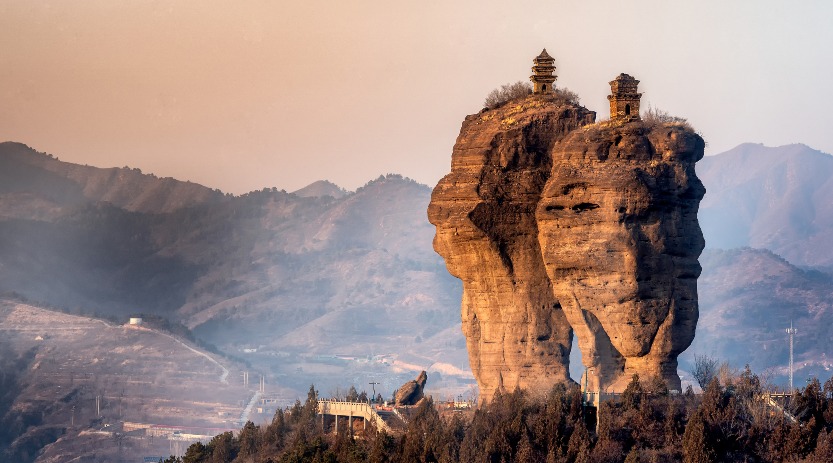
There is a local theory that the twin pagodas were originally built at ground level, and that after a millennium of tectonic shifts and falling water levels, the current spectacle of two peaks holding up the pagodas was formed.
Archaeologists, however, based on their analysis of the brick pagodas' structure, have strongly inferred that they are Liao dynasty tomb pagodas, dating back over a thousand years.
During the Qing dynasty, the Qianlong Emperor once ordered people to build a ladder to reach the summit and uncover its secrets.
After going up, they only found a stone table, an incense burner, a few pairs of worn-out straw shoes and two bunches of chives, and he returned greatly disappointed. That night, he dreamt of a white-haired old man who told him in the dream that the straw shoes were cloud-climbing boots, the chives were lingzhi grass, and there was a celestial book beside them.
However, when Qianlong wanted to go up again the next day, the ladder could not be erected, no matter what.
This legend has been passed down to this day, adding another layer of legendary colour to the already mysterious Shuangta Mountain.
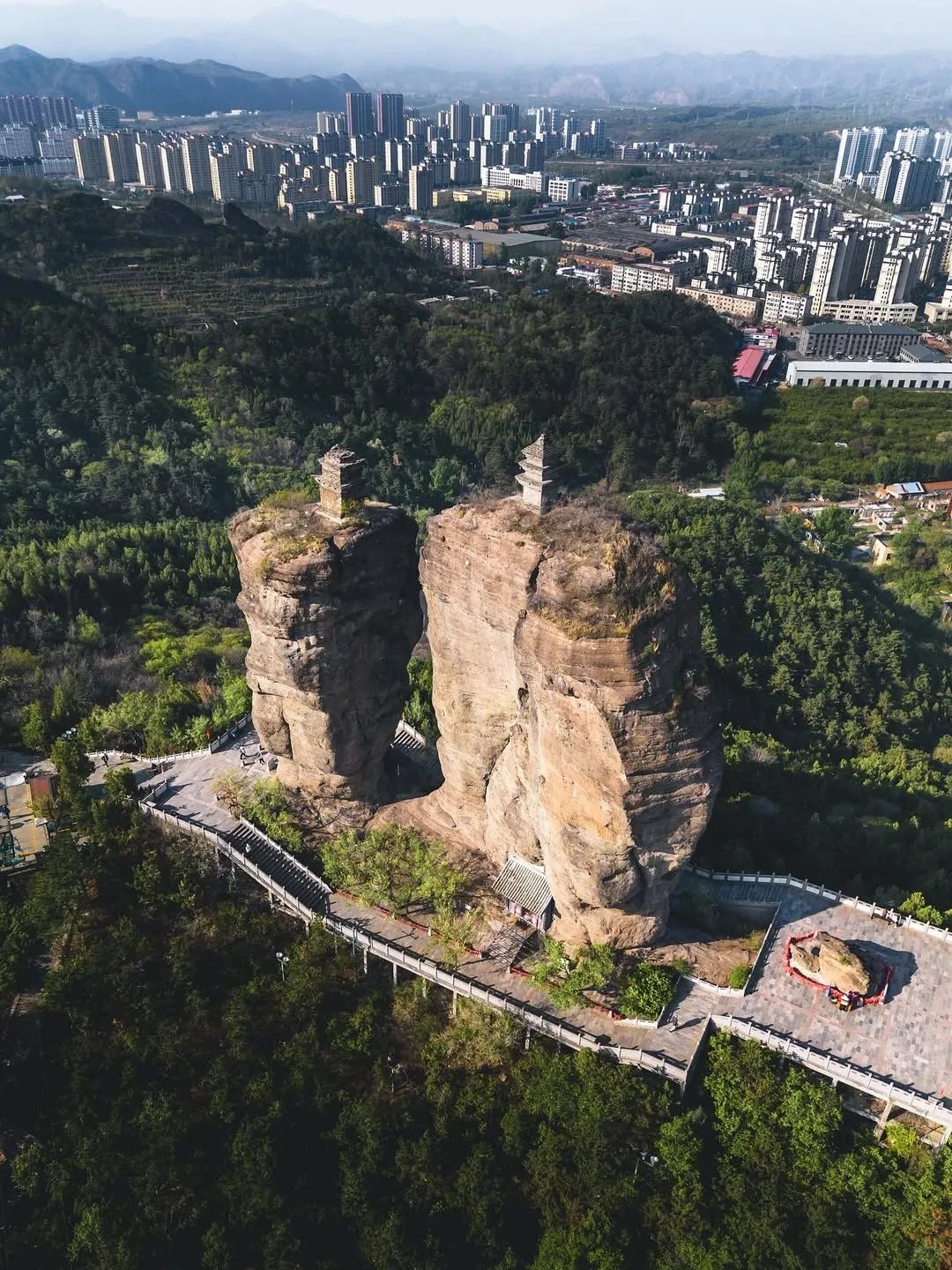
In modern times, a sightseeing lift was once built to let people glimpse the mysterious visage of Shuangta Mountain. Unfortunately, after the lift was built, cultural relics inside the pagodas were frequently stolen, and the lift also damaged the natural scenery.
It was finally dismantled in 2003. Since then, Shuangta Mountain has become China's "only" unclimbable peak, and a great, breathtaking wonder.
Read more: How breathtaking is the "Longtou incense" on the cliff of Wudang Mountain?
The twin pagodas of Yongzuo Temple, Taiyuan
People in Taiyuan often say, "If you don't know where you are, just look up and find the Twin Pagodas."
As the city symbol of Taiyuan, Shanxi, the twin pagodas of Yongzuo Temple (永祚寺雙塔) are like a pair of sisters standing side by side and are one of the "Eight Ancient Views of Taiyuan".
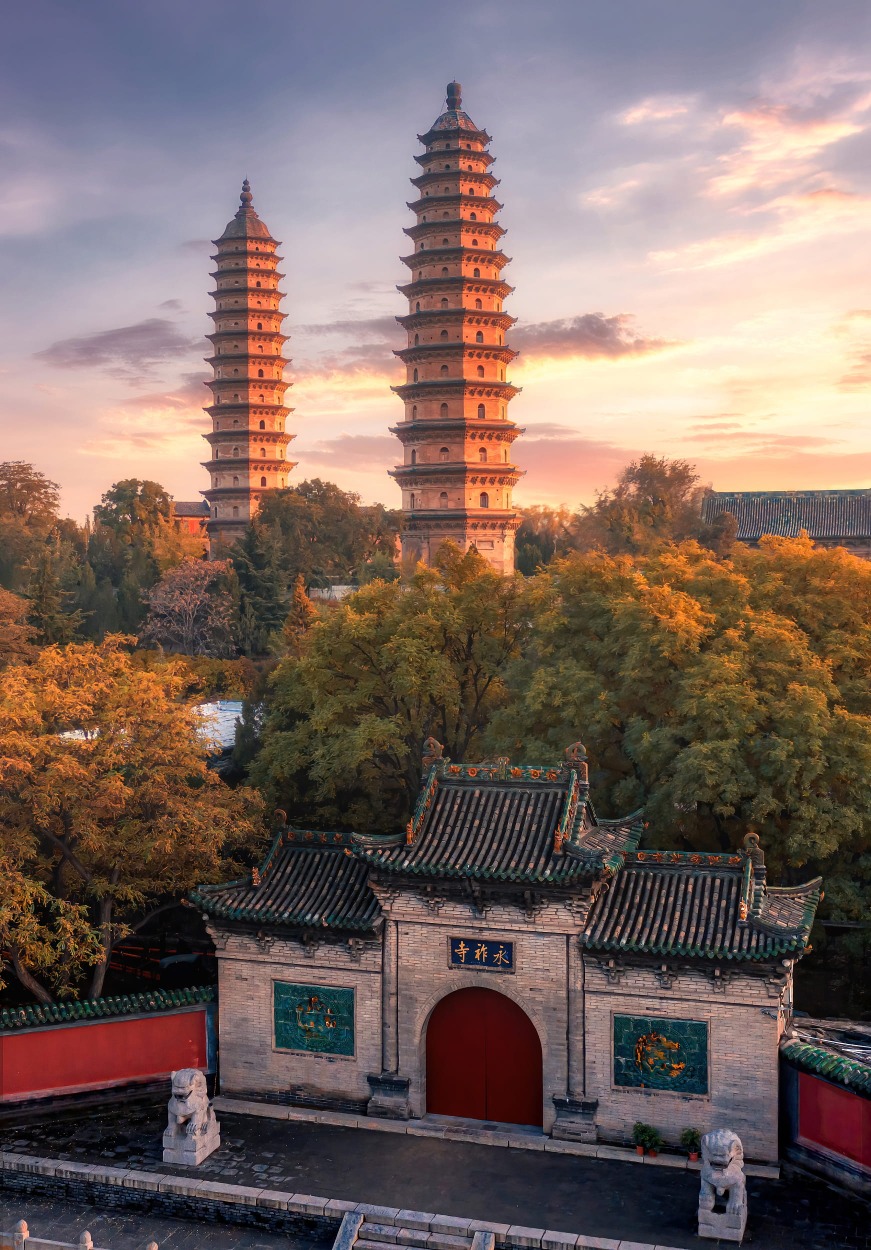
In reality, these two "sisters" were not built at the same time. The first to be constructed was the Wenfeng Pagoda (文峰塔), built in 1599 during the Ming Dynasty, with funds raised by local gentry hoping to remedy Taiyuan's "lack of literary prosperity".
The later addition was the Sarira Pagoda (舍利塔), funded by the Empress Dowager Cisheng, mother of the Wanli Emperor. It is said that she once prayed to a revered monk for advice on bearing a son and was told: "Build a pagoda, construct a temple, and mend roads and bridges."
Acting on this advice, she generously financed the construction of a second pagoda alongside the first.
Both pagodas at Yongzuo Temple stand at 13 storeys, each exceeding 54 metres in height. They form the most complete and largest pair of twin pagodas in China, earning the reputation as a "Wonder of Jinyang".
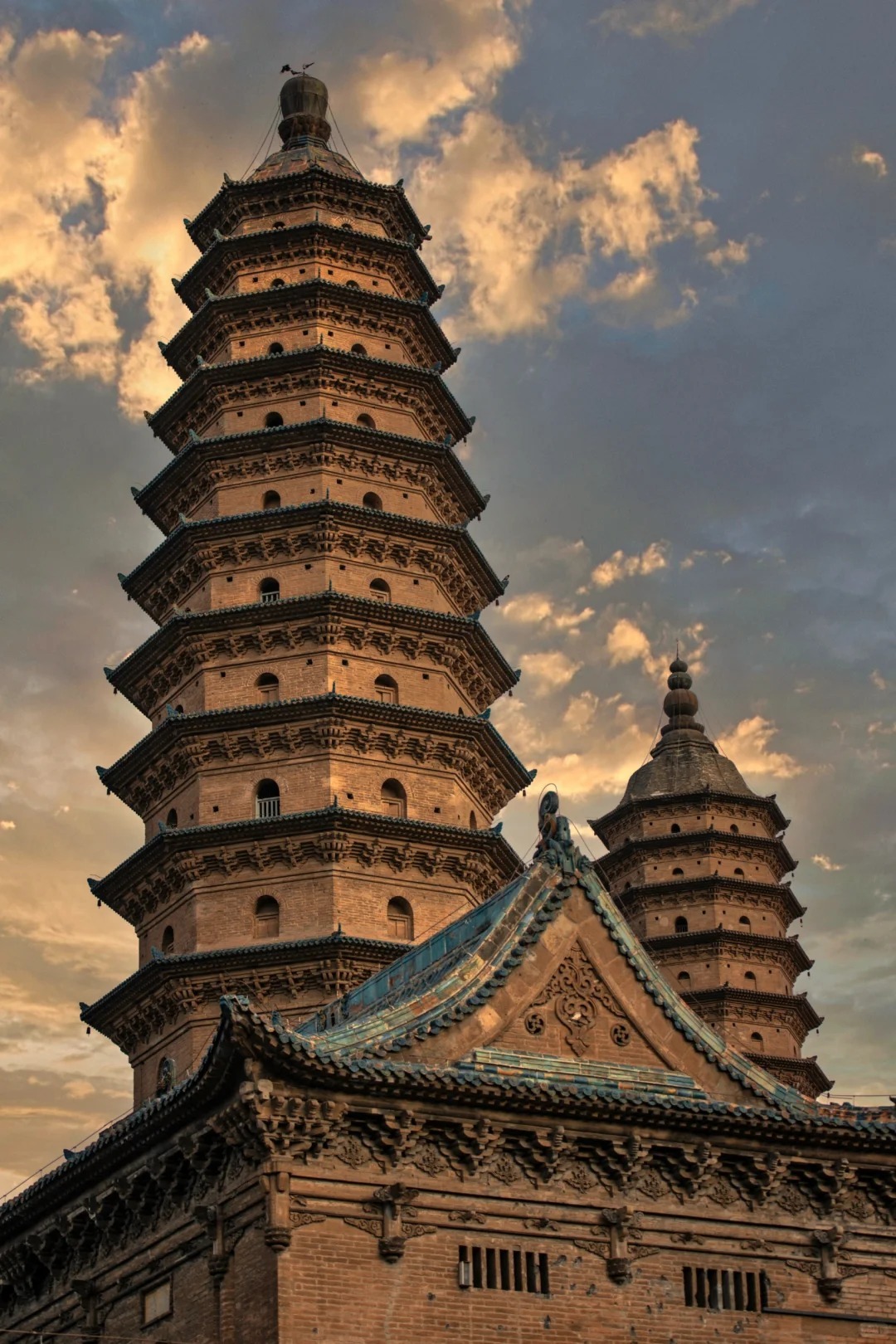
Although the Twin Pagodas of Yongzuo Temple were both built in the mid-Ming Dynasty, a closer look reveals their differences.
The Wenfeng Pagoda is constructed with plain bricks, its overall shape resembling a writing brush—tall and majestic.
The Sarira Pagoda, by contrast, features glazed brick trim and vibrant colours, with elegant, flowing lines. One is plain, the other ornate, yet they harmonise unexpectedly—much like the ancient city of Taiyuan itself, where a deep historical legacy sits comfortably alongside the rhythms of everyday life.
The twin pagodas of Baisikou in Yinchuan, Ningxia
Throughout China's long history, one particularly distinctive dynasty was the Xixia, which coexisted alongside the Liao, Northern Song, Jin and Southern Song dynasties.
Due to scarce historical records, this dynasty, which lasted just over 200 years, remains shrouded in mystery to this day.
Although there are few written records of the Xixia Dynasty, many historical sites remain, including two ancient pagodas located at Baisikou (拜寺口雙塔) in the Helan Mountains, Yinchuan City, Ningxia.
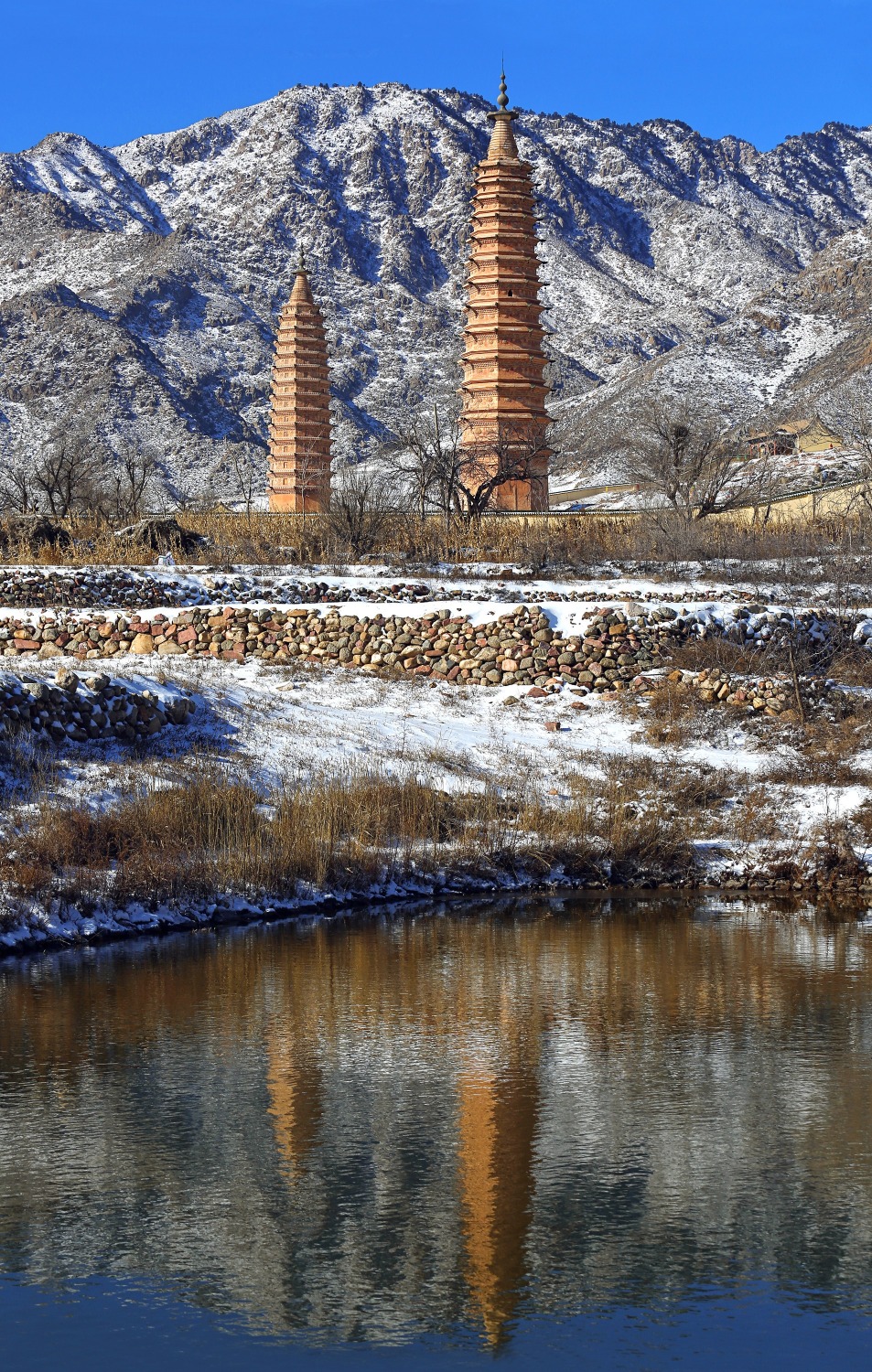
Baisikou was originally named "Hundred Temples Pass", and it is said that hundreds of temples were once scattered throughout the mountains.
The twin pagodas were built in the middle to late period of the Xixia Dynasty and were part of the detached palace complex of the Xixia emperor Li Yuanhao.
While the Baisikou Twin Pagodas are similar in form, they each have their own distinctive features: the West Pagoda is stout and unadorned, 41 metres high, with its body covered in painted Arhats and Vidyaraja figures; the East Pagoda is slender and tall, 39 metres high, with each storey featuring painted sculptures of beast faces, Buddha statues, and various floral patterns.

In the fourth year of the Qianlong reign during the Qing Dynasty, an 8-magnitude earthquake struck Yinchuan, destroying all nearby buildings, yet the Baisikou Twin Pagodas remained standing amidst the lofty mountains, demonstrating the superb architectural techniques of the Xixia.
During repairs in 1986, workers discovered inscriptions in the Xixia and Sanskrit languages at the top of the pagoda, and also unearthed precious cultural relics such as Buddhist paintings on silk, wooden tables and chairs, and ancient coins.
These relics, hidden at the top of the pagodas for nearly a thousand years, seem like a secret message left by the Xixia people for posterity, carving the imprint of a lost dynasty upon the land.
The twin pagodas of Chongxing Temple in Jinzhou, Liaoning
Jinzhou in Liaoning may be an unassuming city, yet it hides a rare pair of twin pagodas—the Chongxing Temple Twin Pagodas (崇興寺雙塔).
The Twin Pagodas of Chongxing Temple are located in the north-east corner of Guangning City in Beizhen City, standing opposite each other from east to west, only 43 metres apart.
They are named the Twin Pagodas of Chongxing Temple because Chongxing Temple is to their north. They are classic masterpieces of Liao Dynasty closely-spaced eaved brick pagodas in China and are also acclaimed as the foremost of the "Four Great Twin Pagodas of China".
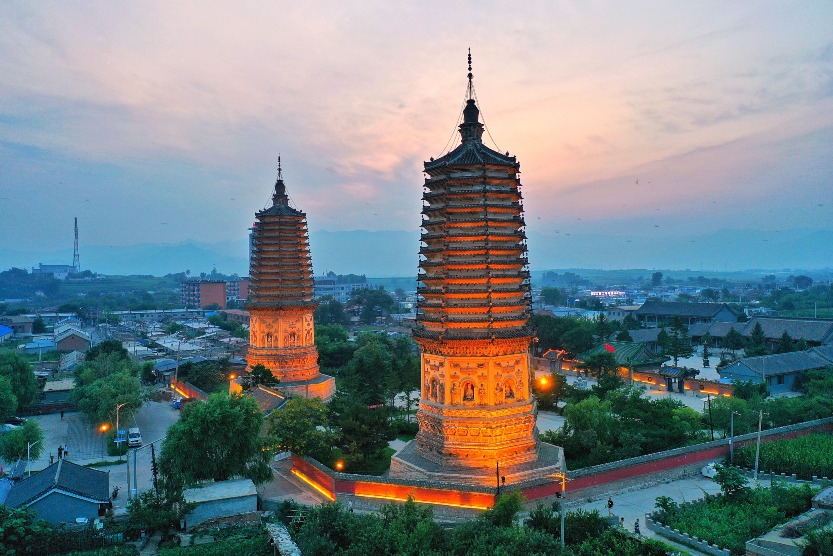
The twin pagodas of Chongxing Temple are both octagonal, thirteen-storey, solid, close-set eaves style pagodas; the east pagoda is 44.46 metres high, and the west pagoda is 42.63 metres high.
Each face of the first storey of the east pagoda's body has a Buddhist niche, decorated with canopies and apsaras, and is also inlaid with bronze mirrors, which glisten in the sunlight.
The eaves of the west pagoda retract layer by layer, and a wind chime hangs from each eave corner; when the wind blows, a thousand wind chimes ring in unison, sometimes gentle, sometimes crisp, naturally forming an ancient tune that spans a millennium.
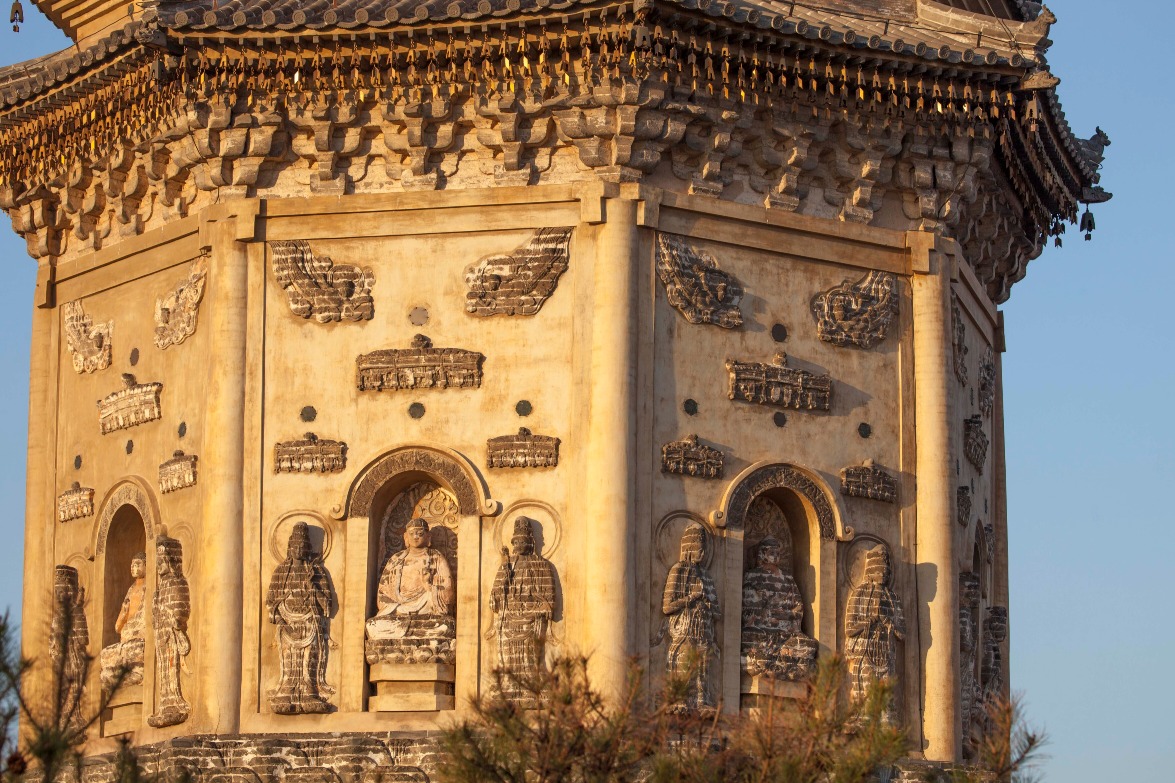
The year of the twin pagodas' initial construction is not clearly recorded in history. Some believe they were built during the Jin dynasty, and there is also a folk legend that they were built by two empress dowagers of the Liao dynasty. However, based on an examination of the architectural structure, techniques, and decorations, they were likely built in the late Liao dynasty.
The people of Liao revered Buddhism and building pagodas became a common practice; these two pagodas are a testament to that era.
Read more: Unveil the Chinese mystery of Longhu Mountain's hanging coffins