Published : 2025-12-10
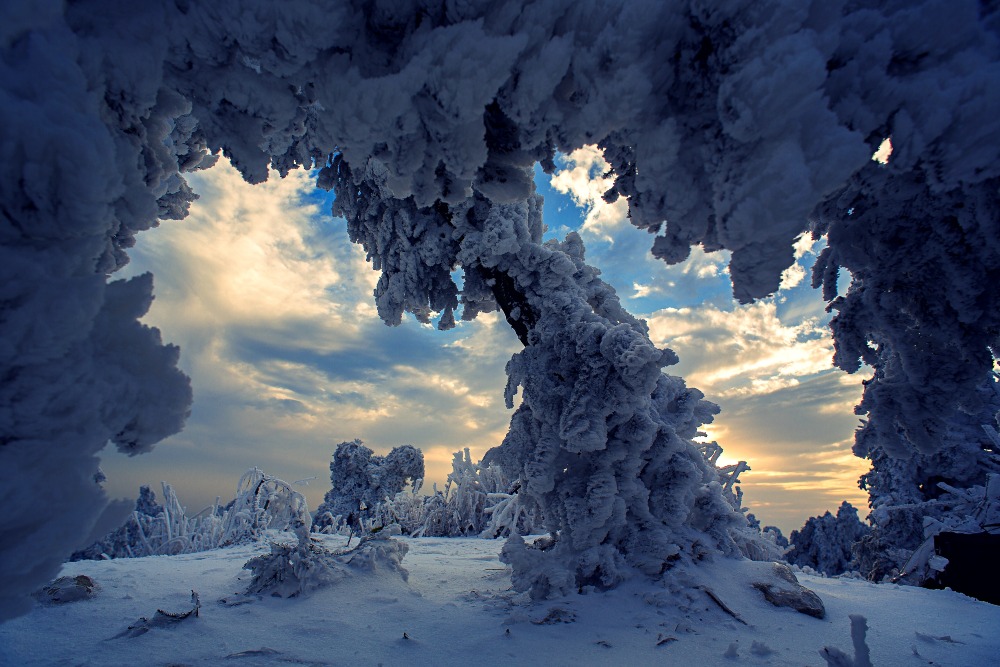
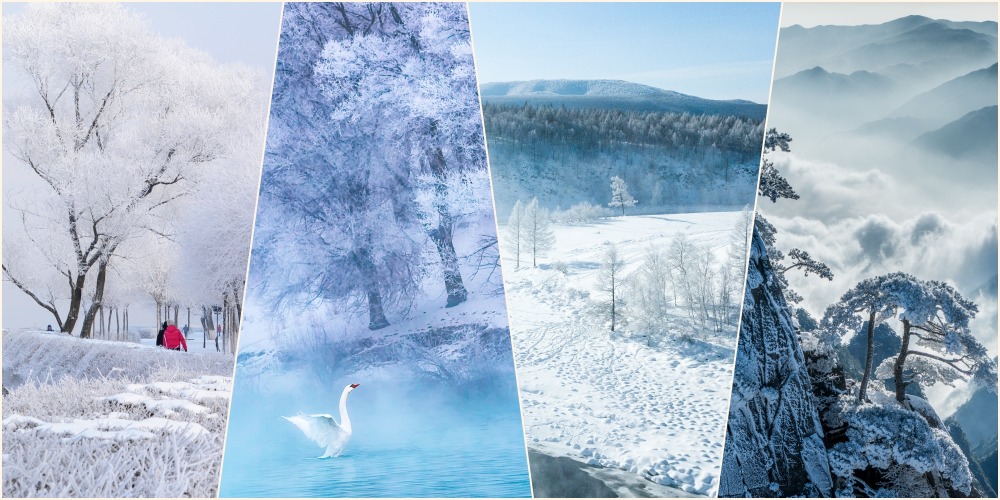
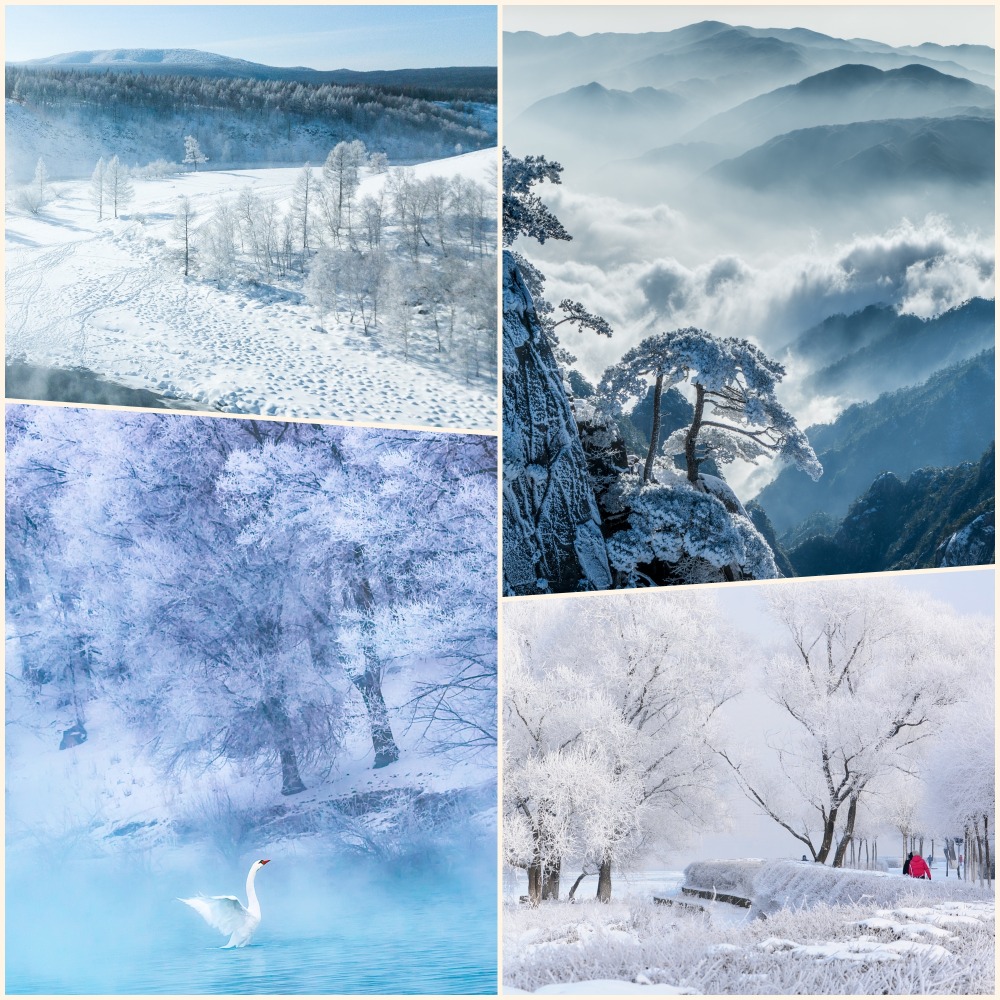
Neither ice nor snow, neither flower nor mist, yet capable of creating a frosty wonderland of "jade trees and crystalline blossoms"—this is the winter spectacle of rime ice.
When does this phenomenon occur, and where in China can one witness it? Journey with us from north to south, and east to west, as we explore China's most stunning rime ice destinations.
Nov to Feb: The best season for viewing rime ice
Rime ice is a remarkable phenomenon that occurs in cold weather, typically around two hours after sunrise.
As moisture evaporates from the earth's surface, it forms mist in the air, and the chilly temperatures cause water droplets in the mist to quickly freeze onto tree branches, creating the breathtaking sight of "jade trees and crystalline blossoms."
Not only is rime ice beautiful to behold, but it is also remarkably "practical"—acting as nature's own "air purifier" and "humidifier."
Jilin Rime Ice Island, Changbai Mountain
In Jilin Province, located in Northeast China, lies a renowned destination for viewing the stunning spectacle of rime ice.
Celebrated as "Jilin's rime ice, a wonder under heaven," the province has hosted the annual Rime Ice and Snow Festival since 1991, firmly establishing itself as a popular winter tourism hotspot.
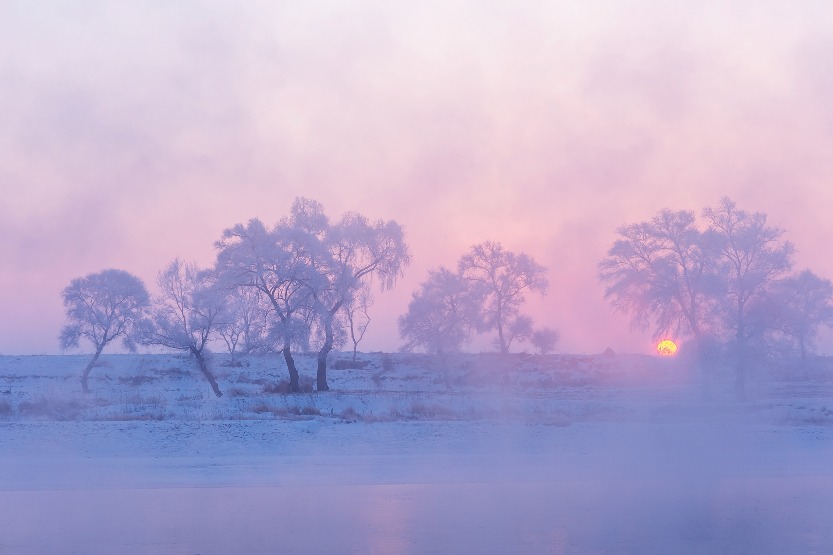
On the Songhua River, 35 kilometres from Jilin City, lies the Rime Ice Island, which is famous for its abundant and beautiful rime ice. The best viewing season is from December to February of the following year, attracting countless visitors.
Read more: Where are the most beautiful snow-capped mountains in China?
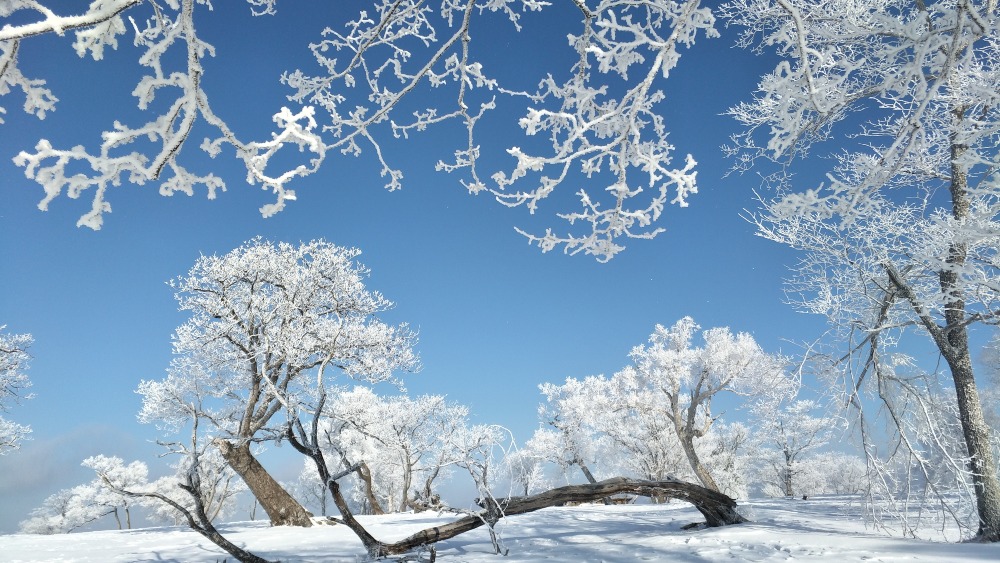
From November to February each year, the Enchanted Realm Scenic Area in Changbai Mountain (長白山), Jilin, enters its rime ice season.
Here, the geothermal water from Changbai Mountain's Tianchi Lake (天池) remains unfrozen throughout the year. The mist rising from the steaming water contrasts with the frost-covered trees along the shore, creating a scene straight out of a fairy tale.
Arxan, Inner Mongolia
Nestled in Inner Mongolia, Arxan (阿爾山), which means "hot holy water" in Mongolian—is renowned for its impressive array of natural hot springs and lush, dense vegetation, earning it the reputation of a "natural oxygen bar."
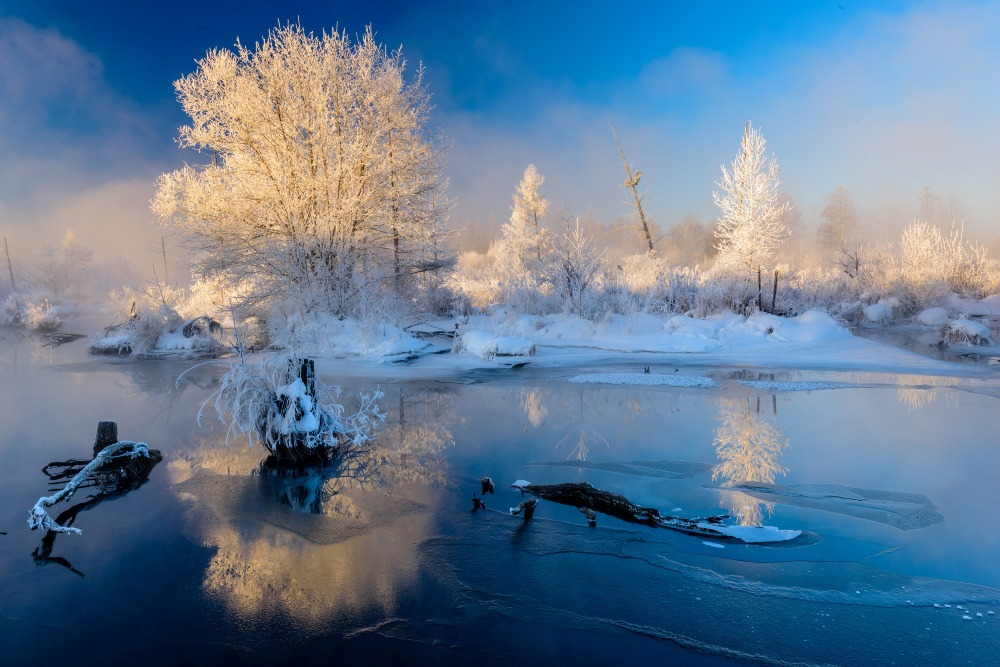
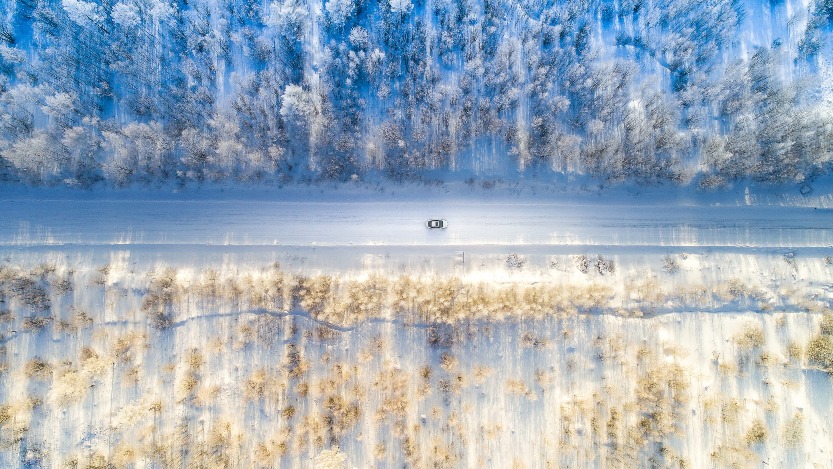
With a frost and snow season lasting up to seven months, the area transforms each winter into a breathtaking display of rime ice, forming a continuous spectacle stretching over 50 kilometres along the mountains.
This magnificent vista is often celebrated as the "Greater Khingan Range Hundred-Mile Rime Ice Corridor."
Xinjiang's desert and Swan Spring Wetland Park
Swan Spring Wetland Park, located on the north bank of the Ili River in Xinjiang, sees a spectacular rime landscape every year from December to January of the following year.
The icy-blue lake, snow-white rime, and leisurely swans form a dreamlike picture, making it one of Xinjiang's winter tourism hotspots.

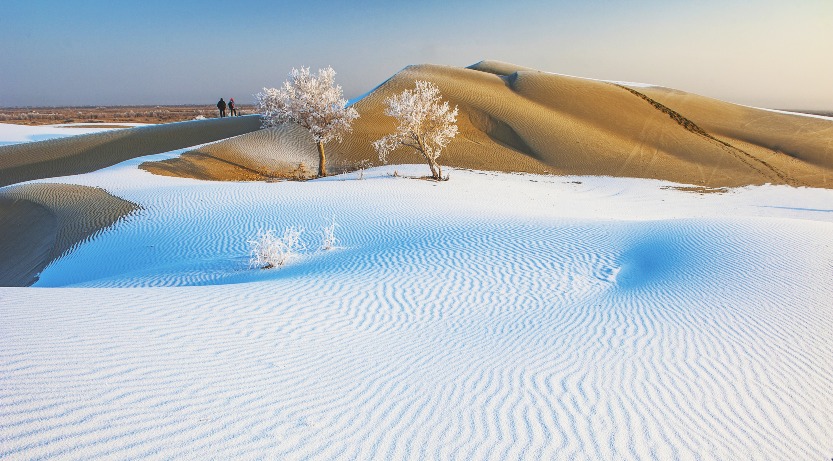
It is generally believed that rime appears in places with relatively humid air. In fact, it can also be found in the extremely arid deserts of Xinjiang, but the conditions for its formation are difficult to meet.
Rime only forms when water vapour from nearby rivers and lakes, or moist air after snowmelt, encounters specific cooling and windy weather conditions. It is a rare and spectacular sight.
Huangshan, Anhui Province
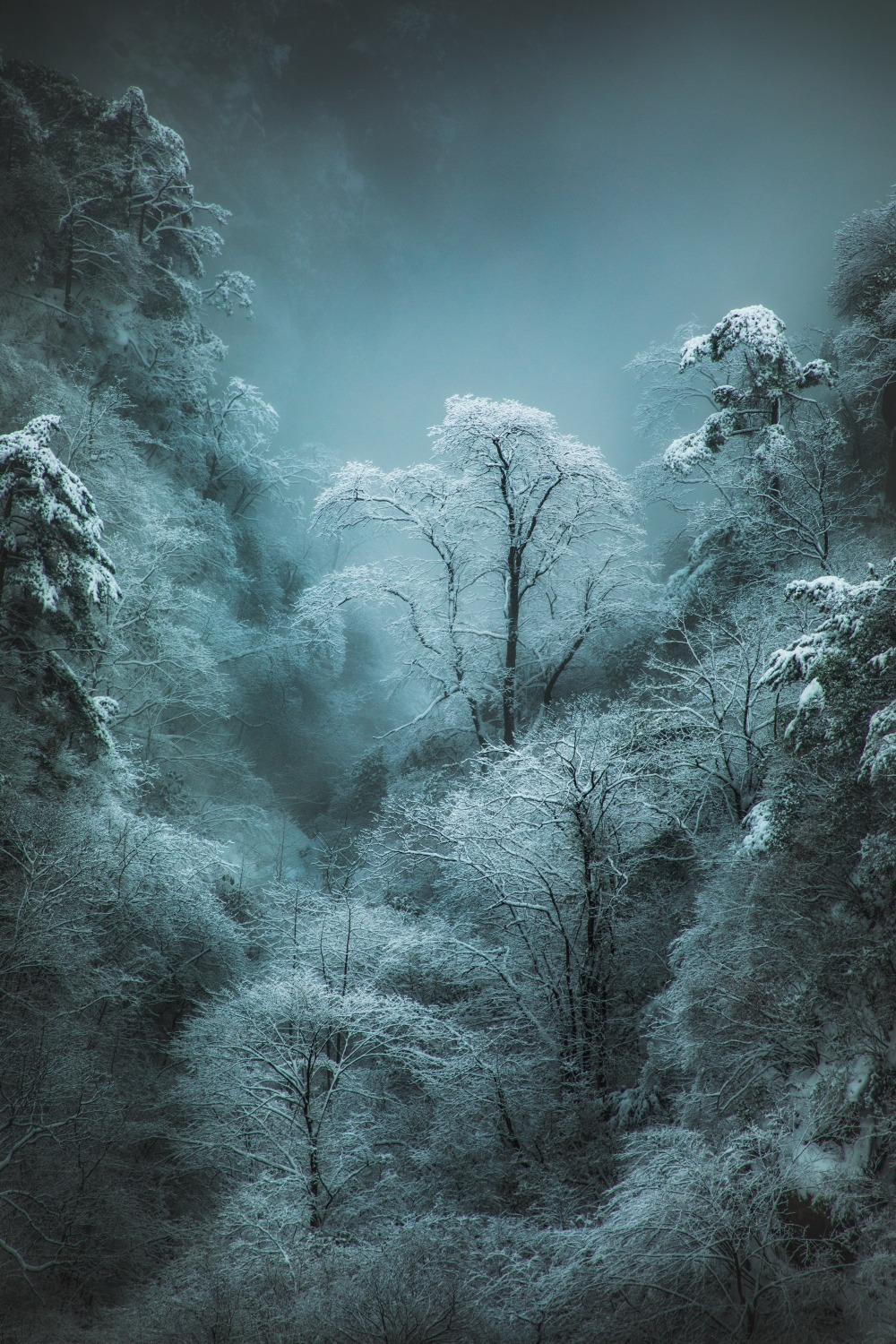
As the saying goes, "After visiting the Five Sacred Mountains, all other mountains seem ordinary; yet after returning from Huangshan, even the Five Sacred Mountains pale in comparison."
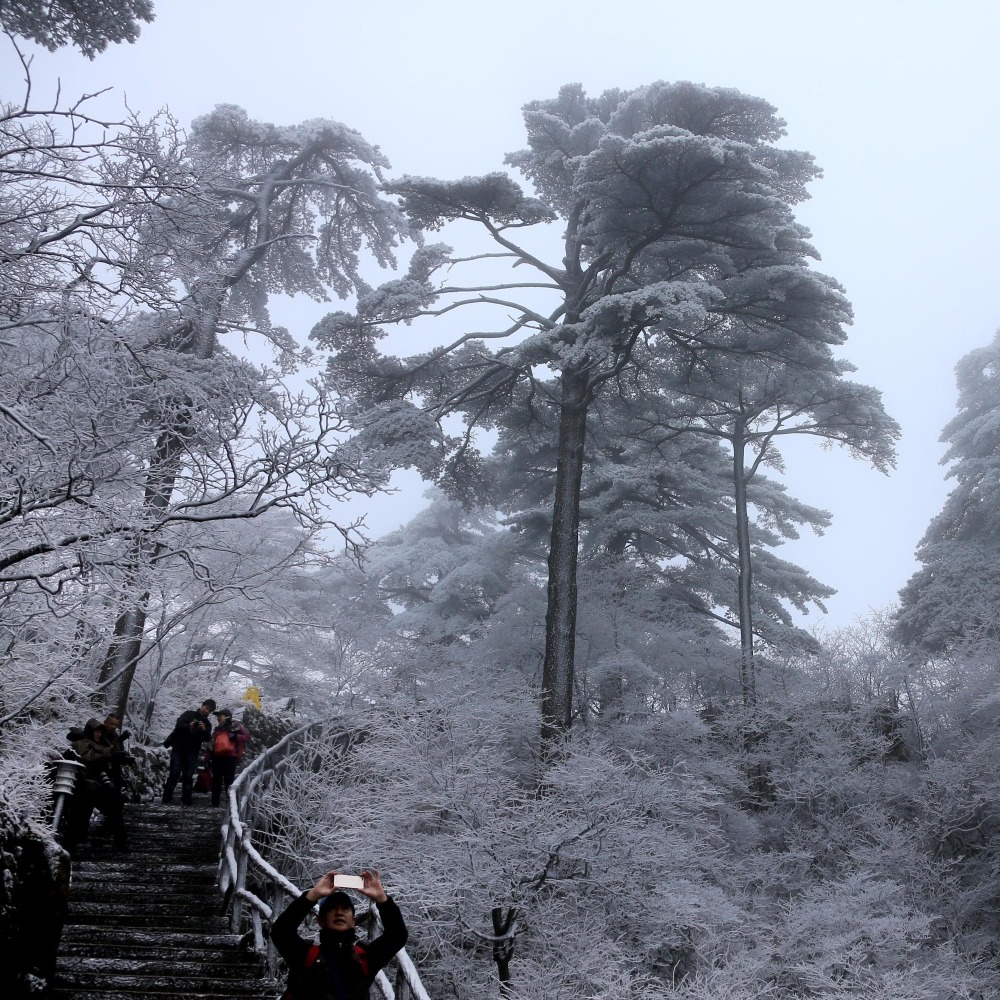
The winter months at Mount Huang (黄山) are often regarded as the prime season for photography. Clad in silvery-white frost and snow, the landscape resembles a crystalline realm, offering a scene of breathtaking beauty.
Read more: A winter trip to China: Why is "China's Snow Town" so popular?
Mount Emei, Sichuan Province
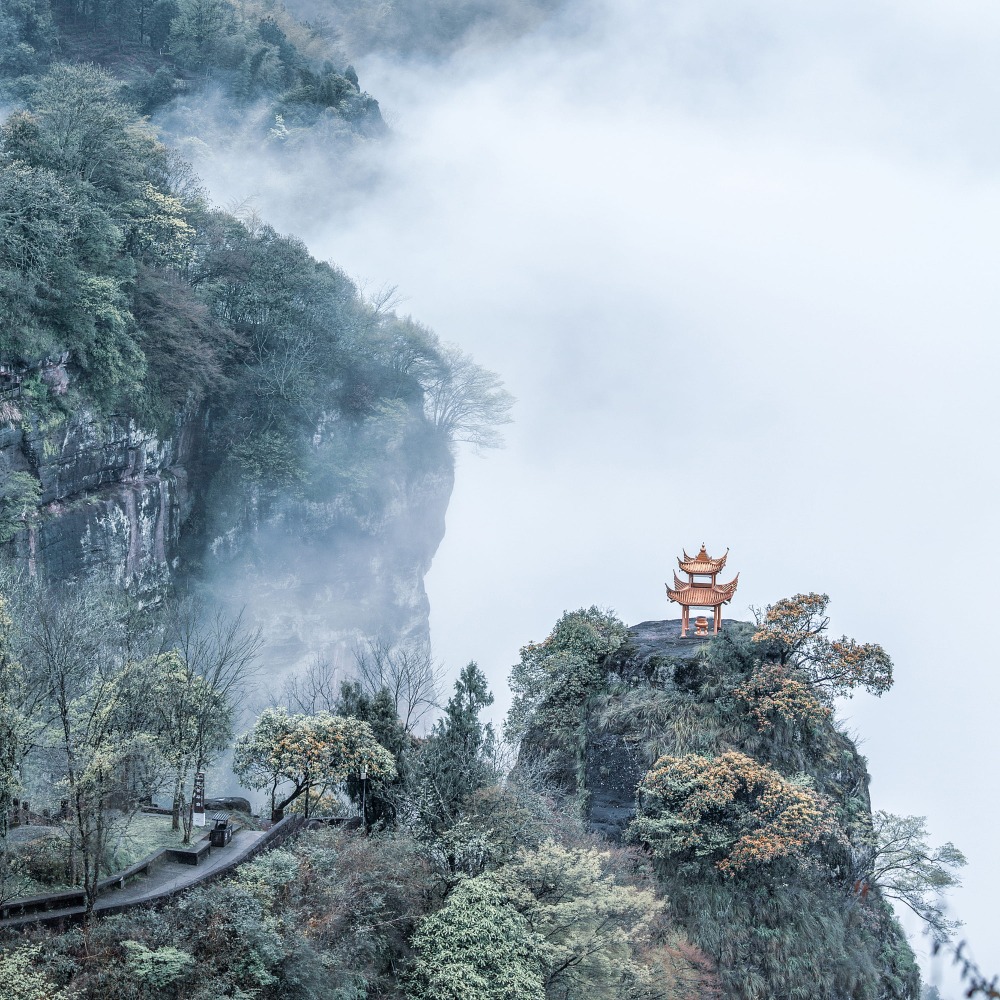
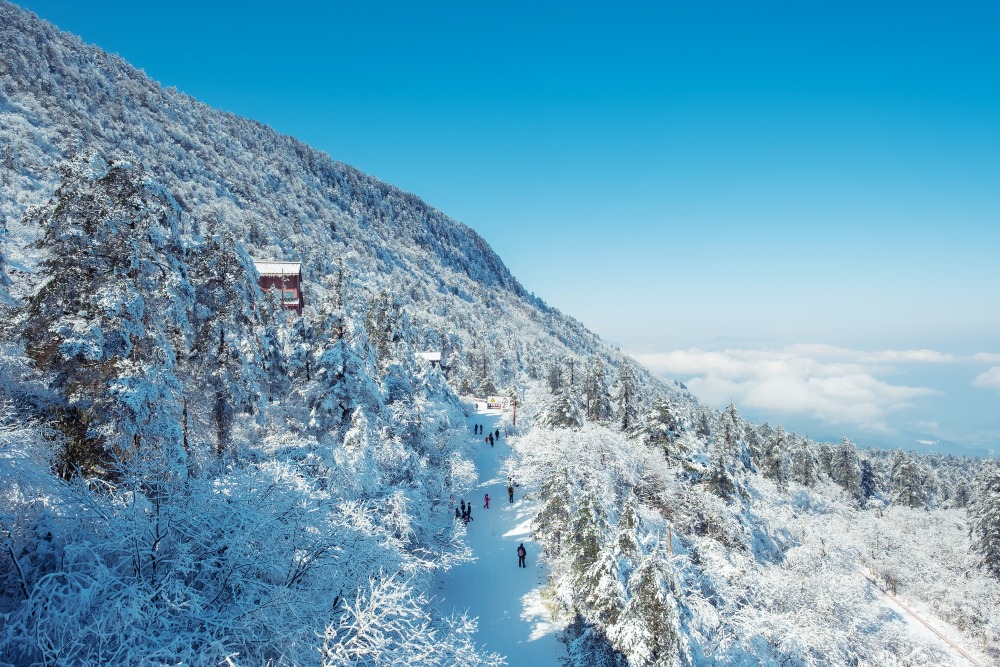
Mount Emei (峨眉山) in Sichuan Province is the region in China with the longest rime viewing period. The rime scenery lasts from November until April of the following year, with an average of over 140 days of rime per year.
Zhangjiajie and Mount Heng, Hunan Province
In the south, rime landscapes usually appear on high mountains. They are formed when mist directly condenses on objects due to rising altitude and falling temperatures.
Zhangjiajie (張家界) and Mount Heng (衡山), located in Hunan Province, are both famous places for viewing rime in southern China.
Zhangjiajie is characterised by its numerous mountain peaks, with the rime in areas like Tianmen Mountain being the most renowned. The best time to visit is from November to March of the following year.

The scenically beautiful Mount Heng is the "Southern Great Mountain" of the "Five Great Mountains". It is only a few hours' drive from Guangdong.
The spectacular rime can be seen for 40 to 50 days each winter. However, paths are slippery after snowfall in winter, so you must be careful when hiking to see the rime.