Published : 2025-12-09
When talking about the origins of diamonds, does South Africa come to mind? In fact, there are over 30 countries worldwide with diamond resources. China is one of them, and its reserves rank around 10th.
What's more, this northern province holds over half of the country's stockpile...
Rough diamonds and diamonds: Is there no difference?
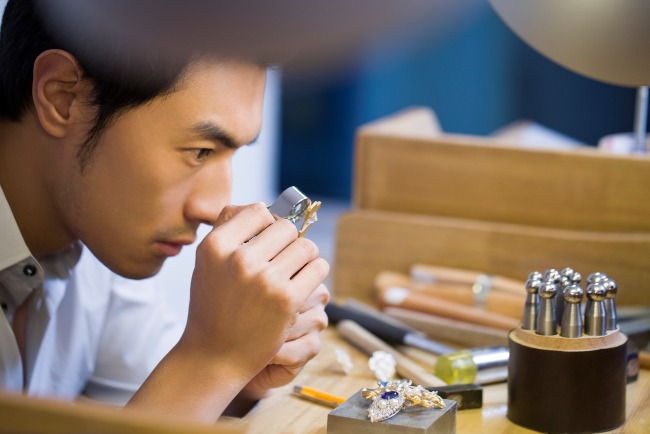
Before talking about China's diamonds, we must first mention something else that everyone has heard of but doesn't really have a concept of—jingangshi (金剛石, another name for diamond). It turns out that zuanshi (鑽石, jewellry diamond) and jingangshi are basically the same thing.
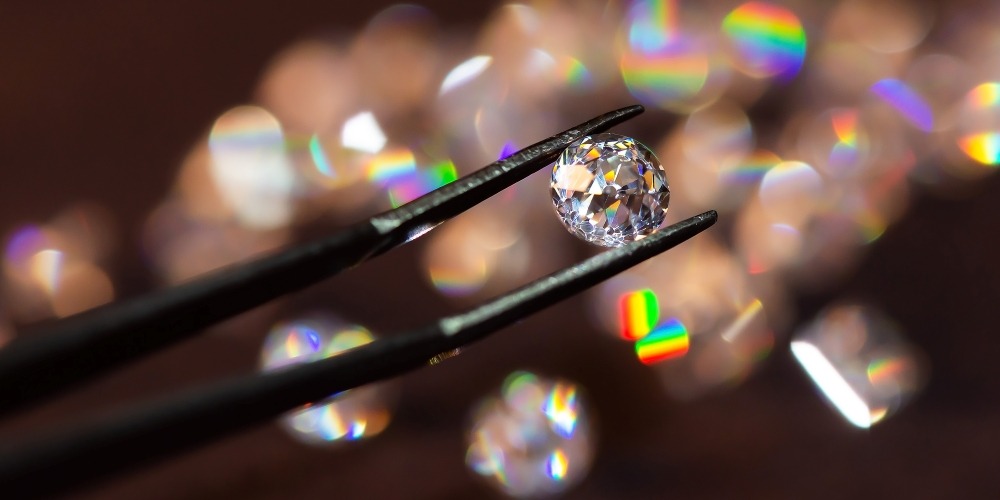
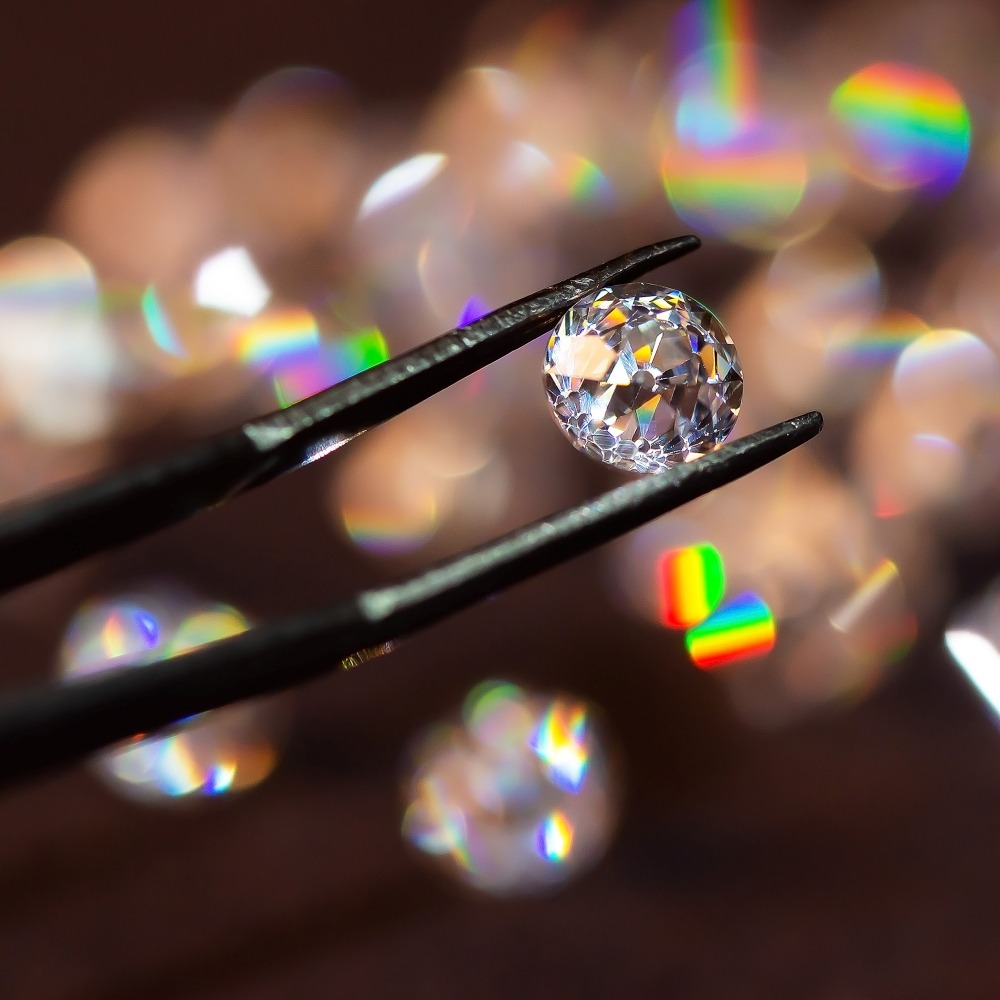
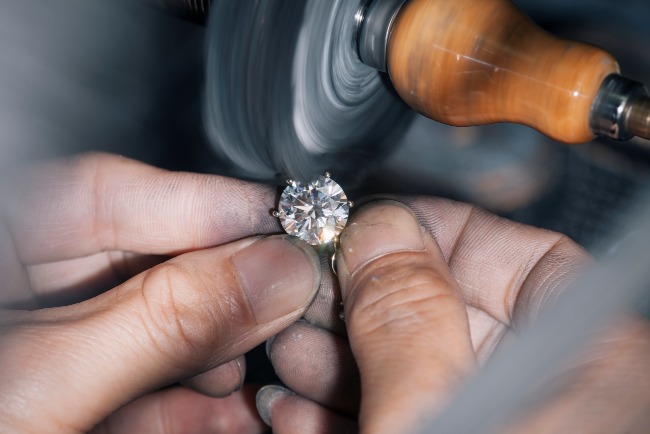
The diamond is the hardest known natural mineral. It has different quality grades. Gem-quality diamonds with high transparency and clarity, become jewellery and collection diamonds after being cut and polished.
Those of slightly lower quality, are used for industrial purposes after processing, such as in mechanical equipment for optics, cutting, drilling, and polishing, for which there is great demand. This type of diamond is known as industrial diamond.
Additionally, some people simply call those diamonds used for jewellery "zuanshi", while those for industrial or academic purposes are called "jingangshi", for ease of distinction.
How much does a 1-carat diamond weigh?
Data shows that generally, only 17% to 20% of natural diamonds are gem-quality. Among these, top-quality specimens that are large in size, high in clarity, and nearly colourless are even rarer.
As for the remaining approximately 80% of diamonds, they can only be used for industrial purposes.
As one might imagine, there is a vast difference in value between gem-quality and industrial diamonds.
Some reports point out that the 20% of diamonds that are gem-quality have a total value five times that of the remaining diamonds.
One point to note is that, whether they are called jingangshi or zuanshi, and whether they are used for jewellery or industry, their unit of measurement is the "carat".
In Chinese Mainland and Taiwan, this is transliterated as "kela" (克拉), while in Hong Kong and Macao, it is customarily transliterated as "ka" (卡).
"Carat" originates from Ancient Greek, and was the weight of a carob seed. Currently, 1 carat is equivalent to 0.2 grams or 200 milligrams, approximately the weight of 10 grains of rice.
How substantial are China's diamond reserves?
According to media reports, China's proven natural diamond reserves rank first in Asia and around 10th globally, but the actual amount is only just over 23 million carats, which is just over 1% of global reserves. Overall, they are by no means abundant.
In terms of production, China's annual diamond output in the mid-2010s was approximately 200,000 carats, ranking it around 10th globally, or slightly lower. To reiterate, this figure includes both gem-quality and industrial diamonds.
Besides, because South African diamonds are already world-renowned, many people assume it to be the country with the largest diamond production.
However, in reality, South Africa's current diamond output only ranks around 5th or 6th globally. Some countries like Russia, Australia, and Botswana all producing more than South Africa.
To return to the main topic, as early as the reign of the Daoguang Emperor in the Qing dynasty, the first half of the 19th century, gold prospectors discovered diamonds in the Yuan River basin area of Hunan.
However, those diamonds were of poor quality and were only used as drill bits for mending porcelain. Many people know the saying, "Don't take on the job of mending porcelain without a diamond drill"; the term for "diamond drill" (金剛鑽) is a colloquial name for a diamond.
Liaoning, Shandong and Hunan produce diamonds
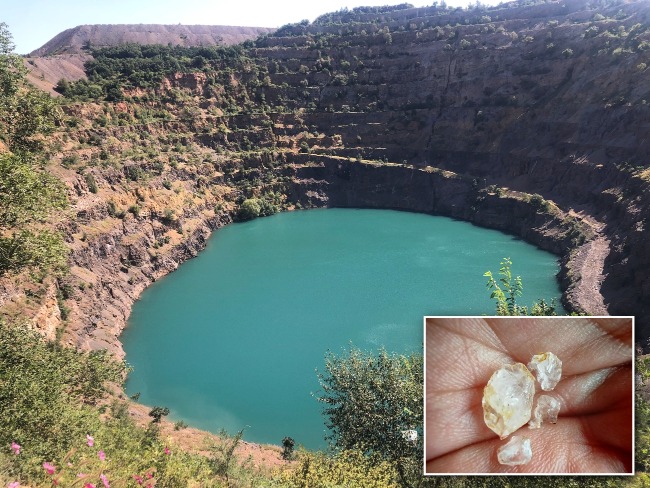
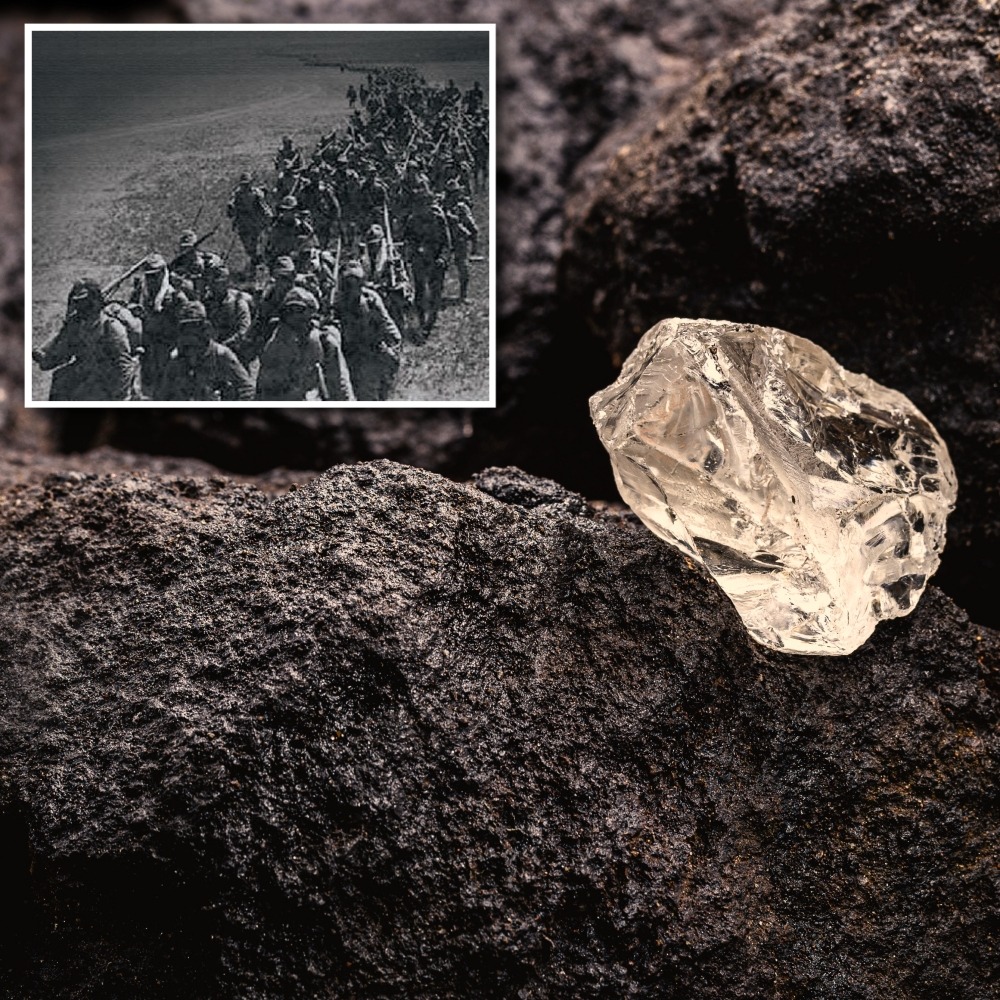
Later, diamonds were also found in Shandong, and a giant diamond was found in the 1930s; its carat weight remains the largest ever found in China until now. There are some stories associated with this giant diamond, which will be told in another article.
After the founding of People's Republic of China, geological teams searched for mineral resources nationwide, successively finding diamond deposits in provinces such as Hunan, Guizhou, Shandong, and Liaoning. Among them, Wafangdian in Liaoning province was the most dazzling one.
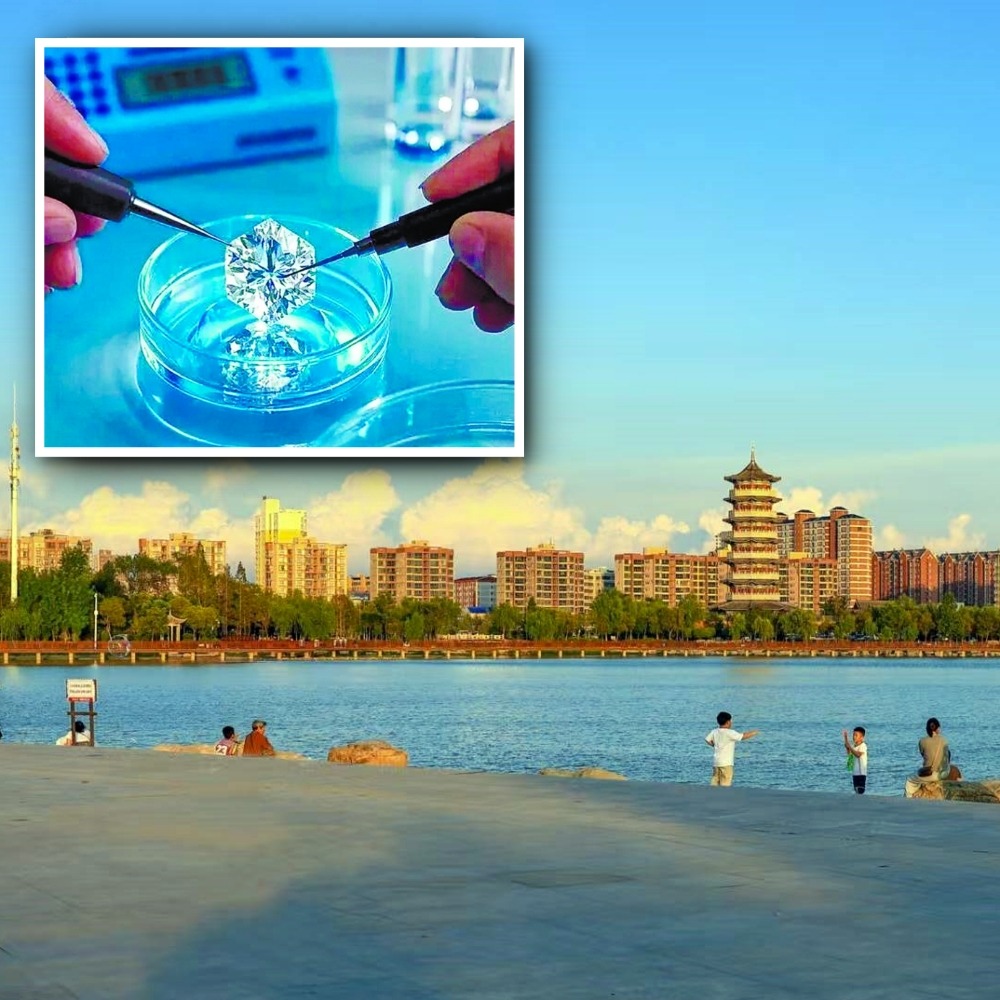
Wafangdian is currently a county-level city administered by Dalian city. It is located on the central-western side of the Liaodong Peninsula, bordering the Bohai Sea to the west, with a permanent population of over 800,000.
In the 1970s, a diamond mine was first discovered in the area, and mining began in the 1990s. The media claims that the diamonds produced in Wafangdian have a higher purity than those from South Africa. About 70% are gem-quality diamonds, far exceeding the average proportion of 17% to 20%.
Wafangdian's diamonds account for 60% of China's reserve
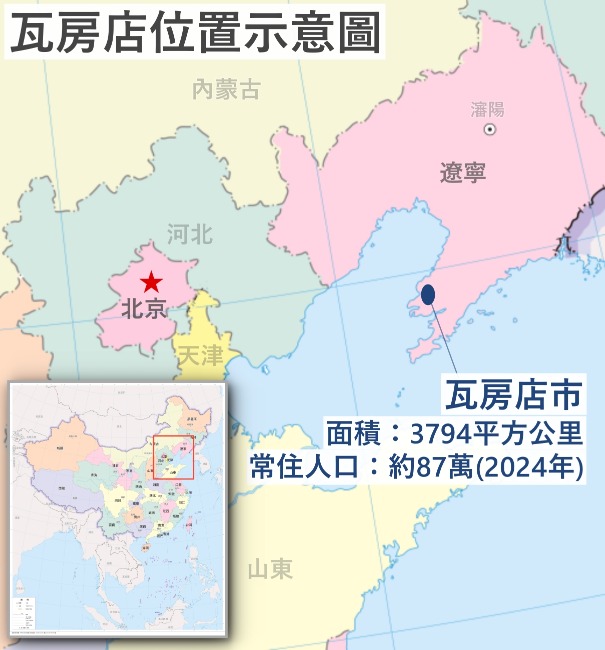
After that, new deposits were successively discovered in Wafangdian. In 2011, a large mine of a million-carat class was found 860 metres underground.
After this discovery, Wafangdian's diamond reserves increased to 13.2 million carats, making it the largest diamond mine in all of China, and even all of Asia. Its total reserves account for nearly 60% of the country's total, making it of great importance.
What is the value of 13.2 million carats of diamonds? As mentioned earlier, there is a huge disparity in value between gem-quality and industrial diamonds.
Even for gem-quality diamonds, the value varies greatly depending on weight and clarity. According to media estimates at the time, the total value of Wafangdian's diamond resources was equivalent to 660 billion RMB.
Some netizens have said that although the place name Wafangdian sounds a bit "rustic", it is in fact a veritable treasure trove, rich beyond measure.
Read more: How deep are China's silver reserves? In which province is Asia's largest silver mine?
Can diamonds be cultivated artificially?

Besides Wafangdian in Liaoning, the area from Mengyin to Linshu in Shandong and the Yuan River basin in Hunan are also major diamond-producing areas in China.
Finally, the diamonds mentioned earlier all refer to natural diamonds. In fact, besides natural diamonds, there are now also lab-grown diamonds. Their composition, quality, and function are almost identical to natural diamonds, but the output is much, much larger.
Currently, China is the largest producer of cultivated diamonds, and its output far surpasses that of other countries. A small, unknown county in Henan province actually accounts for more than 60% of the national output.
Some media said that in this small county, diamonds have become as affordable as cabbage.
The development of cultivated diamonds in China, and how the small county in Henan became the "diamond capital", will also be told in another article.