Published : 2025-11-13
The appearance of Robot dogs are small and cute, but the skills it have mastered are no less than humanoid robots.
It can handle difficult off-roading, Antarctic scientific expeditions, or security patrols with ease. Just as dogs are man's best friend, robot dogs have also become man's great helpers.
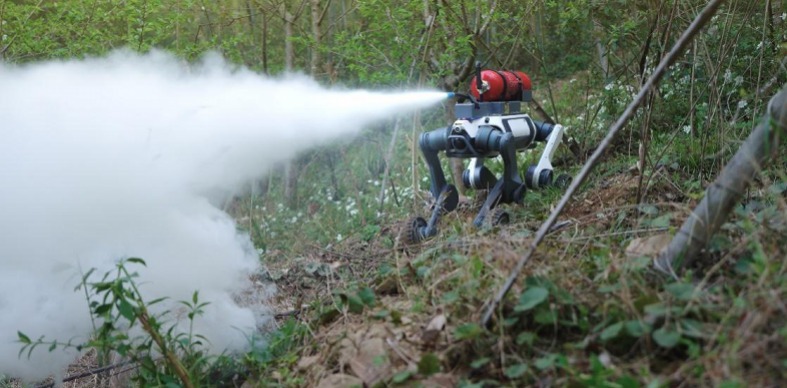
Wheeled-legged robot dog shows excellent off-road skills
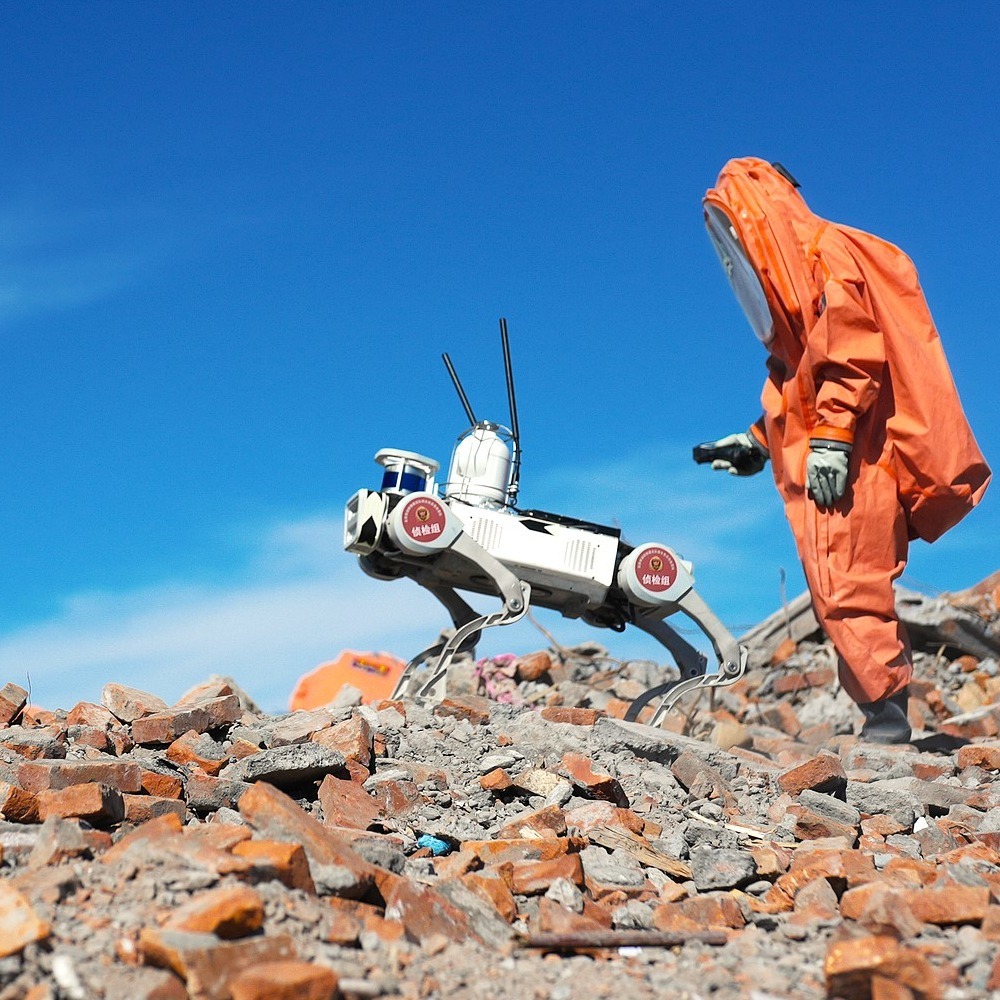
With their compact size and agile movement capabilities, robot dogs can replace manual labour to complete many tasks, especially helping humans to undertake dangerous and repetitive jobs, such as rescue and disaster relief, security checks and patrols, and scientific reconnaissance.
Based on their appearance, robot dogs are divided into types such as wheeled-legged robot dogs and legged robot dogs.
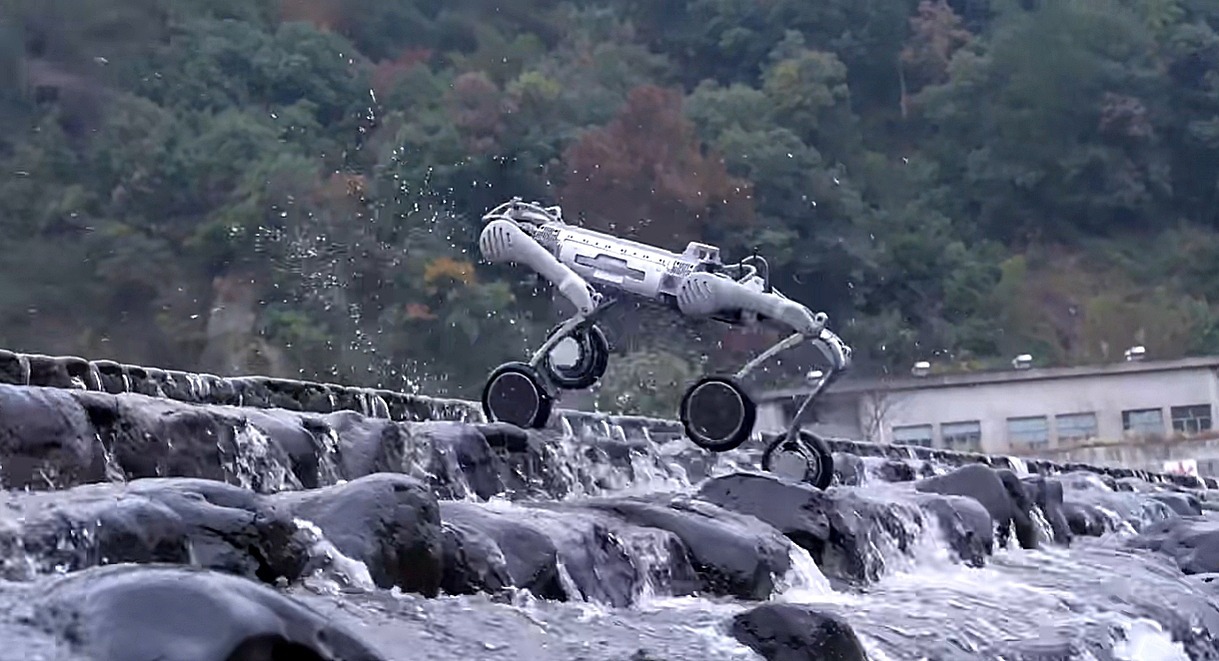
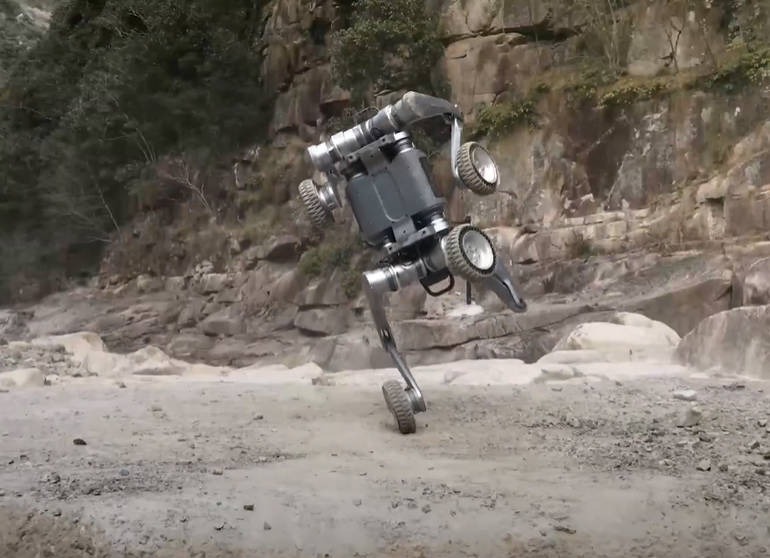
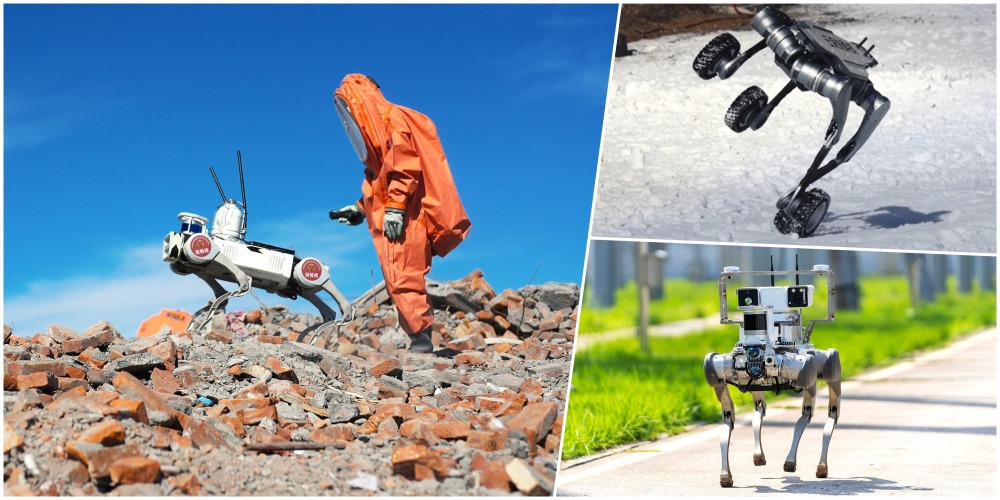
Among these, the wheeled-legged robot dog has wheels fitted at the end of its mechanical legs, enabling it to walk flexibly like a legged robot dog, as well as glide smoothly and jump quickly.
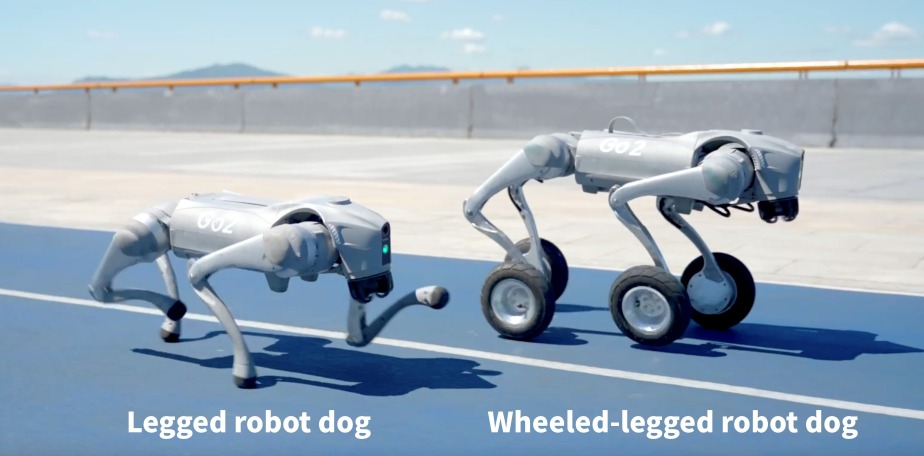
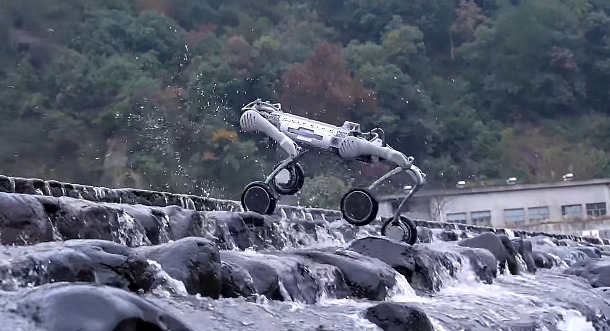
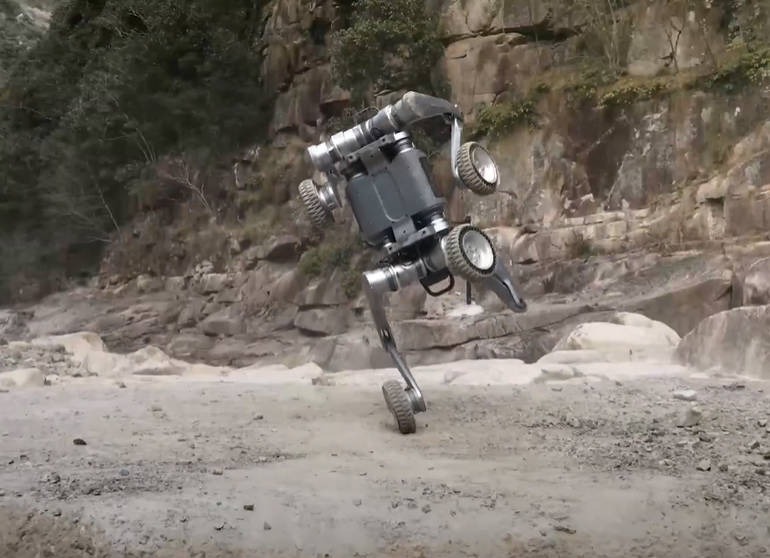
The wheeled-legged robot dogs developed by DEEP Robotics (雲深處科技) and Unitree (宇樹科技) are both experts in off-roading.
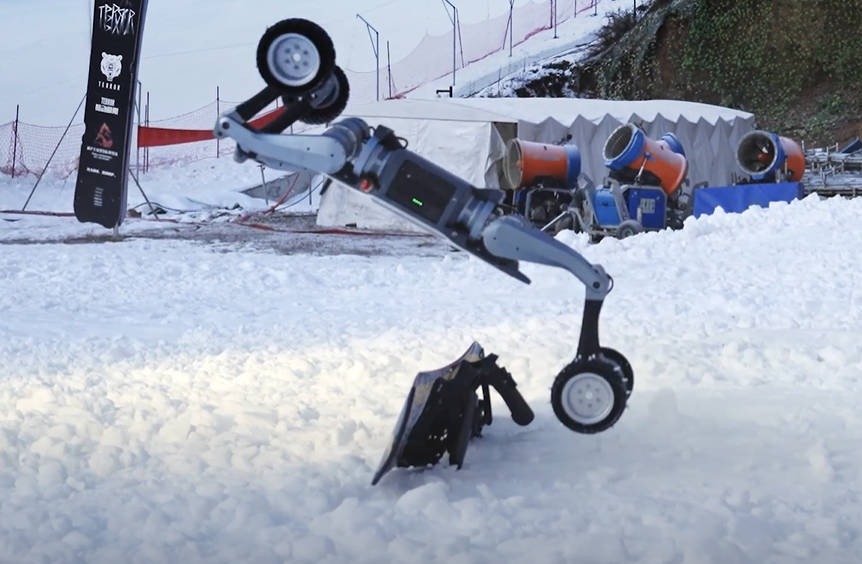
They can smoothly traverse complex terrains such as gravelly slopes, shallow mountain streams, woodlands, and thickets. They can also perform difficult manoeuvres such as aerial leap, standing on one leg, and doing a backflip to land upright on two legs.
Large robot dogs have disadvantages in terms of their agility, self-weight, and the ability to pass through narrow spaces. While small robot dogs have shortcomings in load-bearing capacity, endurance, and protective capabilities.
"Mountain Cat" from DEEP Robotics, however, is a medium-sized robot dog, which can both carry loads and enter narrow spaces.
Mountain Cat's intelligent motion control algorithm gives it excellent balance and precise movement control, allowing it to autonomously adjust its posture according to the terrain. In outdoor environments, it can easily handle complex terrains such as rugged mountain paths, muddy wetlands, and snow, demonstrating amazing stability.
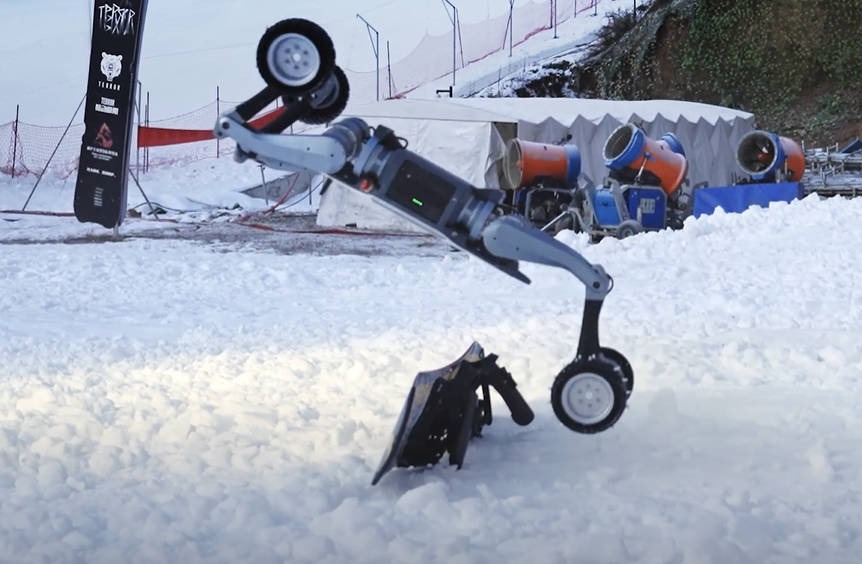
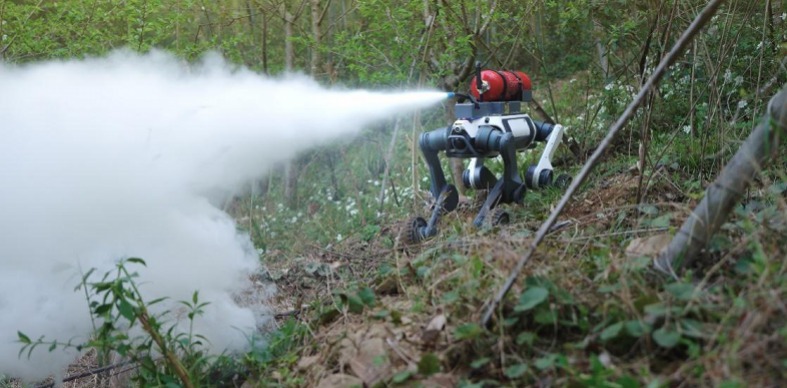
In addition to these hardcore off-road skills, the wheeled-legged robot dog also has strong practical applications.
Mountain Cat is the world's first industrial wheeled-legged robot dog designed for complex terrain and hazardous environments, which can be applied to scenarios such as electricity inspections, firefighting and emergency, logistics and distribution, and scientific research.
Read more: How do China's industrial robots accelerate smart manufacturing?
Six-legged robot dog: A new assistant for Antarctic scientific expeditions
Besides the common four-legged type, there is also a six-legged type of robot dog. What are its advantages?
A six-legged robot dog can distribute its weight more evenly, its load-carrying performance is better, and its stability is stronger.
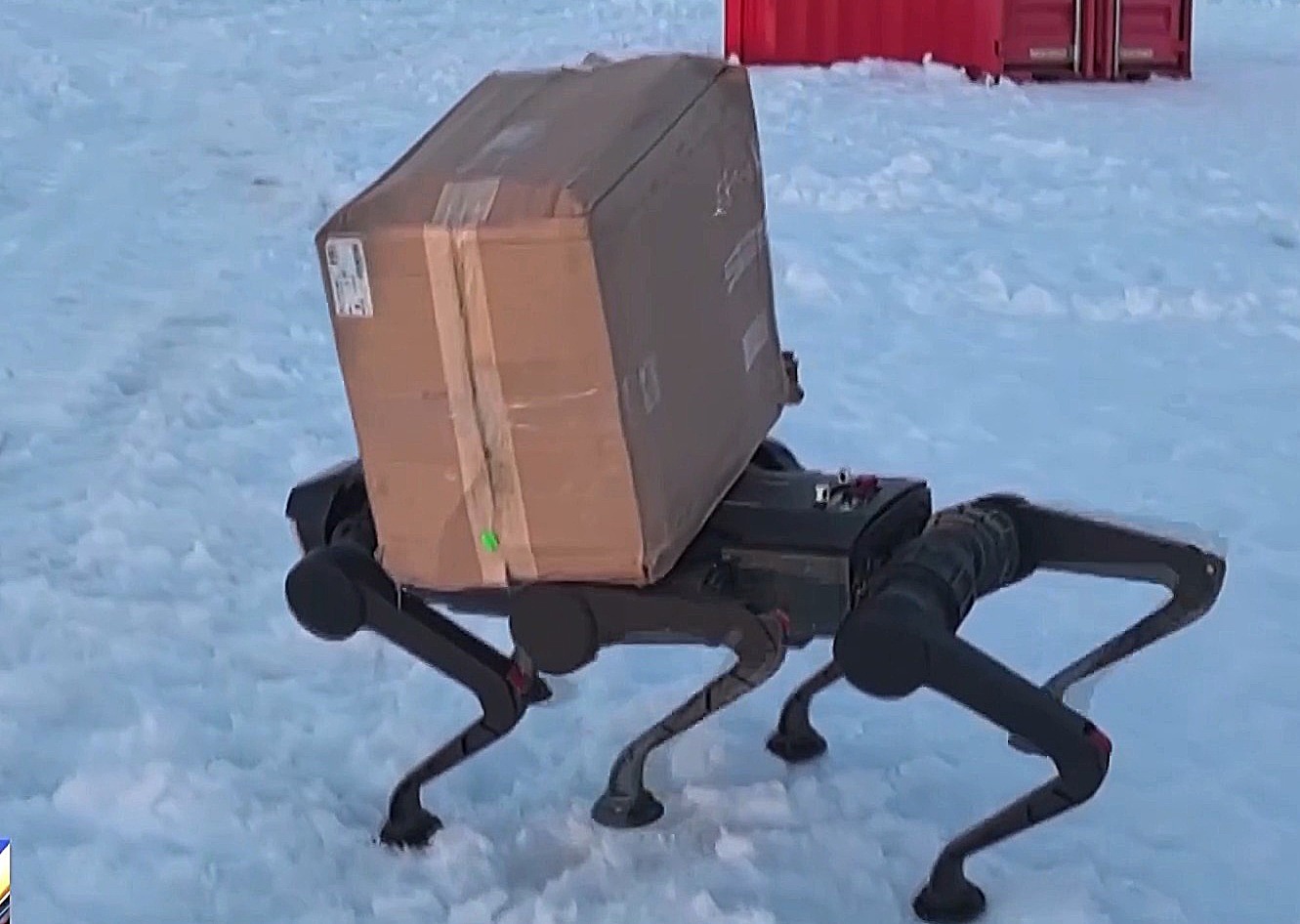
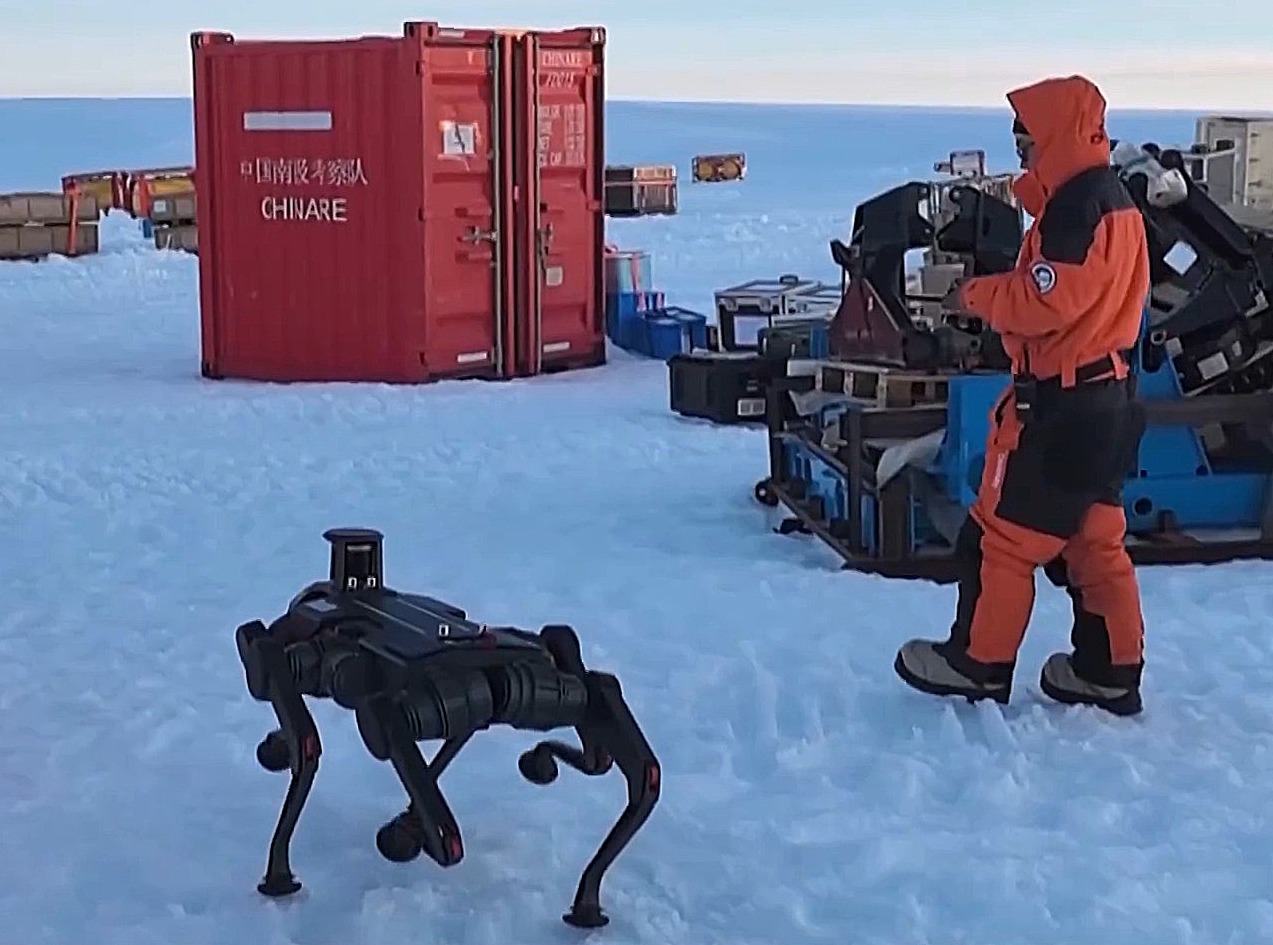
Near China's Zhongshan Station in Antarctica, a six-legged robot dog independently developed by China successfully completed a series of scientific expedition tests, which was also an innovative attempt for Antarctic expedition equipment.
The six-legged robot dog walks steadily on the ice while carrying a box. How does it manage not to fall or slip? The secret lies in the special anti-slip shoes it wears.
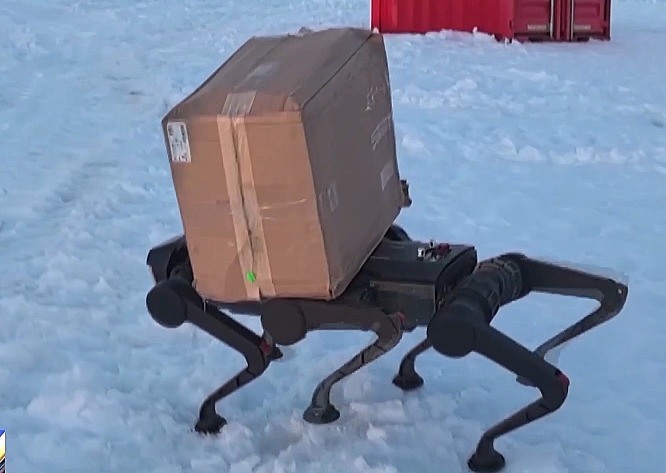
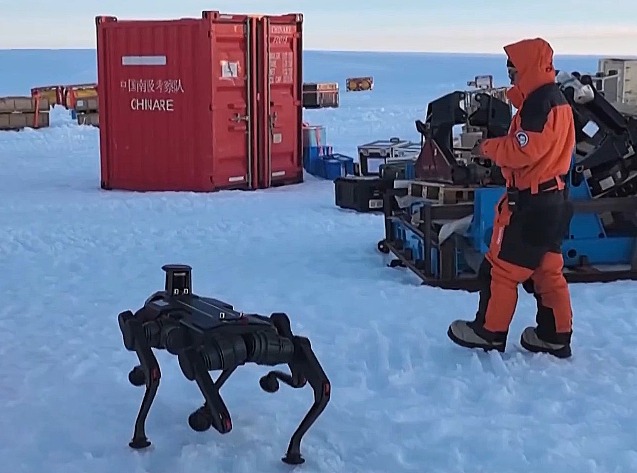
To cope with the harsh and severely cold environment of Antarctica, the research and development team designed a pair of shoes that can withstand temperatures as low as -40℃.
After the robot dog puts on the shoes, the pressure of contact with the ice surface becomes very small, thus achieving an anti-slip effect and allowing it to walk on the ice like on flat ground.
In addition, the robot dog's batteries have also undergone special thermal insulation treatment, which allows them to work for two hours in environments ranging from -30℃ to -40℃. Stacking two batteries on this basis can achieve the four-hour working time required for the scientific expedition.
Not only can the six-legged robot dog transport 70 to 100 kg of supplies, but its more important mission is to act as a trailbreaker, undertake the task of safety detection. It can carry a crevasse detector and walk ahead of the expedition members and vehicles, ensuring there are no crevasses under the ice it has traversed.
Read more: Service robots: How these daily life assistants help human?
Factory security robot dog: 24-hour patrol with ultra-long standby
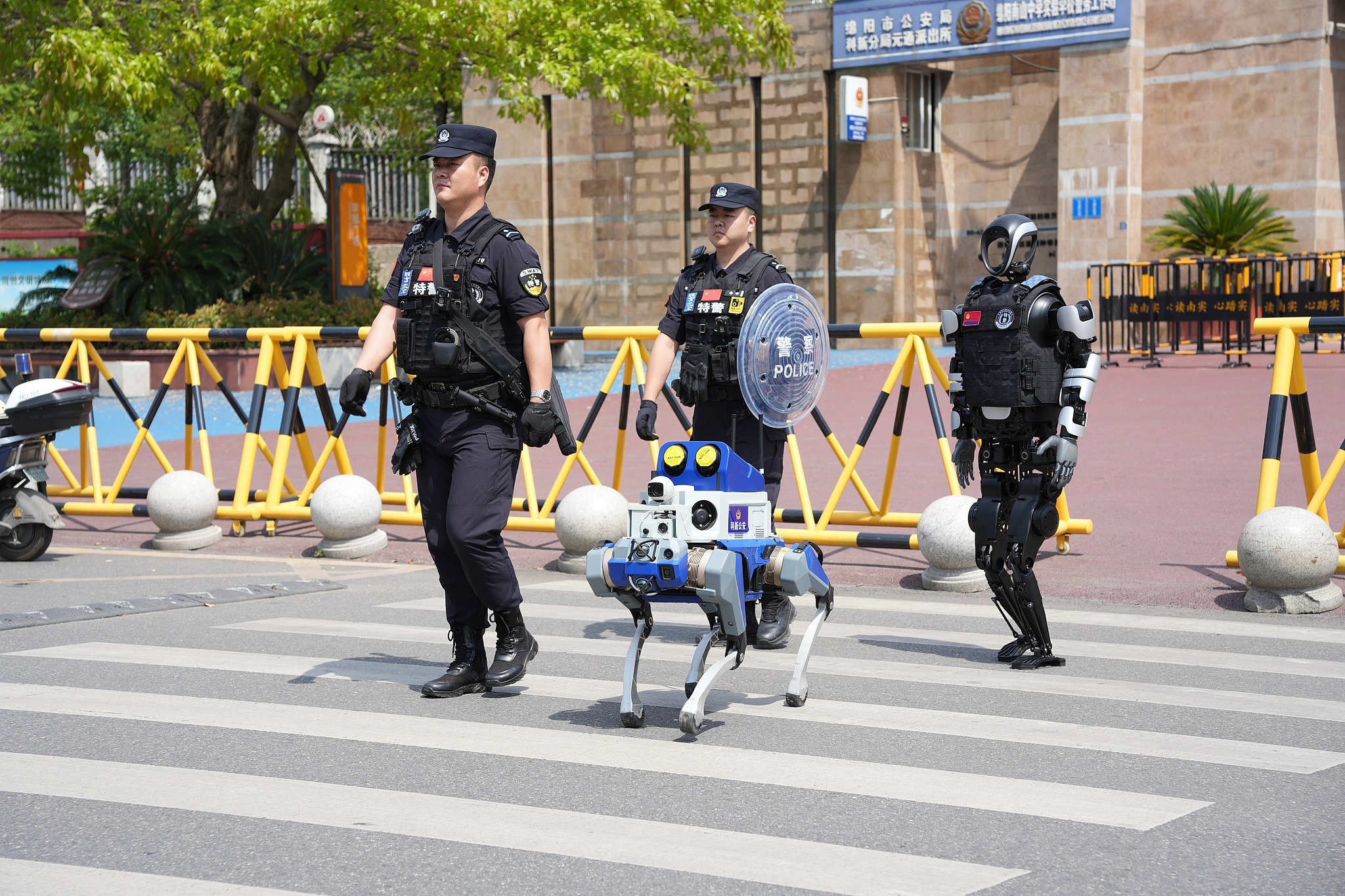
Robot dogs are now widely used in the field of security checks and patrols.
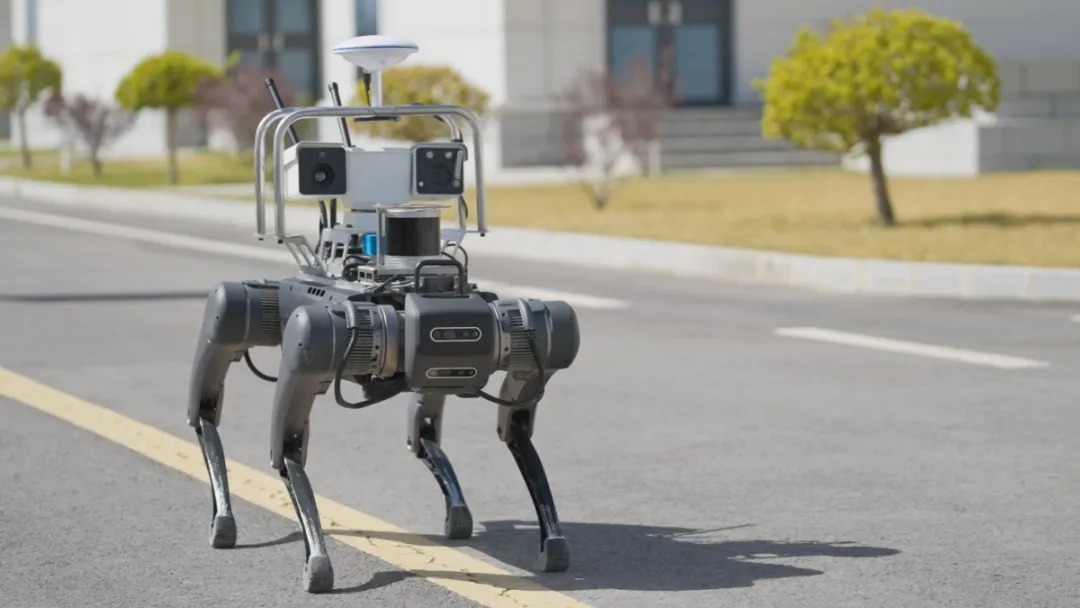
In a dairy factory, a robot dog named "Xiao Tian" (嘯天) is on patrol. It carries cameras and sensors on its back, equivalent to a mobile sky eye. With AI algorithms, it can accurately capture images and transmit data to the back office, enabling 24-hour dynamic monitoring of the factory.
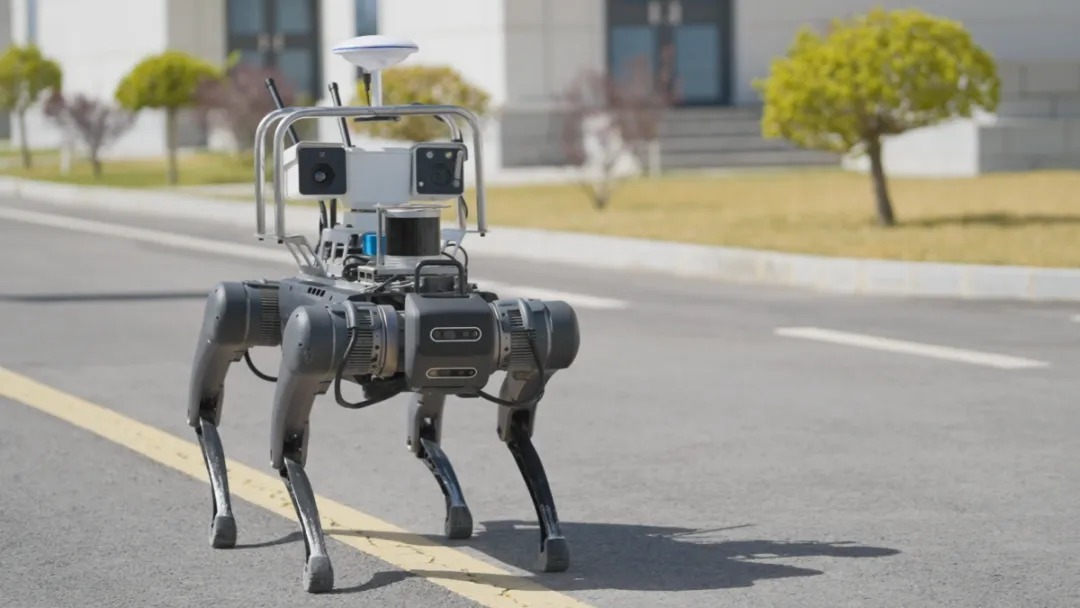
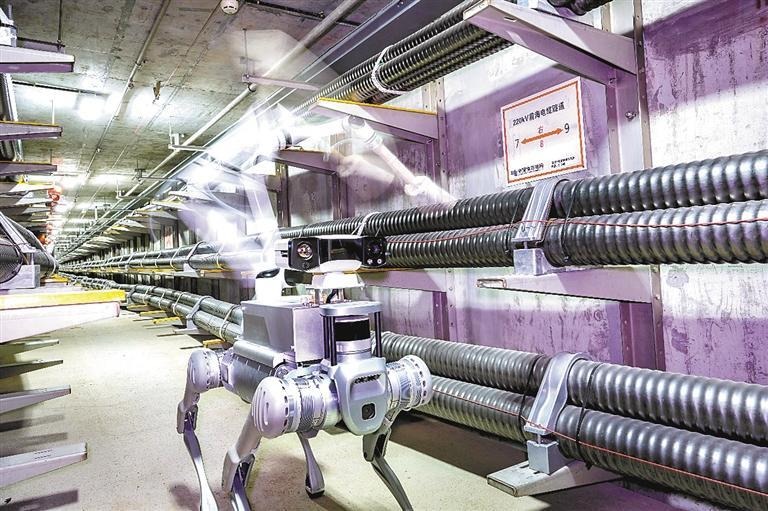
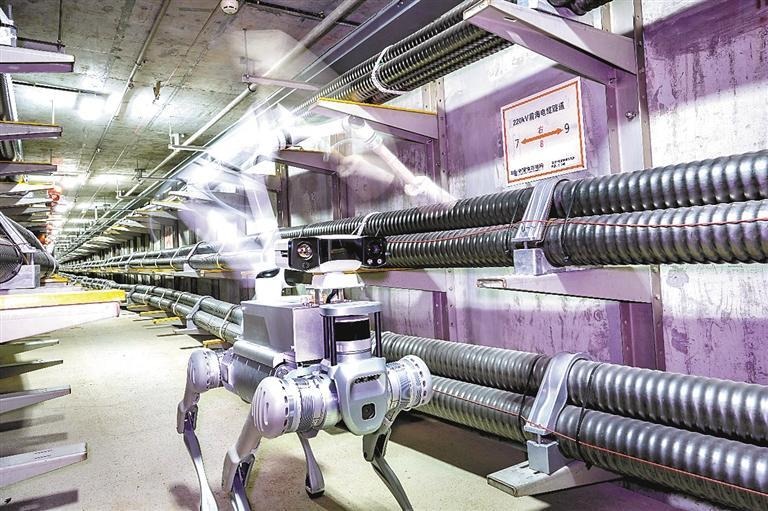
In narrow areas such as sewage pools and cable wells, workers need to be fully equipped to carry out inspections, which is high-risk and inefficient. Xiao Tian, however, can independently complete these high-risk inspection tasks, avoiding the dangers of manual inspections.
It can easily enter various complex spaces and detect parameters such as temperature, humidity and pressure through its thermal imaging camera sensor, identifying potential hazards like pipeline leaks.
The entire factory park covers an area equivalent to 40 football pitches, and Xiao Tian can patrol around the factory twice without interruption, acting as the security of the factory area.
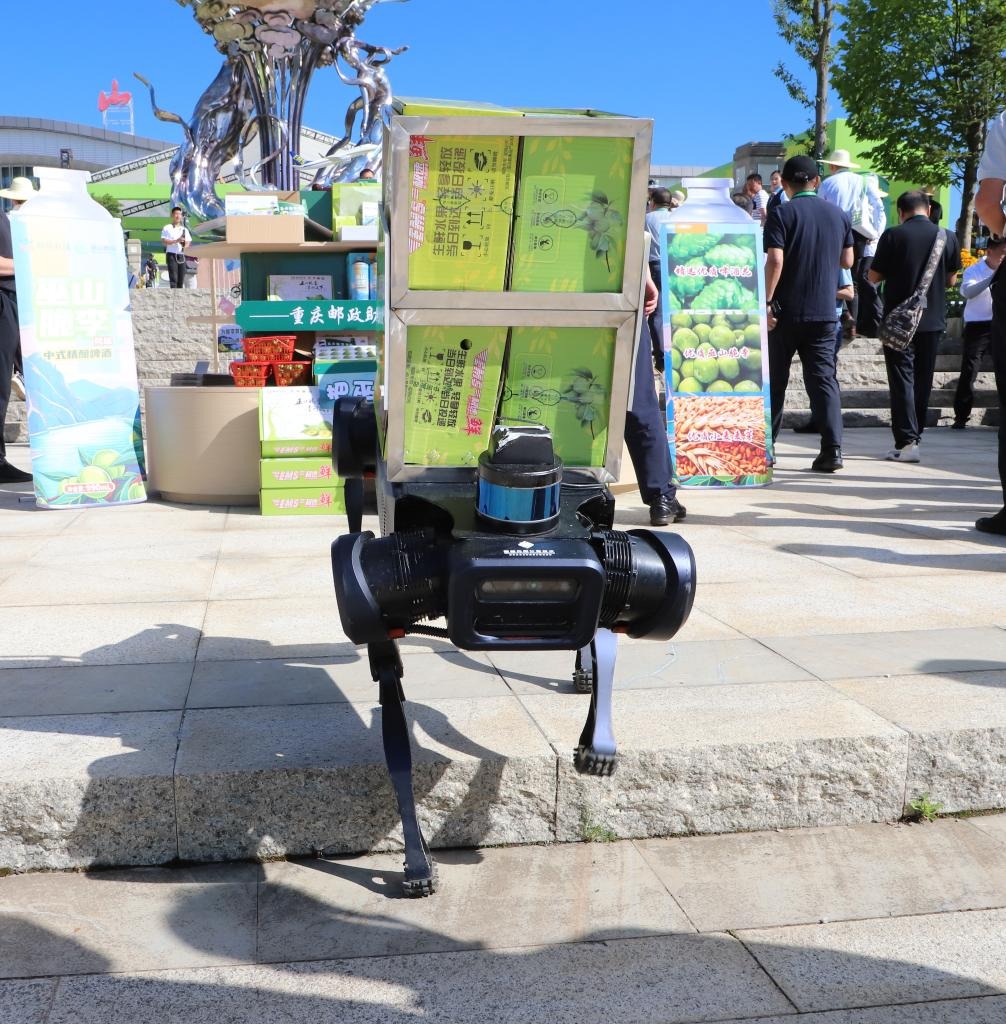
In addition to the impressive skills mentioned above, robot dogs are already being flexibly applied in various everyday scenarios, such as performing lion dance, logistics and transportation, and serving people in communities.

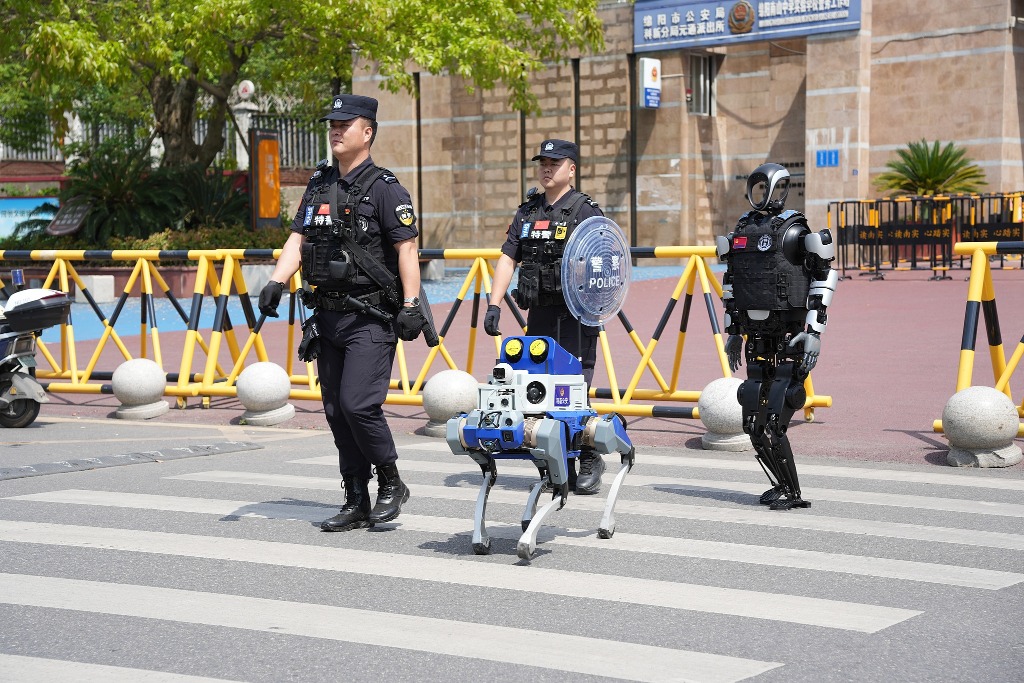
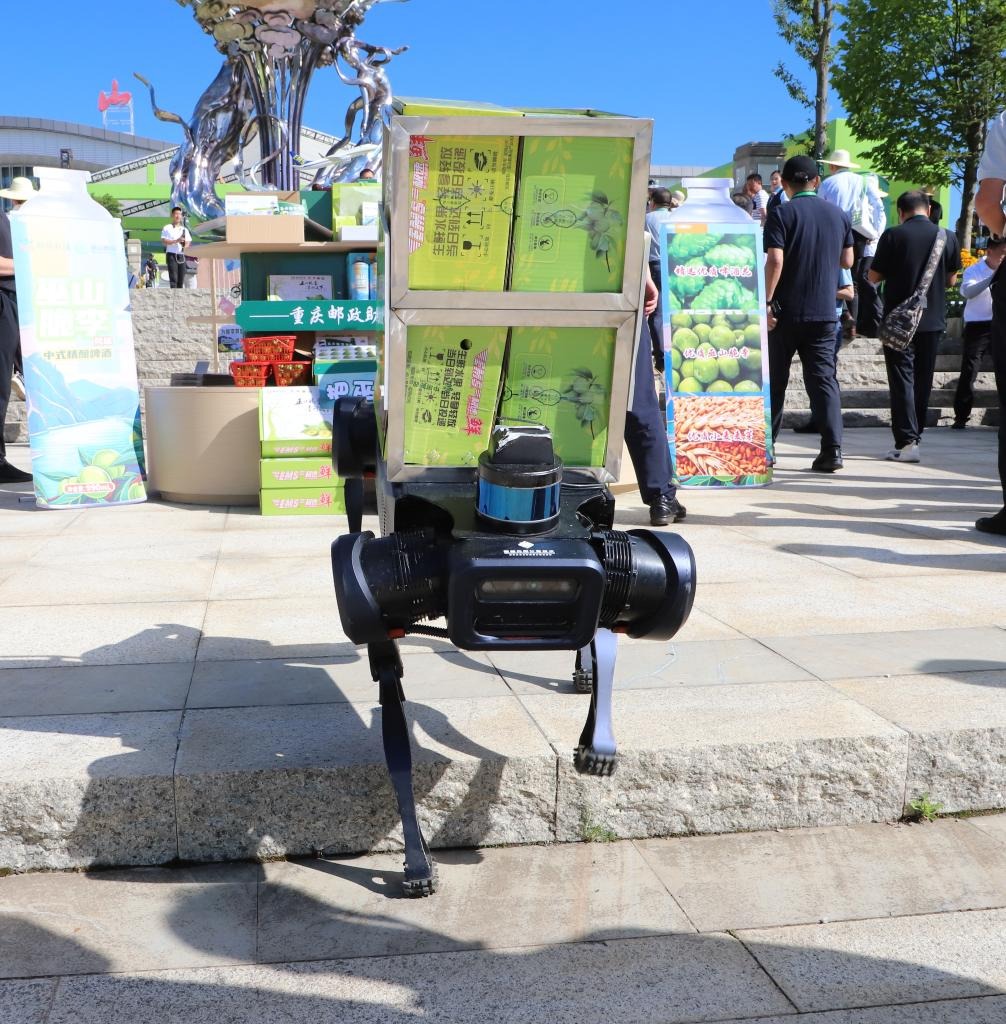

Although robot dogs currently still face technical challenges such as dynamic balance control and battery life, as robot dog technology continues to break through, their motor skills and application scenarios will be further developed.
Robot dogs are expected to distinguish themselves in more fields, not only bringing more convenience to human work and life but also becoming good helpers in safeguarding social security.
Read more: Chinese humanoid robots' new skills: Backflips, cycling and doing housework