Published : 2026-05-31
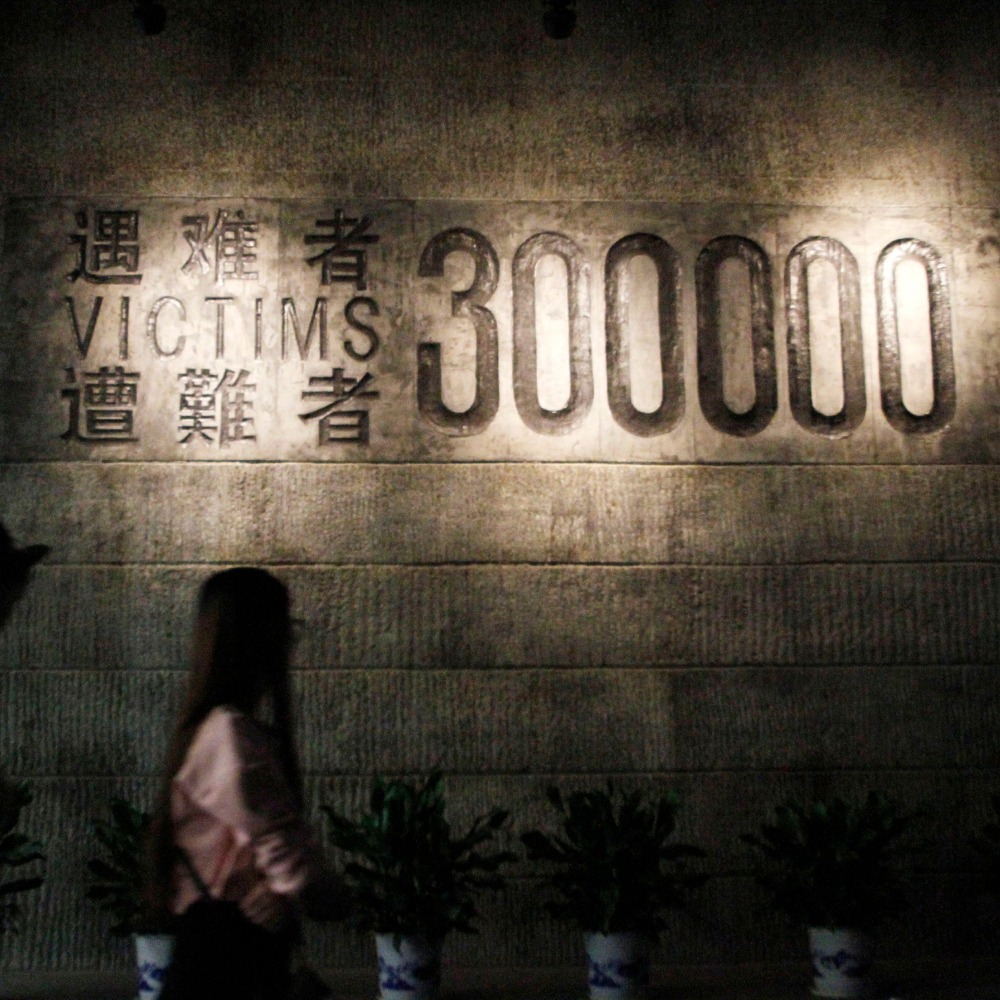
Nanjing, one of China’s ancient capitals, is a city layered with history. For many visitors, it first brings to mind the bustle and brilliance of the Confucius Temple and Qinhuai River area, or the solemn reflections inspired by the Sun Yat-sen Mausoleum and the Memorial Hall of the Victims in the Nanjing Massacre.
Yet beyond its glamour and grief, Nanjing is also a renowned Buddhist city, rich in contemplative calm and cultural depth.
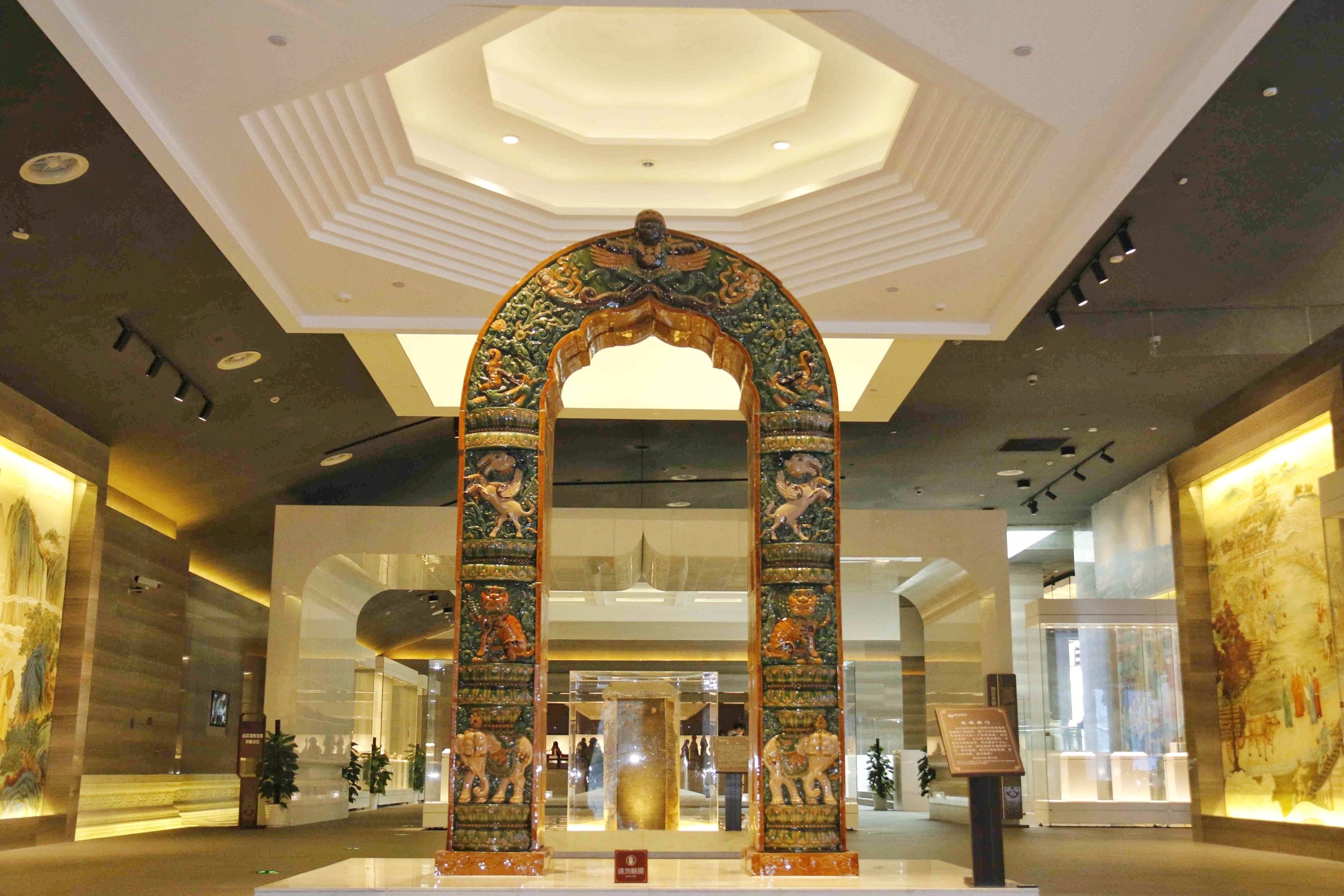
Grand Bao'en Temple Heritage Site
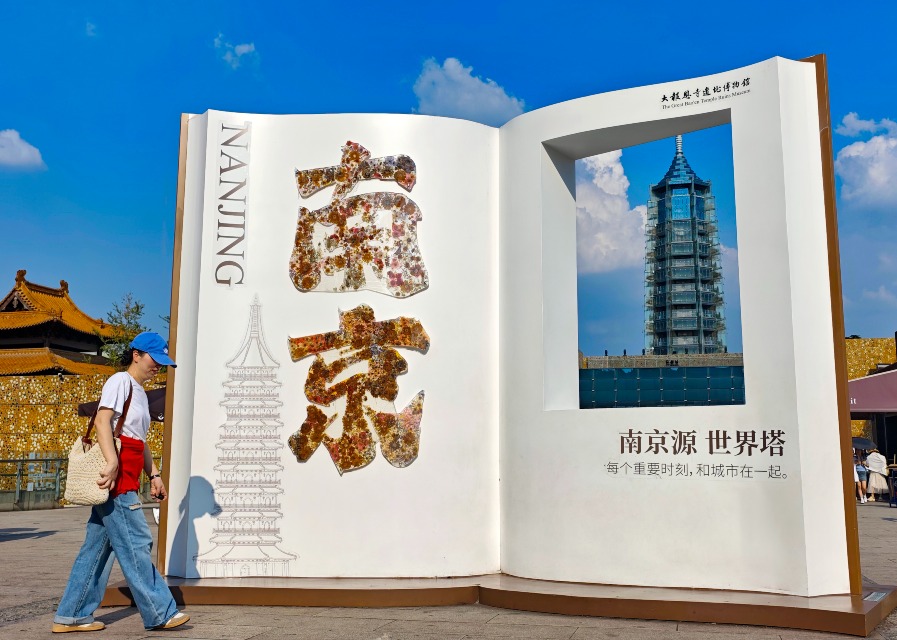
To begin a pilgrimage to Nanjing, the best place to start is the Grand Bao'en Temple Heritage and Scenic Area on the banks of the Qinhuai River.
The history of Nanjing's Grand Bao'en Temple can be traced back to the Jianchu Temple of the Eastern Wu period during the Three Kingdoms, making it the oldest Buddhist temple in the Jiangnan region.
During the Yongle era of the Ming Dynasty, the Yongle Emperor Zhu Di, in memory of his birth mother, mobilised 100,000 soldiers and civilians and spent nearly 20 years building the grand-scale Bao'en Temple.
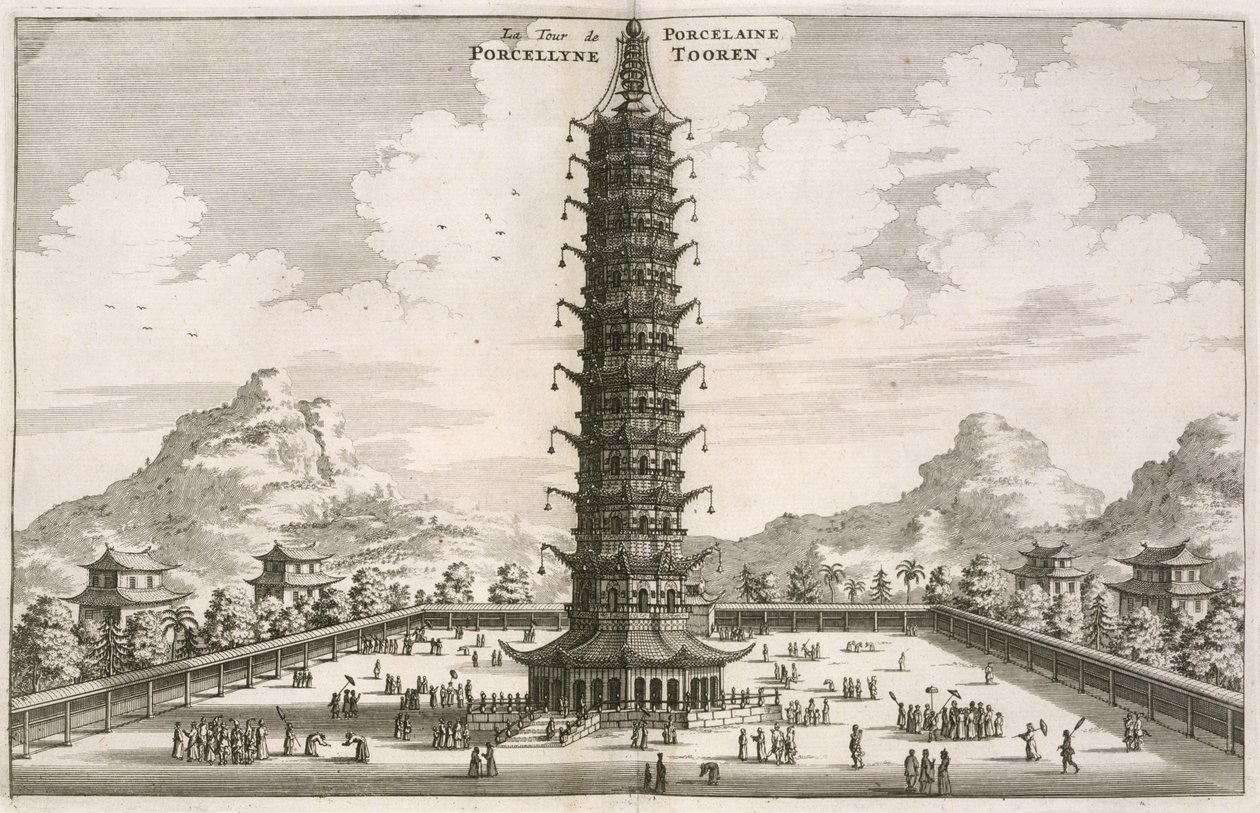
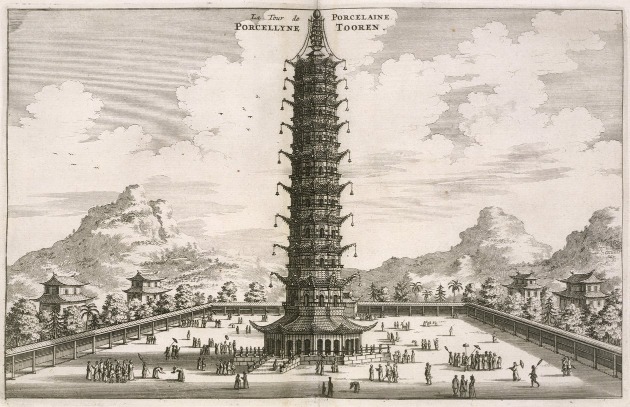
At the end of the 17th century, painter Johan Nieuhof visited China with the Dutch East India Company and depicted what he saw and heard in "An Embassy from the East-India Company of the United Provinces to the Grand Tartar Cham, Emperor of China".
This earned the Grand Bao'en Temple's coloured glaze pagoda the laudatory name "Porcelain Tower," making it famous abroad and becoming one of the Seven Wonders of the Medieval World in the eyes of the West, on par with the Colosseum in Rome and the Leaning Tower of Pisa. Traces of the coloured glaze pagoda can even be found in fairy tale master Hans Christian Andersen's "The Garden of Paradise".
Unfortunately, the pagoda, which had stood in Nanjing for 400 years, was destroyed during the Taiping Rebellion in the Qing Dynasty, to the regret of countless people.
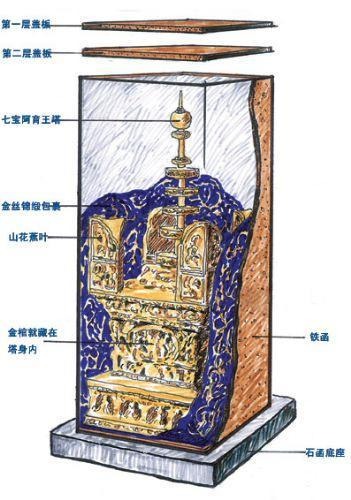
In the 2000s, the Nanjing municipal government initiated archaeological excavations for the reconstruction of the Grand Bao'en Temple, and in 2008, unexpectedly unearthed the underground palace of the Song Dynasty's Changgan Temple at the pagoda site.
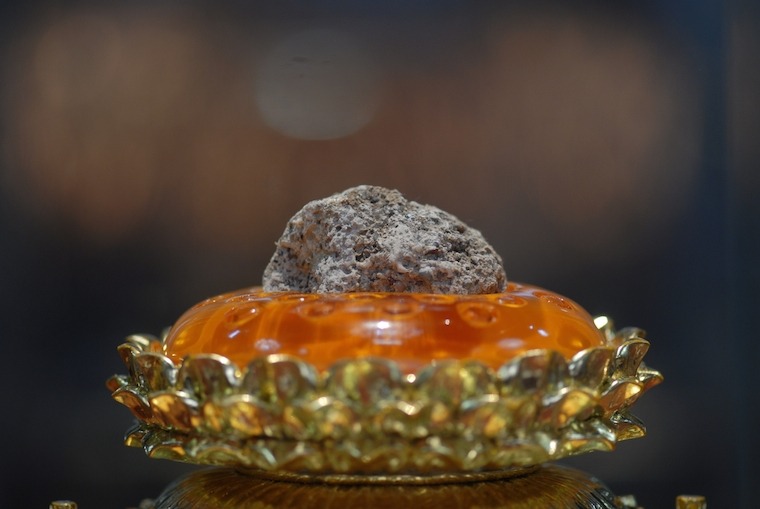
Even more sensational was that among the sacred relics that had lain dormant in the underground palace for a thousand years was the world's only parietal bone sarira of Sakyamuni Buddha, a discovery that shocked the world.
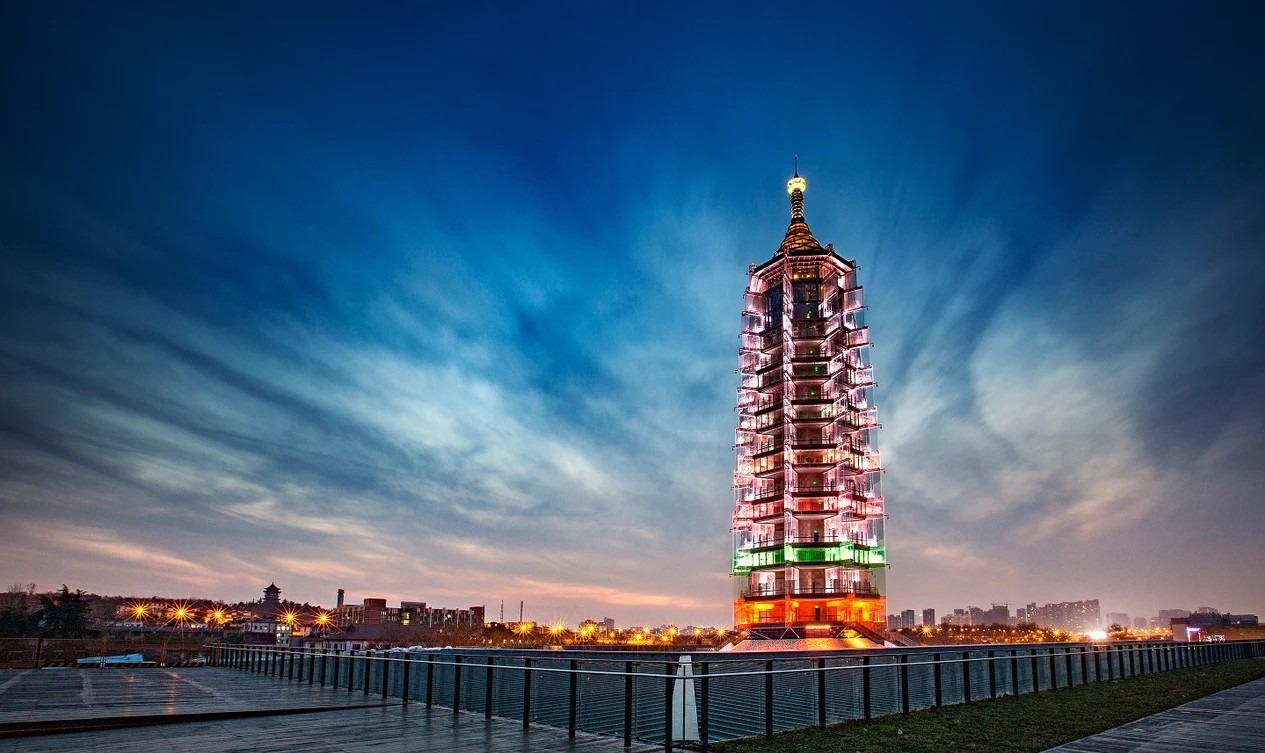
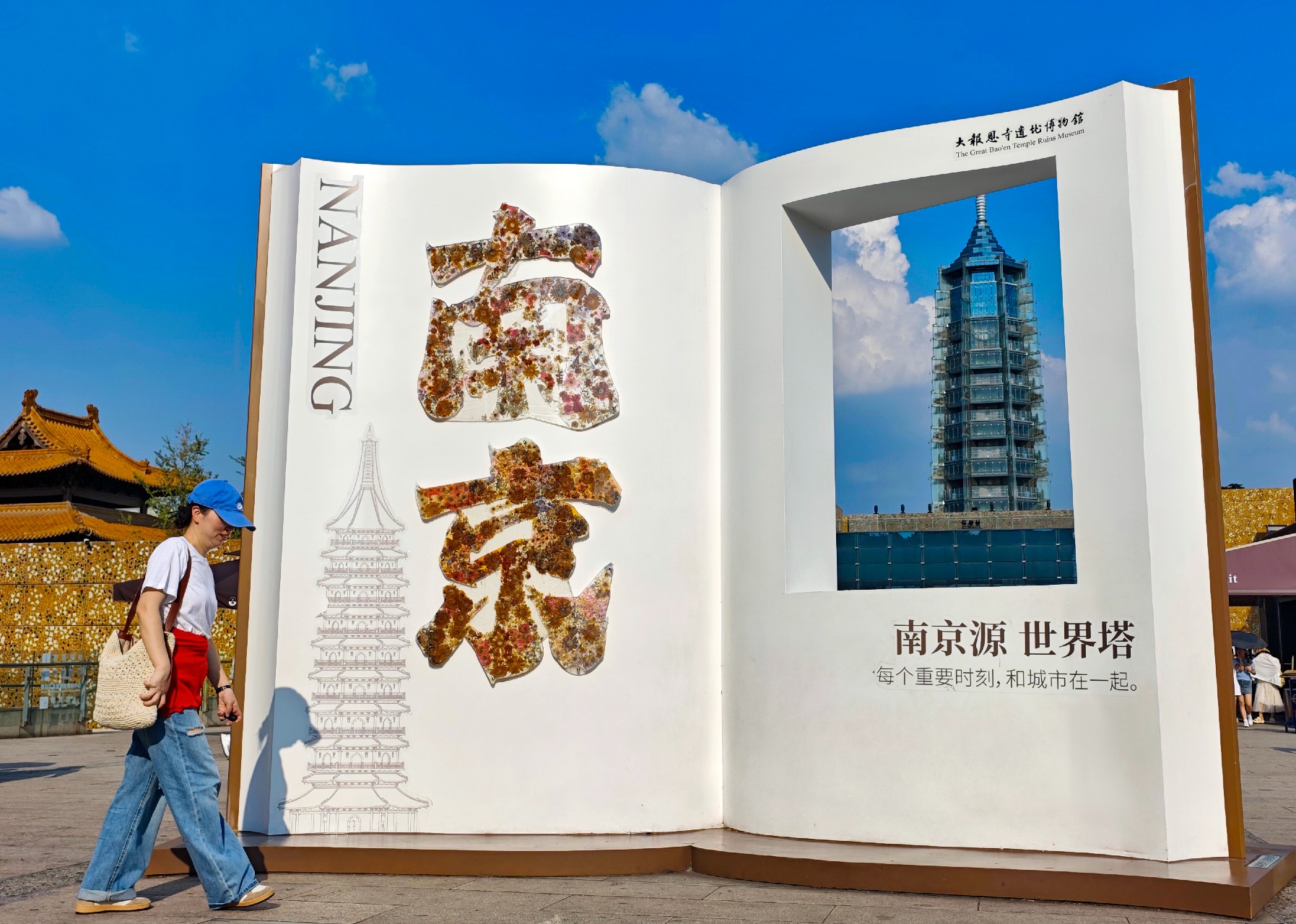
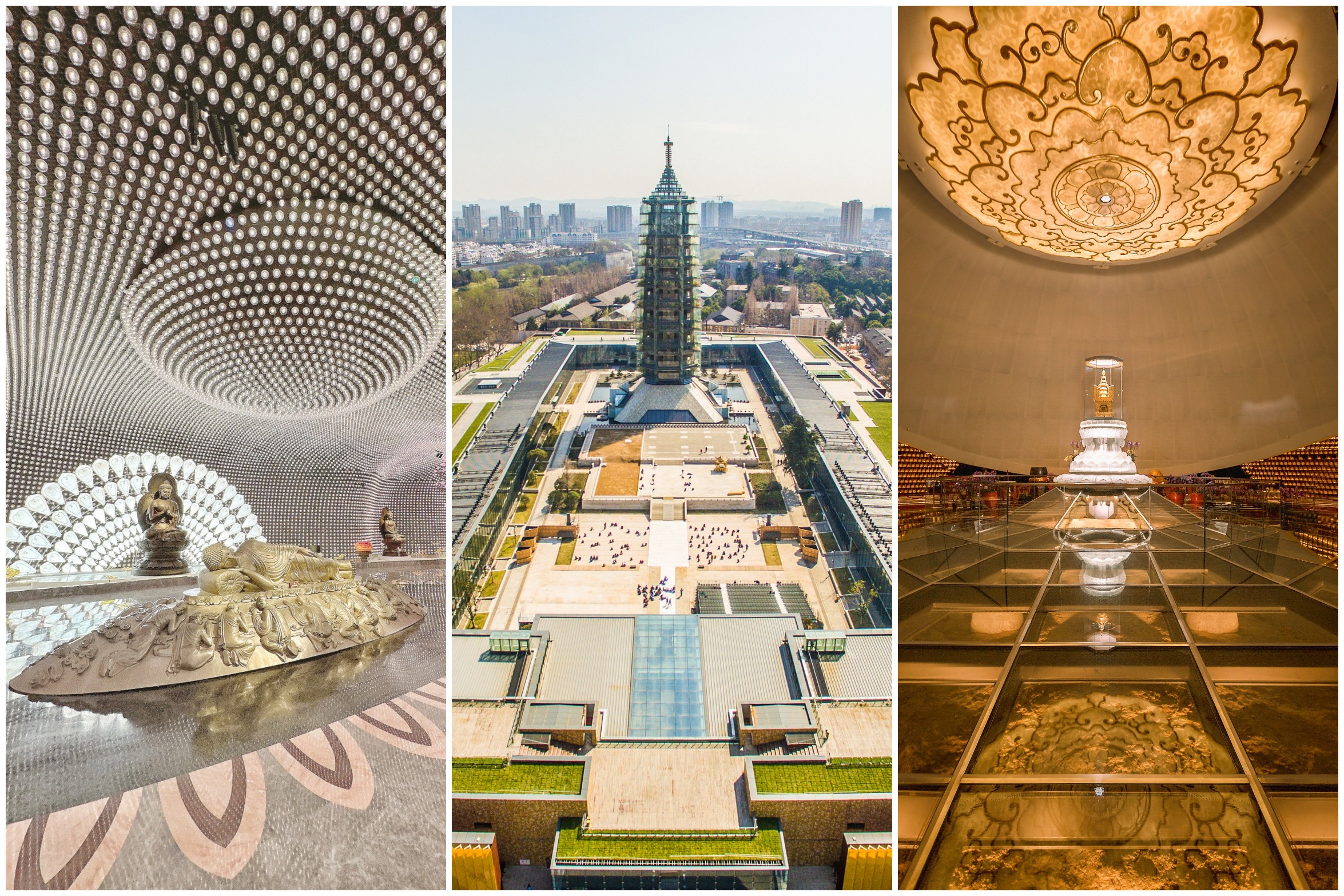
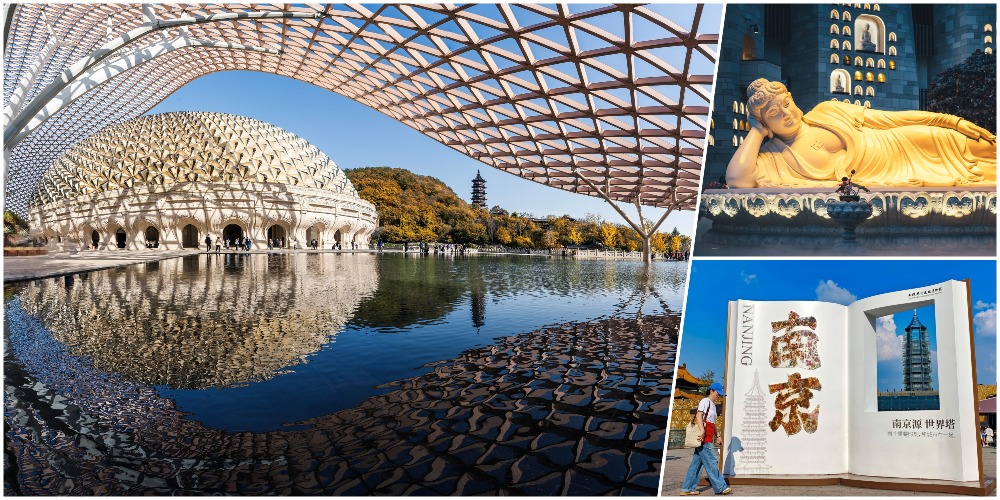
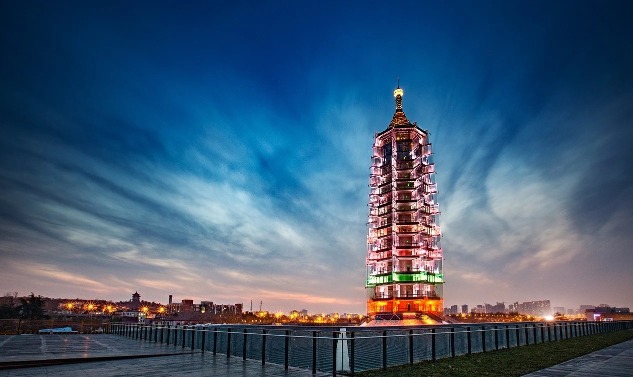
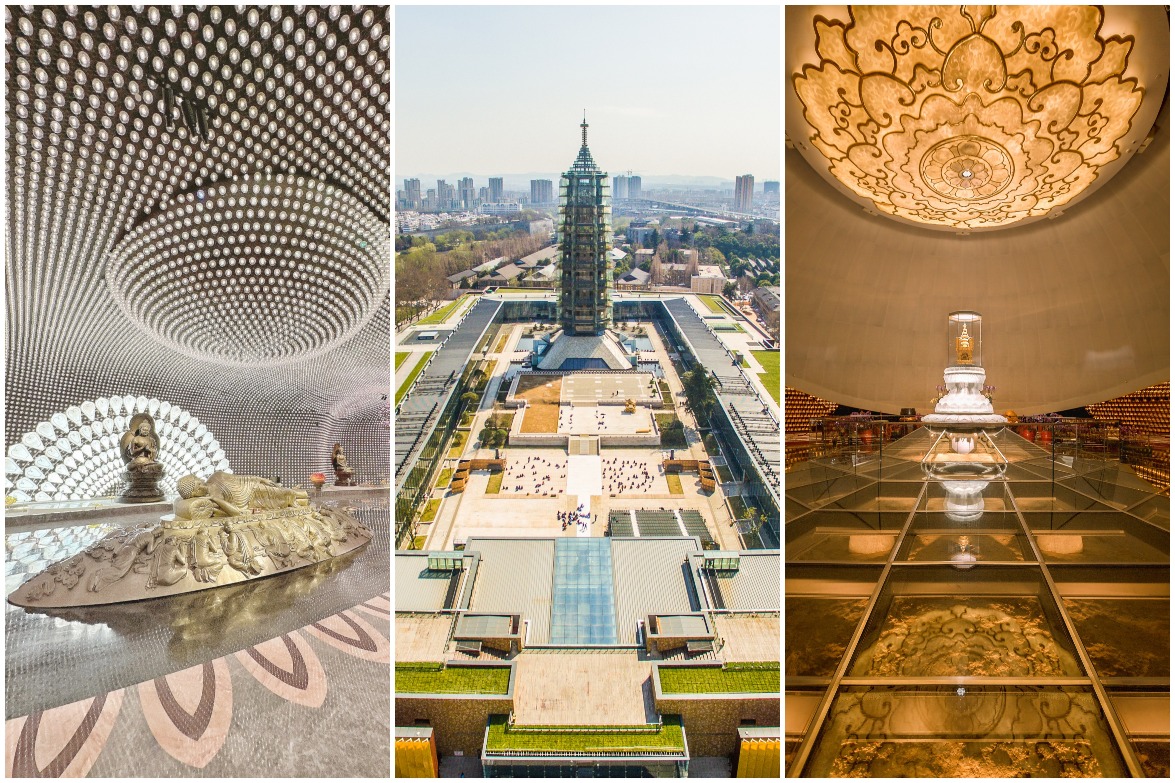
To avoid damaging the underground palace, the authorities changed their plan and, following the principle of minimal intervention, recreated the nine-storey pagoda on the original site in the form of a lightweight steel and glass protective tower, naming it the "Grand Bao'en Pagoda" to protect the underground palace ruins.
In December 2015, the Grand Bao'en Temple Heritage Park officially opened, becoming China's largest, highest-standard, and most completely preserved temple heritage site.
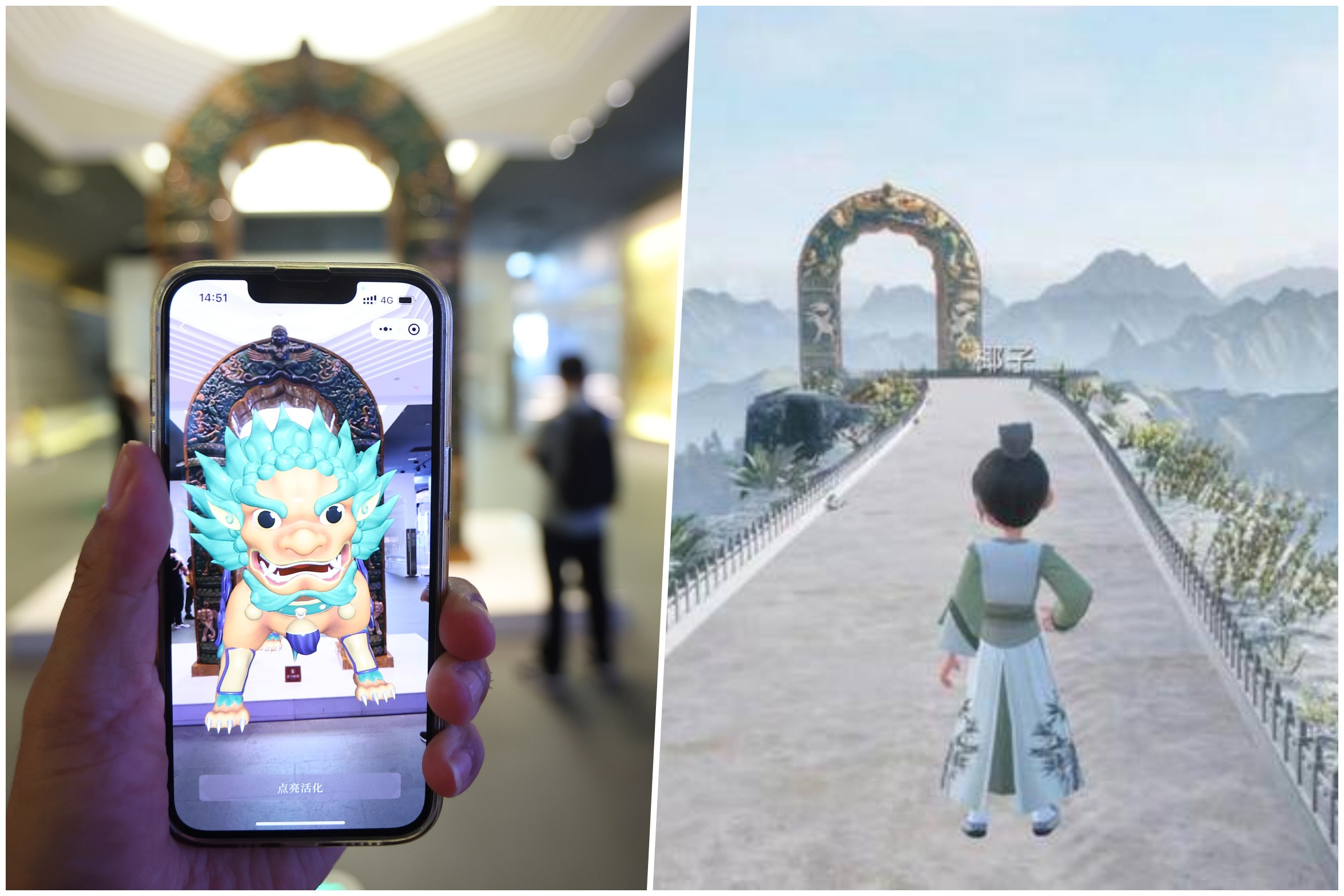
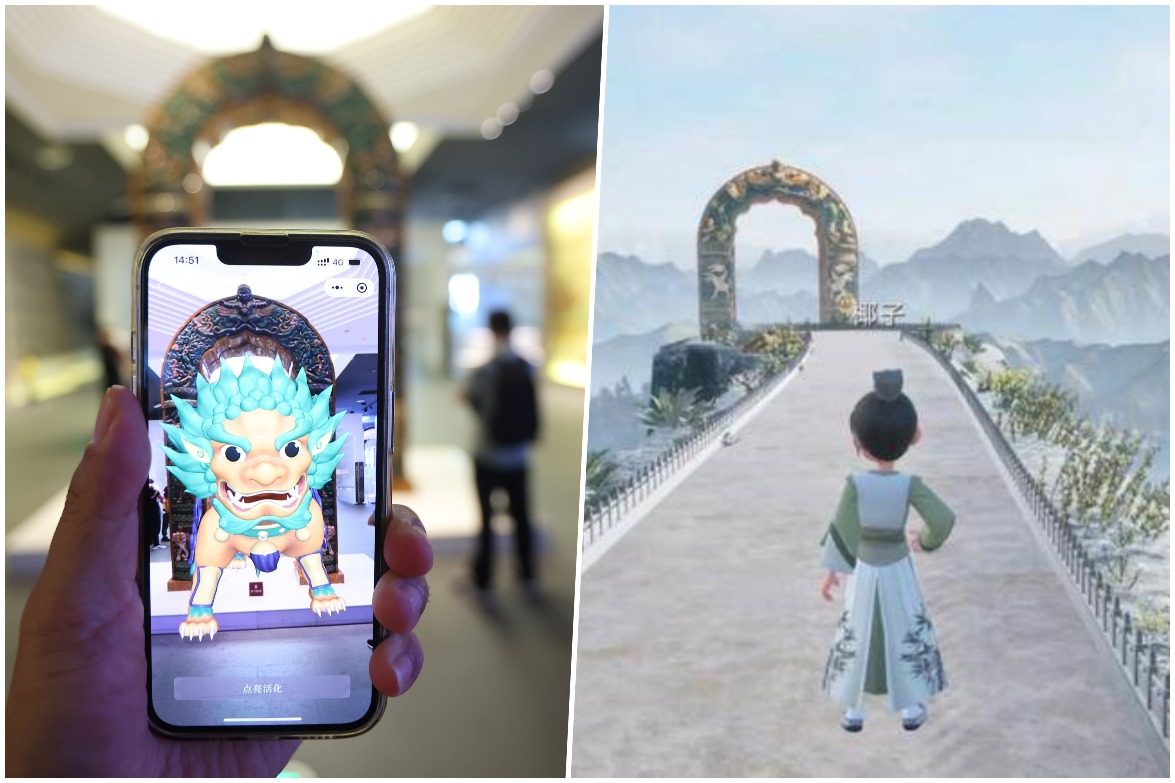
The heritage museum also makes clever use of technology, transforming the museum into a metaverse space and using digital technology to restore the original appearance of cultural relics. It revitalises the artefacts through lively and advanced methods, promoting Buddhist history and culture.
Niushou Mountain Usnisa Palace
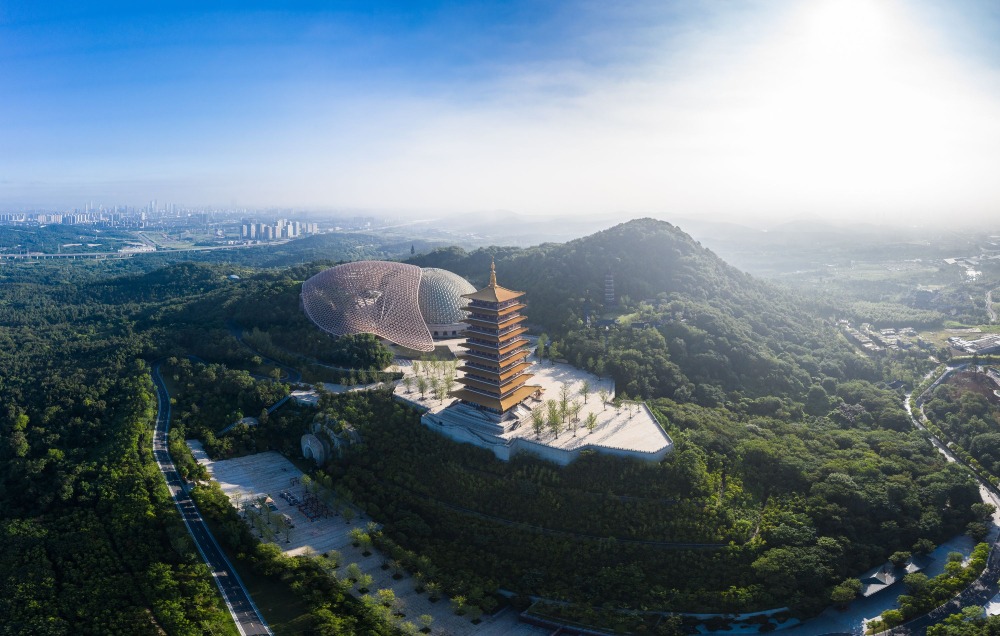
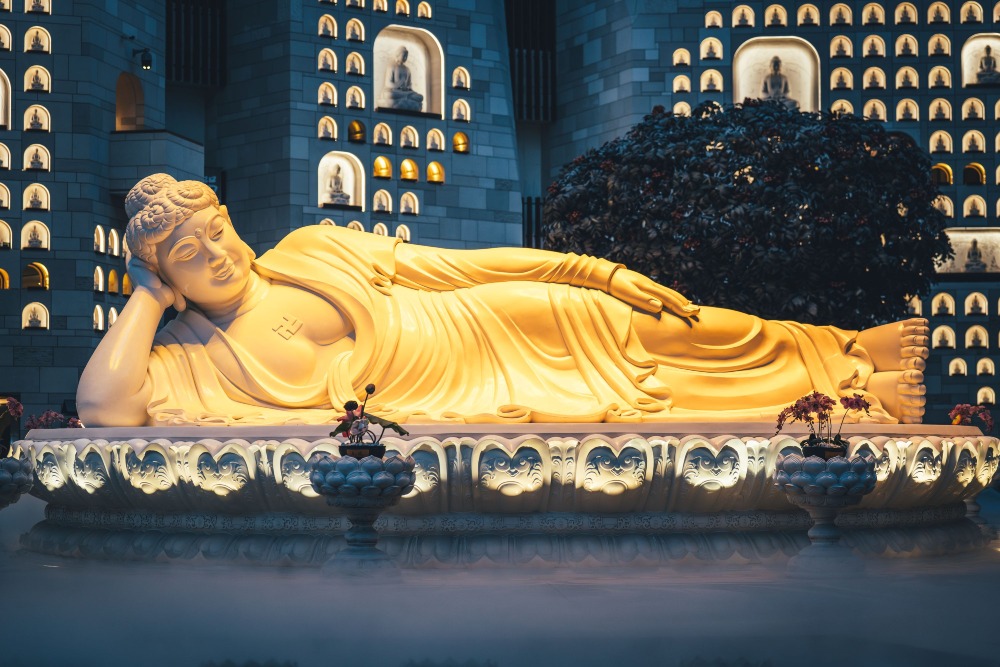
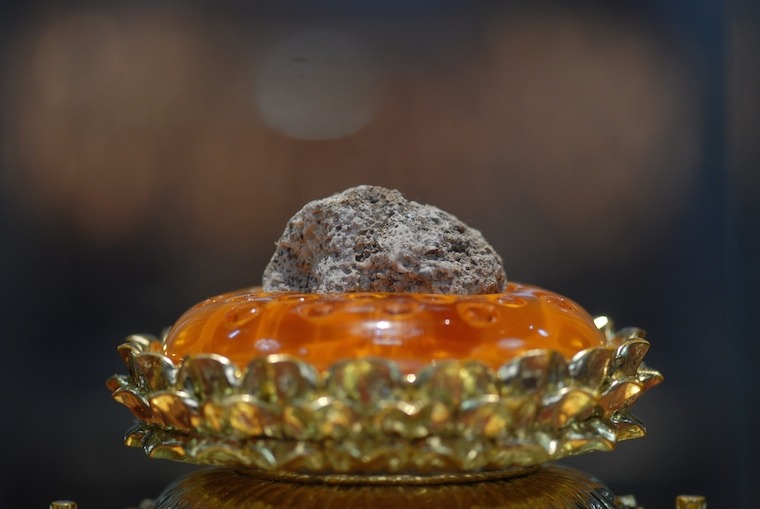
Since the Buddha's parietal bone sarira was unearthed at the Grand Bao'en Temple, where is this supreme sacred relic housed today? The answer is Nanjing's Niushou Mountain Usnisa Palace!
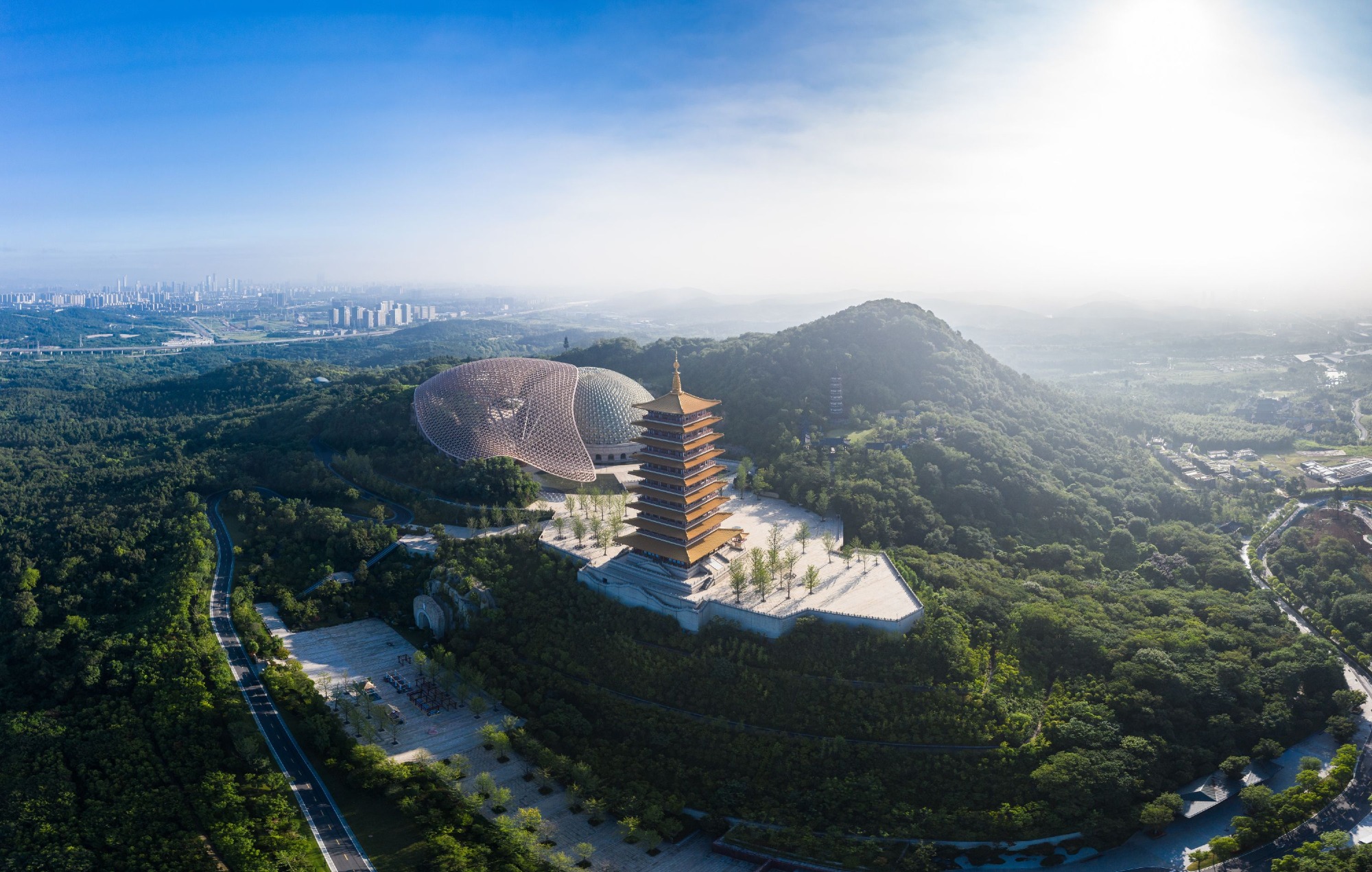
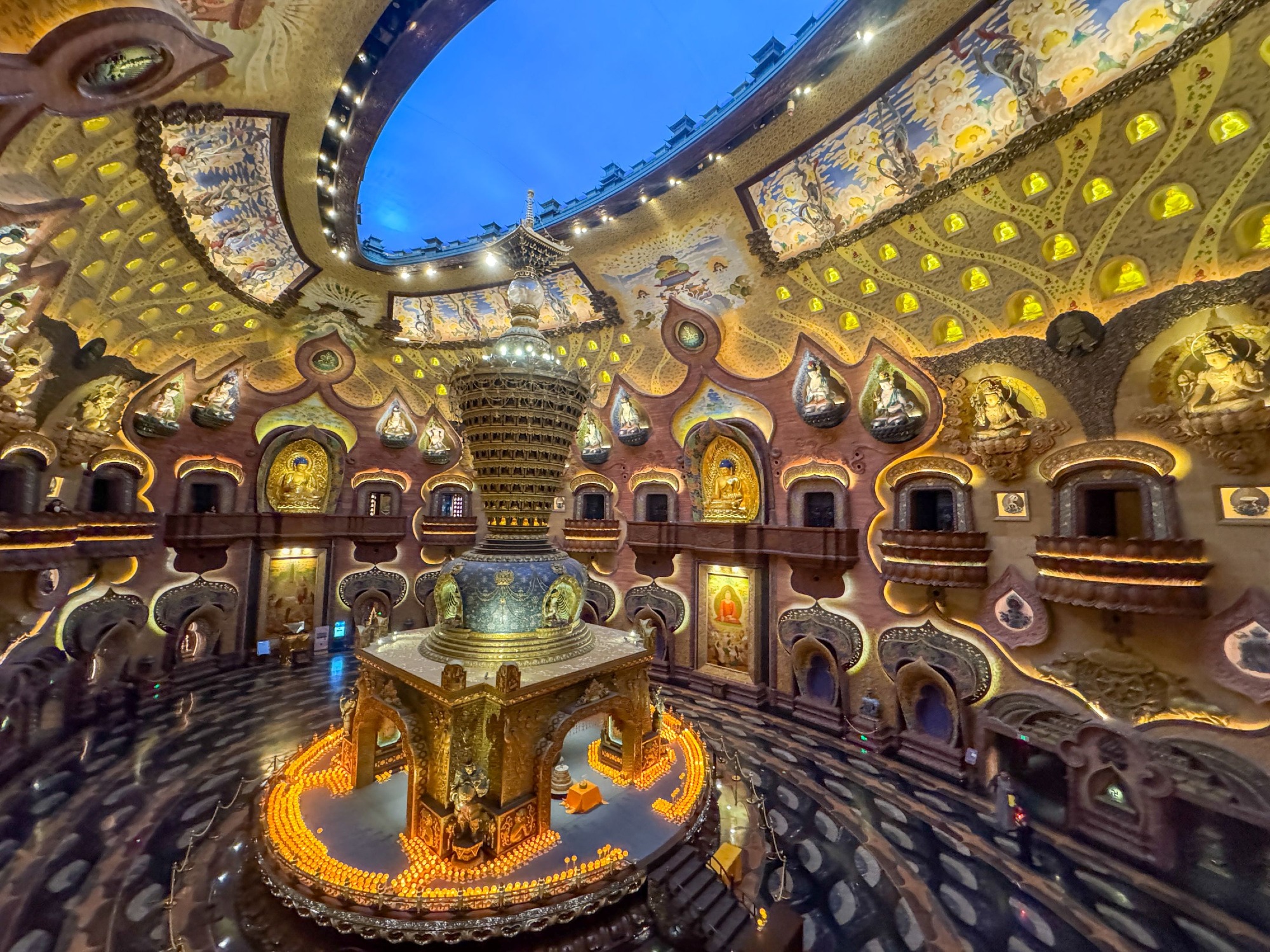
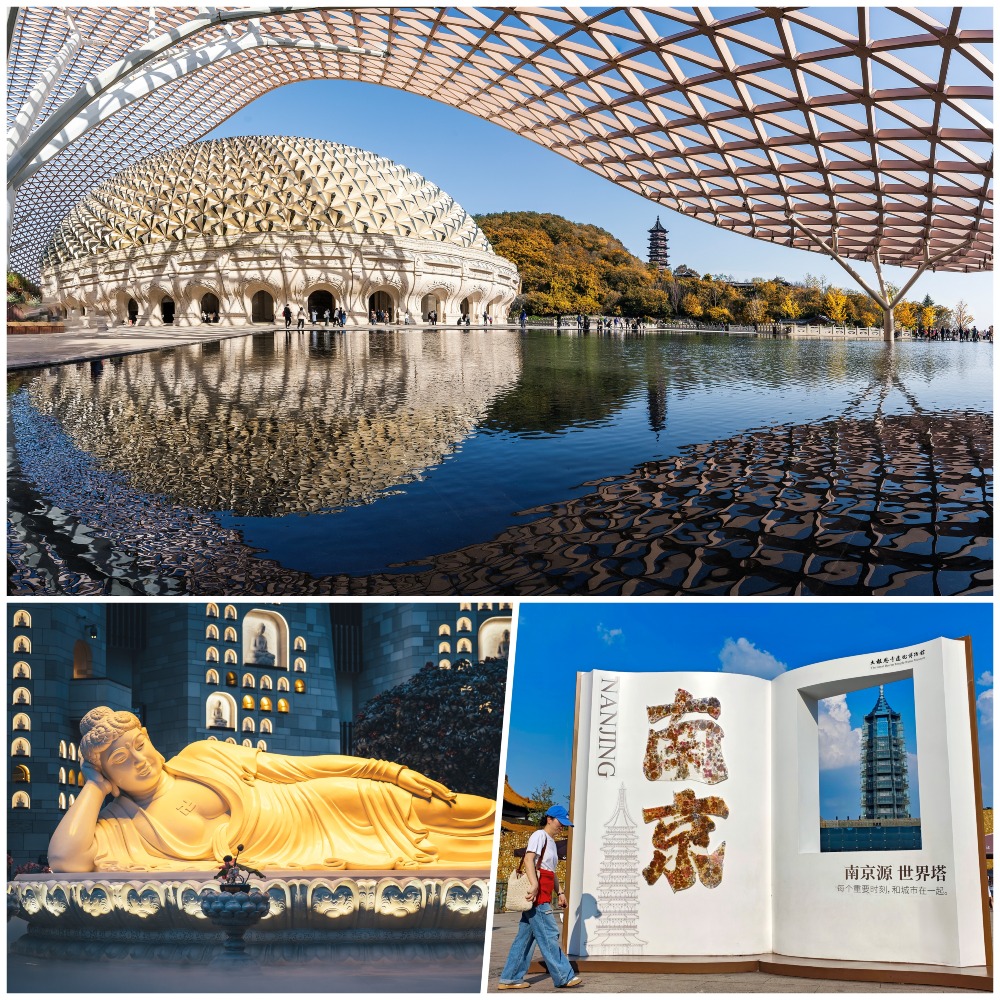
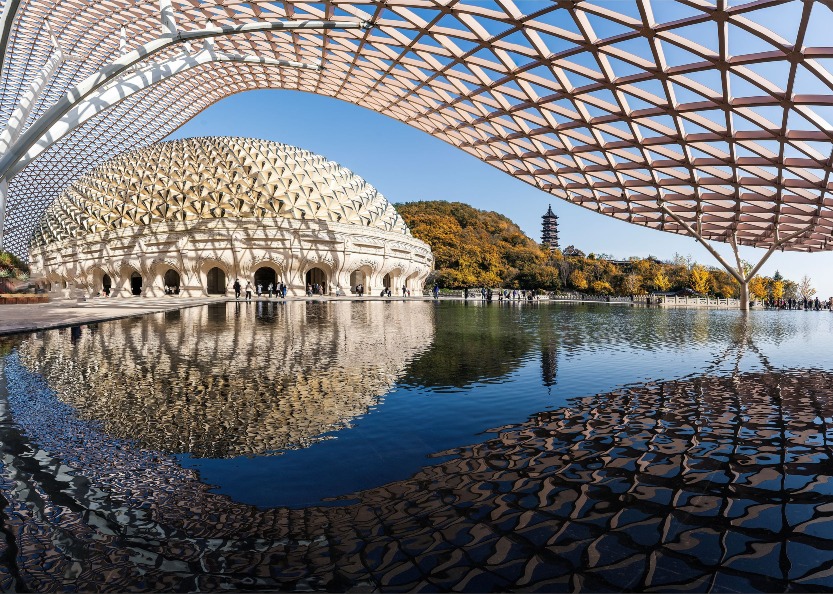
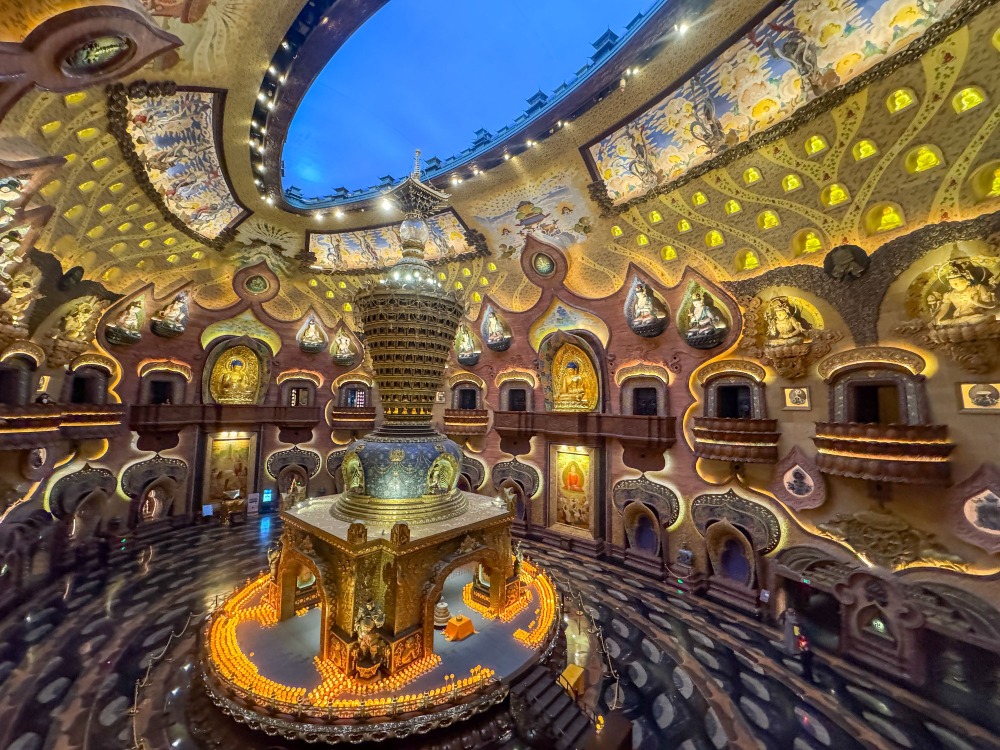
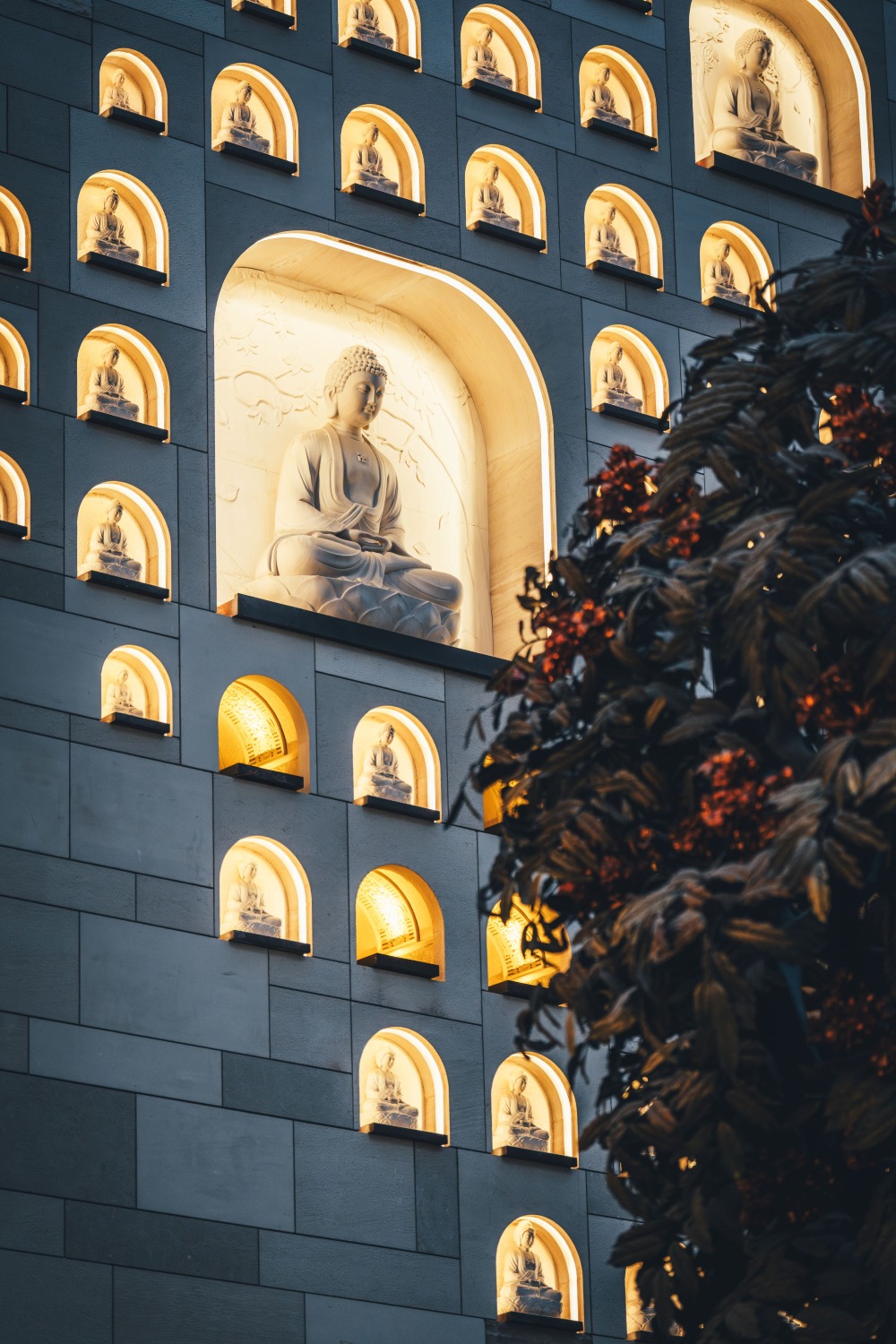
Opened in 2015, the Niushou Mountain Usnisa Palace, with its exquisite architecture and magnificent decoration, has been hailed as a palace of Chinese Buddhist art.
In fact, Niushou Mountain has been a famous Buddhist mountain since ancient times. According to the research of the contemporary Buddhist master, the Venerable Yin Shun, Farong, the founding patriarch of Niushou Mountain, was the true driving force behind the successful transformation of Indian Buddhism into "Chinese Zen".
He skilfully integrated the philosophies of Laozi and Zhuangzi into Buddhist teachings, founding the Niutou school, which allowed Buddhism to take root in China. Therefore, the enshrinement of the Buddha's parietal bone sarira here is of profound significance.
After the parietal bone sarira was unearthed, the authorities invested 4 billion yuan to build the extraordinarily crafted Usnisa Palace on Niushou Mountain.
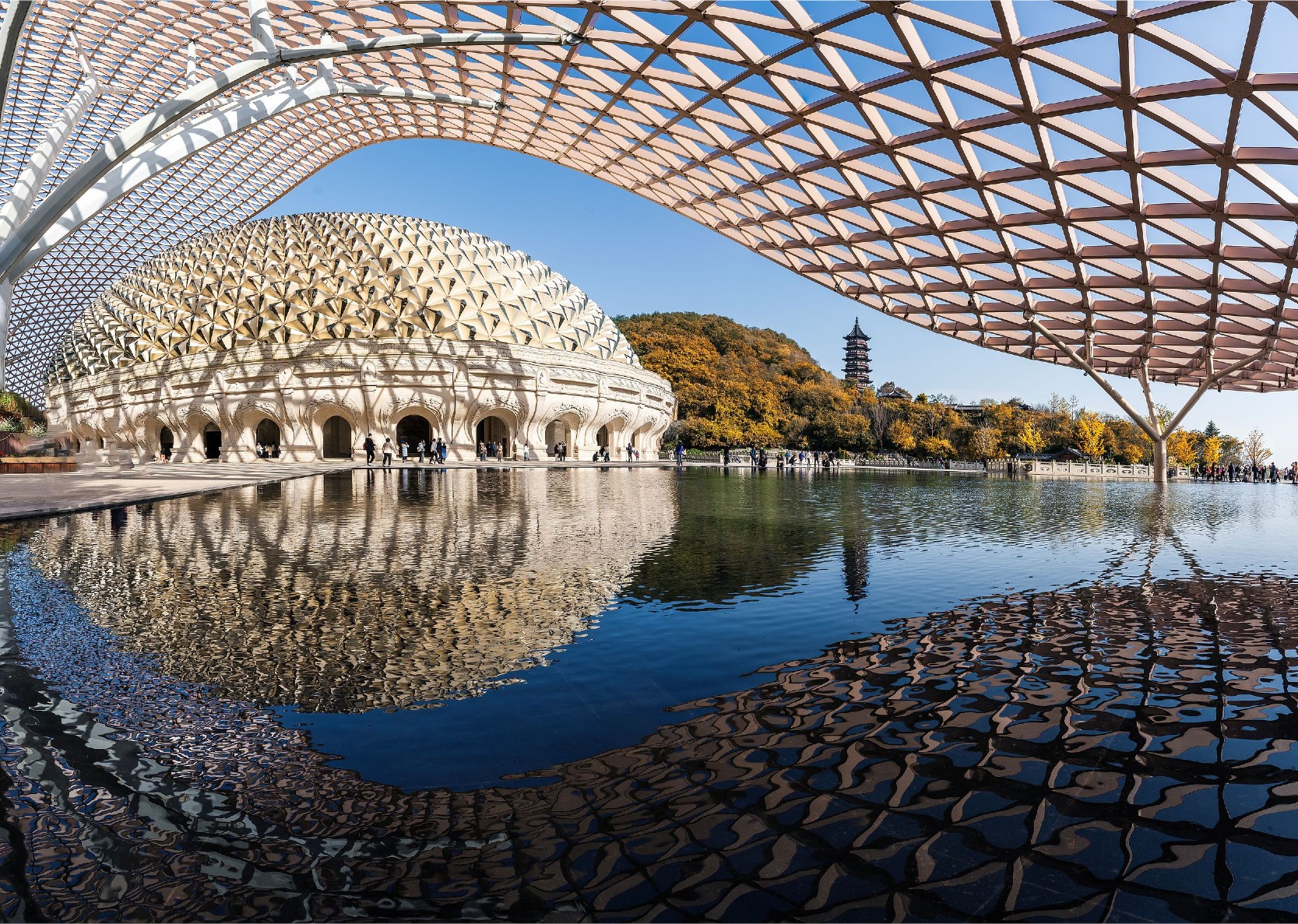
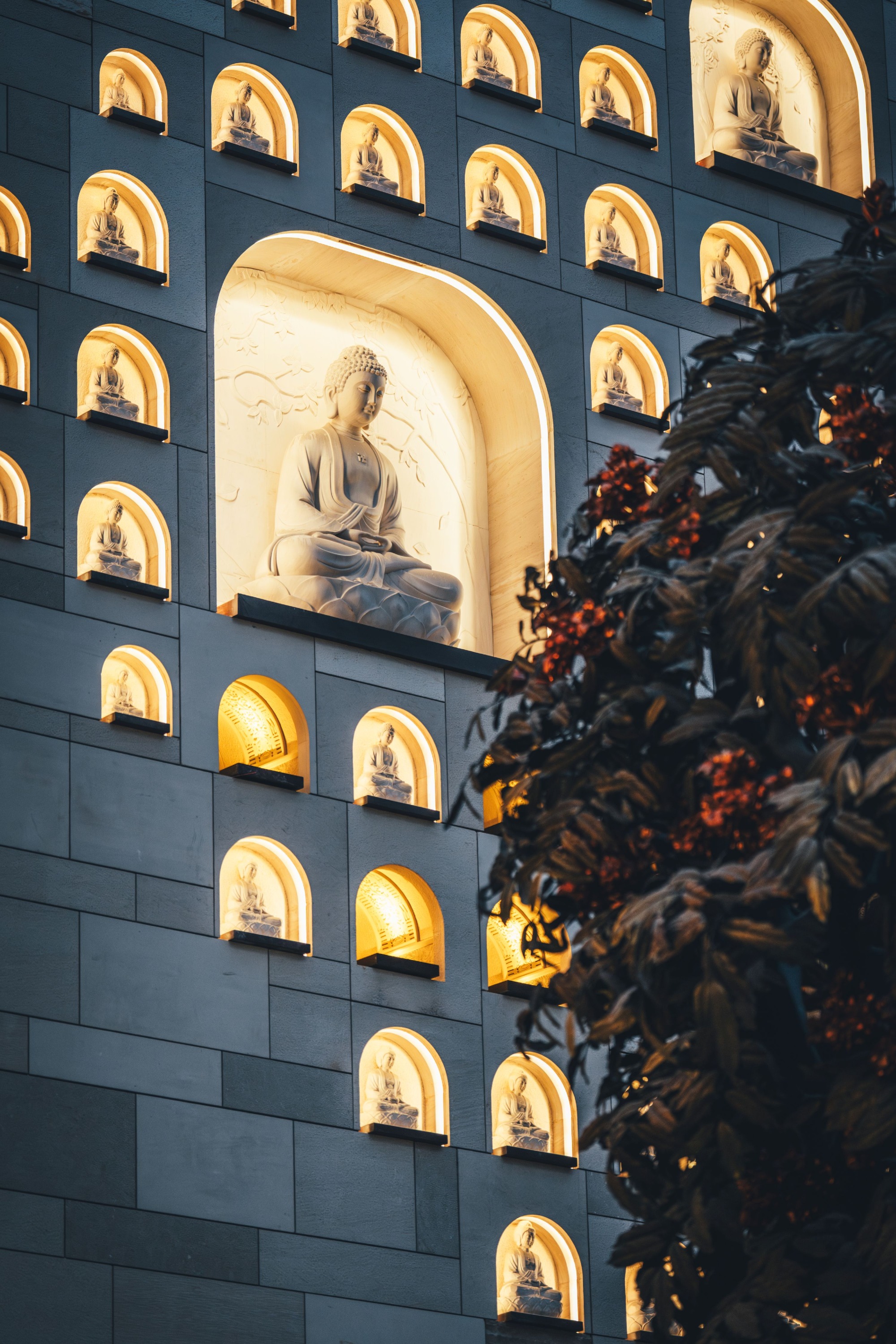
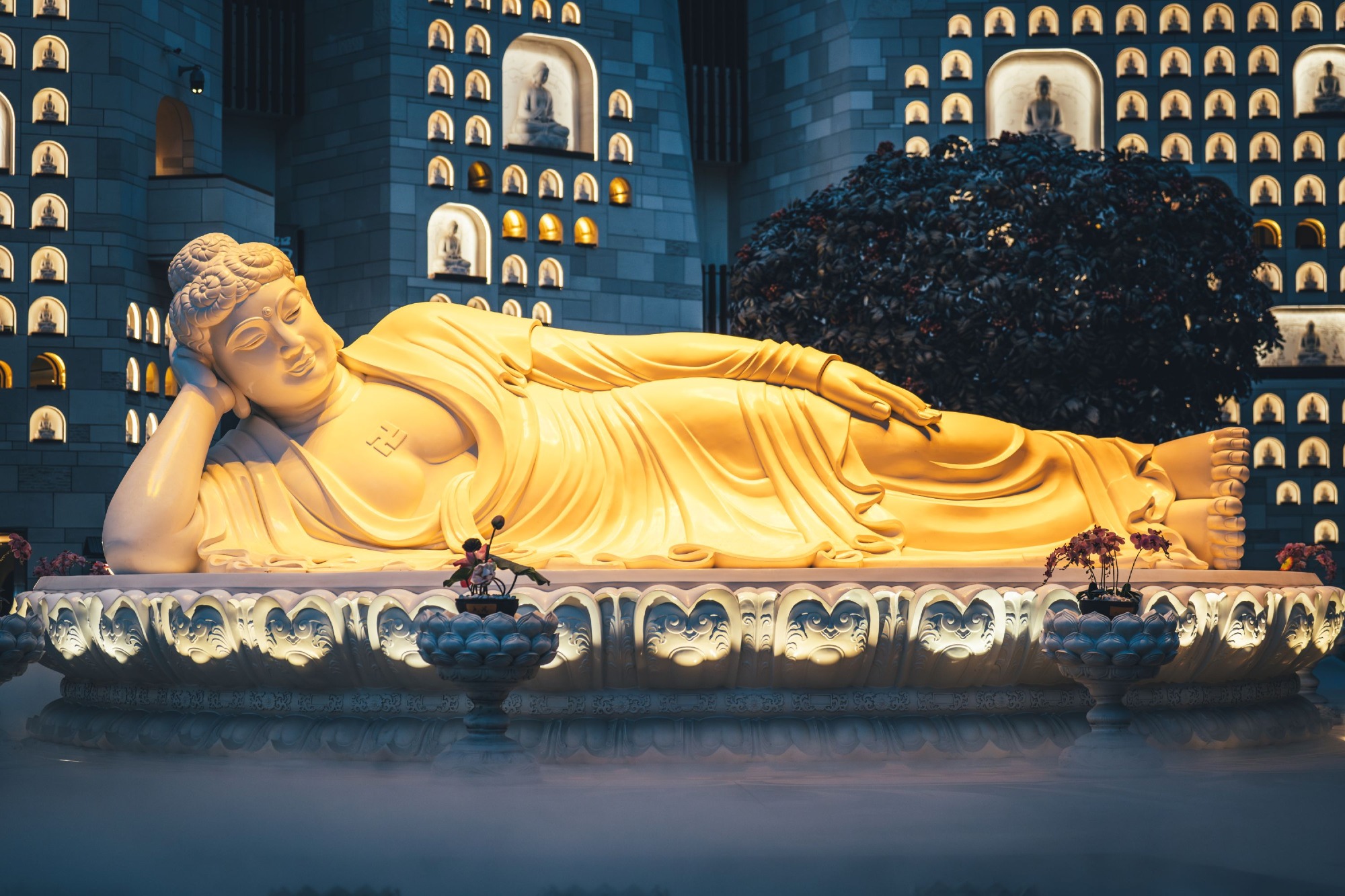
This palace, built in a mine pit, is 9 storeys high, with 6 storeys underground and 3 storeys above ground. Viewed from the outside, the Usnisa Palace can be divided into three main parts: the large dome, the small dome, and the Usnisa Cliff Carvings.
The large and small domes symbolise external and internal offerings; the 120-metre-long large dome is shaped like the Buddha's kasaya (robe), covering the small dome, symbolising the Buddha's infinite blessings; the small dome as a whole resembles the Buddha's topknot, with each individual element shaped like hands clasped in prayer, symbolising the offerings of millions of believers to the Buddha.
The Buddha's parietal bone relic is normally enshrined in the Relic Chamber of the Usnisa Palace.
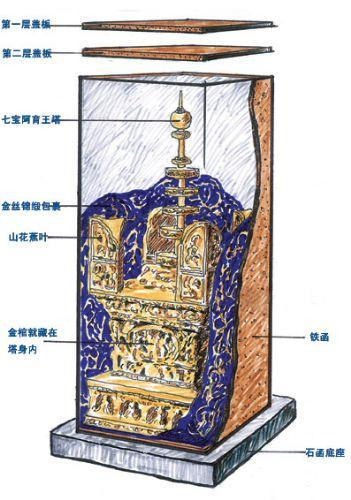
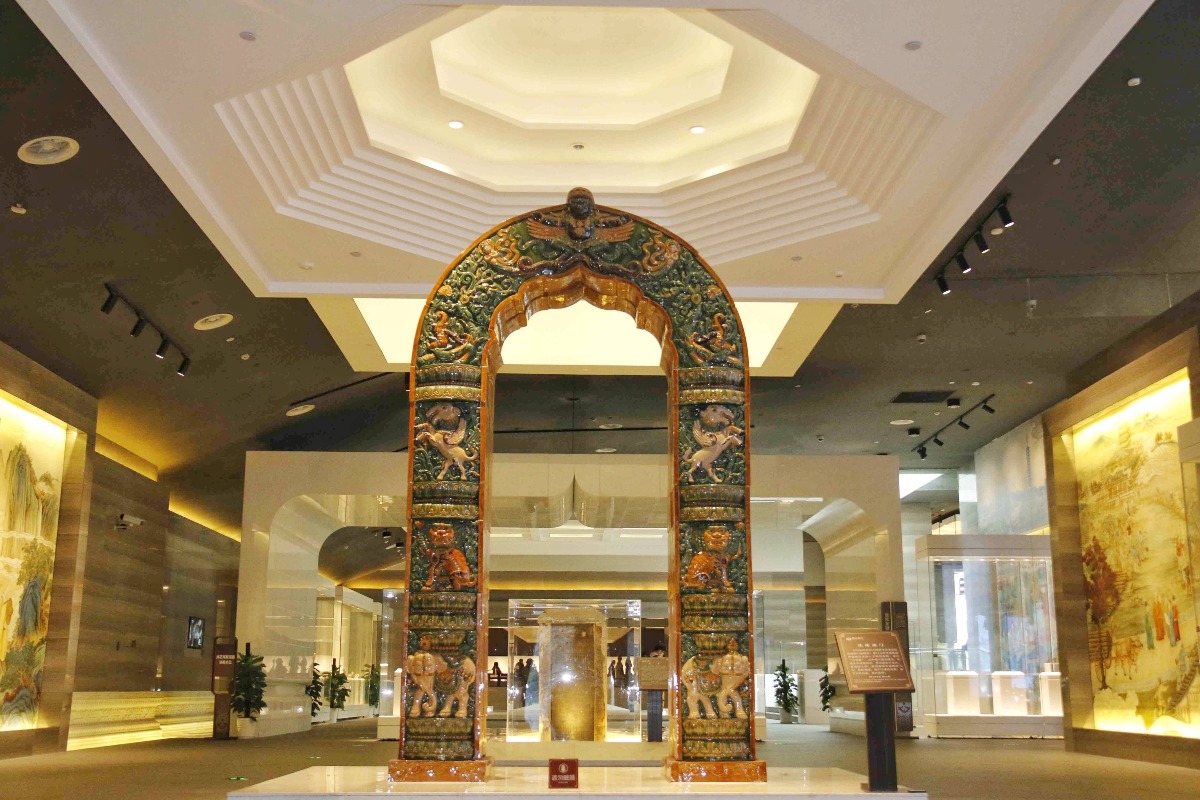
During public veneration, it is moved to the holy stupa in the centre of the Thousand Buddhas Hall. The design of this stupa is based on the gilt seven-treasure Ashoka Stupa unearthed from the Grand Bao'en Temple, taking inspiration from the inverted Mount Sumeru-shaped central pillar in the Dunhuang Mogao Caves, symbolising the pure and majestic world of the Lotus Treasury.
However, the Buddha's parietal bone relic is only open for public veneration on specific holidays such as the Buddha's Birthday, New Year's Day, the Spring Festival, and National Day. If you wish to see the holy relic, you will need to pay attention to the official website's public veneration times.
Linggu Temple
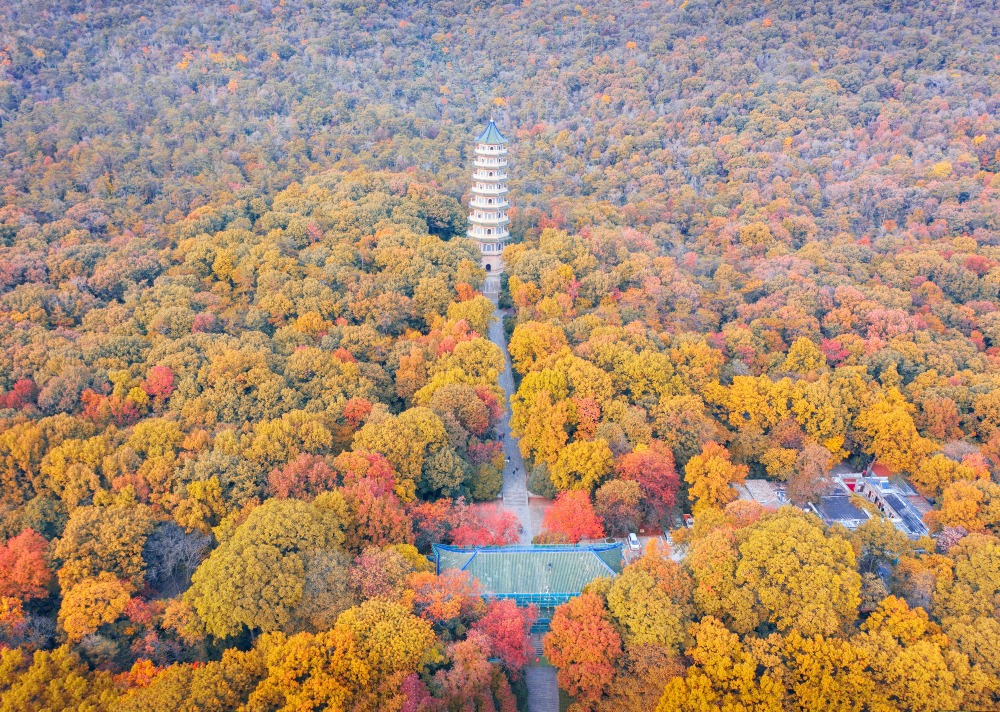
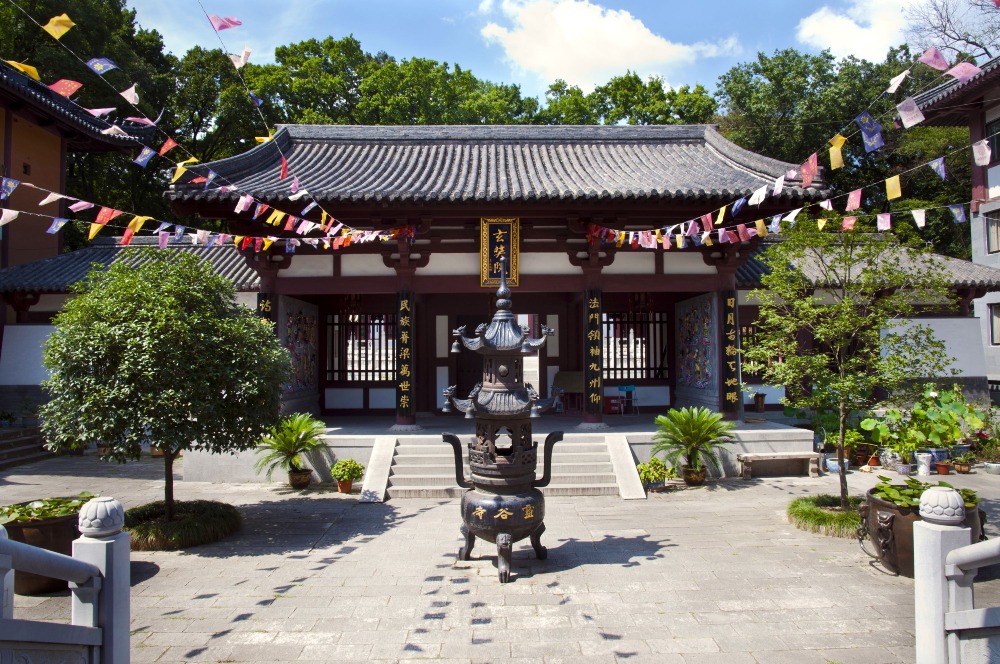
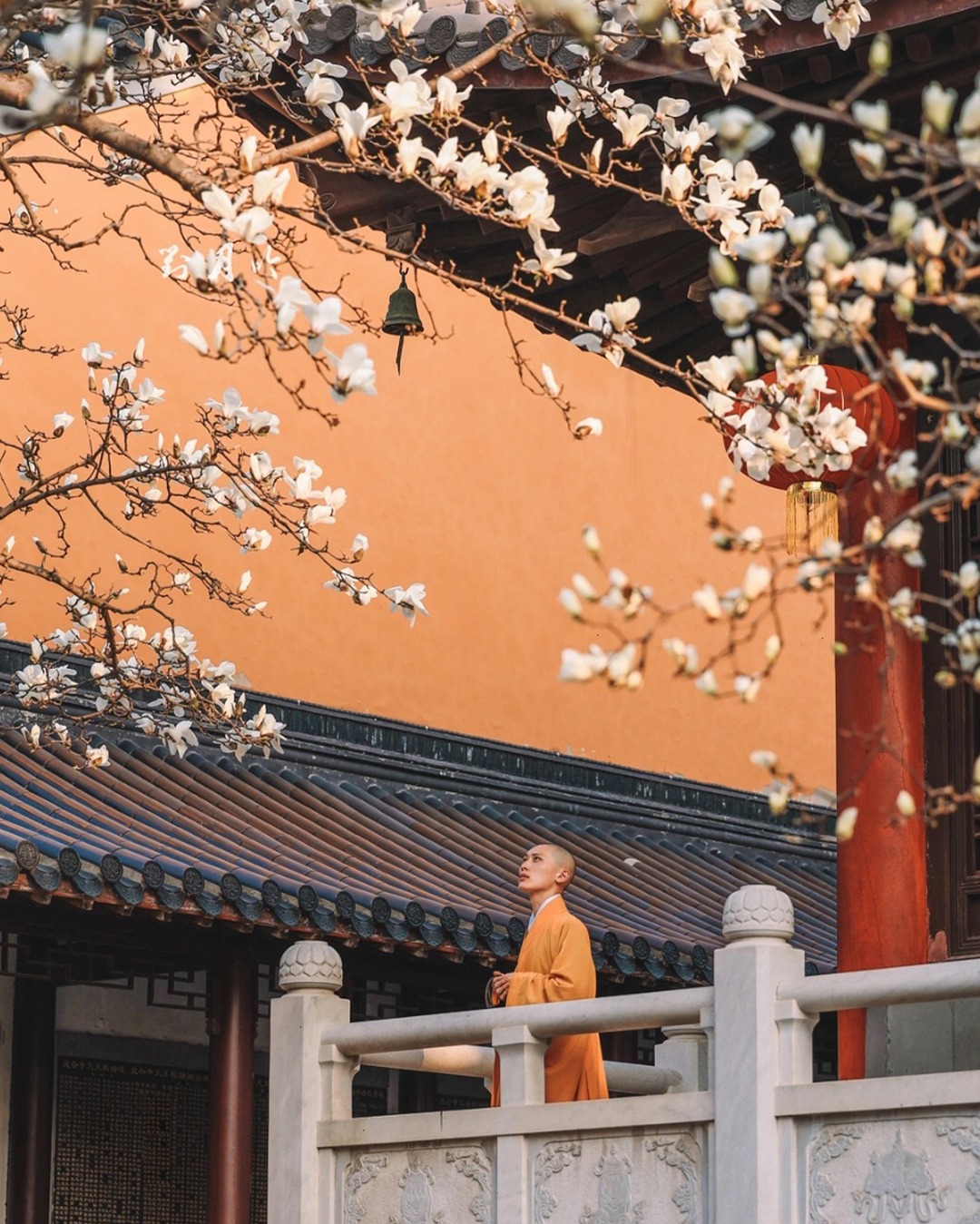
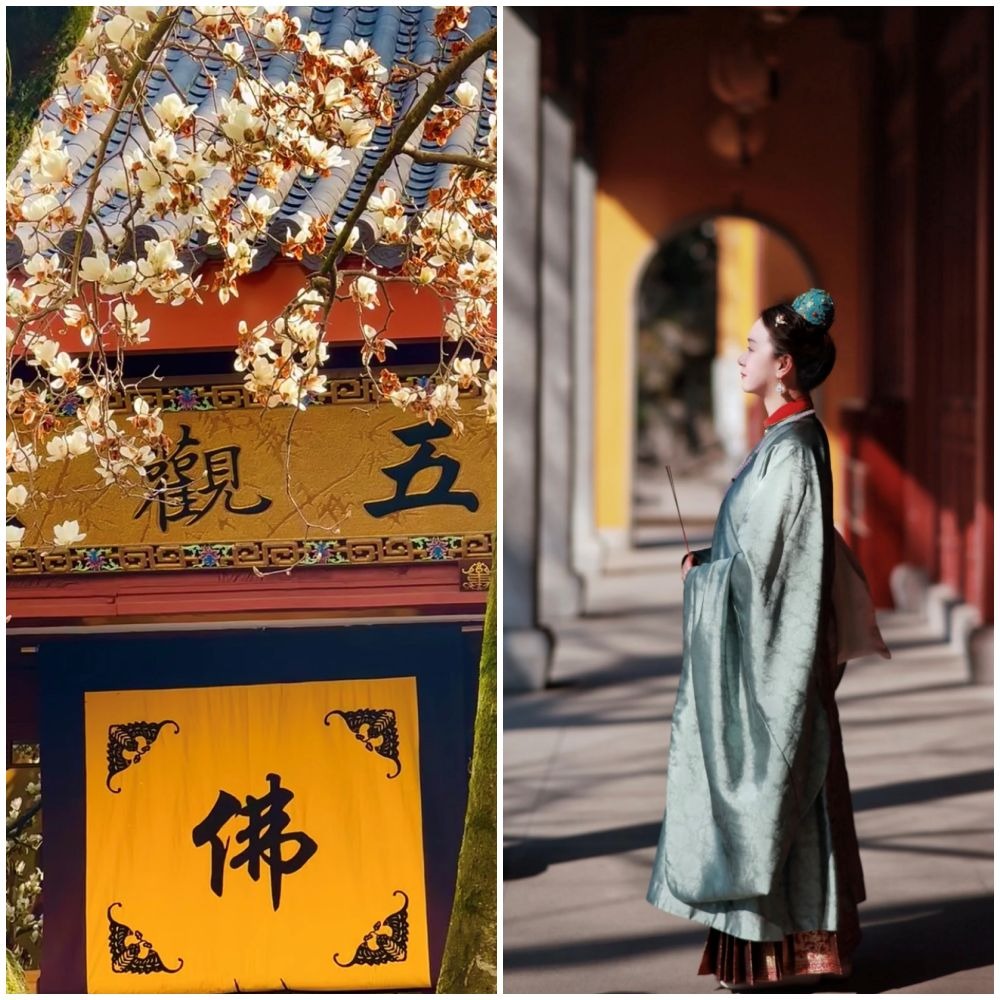
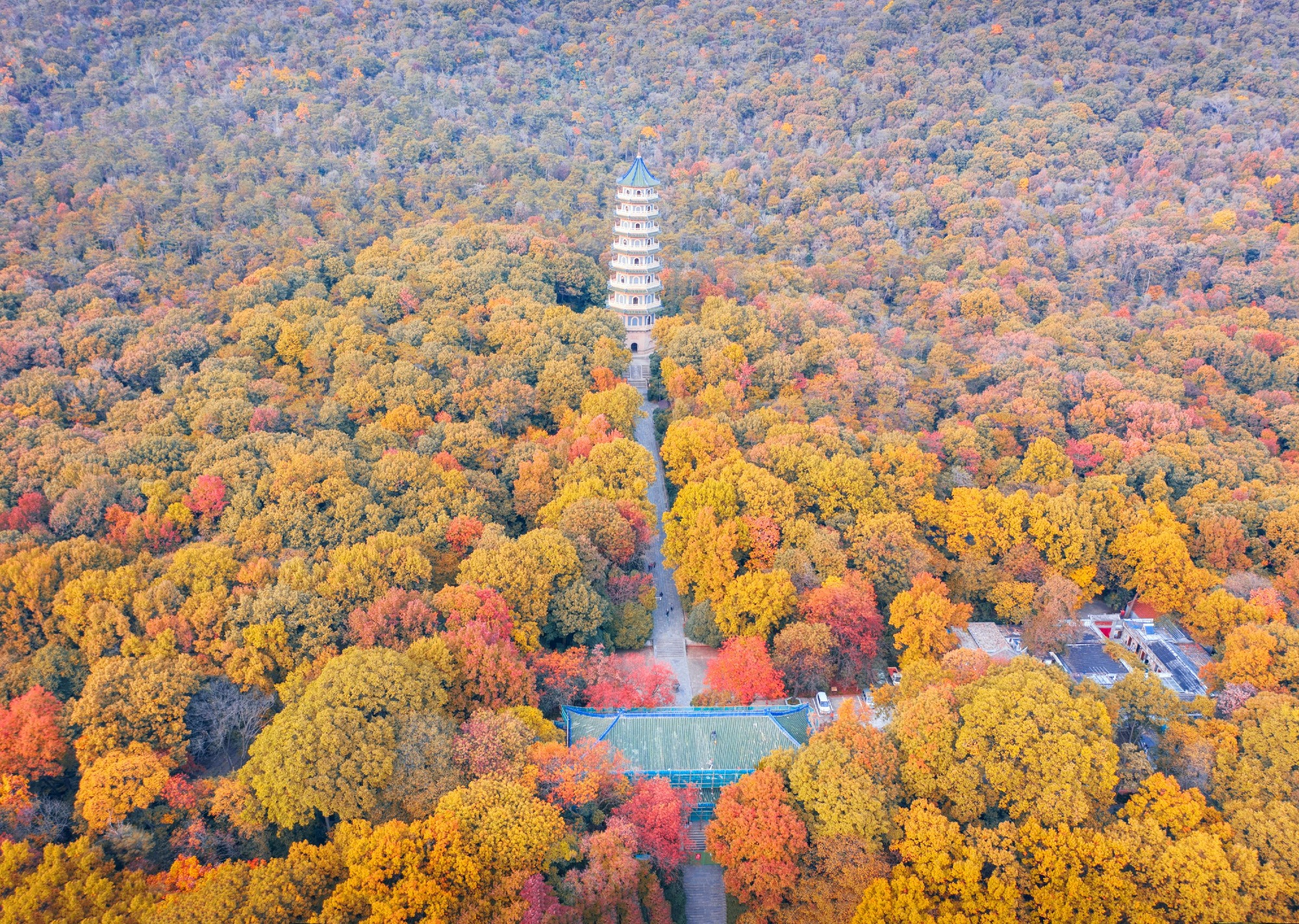
After the journey to see the Buddha's relic, the final stop is Linggu Temple, "The Finest Zen Temple under Heaven", on the eastern foot of Nanjing's Zijin Mountain.
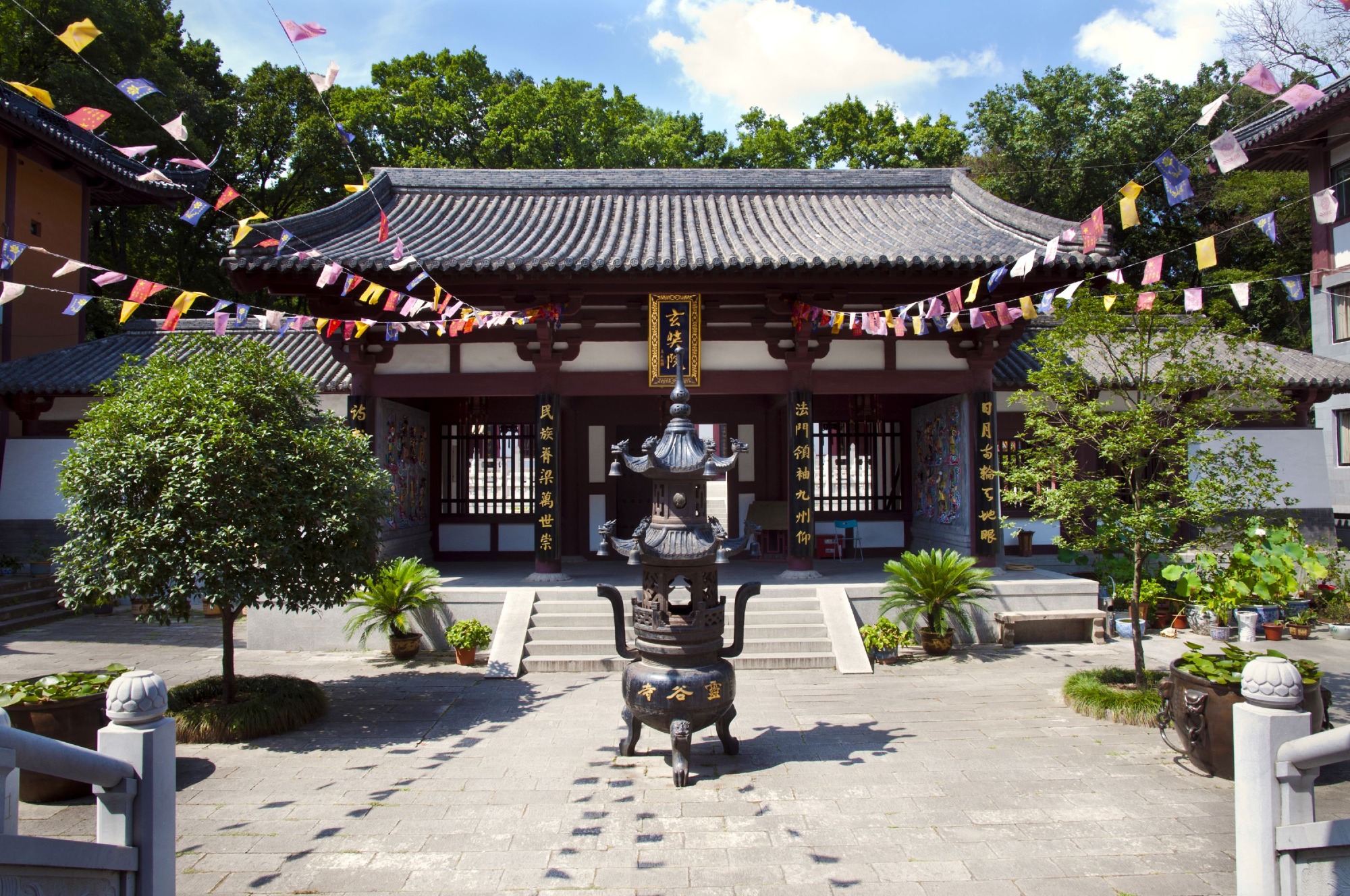
It enshrines the parietal bone relic of another great historical figure—Tang Sanzang (Master Xuanzang).
After Master Xuanzang entered nirvana in 664 AD, he was originally buried in Chang'an, but his remains were later moved and enshrined in Nanjing's Tianxi Temple, the predecessor of the Grand Bao'en Temple.
During the Japanese invasion of China, the Japanese army excavated a stone casket containing Xuanzang's parietal bone from the ruins of the Grand Bao'en Temple and stole it, taking it back to Japan.
The incident was later exposed by the media. After the Wang Jingwei puppet government was forced by public opinion to negotiate with the Japanese side, the parietal bone was divided into three parts; one part was taken back to Japan, and the other two were placed in Beijing and Nanjing respectively.
In 1973, Nanjing's Linggu Temple, originally built in the Southern Dynasties and with over a thousand years of history, was restored and reopened.
With the approval of Premier Zhou Enlai, Linggu Temple received and enshrined the parietal bone relic of Master Xuanzang, which became the temple's secretly kept treasure. It was not until 2011 that it was made available for daily veneration by worshippers.
Currently, Master Xuanzang's parietal bone relic is divided and preserved in 10 locations both at home and abroad. Xuanzang Temple on Nanjing's Xiaojiuhua Mountain also houses a portion, but Linggu Temple holds the largest share, accounting for over 50% of Xuanzang's parietal bone relic.
Besides venerating the holy relic, Linggu Temple offers pleasant scenery throughout the four seasons.
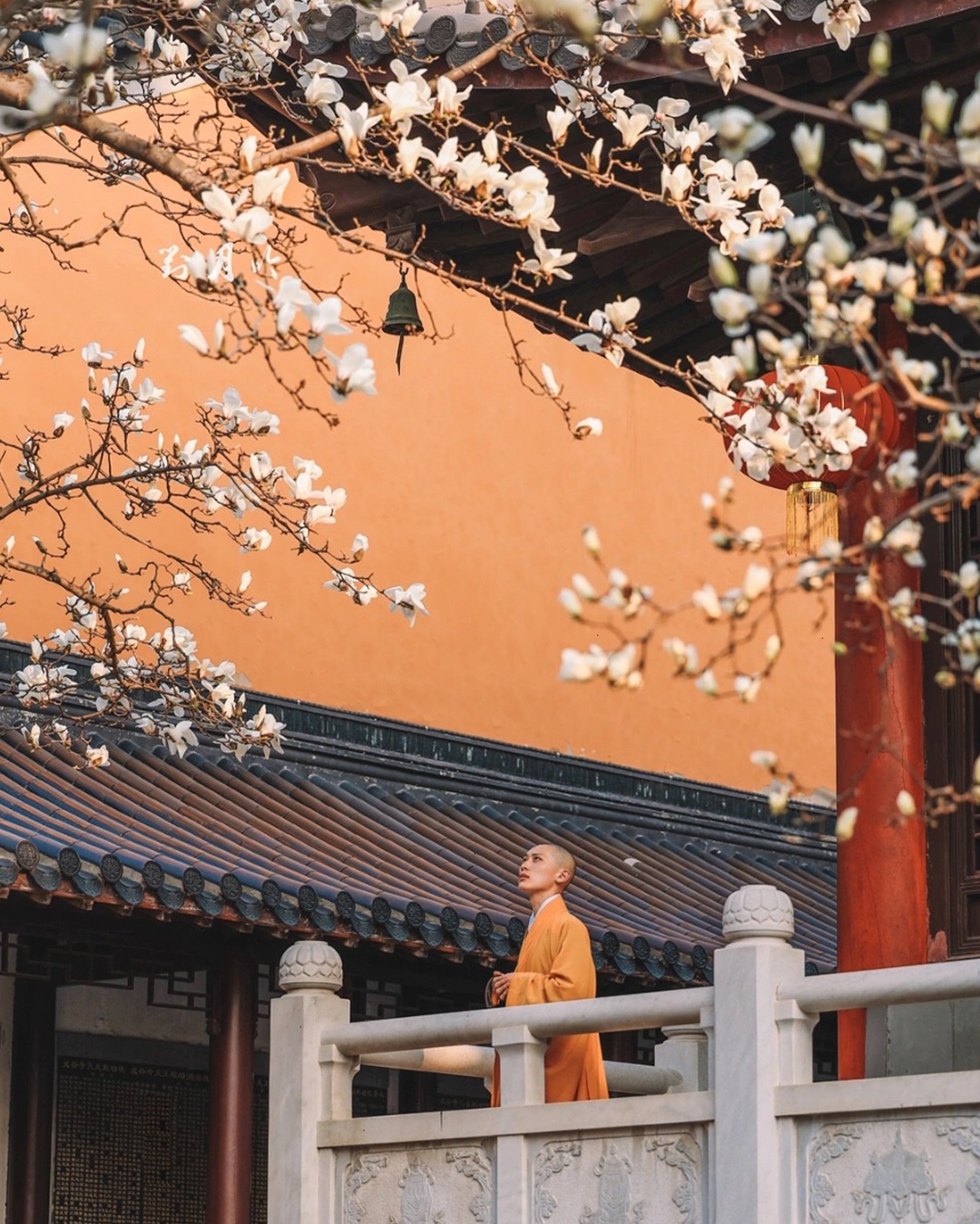
Whether it is the magnolias in spring, the green shade in summer, the red leaves in autumn, or the snowy scenes in winter, each has its own unique beauty, making it an ideal place for quiet meditation and self-cultivation.
Read more: Guide to 4 Chinese coastal attractions in Quanzhou
Read more: A walk through Badaguan to explore Qingdao's coastal charm