
Published : 2026-11-06
China plans to achieve a crewed lunar landing by 2030. What is the specific roadmap for this?
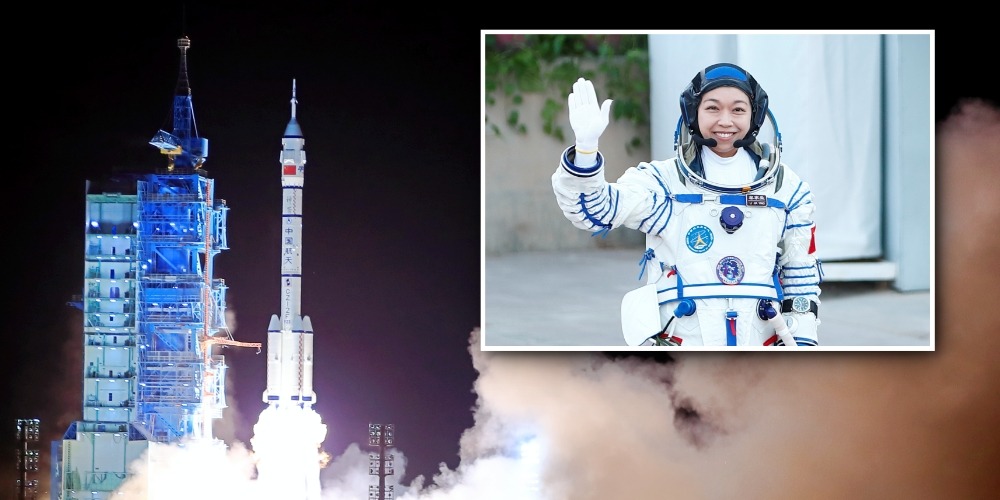
Two Long March 10 rockets will be launched
China's lunar exploration programme officially began as late as 2004, much later than countries like the U.S. and Russia, but it has progressed rapidly.
After completing the unmanned exploration phase of "orbiting, landing, and returning", the Chinese authorities fully initiated the crewed lunar landing mission in 2023, with the time for the first implementation even being adjusted from "around 2030" to "before 2030", which shows that progress has been very smooth.
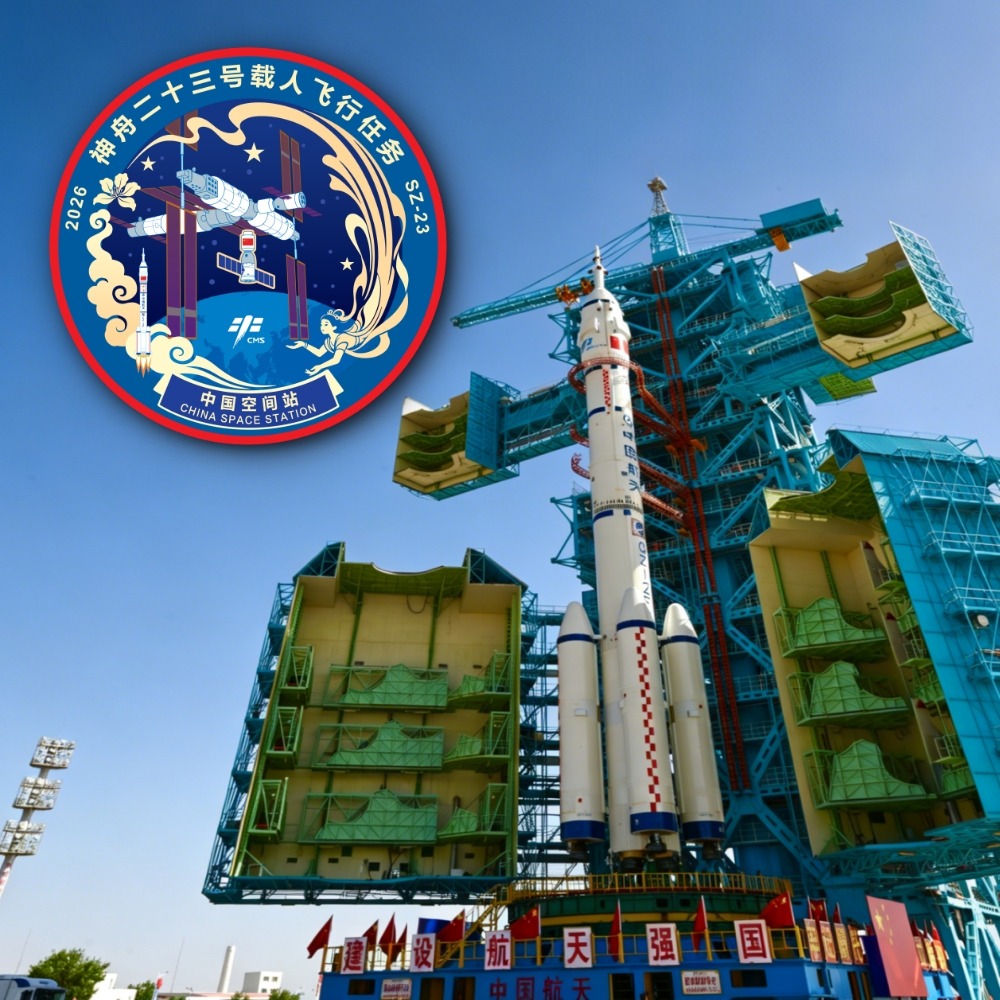
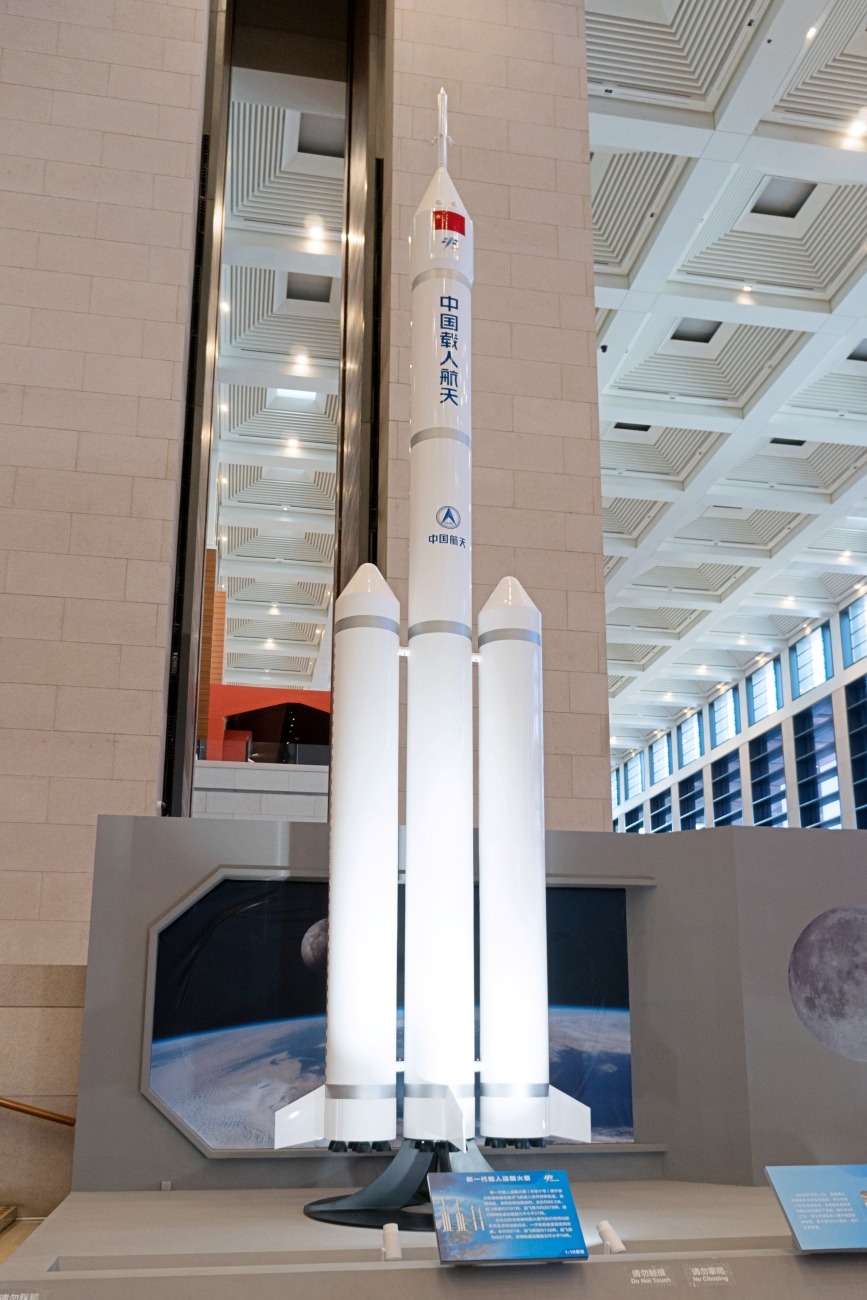
Under the roadmap for the crewed lunar landing, the authorities first need to launch two Long March 10 (長征十號) heavy-lift carrier rockets.
The newly developed Long March 10 has a total length of about 90 metres, equivalent to the height of a 30-storey building when erected, with a take-off weight of over 2,000 tonnes, roughly the weight of 20 fully loaded Boeing 747 passenger aircraft, making it a veritable behemoth.
The design of the crewed lunar landing rocket has been revised multiple times, and multiple model names have appeared, including "Long March 5 DY", "921", etc., which has caused considerable confusion.
Now, China's space authorities have clarified that it is the "Long March 10", and everyone can forget the other names.
Mengzhou and Lanyue need to rendezvous and dock in lunar orbit
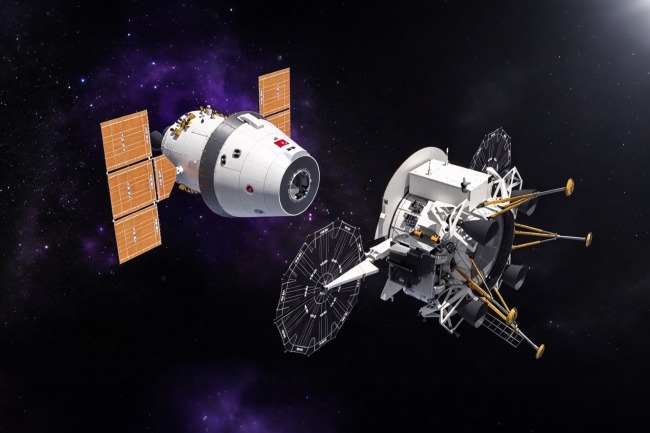
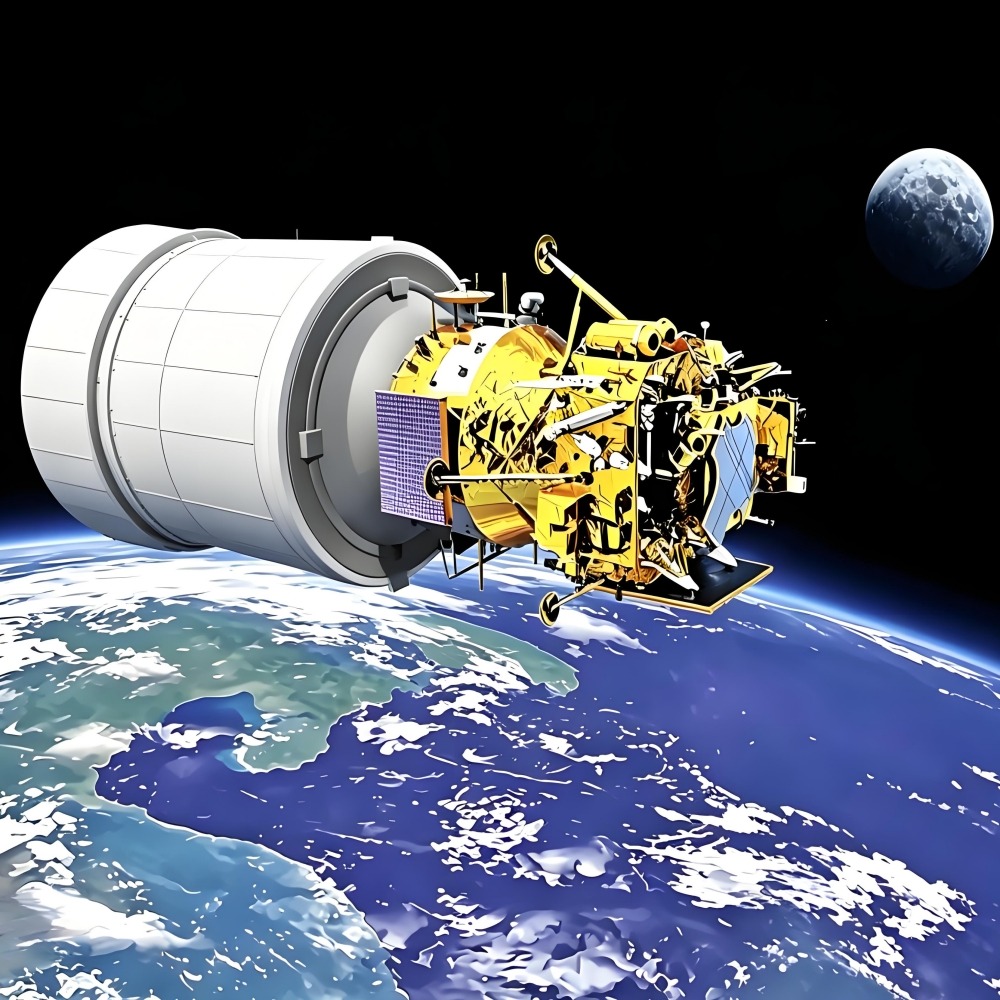
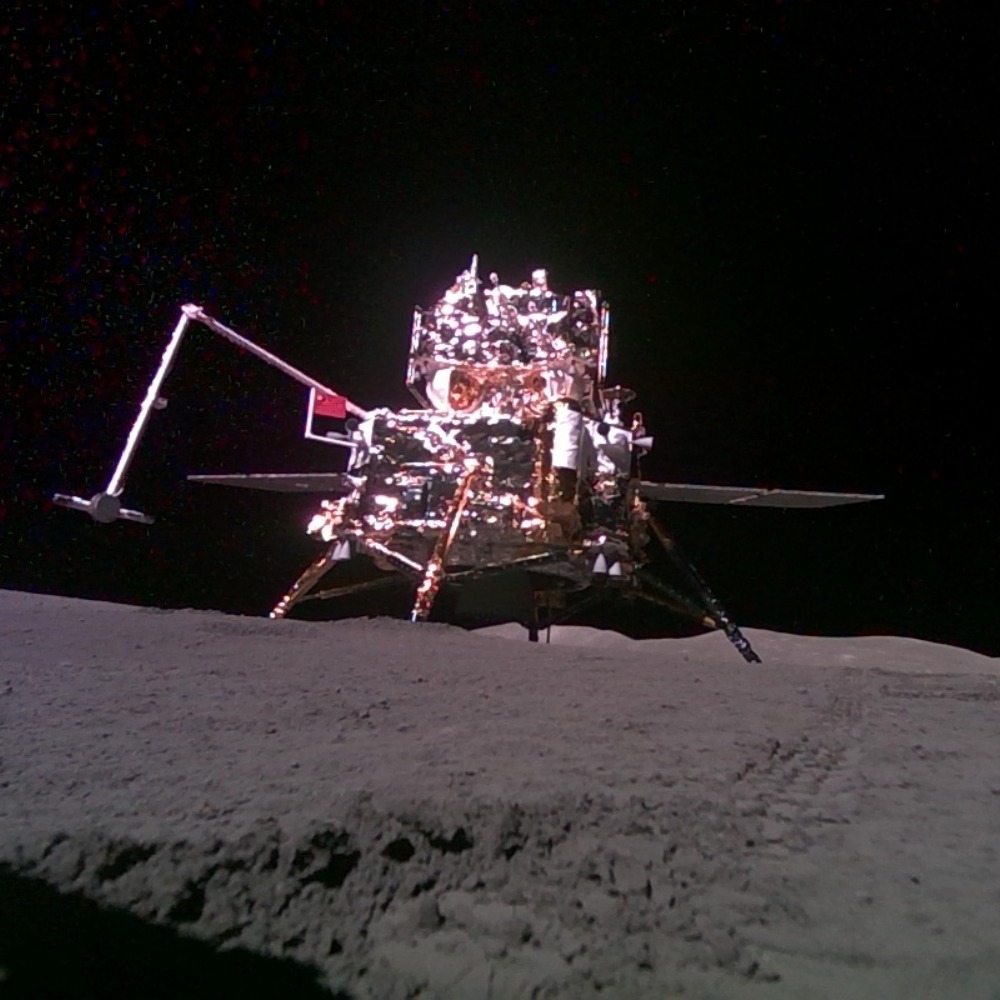
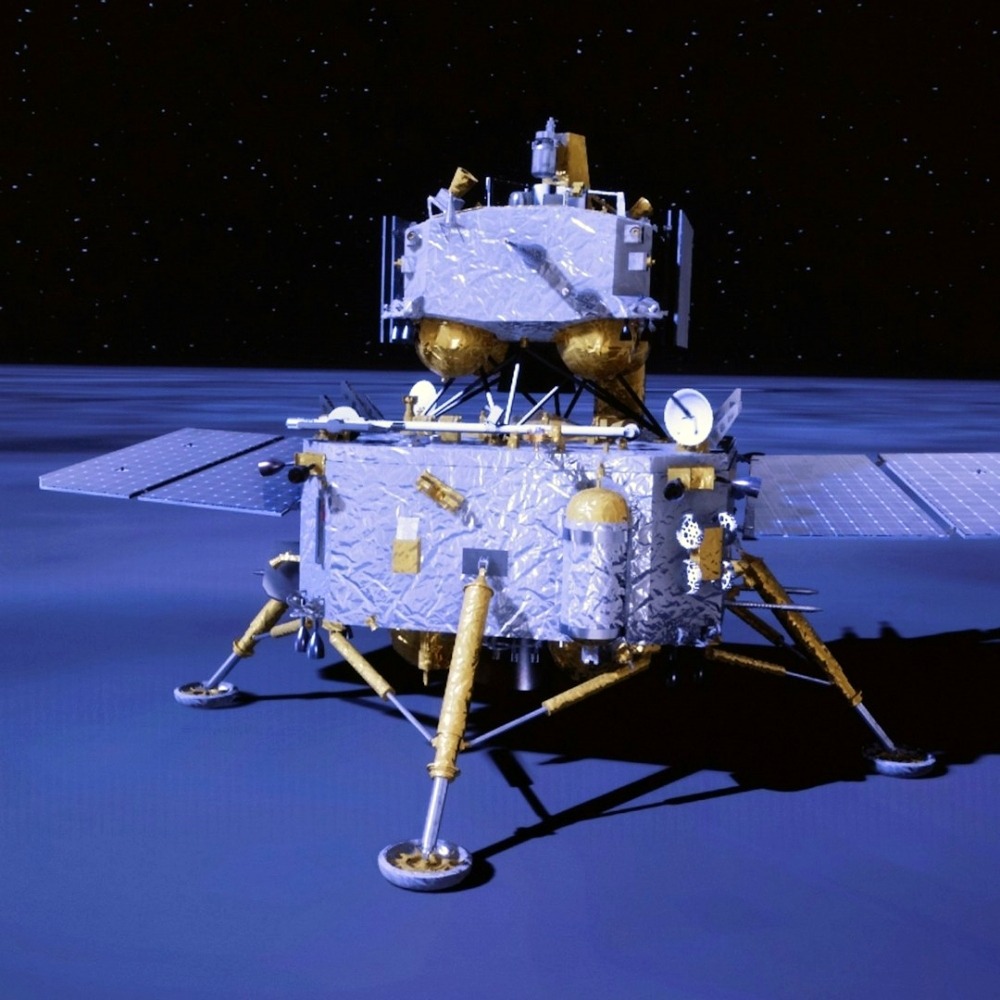
Returning to the topic, the first Long March 10 rocket will send the "Lanyue" (攬月), the lunar lander, into space.
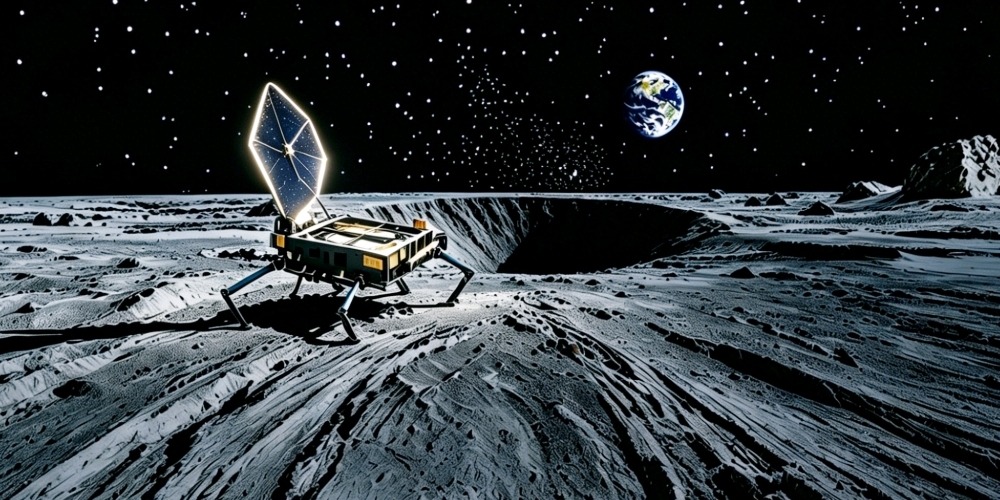
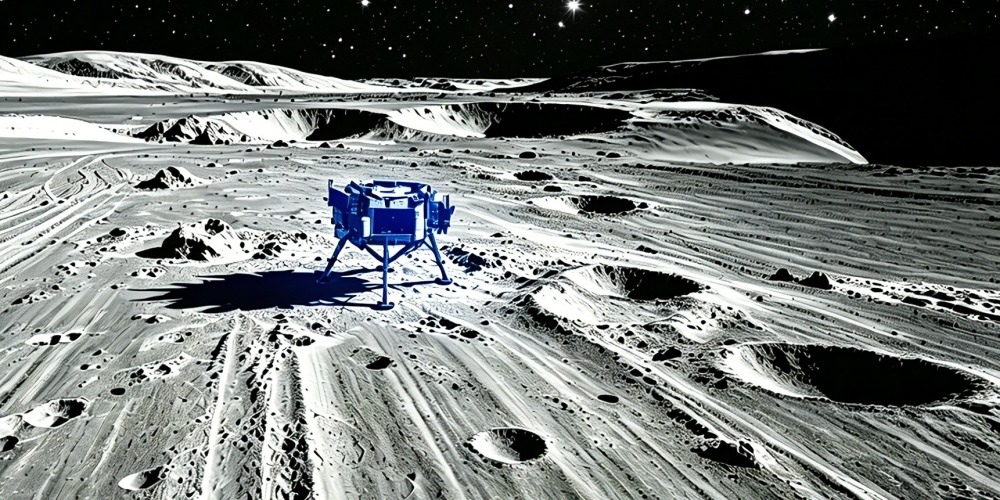
Lanyue weighs 26 tonnes and is composed of two parts: a landing module and a propulsion module, with its landing module being equipped with a life support system sufficient to support astronauts for a short stay on the Moon.
According to the plan, after Lanyue is launched, it will fly towards the Moon along a trans-lunar trajectory and then brake to enter a lunar orbit to wait.
The second Long March 10 will launch the "Mengzhou" (夢舟) spacecraft carrying three astronauts.
Mengzhou is China's new-generation crewed spacecraft, with a launch weight of approximately 26 tonnes, and its re-entry capsule is designed to be reusable.
It has two main models: one is responsible for space station missions in near-Earth orbit and can carry up to seven astronauts; the other performs deep space missions such as crewed lunar landings, carrying a maximum of three astronauts as it requires more instruments and equipment for "long-haul flights".
Mengzhou will also enter lunar orbit via a trans-lunar trajectory to rendezvous and dock with the pre-arrived Lanyue, after which two of the astronauts it carries will transfer to Lanyue.
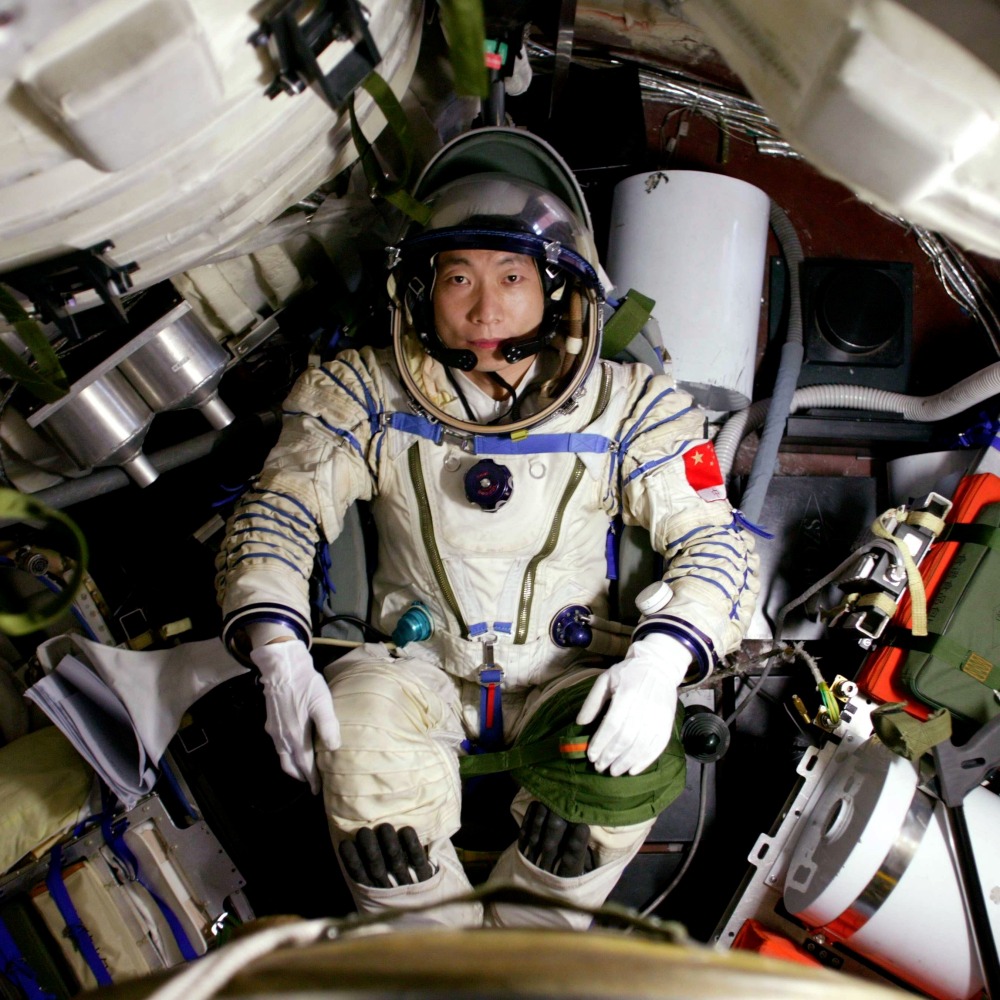
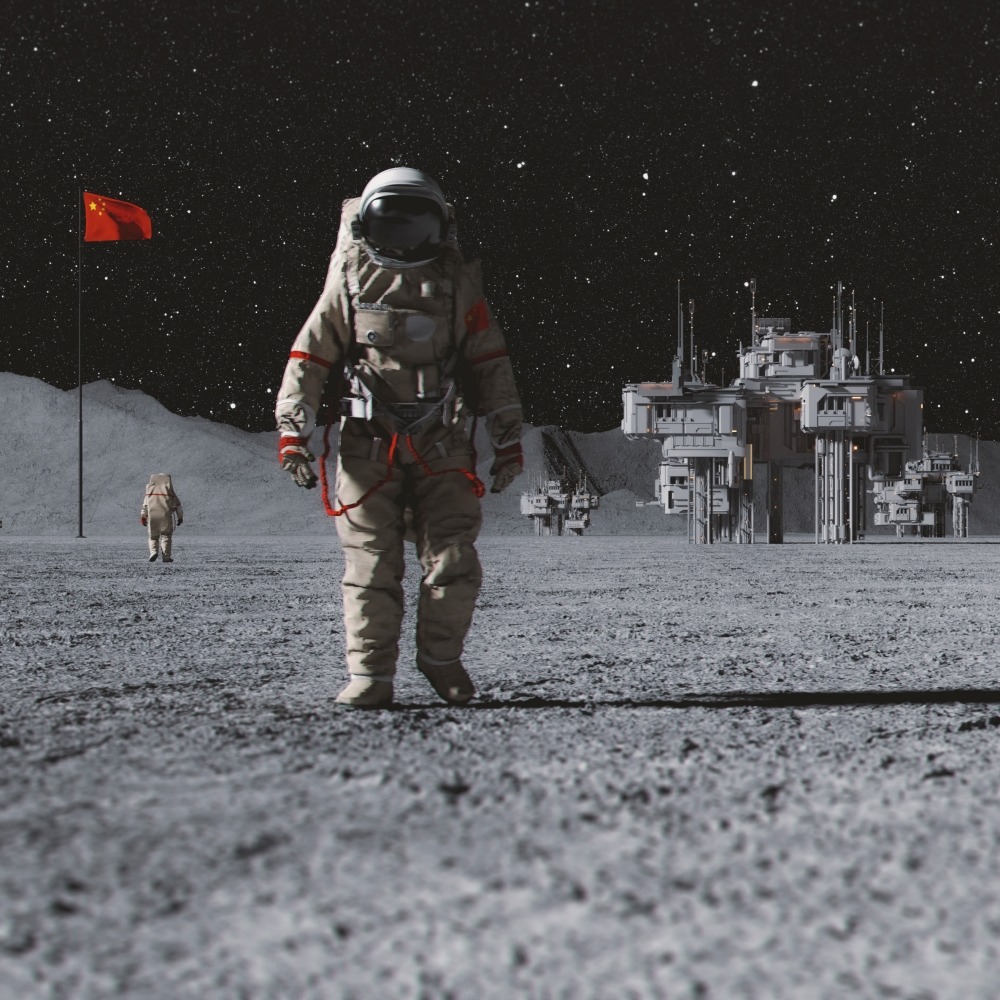
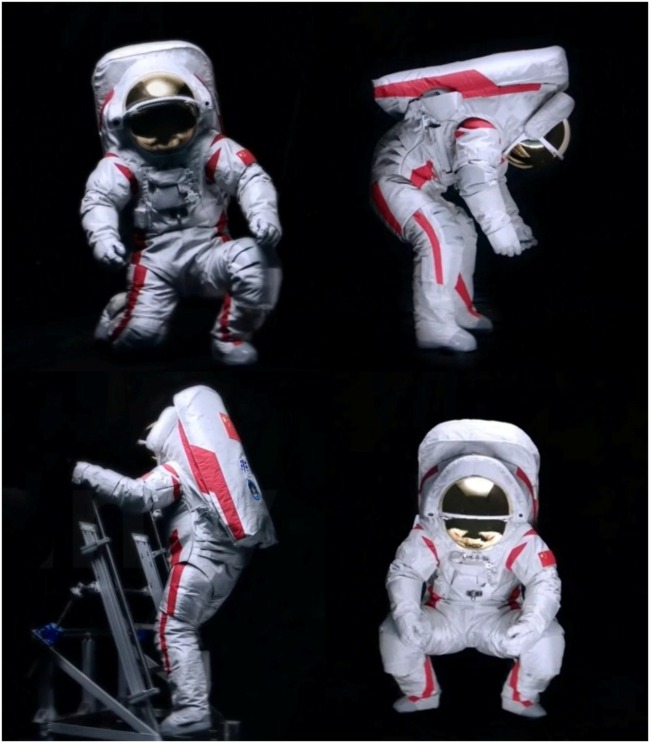
Then, the two spacecraft will separate at an opportune moment, and Lanyue will land on the lunar surface; the astronauts, wearing the "Wangyu" (望宇) lunar spacesuits, will then exit the cabin at an opportune moment, taking the first step for a Chinese person on the Moon.
A 3-day stay and driving a lunar rover for 70 km?
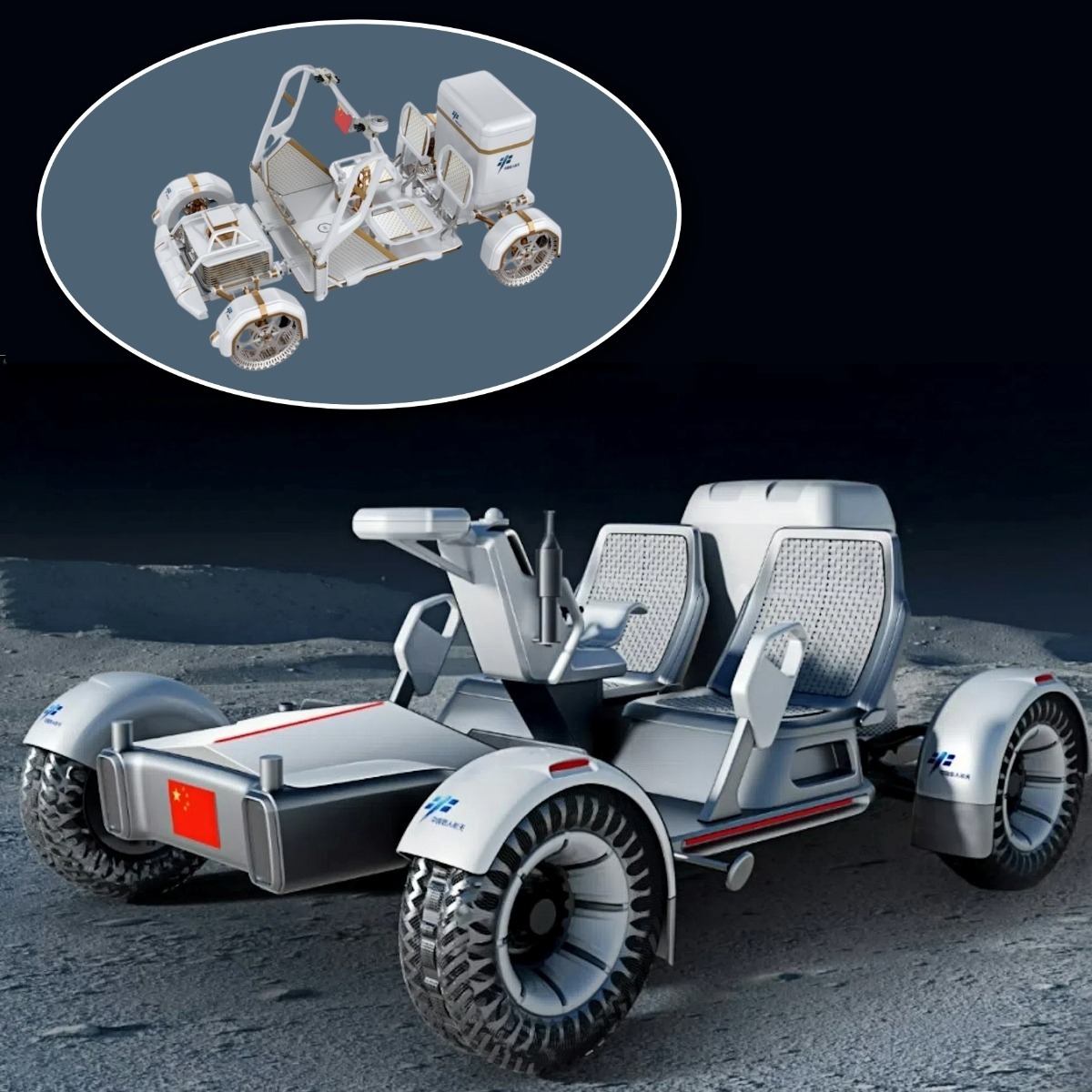
During their time on the Moon, besides "strolling", the two Chinese astronauts will also have to drive "Tansuo" (探索, meaning "Exploration"), the crewed lunar rover, to carry out patrols, conduct various explorations and collect samples, in preparation for the future construction of a lunar base.
According to information, Tansuo has a self-weight of about 200 kilograms, can carry two astronauts to move quickly over rugged terrain, and can operate within a 10-km radius of the Lanyue landing site. It adopts a folding configuration and will be sent to the Moon along with Lanyue.
In addition, while the two astronauts are landing on the lunar surface, the third astronaut of the mission will have to remain in Mengzhou spacecraft in lunar orbit, responsible for support tasks such as orbital management and communications.
How long will the Chinese astronauts stay on the lunar surface?
Officials have not yet given a clear statement, but some media outlets claim their stay will be no less than three days, with the cumulative distance explored by the lunar rover being no less than 70 kilometres.
What does a distance of 70 kilometres mean? The straight-line distance between Hong Kong Island and Macao is only just over 60 kilometres.
Lunar surface take-off: Extreme high risk and difficulty
After completing their work on the lunar surface, the two Chinese astronauts must take the "ascender" attached to the Lanyue lunar lander to take off from the lunar surface and enter lunar orbit.
Because the Moon has no launch facilities, and there may be situations of unstable foundations or sloped terrain, and ignition must be successful on the first attempt with no margin for error, lunar surface take-off is considered an extremely difficult and high-risk stage.
Next, the ascender will dock with the Mengzhou spacecraft, and the two astronauts will return to the spacecraft.
After that, components such as the ascender will be detached, and the Mengzhou spacecraft will carry the three astronauts back to Earth, with the return capsule landing at a designated landing site.
Space enthusiasts estimate that the entire crewed lunar landing process will take about two weeks, because the round-trip flight time to the Moon alone requires 8 to 10 days.
However, the time required for the "journey to the Moon" involves many factors such as orbital design, and the actual situation awaits official announcement.
U.S. plans to land on the Moon in 2028?
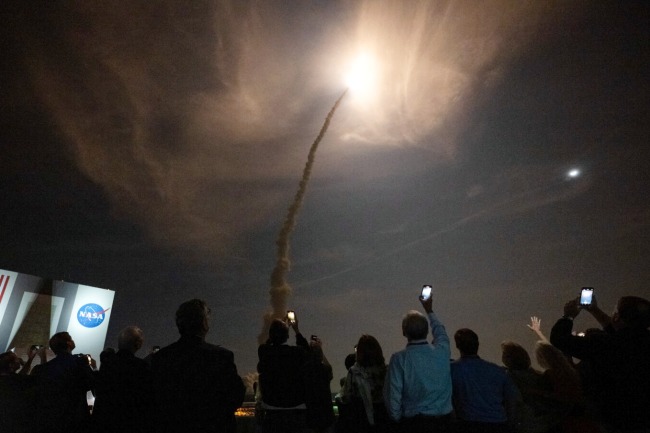
Some additional information: In July 1969, two astronauts from the U.S. Apollo 11 mission landed on the Moon, marking the first time humans set foot on Earth's satellite.
Subsequently, another 10 astronauts reached the Moon during the Apollo 12, 14 to 17 missions, but after Apollo 17 in 1972, the lunar landing missions came to an abrupt end, and for decades, no human has set foot on the Moon since.
Will the Chinese be the next to land on the Moon? Perhaps not.
The United States launched the "Artemis Program" in 2017, preparing to send astronauts to the Moon again, and the currently expected landing time is 2028.
Of course, postponements are the norm for U.S. space programmes, and no one knows how long the delay will be.
Incidentally, in the Apollo program of the last century, the spacecraft and the lunar lander were already connected before launch and sent into space by a single rocket, eliminating the need for a rendezvous and docking manoeuvre in lunar orbit.
However, the "Artemis Program" will instead adopt a method similar to China's "two rocket launches, near-lunar orbit docking".
(Cover image generated by AI)
Read more:
China's 4 major artefacts for crewed lunar landing fully revealed
Chinese elements + "Black Tech": Lunar spacesuit unveiled
How are rockets recovered? China pioneers "net-capture" recovery!