Published : 2024-10-03
Since the founding of the People's Republic of China (PRC) 75 years ago, the country has weathered storms and undergone tremendous changes.
This series, "Extraordinary 75 Years", provides a deep dive in China's achievements and breakthroughs over the past 75 years.
This article, as the 2nd one of the Chapter of Sci & Tech, takes you through how China's space development has grown step by step, from nothing to strength over the past 75 years.
The initial period of nation building: start of the space industry
At the early stage of the founding of New China, the space industry started from scratch.
In 1956, based on the recommendation by Qian Xuesen, the Fifth Academy of the Ministry of National Defense was established to research rocket and missile technology, marking the starting point of the national space industry.
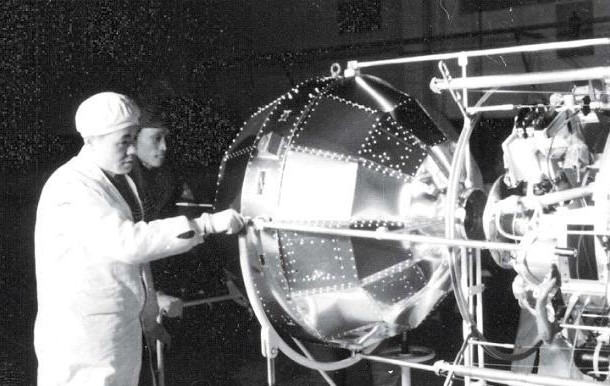
In April 1970, China's first artificial earth satellite "Dong Fang Hong 1" was successfully launched, and the song "Dong Fang Hong" resounded across China through radio broadcasts.
China became the fifth country in the world to independently develop and launch an artificial satellite.
In November 1975, China successfully launched its first recoverable satellite, which successfully returned to earth after three days in orbit. These two milestone events marked the beginning of China's space program.
After the Reform and Opening-up in the 1980s, the country proposed the "863 Program" to develop high-tech, with space technology ranked second among the seven major fields, paving the way for the rapid development of space technology.
30 years of manned space flight: building China's space station
In the early 1990s, the international landscape was undergoing significant changes, with major world powers competing in the development of manned spaceflight.
Sixteen countries including the U.S. and Russia jointly built the International Space Station, while China was excluded. In 1992, China officially launched its manned space program, set out a three-step strategy for manned spaceflight, and resolved to build its own space station independently.
The first step of the "Three-Step Strategy" is to launch a manned spacecraft. From 1992 to 2002, China spent 10 years completing four unmanned flight missions.
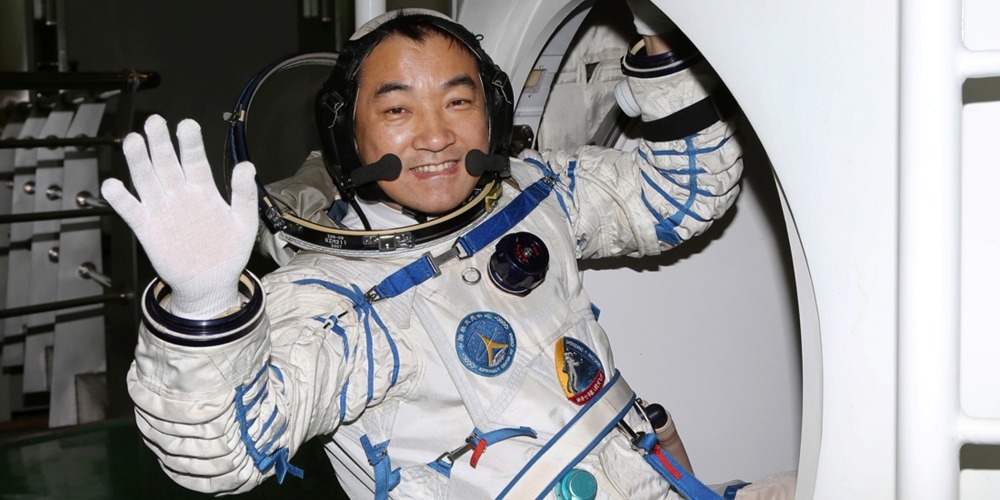
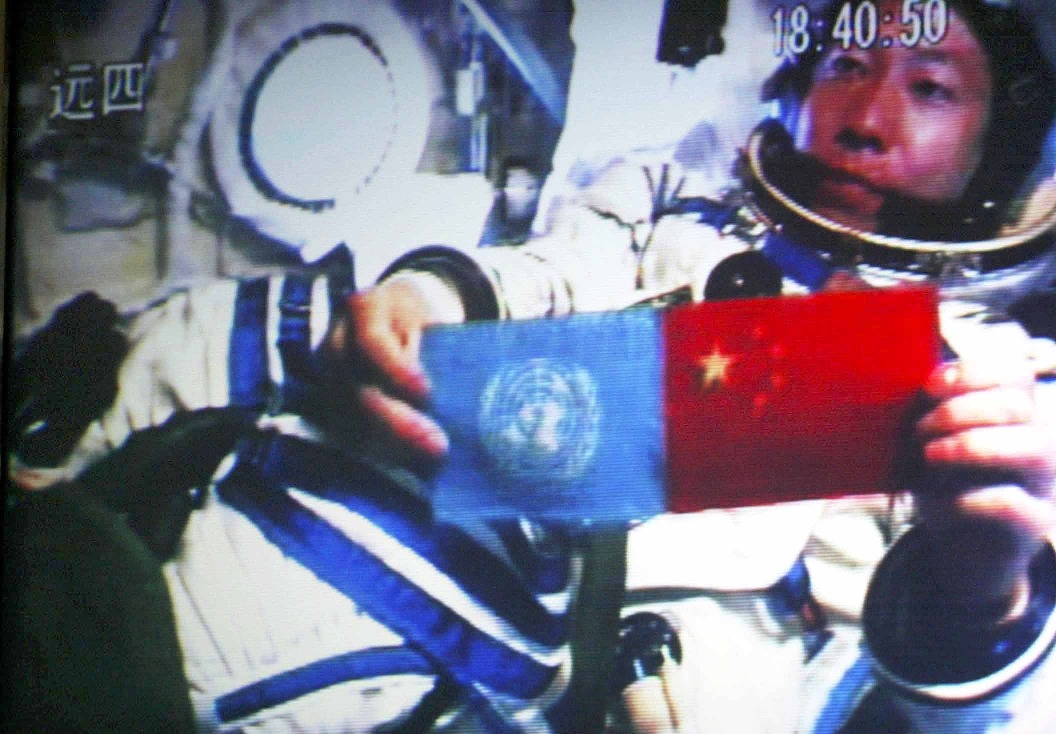
In 2003, Yang Liwei orbited the Earth 14 times in the "Shenzhou-5" spacecraft, returning safely after 21 hours and 23 minutes, becoming the first Chinese visitor in the vast space.
China thus became the third country in the world to independently master manned spaceflight technology.
The second step is to achieve spacecraft rendezvous and docking and build a space laboratory.
From 2003 to 2013, China conducted five manned flights over 10 years, further completing key technologies such as extravehicular activities and spacecraft rendezvous and docking.
From 2016 to 2017, the first truly significant space laboratory "Tiangong-2" was launched, with "Shenzhou-11" astronauts staying for 30 days, marking the first mid-term in-orbit stay, indicating the successful completion of the second phase.
The third step is the construction of a space station. With extensive experience accumulated, from 2020 to 2022, a series of launch missions were intensively carried out, completing the in-orbit construction of the space station in just two years.
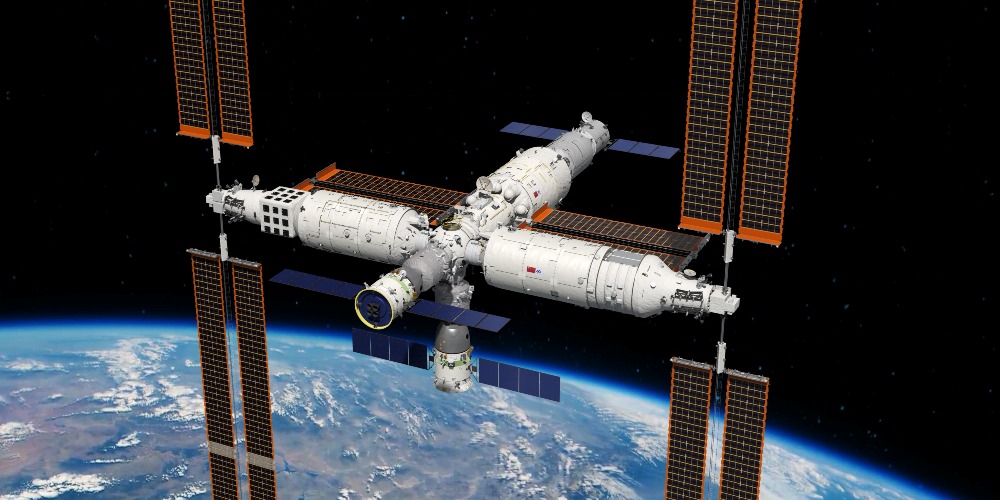
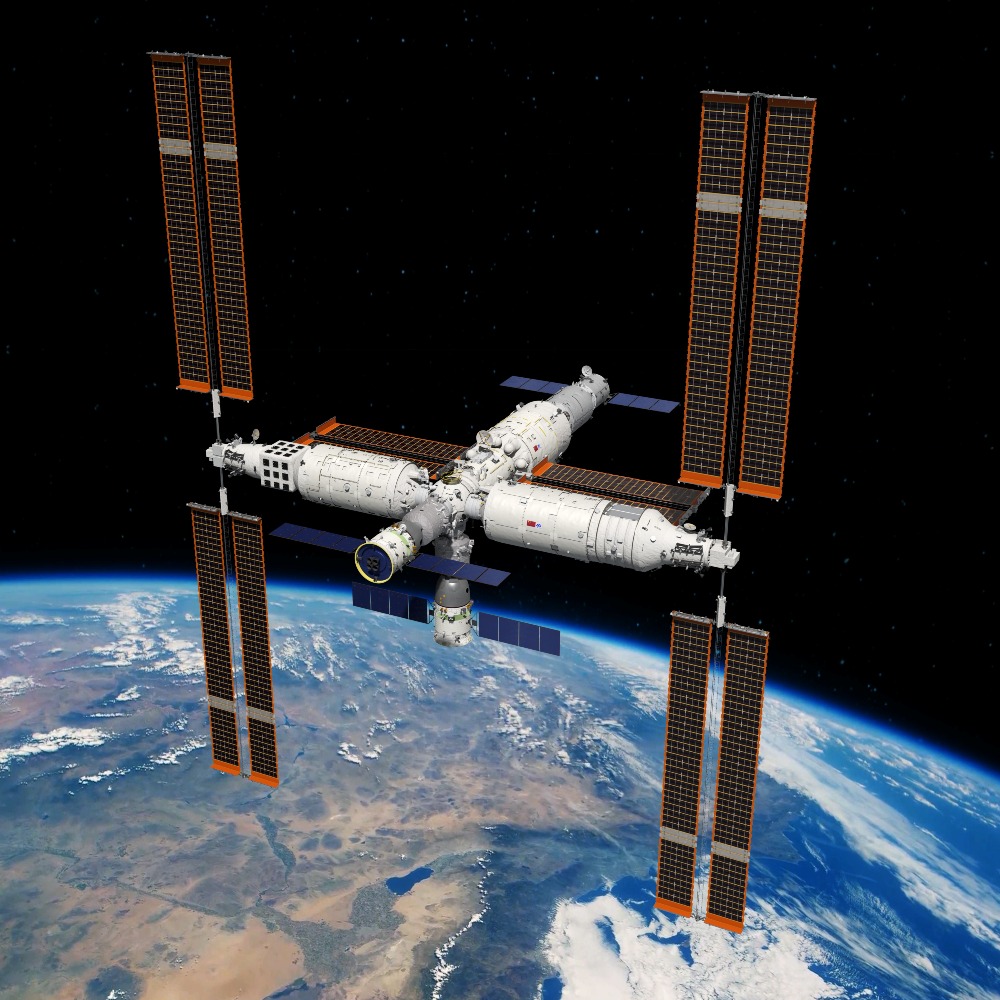
The space station is independently designed with a basic "T" shape configuration, composed of the Tianhe core module, the Wentian laboratory module, and the Mengtian laboratory module.
It operates in an orbit about 400 kilometres from the ground, functioning like a space home that can accommodate three astronauts living and working for long periods, conducting various space experiments.
The manned space project is one of China's largest, most complex in system composition, and technically challenging national key projects.
Over 30 years, the project has yielded over 4,000 invention patents, propelling the aerospace industry to new heights and driving rapid development in fields such as raw materials, microelectronics, machinery manufacturing, chemical industry, metallurgy, and communications, greatly enhancing technological levels.
Read more: What animals has China previously sent to space?

Deep space exploration "exploring Moon and Mars"
The Moon is Earth's natural satellite and the first step for humans to leave Earth and explore space. In the early 1990s, aerospace experts proposed the idea of exploring the Moon; in 2004, the lunar exploration programme was officially established, named the "Chang'e Project," with a strategic plan of "orbiting, landing, and returning" in three steps.
Milestone events of the "Three-Step Strategy" include:
In October 2007, the "Chang'e-1" satellite reached a 200-kilometre lunar orbit, successfully achieving lunar orbit and completing the first step of "orbiting the Moon."
In December 2013, the "Chang'e-3" probe was successfully launched, with the first lunar rover "Yutu-1" landing on the lunar surface and conducting automated inspections, completing the second step of "landing on the Moon." "Yutu-1" conducted "Moon measurement, sky observation, and Earth observation" on the Moon.
Designed to last 90 days, it exceeded its lifespan by over three years, obtaining scientific data on the lunar surface's geological structure and lunar-based astronomical observations.

In December 2020, after a 23-day journey, "Chang'e-5" brought back about 2 kilograms of lunar samples to Earth.
By then, the lunar exploration programme had spanned 16 years, successfully completing the final step of "orbiting, landing, and returning," making China the third country in the world to achieve lunar sample return.

The lunar exploration programme has come to a successful end, with the lunar landing and residence programme following closely.
According to the plan, China will achieve manned lunar landing by 2030, build an international lunar research station by 2040, and gradually develop and construct a multifunctional lunar base.
It should be added that lunar exploration is only part of the deep space exploration plan.
Currently, "Tianwen-1" has successfully explored Mars. In the future, China will also implement Mars sample return missions and explore planets such as Jupiter and Uranus, taking steps to enter deeper space.
Read more: When will Hong Kong's first astronaut take off?
The BeiDou system promotes socio-economic development
The aerospace industry not only enables "space flights", promoting technological development, but also "lands on earth", bringing many benefits to social life.
Currently, the primary way humans utilize space technology is through artificial satellites for communication, remote sensing, navigation, and more.
In the 1990s, the two major navigation systems, the US GPS and the Russian GLONASS, completed global networking, almost monopolizing the global navigation system.
At that time, China's economic and technological strength were lagging, facing severe technological blockade. Amid adversity, the nation proposed a "three-step" development strategy to independently build its own satellite navigation system.
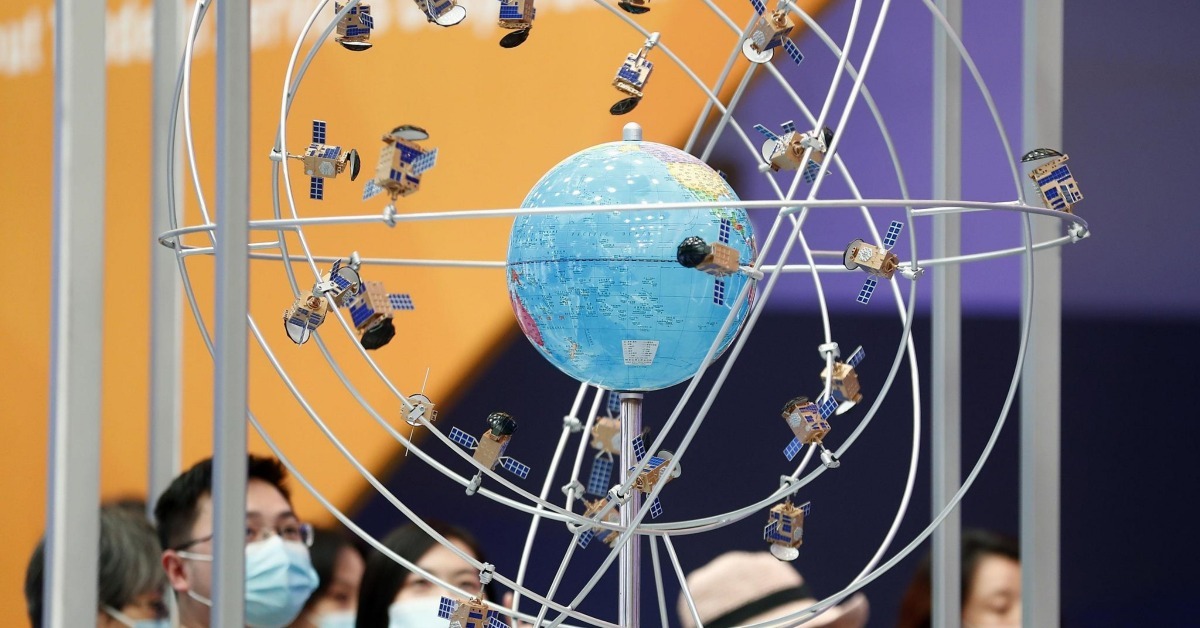
At the end of 2000, the "BeiDou-1" system was completed, providing services to China; at the end of 2012, the "BeiDou-2" system was completed, providing services to the Asia-Pacific region; in July 2020, the BeiDou global system was completed, providing services globally.
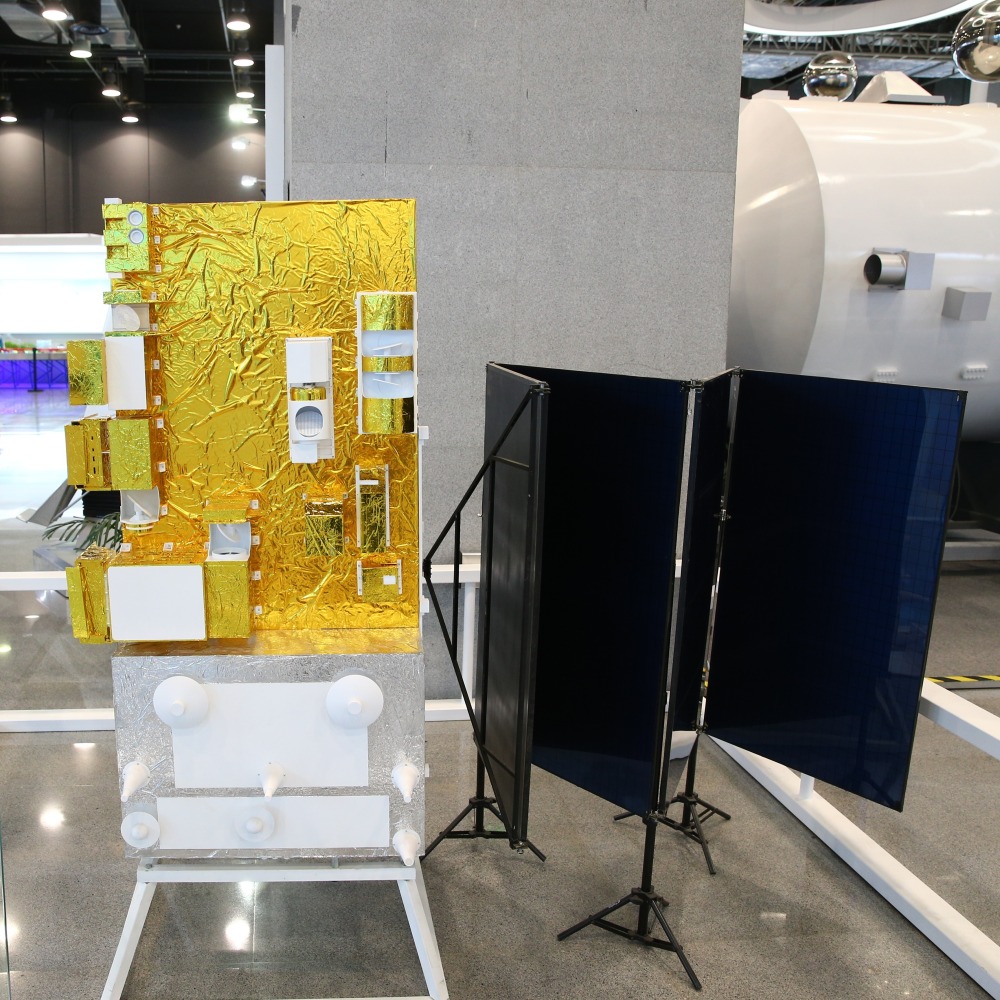
The core components of BeiDou system satellites are 100% independently controllable, with performance reaching the world's advanced level, providing all-weather, high-precision positioning, navigation, and timing services to users worldwide, and applied in various fields.
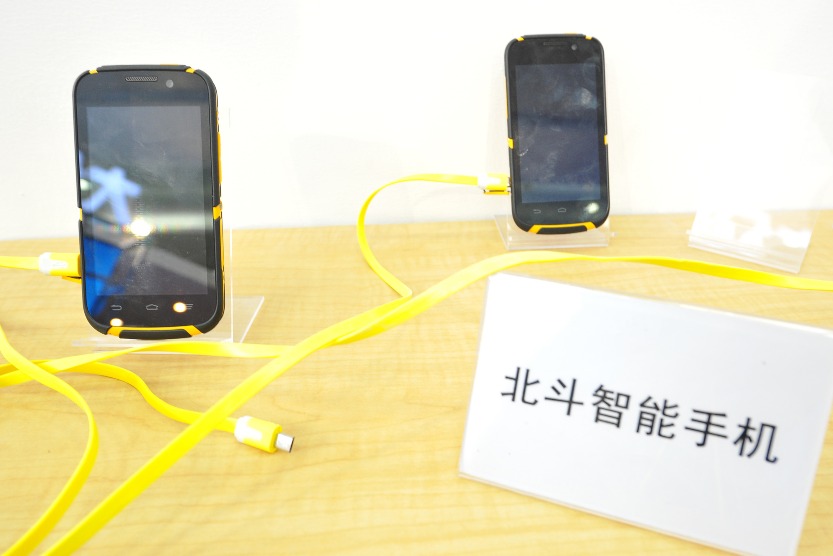
For example, in the field of everyday life, BeiDou provides short message communication services enabling sending text messages and reporting locations in the absence of mobile phone signals.
It plays an important role in earthquake rescue and disaster relief. In the field of transportation and logistics, many cars, ships, aircraft, and agricultural machinery use BeiDou terminal equipment for automatic navigation.
The starry sky is vast, and exploration is endless. China's aerospace industry is continuously developing, writing a magnificent journey from scratch, from weak to strong. Future developments are also eagerly anticipated.