Published : 2026-01-07
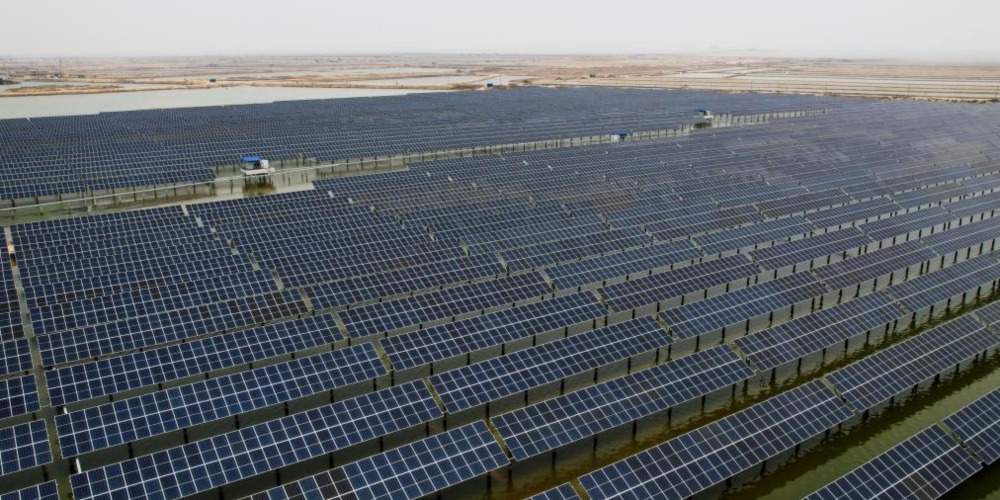
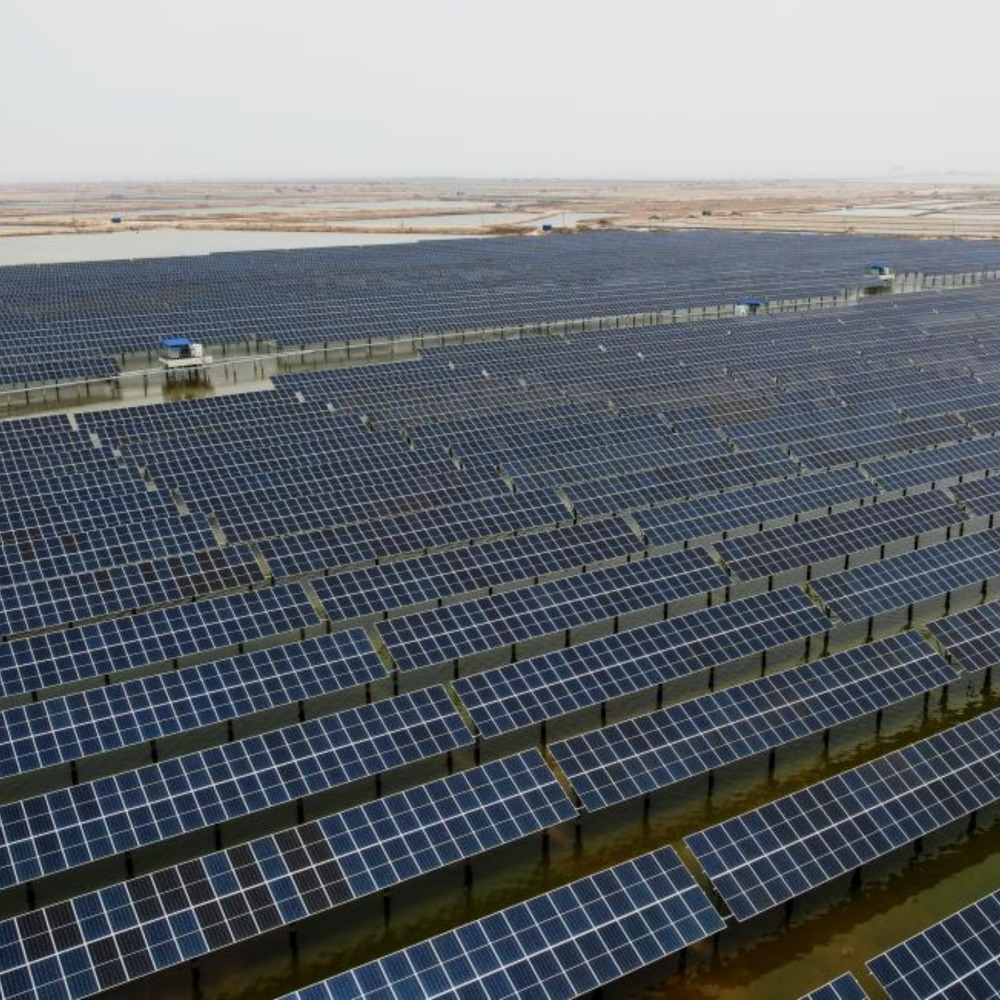
China's largest "fishing-photovoltaic complementary" project, 1.09 million kW sea pond photovoltaic power station in Hebei, had been successfully connected to the grid and is generating electricity.
It's average annual power generation is 1.86 billion kWh, which is approximately enough to meet the annual electricity consumption of 2.79 million residents.
As the demand for clean electricity becomes increasingly high while land costs also rise, "fishing-photovoltaic complementary" has become another solution, creating a win-win situation.
reduces carbon dioxide emissions by 1.4 Million tonnes annually
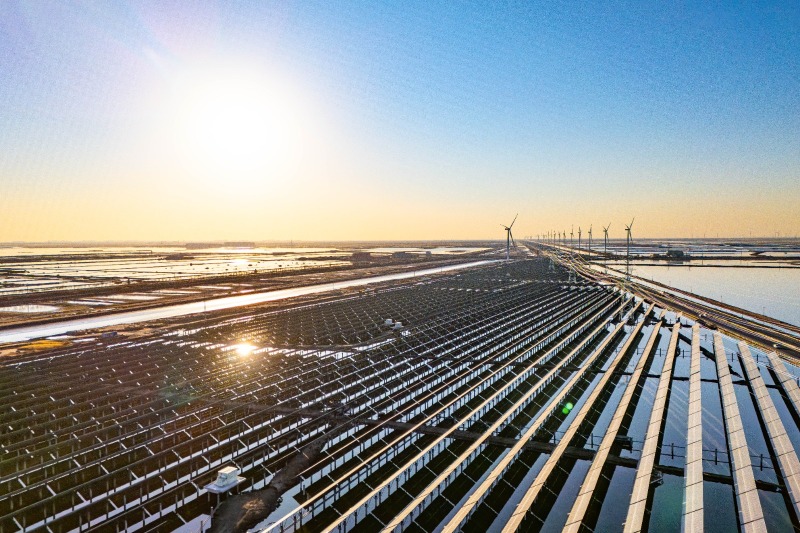
Hebei's 1.09 million kW sea pond photovoltaic power station is located in Cangzhou City, Hebei, situated on the coast of the Bohai Sea. It has 363 arrays with a total of 2.31 million photovoltaic modules, covering an area of approximately 26,000 mu.
The project is part of China's third batch of large-scale wind and photovoltaic power base projects, with a total investment of approximately 6.5 billion yuan (RMB, the same currency below).
After the project is connected to the grid and generates electricity, it can save approximately 561,000 tonnes of standard coal and reduce carbon dioxide emissions by approximately 1.4 million tonnes annually.
More importantly, the project can help the local area to build a new type of power system based on renewable energy.
By leveraging Cangzhou's unique natural resource conditions and its well-established aquaculture industry, it will carry out the development and applied research of key technologies for "fishing-photovoltaic complementary" green ecological aquaculture in seawater ponds
It can also establish an innovative technology system for "fishing-photovoltaic complementary" green ecological aquaculture, and explore a new path for upgrading the "energy + seawater aquaculture industry".
The dual carbon transition of traditional fisheries
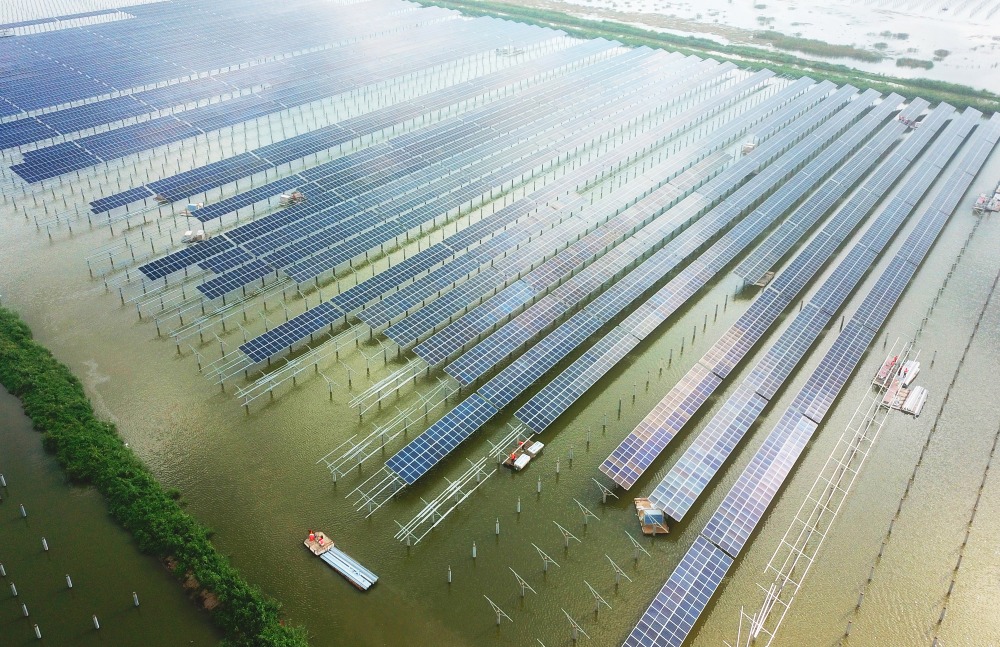
The so-called "fishing-photovoltaic complementary" refers to the complementary and integrated development of two major industries: traditional fishery farming and new energy photovoltaic power generation.
It involves installing photovoltaic panels in the idle space above fishponds to generate electricity, leveraging the panels' advantages of providing shade, lowering temperatures, and inhibiting algae growth to subsequently increase aquaculture yields. It forms a new power generation model where power can be generated above, and fish can be farmed below.
In fact, under the dual carbon targets, the demand for new energy has greatly increased, but a major challenge for future development is the restriction on land availability, necessitating the efficient use of land resources while simultaneously increasing the output of clean energy.
Carbon emissions from traditional fishery farming are primarily due to electricity consumption. For example, significant electricity is used for refrigeration and quick-freezing, as well as by lighting and intelligent monitoring equipment in aquaculture.
How to achieve energy conservation, environmental protection, and emissions reduction without damaging ecological resources and the environment is a pressing issue that needs to be resolved.
China is the largest aquaculture country, with marine aquaculture accounting for more than half of the aquaculture market. A large number of seafood aquaculture bases are distributed along the coastal areas, many of which are located on shallow sea mudflats.
However, due to geographical factors, China's shallow sea mudflats are generally dispersed and fragmented, making it difficult to build large-scale, centralised projects, with most areas being used inefficiently or even left derelict.
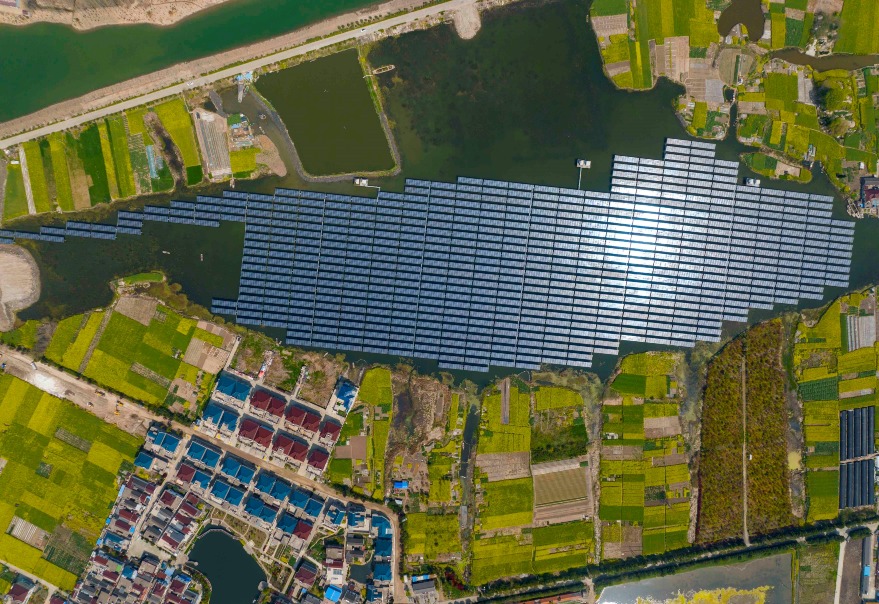
Under the composite photovoltaic project model, installing photovoltaic panels over the water surfaces of aquaculture areas such as lakes, reservoirs, and ponds for power generation allows for the rational use of land resources to increase the installed capacity of photovoltaic power generation.
This model creates a new intensive and efficient form of photovoltaic power generation, and provide sufficient green energy for aquaculture. In addition to using inland lakes and reservoirs to build floating photovoltaic systems, mudflat sea areas are also suitable for the construction of fixed photovoltaic systems.
As an industry that combines ecological agriculture with clean energy, "fishing-photovoltaic complementary" will be one of the effective paths for the dual carbon transition of the traditional fishing industry.