
Published : 2024-05-12
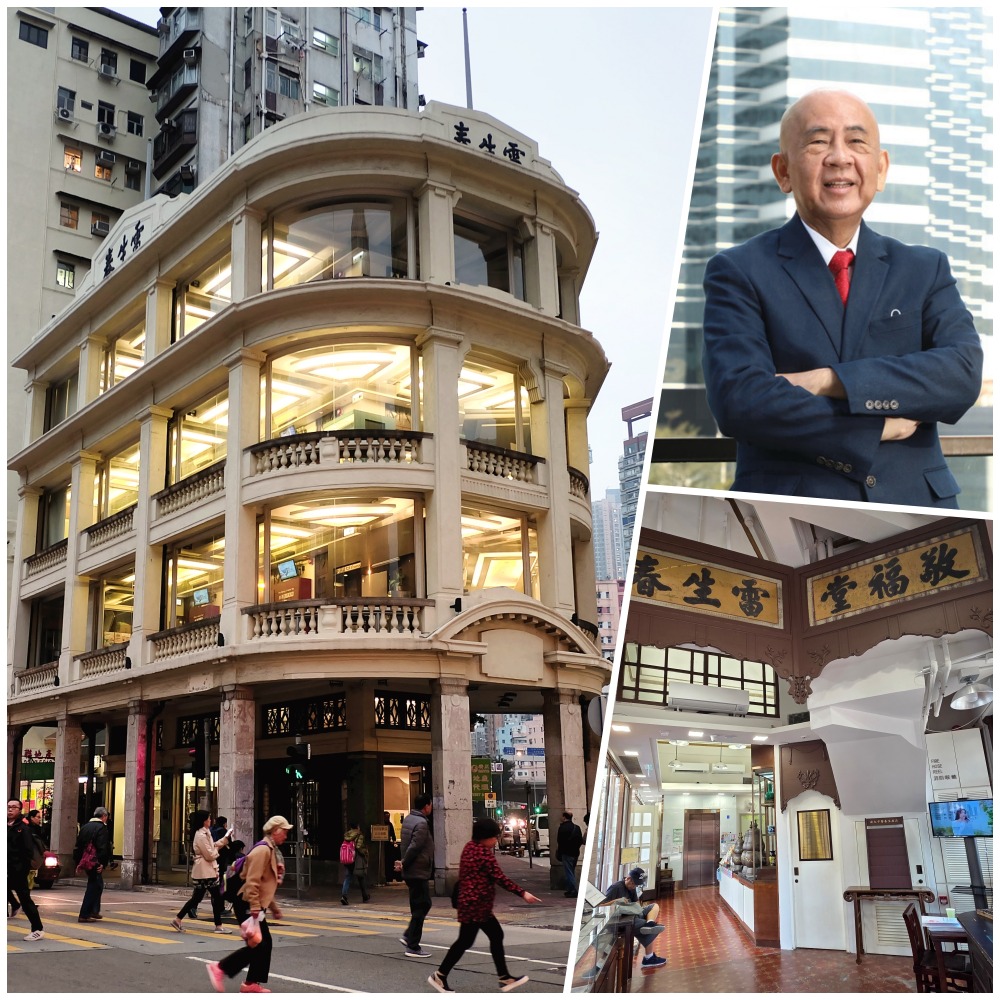
The 145-year-old traditional Chinese medicine brand Eu Yan Sang (余仁生) will be acquired by a Japanese company, transforming it from a Chinese-funded enterprise into a Japanese-owned brand.
Eu Yan Sang was founded in 1879 by Eu Kwong Pai (余廣培), who hailed from Foshan, and was later expanded and brought to prominence by his son, Eu Tong Sen (余東旋). A remarkably successful businessman, Eu Tong Sen was a firm believer in feng shui and fortune-telling.
To prolong his life, he constructed several European-style castles across Hong Kong, Singapore, and Malaya. Regrettably, most of the land was sold off by his descendants following his death, leaving none of the Hong Kong castles behind.
Eu Yan Sang's owner Eu Tong Sen had diversified business
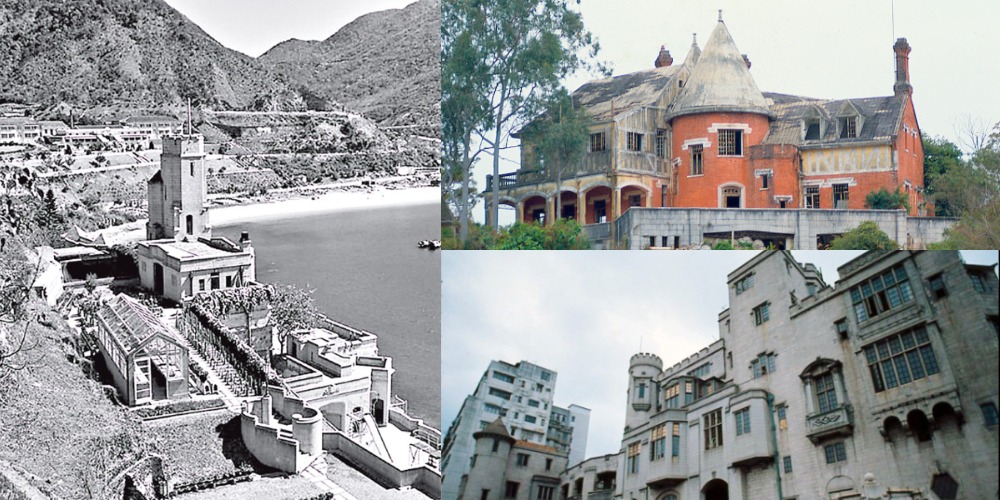
Eucliff (余園), located in Repulse Bay, was built in 1930. It consisted of two castle structures, each with a tower. It was famous for the large collection of western ancient armour inside, as well as the exterior stained glass windows.
Fortresses imbued with European architectural characteristics, magnificent stained-glass windows, three-dimensional bas-reliefs depicting angels and nude figures, murals featuring Chinese folk tales, alongside antique Western armour, Italian marble sculptures, Chinese and Indian bronze statues, accented by an abundance of jade items and gold leaf decorations... all of these were signature features of Eucliffe, the castle belonging to Eu Tong Sen, the owner of the Eu Yan Sang pharmaceutical business.
Eucliff was a fitting reflection of Eu Tong Sen, who dressed and behaved in a westernised manner, resembling an English gentleman. However, his lifestyle and family values retained traditional Chinese aspects, with practices such as polygamy and the belief in Feng Shui.
Eu Tong Sen was a wealthy South Chinese merchant in the early 20th century, well-known in Southeast Asia and Greater China. Today, people know him as the founder of centennial brand Eu Yan Sang.
But, in fact, this traditional Chinese medicine business only constituted a small part of Eu Tong Sen's income; his wealth primarily came from tin mining, rubber cultivation, real estate, and overseas remittance businesses.


Eu Tong Sen owned tin mining, rubber planting and real estate businesses
Eu Tong Sen was not only wealthy, but also very influential in Hong Kong.
According to the book EUS Family - The Past and Present of a Transnational Corporation (《仁生家族──跨國企業的前世今生》) by Zheng Wan Tai (鄭宏泰), it is cited that as of 1908 Eu Yan Sang employed as many as 12,000 people for his mining business alone.
These workers not only worked for Eu Tong Sen, but they also served as his biggest customers for his overseas remittance business, providing a huge cash flow for the Eu's corporation.
Eu Tong Sen saw opportunities before cars became ubiquitous, and used the profits from his mining business to invest heavily in rubber cultivation. Later on, the advent of mass-produced cars saw a surge in demand for tires, driving up the price of rubber.
In 1910, the price of rubber was 16 times the cost of production! No wonder Eu Tong Sen was described as having the "Midas touch."

In the 1930s, when Eu Tong Sen was over 50 years old, he had already moved to Hong Kong. His eldest son, Eu Tong Chew (余經鑄), and manager Lo Kwee Seong (羅桂祥) took over the business.
Lo Kwee Seong had followed his father to Southeast Asia to make his living and worked for Eu Yan Sang. Eu Tong Sen saw potential in him and sponsored him to study business at the University of Hong Kong.

Eu Tong Sen built castles to house wives and children
Eu Tong Sen knew how to diversify his investments, particularly favouring land purchases for rentals.
In the early 20th century, Eu bought many pieces of land in Malaysia, Singapore, and Hong Kong.
According to records, when Eu Yan Sang was established in Singapore in 1932, the company owned as many as 340 real estate properties. Although there is no exact market value amount, but many are located in prime locations, estimated to be a vast fortune.
The land was used not only for investment but also for building private family estates.
Eu Tong Sen had a large family, with 11 spouses who bore him 24 children. They resided in various mansions and villas in Malaysia, Singapore, and Hong Kong, all of which were European-style castles.
There were three such mansions in Hong Kong, all called "余園" in Chinese, but they had different English names: Euston on Bonham Road in Mid-Levels, Eucliff in Repulse Bay, and Sirmio in Tai Po.

Eu Tong Sen collected many antiques in Eucliff. In 2016, a couple who collected a large number of antiques from Eucliff of Repulse Bay, applied to the government to allocate land for a museum to display their collections. Unfortunately, they were unsuccessful.

Eu Tong Sen believed in Feng Shui to build castles to prolong his life
It was reported that the reason Eu Tong Sen enthusiastically built castles was due to the advice of a Feng Shui master.
He said that if Eu Tong Sen wanted to live a long life, he needed to engage in major construction projects. Therefore, Eu Tong Sen built over 10 castles in various places over the years.
In Hong Kong, Euston on Bonham Road was completed in 1931; Sirmio in Tai Po was where Eu Tong Sen laid to rest.
He died from heart failure in May 1941 at the age of 64. He was buried in Sirmio in Tai Po.
After Eu Tong Sen's death, Eucliff in Repulse Bay tragically became a slaughterhouse for prisoners of war during the Japanese occupation, and earning it a reputation as a "haunted house".


Three castles were sold after Eu Tong Sen's death
After Eu Tong Sen's death, his estate was worth a total of 50 million SGD (Straits Dollar,海峽貨幣), which was divided equally among his 13 sons, and each daughters received 30,000 SGD.
His wives had not received any estates, except for his favourite wife, Liu Cheng-yee, who was allowed to live in Euston on Bonham Road and Eucliff in Repulse Bay for the rest of her life.
After Liu died in 1978, Eu's descendants sold the castles on Bonham Road and in Repulse Bay. The former was developed by New World Development Company Limited into the luxury residential building "Euston Court" while the latter became Sino Land's "56 Repulse Bay Road."
As for Sirmio in Tai Po, where Eu Tong Sen's body was buried, it was sold in 1972. Later, the land was developed by Nan Fung Development, a subsidiary of Nan Fung Group into "Fortune Garden" (雅景花園).
All of Eu Tong Sen's castles in Hong Kong were demolished. Even his remains had to be exhumed and reburied at the Chinese Permanent Cemetery in Tsuen Wan. The elaborately decorated home and the heritage Eu's castles no longer exist.


Read more:
Aw Boon Haw built Haw Par Mansion in Hong Kong and Singapore
The founder of Vitasoy once work for Eu Yan Sang