Published : 2026-08-11
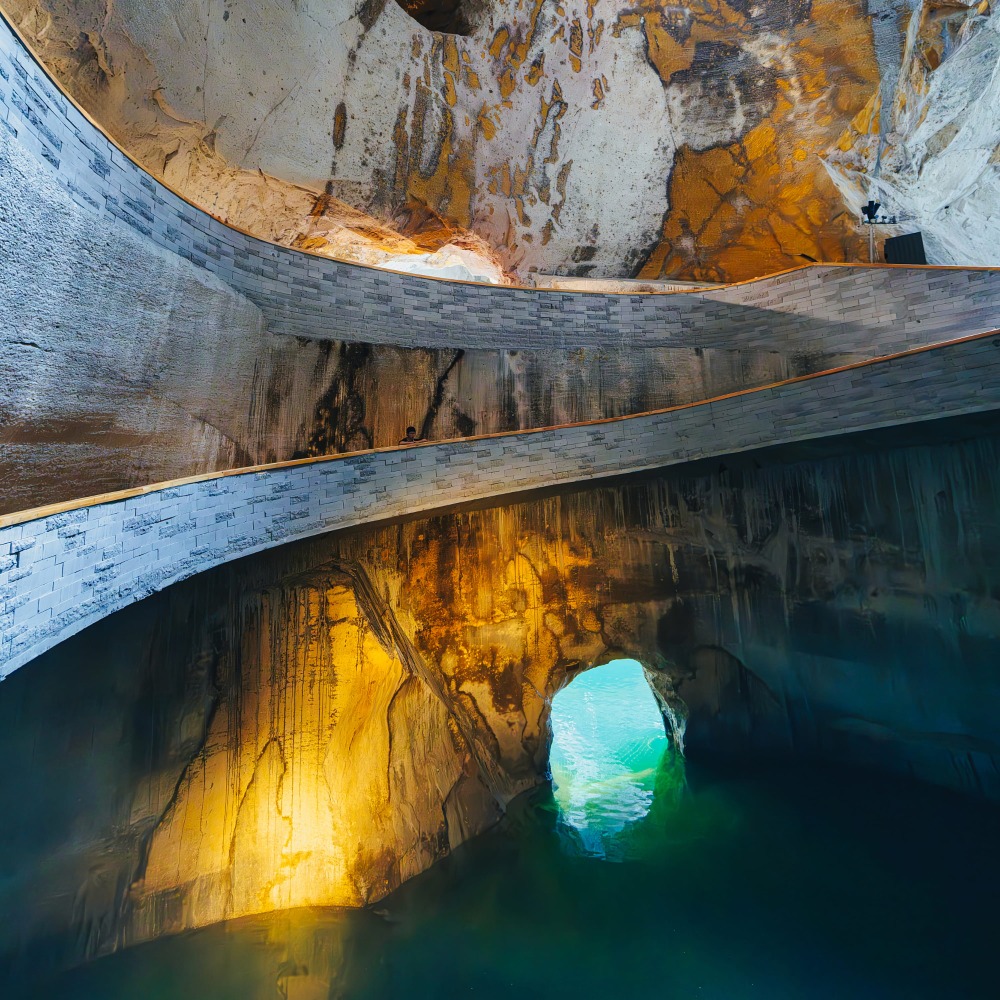
In the darkness of a cave, light ripples across the rock walls. Few would guess that this atmospheric art space was once a quarry abandoned for more than a thousand years.
In Taizhou, Zhejiang, Huangyan Grottoes has been reborn as a contemporary cave art museum. Stone once quarried here for roads and city walls now frames an award-winning cultural space. But how did designers use "architectural acupuncture" to awaken this ancient site?
Step inside Huangyan Grottoes and discover a world beneath the surface.
Taizhou Huangyan Grottoe
The Huangyan Grottoes are located in Shanxialang Village, Jiangkou Subdistrict, Huangyan District, Taizhou City, Zhejiang Province, and are a quarry with a thousand-year history.
As early as the Tang Dynasty (675 AD), the Huangyan Grottoes provided a large amount of building stone for the construction of Yongning County town and the prefectural city.
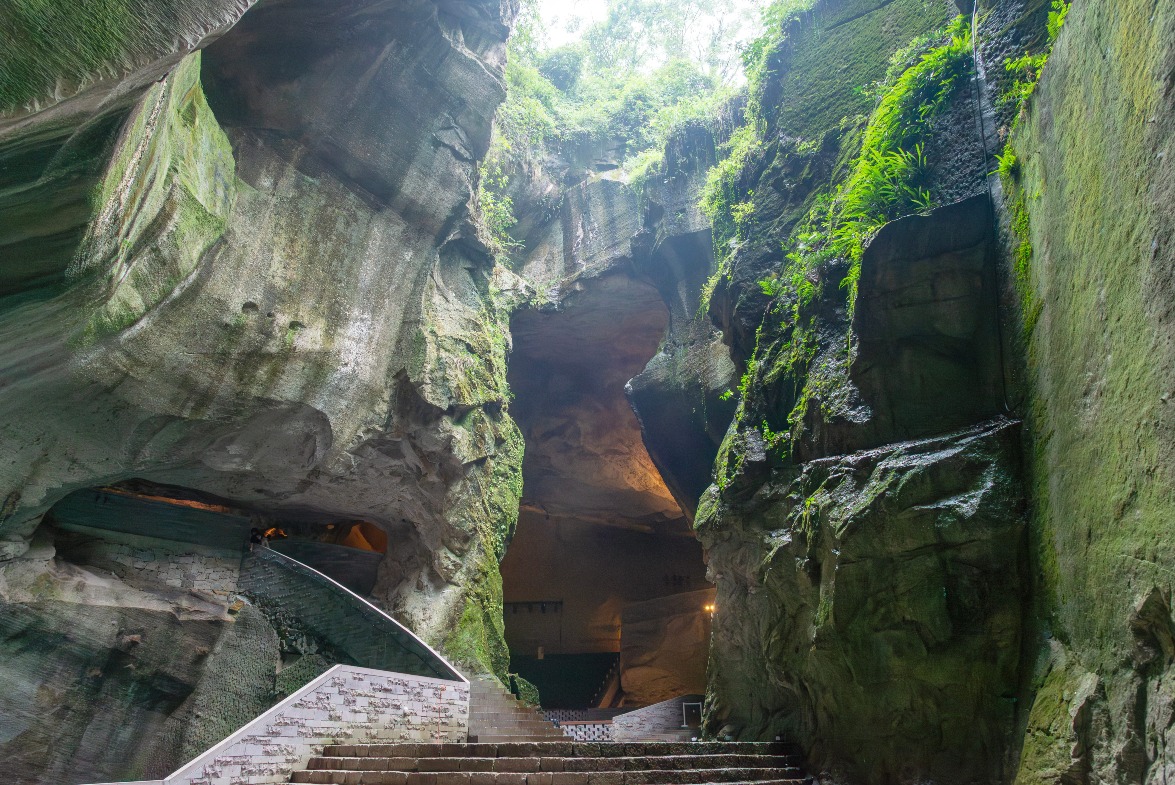
Since Huangyan became a county in the Tang dynasty, stone slabs and blocks quarried from its grottoes have been used to build city walls, roads, bridges, canals and homes.
Once known as the "Shanxialang Stone-Slab Storehouse", the site still bears the marks left by generations of stonemasons.
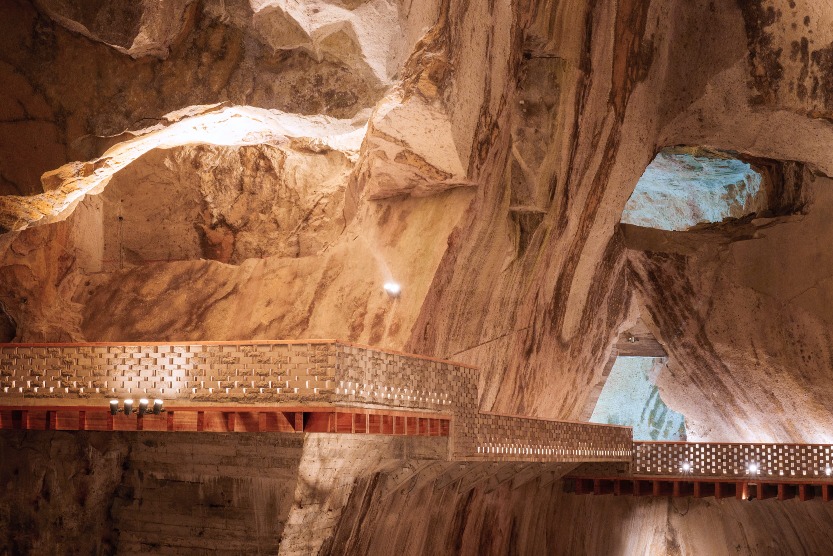
The grottoes contain several stone chambers more than 100 metres high, along with dozens of interconnected caves.
They were not formed by nature, but excavated to extract stone while shielding it from sun and rain. Their small entrances open into vast interiors, creating a distinctive narrow-necked, wide-bellied form.
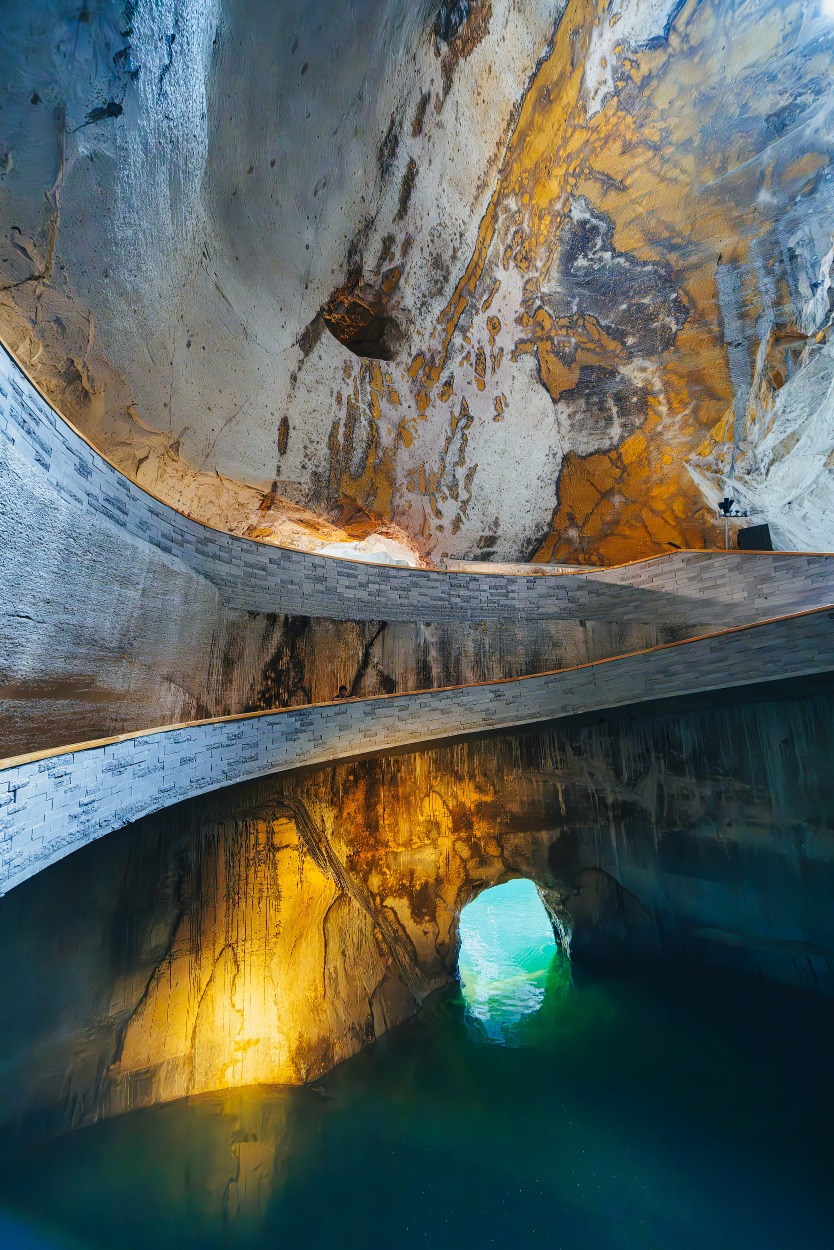
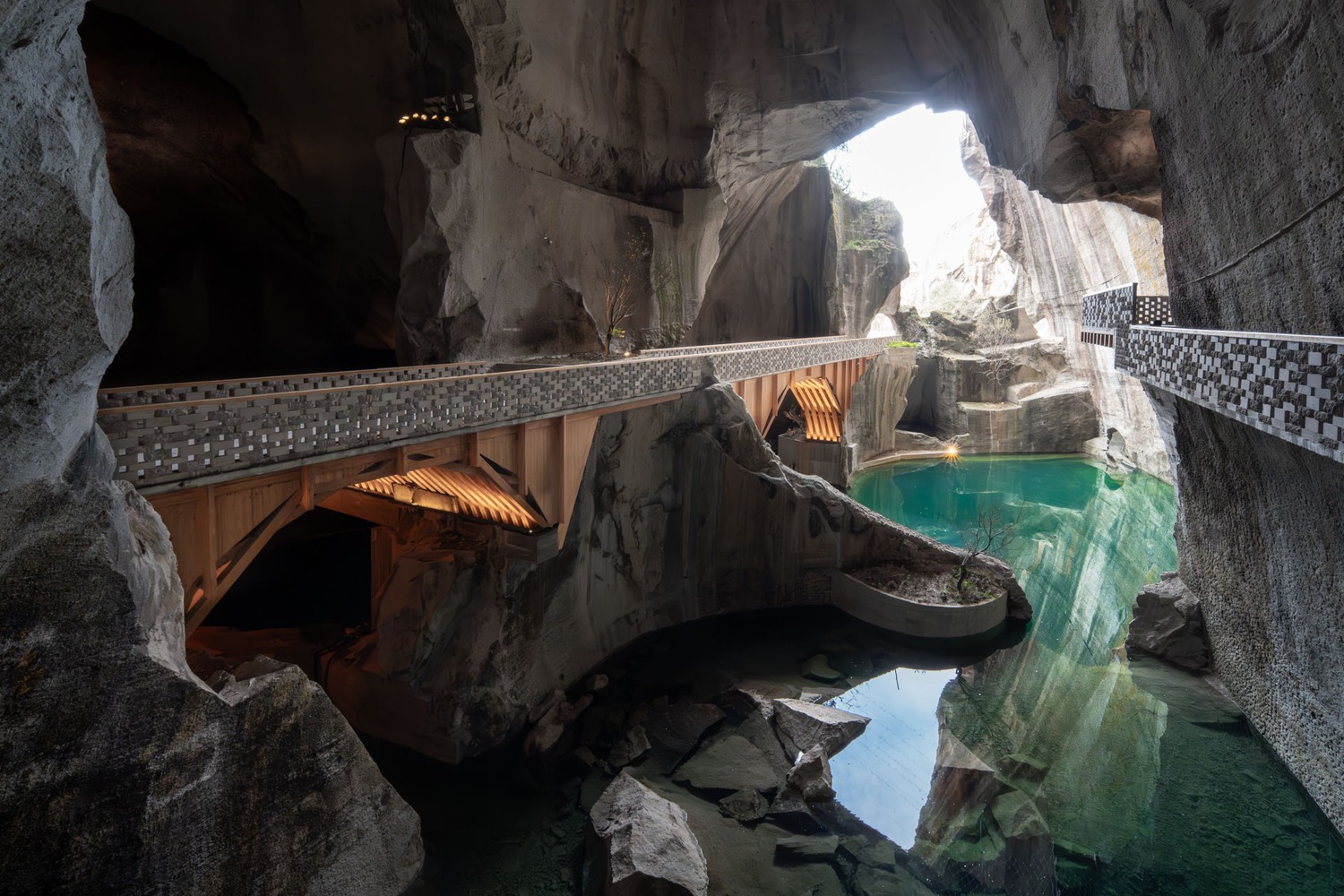
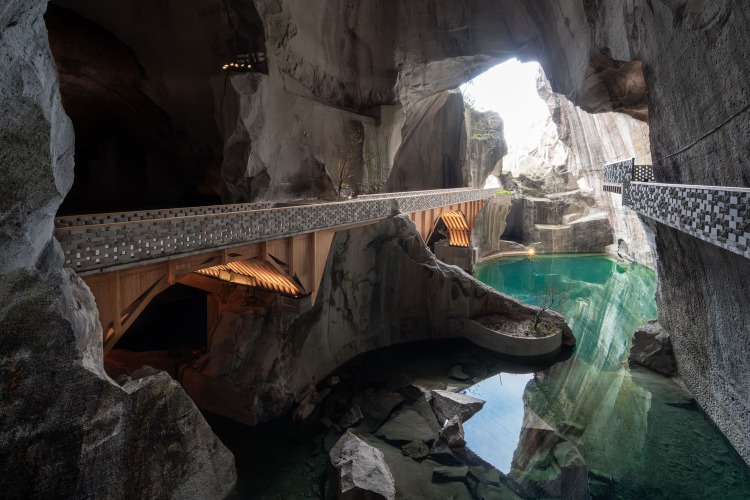
In addition to the caves of various shapes, rainwater sometimes seeps in through the skylights and rock crevices of the mountain, forming winding waterways and emerald-green pools, adding a touch of deep and tranquil natural colour to the former quarry.
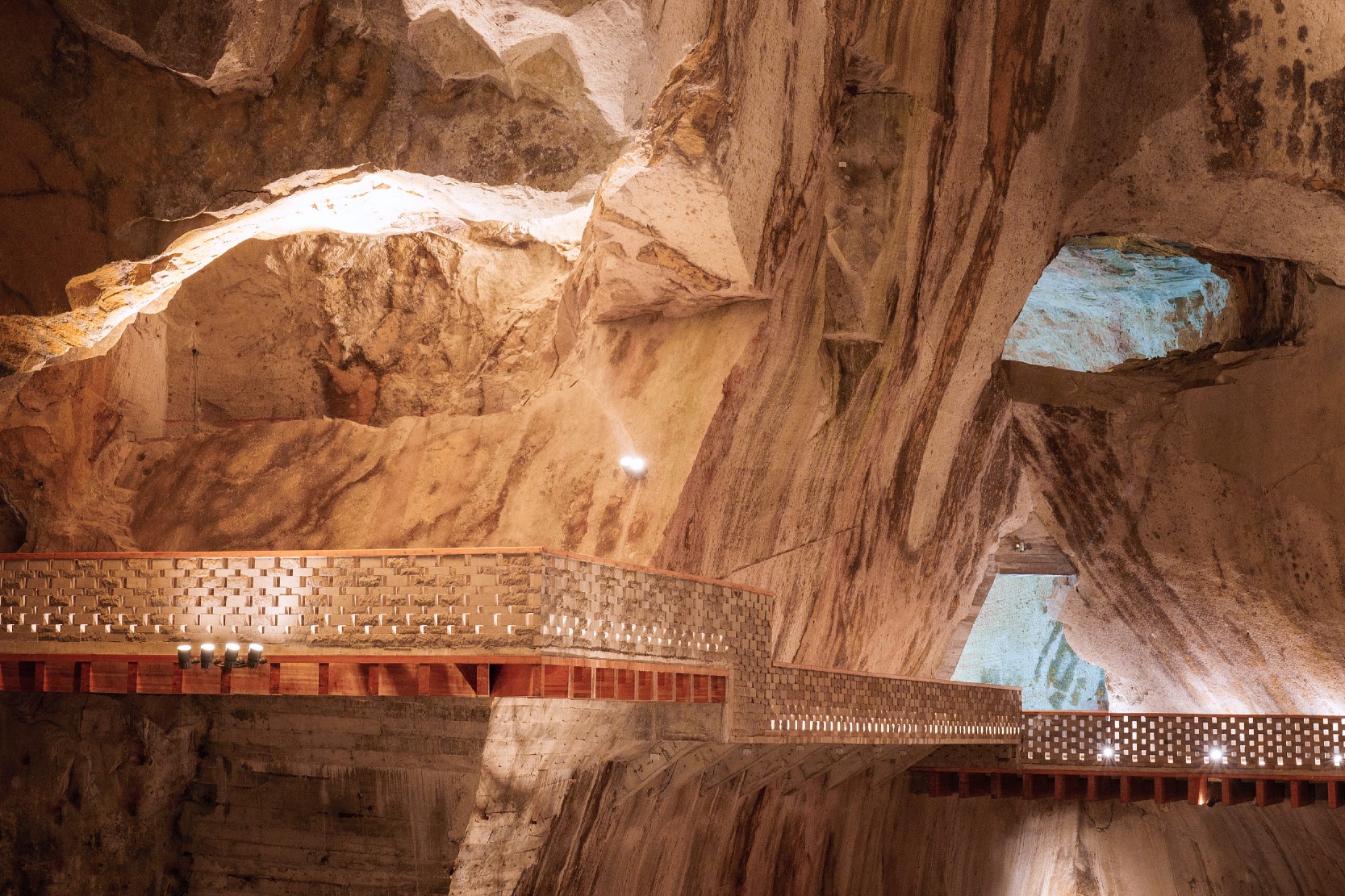
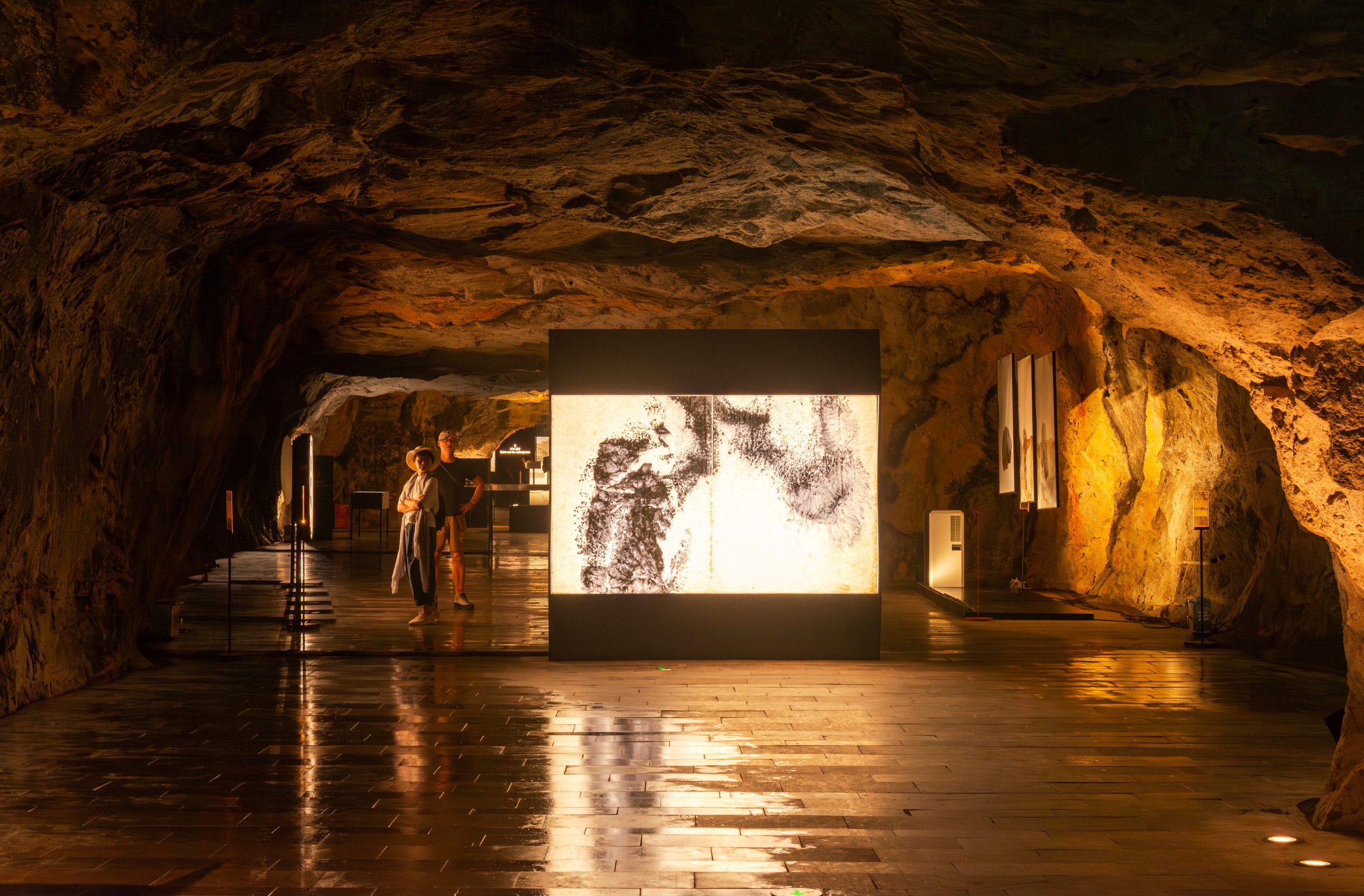
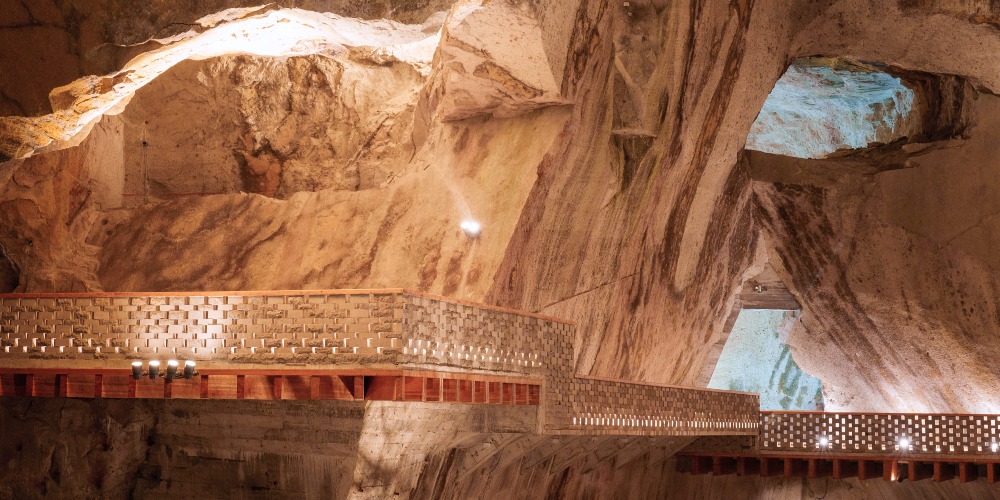
The most striking feature of the Huangyan Grottoes is the colourful natural textures on the rock walls.
As groundwater containing mineral elements such as iron, manganese, and sulphur has seeped out along rock crevices and deposited over many years, it has stained the stone walls with colours like golden yellow, reddish-brown, and dark brown, resembling giant murals painted with rich, heavy colours. At first glance, the entire grotto looks like a naturally formed rock painting art gallery.
Such a natural wonder was certified by the Shanghai Great World Jinisi Headquarters as the "largest group of natural murals".
How Tsinghua architects "acupunctured" Huangyan Grottoes?
In the 1980s, the Huangyan Quarries, which had once contributed greatly to the local economic development, officially completed their historical mission.
However, this silence did not last long. In 2023, Professor Xu Tiantian from Tsinghua University's School of Architecture led a design team to the quarries to launch an ingenious ecological restoration and spatial revitalisation project.
The team believes that the production passages people have carved out within the caves over a thousand years are a living memory of local development, and the intervention of architecture is to re-present this cultural heritage and atmosphere of life.
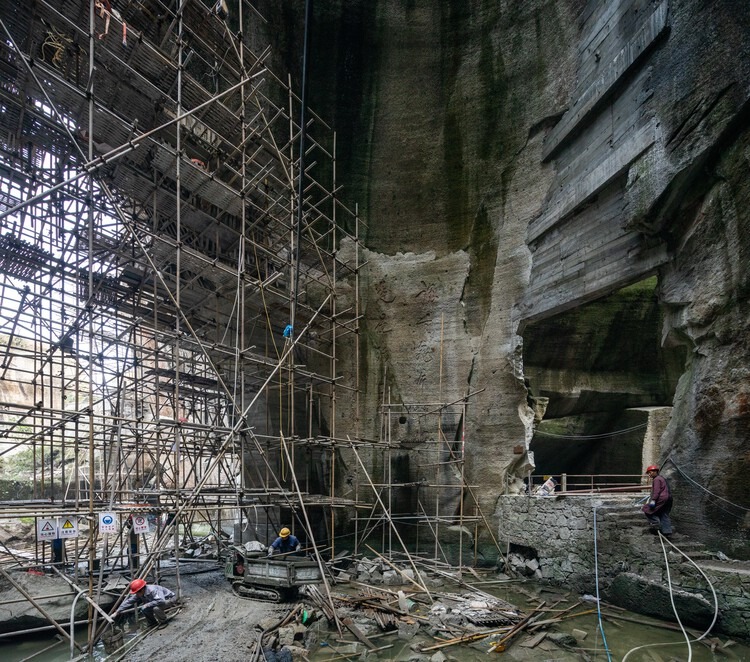
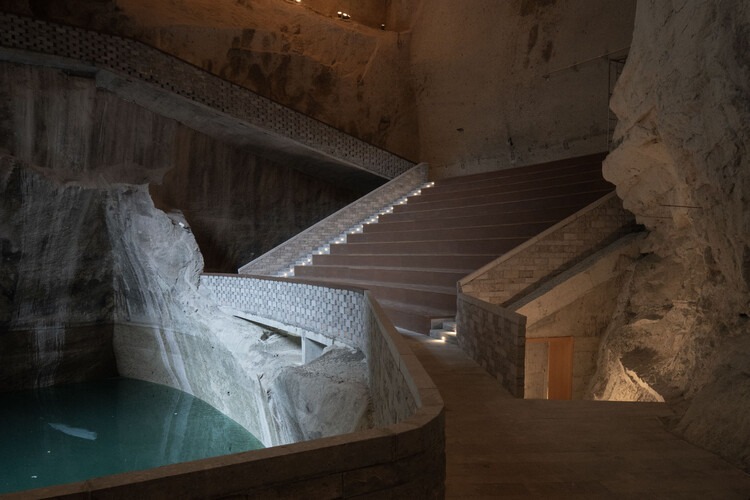
To preserve the original appearance of the Huangyan Quarries as much as possible, the team abandoned large-scale transformations, instead opting to integrate local materials and construction techniques to carry out minimal intervention on the quarries with the concept of "architectural acupuncture".
Facing safety hazards such as weathering and structural instability inside the caves, they inspected and reinforced nearly 4,700 points one by one.
The assessment of each point and the application of each reinforcement were as precise and cautious as a traditional Chinese medicine practitioner accurately locating an acupuncture point to insert a needle.
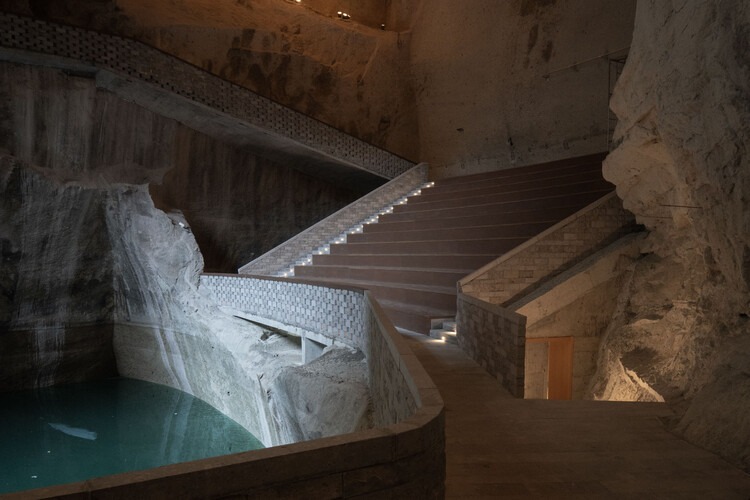
In addition to precise reinforcement, the team also designed multiple interconnected corridors along the original production passages on the cave walls of the Huangyan Quarries, linking them with openwork balustrades. This not only effectively reduces the load on the stone walls but also adds a touch of softness and transparency to the quarries.
From thousand-year-old mines to an art gallery
After 15 months of restoration and revitalisation, the Huangyan Quarries reopened in January 2025.
The approximately 20,000 square metres of caves and over 2 kilometres of touring routes have reconnected the originally dark and fragmented caves, transforming them into a highly distinctive modern art space.
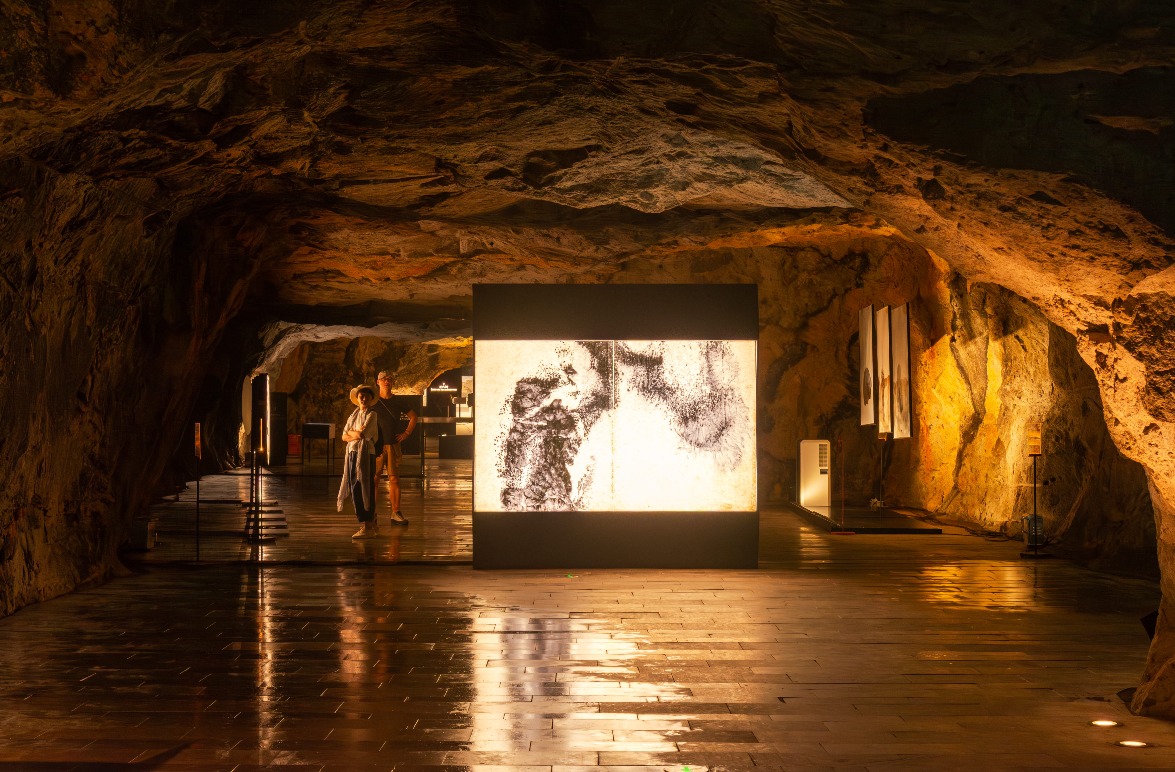
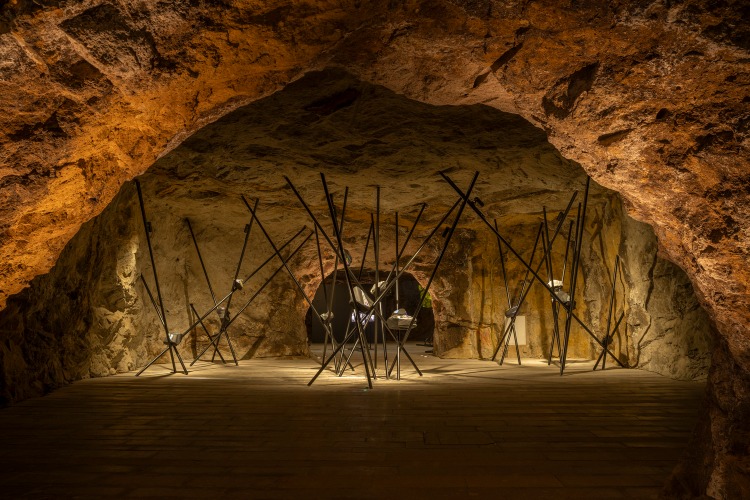
Entering Quarry No. 1, the giant rock wall is transformed into a natural display screen, with AI light projections and installation art displayed upon it, allowing the thousand-year-old stone textures to flow with the light.
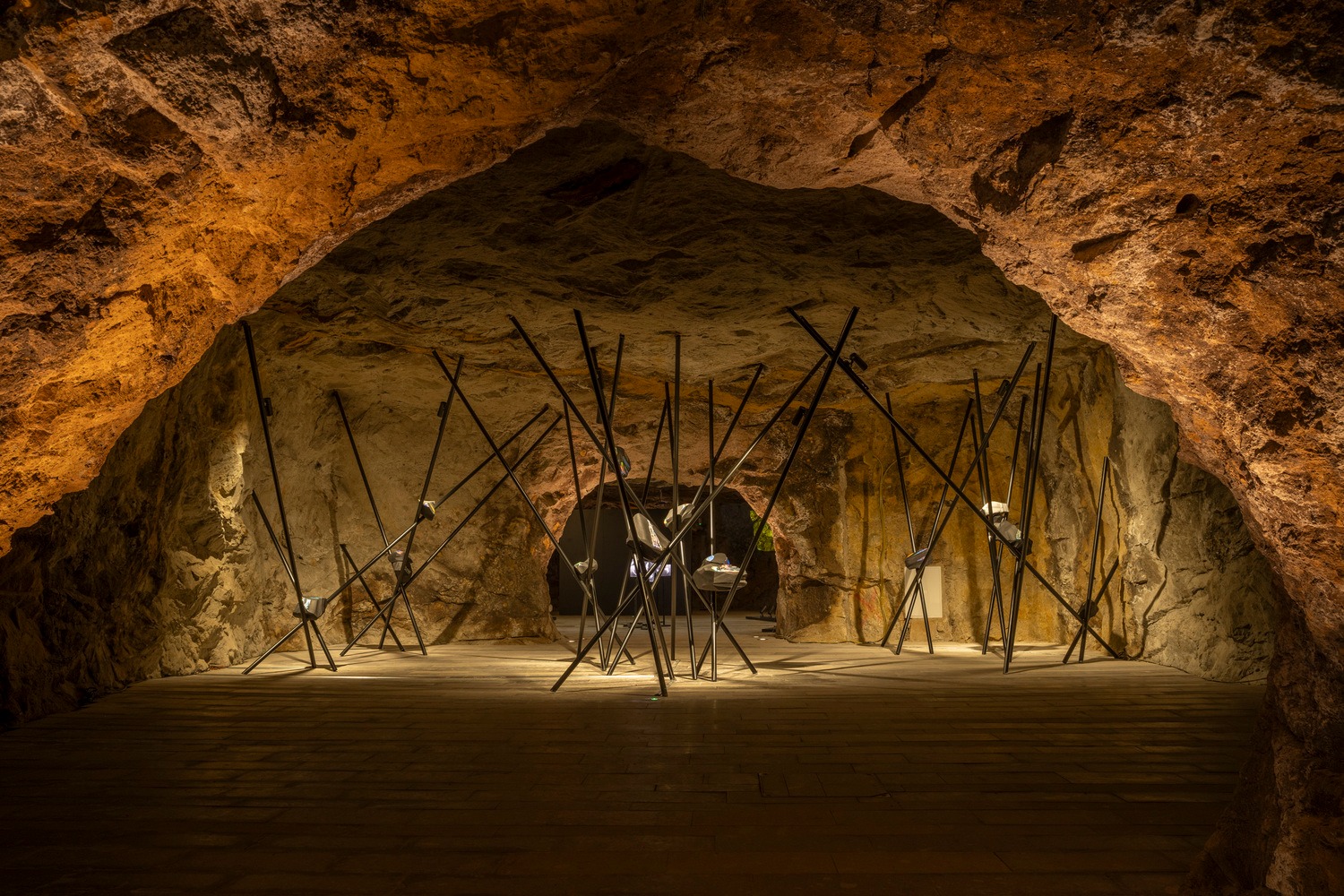
Paired with an installation made from scrap car parts, it presents a visual effect where the ancient and the avant-garde coexist.
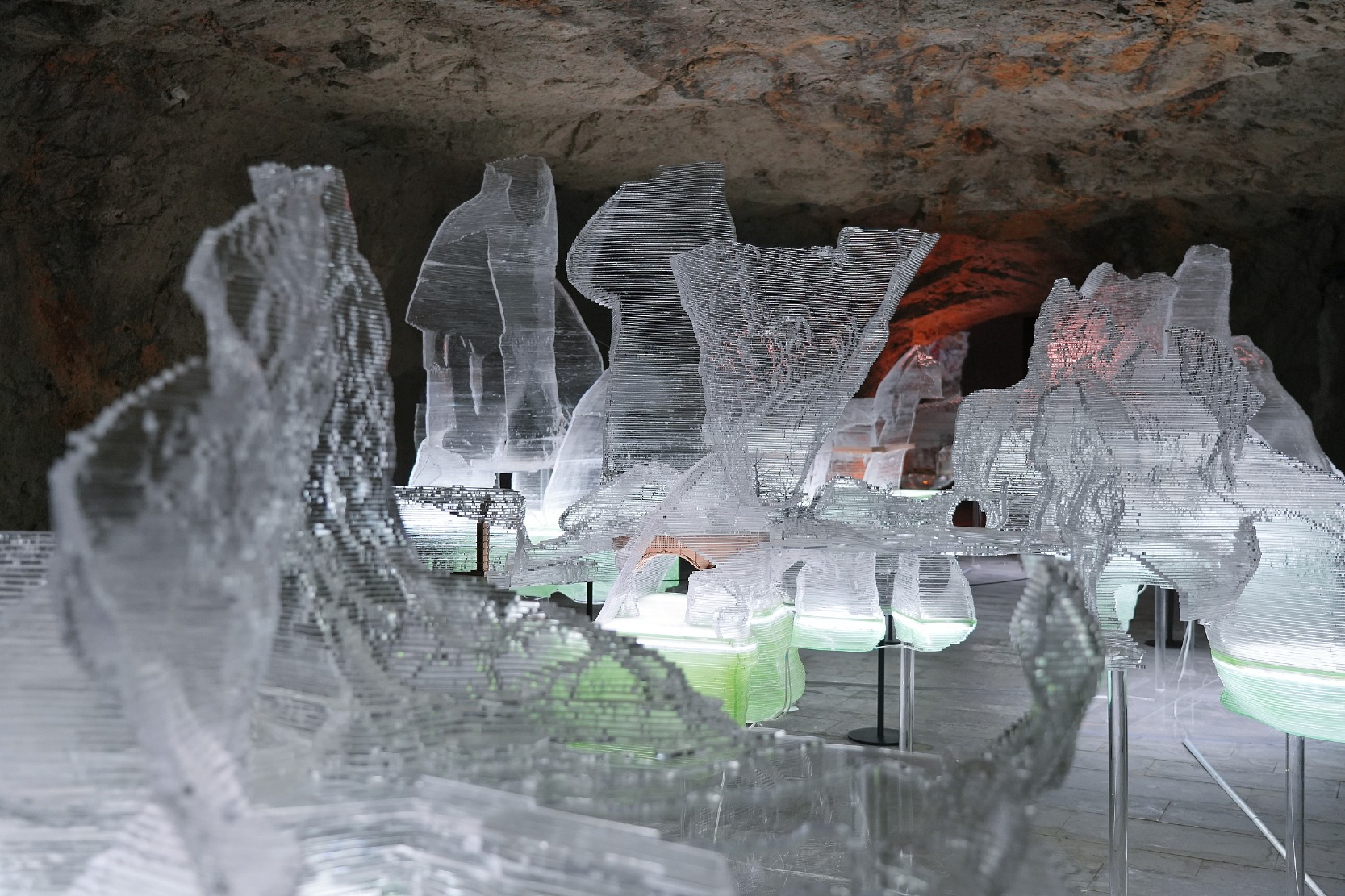
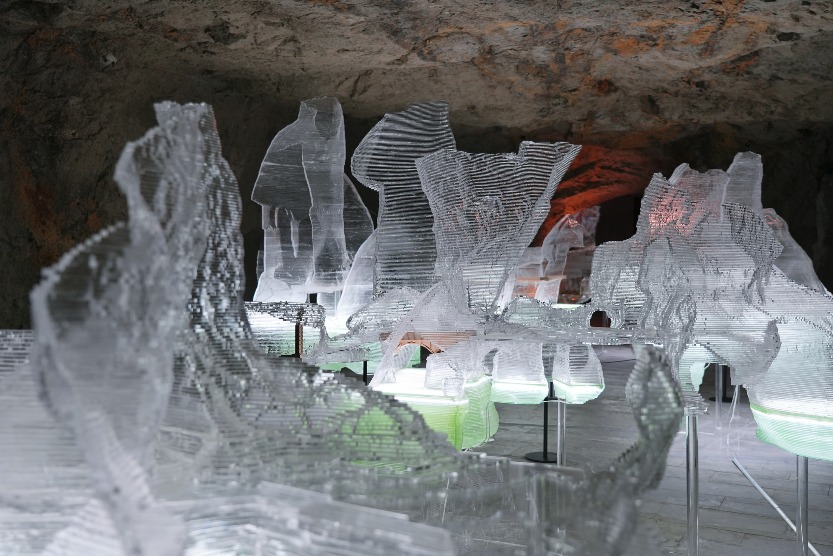
The 260-metre-long corridor connecting Quarry No. 1 and Quarry No. 2 has been transformed into an immersive exhibition space with "stone" as its theme.
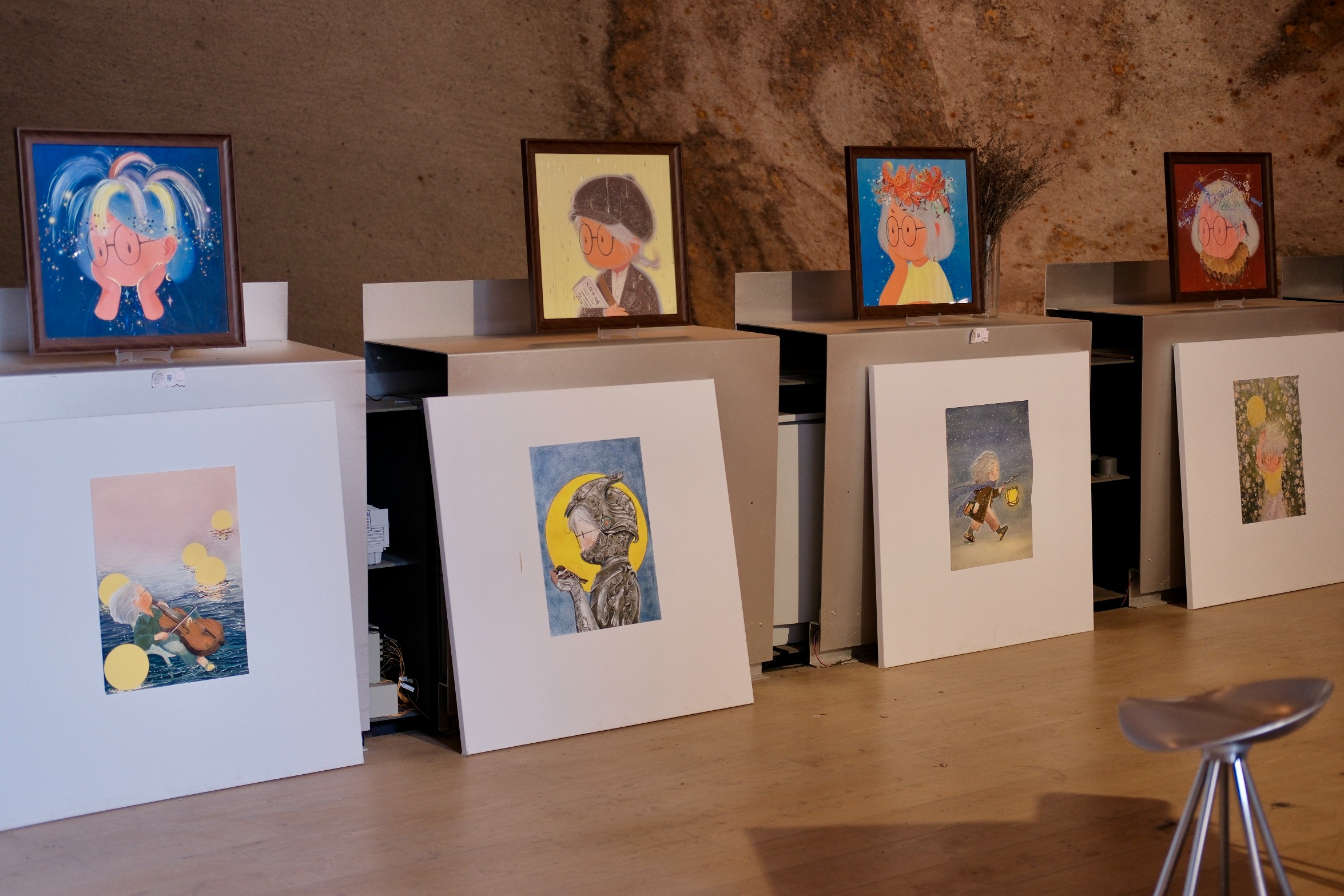
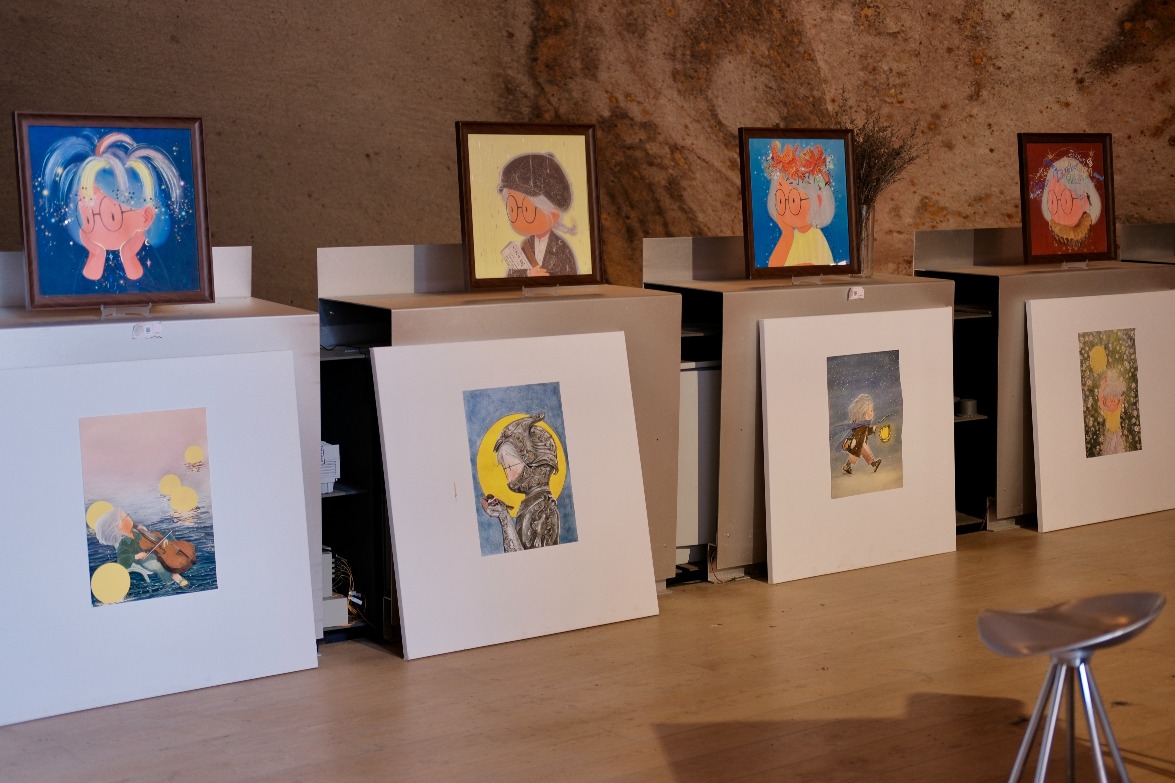
Works by over 30 artists are scattered between the rock walls and the corridor, as if in dialogue with these thousand-year-old quarries.
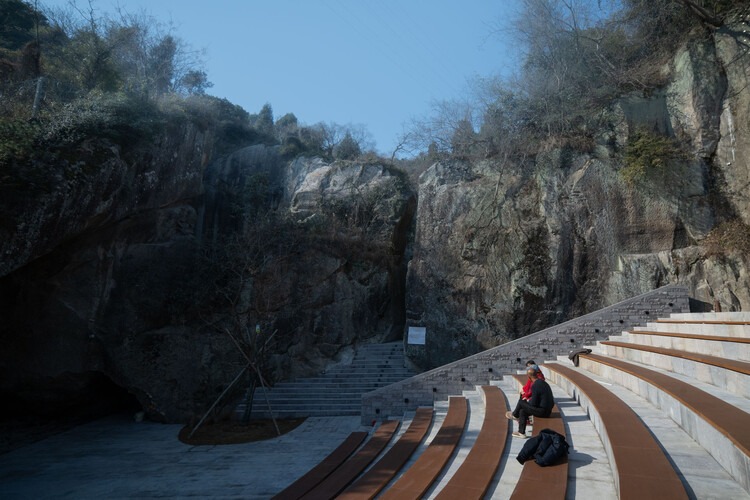
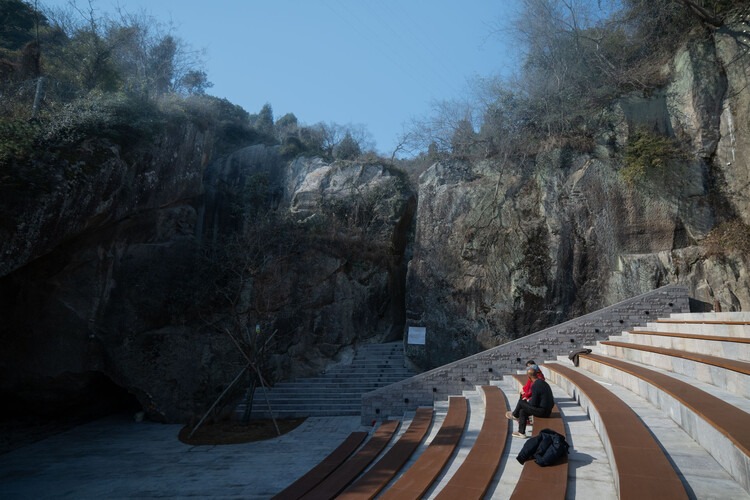
Arriving at Cave No. 2, the sounds of water and music intertwine to form another landscape. There is a cave theatre here, where concerts, plays, and live performances are held from time to time.
As the sound of music echoes between the rock walls, harmonising with the sound of the waterfall cascading down the walls, the mine pit, where once only the sound of chiselling stone could be heard, now has more of an artistic atmosphere.
From quarrying stone in the past to exhibiting light, shadow, and artworks today, although the purpose of the Huangyan Grottoes has changed, the chisel marks, water channels, and natural textures on the rock walls have been preserved.
Walking inside the caves, one can see the traces left by a thousand years of quarrying, and also feel the new look brought to the space by contemporary art.
This once-silent mine pit, now continues to tell the story of Huangyan in another way.
Read more:
Today's Scenery|Triangular wonders hidden across China
Who carved a buddha into the rock in Shaoxing?