Published : 2026-03-16
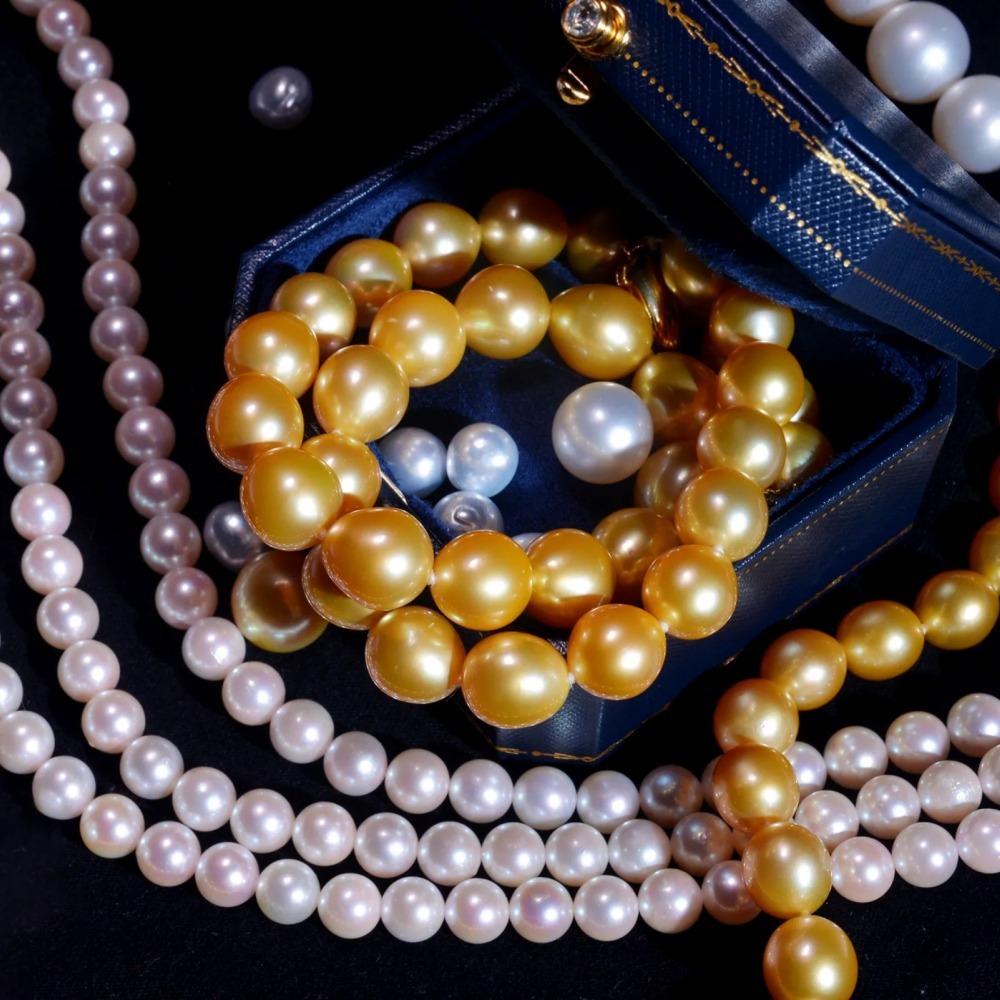
Did you know? The pearl jewellery we wear most likely comes from a small town in Zhejiang, China — Shanxiahu Town.
As the "Hometown of Pearls", Shanxiahu Town's freshwater pearl production accounts for 80% of the country's total and 70% of the world's total, with an annual turnover exceeding 50 billion RMB (the same currency applies below). How did tiny pearls string together a brilliant kingdom?
Shanxiahu Town: China's pearl capital
Shanxiahu Town is a small town under the jurisdiction of Zhuji City, Shaoxing City, Zhejiang Province. In this area of less than 43 square kilometres with a registered population of under 30,000, there are more than 9,000 enterprises engaged in pearl farming, processing, wholesale and retail, with over 20,000 employees.
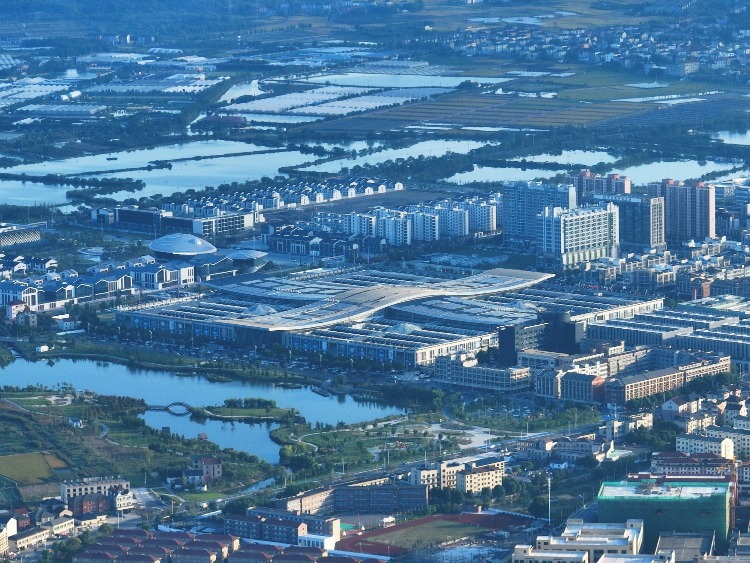
Shanxiahu Town is the true "Hometown of Pearls" and "China's Pearl Capital", its turnover in 2025 exceeded 50 billion RMB, of which the cross-border transaction volume reached 4 billion RMB, truly tapping into the major international market.
On the global map of the pearl industry, Shanxiahu Town is undoubtedly one of the most brilliant "pearls". 80% of the nation's and 73% of the world's freshwater pearls come from here.
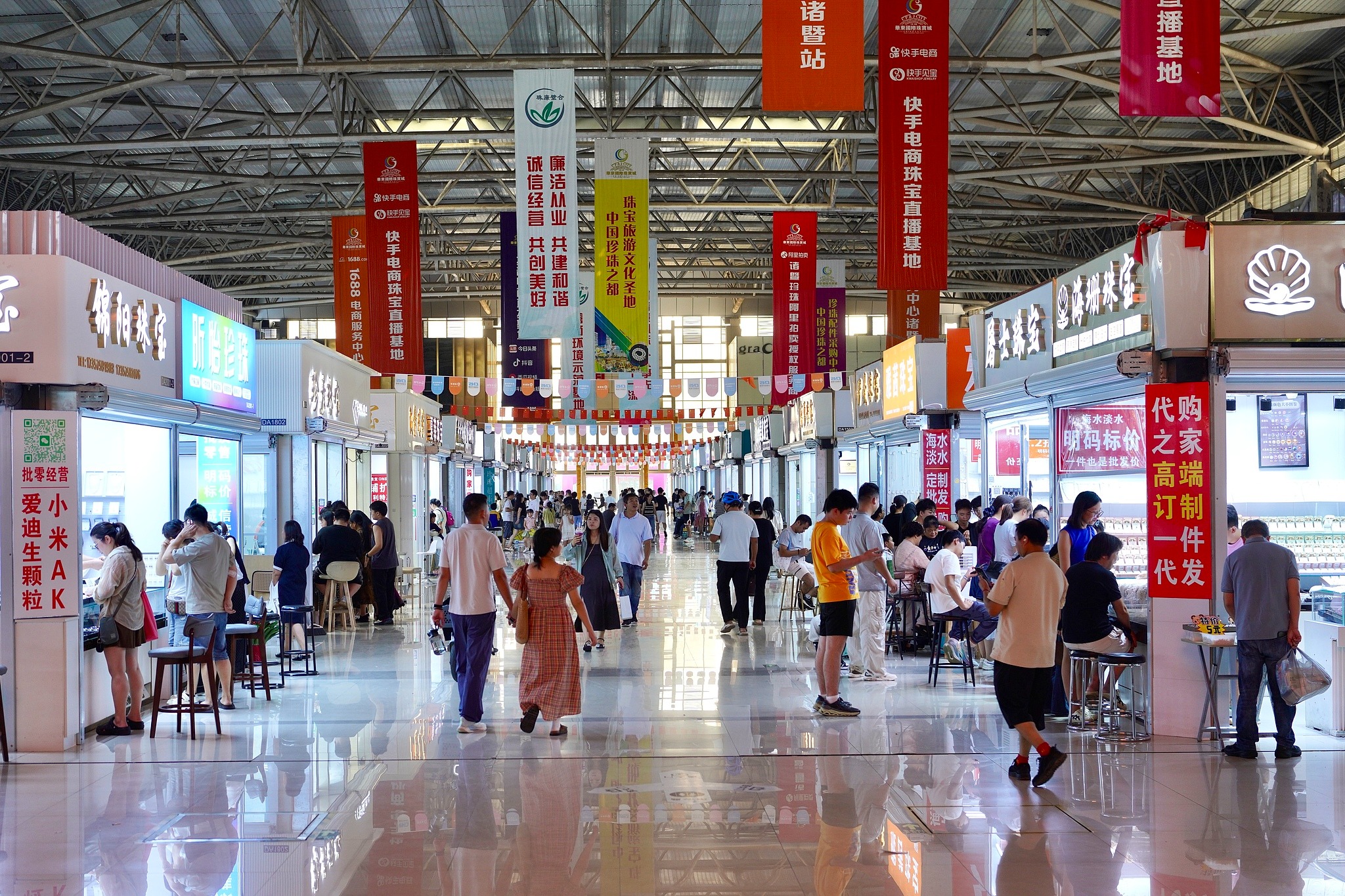
Shanxiahu Town also boasts the world's largest pearl trading market — the East China International Jewellery City, making it the world's largest distribution and trading centre for freshwater pearls.
In 2020, the permanent site of the World Pearl Congress was established here, which means that Shanxiahu has already secured a pivotal position in the global pearl industry.
500 RMB to 50 billion: The transformation of Shanxiahu pearls
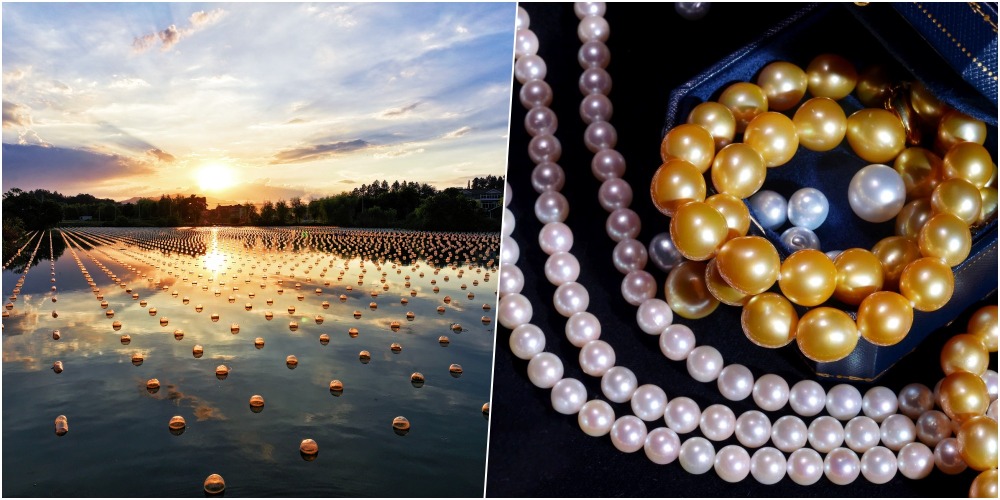
In the 1960s and 1970s, when businessmen from Jiangsu came to Zhuji in search of pearl-producing river mussels, two villagers from Shanxiahu who gave them directions unexpectedly saw an opportunity and tried to cultivate pearls themselves, becoming the first batch of pearl farmers in Shanxiahu Town.
Later, their first batch of cultivated pearls was sold for a high price of 497 RMB, which was equivalent to the price of 10 pigs at that time; with this first pot of gold, they also became the widely-known first-generation "Pearl Kings".
Subsequently, the villagers of Shanxiahu began to learn how to cultivate pearls from mussels, gradually scaling up their operations.
After the pearls were cultivated, they carried bags of pearls on their backs to places like Guangzhou and Shantou to find markets, and took the opportunity to connect with the international metropolis of Hong Kong, opening up the sales market.
In recent years, the Shanxiahu organisation has organised pearl enterprises to participate in Hong Kong's jewellery fairs, actively developing the international market.
It turns out that 90% of the freshwater pearls in Hong Kong come from Zhuji.
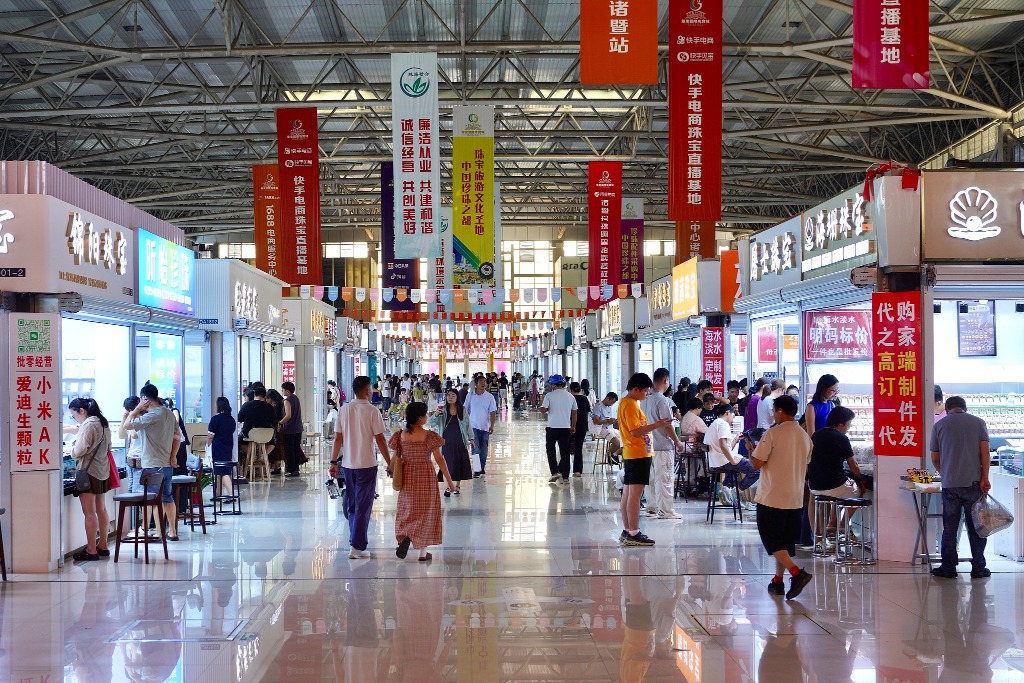
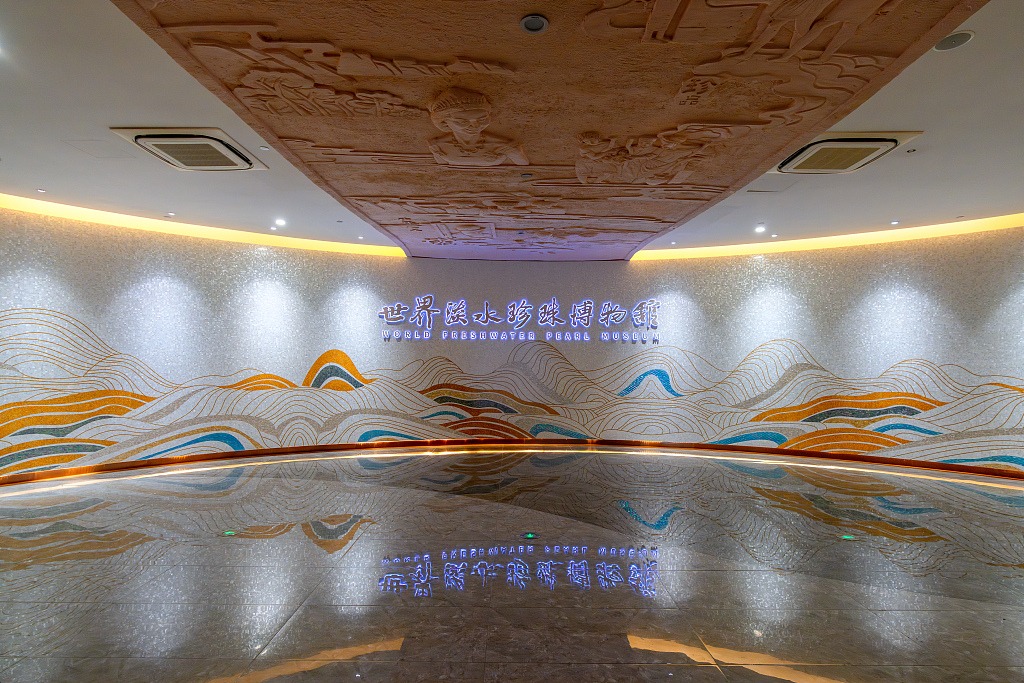
The leap from 497 RMB to 50 billion RMB has seen an epoch-making transformation. Today, Shanxiahu has a freshwater pearl mussel cultivation area of nearly 100,000 mu.
Why Shanxiahu? How did tiny pearls create a pearl kingdom?
The success of Shanxiahu's pearl industry is attributed to factors such as its geographical advantages, product quality, policy support, and diversified consumption scenarios.
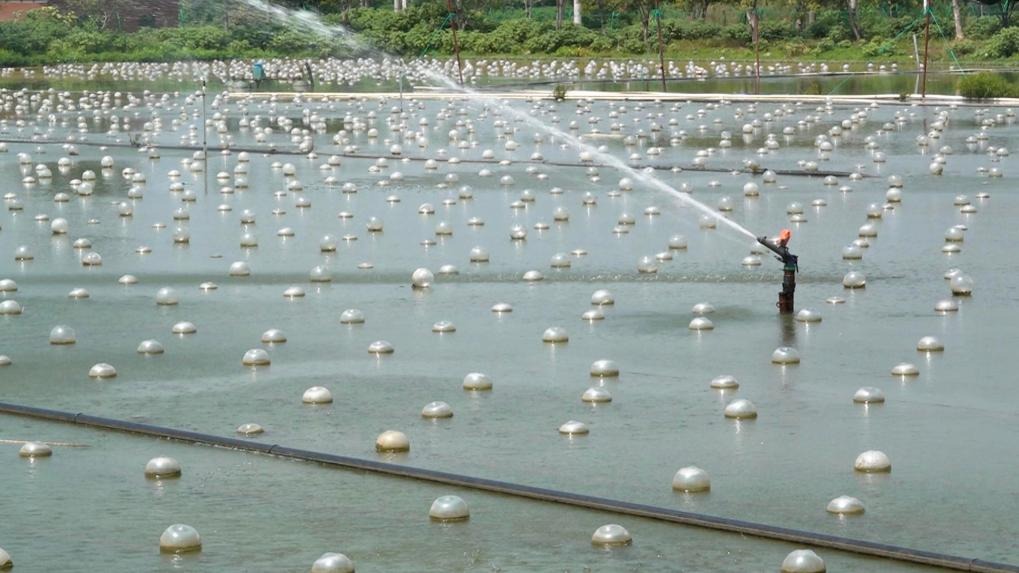
In terms of geographical advantages, Shanxiahu Town has a dense network of lakes and ponds, and its unique geographical environment has laid the foundation for the development of the pearl aquaculture industry.
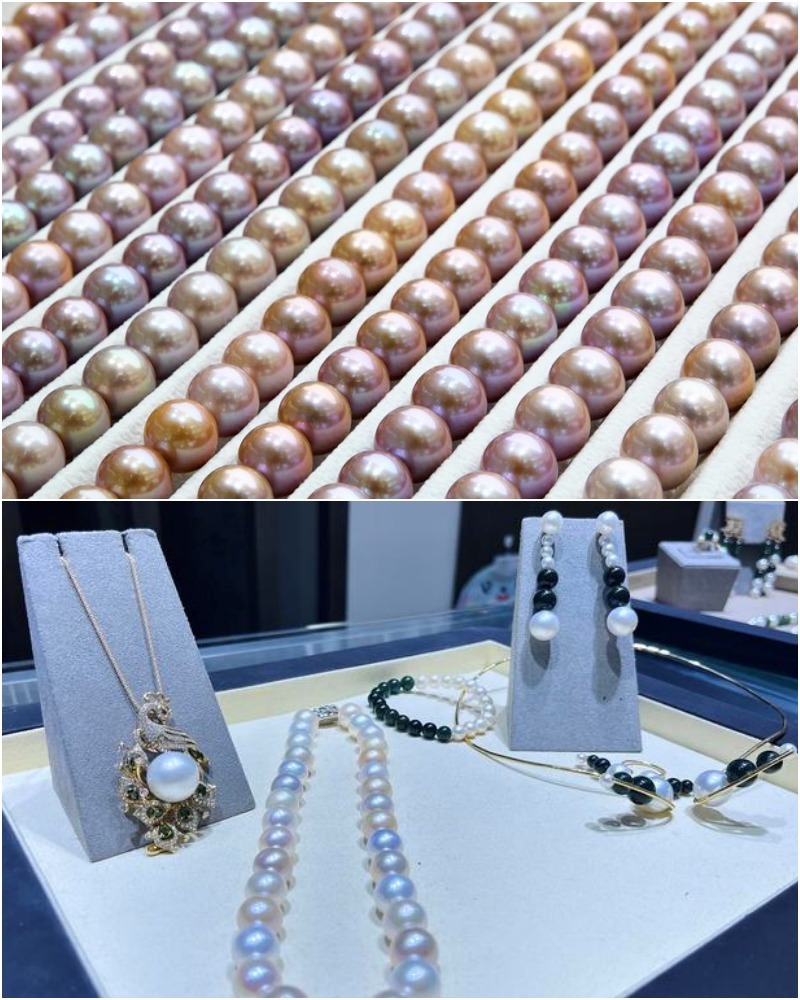
In terms of product quality, not only are the raw pearls from Shanxiahu of high quality, but the jewellery designs are also novel and very popular in the market.
In addition, Shanxiahu Town has established a traceability mechanism for information on goods sold online, where goods are inspected by a third-party organisation before dispatch, which effectively guarantees product quality.
In terms of policy, Zhuji City once set up a special fund, allocating 10 million RMB for two consecutive years, providing a solid guarantee for the transformation and upgrading of the Shanxiahu pearl industry.
There are also cash rewards for enterprises that upgrade their scale and pursue innovative development.
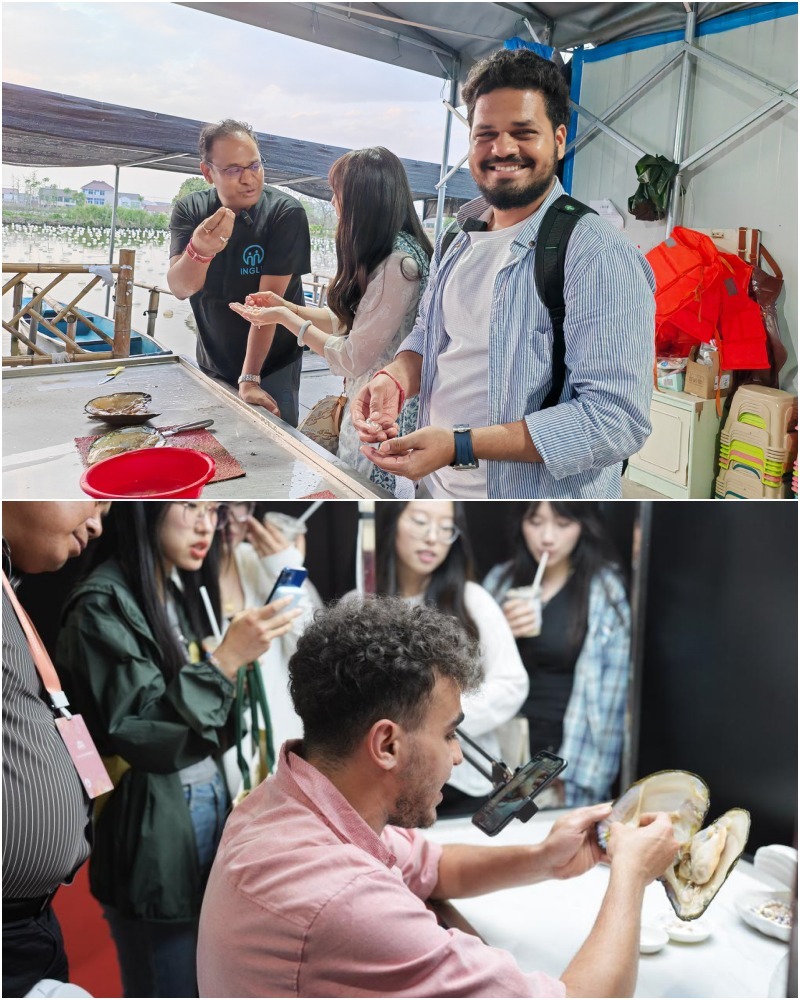
In terms of consumption scenarios, besides pearl aquaculture bases and processing plants, Shanxiahu Town has also established many study tour bases, e-commerce training centres, and exhibition and sales centres.
The pearl industry chain has also shifted from solely cultivation and sales to an integration with cultural tourism, innovating cultural tourism consumption scenarios, such as "Mussel Opening Street" and the "Mussel Opening Festival", building a new consumption ecosystem with cross-industry linkage, which drives more cultural and tourism consumption and promotes the upgrading of the industrial chain.
How is Shanxiahu Pearl smartly winning the future?
The Shanxiahu pearl industry chain is undergoing exploration and transformation in all links, from cultivation, R&D, processing, and trading.
It has both preserved the lustre of its pearls and retained its clear, green waters.
In the past, pearl farmers mostly used extensive farming methods, which easily led to eutrophication of the waters and affected the quality of the pearls.
Through precision feeding of pearl mussels using "drips", water pollution has been solved at its source, and the water quality in the aquaculture areas has also been improved.
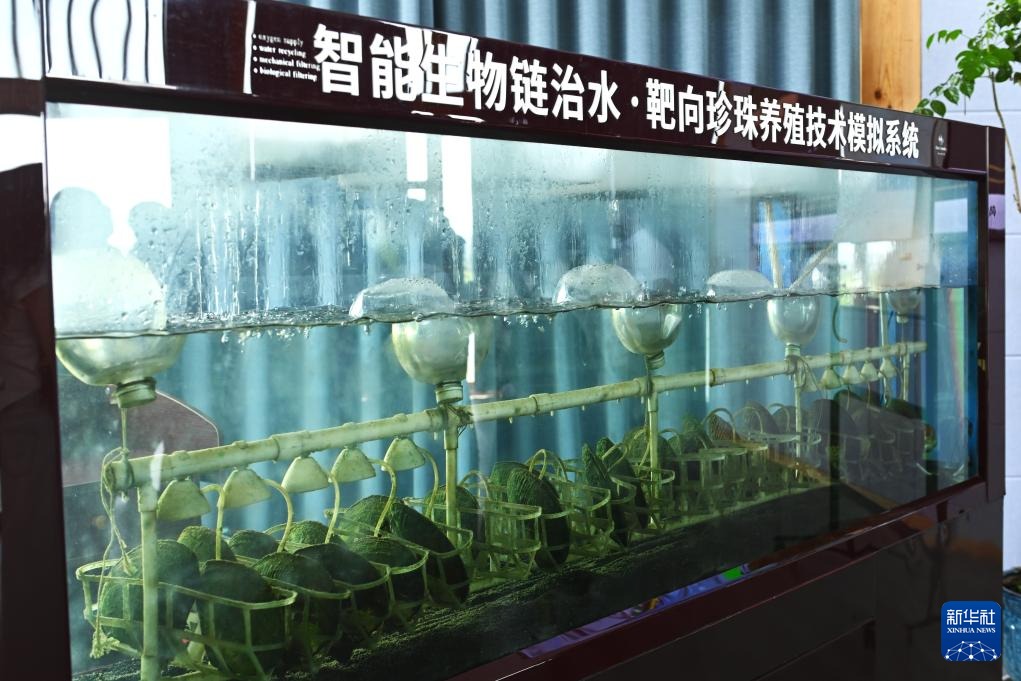
The transition from extensive farming to automated, intelligent, and environmentally friendly aquaculture has increased the output of raw pearls by more than six times, and the overall quality of the pearls has also improved in terms of indicators such as diameter, body colour, and lustre.
Innovation and branding are key to revitalising traditional industries. In the future, the pearl industry will continue to deepen technological innovation, move towards higher value-added branding and design segments, and actively explore new ideas for cross-sector, diversified development.
For example, a well-known pearl brand collaborated with a Japanese enzyme brand, bringing in talent and technology to develop a new product: pearl enzyme whitening pills.
At the same time, it is expanding its pearl cosmetics range, applying pearl powder to make-up such as foundation and pressed powder, with the finished products already on sale on e-commerce platforms.
Nowadays, in Shanxiahu Town, whether they are experienced pearl farmers, craftsmen with exquisite skills, or young people returning to their hometowns to start businesses, they can all find suitable positions in the pearl industry chain to increase their income and become prosperous.
The future of Shanxiahu is like a pearl mussel slowly opening, embracing the global wave with an inclusive attitude, allowing Chinese pearls to shine dazzlingly on the world stage.
What this Jiangnan town has strung together with pearls, one by one, is not only the persistence and dreams of generations of pearl farmers, but also a vivid testament to how specialised industries can empower rural revitalisation.
Read more:
How did an internet cable "weave" out the map of the Hanfu business?
How did a toothbrush spark up a 10 bln industrial miracle in China?
How does a small Chinese town Dongguan built up a smartphone kingdom?