Published : 2026-07-27
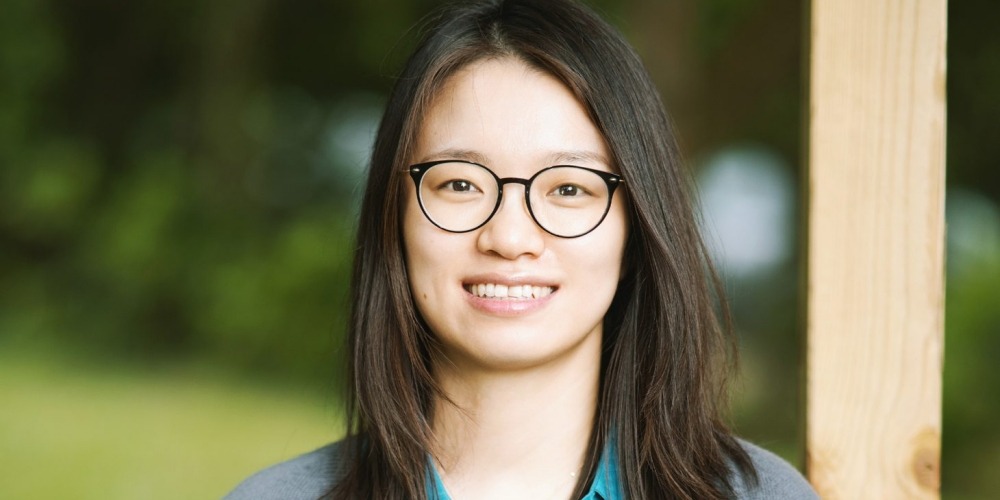
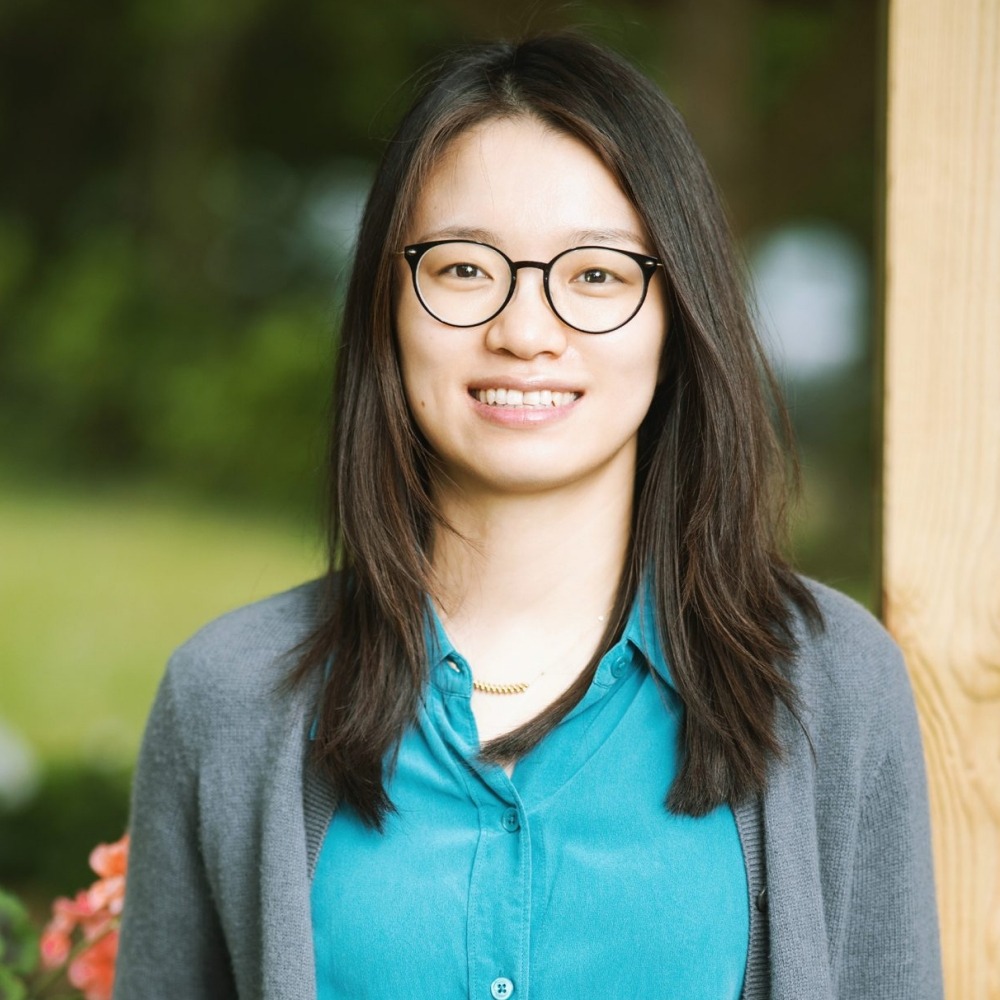
The name "Wang Hong" was once likely known only within academic circles, but with the announcement of the 2026 Fields Medal, the public has come to know this world-class Chinese mathematician who solved a century-old geometric puzzle.
What is Wang Hong's story?
Wang Hong admitted to Peking University at 16

Wang Hong (王虹) was born in 1991 in Pingle County, Guilin City, Guangxi. Her parents were both secondary school teachers, and her father taught mathematics.
When she was five or six years old, Wang obtained her primary school textbooks in advance. In some chapters of her maths textbooks, there were a few "Think About It" brainteasers. One of them asked: if you have seven trees and every three collinear trees count as a row, what is the maximum number of rows you can make?
She quickly worked out the answer and was thrilled, and from that moment on, she fell in love with "Think About It" puzzles and mathematics.
"Fun" and "interesting" are the words Wang Hong repeatedly used when talking about her first encounter with mathematics.
Was Wang Hong a "child prodigy" and a "top student" from a young age? Indeed she was.
While preparing to start primary school, she had already taught herself the entire first-grade curriculum and skipped directly to the second grade upon enrolment. Afterwards, she skipped the sixth grade and went straight to secondary school.
During her secondary school years, her grades were not outstanding at first, but she improved quickly, and by her final year of senior secondary school she was in the top 10 of her year group, and at the age of 16, she was admitted to China's top university – Peking University.
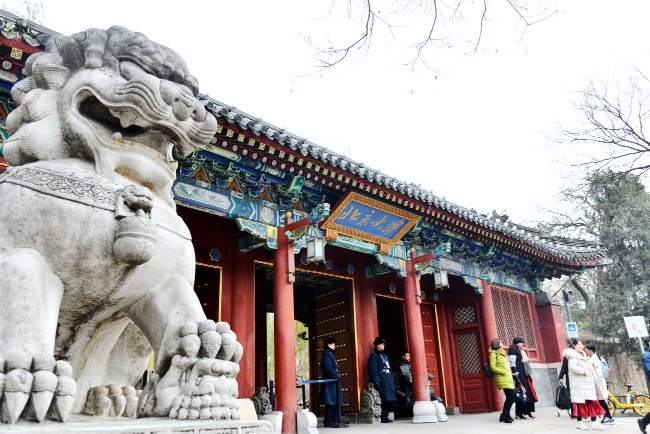
That year, Peking University's mathematics department only recruited one student from Guangxi, and Wang Hong was admitted to the geophysics department. Although this subject is "high-end, classy, and upscale", Wang was determined to pursue mathematics, so from the very first day of university, she started preparing to transfer to the mathematics department.
"Pursuing mathematics, I was very certain." She also had a more "ambitious" idea: "Maybe one day I can prove a theorem."
Wang Hong: Mathematics allows you to "construct" ideas on your own
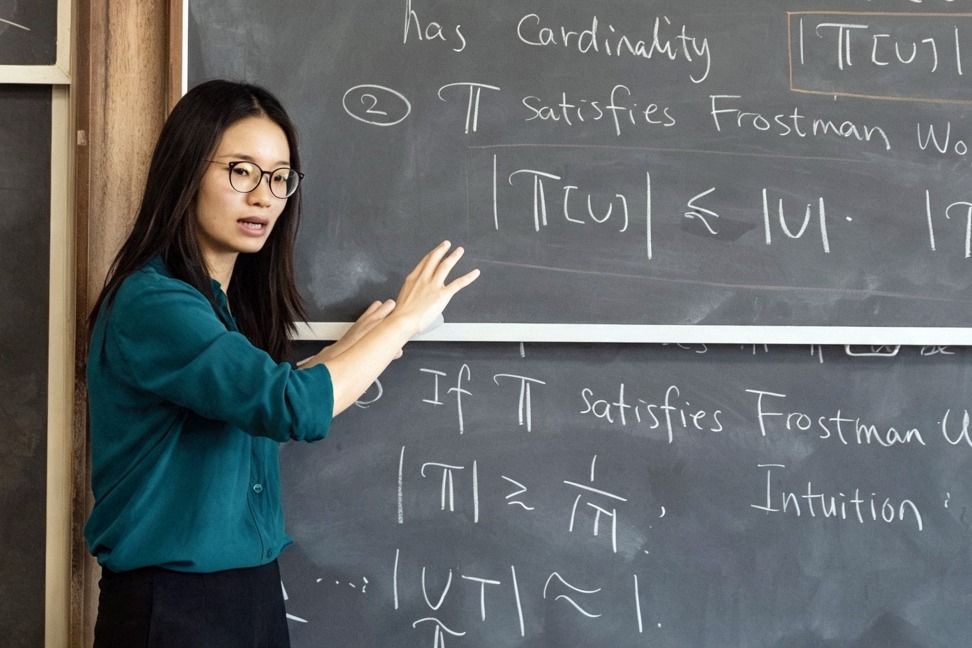
It is not easy to transfer departments at Peking University, as the academic requirements are extremely high, but Wang Hong succeeded. The subsequent studies were not smooth sailing either, but with her passion for mathematics, she was always able to overcome difficulties.
When she first transferred into the mathematics department, Wang Hong found that university-level mathematics was not only interesting but also very difficult, and completely different from secondary school.
"How to learn mathematics systematically was a key question for me, and I spent a long time figuring it out on my own."
After completing her undergraduate studies, Wang Hong went to France to study, attending École Polytechnique in Paris for her postgraduate studies. At this time, she became interested in architecture and painting, so she took an architecture course, and at the end of the term, she interned at an architecture firm for a month.
Of course, she did not change her career path. After the internship, she felt that in architecture, one needs to first convince others to invest, which limits creative freedom, whereas in mathematics, she could completely "build" ideas on her own, so she decided to devote her most creative years to mathematical research.
Afterwards, Wang Hong went to the Massachusetts Institute of Technology (MIT) in the U.S. to study for her doctorate, conducted postdoctoral research at universities such as Princeton, and held teaching positions at the UCLA, NYU, and the Institut des Hautes Études Scientifiques (IHES) in France.
In 2025, Wang Hong collaborated with Canadian mathematician Joshua Zahl to solve the "three-dimensional Kakeya conjecture", a geometric puzzle posed in 1917 by Japanese mathematician Soichi Kakeya (掛谷宗一), solidifying her position as a master in the field of mathematical research.
Wang Hong was once classmate of Deng Yu, another Fields Medal winner
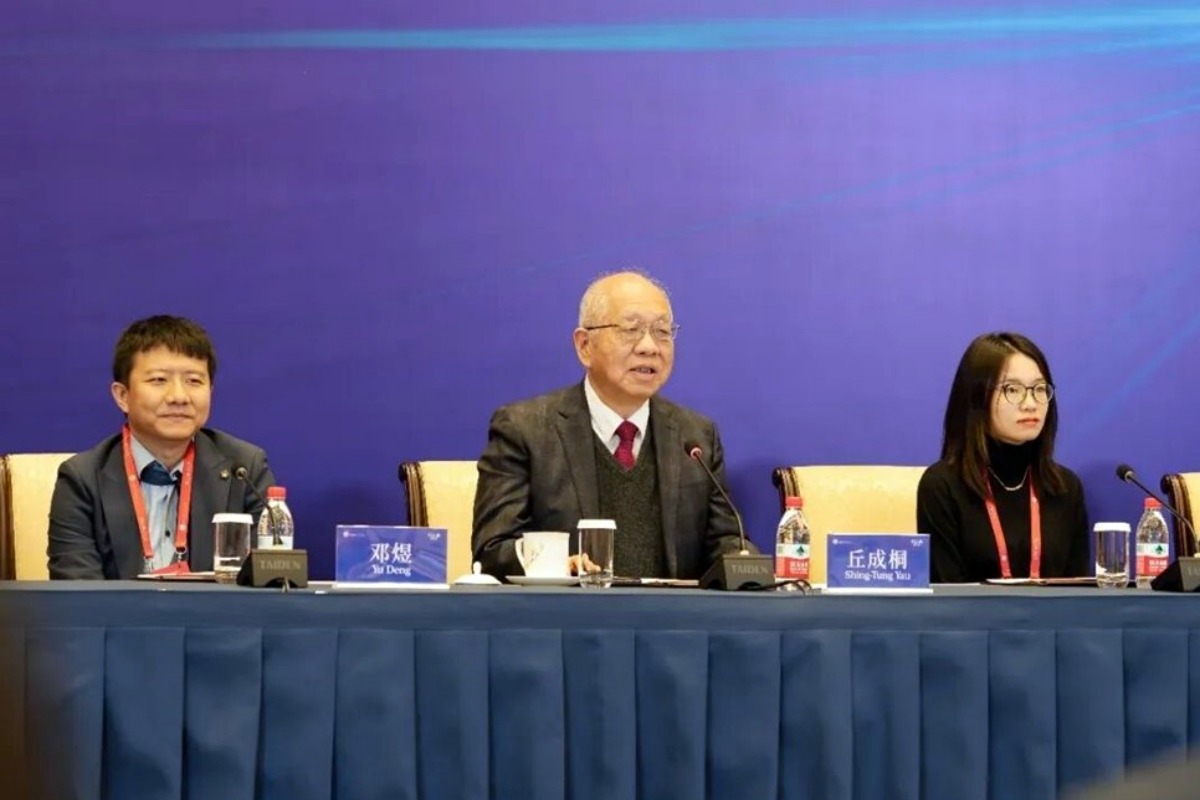
In July 2026, the Fields Medal, known as the "Nobel Prize of Mathematics", was announced in Philadelphia, with post-90s Wang Hong and another Chinese mathematician, Deng Yu (鄧煜), both receiving the award.
Wang Hong's win set two records: the first female Chinese mathematician to win the Fields Medal, and the first Fields Medallist whose undergraduate degree was from a Chinese Mainland university.
There is another interesting point about Wang Hong and Deng Yu winning the award.
It turns out that Deng Yu, who was born in Shenzhen in 1989, was a classmate of Wang Hong's in the same year at Peking University. They were classmates for two years until he transferred to the MIT in the US.
In a media interview, Wang Hong mentioned, "Everyone called him 'Deng the God' back then; he was incredibly brilliant."
The Fields Medal is awarded every four years to no more than four recipients, honouring scholars under the age of 40 who have made outstanding contributions to the field of mathematics. Before Wang Hong and Deng Yu, the Chinese mathematicians who had won the award were Shing-Tung Yau (丘成桐) and Terence Tao (陶哲軒).
Both Shing-Tung Yau and Terence Tao have connections to Hong Kong. Shing-Tung Yau grew up and was educated in Hong Kong, only going to study abroad in the U.S. in his third year of university; Terence Tao was born in Australia, and both his parents are from Hong Kong.
Read more:
Committed to serving China's education, Shing-Tung Yau seeks no reward for 40 years
Author of The Three-Body Problem Liu Cixin brings Chinese sci-fi to the world