Published : 2026-03-12
Xinjiang possesses vast lands and also hides many unknown secret realms. The Anjihai Grand Canyon is such a place. It is like a huge colourful fissure, lying mysteriously at the northern foot of the Tianshan Mountains. Just "who" carved out this magnificent canyon?
Is it true, as the rumours say, that an invaluable treasure is hidden deep within the bottom of the Anjihai Grand Canyon?
The colourful fissure beneath Xinjiang's Tianshan Mountains
The Anjihai Grand Canyon (安集海大峽谷) is located in Xinjiang Tianshan's northern foot geological fault zone. The Anjihai River, which originates from the Tianshan mountain range, is also known as the Bayingou River.
This river, formed by the convergence of glacial meltwater and spring water, rushes down from the depths of the Tianshan Mountains, bursts out of the Tianshan canyons near the Gurbantünggüt Desert (China's third-largest desert), and, after millions of years of erosion, has carved this precipitous valley, 400 metres deep and about a kilometre wide, into the gentle piedmont hills.
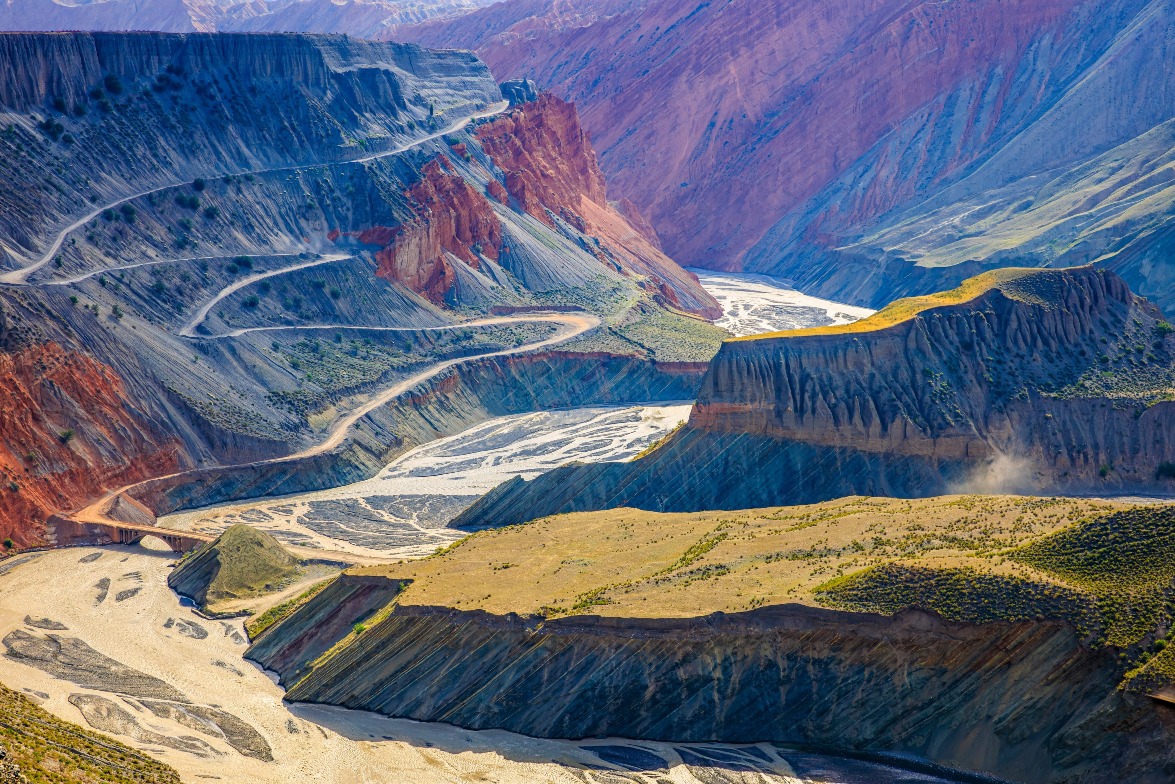
The soft currents washed over and over, eroding the hard earth day after day, year after year, eventually sculpting this magnificent geological wonder.
What is most striking about the Anjihai Grand Canyon is its rich colours.
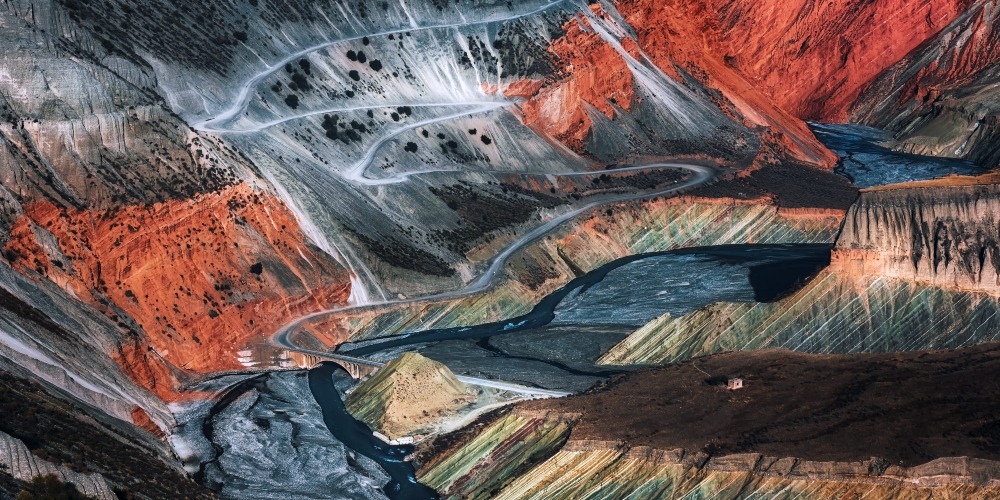
Due to the different mineral compositions of the mountains on both banks, the cliff walls display a variety of hues including red, yellow, blue, green, brown, and purple, stacked in layers, spreading out like a giant abstract painting at the northern foot of the Tianshan Mountains.
The eastern cliffs are particularly vivid under the sunlight, with ochre-red and bluish-grey interweaving in intense colours.
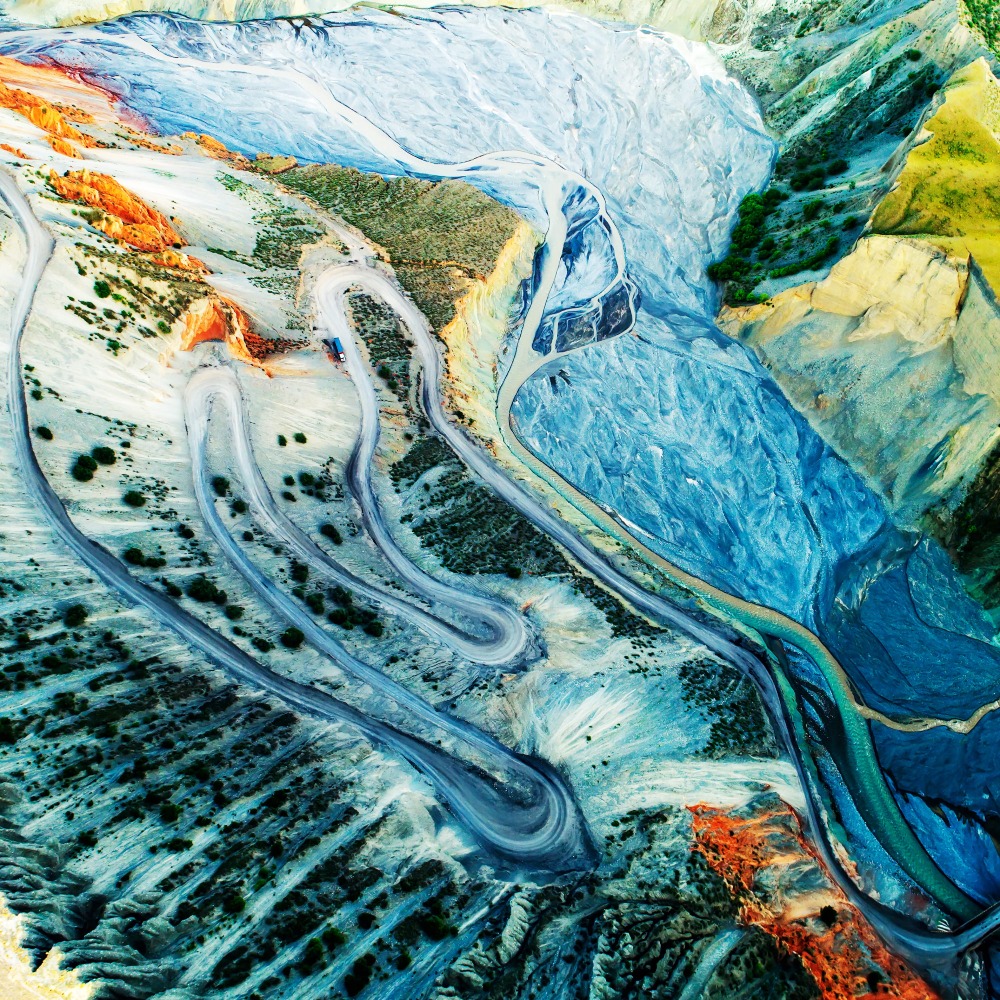
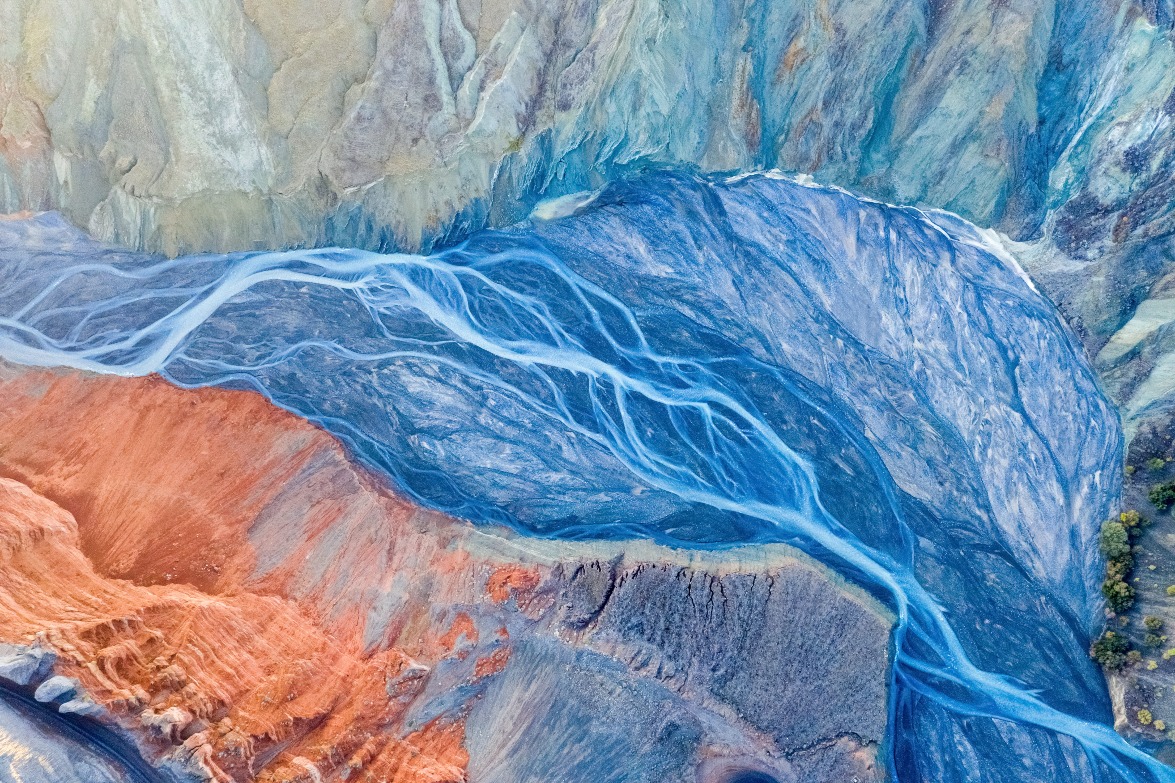
At the bottom of the canyon, a braided river system meanders, its channels twisting and intersecting, extending into the distance like the texture of the earth.
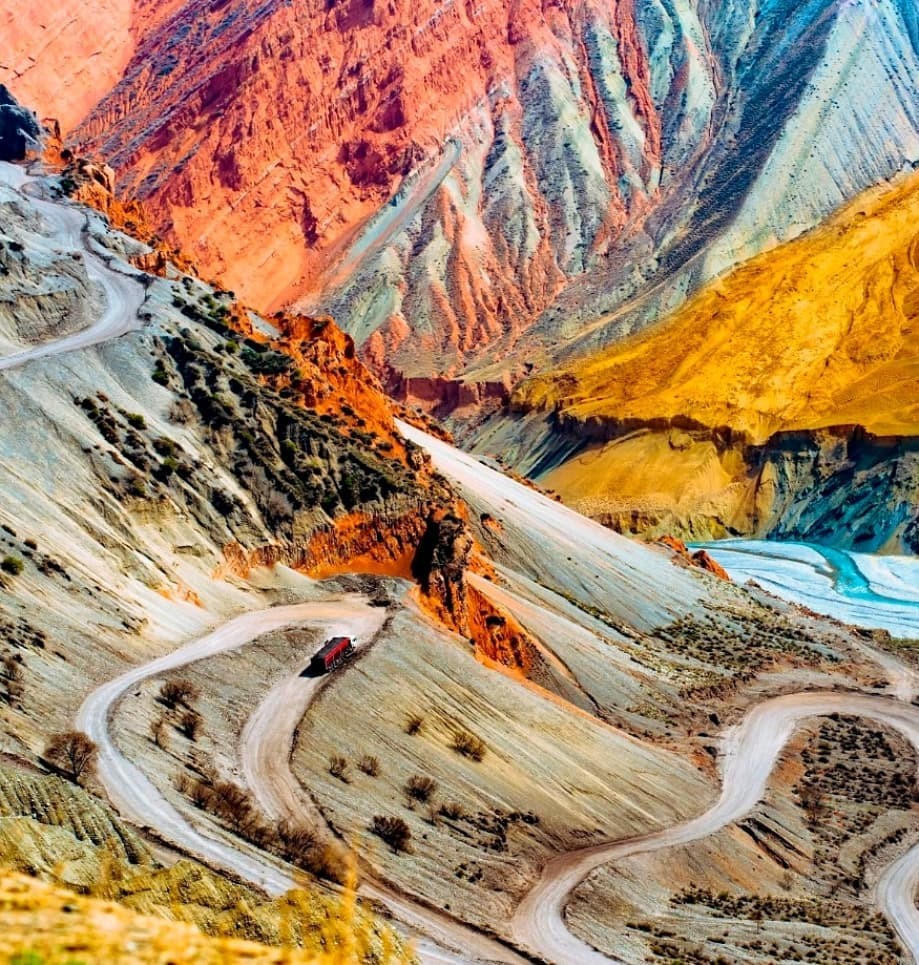
Looking down from the top of the cliffs, vehicles driving at the bottom of the canyon appear as small as miniature toys, and the nearly 400-metre drop creates a strong visual impact.
This magnificent and mysterious fissure has thus been described as "a river and canyon flowing out of a modernist abstract painting".
Read more: The world's longest expressway tunnel: China's Tianshan Shengli Tunnel
The legendary mysteries of the Anjihai Grand Canyon
The Anjihai Grand Canyon not only captivates people with its scenery but is also the subject of many stories and legends.
According to records, the Anjihai Grand Canyon area is rich in more than 40 types of mineral resources, including oil, coal, limestone, alluvial gold, Glauber's salt, and jade.
Such abundant mineral resources may explain the phenomenon of the varied colours of the stones at the bottom of the canyon.
There is also a local saying that Manas River jasper comes from Anjihai; as for whether one can truly find it, that probably depends on a bit of luck.
Besides the legend of beautiful jade, Anjihai Grand Canyon was actually an important stop on the ancient Silk Road.
Historically, Anjihai was a strategic pass on the Suyab route of the Silk Road, and also one of the oldest post stations in Shawan County.
One can perhaps imagine that, thousands of years ago, camel caravans and merchants once rested in this grand canyon, and goods from different civilisations converged here.
Today, this great fissure in the earth has been seen by more and more people in recent years. Free admission plus the visual shock have led it to successively appear in travel sections, and it has also appeared in reports by National Geographic magazine, becoming a viral photo spot in Xinjiang.
However, Anjihai Grand Canyon is still a not-yet-fully-developed tourist attraction to this day. Due to the perilous terrain, and the soft, easily collapsible soil, the safety risks are considerable.
If you plan to travel there, you must be well-prepared, and pay attention to safety.