Published : 2025-07-18
At a temple in southeast China's Fuzhou, stands a 1,000-year-old lychee tree – a botanical marvel with a hollow trunk sustained by just a layer of bark.
Yet year after year, it bursts into bloom and yields over a hundred pounds of fruit! Is this divine blessing? Or does science hold the key to its secret?
Xichan Temple's millennial "hollow" lychee
Since ancient times, Fuzhou (福州) has been a place of abundant lychee production, reaching its peak in the Song Dynasty (960-1279 AD), far outshining Lingnan, Bashu, and other regions.
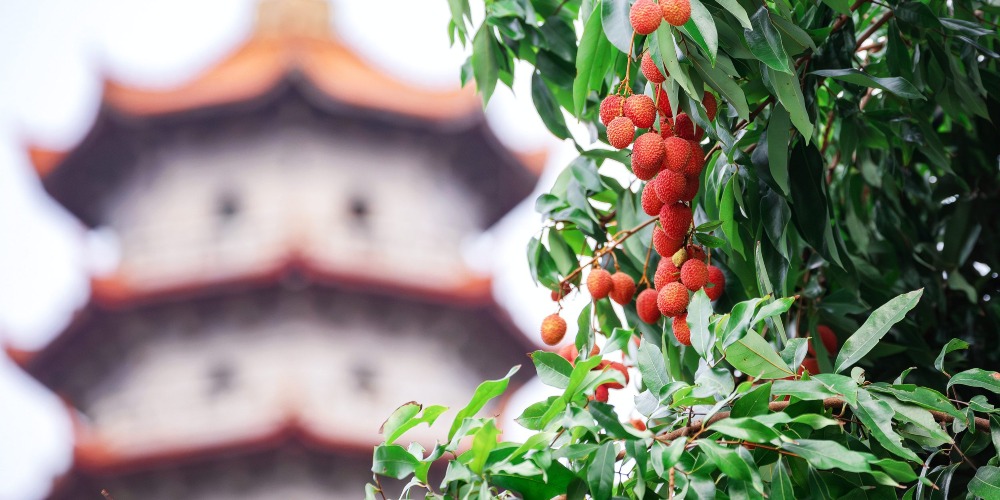
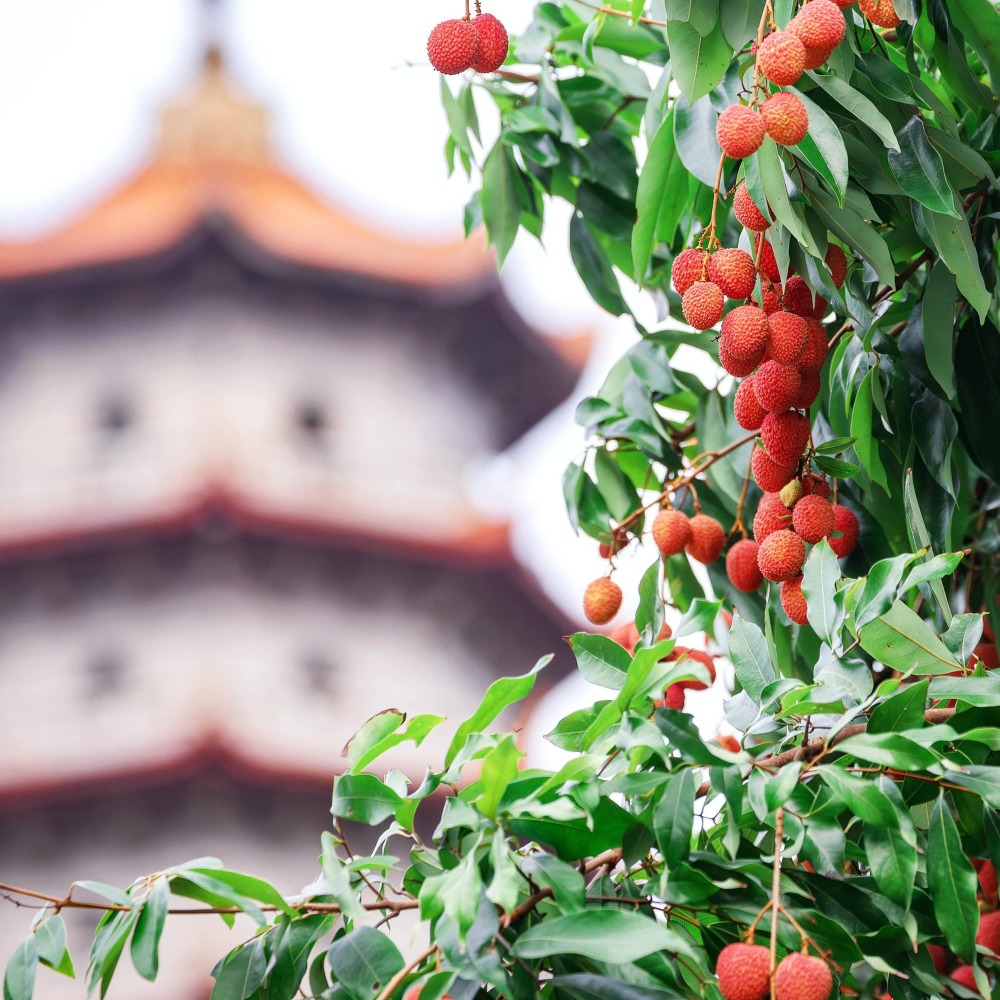
The lychees of Xichan Temple (西禪寺) have been renowned in Fuzhou, with the reputation that "Fuzhou lychees are the best in the world, and Xichan lychees are the best in Fuzhou."
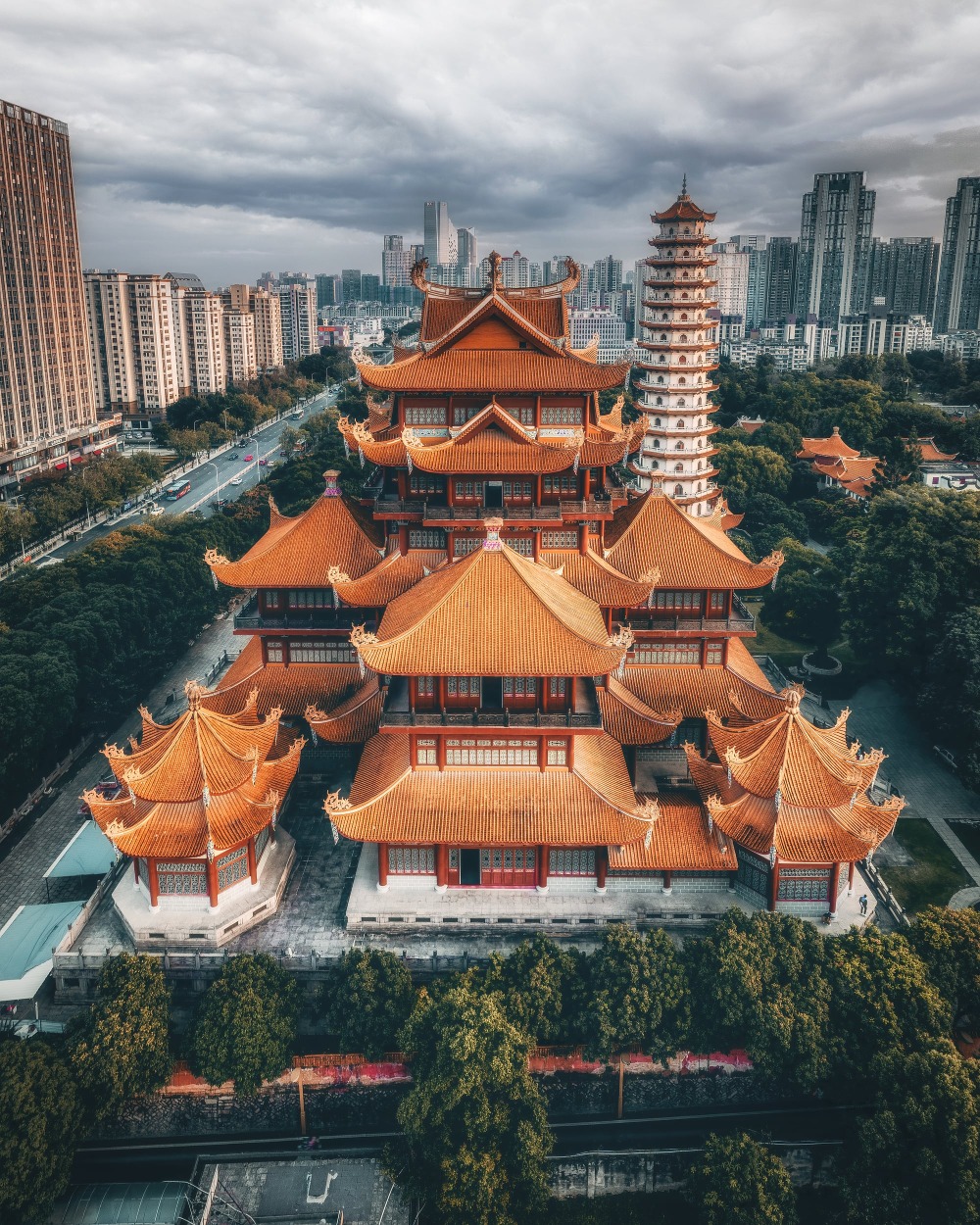
Xichan Temple has a long history of planting lychees. Today, there still exists an ancient lychee tree planted in 1023 AD during the Northern Song Dynasty (960-1127 AD), standing seven metres tall with a trunk diametre of 2.5 metres. It is the thickest existing lychee tree in China, known as "Song Dynasty Lychee."
However, upon closer inspection, you will witness an astonishing scene — the interior of the Song Dynasty Lychee's trunk has long rotted away, with only a 10-cm-thick layer of bark supporting the entire tree's life.
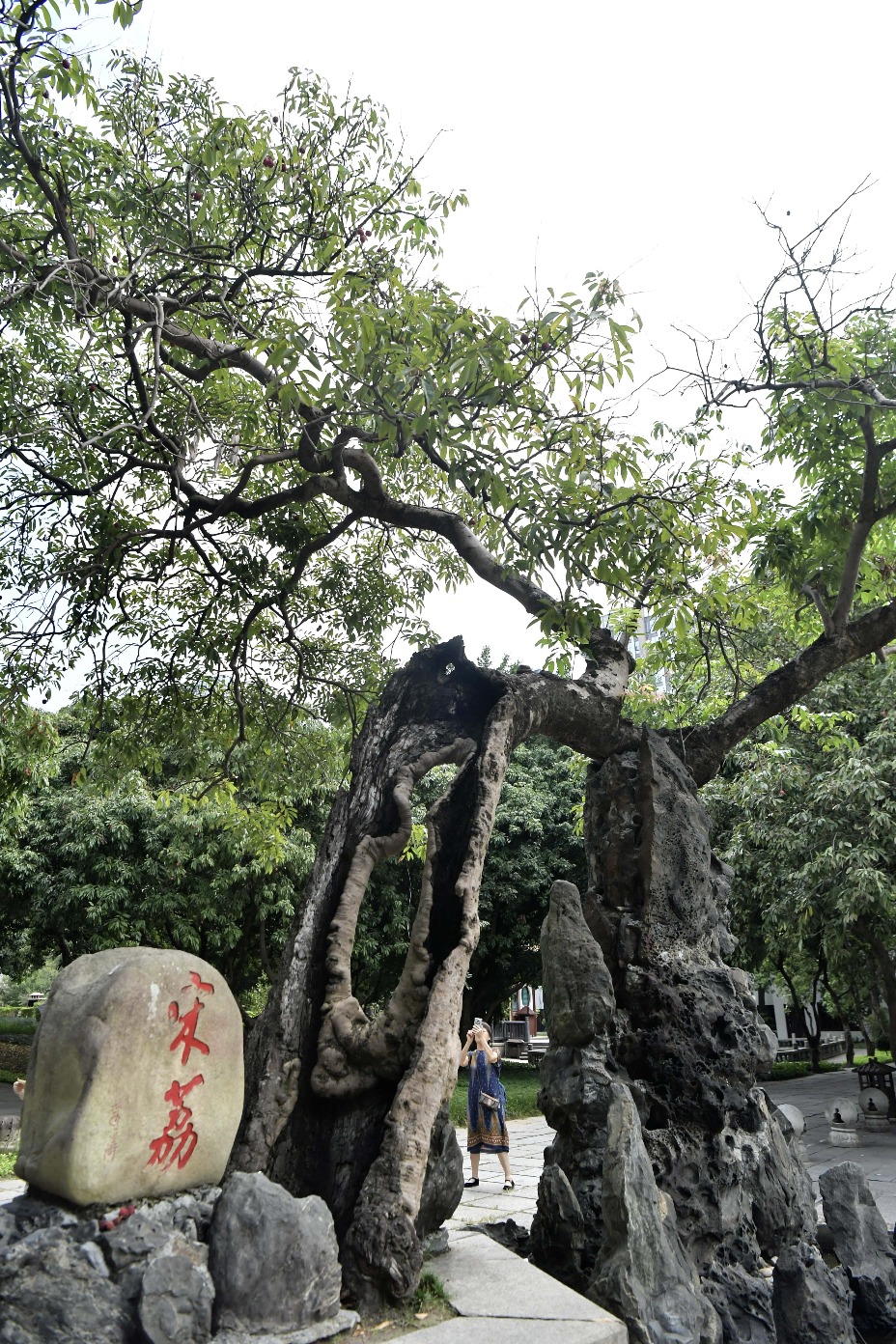
As it turns out, there was a period when the tree was severely damaged and nearly died. Several decades ago, a monk named "Pinxing" (品性) led the monks to lay a special water pipe from the roots directly to the crown, ensuring that water could reach every branch.
With years of meticulous care, the Song Dynasty Lychee miraculously revived. In 1997, the year of Hong Kong's return to China, it rebounded to life, blossoming and bearing fruit once again.
Today, the old Lychee continues to bear fruit annually, leaving people marvelling at this miracle of life.
Read more: How are lychees from China's Guangdong transported in "dormant cabins"?
When lychee meets calligraphy
Today, more than half of the lychee trees in Xichan Temple have been grafted from this millennium-old Song Dynasty Lychee as the mother tree.
These "lychee descendants" have perfectly inherited the excellent genes of the mother tree, with plump flesh, small seeds, and a perfect balance of sweetness and acidity, attracting a large number of citizens to taste them every harvest season.
If you have the chance to visit Xichan Temple in July, not only can you taste the sweetness of the Song Dynasty Lychee's descendants, but you can also encounter a timeless lychee poetry banquet — the Yishan Lychee Poetry Banquet (怡山啖荔詩會).
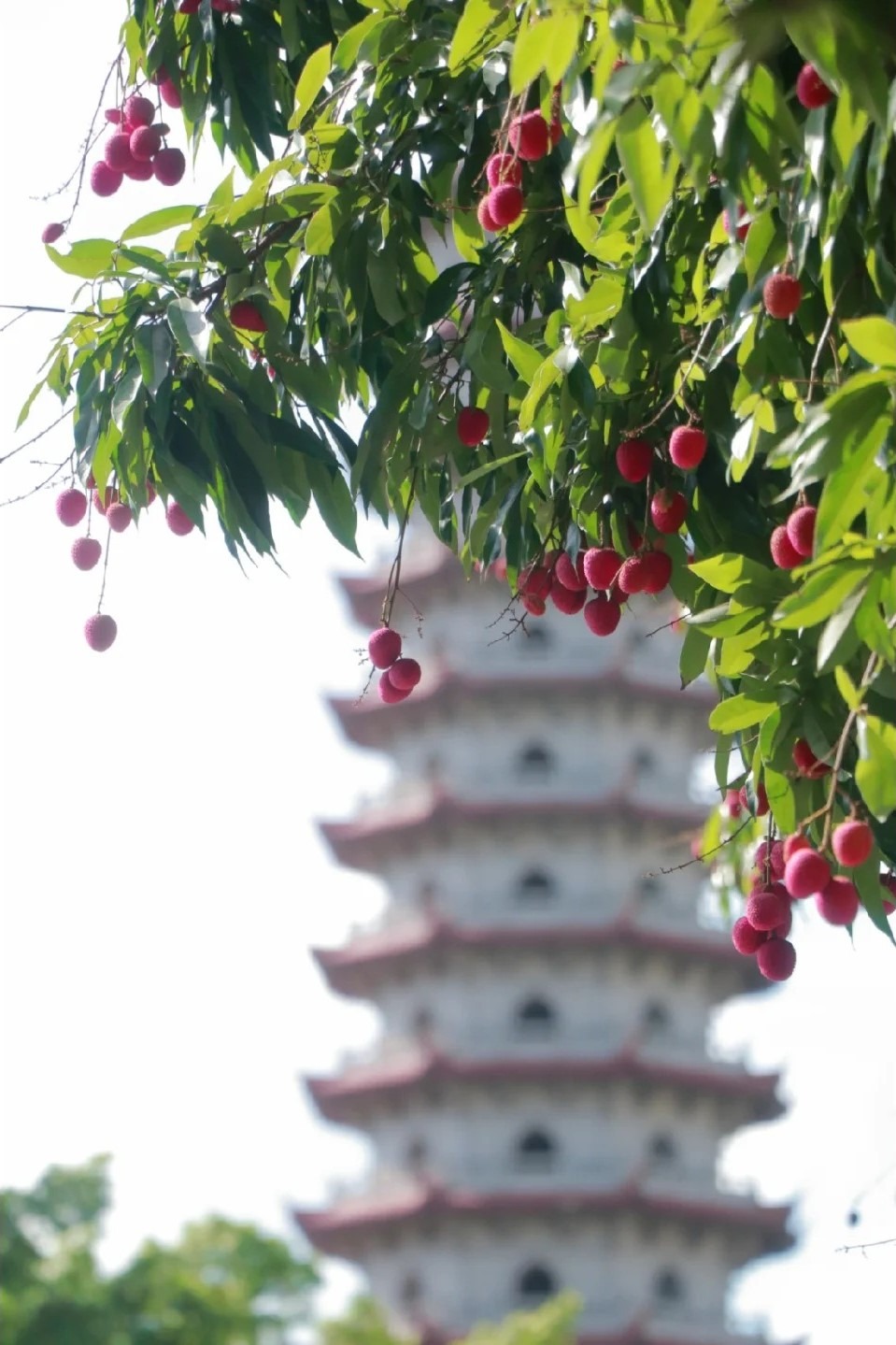
The tradition of the Yishan Lychee Poetry Banquet began in the Ming Dynasty (1368-1644 AD). At that time, the poet Xu Huobo (徐火勃) often held elegant gatherings at Xichan Temple, where literati and poets would enjoy fresh fruits and compose poetry on the spot, creating a flourishing scene.
Although the poetry gatherings were interrupted for some time, since 1988, Xichan Temple and the Fujian Poetry Association have revived this tradition, and it has been held for over 30 sessions to date.
The Yishan Lychee Poetry Banquet is generally held around the Minor Heat period. 10 days to a month before the event, the Fujian Poetry Association sends out invitations widely to poetry enthusiasts across the city, collecting anonymous poetry submissions and inviting expert judges. Awards are eventually presented at Xichan Temple.
From the initial small gatherings of three to five tables to the peak in recent years with nearly a hundred participants, as the newly picked red lychees meet the fragrance of freshly written ink, the Yishan Lychee Poetry Banquet has become a cultural and elegant feast for the people of Fuzhou in midsummer.
Read more: A 300-year old house in Shenzhen is relocated from Jiangxi?