Published : 2025-07-11
The recent Chinese drama Lychee of Chang'an mainly revolves around how lychees were transported in ancient China, which was considered almost an "impossible mission" because lychees usually spoil quickly.
But in the modern times, even in China's remote north-western cities like Urumqi of Xinjiang, people can enjoy fresh lychees from Maoming, Guangdong Province, which is located on the southern coast.
How exactly do lychees remain intact and fresh across thousands of kilometres?
Cold chain helps keep lychees fresh and expands to Europe market
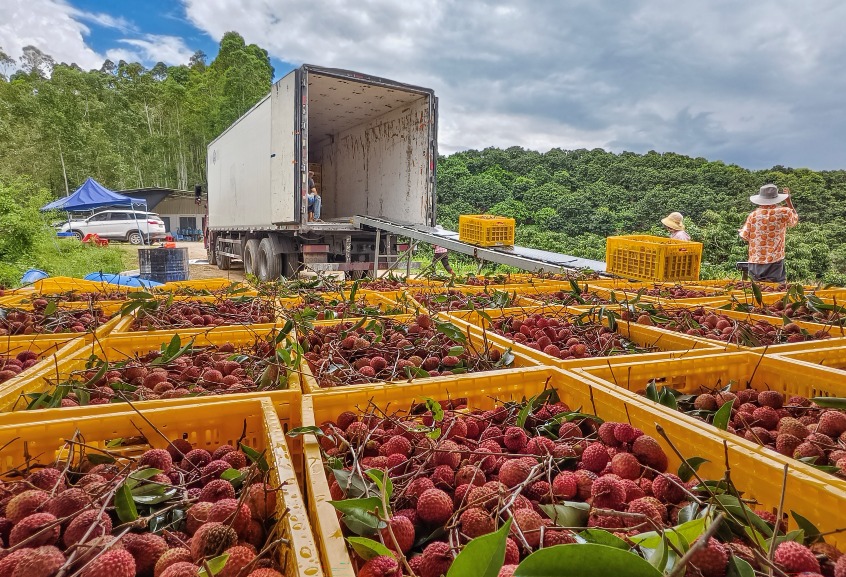
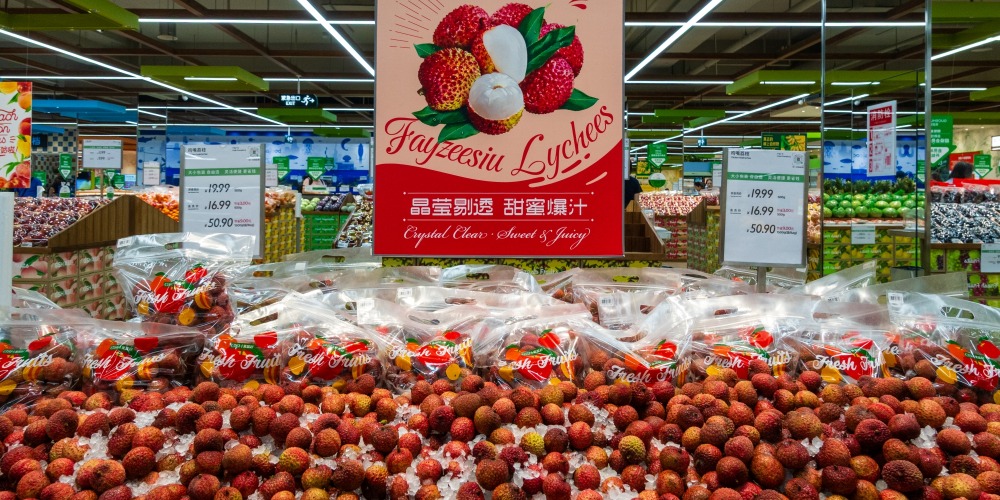
China is the world's largest producer of lychees, with Guangdong's production alone accounting for over 30% of the world's total. For easily perishable fruits like lychees, the cold chain is a crucial link.
The advancement of China's cold chain technology not only offers better preservation but also expands the market scope for lychees.
In Maoming's Gaozhou, companies are adopting innovative cold chain technology—a dual-mechanism system combining physical cooling with controlled levels of oxygen, carbon dioxide, and nitrogen. This creates a "dormancy chamber" for lychees, slowing their metabolism and ensuring long-lasting freshness during transport.
While regular cold chains preserve lychees for about seven days, the new technology extends this to at least 15 days, with no significant changes in lychees' appearance or taste.
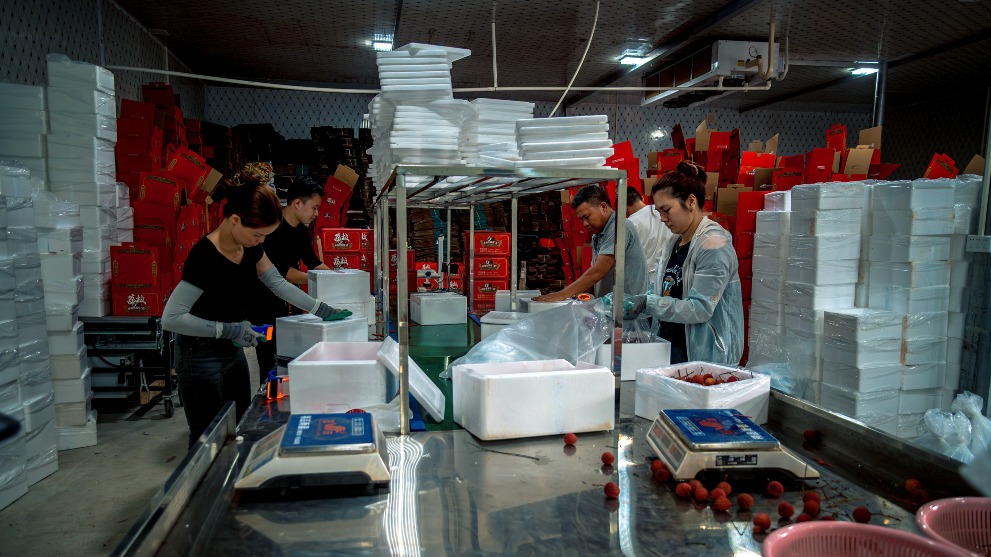
Additionally, there is a product known known as "Frozen Lychee." Freshly picked lychees are pre-cooled before being fed into a tunnel-style flash freezer over 10 m long, where they are sprayed with a mist of liquid nitrogen at -196°C. This rapidly chills the fruit to -50°C.
After approximately 30 minutes of ultra-low-temperature freezing, the "frozen lychees" are transferred to the packaging area and ultimately stored in warehouses at -18°C.
These lychees have a shelf life of up to one year. To enjoy them, simply soak the fruit in water for 15 minutes or leave it at room temperature for half an hour before consumption.
Cold chain technology allows lychees, typically a summer seasonal fruit, to be enjoyed even in winter.
The use of cold chain technology not only helps expand the market for perishable lychees, making them available outside the province but also abroad.
In 2025, Maoming lychees were exported for the first time to Eastern European countries such as Belarus. Fresh lychees from Guangdong's Conghua and Lianjiang were also exported for the first time to the UAE and Hungary. And even volcanic lychees from Hainan Province entered the American, African, and European markets for the first time.
From orchard to doorstep in short time—A microcosm of China's modern logistics
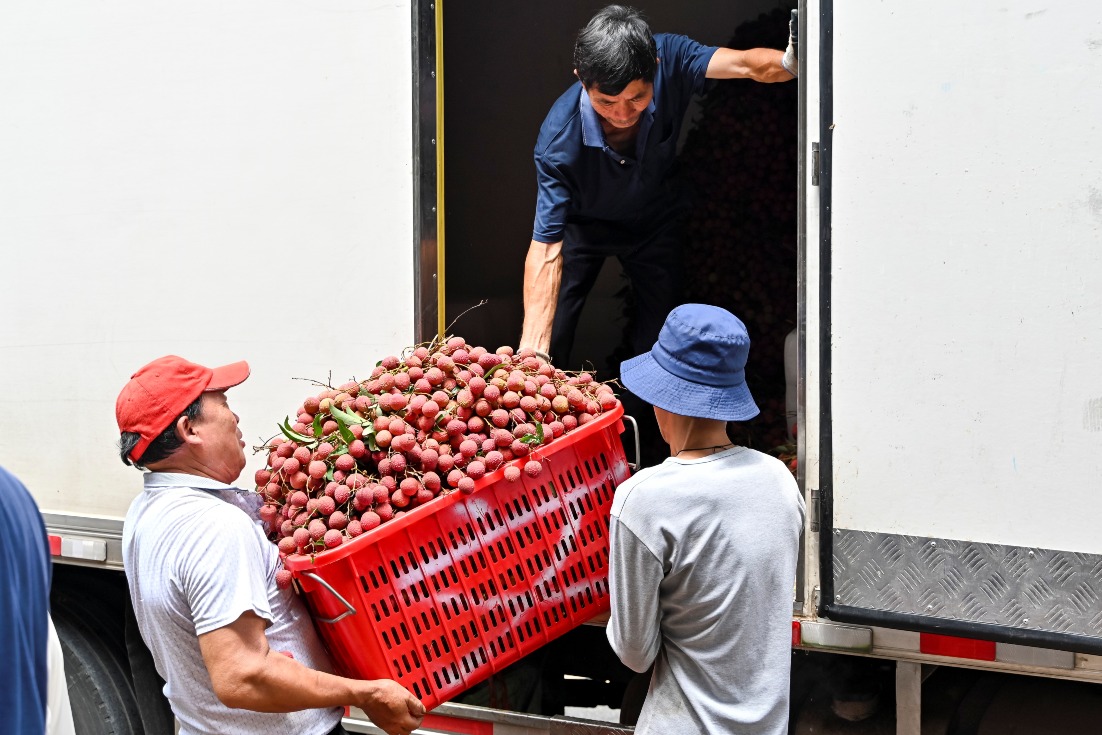
However, if we want to eat fresh lychees, the combination of cold chain and logistics plays a key role.
Given the "high efficiency, high freshness" characteristics of lychee transportation, Shenzhen Airport has, since early June this year, partnered with SF Airlines, JD Airlines, and others to open multiple lychee air transport routes, setting up priority delivery windows, exclusive security checkpoints, and quick processing counters to ensure "immediate inspection upon arrival" for lychee cargo.
Customs across various regions continuously optimise inspection processes and shorten clearance times. In Foshan, Guangdong, local customs have opened a "green channel," allowing enterprises to apply for customs clearance appointments through the international trade single window even on holidays.
Among them, SF Airlines relies on a comprehensive route layout to essentially build a fast transportation network for lychees covering the whole country. Since late May, Shenzhen Airport has been transporting over 300 tonnes of lychees every day.
Now, freshly picked lychees can be transported from lychee orchards in south China to various parts of the country in a short time through various transportation methods such as highways, high-speed rail express, and air cold chains, transforming what was once a labour-intensive, multi-day transportation process into an efficient and streamlined operation.
From field chilling and pre-cooling for freshness preservation, through uninterrupted cold chain transport to air express delivery—the lychees arriving at consumers' homes may have only been "off the stem" for merely a day or two.
The "journey" of a single lychee epitomises how courier companies integrate road transport, air cold chain and warehousing into an efficient end-to-end logistics system - vividly reflecting the advancement of China's modern logistics infrastructure.
Read more: Japan matcha is made in China's Guizhou?|China's new specialties