
Published : 2024-10-01
Since the founding of the People's Republic of China (PRC) 75 years ago, the country has weathered storms and undergone tremendous changes.
This series, "Extraordinary 75 Years", provides a deep dive in China's achievements and breakthroughs over the past 75 years.
This article, as the 1st one of the Chapter of Sci & Tech, takes you through 75 years of infrastructure development and key projects in New China, and exploring how the "Infrastructure Giant" was forged.
"Pioneering Project" – The Chengdu-Chongqing Railway
Infrastructure construction is an important support for socio-economic development and is crucial for any country.
At its founding, New China was impoverished and underdeveloped, with severely inadequate infrastructure: across its vast territory, there were only slightly over 30,000 kilometres of roads accessible to vehicles and merely 20,000 kilometres of operational railways.
Other essential facilities such as water supply, power grids, telecommunications, and energy infrastructure were also severely underdeveloped or damaged.

Due to financial and other realities, the funds that the authorities could invest at that time were limited, and China's infrastructure could only progress slowly for a long time.
The development speed was incomparable to the current "Infrastructure Giant" status.
However, in the two or three decades following the founding of the nation, China still had some influential infrastructure projects.
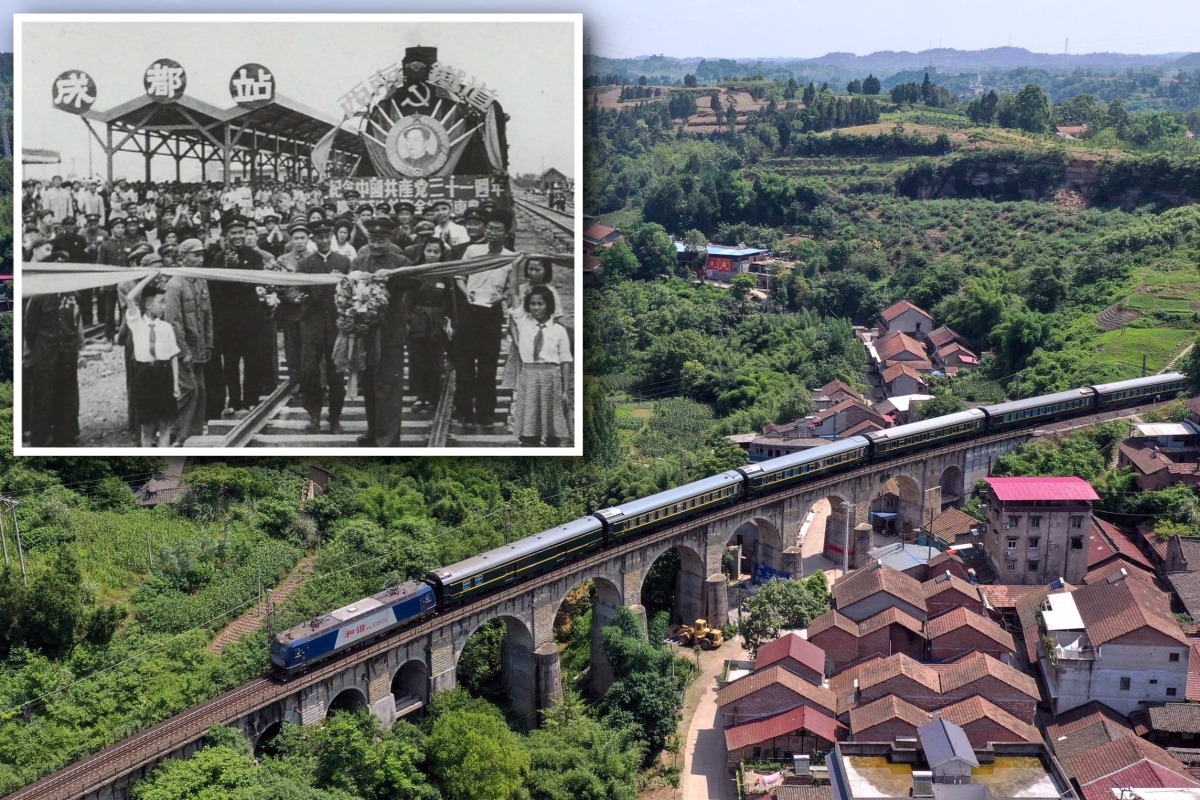
For example, the Chengdu-Chongqing Railway, which started construction in 1950 and connects Chengdu and Chongqing in Sichuan, was an important "pioneer work" in the infrastructure of New China.
Subsequently, China also completed main railway lines such as the Lanzhou-Xinjiang (from Lanzhou in Gansu to Urumqi in Xinjiang) and the Chengdu-Kunming (from Chengdu in Sichuan to Kunming in Yunnan).
However, the Nanjing Yangtze River Bridge in Jiangsu, deemed "impossible" by foreign experts, was independently designed and constructed by the Chinese people. Upon its completion and opening in 1968, it was hailed as the "Pride Bridge."
Before this, New China constructed the Wuhan Yangtze River Bridge in Hubei, known as the "first bridge over the Yangtze River", but it was completed with the assistance of Soviet experts.
Read more: How does China become "champion" of clean energy?
The epoch-making Shanghai-Jiading Expressway
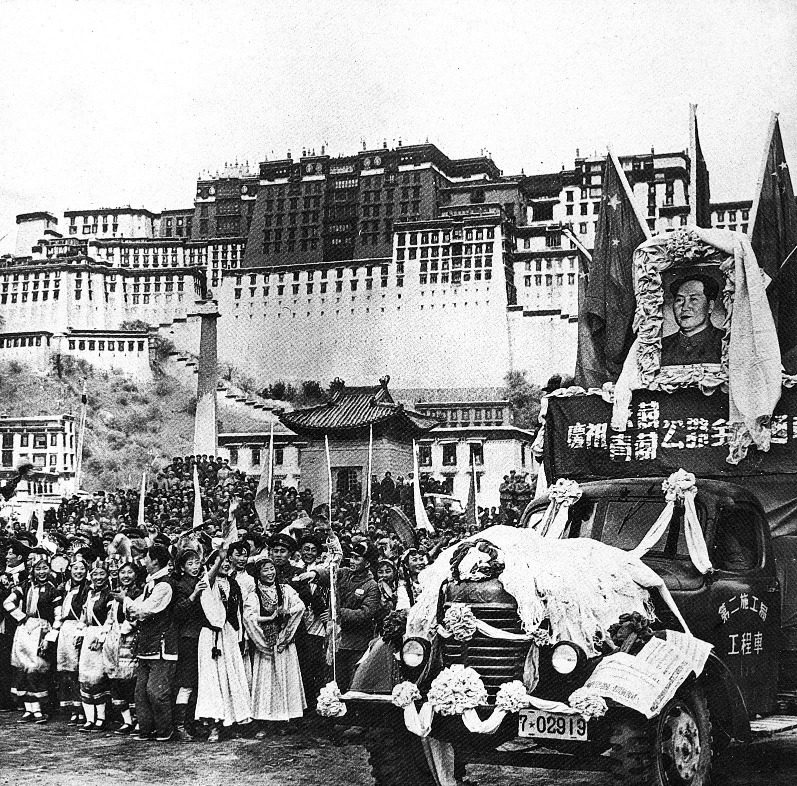
In the 1950s, China also constructed critical access highways to Xizang, such as the Kang-Xizang (Sichuan-Xizang) and Qinghai-Xizang roads, under extremely arduous conditions. Xizang, which accounts for one-sixth of China's land area, previously had no roads at all, and all transportation relied solely on human porters and horse caravans.
In 1978, China entered the new era of Reform and Opening-up.
Economic development became the focus, and the authorities gradually increased investment, leading to the modernisation of infrastructure.
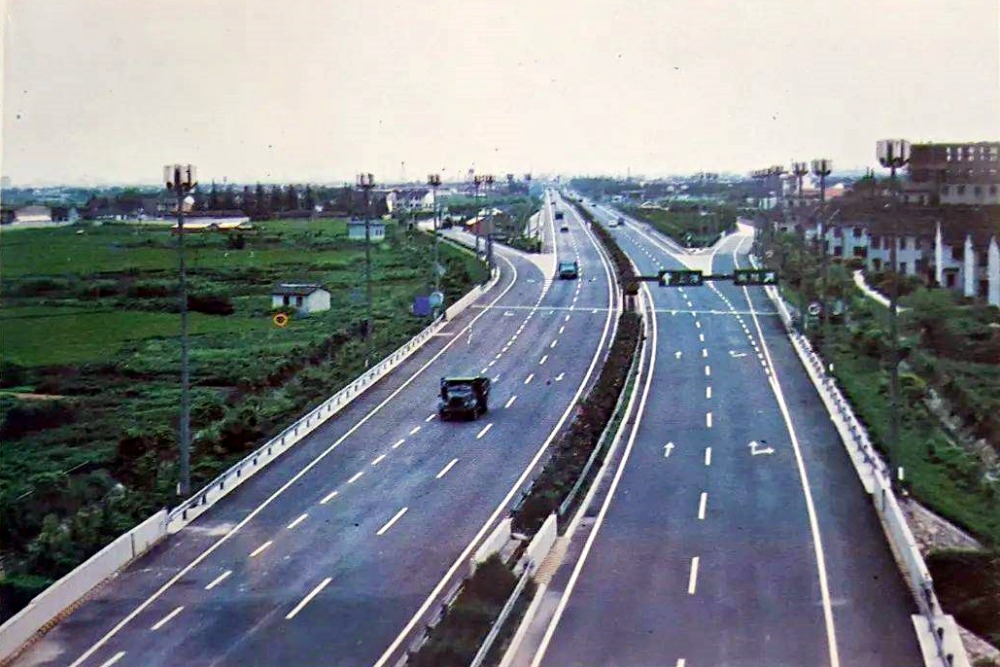
A frequently mentioned project from this period is the Shanghai-Jiading Expressway, which opened in 1988, connecting downtown Shanghai to Jiading.
Although it is only 18.5 kilometres long, shorter than Hong Kong's Tuen Mun Road, it is significant as the first operational expressway in Chinese Mainland.
Three Gorges Dam project for flood control and power generation
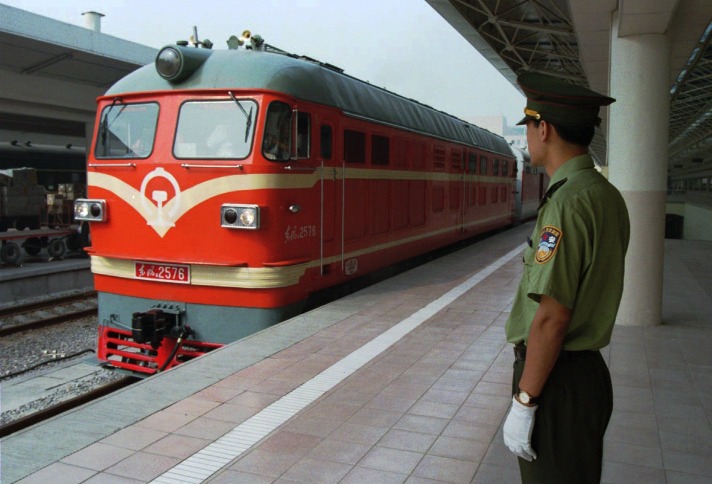
By the 1990s, China's infrastructure development accelerated. In the transportation sector, the Beijing-Kowloon Railway, spanning over 2,300 kilometres and linking Beijing with Kowloon, Hong Kong, opened in 1996 after three years of construction, marking the return of Hong Kong.
At the time, it was the largest and most expensive rail project in China, with the longest single-line track completed in one go, making it the second-largest construction project of the time in the country.
The transportation infrastructure projects that commenced construction or became operational from the 1990s to the early 21st century also include the Shenyang-Dalian Expressway in Liaoning (the first expressway to start construction in China, though it opened after the Shanghai-Jiading Expressway), Shanghai Pudong International Airport, and the new Guangzhou Baiyun International Airport, among others.
According to 2023 data, the two busiest airports in China with the highest passenger throughput are precisely Pudong and Baiyun.
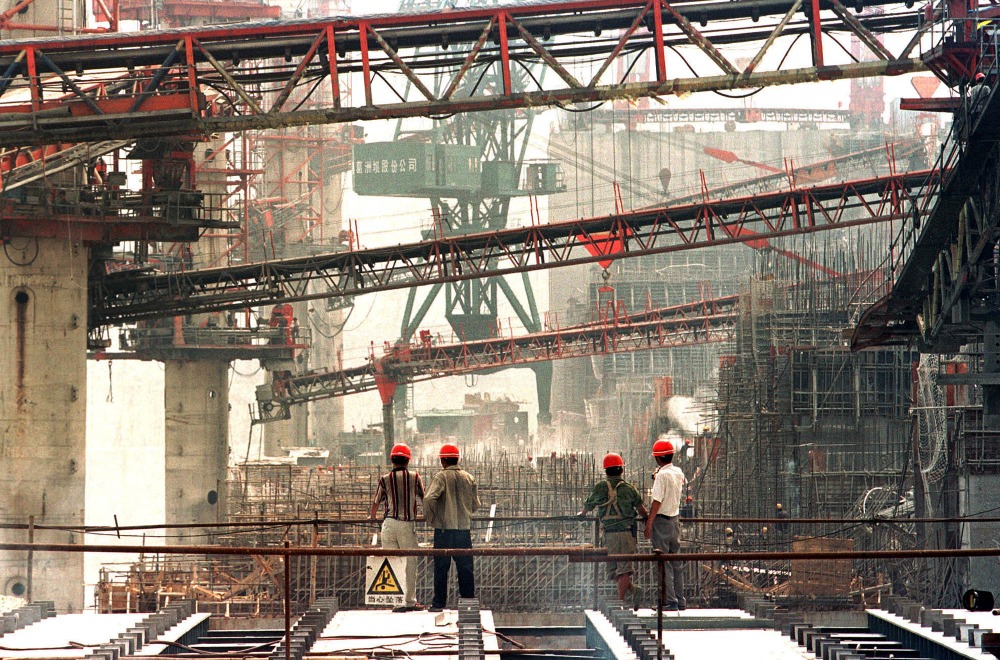
As previously mentioned, the Beijing-Kowloon Railway was the second-largest infrastructure project in China at that time. What was the largest? The answer is the Three Gorges Dam project on the Yangtze River.
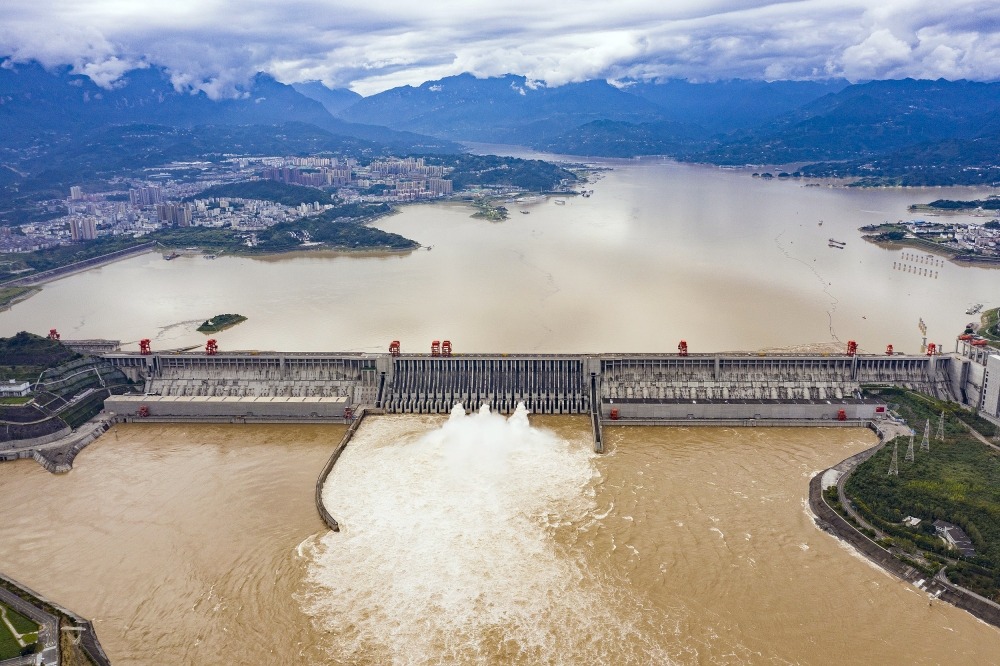
The Three Gorges Dam project includes a dam over 2,000 metres long and 185 metres high located in Yichang, Hubei, along with supporting hydroelectric power stations, ship locks, and other facilities.
It began construction in 1994 and gradually started operations in 2003. Today, aside from its crucial roles in flood control and navigation, it is the largest hydroelectric power station in the world, with an annual power generation exceeding 100 billion kilowatt-hours.
Entering the new century, with continuous improvements in economic and technological capabilities, China's infrastructure has entered a "great explosion" phase, with many projects being at the "mega project" level.
Read more: Why do high-speed trains in China turn on headlights in daylight?
South-to-North Water Diversion benefits 176 million people
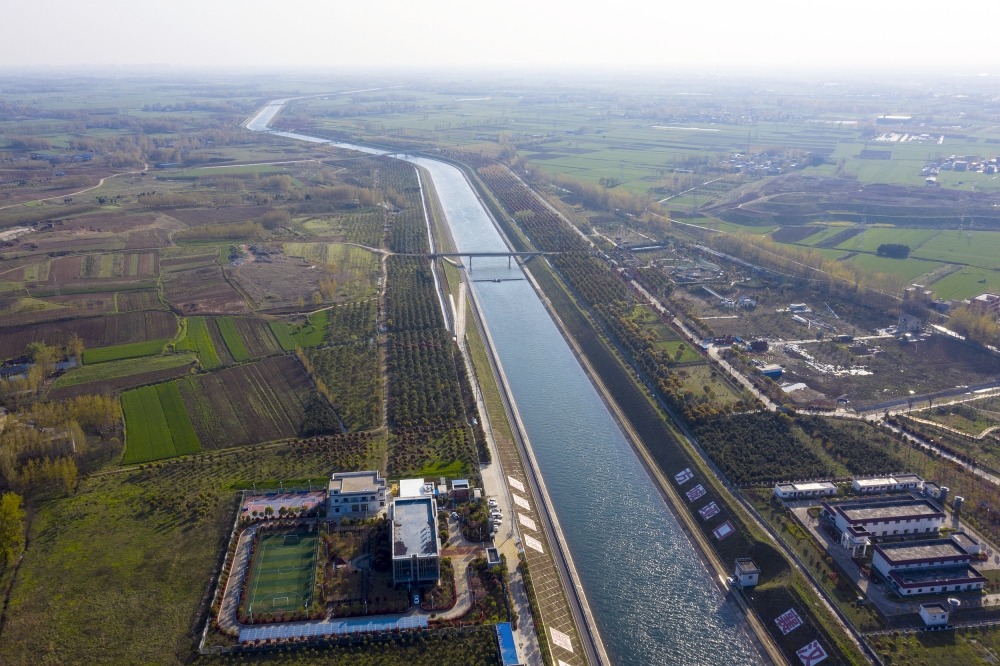
For example, the South-to-North Water Diversion, which has changed the water shortage situation in northern China, is the largest water diversion project ever planned in the world.
The East and Middle routes, which were completed in 2013 and 2014, already have a water transfer route of more than 2,600 kilometres.
According to official data, by early 2024, the South-to-North Water Diversion has delivered 70 billion cubic metres of water from the Yangtze River and its tributaries to provinces and cities such as Beijing, Tianjin, and Hebei, benefiting a population of 176 million, roughly one-eighth of the country's total population.

The West-to-East Gas Pipeline project, with a total length of more than 20,000 kilometres for its three major pipelines, has been continuously delivering natural gas from the western regions to the energy-deficient coastal areas since 2003.
The power plants in Hong Kong also now use gas supplied by the West-to-East Gas Pipeline project.
Meanwhile, the western regions of China, such as Sichuan, Yunnan, and Shanxi, are rich in hydropower or coal resources.
The electricity produced in these provinces is supplied to the coastal areas through the more than 20,000 kilometres long high-voltage transmission channels of the West-to-East Power Transmission project, alleviating the power shortages in these economically developed areas.
It is worth mentioning that the Baihetan Hydropower Station, located at the border of Sichuan and Yunnan on the Jinsha River (upper reaches of the Yangtze River), was fully operational in 2022.
With an annual average power generation of over 60 billion kilowatt-hours, it is the world's second-largest hydropower station, second only to the Three Gorges Dam, and is a key facility for the West-to-East Power Transmission project.
45,000 kilometres of high-speed rail
Another world-class infrastructure put into use in the new century is the section of the Qinghai-Xizang Railway from Golmud in Qinghai to Lhasa in Xizang, which was opened in 2006.

This 1,100-kilometre-long railway traverses vast areas of plateau permafrost, with an average altitude of over 4,000 metres and has to cross the Tanggula Pass at 5,072 metres above sea level, representing a massive engineering feat.
The Tanggula Pass is the highest point on any railway in the world.
Two years after the Qinghai-Xizang Railway opened, in 2008, Chinese Mainland's first high-speed railway, the Beijing-Tianjin Intercity Railway, was launched.
Since then, China’s high-speed railways have attracted foreign technology, then digested, innovated, and developed at an unprecedented speed.
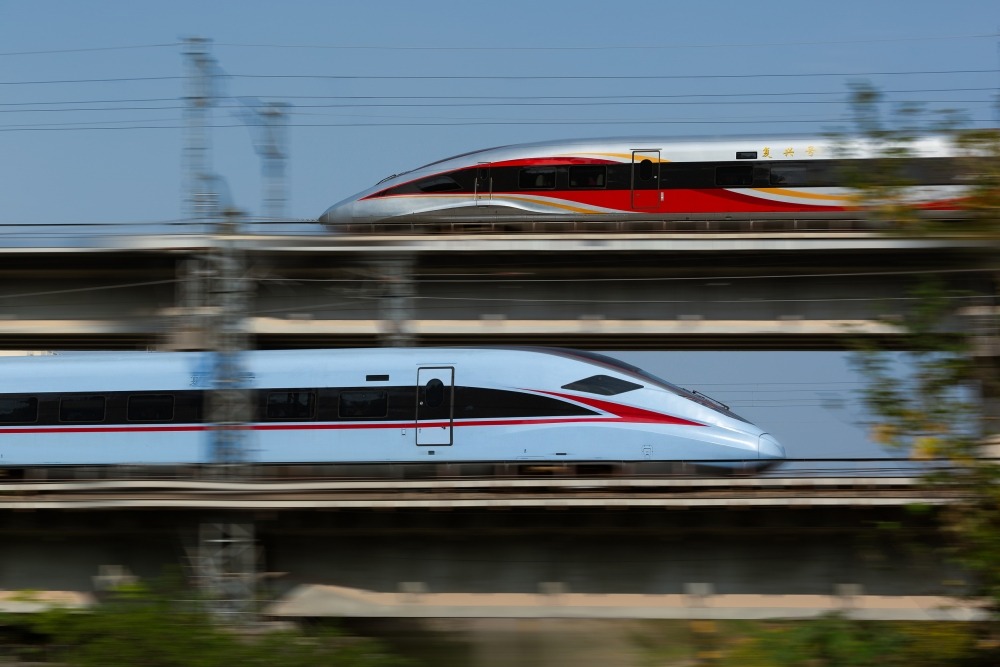
By early 2024, China's railway mileage will reach 159,000 kilometres, including 45,000 kilometres of high-speed rail, which is more than the circumference of the Earth, firmly ranking first in the world, even exceeding the combined length of other countries' high-speed rail.
Currently, more than 90% of Chinese cities with a population of over 500,000 are connected by high-speed rail; high-speed rail has become the preferred mode of transportation for long-distance travel for most people.
Read more: Why does first high-speed train of the day in China not carry passengers?
Hong Kong-Zhuhai-Macao Bridge spans the Pearl River Estuary
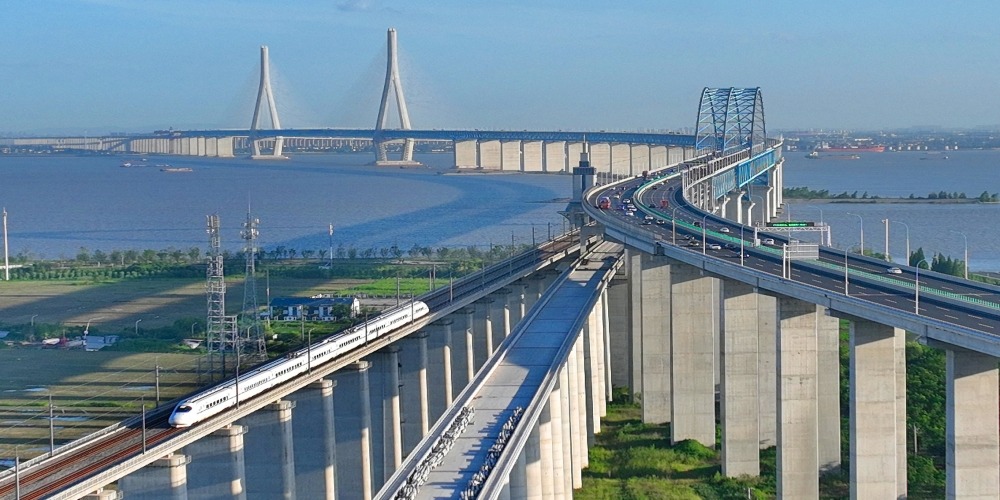
While China vigorously develops high-speed rail, the highway network is also expanding at an astonishing rate.
Data shows that by the end of 2023, China’s highway mileage reached 535,480 kilometres, more than 170 times that of 1949, with the length of highways increasing from zero before 1988 to about 170,000 kilometres, also ranking first in the world.
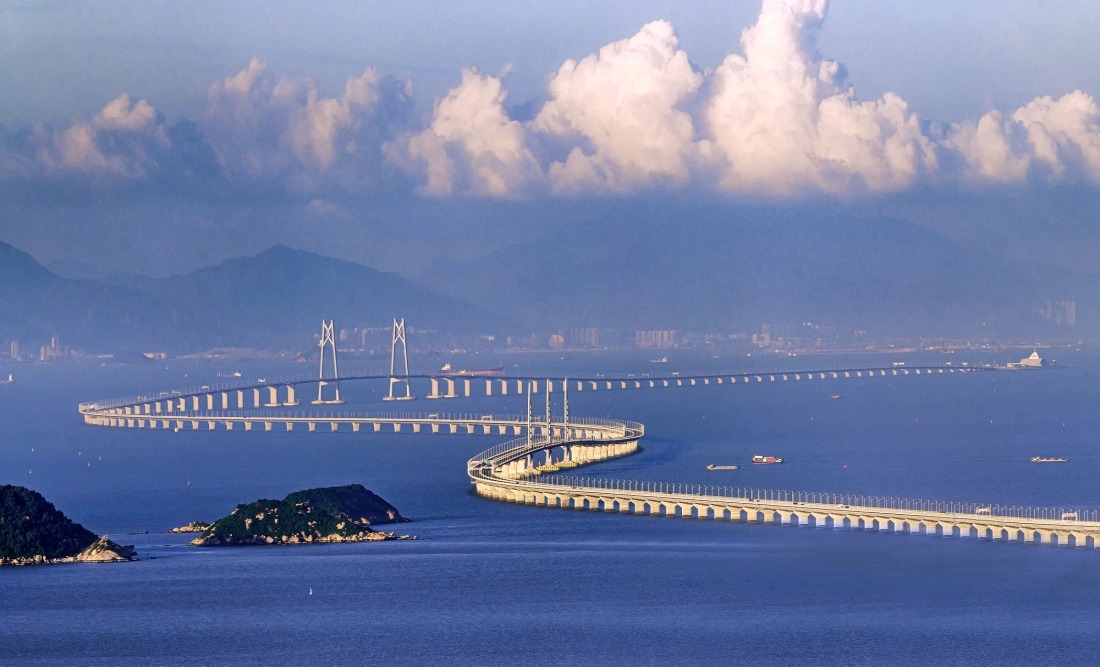
Accompanying the construction of railways and highways, Chinese people have built numerous bridges and tunnels, with their design and construction difficulties far surpassing the "Striving Bridge" of the past by countless magnitudes.
The most familiar one to everyone is the Hong Kong-Zhuhai-Macao Bridge, which connects Hong Kong, Macao, and Zhuhai in Guangdong.
This bridge spans the Pearl River Estuary, with a total length of 55 kilometres, and holds titles such as the world's longest sea-crossing bridge-tunnel combination and the world's longest submerged tunnel.
Additionally, more than 70% of the world's top 100 highest bridges are in China, occupying the top positions.
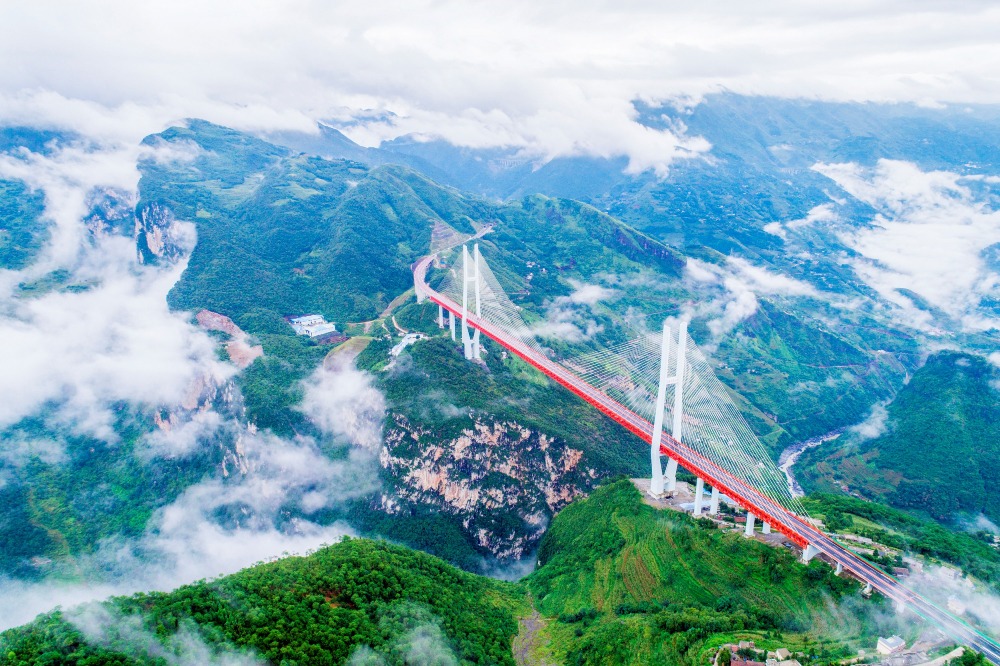
Speaking of the world's highest bridge, many people know it is the Beipanjiang Bridge at the border of Xuanwei in Yunnan and Liupanshui in Guizhou, with a bridge deck height of 565.4 metres.
However, this record will be broken in 2025 by the 625-meter Hua Jiang Gorge Bridge in Guizhou. The Nujiang Bridge of the Sichuan-Xizang Railway, expected to be completed in 2030, will have a bridge deck height of 700 metres, equivalent to the height of a 230-story building.
The "epic" Sichuan-Xizang Railway is under construction
In fact, the Sichuan-Xizang Railway not only has the tallest Nujiang Bridge but also includes the Yigong Tunnel, which is over 42 kilometres long.
Once completed, this tunnel will become the longest railway tunnel in China.
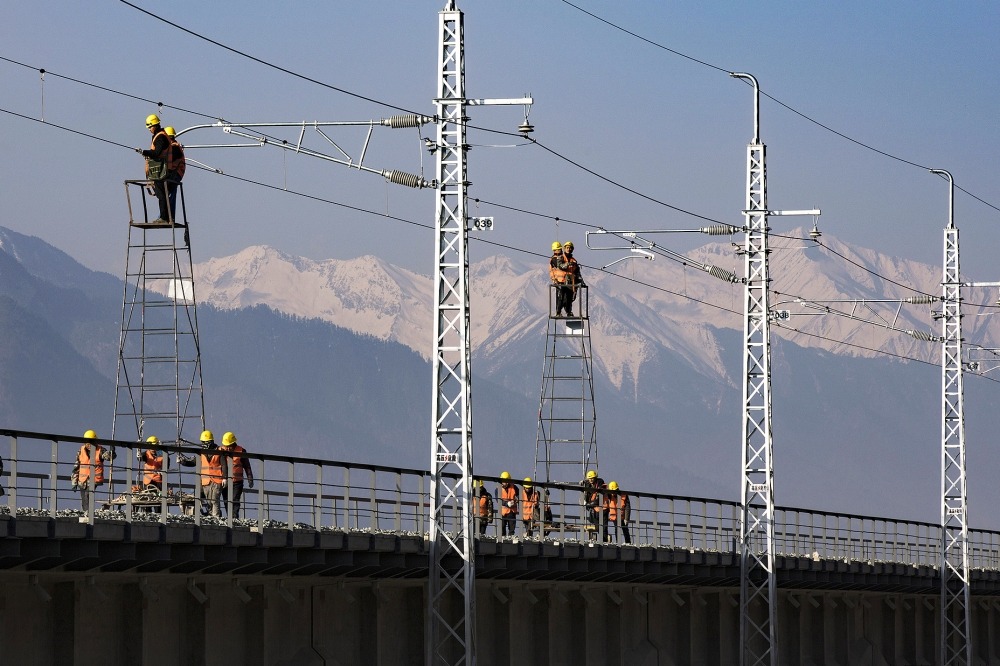
Dubbed as an "epic" project, the Sichuan-Xizang Railway spans nearly 2,000 kilometres.
It traverses the formidable Hengduan Mountains, crossing over numerous towering peaks and major rivers, climbing from the Sichuan Basin up onto the Qinghai-Xizang Plateau.
Its engineering challenges far surpass those of the Qinghai-Xizang Railway and are unparalleled in the world.
Construction began in sections starting from 2012. Segments like the Lhasa-Linzhi section are already operational, and the entire line is projected to be fully completed by 2032, an event eagerly anticipated by all.
In fact, China's major infrastructure developments in recent years are not limited to these.
Examples include the Beijing Daxing Airport, the Shenzhen-Zhongshan Link from Guangdong, the vast 5G network in communication, and the reclamation projects in the South China Sea.
More importantly, China's infrastructure construction is characterised by its rapid speed and high quality, unmatched by almost anyone.
In recent years, people often use the term "Infrastructure Giant" to describe China, reflecting its extraordinary infrastructure capabilities.