Published : 2021-12-19
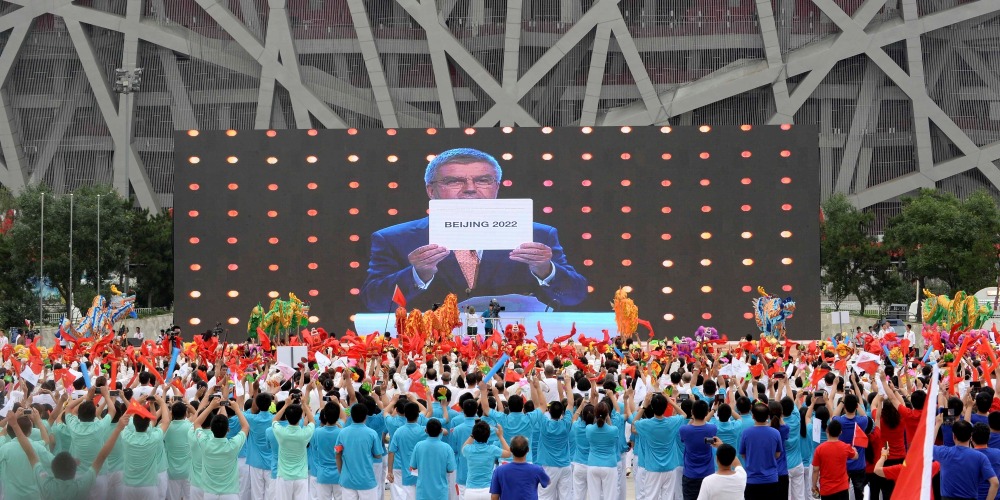
With the Beijing Winter Olympics approaching, the dual Olympic city Beijing is once again in the global spotlight.
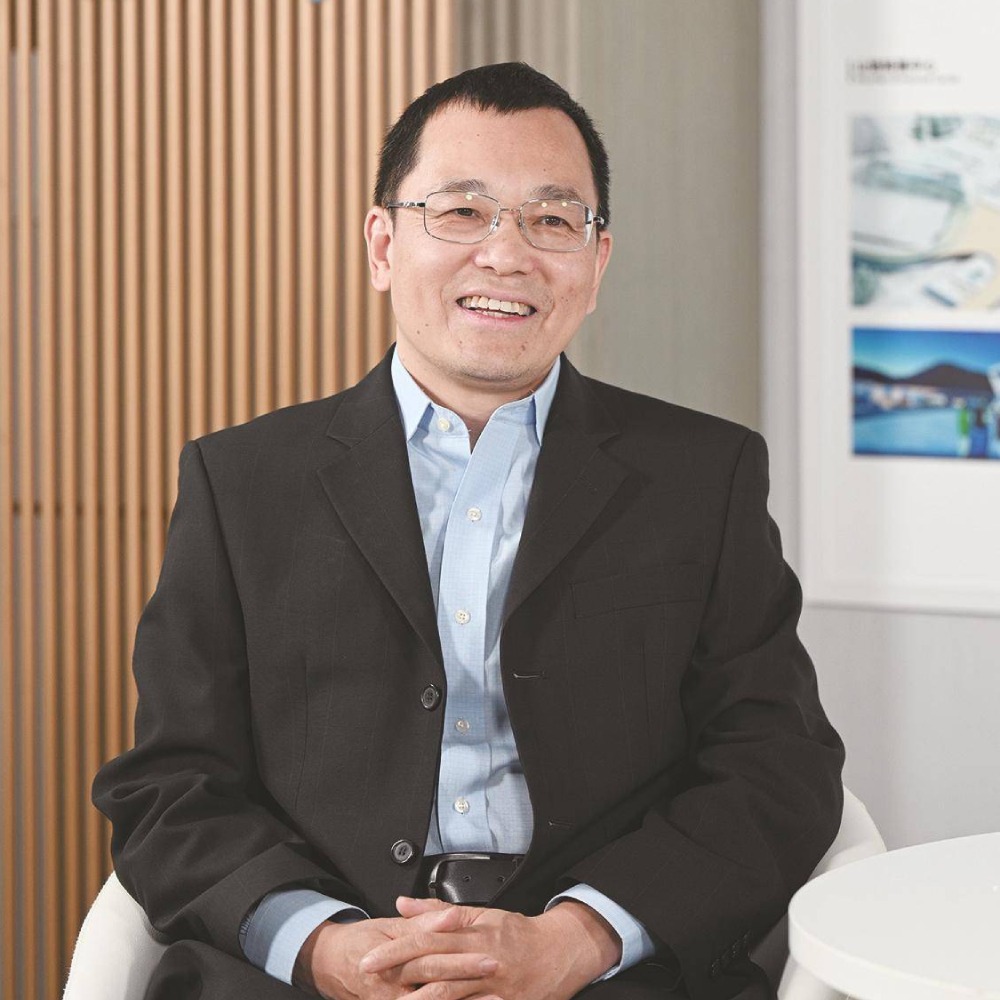
What many may not know is that seven venues across both Olympic Games were designed by the same person – architect Zheng Fang.
From the "Water Cube" in 2008 to the "Ice Ribbon" in 2022, Zheng's design philosophy remains consistent after 14 years: the Water Cube freezes fluid water into solid blocks, while the Ice Ribbon transforms solid ice into flowing ribbons.
This reflects the Chinese reverence for nature and the wisdom of balancing toughness and softness.
Beijing Winter Olympics | Zheng Fang designed 7 competition venues
In 1988, Zheng Fang, a young man from Taian, Shandong, with top scores in the province in science, came to the famous Tongji University to study architecture.
He didn't really understand architecture at the time, but during his years of further study and work at Tsinghua University after graduation, he continuously reflected on and explored architectural design.
In 1996, Zheng Fang, who had completed his master's degree, began working at the Tsinghua University Design Institute.
Here, under the guidance of famous contemporary Chinese architect Zhuang Weimin, he participated in the design of the university's comprehensive sports centre and was exposed to the complexities of large-scale projects.
From the institute to the construction site, he started learning and researching complex long-span structures in his designs, laying the groundwork for his later design of Olympic venues.
For the 2008 Beijing Olympics, Zheng Fang designed the National Swimming Center "Water Cube", the Beijing Olympic Park Tennis Centre, the Hockey Field, the Archery Field, and the Beach Volleyball Court, five competition venues in total.
He also completed the post-event transformation of these venues.
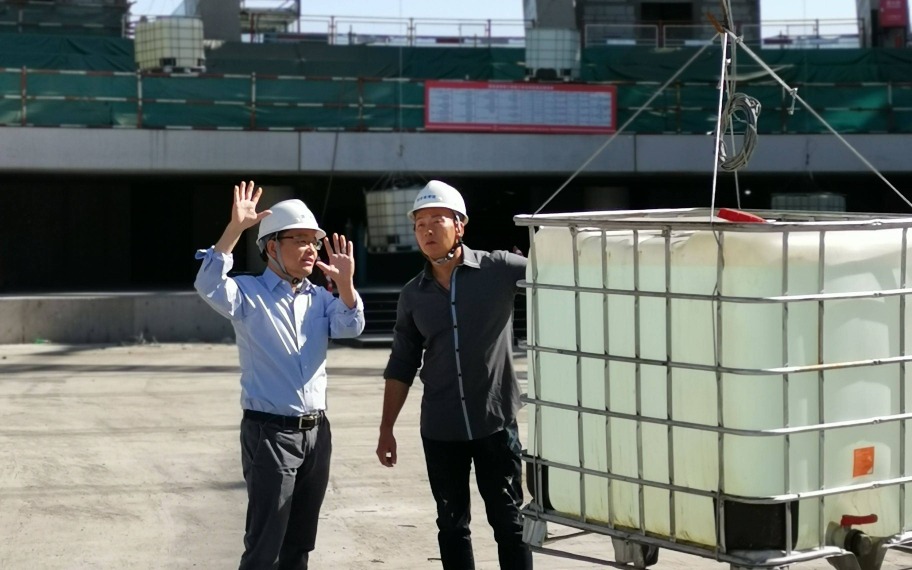
Read more: 14th Five-Year Plan|Healthy China: life expectancy of 79
Beijing Winter Olympics | The "Water Cube" becomes the "Ice Cube"
The "Water Cube" has now transformed into the "Ice Cube", which will host curling and wheelchair curling competitions during the Winter Olympics and Paralympics.
When Zheng Fang first designed it, he never imagined that over a decade later it would still be used to host Winter Olympics competitions.
The "Water Cube" has also hosted national events and large-scale performances, demonstrating the immense potential of such buildings in practical use.
Zheng believes that shaping an open framework to leave room for the future is the most foresighted choice.
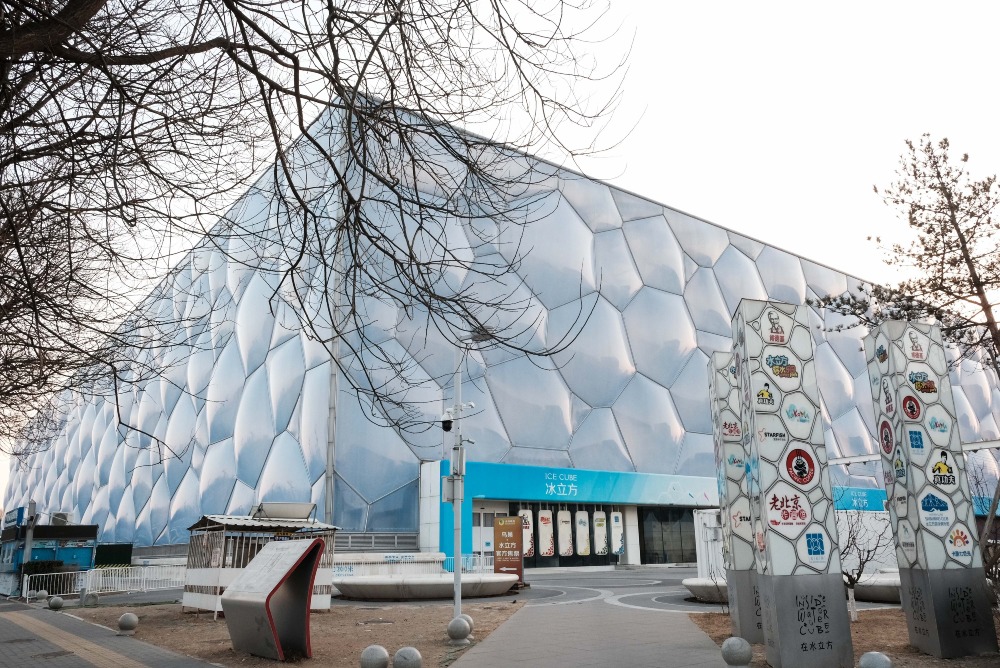
On July 31, 2015, when he heard the news that Beijing had been successful in its bid to host the Winter Olympics, Zheng had a deep desire: "To serve the Winter Olympics with all I have learned."
If building sports stadiums is a "super project", then in Zheng Fang's words, designing Olympic venues is like designing the "most complex superstructure".
Architectural effect, structure, curtain wall, electromechanics, acoustics, temperature, light environment, all of these must be considered, which encompasses many technical challenges.
Designing Olympic venues to the highest standards is beyond question.
During construction of the "Ice Ribbon", architects had to take into account the environment, temperature, humidity, wind speed, and many other factors surrounding the ice rink, striving to achieve the fastest ice making.
Beijing Winter Olympics | The "green" Ice Ribbon, complying with environmental requirements
In addition, in order to meet current environmental requirements, the design is full of green and low-carbon details.
"The design of the Winter Olympic venues better reflects our attitude towards environmental issues in the new era."
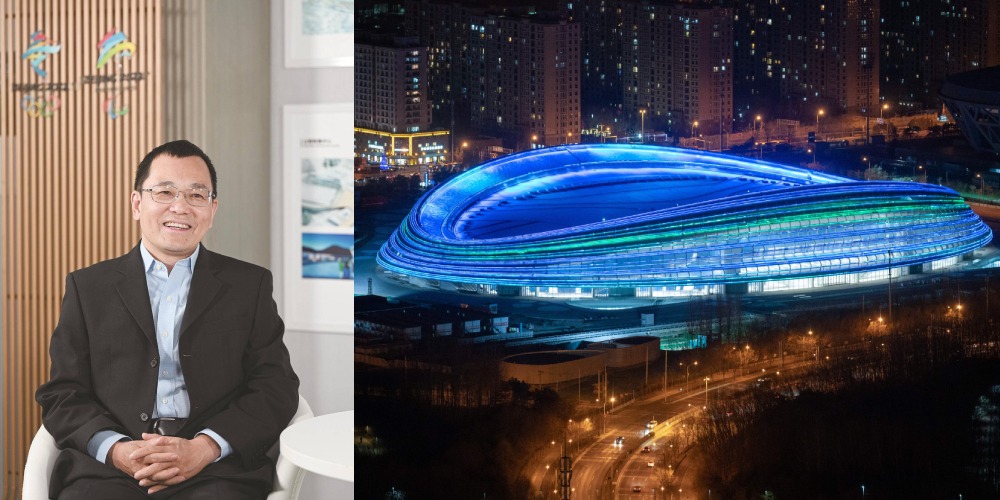
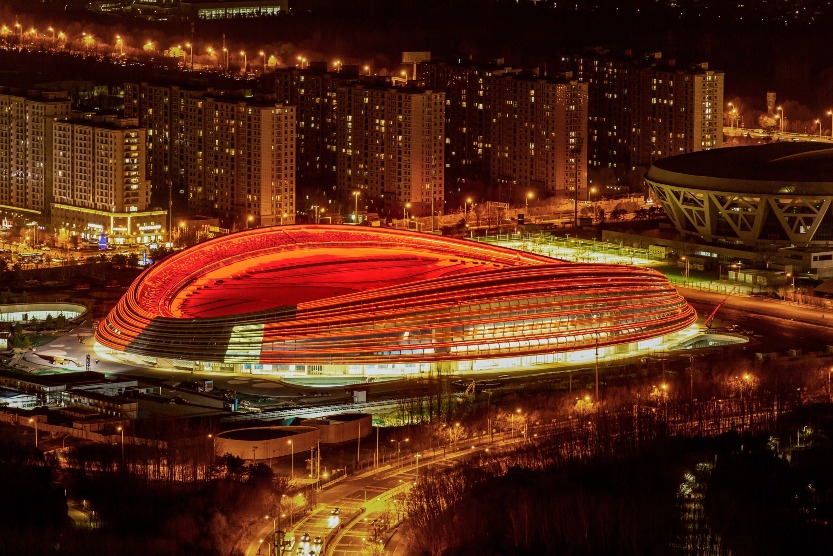
The ice rink of the "Ice Ribbon" covers about 12,000 square meters, making it one of the largest artificial ice rinks in the world.
In order to reduce volume, minimize air conditioning, dehumidification, and other loads, Zheng Fang designed the roof to be a downwardly curved parabolic surface, so the space above the ice is smaller.
The roof presents a shape that is high on both sides and bends downward in the middle, resembling a potato chip.
This double-curved saddle-shaped single-layer cable net roof design uses approximately 27 kilograms of steel per square meter, greatly saving materials. The amount of steel used is only a quarter of that used in the traditional steel roof structure.
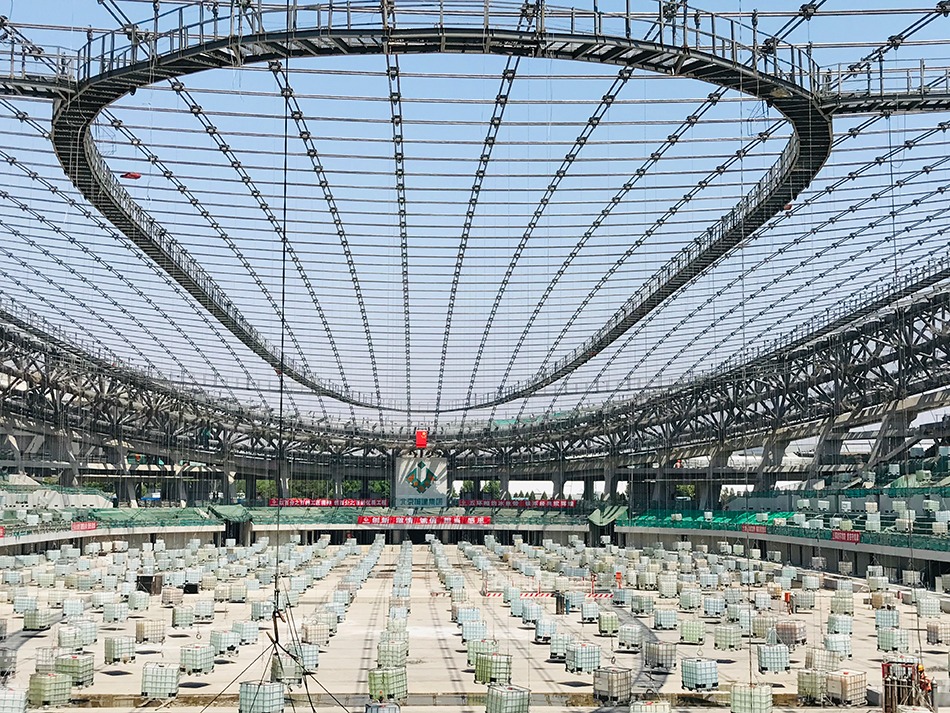
In the end, the "Ice Ribbon" became the only newly constructed ice sports competition venue for this Winter Olympics.
The 22 floating ribbons, symbolizing speed and passion, resemble the tracks left by speed skaters on the ice, and also represent the year 2022 in which the Winter Olympics are being held.
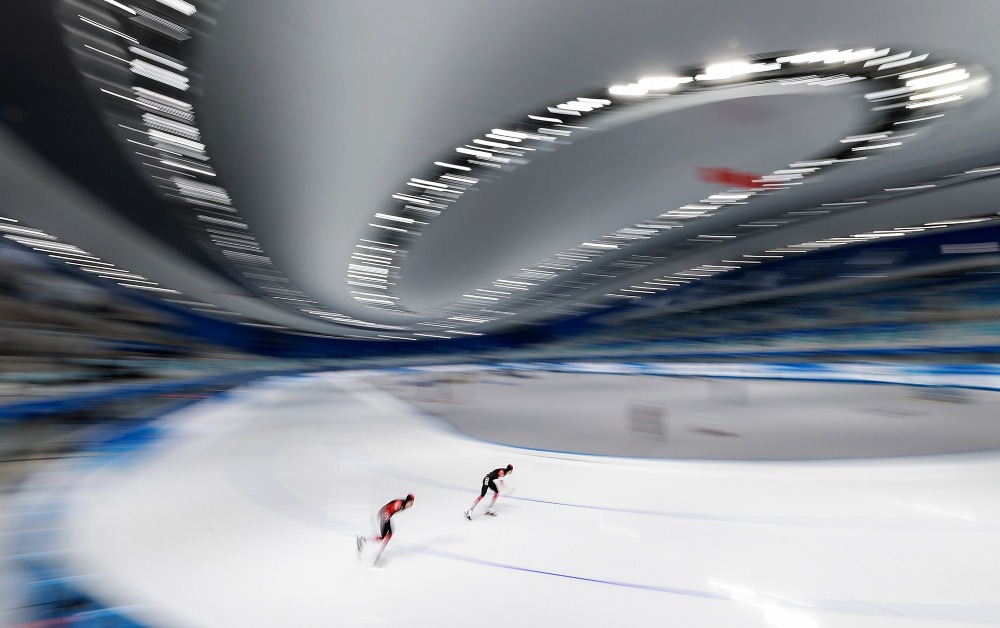
After the Winter Olympics, the "Ice Ribbon", as one of the world's largest indoor ice surfaces (12,000 square meters), will be able to accommodate about 2,000 people on ice at the same time, allowing the public to experience the joy of ice sports.
Zheng Fang once said, "If there are some things in our brief lives that we must do, then going to the stadium to watch a game is something I highly recommend."
In his view, watching a game in a sports venue is an incomparable experience, and his design precisely provides this kind of experience for the audience.