Published : 2026-05-11
One individual, one computer, and a suite of AI tools—is that all it takes to start a business? In China, this form of entrepreneurship is gaining significant traction and is known as the "one-person company" (OPC).
In the first half of 2025 alone, the number of newly registered OPCs across the country reached 2.86 million, representing a year-on-year increase of 47%. Why has the "one-person company" become such a craze? What exactly do these companies do, and what are the costs involved?
3 main reasons for the explosive growth of OPCs
In the era of AI (artificial intelligence), an OPC is not a "sole trader" in the traditional sense, but rather a new type of lean start-up model.
Entrepreneurs no longer rely on large teams; instead, as the core leader, they direct AI agents, outsourced services, or a very small number of support staff to independently handle the entire process—from product development and marketing to customer service and operational management.
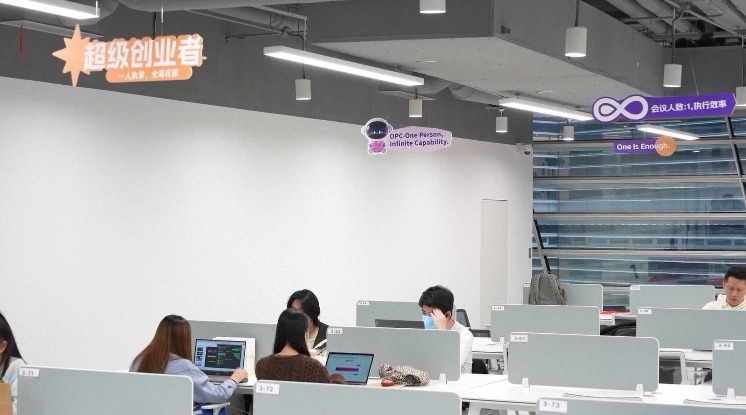
According to the China OPC Development Trend Report (2025-2030), as of June 2025, the number of OPCs nationwide has exceeded 16 million, accounting for 27.4% of the total number of enterprises.
The popularity of OPCs is essentially the result of the combined push from technological change and market demand.
On one hand, the popularisation of AI has significantly lowered the barrier to entry for start-ups. Compared to traditional entrepreneurship, OPCs have low trial-and-error and labour costs; tasks that previously required building a team can now be accomplished at a low cost using AI tools.
Read more: Understand the OpenClaw trend: AI's evolution from chatting to doing
On the other hand, there is a market trend towards "personalisation".
The public increasingly values unique experiences in products and services. Large companies are like "big ships that are hard to turn", whereas OPCs are fast to react and flexible enough to precisely meet these niche demands.
In addition, the shift in the entrepreneurial mindset of the younger generation is also a major driving force.
OPC entrepreneurs are mainly from the post-90s and post-00s generations. These new generations are adept at using digital tools, pursue flexible and autonomous ways of working, and directly convert their personal creativity and professional skills into commercial value.
Currently, OPCs are mainly concentrated in fields such as cross-border e-commerce, educational technology, software development, and content creation.
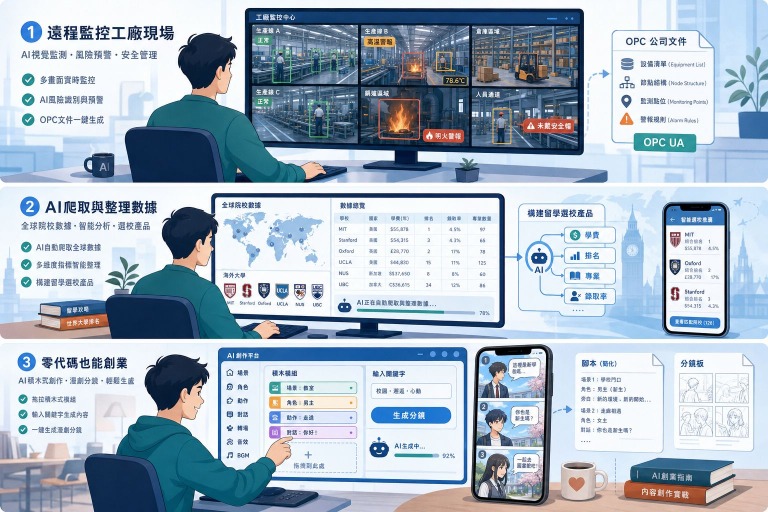
For example, some entrepreneurs use AI to develop factory safety monitoring cameras; others create products for selecting schools for studying abroad by using AI to scrape data from overseas institutions;
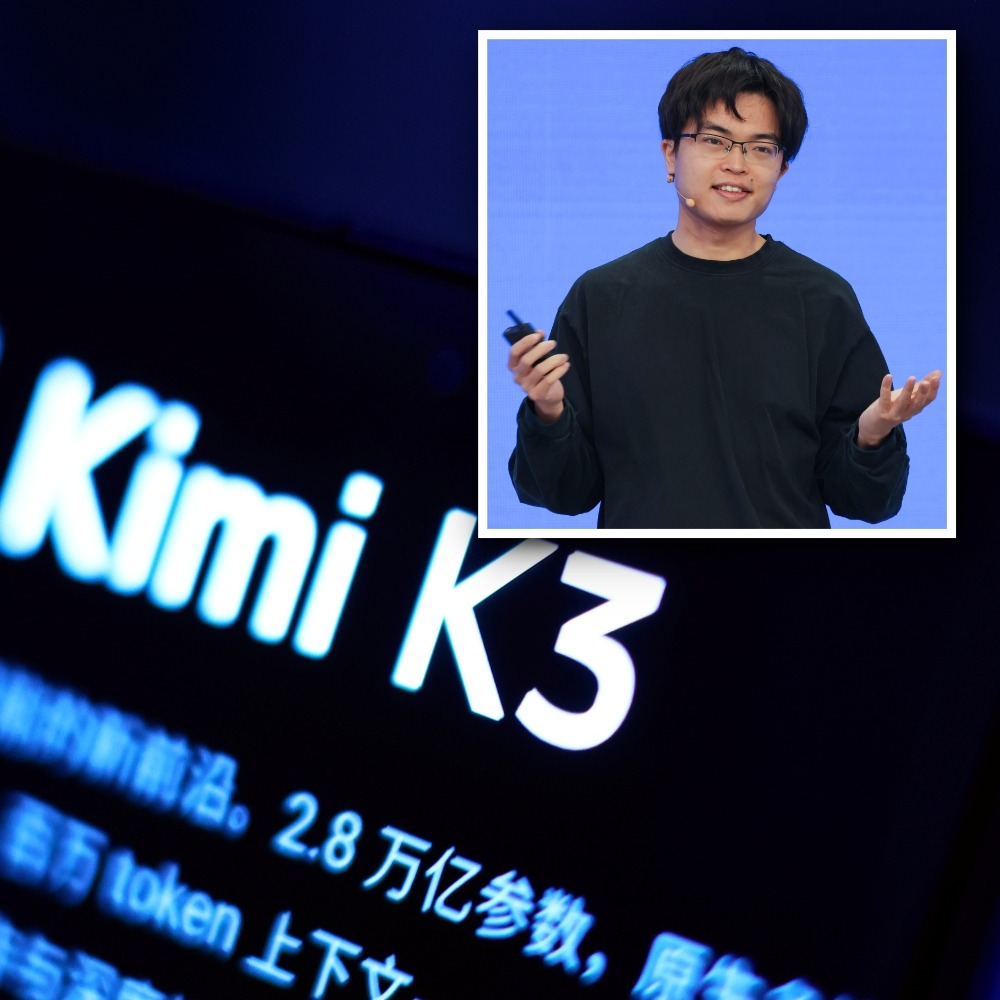
There are even people who have no knowledge of coding but have successfully created motion comic generation tools with the help of AI platforms and profited from them.
OPCs booming with low costs and policy support
How much does it cost to start a "one-person company"?
For OPC entrepreneurs, the biggest daily expense is no longer employee wages, but the cost of purchasing tokens of AI models and renting cloud computing power. With AI being a "full-time employee", its "salary" is reflected in the consumption of these technical resources. And this expense can be as low as a few hundred RMB per month.
The emergence of a large number of OPCs is equivalent to conducting a large-scale, low-cost experiment in business innovation, helping to quickly screen for valuable business models and also alleviating employment pressure in the short term.
More than 20 Chinese provinces and cities across the country have introduced policies, from office space and financial subsidies to resource matching, providing comprehensive support for the development of "one-person companies".
For example, Beijing took the lead in launching the "Artificial Intelligence OPC Service Plan", offering move-in-ready spaces, rent reductions, and computing power support.
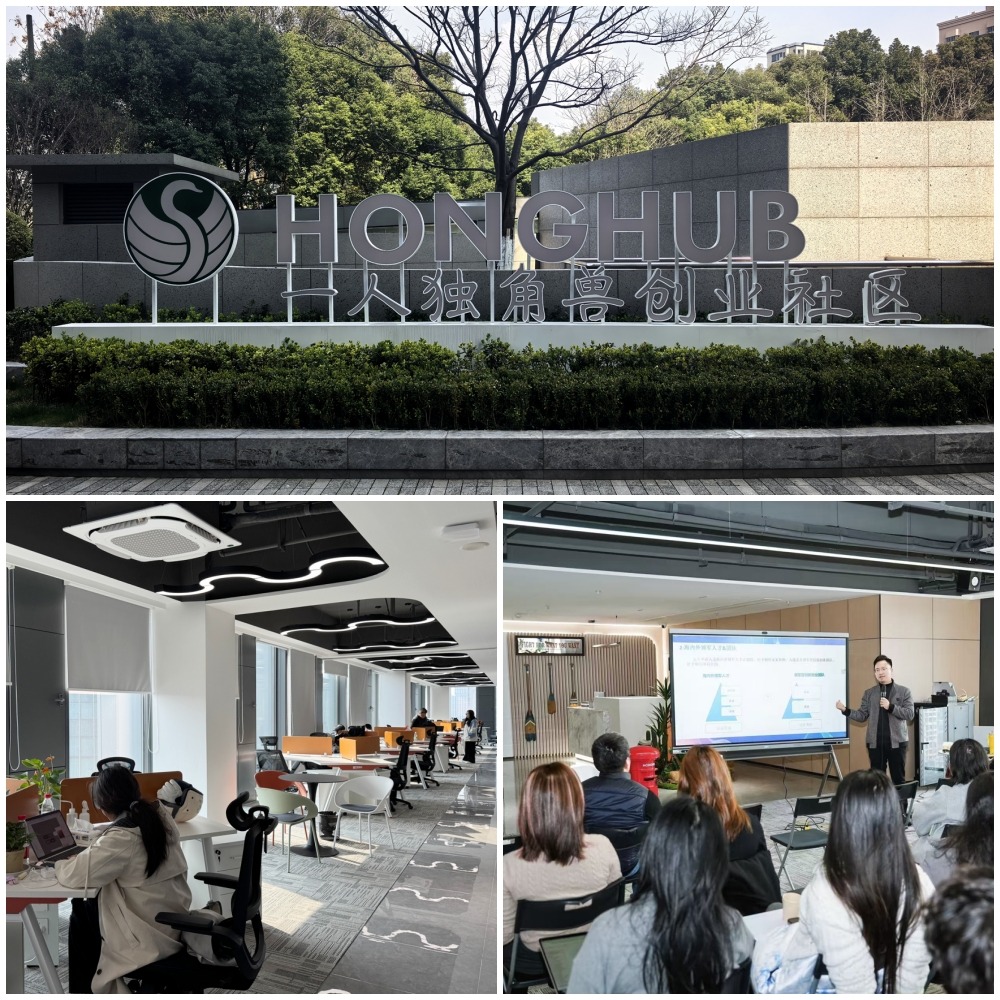
Shenzhen has stepped up its efforts at both the municipal and district levels, with computing power support for entrepreneurs reaching up to 10 million RMB; the city has also launched the first batch of nine OPC communities, creating a new industrial chain where "upstream and downstream are just floors away".
Guangdong Province has launched a special provincial policy and started building OPC communities. Cities like Hangzhou, Suzhou, Qingdao, and Chengdu have also successively followed suit.
Unlike in the past, the policies are no longer just about lowering registration thresholds or providing tax incentives, but are shifting towards supporting core AI infrastructure such as computing power, data, and models.
Behind this shift lies a push at the national level.
As early as the 14th Five-Year Plan, the development of the digital economy, including fields such as artificial intelligence and big data, was prioritised. This was accompanied by the construction of "new infrastructure," such as big data centres, to ensure sufficient computing power.

With the deployment of computing power infrastructure, the 15th Five-Year Plan explicitly elevates AI to a national strategy, continuing to increase investment in infrastructure such as electricity and data centres to further provide foundational support for AI development.
Read more: Understand the highlights of China's 15th Five-Year Plan
The trump card of a OPC: Is it AI or the person?
At this point, you might ask: who exactly is suited to starting an OPC?
Some industry observers believe that the protagonists of this entrepreneurial wave initially consisted of three types of people: makers who have mastered hardcore technology, senior executives from large companies with business resources, and scientists holding projects with potential.
However, as the barrier to entry for AI applications gradually lowers, more and more ordinary people are also joining the ranks.
The most important thing in OPC entrepreneurship is not how many AI tools you can use, but whether you can use your unique industry insights to discover a real business pain point, and direct AI and external resources to efficiently implement a solution.
Therefore, the core competitiveness of an OPC entrepreneur is always human creativity and judgment.
The rise of OPCs not only reshapes the form of business organisations, but also holds the infinite possibilities of individual intelligence in the AI era.
OpenAI founder Samuel Altman once predicted, "In the AI era, there will soon be a one-person, or even no-employee, billion-dollar company."
Today, this prediction is gradually coming true in China. Millions of "one-person companies", like sparks, are spreading like wildfire.
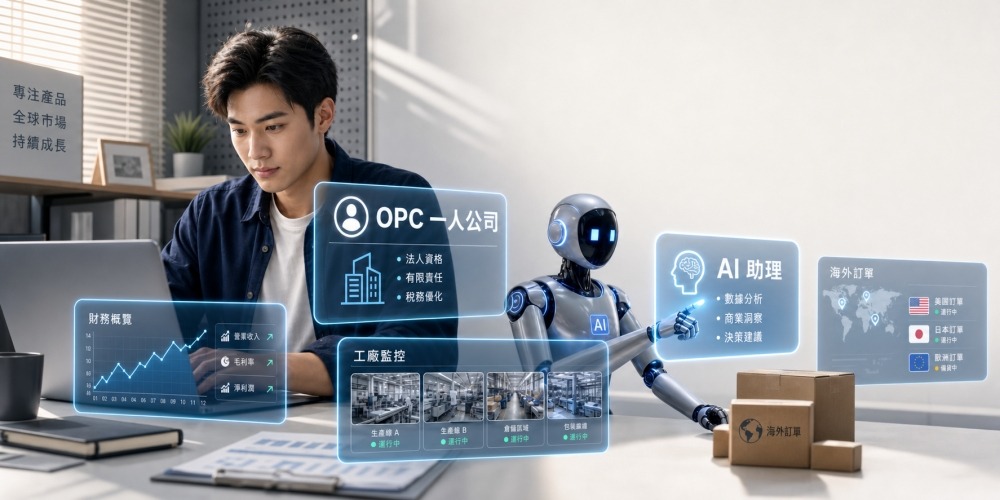
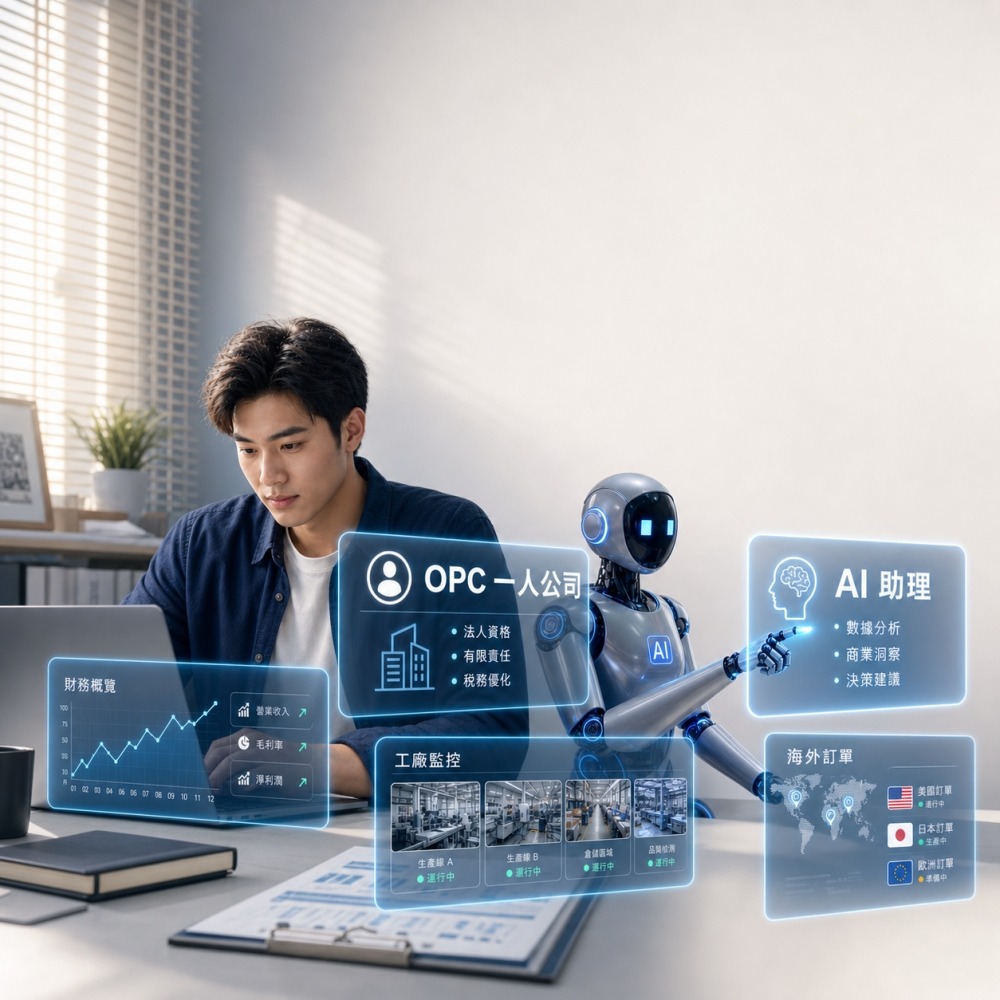
(The cover image of this article is generated by AI)