Published : 2025-12-06
This year during "Double 11"(a shopping festival), Hong Kong residents enjoyed Taobao's free shipping for one item. And at the foot of Mount Everest, 2,200 kilometres from Hong Kong, free shipping for one item was also realised, with shipping costs no longer being an obstacle for deliveries to reach Mount Everest.
The time it takes for local resident there to receive their online purchases has also been reduced from half a month to just two or three days, a delivery speed that was previously unimaginable.
"No free shipping to remote areas" has become a thing of the past, so what exactly have remote areas in China experienced on their path to achieving free delivery?
Why is free delivery to remote areas difficult to achieve?
Products on e-commerce platforms are of good quality at a reasonable price. But in the past, they were commonly marked with "No free delivery to remote areas".
For consumers in the western regions in China, an item costing a few dozen yuan(RMB, same currency below) could sometimes need a shipping fee of few dozen to a hundred yuan, which was more expensive than the product itself.
The expensive delivery fees were like an invisible barrier, shutting out consumers from the western regions.
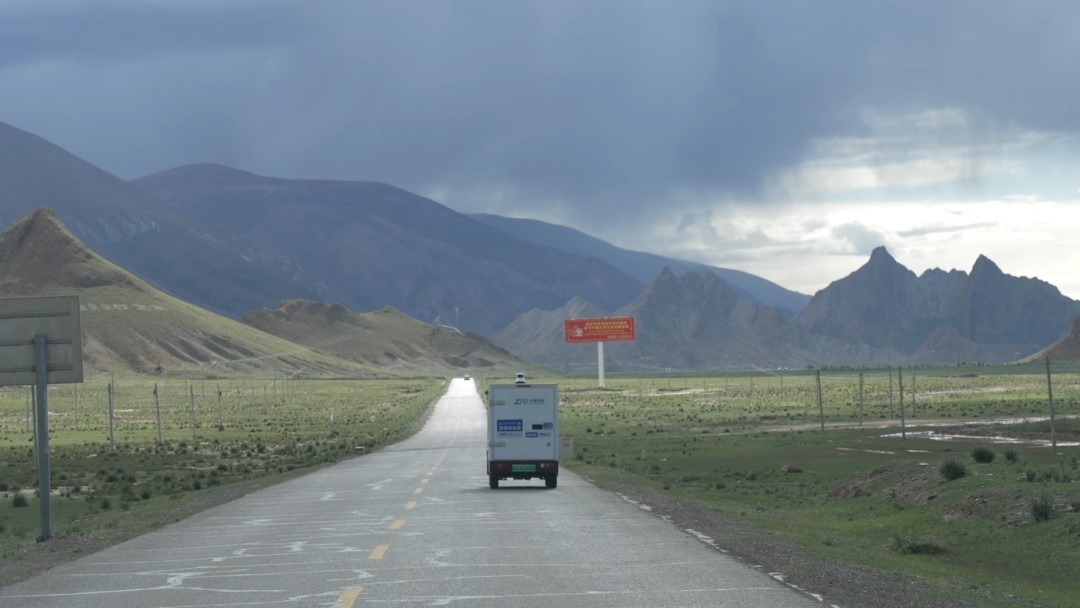
Why are delivery costs to remote areas so expensive? Long-distance transport inevitably increases transportation costs. In addition, many areas in the west are vast and sparsely populated, leading to scattered delivery points and higher dispatch costs.
For e-commerce companies pursuing a return on investment, this is not a profitable venture, so few are willing to take on this "hard nut to crack".
In response to this situation, the national and local governments have actively introduced policies to support the construction of logistics infrastructure, creating favourable conditions for e-commerce platforms to offer free delivery services.

E-commerce goes west innovating logistics mechanisms
In 2022, Pinduoduo addressed the logistics pain points in remote areas by pioneering the "transit consolidation" method: merchants only need to send parcels to a transit warehouse, and the platform then uses third-party logistics to ship them uniformly to the destination (two-stage consolidation).
From then on, places like Inner Mongolia, Xizang, Gansu, Ningxia, and Qinghai were included in the "free delivery zone", meaning consumers no longer had to pay expensive delivery fees, and merchants' markets also expanded.
However, free shipping did not mean home delivery. Consumers in some remote areas still needed to go to parcel collection points in towns or counties to collect their parcels, which was very time-consuming and laborious.
In 2023, Pinduoduo began to roll out a free shipping service to villages in pilot provinces, shortening the distance between last-mile delivery points and consumers from several tens of kilometres to just a few kilometres by collaborating with third-party logistics service operators.
Deliveries can now reach an increasing number of pastoral settlements and village collection points directly, and are even delivered to villagers' doorsteps. By February 2025, the national delivery-to-village coverage rate had already exceeded 95%.
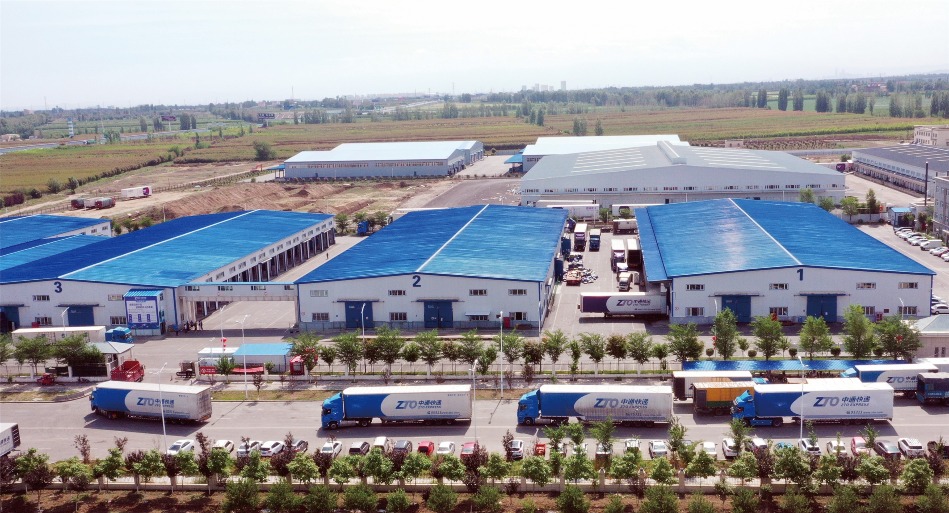
In April 2025, Pinduoduo launched the ‘Hundred Billion Support Plan’. The westward expansion of e-commerce is one of the key projects of Pinduoduo's Hundred Billion Support Plan. This has allowed various western regions to gradually implement free delivery, stimulating a great deal of potential consumer demand.
Data shows that in the past year, the volume of orders in western regions increased by over 40% year-on-year, with the volume of orders for general merchandise doubling, and the volume of orders for items like trendy toys and peripherals and pet supplies increasing by more than 60%.
After Pinduoduo took the first step for free delivery to remote areas, other e-commerce companies have also joined the ranks.
JD.com's consolidated shipping and delivery service for remote areas went through a major upgrade during this year's Double 11, extending its second-stage consolidated free delivery subsidy from Xinjiang to Xizang, Inner Mongolia, Gansu, Ningxia, and Qinghai, achieving full coverage of remote areas.
JD.com expects to save merchants over 30 million yuan (RMB) in delivery costs during the Double 11 promotion period.
Read more:Courier services entering villages to aid rural revitalisation
Western railways expanded by 30,000 km in ten years
The improvement in the standard of road construction is the foundation for logistics development. Today, the upgrading of railway and road transport conditions in remote areas has greatly accelerated the delivery efficiency of courier services.
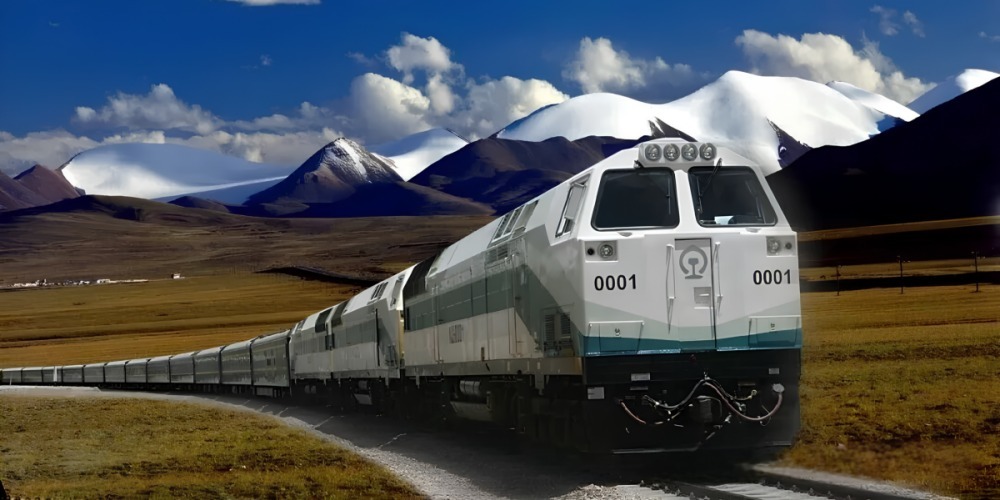
In terms of railways, the Qinghai-Xizang Railway is an important logistics channel connecting Xizang with other provinces. The transport time has been reduced from 60 hours to 48 hours, and the significant improvement in transport efficiency has also led to a surge in transport volume.
In 2012, the operational mileage of western railways was 37,000 kilometres, and by the end of 2021, it had exceeded 60,000 kilometres. The railway network has extended to more and more distant places, making courier transport more convenient.
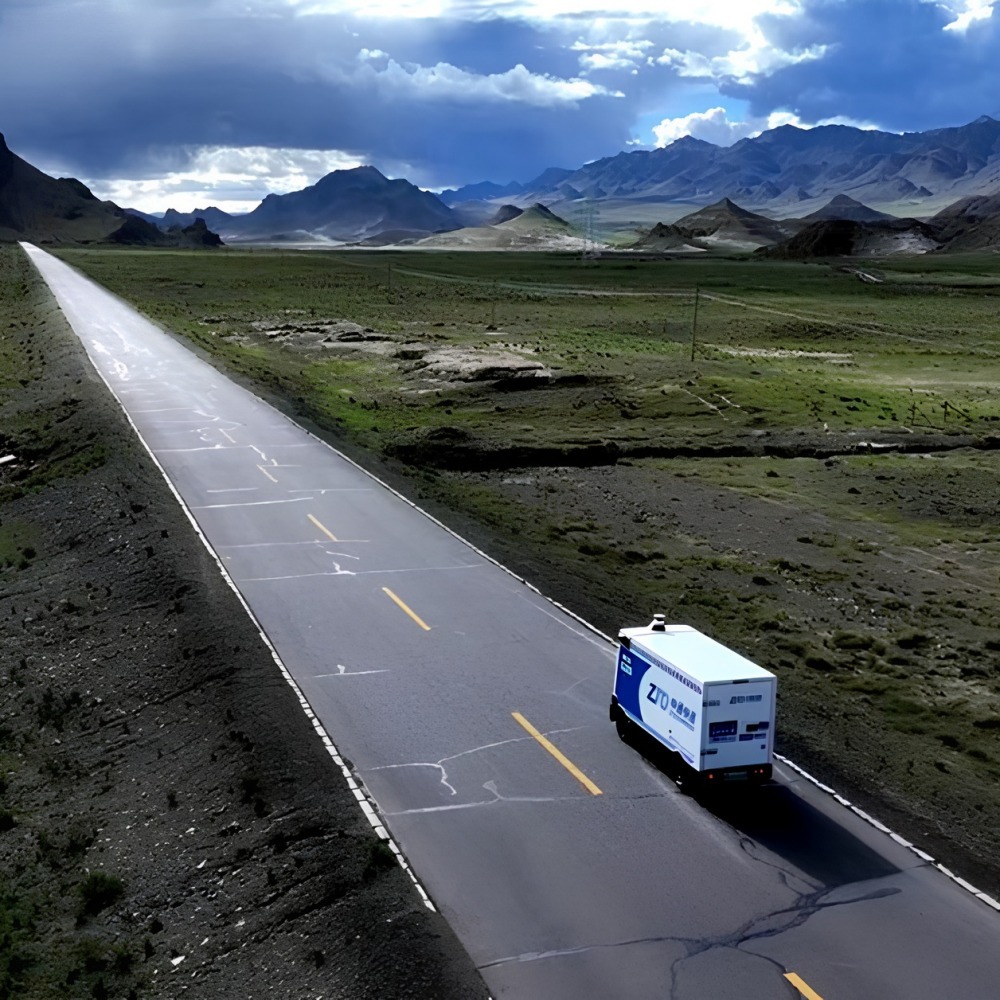
In terms of roads, some courier companies have launched a transport route from Chengdu, Sichuan to Lhasa. The transit time for lorries along the Sichuan-Xizang Highway is just over 40 hours, which is a full day faster than the previous route along the Qinghai-Xizang Highway.
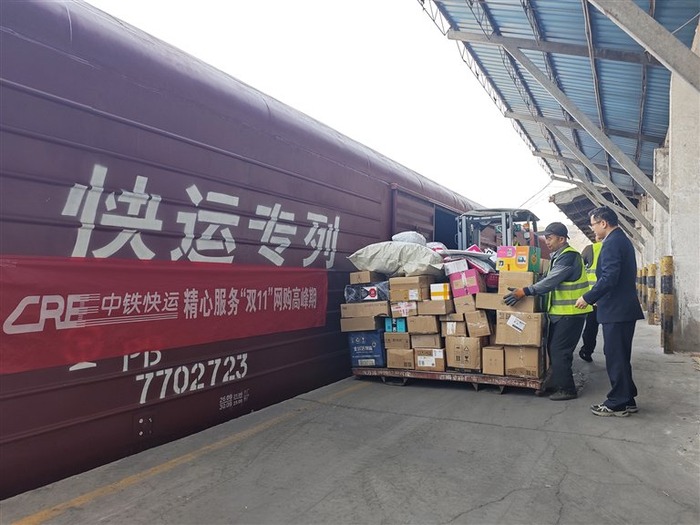
Greater efficiency has brought lower transport costs, and the improvement of transport conditions has created the hardware foundation for free delivery in Xizang.
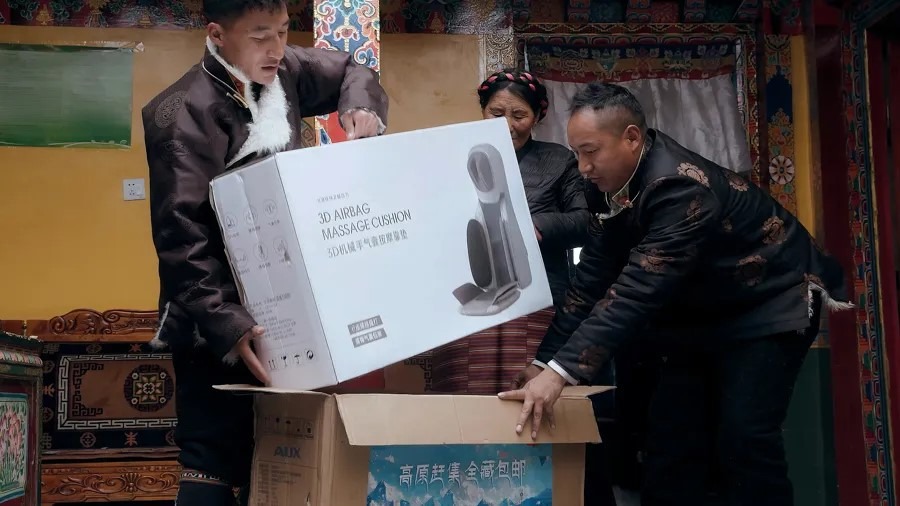
Former natural barriers have turned into clear paths. Unimpeded roads and railways have opened up the 'arteries' for free delivery in Xizang, better connecting the remote snowy plateau with the national market.
The accessible convenience of free delivery can finally cross thousands of mountains and rivers to reach countless households.
Read more: China Economy|From Isolation to Connection, Railway Youths Aid Rural Revitalisation
Parcels coming in and agricultural products going out
Once the postal routes are opened up, consumer demand flows like living water. E-commerce companies advancing into western regions have made the lives of local people more convenient, provided more consumer choices, and greatly enriched the material and spiritual lives of them.
Consumers no longer have to be deterred from online shopping by high delivery fees, and more and more people are enjoying affordable and convenient courier services.
Data from the State Post Bureau shows that in the first quarter of 2025, there were 10 provinces where the growth rate of national courier business volume exceeded 30%, nine of which are located in the central and western regions.
The westward march of e-commerce has awakened potential consumer demand and quietly reshaped consumer habits in this region that was once beyond free delivery zone, and has also allowed the west to truly integrate into the national consumption cycle.
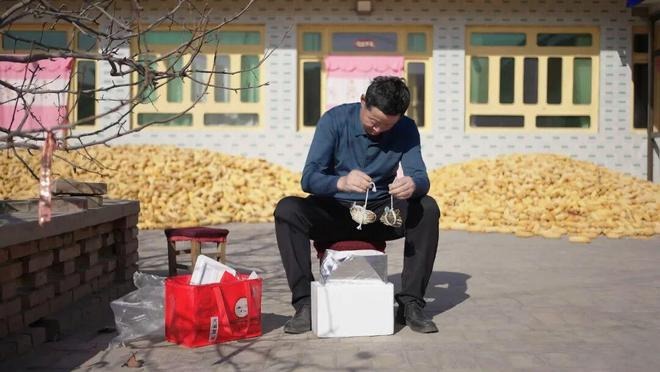
While the westward expansion of e-commerce allows parcels to continuously come in, it also makes it easier for local products to go out.
The smooth flow of logistics is not just about the circulation of goods, it also brings employment opportunities to the local people. For countless farmers and small and micro-sized businesses, e-commerce is like a pathway out of the mountains, finding a national market for an increasing number of unique western products.
Agricultural products such as Ningxia goji berries and Xinjiang walnuts, and handicrafts like paper-cuttings and Tibetan carpets, have begun to reach faraway places with the help of e-commerce platforms.
Agricultural e-commerce in the western region is on the rise, and the 12 provinces, autonomous regions, and centrally administered municipalities in the western region sold 40 billion yuan of local specialities on Taobao in a single year.

Today, the logistics network extends to the west, unique products reach the entire country, and employment opportunities take root in rural areas.
All of this is quietly energizing western regions, allowing an increasing number of people to increase their income right at their doorstep and live a happy and hopeful life.
Read more: China's Economy|Rural E-commerce Unleashes Potential for Rural Revitalisation