
Published : 2025-12-21
"Resembling a deer yet not quite a deer, a horse yet not quite a horse, an ox yet not quite an ox, a donkey yet not quite a donkey—it is known as the foremost among mythical beasts."
This refers to the "Sibuxiang" (四不像, "Four Unlikes") in ancient Chinese mythology. In reality, the "Four Unlikes" has a tangible counterpart: the rare and endemic Chinese species—the milu deer.
This creature, which lived and thrived in China for millions of years, once vanished from its native land. Today, however, it has made a miraculous return and been revived—a remarkable story lies behind its restoration...
China's endemic deer species once became extinct in its native land
Since the dawn of the modern era, China has seen a significant number of cultural relics lost to foreign lands. Yet, it is little known that living creatures, too, have suffered a similar fate in history. The protagonist of this particular episode is the Milu deer (麋鹿), also known as the Père David's deer.
The milu deer is a deer species unique to China, originating millions of years ago, and was once widely distributed in the warm and humid areas of the Yellow River and Yangtze River basins.
However, throughout the dynasties, the Earth experienced climate change, coupled with population growth and hunting, the number of milu deer declined rapidly.
By the end of the Qing Dynasty (1644-1911 AD), only a few hundred remained, kept in the Nanhaizi (南海子), a royal garden in Beijing.
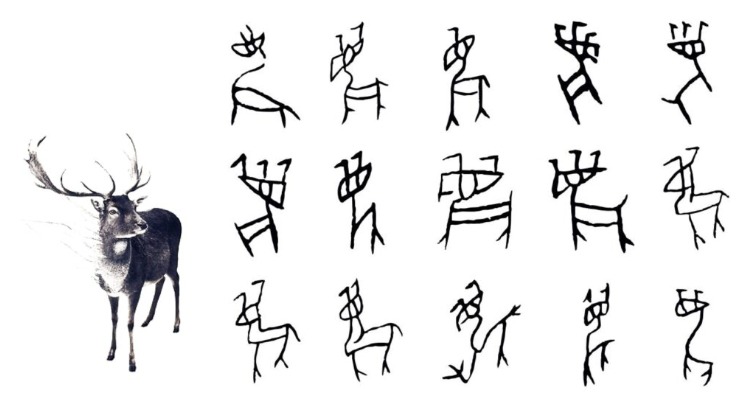
These milu deer attracted the attention of Westerners.
First, French naturalist Armand David obtained a deer hide and skull, confirming it was a new species never before discovered in the West, and named it "Père David's deer". Later, people from various countries acquired milu deer through both open requests and secret purchases.
After the Eight-Nation Alliance invaded Beijing, the milu deer were all looted and killed, leading to their extinction in their native land.
Herbrand Russell, the Duke of Bedford in the United Kingdom, could not bear to see the tragic state of the milu deer, so at the end of the 19th century, he spent a great deal of money to purchase 18 milu deer from around the world and kept them at Woburn Abbey in England.
These 18 milu deer became the "ancestors" of all milu deer in the world today.
By the Second World War, there were 255 milu deer at Woburn Abbey. To prevent the war from completely destroying the estate and the deer, the Duke of Bedford's descendants began to transfer milu deer to large zoos around the world.
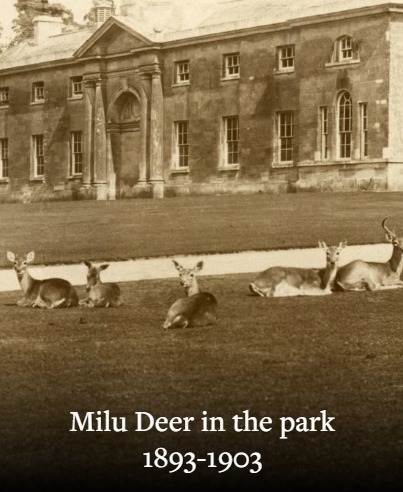
A three-step approach to milu deer conservation
After the founding of the People's Republic of China (PRC) in 1949, there was a constant hope for the milu deer to return to their homeland.
Starting in 1985, the country successively introduced 77 milu deer from the UK, placing them in the Nanhaizi Milu Park in Beijing and the Dafeng Milu National Nature Reserve in Jiangsu Province.
The milu deer had come home, but people were already very unfamiliar with this animal. To understand them, staff made considerable efforts.
For example, they studied similar wildlife species, carefully designed diets and feed enriched with probiotics, introduced clean water sources into the reserve, cultivated high-quality pasture, and created spacious areas for activity.
Under such meticulous care, the milu deer has once again "taken root", and its population has grown rapidly.
At the same time, experts conducted surveys across the country and established ex-situ conservation sites in places like Hainan Province, Hebei Province, and Jiangxi Province, successively transporting hundreds of milu deer there.
This has not only expanded their living space but also increased the genetic diversity of the population.
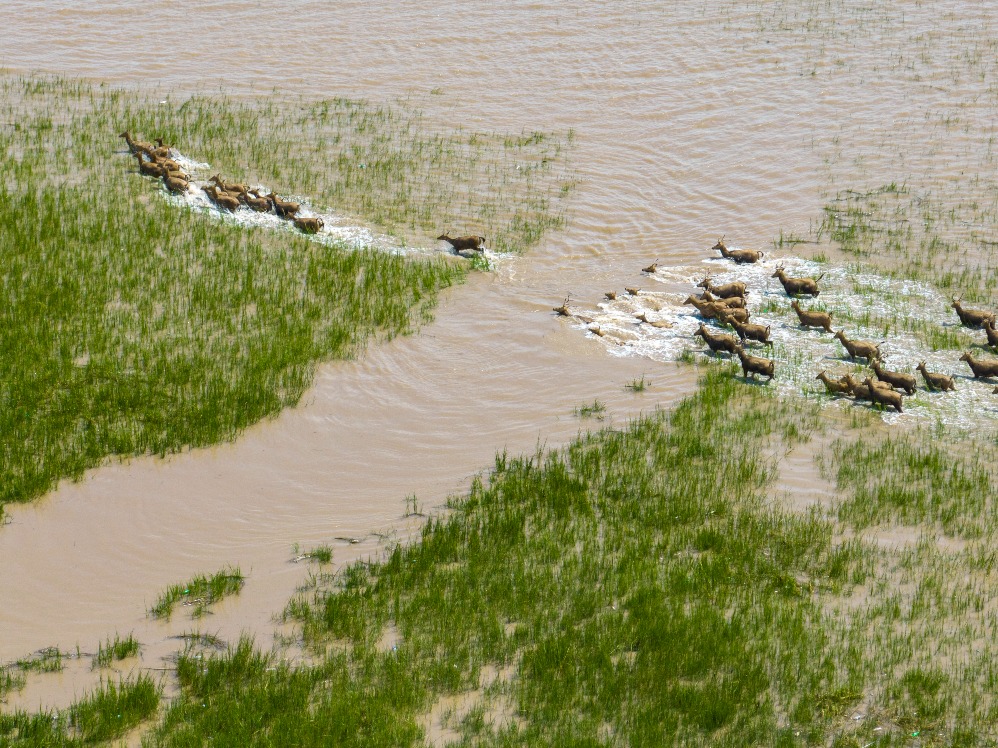
However, conservation in captivity is not enough. Reintroduction into the wild and restoring the wild population is the ultimate goal.
In 1998, the fences of the Shishou Milu National Nature Reserve (石首麋鹿自然保護區) in Hubei were destroyed by floods, and a few milu deer swam across the Yangtze River and made their home in east Dongting Lake (洞庭湖), forming a naturally feral population since then.
Meanwhile, the Dafeng Milu National Nature Reserve (大豐麋鹿自然保護區) in Jiangsu conducted several rewilding experiments, all of which achieved good results.
From population rejuvenation, to ex-situ conservation, and then to rewilding and release, the conservation of milu deer has completed a "three-step" process. Today, the number of milu deer in China has grown to 15,000, with six wild populations accounting for over 6,000 individuals, forming the world's largest wild milu deer population.
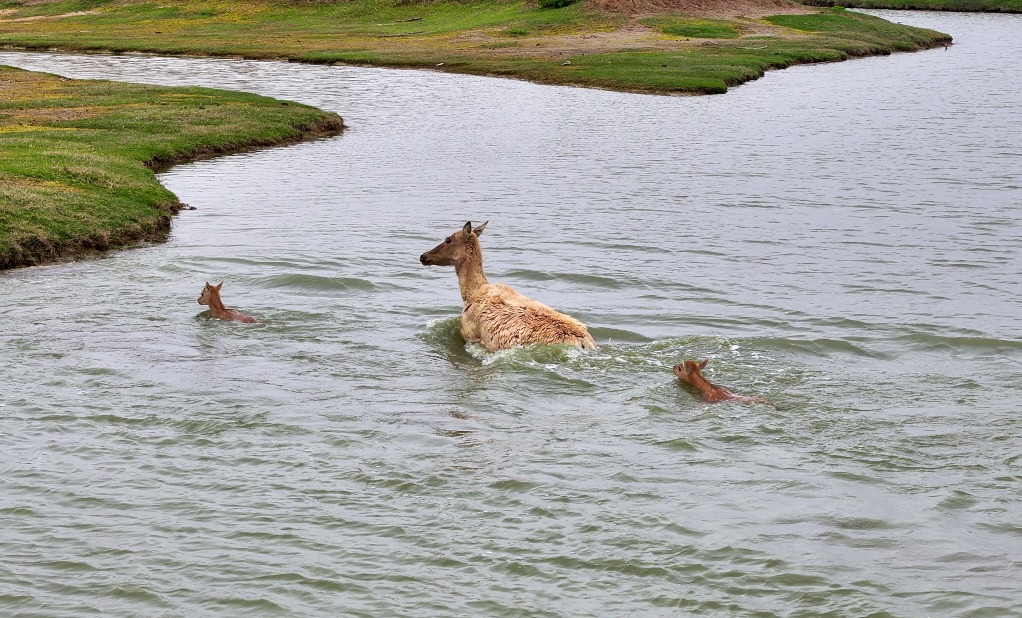
From "Père David's Deer" to "Milu"
The conservation of milu deer, of course, also relies on the help of high technology.
First is comprehensive observation and monitoring. From telescopes and infrared cameras to drones and BeiDou satellite positioning collars, monitoring equipment has become increasingly advanced and multi-dimensional over the years.
For example, the Shishou Milu National Nature Reserve has established a comprehensive data monitoring system, using drones for regular patrols to collect data on the herd's activity habits, growth cycles, and calving periods, allowing for timely understanding of their growth status.
The system can also monitor the entire environment, detecting immediately when a person or animal climbs the fence, and sending a message to the information centre for staff to handle immediately.
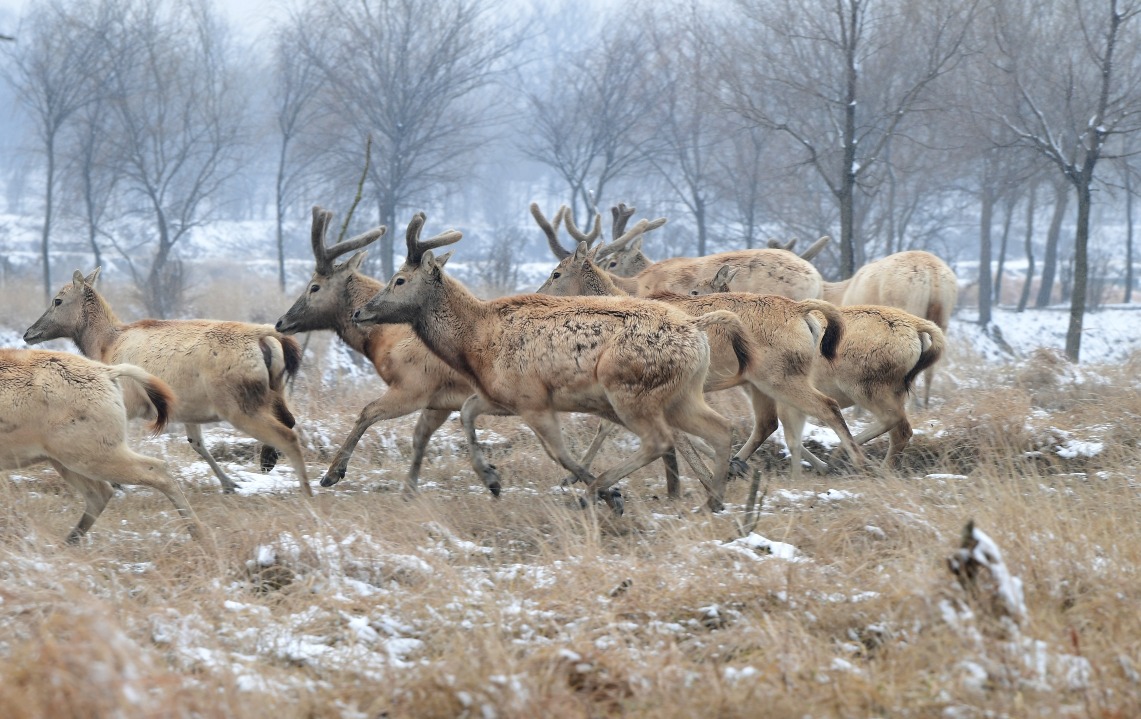
Secondly, a gene bank was established for milu deer. As mentioned earlier, the current milu deer are all descendants of those reintroduced from the UK, so they are closely related and have low genetic diversity. Biological samples in the gene bank can help improve this issue.
For instance, the Beijing Milu Ecological Research Centre is equipped with ultra-low temperature freezers at minus 80 degrees Celsius to store samples of blood, tissue, and cells from milu deer in various protected areas across the country.
These genetic resources form a rich gene bank for milu deer, serving as an important basis for studying genetic structure and disease prevention and control. Staff can also use the data to pair and breed individual milu deer from different geographical locations with more distant kinship to improve the health of the population.

From roaming across the vast lands of China to local extinction, and from sporadic reintroductions to establishing the world's largest wild population, the milu deer was once known to the world as "Père David’s deer". Today, however, scientific literature globally adopts the Hanyu Pinyin "Milu" as the standard nomenclature.
The legendary rebirth of this ancient mythical beast stands as a testament to China's determination and capacity for action in environmental improvement and wildlife conservation.
Read more: How did the nearly extinct Asian Elephant experience a "baby boom"?