Published : 2025-12-18
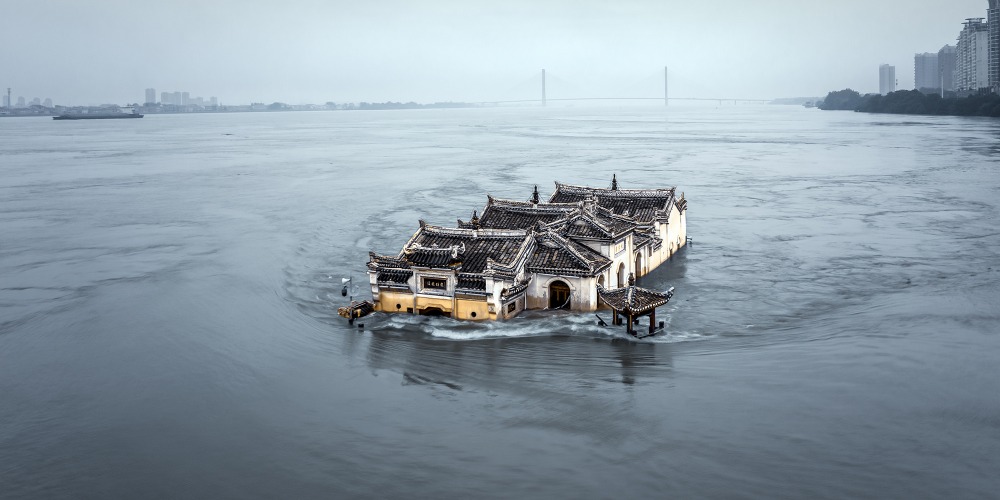
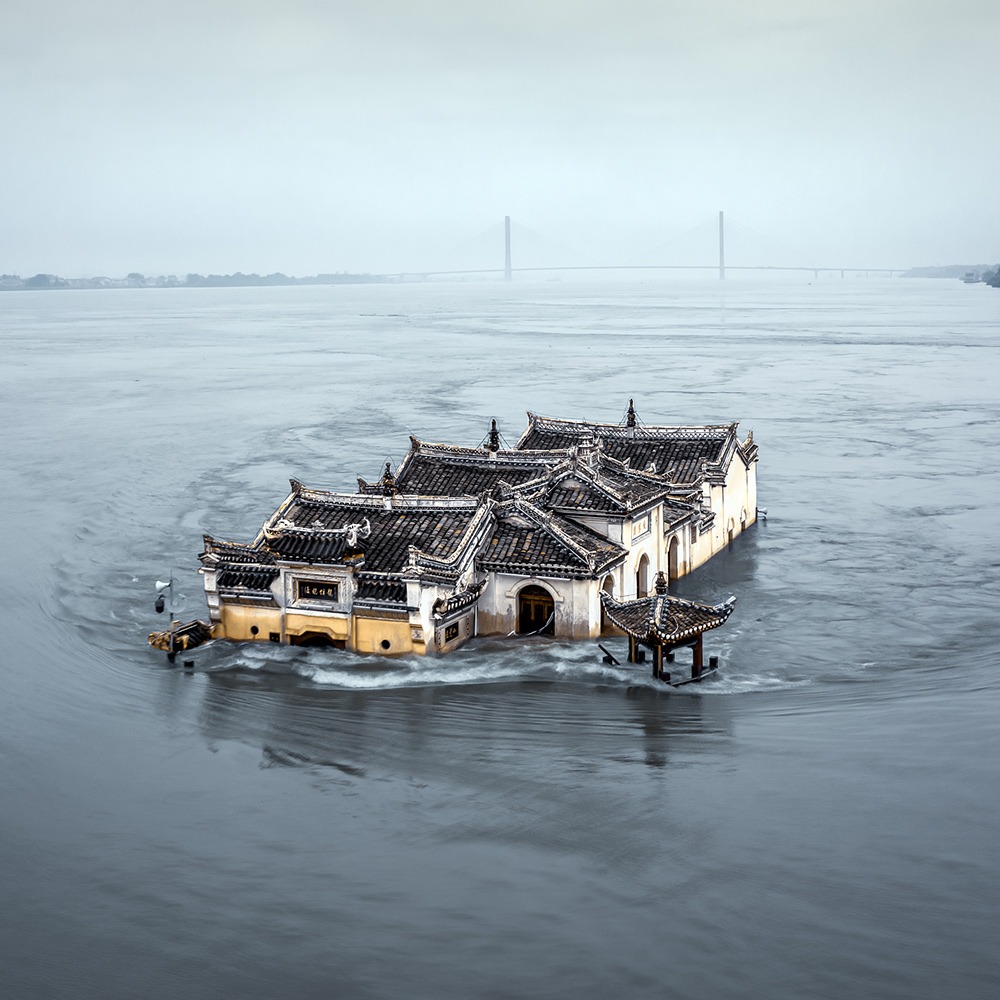
In the middle of the Yangtze River in Ezhou, Hubei, stands a remarkable structure—the Guanyin Pavilion.
For 700 years, it has endured countless floods, yet remains unscathed, earning the title of "the First Pavilion along the Long River."
What is the secret behind its unyielding endurance through the centuries?
Is there more than just Guanyin inside the Guanyin Pavilion?
Guanyin Pavilion is situated in the middle of the Yangtze River, just outside Xiaodongmen in Ezhou City. It is constructed on top of a massive rock known as "Longpanji" (Dragon Coiling Reef).
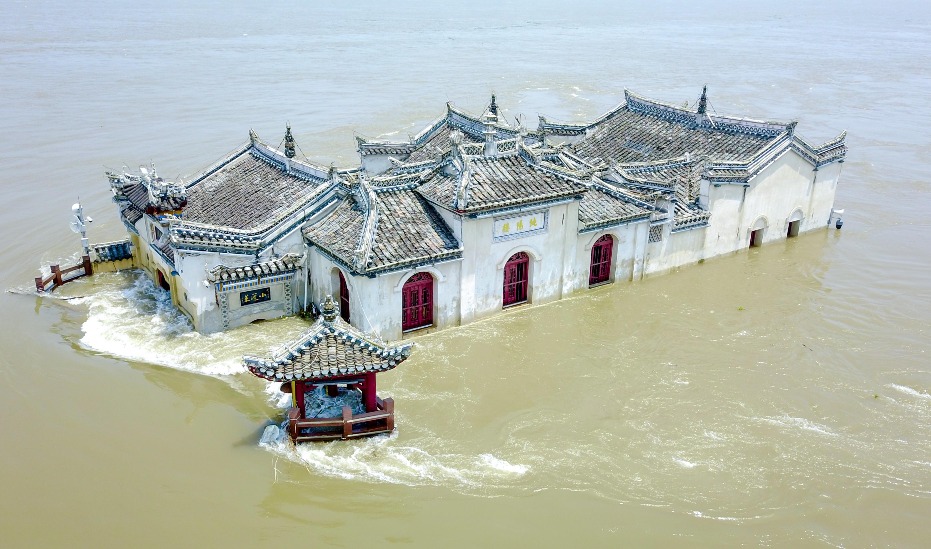
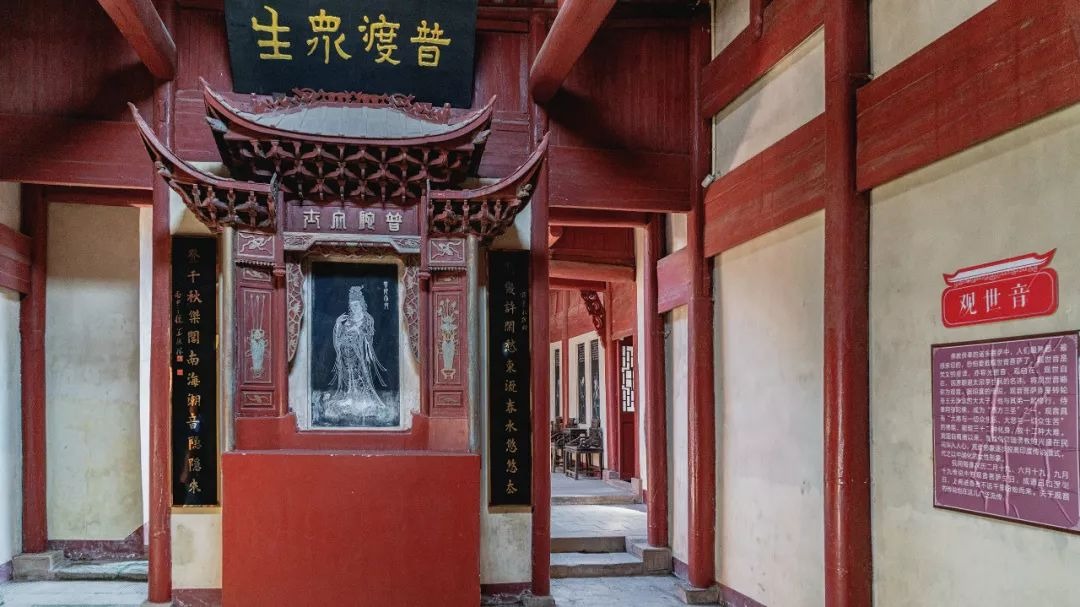
The entire structure measures 24 metres in length, 10 metres in width and 14 metres in height. Inside the pavilion are a kiosk, three halls and an upper storey, specifically the Guanlan Kiosk, the Hall of Dongfang Shuo, the Guanyin Hall, the Laojun Hall, and on the upper level, the Chunyang Chamber.
According to historical records such as the Wuchang County Annals, the pavilion was originally known as the Longpanji Temple and dates back to the Song Dynasty.
It is said to have been built to control floods and ward off disasters. The current structure was reconstructed during the Yuan Dynasty and has stood for over 700 years.
During the rainy season, the Yangtze River basin frequently floods.
For hundreds of years, this ancient building has been submerged by floods countless times, yet it still stands firm today. The main structure of the building has remained well-preserved and when the floodwaters recede, it reappears as if from nowhere, which is astonishing.
How does Guanyin Pavilion defy torrential floods?
In ancient times, when technology was not advanced, how could the Guanyin Pavilion built by the ancients withstand the torrents? What is the profound mystery behind it?
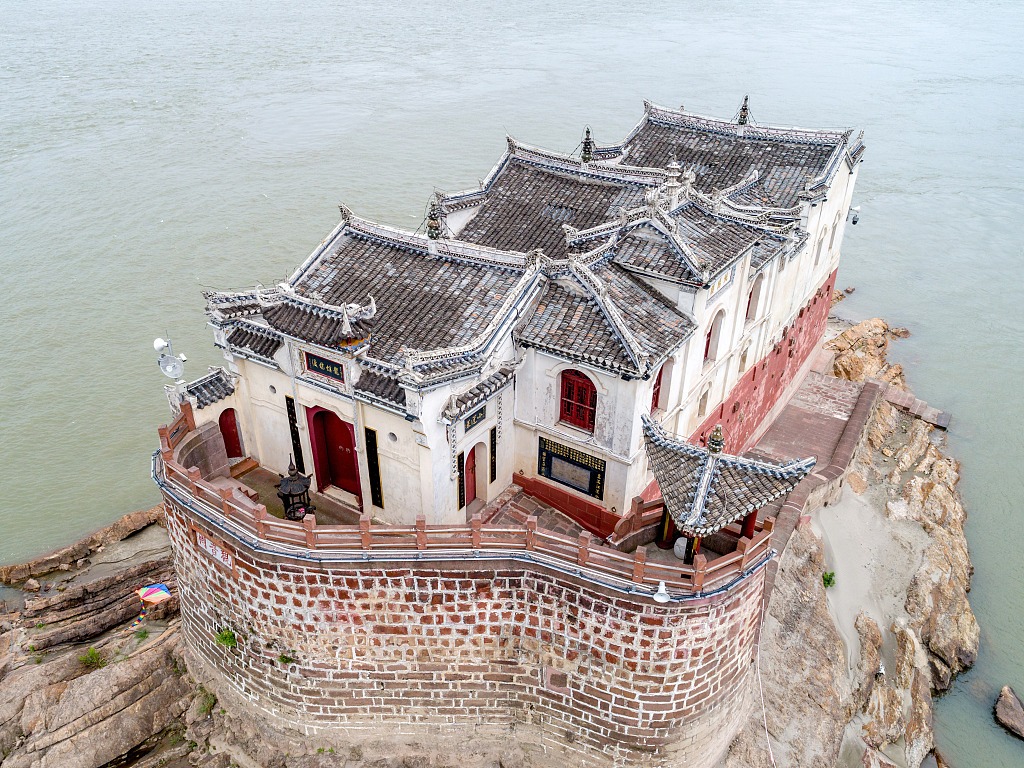
It turns out this is related to the unique terrain and the ingenious structural design.
The main structure of Guanyin Pavilion is built with blue bricks, which are resistant to water immersion. Its foundation, with a thickness of over one metre, is constructed from layered stone slabs.
On the western side, a curved stone wall integrates the entire building with the base reef, forming a ship’s hull-like structure.
This design not only helps cushion the impact of floodwaters and enhances the building's resistance to flooding, but also allows water to flow past efficiently, facilitating drainage.
Also, on a corner of the western wall of the Guanyin Pavilion, there is an "L"-shaped drainage hole, approximately 30 centimetres long and 20 centimetres wide.
It is located at the lowest point of the entire building, allowing floodwater to drain quickly through the opening when the tide recedes, thus reducing damage to the building.
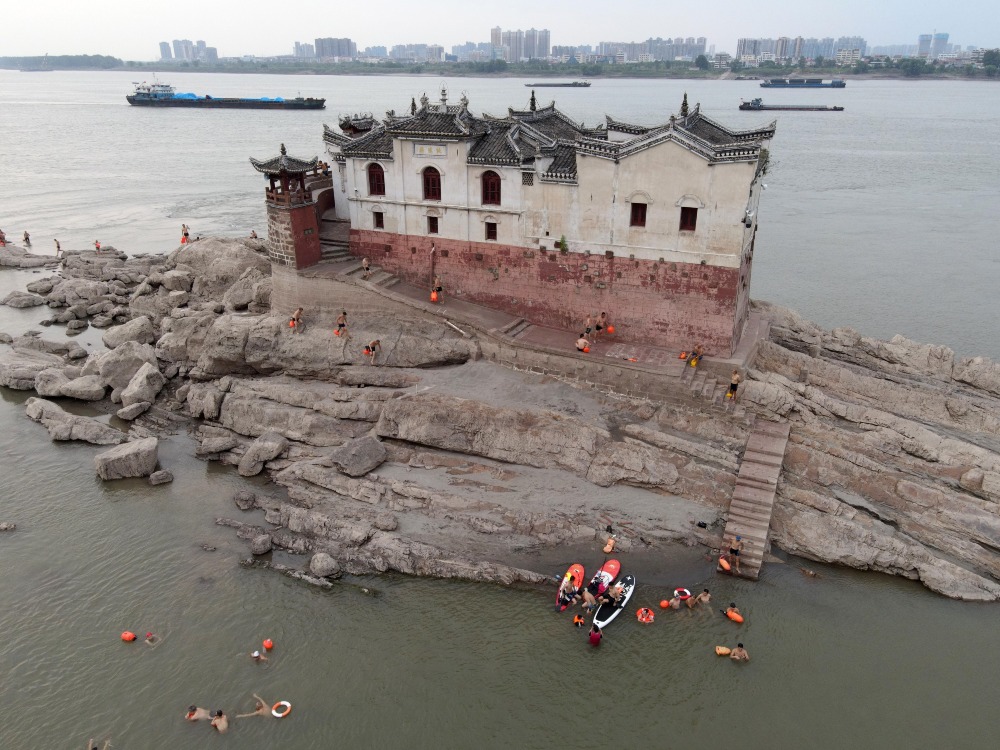
However, the Guanyin Pavilion's ability to stand firm for so many years is also inseparable from the protection of the heritage department.
After the great Yangtze River flood of 1998, the Guanyin Pavilion underwent a full-scale renovation.
In 2006, the Guanyin Pavilion was listed as a Major National Historical and Cultural Site.
For conservation reasons, the local cultural heritage bureau suspended public access to the pavilion, so citizens admire this magical building from the outside.
Read more: Suzhou Chongyuan Temple: "Buddha's kingdom on water"