Published : 2024-04-19
What needs to be done for the construction of the Guangdong-Hong Kong-Macao Greater Bay Area (GBA) in South China?
In Outline Development Plan for the Guangdong-Hong Kong-Macao Greater Bay Area (the Development Plan), mentions seven major tasks.
This series examines achievements across seven areas, spotlighting infrastructure achievements in the GBA cities in this article.
Infrastructure in GBA|Nansha Port Area, Port of Guangzhou
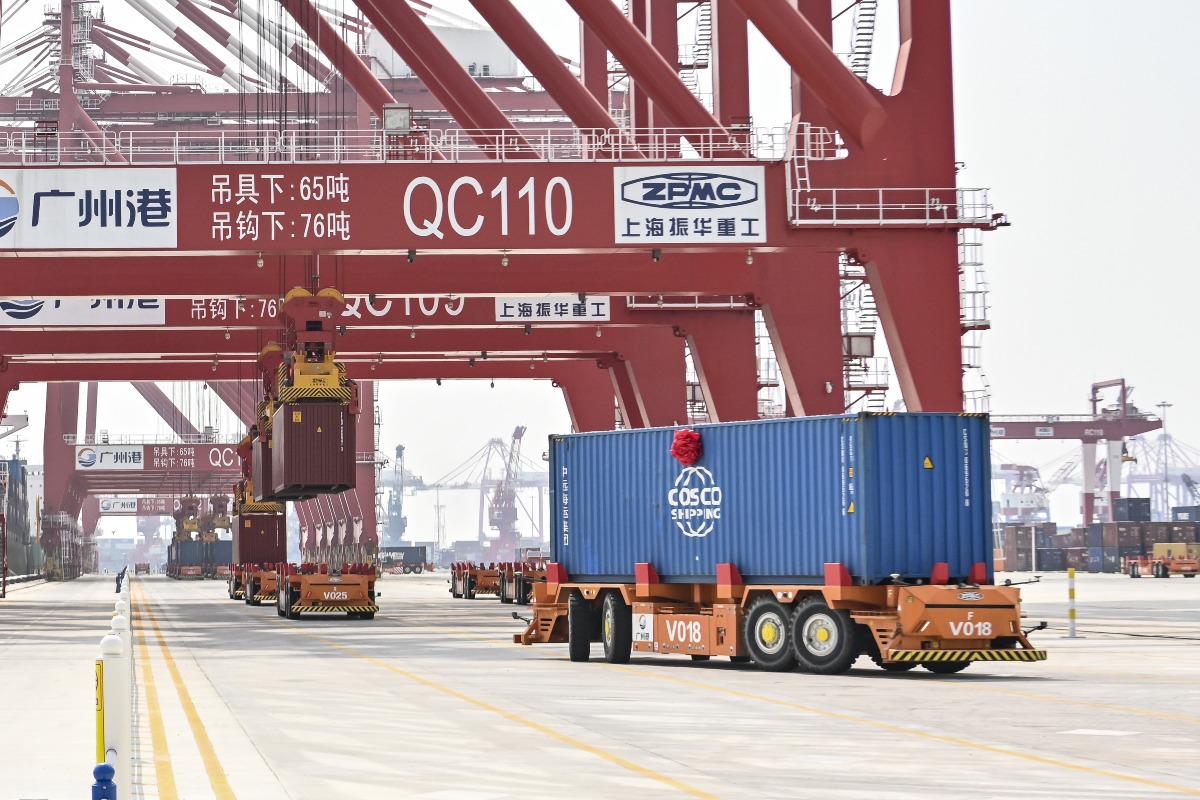
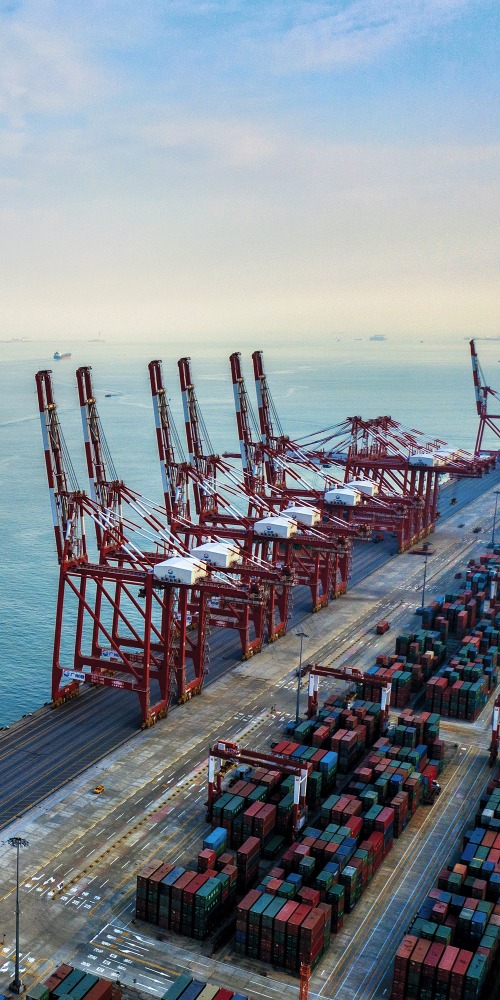
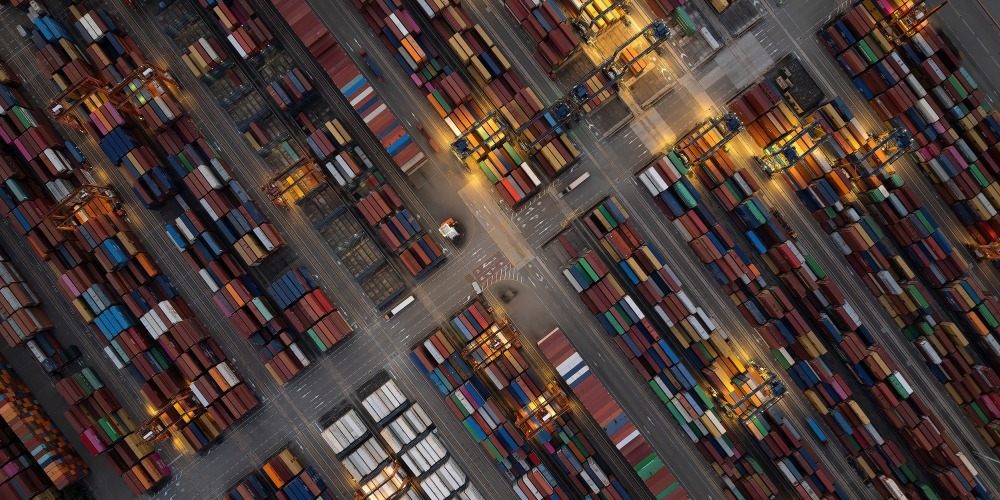
Guangzhou Nansha Phase IV, located on Longxue Island, is the GBA's first and the world's largest fully automated terminal, having commenced operations in July 2022.
By integrating advanced technologies such as the BeiDou Navigation Satellite System, 5G, and artificial intelligence, the terminal achieves full automation, reducing workforce requirements by approximately 70% compared to conventional ports.
The facility is notable for several pioneering achievements, including the world's first use of BeiDou-guided unmanned Intelligent Guided Vehicles (IGVs), the adoption of a groundbreaking automated terminal design, and the large-scale implementation of lighter, more economical single-trolley quay cranes.
The IGVs, central to operations, navigate with centimetre-level precision, enabling seamless container transport across the yard.
Since beginning trial operations, the terminal has handled 920,000 TEUs. It has also bolstered the annual capacity of Nansha Port Area to 24 million TEUs, ranking it among the world's leading single-port facilities.
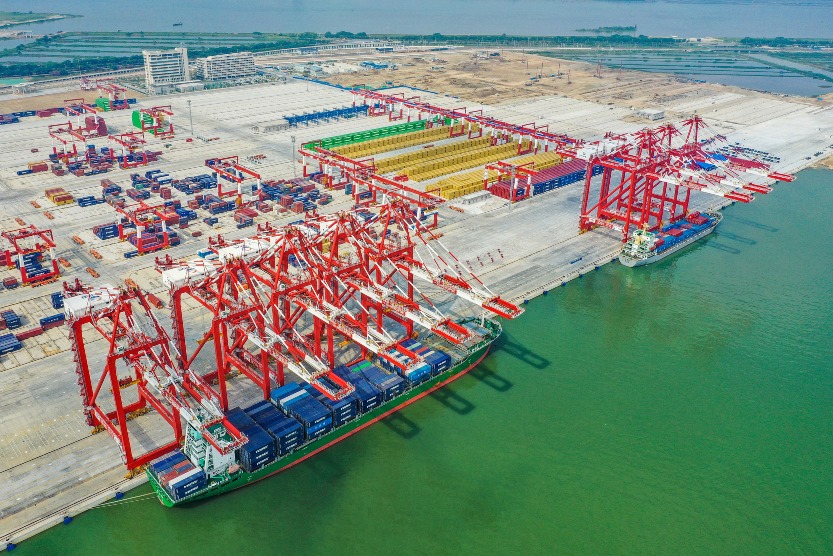
The Nansha Port automated terminal can be said to be a microcosm of port construction in the GBA.
The Development Plan proposes to "accelerate infrastructure connectivity", including enhancing the "international competitiveness of the Pearl River Delta port cluster".
The GBA has now formed a development pattern with the ports of Hong Kong, Guangzhou, and Shenzhen as the core, supported by ports such as Dongguan, Foshan, and Zhuhai.
Including Jiangmen Port, there are a total of seven major ports with a capacity of over 100 million tonnes. The international container shipping routes of the GBA port cluster cover almost all major trading ports in the world.
Cooperation between ports in the GBA has also been continuously deepening, creating a "Port Alliance" for sharing berths, container yards, and shipping routes among the various ports.
In 2023, routes such as the "Shenzhen Shekou Port-Zhanjiang Port" were successively opened, achieving full coverage of the nine Chinese Mainland cities in the GBA.
Infrastructure in GBA|Shenzhen-Zhongshan Link
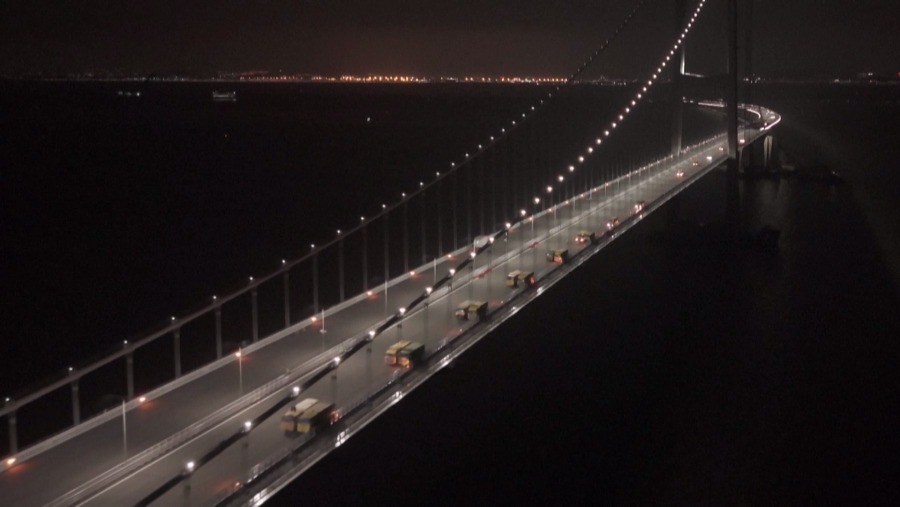
The Shenzhen-Zhongshan Link, connecting Shenzhen and Zhongshan, is another mega project in the GBA following the Hong Kong-Zhuhai-Macao Bridge, and is expected to open to traffic in June 2024.
After its opening, the travel time by car from Zhongshan to Shenzhen will be drastically reduced from 2 hours to 20 minutes, making travel between the east and west banks of the Pearl River Delta more convenient.
The Shenzhen-Zhongshan Link, under construction since 2016, is a 24‑kilometre world‑class cross‑sea corridor integrating bridges, islands, and a subsea tunnel.
Its main components include a 17‑km sea‑crossing bridge—featuring the Lingdingyang Bridge with a 1,666‑metre main span—and a 6.8‑km immersed tube tunnel connected by two artificial islands.
The project has set several world records due to its scale and engineering complexity. These include the world’s widest immersed tube tunnel, the highest and longest‑span offshore suspension bridge (Lingdingyang Bridge), and the largest offshore anchorage system for securing suspension‑bridge cables.
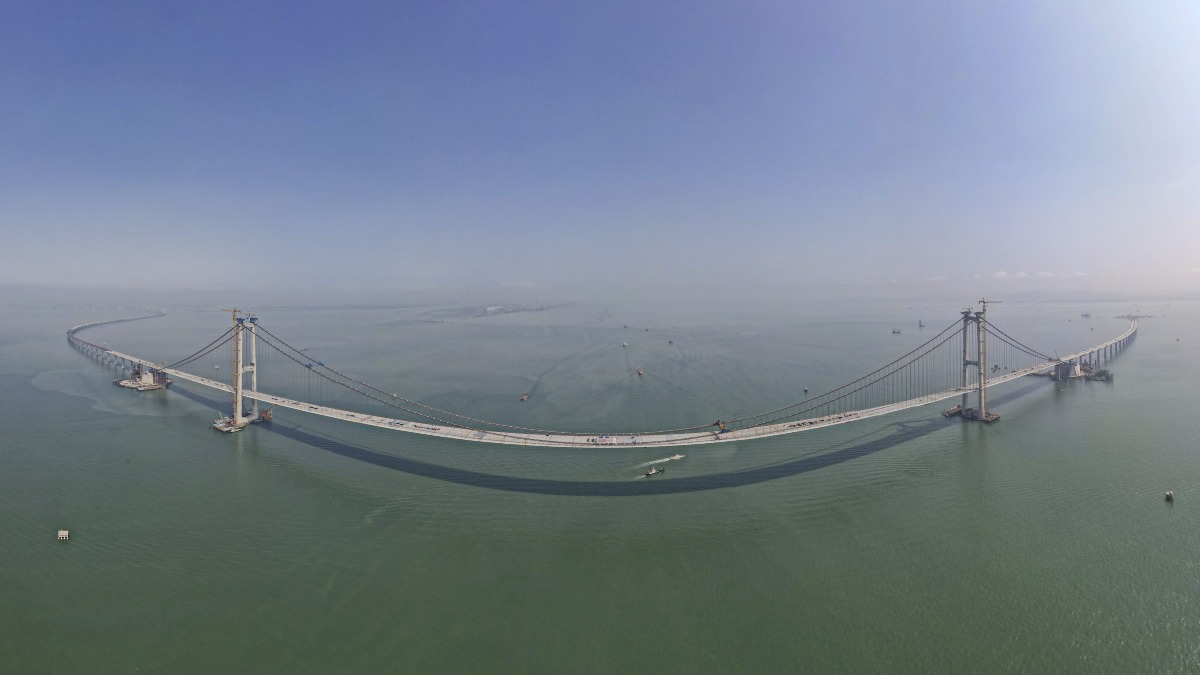
The Development Plan proposes, with a focus on connecting the Chinese Mainland with Hong Kong and Macao, as well as the east and west banks of the Pearl River Estuary, to build an intercity rapid transport network with high-speed rail, intercity railways, and high-grade highways as its backbone, striving to achieve a one-hour travel circle among the major cities of the Greater Bay Area.
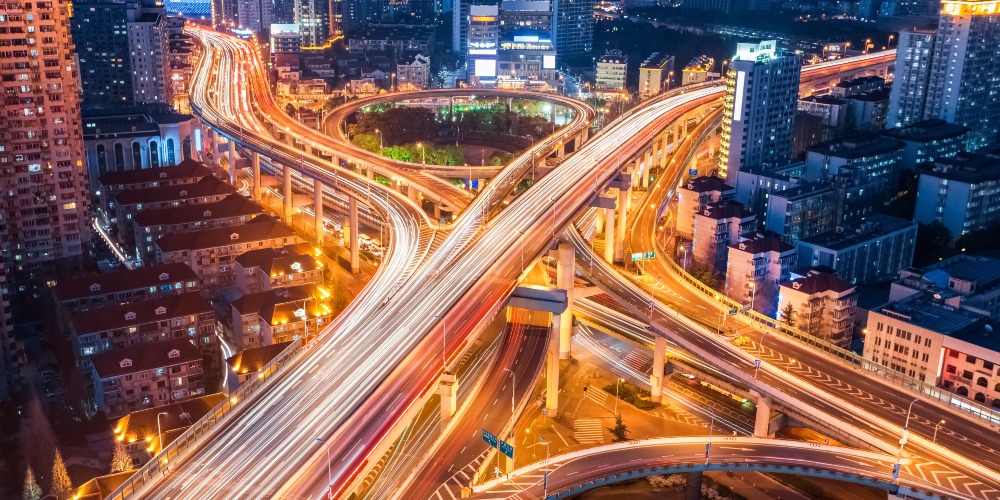
Over the past five years, the transport network in the GBA has been steadily enhanced. By the end of 2023, the total road mileage open to traffic in the region reached approximately 60,000 kilometres.
Initiatives such as “Northbound Travel for Hong Kong Vehicles” and “Northbound Travel for Macao Vehicles” have been successfully implemented, while the Hong Kong-Zhuhai-Macao Bridge port has consistently set new records for both passenger and vehicle flow.
The Hong Kong Section of the Guangzhou-Shenzhen-Hong Kong Express Rail Link has been integrated into the national high-speed rail network, currently connecting to 73 stations across 16 provincial-level regions on the mainland.
New ports such as Liantang/Heung Yuen Wai, Qingmao, and the Hengqin Port have also improved clearance efficiency.
Furthermore, major projects including the Shenzhen-Zhongshan Link, the Huangmaohai Cross-Sea Bridge, and the Shiziyang Channel are progressing well, which will further accelerate connectivity and integration within the GBA.
Read more: 4 highlights to know about Shenzhen-Zhongshan Link's Western Artificial Island
Infrastructure in GBA|Guangzhou Baiyun Station
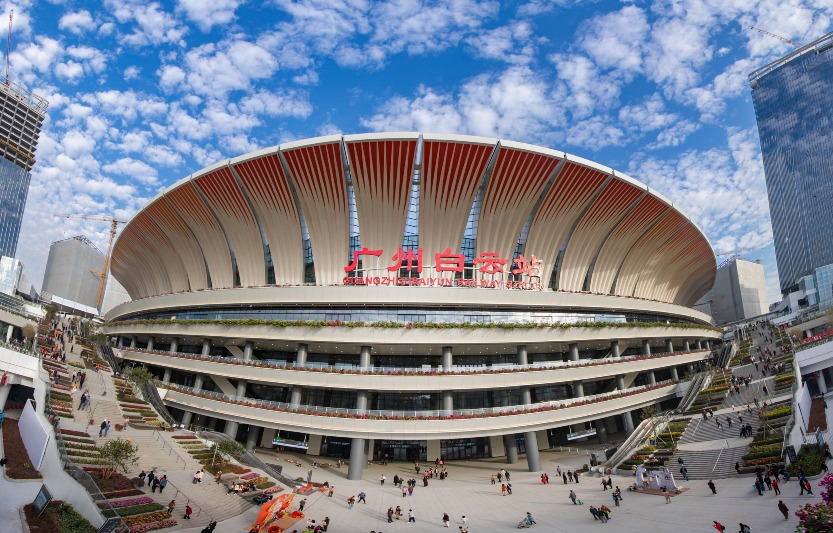
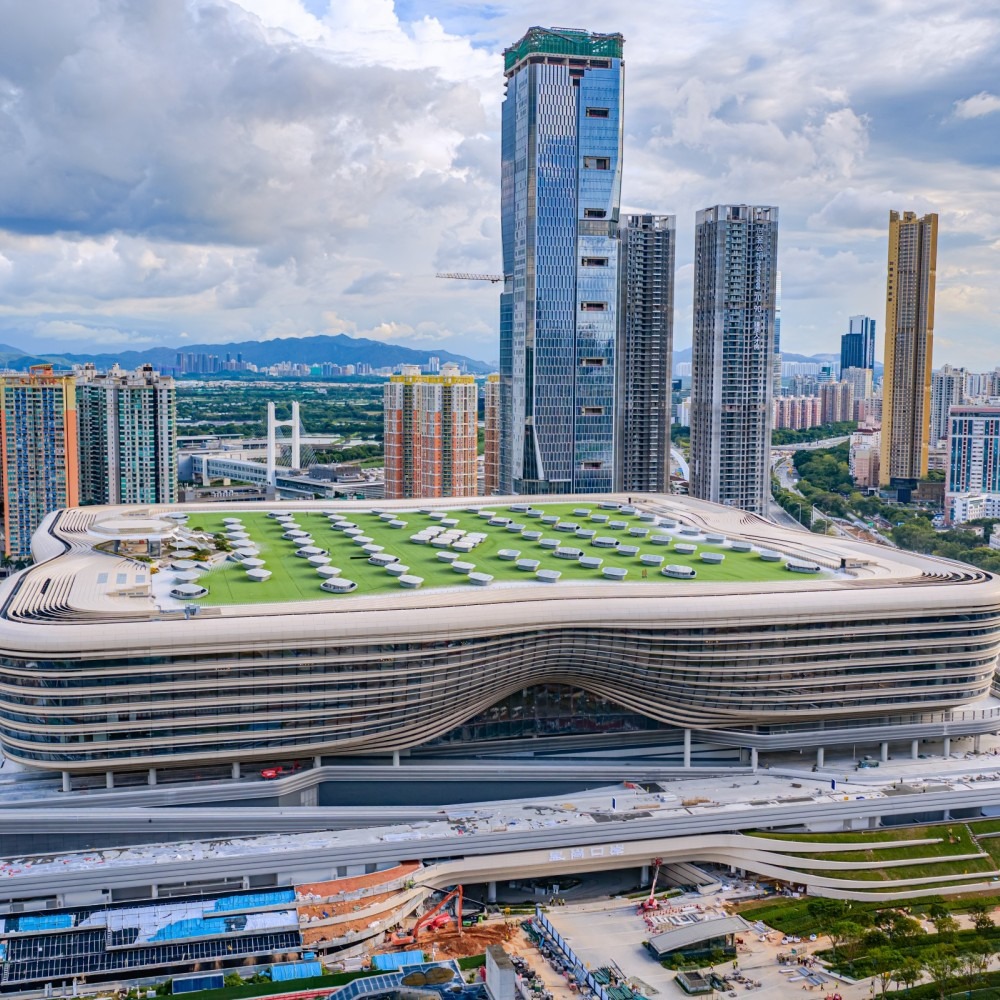
Located in Baiyun District, Guangzhou City, Guangzhou Baiyun Station is acclaimed as one of Asia's largest comprehensive railway hub stations, with an area equivalent to four Guangzhou South Railway Stations, and is positioned as a "composite passenger station for conventional, high-speed, and intercity rail".
It primarily serves conventional-speed railways, supplemented by high-speed and intercity rail, and also has integrated functions such as hotels, apartments, offices, and shopping centres.
Baiyun Station commenced operations in December 2023. It features three main lines, 21 tracks and 21 passenger platforms, connecting multiple key rail corridors including the Beijing-Guangzhou, Guangzhou-Zhanjiang, Guangzhou-Meizhou-Shantou, Guangzhou-Maoming, Guangzhou-Shantou, and Shantou-Shanwei High-Speed Railways. This further strengthens and expands the GBA's rail transit network.
The Development Plan proposes to improve the comprehensive transport corridors of the GBA through eastern, western, and northern Guangdong to surrounding provincial administrative regions, and to advance the construction of railway projects such as Ganzhou-Shenzhen and Guangzhou-Shantou.
As of 2023, the operational railway mileage in the GBA exceeded 2,700 kilometres, and the operational urban rail mileage exceeded 1,300 kilometres.
It is expected that by 2035, the operational and under-construction railway mileage in the GBA will reach 5,700 kilometres, covering all cities at and above the county level. The "GBA on the Rail" is accelerating its formation.
Read more: Why do high-speed trains in China turn on headlights in daylight?
Infrastructure in GBA|Hong Kong Airport
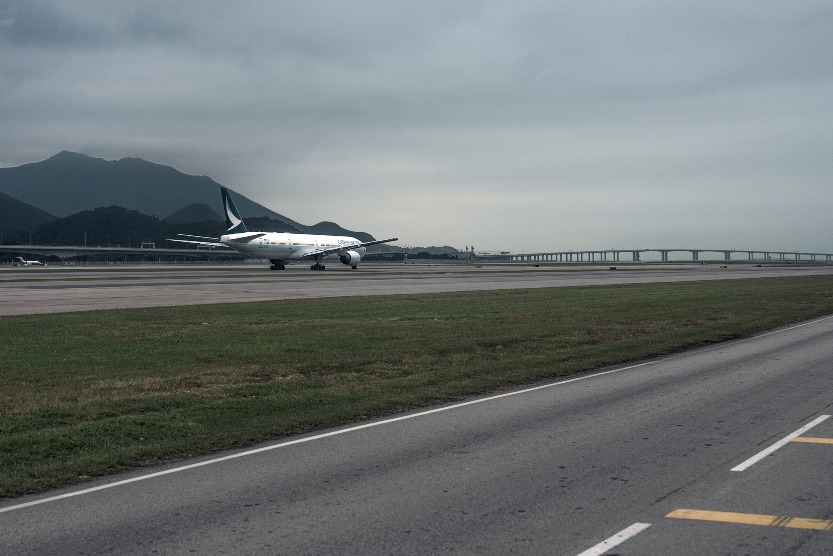
Hong Kong International Airport is one of the busiest airports in the world, with its annual passenger traffic reaching 71.5 million in 2019 before the pandemic.
The Development Plan proposes to "consolidate and enhance Hong Kong’s status as an international aviation hub… elevate the competitiveness of Guangzhou and Shenzhen airports as international hubs, strengthen the functions of airports in Macao and Zhuhai, and promote differentiated development and positive interaction among the airports in the GBA."
The third runway of Hong Kong Airport was commissioned in November 2022. The 3,800-metre-long runway was constructed on reclaimed land, with the total reclamation area equivalent to approximately 34 Victoria Parks, reflecting the immense scale of the project.
According to data from the Airport Authority, as of March 2024, Hong Kong International Airport recorded 29,840 civil aircraft movements, the highest since February 2020 at the onset of the pandemic.
Cargo throughput reached 4.25 million metric tonnes, also a post-pandemic high. In the "2024 World's Best Airports" ranking, Hong Kong International Airport was placed 11th, making it the highest-ranked airport in China.
The GBA is currently served by seven transport airports with a total of 11 runways.
These include three 4F-class international aviation hubs: Hong Kong International Airport, Guangzhou Baiyun International Airport, and Shenzhen Bao'an International Airport.
They are supported by two trunk airports—Macao International Airport and Zhuhai Jinwan Airport—along with two regional airports: Foshan Shadi Airport and Huizhou Pingtan Airport.
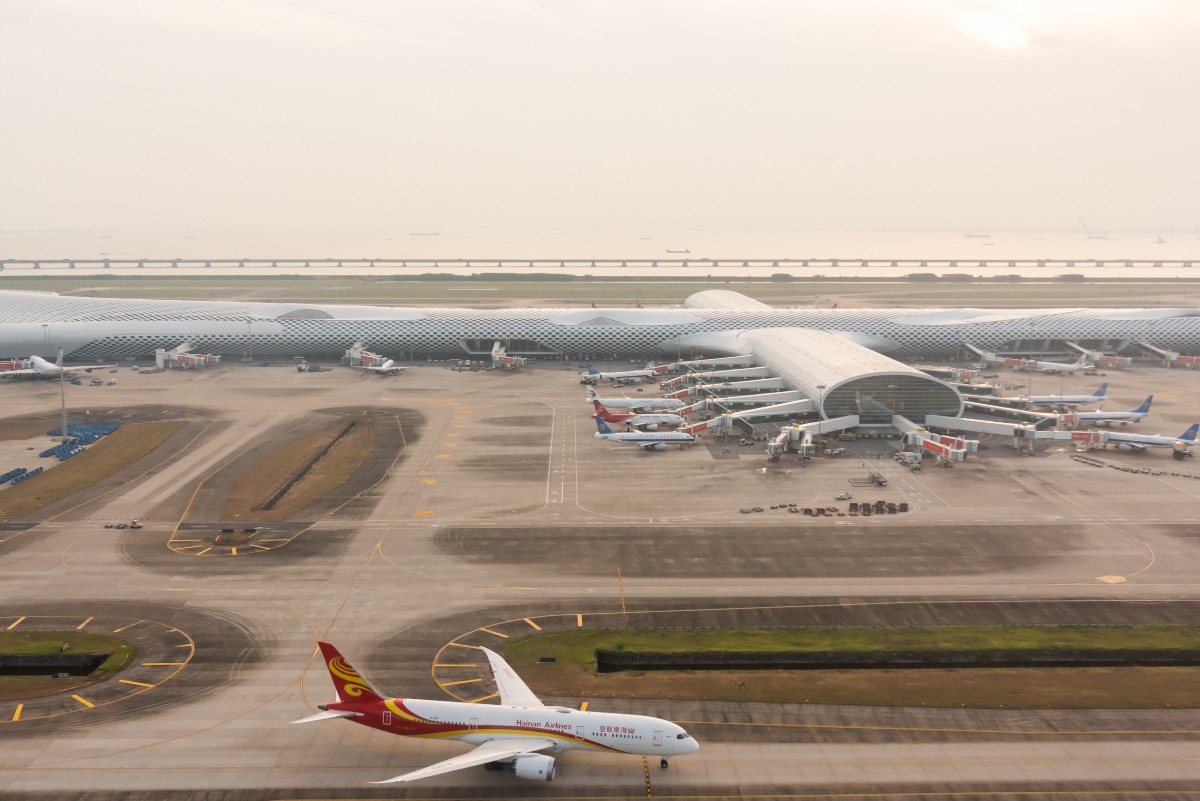
An additional 4F-class airport, the Pearl River Delta Hub (Guangzhou New) Airport, is currently under construction. Located at the border of Foshan's Gaoming District and Zhaoqing's Gaoyao District, it will be managed by Baiyun Airport and serve Guangzhou, Foshan, and the wider Pearl River Delta region.
According to forecasts by IATA Consulting, air travel demand in the GBA is expected to reach 387 million passenger trips and 20 million tonnes of cargo by 2030—roughly double the handling capacity recorded in 2020.
Read more: Shenzhen Airport was once renamed because of pronunciation?