
Published : 2024-04-24
What needs to be done for the construction of the Guangdong-Hong Kong-Macao Greater Bay Area (GBA) in South China?
In Outline Development Plan for the Guangdong-Hong Kong-Macao Greater Bay Area (the Development Plan), mentions seven major tasks.
This series examines achievements across seven areas, spotlighting infrastructure achievements in the GBA cities in this article.
Infrastructure in GBA|Guangzhou Gaoxinsha Reservoir
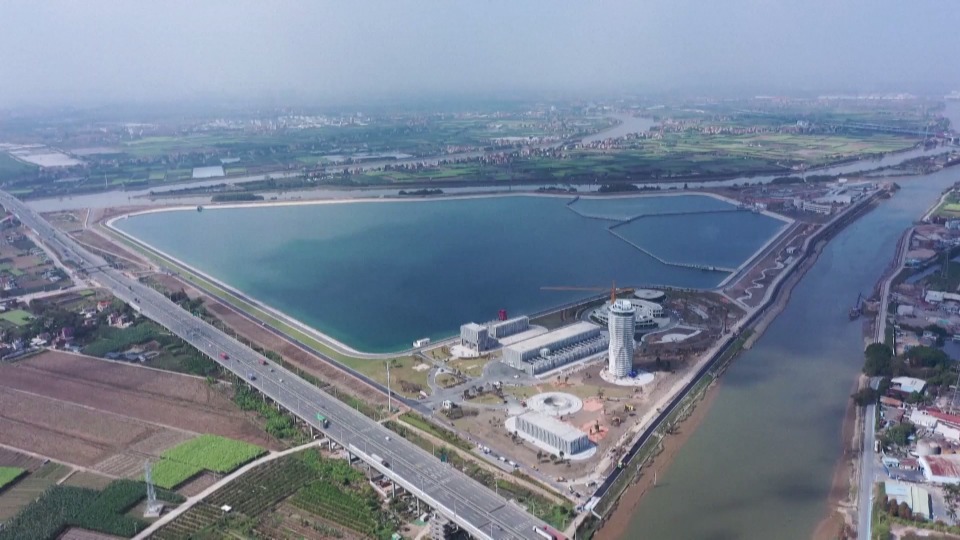
The Gaoxinsha Reservoir, situated on Gaoxinsha Island in Guangzhou’s Nansha District, is currently the largest reservoir in the area.
It forms part of the Nansha section of the Pearl River Delta Water Resources Allocation Project, commonly referred to as the West-to-East Water Diversion scheme, and is the only newly constructed plain-type regulating reservoir along the entire route.
The West-to-East Water Diversion project extends from Liyuzhou on the West River in Foshan to the Gongming Reservoir in Shenzhen, transferring water from the west to the east of the Pearl River Delta.
It represents the largest investment, longest pipeline, and most extensive service coverage of any water diversion project in the GBA.
The water conveyance tunnels are buried 40–60 metres underground, passing beneath the densely populated urban centres of the region.
This engineering achievement has set three world records: the highest-pressure shield tunnel for water conveyance, the longest prestressed lining water conveyance tunnel, and the largest-capacity long-distance pressurised water transfer system.
The East River has long been a crucial water source for the socio-economic development of the Pearl River Delta.
However, its total water resources account for only 18% of the province’s total, while its utilisation rate has reached 38.3%—approaching the internationally recognised warning threshold of 40%. Water quality concerns further underscore the need to secure additional water sources for the region.
The Development Plan calls for "accelerating the Pearl River Delta Water Resources Allocation Project and the construction of the fourth water pipeline to Macao, to ensure water supply security across the Pearl River Delta, Hong Kong and Macao."
Officially commissioned in January 2024, the West-to-East Water Diversion Project has now entered its initial operational phase. With an annual designed water supply capacity of 1.708 billion cubic metres, it is expected to serve over 32 million people, significantly strengthening regional water security and optimising resource distribution.
The project will end the reliance on single water sources in Guangzhou’s Nansha District, Shenzhen and Dongguan, while also providing backup supply for Hong Kong, Guangzhou’s Panyu District, Foshan’s Shunde District and other areas.
Infrastructure in GBA|Guangzhou International Bio Island
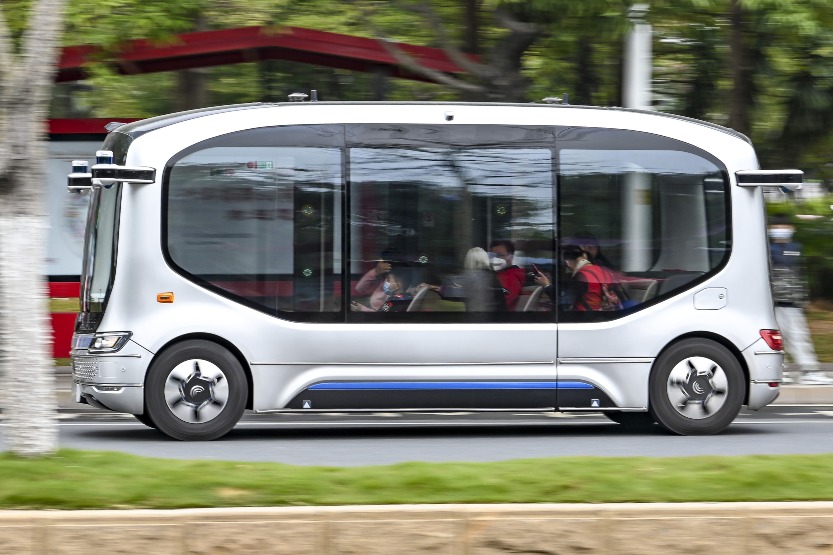
Guangzhou International Bio Island showcases various driverless applications in daily use.
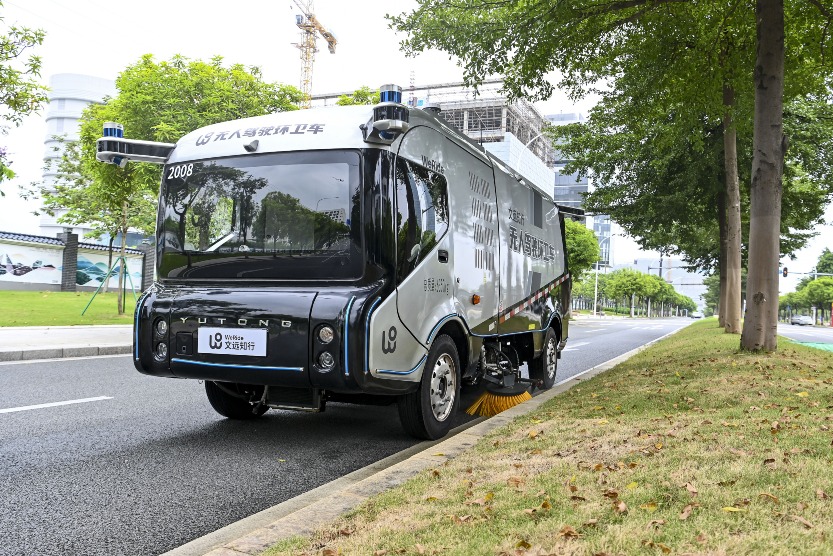
Driverless minibuses transport passengers to key locations including metro stations, parks, and hotels, while autonomous sanitation vehicles conduct scheduled street cleaning and spraying tasks, allowing residents to experience a smart lifestyle enabled by digital industry.
Autonomous driving is a key application of the digital economy. Since 2019, Guangzhou—including Bio Island—has been among the first areas in China to permit open-road testing of self-driving vehicles.
To date, test permits have been issued to 10 companies, such as WeRide, Pony.ai, and GAC Group, covering 127 intelligent connected vehicles.
The Development Plan proposes to advance the pilot demonstration of new smart cities and the construction of the Pearl River Delta National Big Data Comprehensive Pilot Zone, strengthen smart city cooperation among Guangdong, Hong Kong and Macao, and vigorously develop smart transport, smart energy, smart municipal services, and smart communities.
Guangzhou is advancing its digital economy by prioritising four key zones: the Biosafety Smart Island on Guangzhou International Bio Island, the Guangzhou Artificial Intelligence & Digital Economy Pilot Zone (Yuzhu Area), the Science City Industrial Internet Integration and Development Demonstration Zone, and the Knowledge City New-Generation Communication Network International Digital Hub.
Together, these areas are shaping a new development framework for the city's digital economy.
At the same time, Guangzhou has launched the Greater Bay Area National Big Data Comprehensive Pilot Zone.
It is actively studying the establishment of a long-term mechanism for data flow and integration among Guangdong, Hong Kong, and Macao, promoting and guiding the regularisation and standardisation of the data element market in the GBA, to facilitate the development of the digital economy in the Greater Bay Area.
In February 2022, China launched the "Eastern Data, Western Computing" project, initiating the construction of eight national computing power hub nodes and planning ten national data centre clusters.
The GBA is one of the eight computing power hubs, and the national data centre cluster within the area is located in Shaoguan.
The data centre and computing power cluster in Shaoguan in the "west" of Guangdong will undertake the real-time computing power demands from cities like Guangzhou and Shenzhen in the "east" of Guangdong, building a real-time computing power centre that radiates across South China and even the entire country.
By 2025, the Shaoguan data centre cluster will be built to a scale of 500,000 standard racks and 5 million servers, with an investment of over 50 billion RMB (approximately 62 billion Hong Kong dollars).
Read more: China's UHV project: The world-leading "Electricity Highway"
Infrastructure in GBA|One Port Access
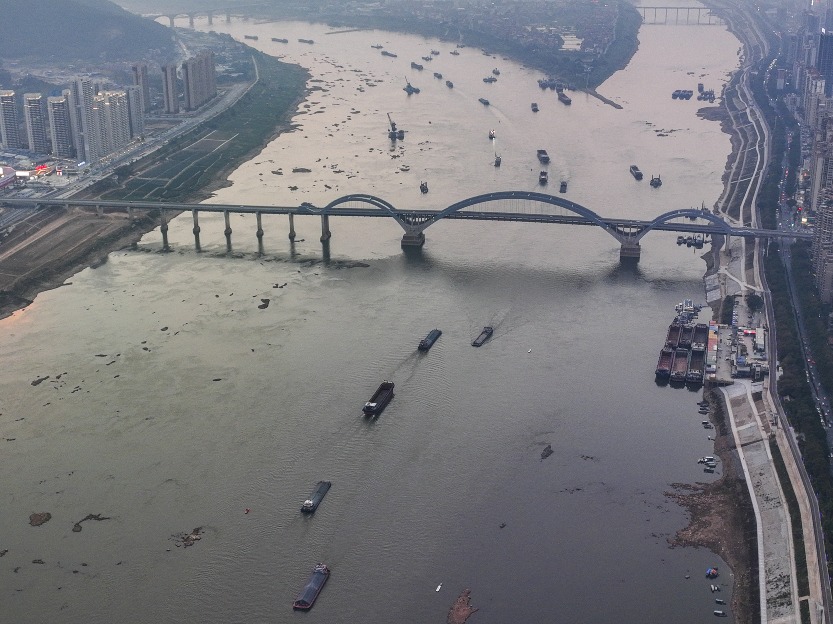
In November 2020, Guangzhou Customs and Guangzhou Port Group launched the "One Port Access in the GBA" scheme, which was officially initiated in Guangzhou.
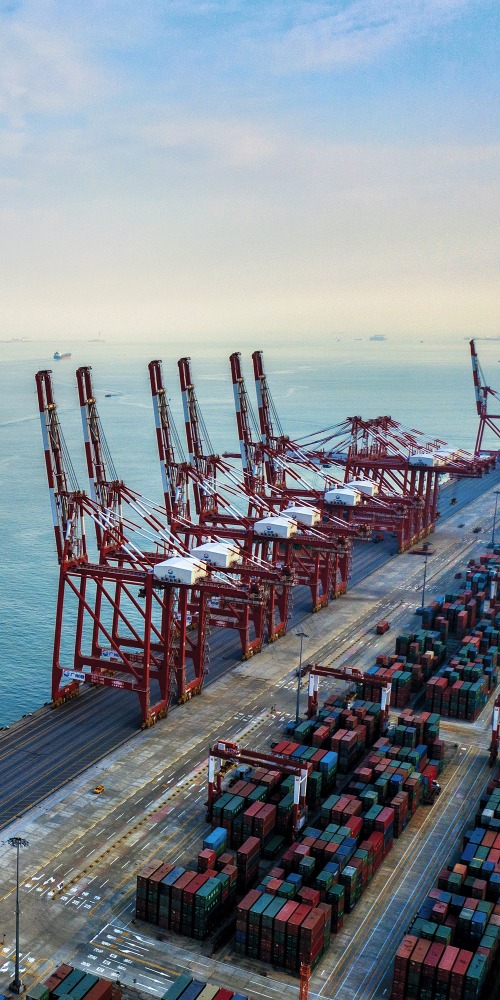
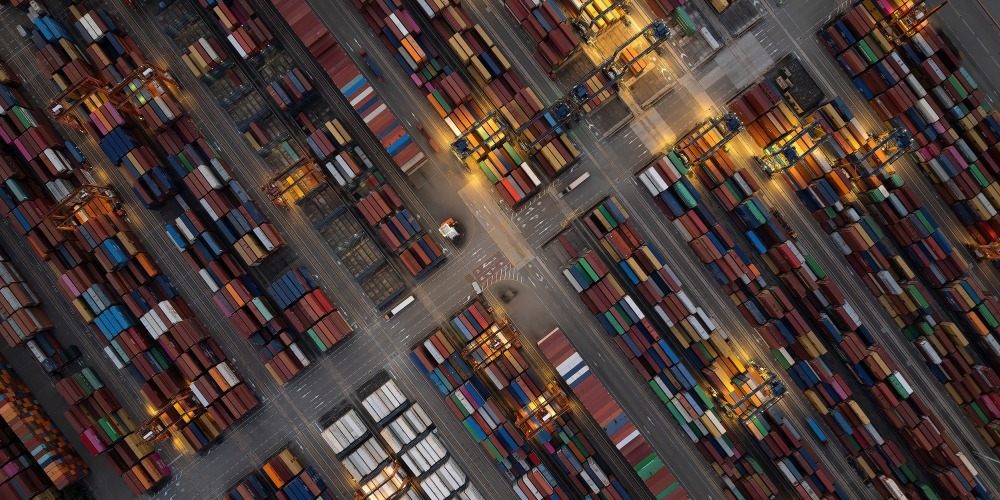
The "One Port Access in the GBA" logistics model utilises Guangzhou Port's Nansha Port Area as its hub, connecting it with various inland ports along the Pearl River. By integrating cargo data across customs districts, it creates a seamless "two ports as one" operation.
This allows goods to be cleared locally, requiring only one declaration, one inspection, and one release for the entire import or export process.
Supporting this system, transhipment via the Nansha hub operates 24/7, enabling rapid customs clearance. The model provides enterprises with an efficient one-stop logistics solution, offering reduced overall costs and faster transit times.
Building on the enhanced port connectivity outlined in the Development Plan, the "One Port Access" initiative has expanded significantly over the past five years. It now covers 17 port terminals across cities including Guangzhou, Foshan, Dongguan, and Zhongshan.
This network allows goods to be declared, inspected, and released locally, with seamless transhipment onto international liner services at Nansha Port.
By streamlining these processes, the model actively promotes greater logistical integration and connectivity within the GBA.
Read more: 7 Tasks of GBA|Path of infrastructure achievements in Greater Bay Area (Part I)