Published : 2026-07-14
In recent years, Hong Kong has had many scientific research achievements, some of which have entered daily life, while others have flown into space, participating in national space exploration missions.
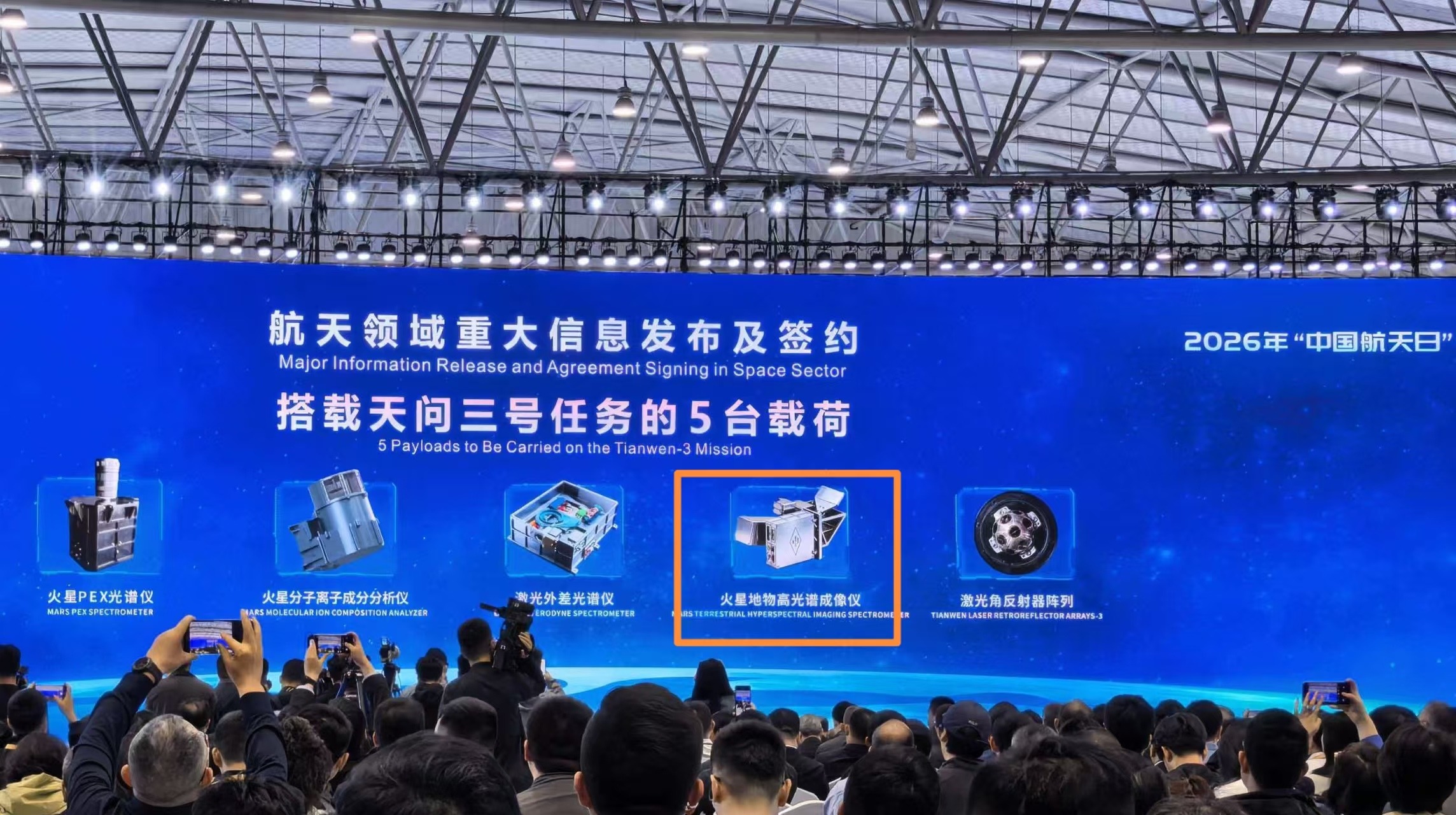
On 24 April 2026, the China National Space Administration announced that the first Mars sample-return mission, "Tianwen-3", launching in 2028, will include among its collaborative projects scientific instruments lead-developed by the University of Hong Kong and The Chinese University of Hong Kong respectively, responsible for observing important data of the Martian surface and atmosphere.
The selection of these scientific research achievements also represents Hong Kong's scientific research capabilities entering the core of the national space exploration programme.
HKU: Mars surface hyperspectral imager searching for life traces
Tianwen-3 is scheduled to launch in 2028 and return with samples to Earth in 2031. It is the China's first Mars sample return mission, with the main purpose of attempting to find answers to major scientific questions such as "Is life unique to Earth?" and "Are the biochemical mechanisms of life universal?".
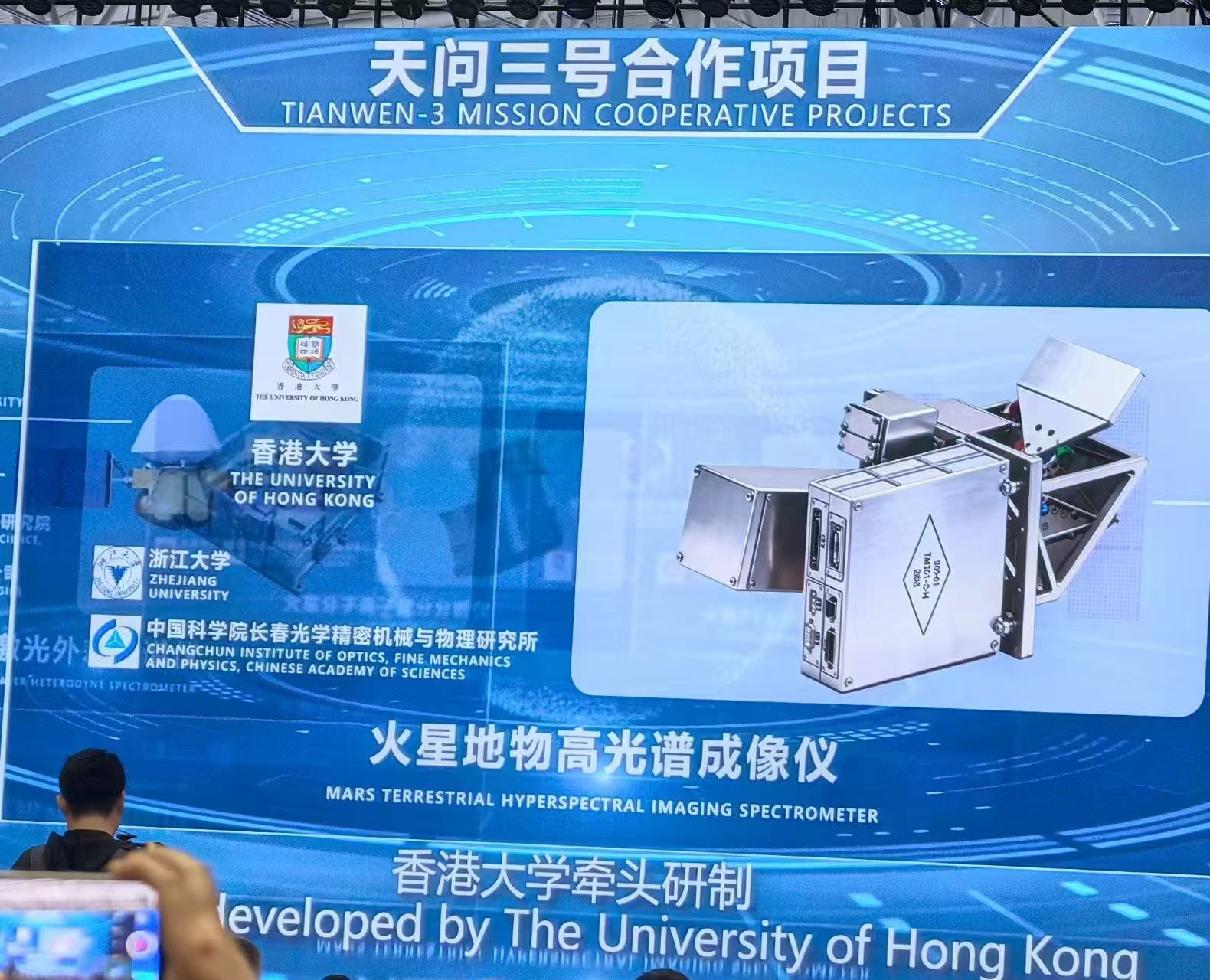
Lead-developed by the Department of Earth and Planetary Sciences at HKU, the "Mars Surface Hyperspectral Imager" has been selected to be carried on the Tianwen-3 service module. It will capture images of the Martian surface and break down each pixel into a detailed spectrum to identify different minerals and chemical compositions.
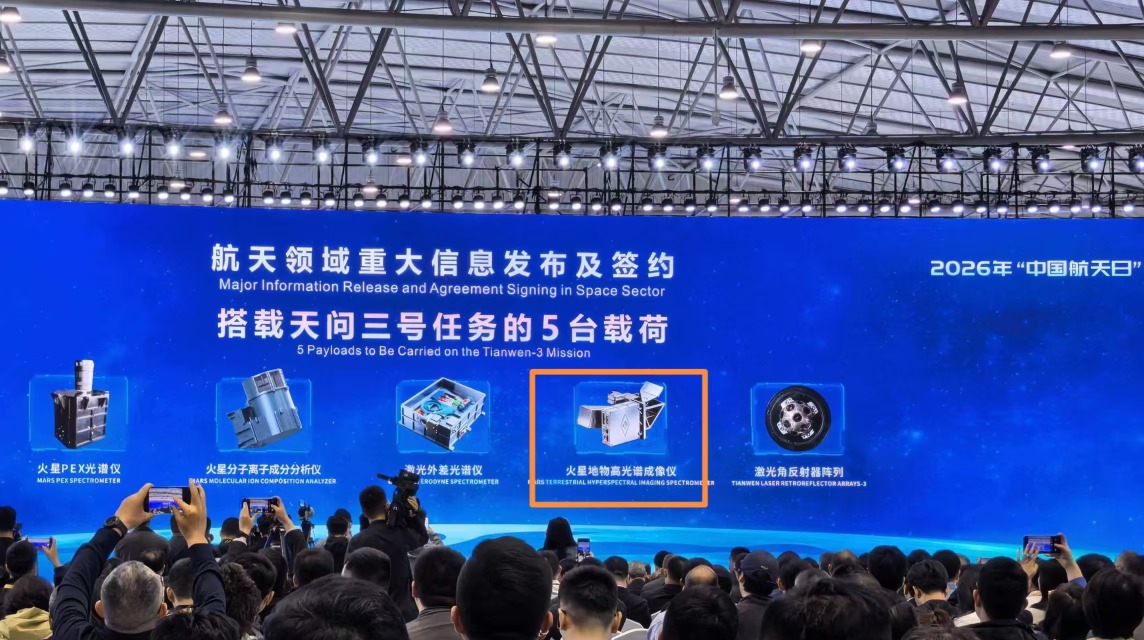
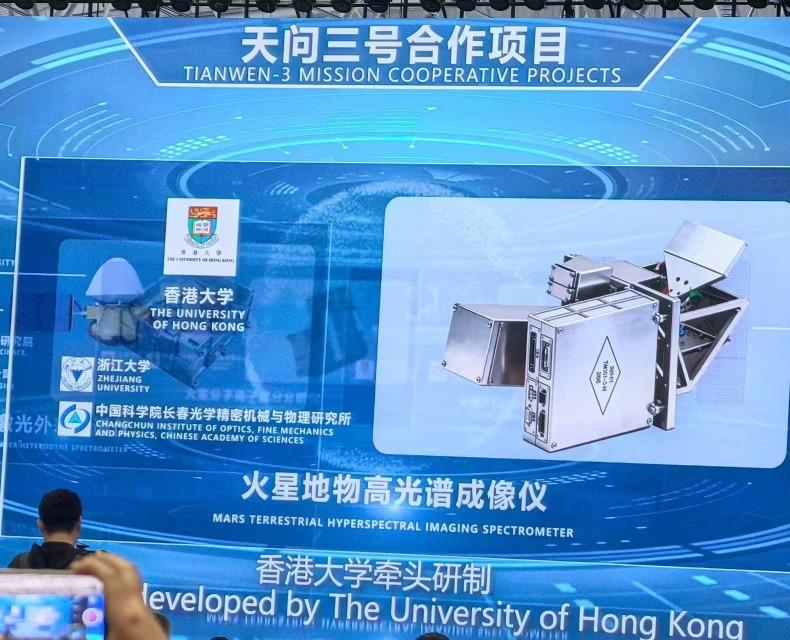

In the Tianwen-3 mission, the Mars Surface Hyperspectral Imager is responsible for three important tasks:
One, to monitor the potential formation and evolution of dust storms, thereby guiding the selection of a site with the highest scientific value for the lander to land safely.
Second, to map the detailed, high spatial resolution mineral distribution of candidate landing zones to support the final landing site selection for Tianwen-3.
Third, after the sample return mission is completed, the Mars Surface High-Resolution Hyperspectral Imager will remain in orbit and is expected to conduct continuous observations of the low-latitude regions of Mars for at least five years, tracking resource distribution and topographical changes.
Therefore, the imager developed by HKU is not for a one-off mission, but will become an important tool for future Martian exploration and resource assessment.
Read more: Tianwen-3 to Launch in 2028 to Bring Back Martian Soil
CUHK: Laser heterodyne spectrometer to detect water and wind on Mars
Corresponding to HKU's responsibility for "observing the surface", the Laser Heterodyne Spectrometer, developed by a team led by CUHK in collaboration with the Hefei Institutes of Physical Science, Chinese Academy of Sciences, and the Macao University of Science and Technology, focuses on water and wind in the Martian atmosphere.
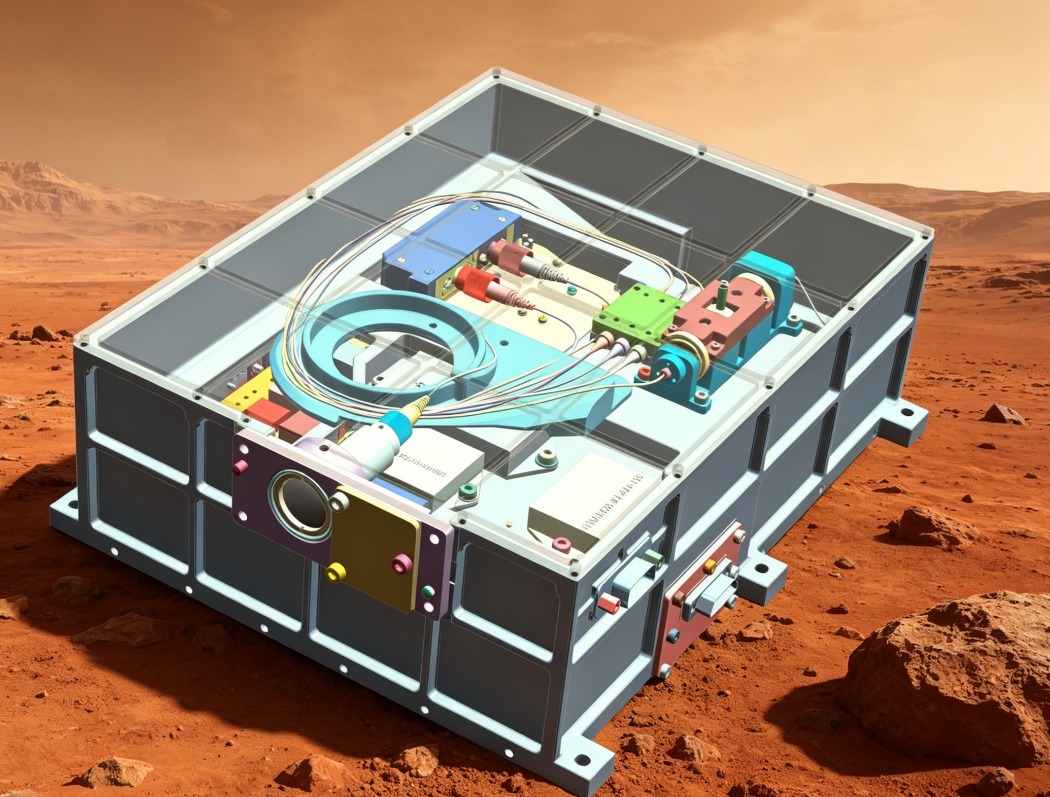
The instrument is used for high-precision, wide-coverage detection of Martian atmospheric water vapour and its isotopes, as well as the detection of global atmospheric wind fields on Mars.
Thereby, it can reveal the escape mechanism and evolutionary history of water on Mars, the characteristics and evolutionary mechanisms of Martian atmospheric wind fields, and deepening the understanding of Martian atmospheric circulation and climate evolution.
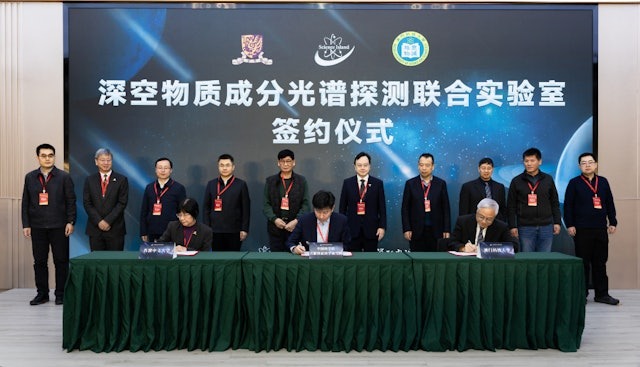
The fact that Tianwen-3 will carry payloads developed in Hong Kong by two local universities is undoubtedly a high recognition of Hong Kong's scientific research capabilities. This will help Hong Kong to continue playing a key role as a payload provider in future space exploration.
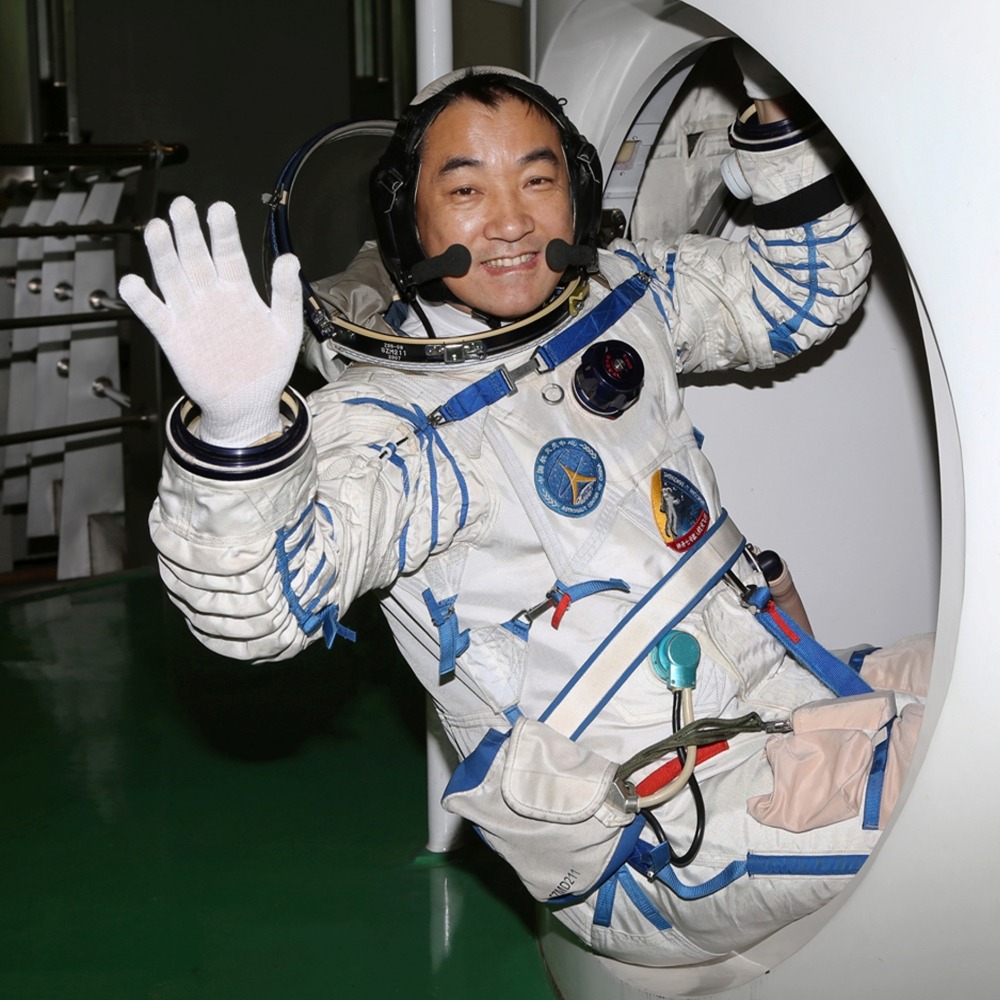
Coupled with the launch of an astronaut from Hong Kong, it is expected that Hong Kong's path in aerospace development through innovation and technology will become increasingly brilliant and yield remarkable results.
(Cover image generated by AI)
Read more: Team from PolyU contributes to national aerospace projects