Published : 2024-08-19
What needs to be done for the development of the Guangdong-Hong Kong-Macao Greater Bay Area (GBA)?
In Outline Development Plan for the Guangdong-Hong Kong-Macao Greater Bay Area (the Development Plan), mentions seven major tasks.
This series examines achievements across seven areas, spotlighting living circle construction in the GBA cities in this article.
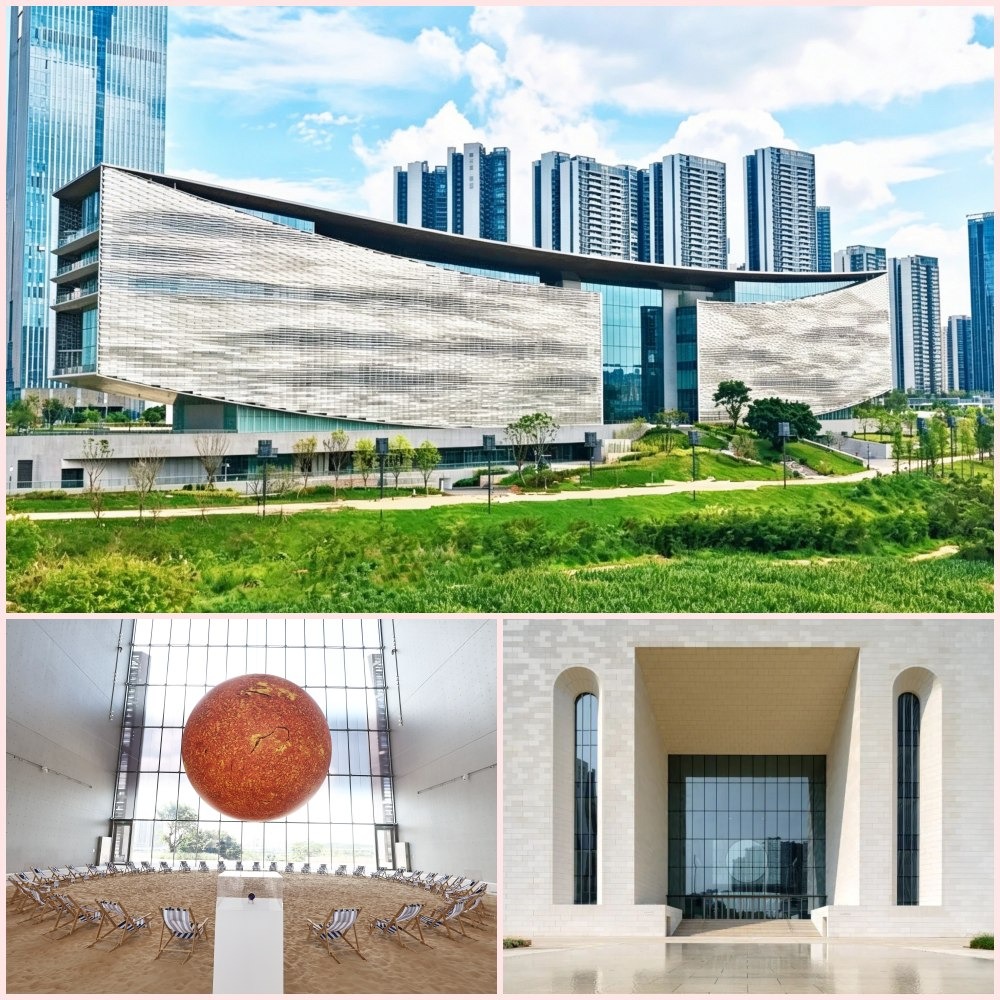
The Chinese University of Hong Kong, Shenzhen
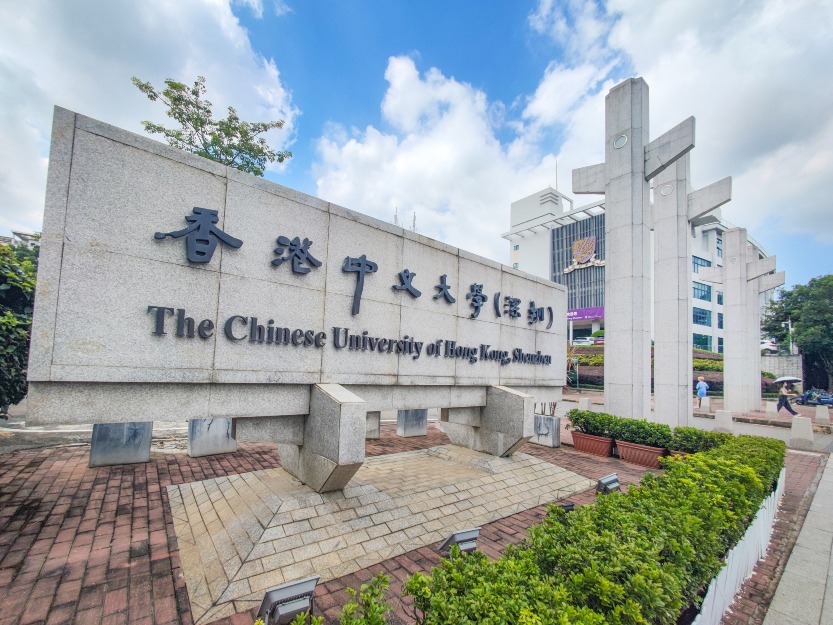
The Chinese University of Hong Kong is one of the first Hong Kong universities to establish a presence in Guangdong.
The Chinese University of Hong Kong, Shenzhen (hereinafter referred to as "CUHK-Shenzhen"), which was formally established in 2014, is located on Longxiang Avenue in Longgang District, and is a university established with the approval of the Ministry of Education and in accordance with the "Regulations on Sino-Foreign Cooperation in Running Schools".
The Chinese University of Hong Kong and CUHK-Shenzhen are "one brand, two campuses". Curriculum approval and monitoring for both universities are the responsibility of the Senate of The Chinese University of Hong Kong, and they conduct admissions independently.
To meet the needs of the Bay Area, the two universities collaborate on the strategic development of disciplines such as artificial intelligence, microelectronics, and robotics.
Upon completion of their programme, undergraduate students of CUHK-Shenzhen are awarded both a degree from CUHK and a graduation certificate from CUHK-Shenzhen.
Currently, CUHK-Shenzhen has exchange and cooperation programmes with more than 140 renowned overseas universities in 30 countries and regions; the proportion of its students with overseas credit-bearing learning experience exceeds 60%, ranking it among the top universities in the country.
CUHK-Shenzhen is also regarded as one of the benchmarks for collaborative education ventures between the Chinese Mainland and Hong Kong.
In 2019, the Development Plan proposed collaborative education ventures among higher education institutions in Guangdong, Hong Kong, and Macao, encouraging the joint establishment of competitive disciplines, laboratories, and research centres.
It supported the development of the Greater Bay Area into an international education demonstration zone by introducing world-renowned universities and distinctive colleges and promoting the development of world-class universities and first-class disciplines.
As of 2024, seven universities from Hong Kong have all established collaborative educational institutions in Chinese Mainland cities within the Greater Bay Area, while universities from the Chinese Mainland have also progressively come to Hong Kong, further developing the Greater Bay Area as an international education demonstration zone.
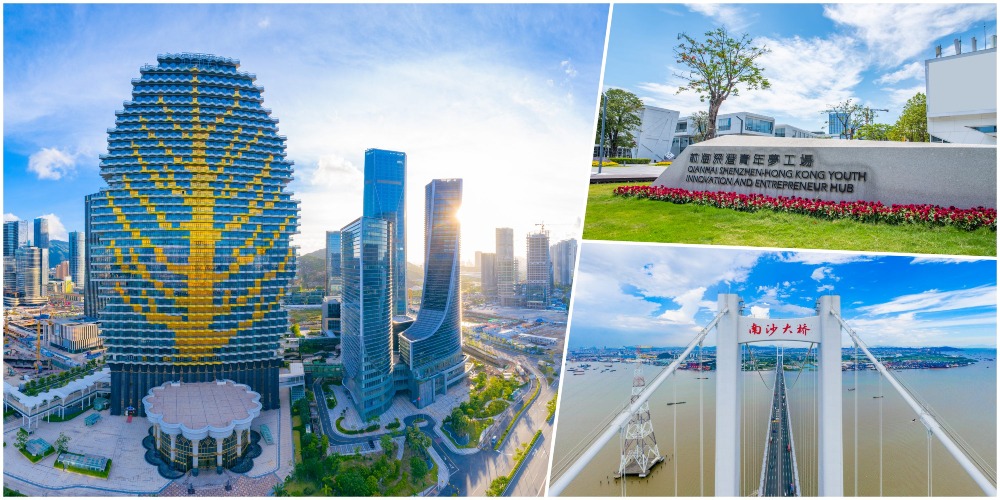
Nansha Innovation Bay
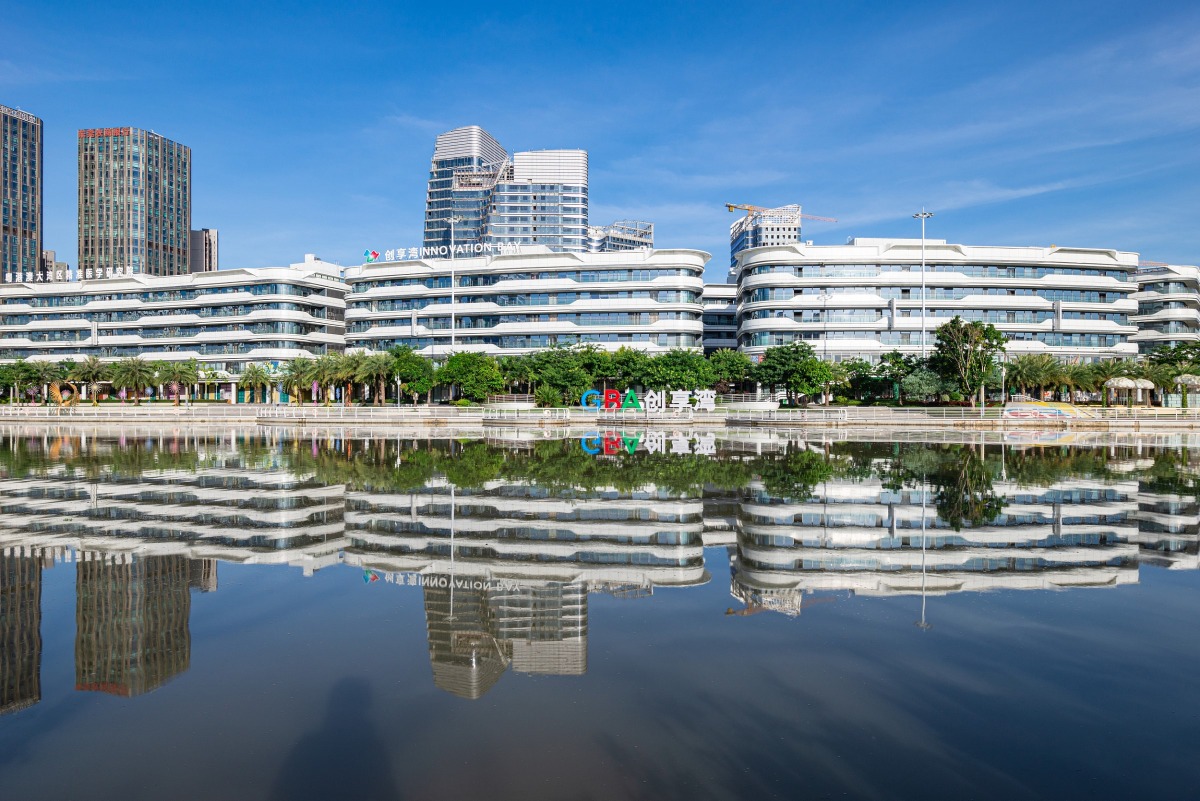
The Innovation Bay Youth Innovation Base, located in the central urban area of the Jiaomen River in Nansha, Guangzhou, has a total construction area of 130,000 square metres, which is approximately the size of Phase II of the Hong Kong Science Park.
As a key youth innovation base which is "based in the Bay Area, collaborating with Hong Kong and Macao, and facing the world".
The Innovation Bay integrates functions of youth innovation exchange, rule alignment, and professional services, using Hong Kong residents as "super-connectors" to provide one-stop support for young people from Hong Kong and Macao to start businesses in the Chinese Mainland, and to provide "last kilometre" services for the implementation of Guangdong-Hong Kong-Macao integration and development policies.
The Service Centre for the Guangzhou Nansha Guangdong-Hong Kong Cooperation Advisory Committee within the Innovation Bay has attracted 30 Hong Kong industrial and commercial associations, including the Hong Kong "One Country, Two Systems" Research Centre and The Chinese General Chamber of Commerce, taking the lead in creating a cluster effect of Hong Kong industrial and commercial associations in the Chinese Mainland.
As of 2023, the Innovation Bay has introduced six Hong Kong and Macao youth innovation bases, which have been established in the Guangzhou Nansha District Five Pleasures Service Centre for Hong Kong and Macao Youth.
It has introduced a total of over 250 youth innovation enterprises (projects), with youth innovation enterprises from Hong Kong, Macao, and Taiwan accounting for half, showing significant results.
The Development Plan specifies the expansion of employment and entrepreneurship space; and the establishment of pilot zones for Hong Kong and Macao entrepreneurship and employment in Qianhai of Shenzhen, Nansha of Guangzhou, and Hengqin of Zhuhai.
At present, the Greater Bay Area has built several innovation and entrepreneurship bases for the youth of Hong Kong and Macao and actively promotes the Shenzhen-Hong Kong youth innovation and entrepreneurship bases.
At the same time, it has launched multiple internship programmes for youth from Guangdong, Hong Kong and Macao and the "Greater Bay Area Youth Employment Scheme", actively assisting young people from Hong Kong and Macao in undertaking internships and employment in Guangdong Province through subsidies.
Read more: Tasks of GBA|Path of ecological civilisation construction (Part II)
The University of Hong Kong-Shenzhen Hospital
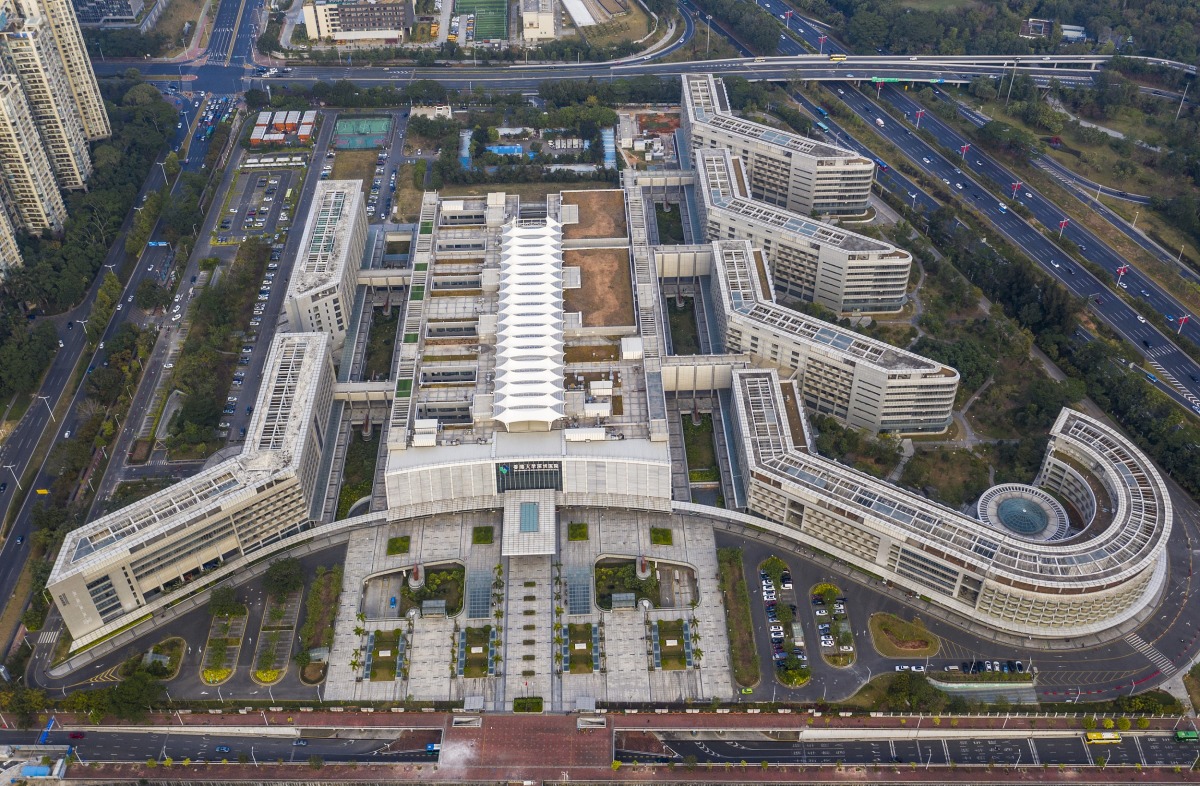
The University of Hong Kong-Shenzhen Hospital (hereafter referred to as HKU-SZH), located in Futian District, Shenzhen, is a large comprehensive public hospital fully funded by the Shenzhen Municipal People's Government and adopting Hong Kong-style management, which opened in 2012.
The University of Hong Kong-Shenzhen Hospital is regarded as a pioneer in the medical integration of Guangdong and Hong Kong.
It adopts Hong Kong-style management, including appointment registration, fee standards, and unified scheduling of surgeons according to procedures, breaking with Chinese Mainland traditions, establishing a comprehensive medical system, and has achieved several "firsts" in Chinese Mainland's healthcare.
The University of Hong Kong-Shenzhen Hospital has implemented a series of "cross-border healthcare" integration schemes, including being the first hospital to accept Hong Kong elderly health care vouchers, the first hospital to enable cross-border enquiries of patient electronic health records via the "eHealth" platform, and being among the first batch of hospitals to efficiently implement the "Hong Kong and Macao Medicine and Medical Device Pass", allowing Hong Kong residents living in the Chinese Mainland to enjoy Hong Kong's medical benefits.
During the pandemic, The University of Hong Kong-Shenzhen Hospital launched the "Pilot Scheme for Supporting Patients of the Hospital Authority in the Guangdong-Hong Kong-Macao Greater Bay Area" for the first time, to facilitate eligible Hospital Authority patients to attend follow-up consultations at HKU-SZH, avoiding delays in treatment due to their inability to return to Hong Kong for follow-up appointments during the pandemic.
The Development Plan proposes to promote close cooperation of high-quality medical and health resources, and to develop regional medical consortiums and regional medical centres.
In the ten years since the opening of the University of Hong Kong-Shenzhen Hospital, it has passed the international accreditation of the Australian Council on Healthcare Standards (ACHS) and the "Grade 3A" hospital accreditation, and it is also the first in the country to receive the authoritative certification from the External Evaluation Association of the International Society for Quality in Health Care (ISQua EEA), becoming one of the nation's authoritative medical institutions.
Over the past five years, the cross-boundary medical integration in the Greater Bay Area has been continuously developing.
Including the University of Hong Kong-Shenzhen Hospital, the Elderly health care voucher is now applicable at 5 hospitals and 2 dental service points in Guangdong.
In January 2024, the sixth batch of the "Drug and Medical Device Connect" directory was announced, with a cumulative approval of 19 designated medical institutions and 56 urgently needed imported drugs and medical devices from Hong Kong and Macao, benefiting a total of over 4,500 people and making the Greater Bay Area more liveable.
Read more: Service robots: How these daily life assistants help human?
Macao New Neighbourhood
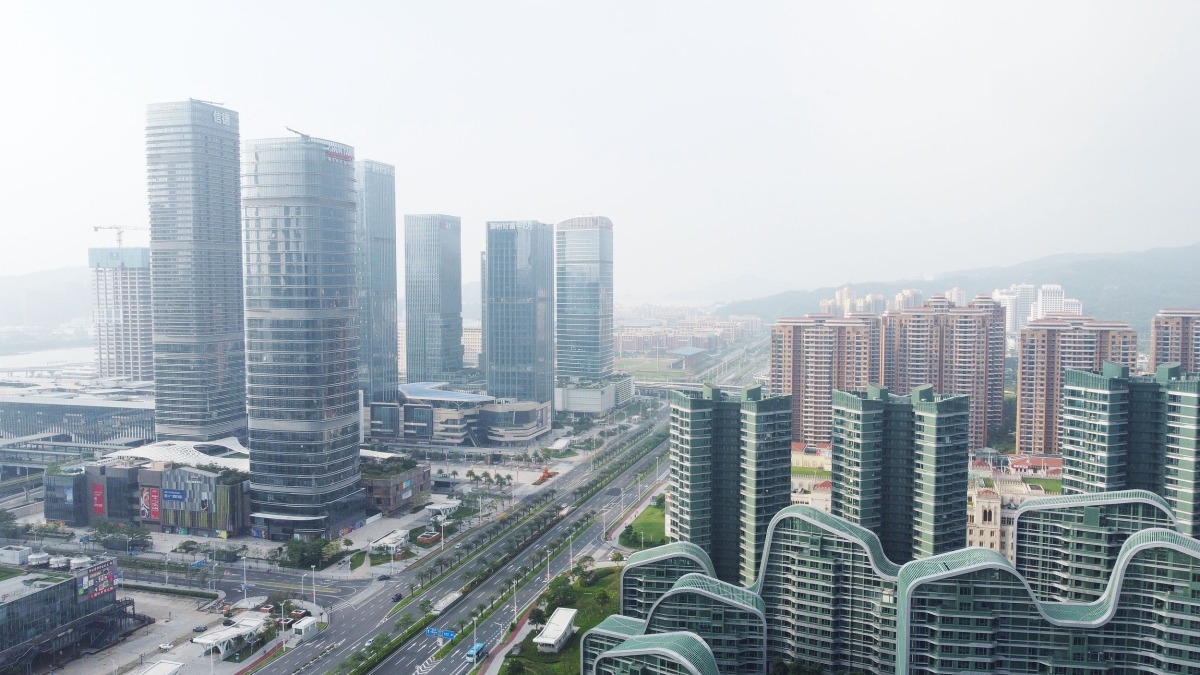
Located in the Guangdong-Macao In-Depth Cooperation Zone in Hengqin, the "Macao New Neighbourhood" is a large-scale residential project for which Zhuhai provided the land and the Macao SAR Government led the construction and operation, serving as a major construction project for the in-depth integration of Guangdong and Macao, which was completed and put up for sale in 2023.
The Macao New Neighbourhood is mainly composed of 27 buildings with comprehensive supporting facilities, including shops, schools, health stations, and elderly service centres.
All standards or practices of Macao are adopted within the neighbourhood, including for schools and community health centres, and the use of Macao-registered drugs is also permitted.
One of its major highlights is the implementation of the first "Standardised Pilot Project for Integrated Hengqin-Macao Home and Community-based Elderly Care Services" (hereinafter referred to as the ), which focuses on creating a series of services such as health assessment, daily life care, meal assistance and delivery, and rehabilitation nursing, supporting a new model of elderly care services in the Greater Bay Area, and is believed to become the "Hengqin model" for healthy ageing in the Bay Area.
The Development Plan explicitly states the deepening of cooperation in elderly care services, promoting the integration of medical and elderly care and constructing a number of regional demonstration bases for healthy ageing.
Read more: How China establishes the world's largest social security system?