Published : 2024-12-15
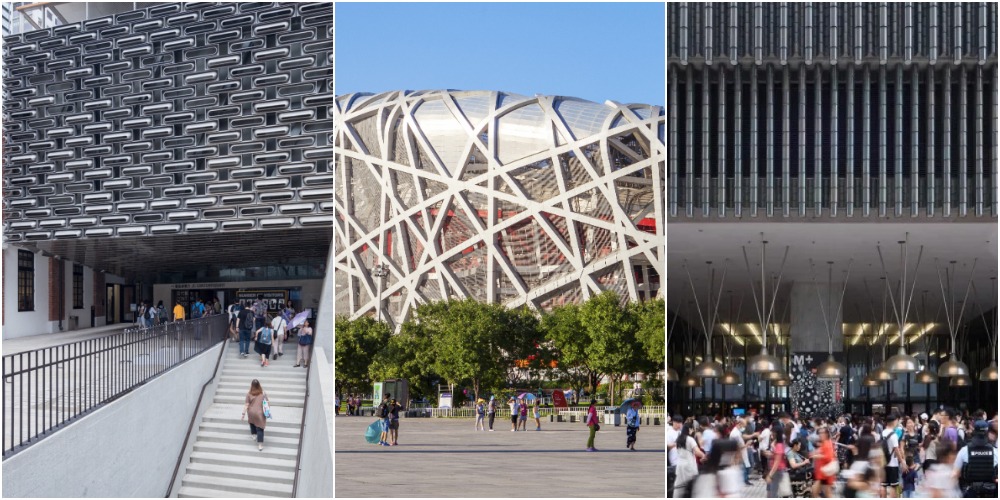
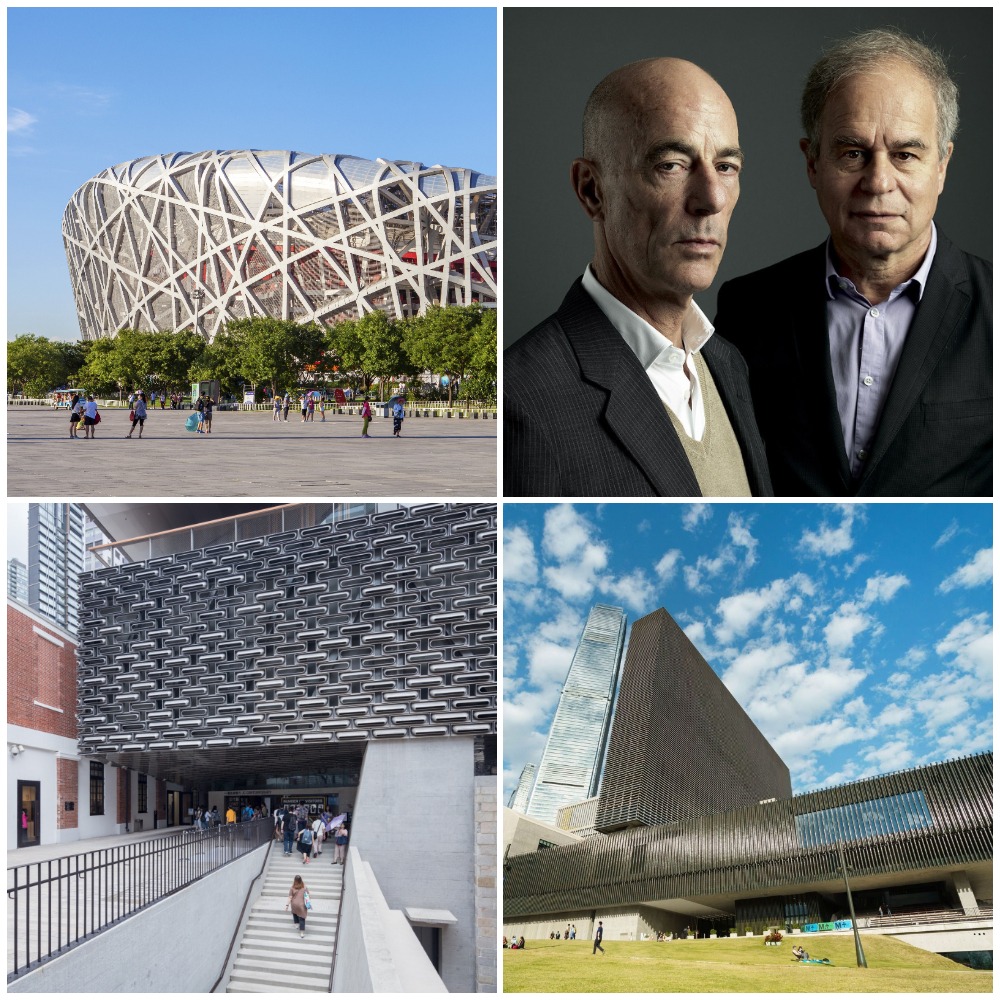
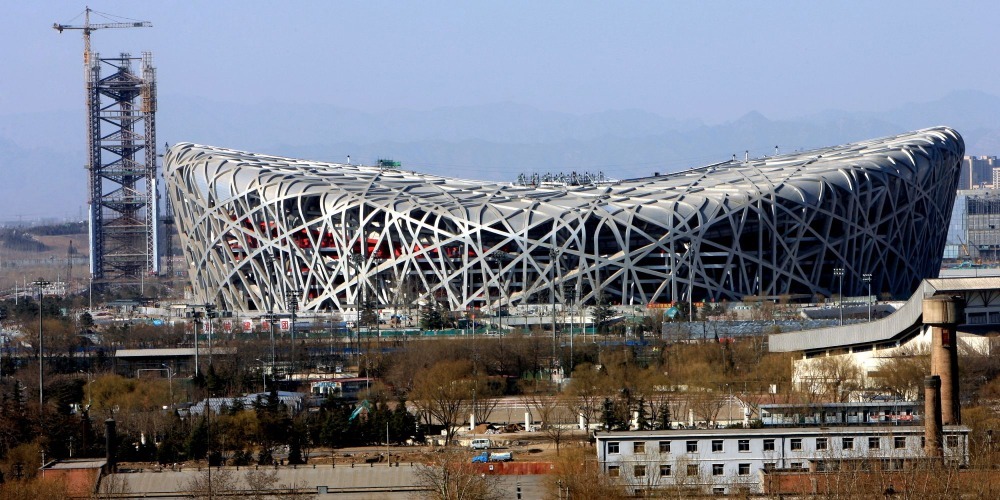
In 2008, the Olympic flame was lit at the "Bird's Nest", or Beijing National Stadium, igniting China's century-old Olympic dream. The architects of the "Bird's Nest," Jacques Herzog and Pierre de Meuron, are the winner of the 2001 Pritzker Architecture Prize, often referred to as the "Nobel Prize of Architecture".
This pair from Switzerland is known as the "material magicians" of architecture, excelling in exploring the plasticity of building materials and integrating local culture to create city landmarks. Their design of Hong Kong's M+ Museum and the rebuilt Tai Kwun also subtly hides architectural magic similar to that of the "Bird's Nest."
Swiss architects highlight the charm of building materials to create landmarks
Swiss architects Jacques Herzog and Pierre de Meuron are internationally renowned, with works spanning the globe. Summing up their architectural characteristics in a few words is absolutely challenging because their designs are diverse and have no fixed style.
Their portfolio includes stone-built cottages, concrete brick houses, glass and steel skyscrapers and tile-roofed structures. It is difficult for people to assert just by appearance, and says "This is a work of Herzog and de Meuron."
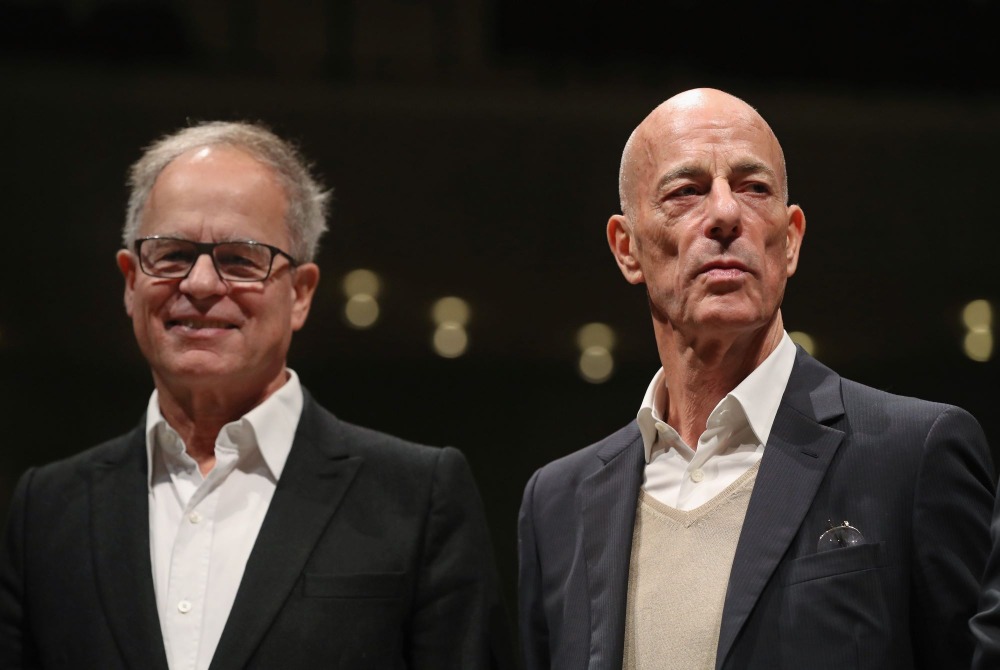
Unlike architects who amplify their personal style through their designs, Herzog and de Meuron are more reserved. Rather than focusing on high-profile signature works, they prefer to work behind the scenes, uncovering the charm and character of materials while integrating local historical and cultural contexts.
They transform often-overlooked materials into the stars of their buildings. Examples of this approach include the Beijing "Bird's Nest," the Hong Kong M+ Museum, and the renovated Tai Kwun (大館).
M+ museum facade is made of corrugated terracotta tiles
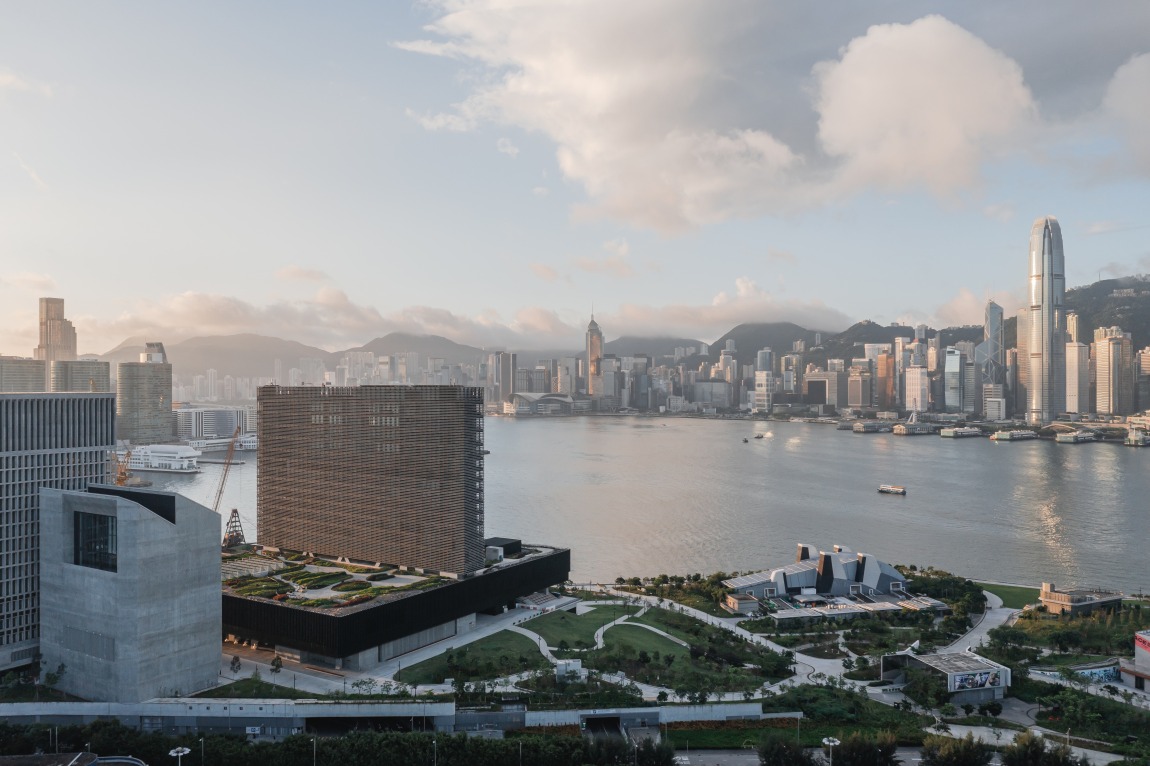
The M+ Museum in the West Kowloon Cultural District, designed by Herzog & de Meuron, has the shape of an inverted "T". The facade appears black at a glance, but upon closer inspection, it is actually a deep green, composed of ceramic tiles arranged in a wavy pattern, resembling the texture of roofing paper.
In Hong Kong, where land is extremely valuable, skyscrapers typically use glass facades to maximise views. However, the M+ Museum's use of ceramic tiles for its facade is quite rare, as this choice was made specifically to meet the needs of the museum.
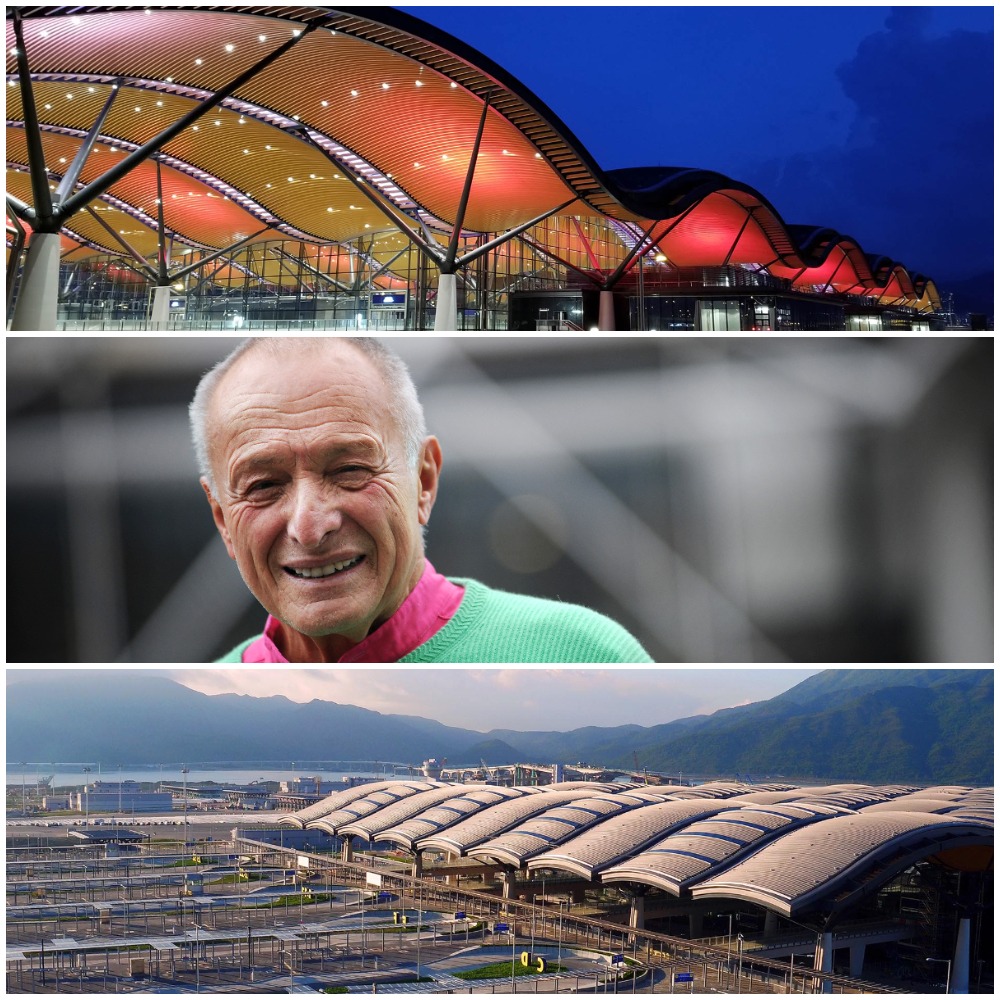
Read More: What's behind the design of HZMB HK Port Passenger Clearance Building?
Why does M+ Museum's exterior change colour?
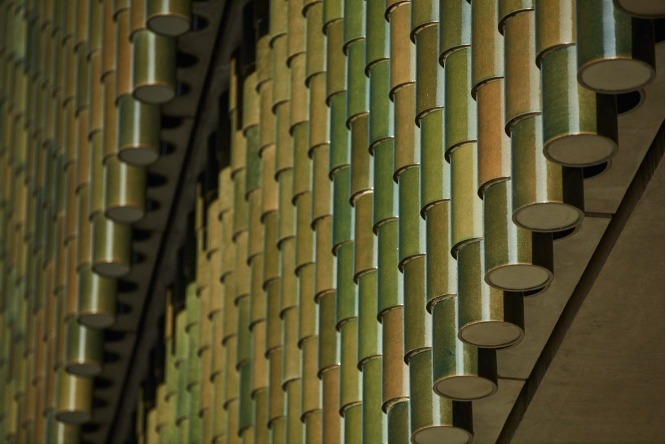
The ceramic tiles used in M+ Museum are produced in Florence, Italy, from a special mixture of clay. They are heat and moisture resistant, and depending on the lighting conditions, they can display various colours, such as golden or olive green.
This unique glazed ceramic tile, designed by Herzog & de Meuron, covers the facade and floors of the M+ building. Some tiles are placed vertically on the walls, resembling bamboo, while others are embedded in concrete within aluminium window frames to shield the interior from sunlight, protecting delicate exhibits from damage.
Additionally, the side facing Victoria Harbour features a large screen constructed from LED lights, serving as a communication medium between the museum and the public.
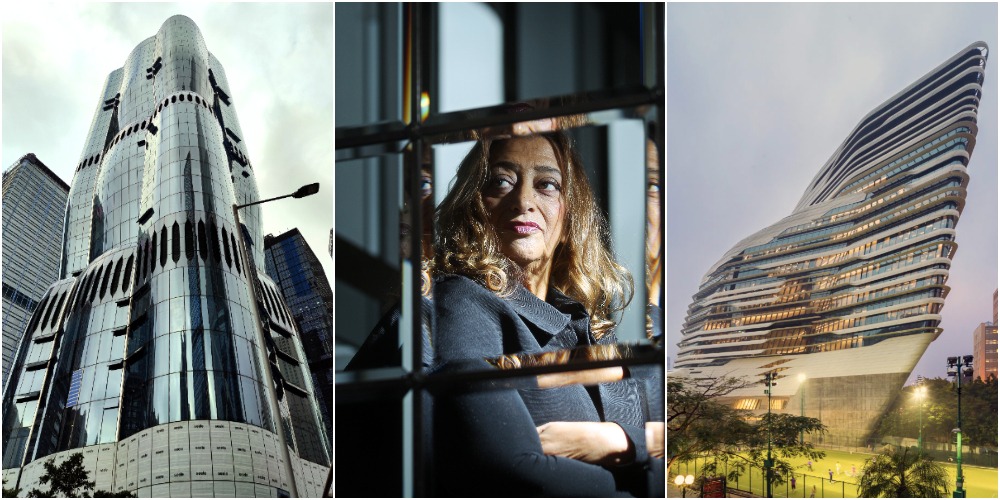
Read More: "Queen of the Curve" Zaha Hadid and her sci-fi buildings in HK
The architects used exposed concrete to create exhibition areas
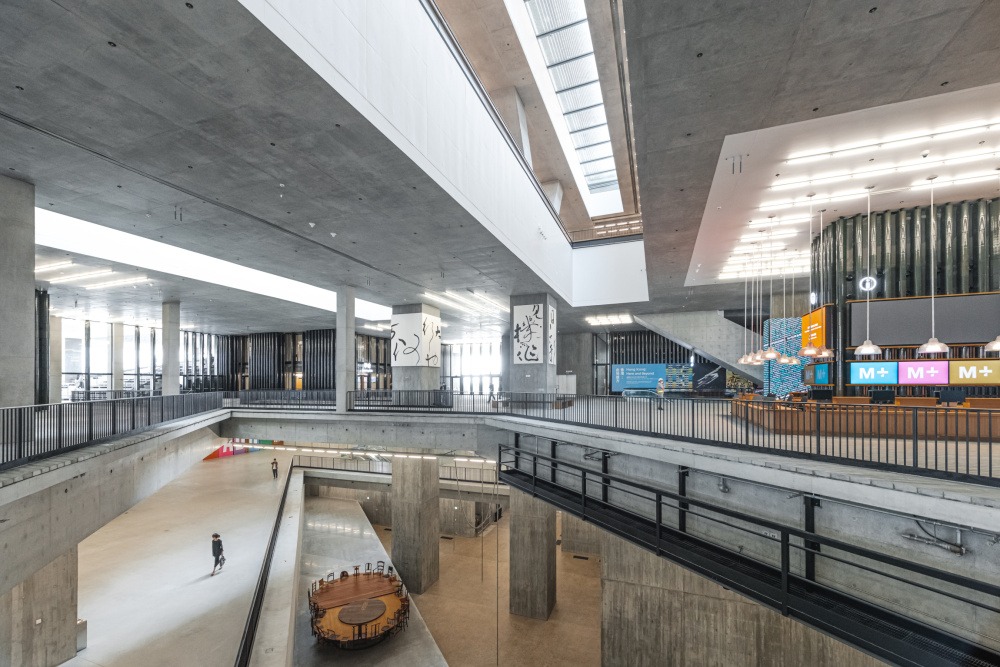
It is well known that the West Kowloon Cultural District has operational MTR tunnels, including the Tung Chung Line and the Airport Express, running beneath the M+ Museum. Building on an operating railway poses many challenges and design constraints for construction.
However, Herzog and de Meuron did not view this as an obstacle, but rather turned it into a unique feature of M+ Museum.
Visitors to M+ Museum are likely to remember the underground "Subspace". This exhibition area, constructed with large expanses of fair-faced concrete, is situated right next to the MTR tunnels.
The irregular architectural lines accurately reflect the tunnel alignments, preserving the original planning stage's appearance. The intricate sense of space provides a new perspective and angle for art exhibitions, successfully turning the site's shortcomings into a highlight.
This is exactly where Herzog and de Meuron's expertise shines.
Revitalising Tai Kwun in Central focus on connecting enclosed spaces
The revitalisation and overall planning of Tai Kwun in Central was also overseen by Herzog and de Meuron.
Tai Kwun in Central consists of three grand buildings: the former Central Police Station, the Central Magistracy, and the Victoria Prison. Originally, these structures were isolated from one another.
Herzog & de Meuron focused on revitalising the site by constructing small bridges, staircases, and pathways to connect them.
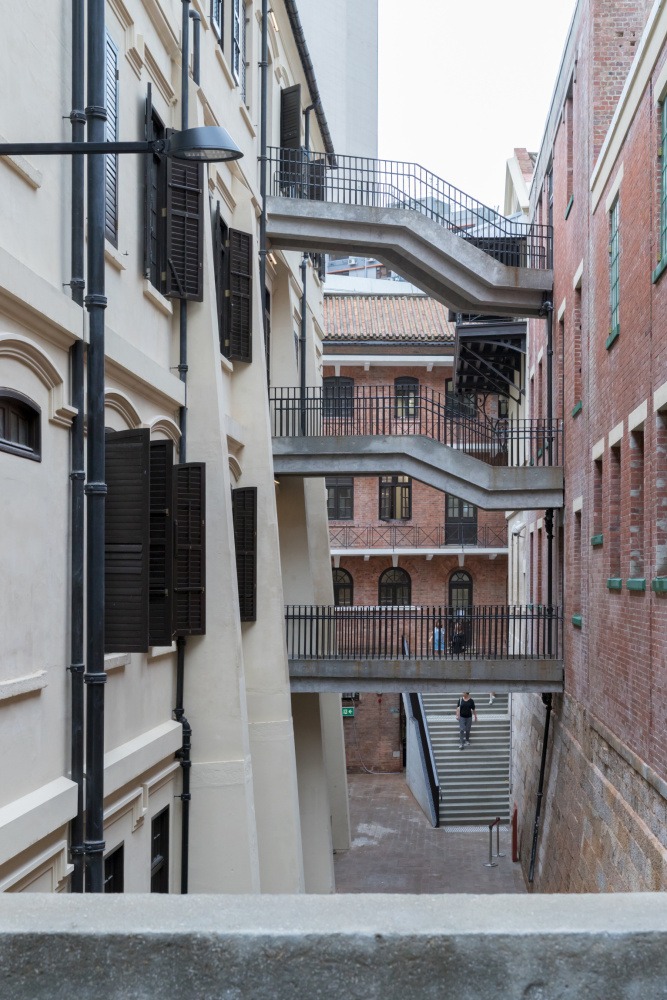
Comprising the Victoria Prison, the former Central Police Station, and Central Magistracy, "Tai Kwun" is part of the former Central Police Station complex. It served as a centre of power during the British colonial era and was once a bustling hub of activity.
How can once closed-off and aloof buildings be revitalised into accessible public spaces? Herzog and de Meuron's strategy focuses on infrastructure. They connected the buildings separated by high walls and large gates with small bridges, staircases, and passages, allowing people to flow as quickly "as ants overrun," swiftly enlivening the entire complex.
Tai Kwun adds two new buildings "JC Contemporary" and "JC Cube"
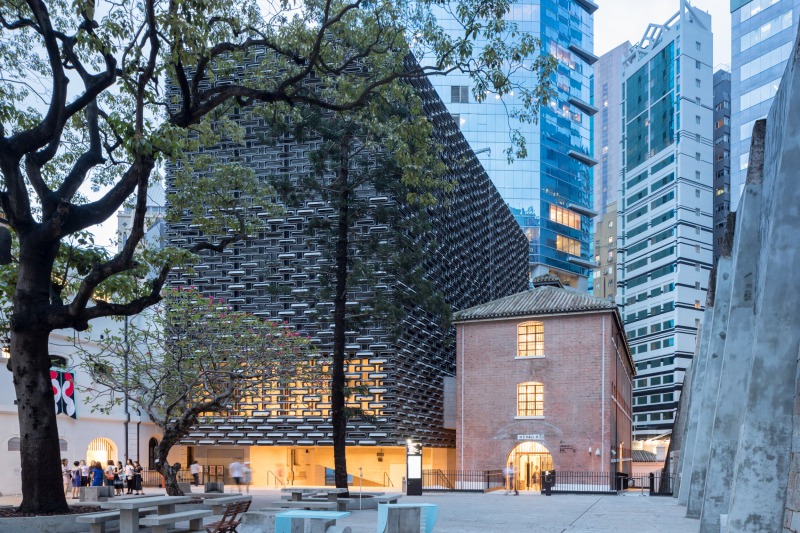
While preserving the old buildings, Herzog and de Meuron also added two distinctly modern buildings within the historic site: the "JC Contemporary" (藝方) and the "JC Cube" (立方).
"JC Contemporary" features an art museum and contemporary art space. The "JC Cube" is primarily used for performances, film screenings and educational purposes.
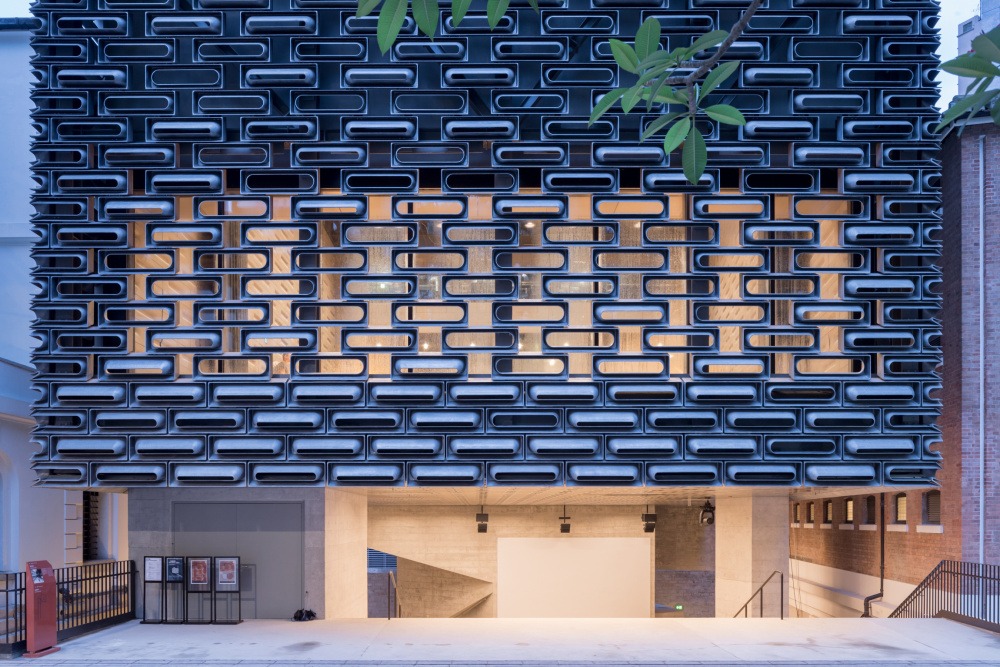
The facades of the two buildings are constructed from specially designed aluminium bricks, which shine against the surrounding red brick structures.
These silver-grey aluminium bricks, recycled from discarded wheel rim alloys, are rectangular in shape with openings of three sizes and varying inclinations, inspired by the granite stone walls of Tai Kwun, echoing the historical structure of the complex.
Aluminium meets granite in a fusion of old and new, warm and cool. Once-sealed prison cells are now open galleries, with people moving freely beneath the imposing walls.
The sharp contrast between the new and the historic in this century-old monument feels like a dialogue across time, inviting the public to form their own associations and appreciate the building's inherent charm.
Read more: Transformation of HK's PMQ: From historic building to creative landmark