Published : 2026-01-19
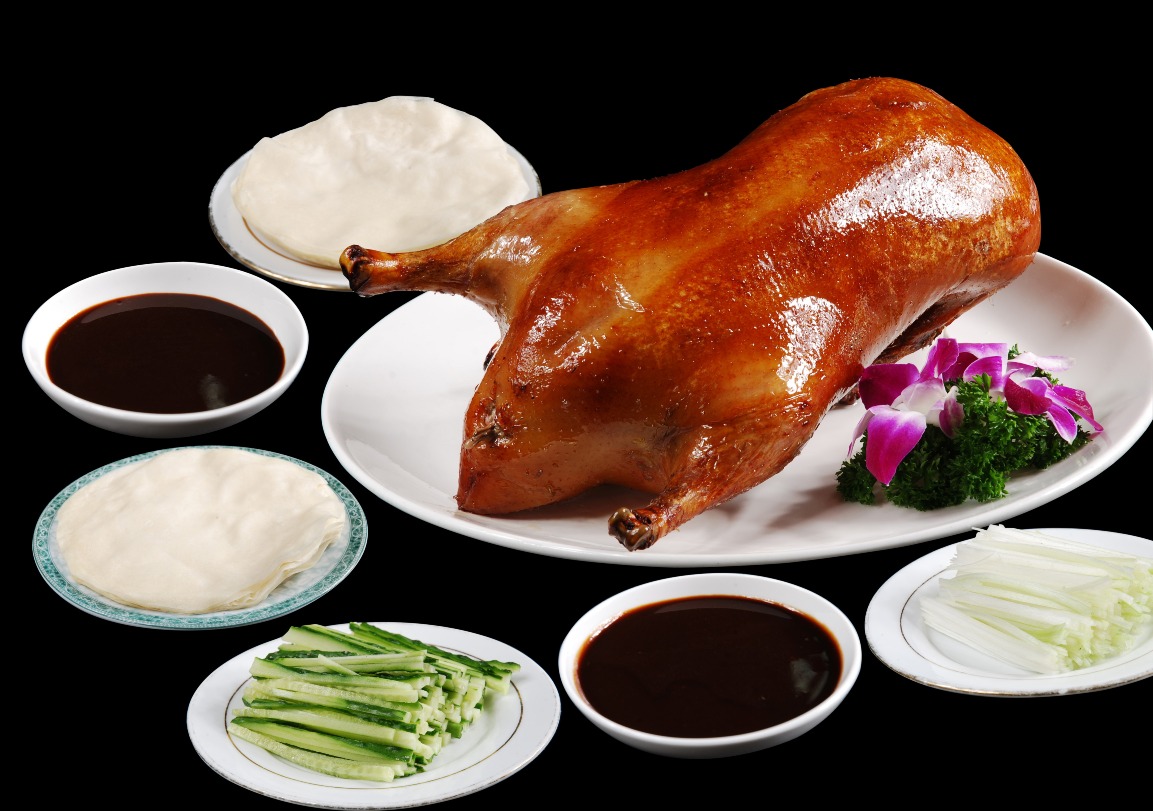
With its crispy skin and succulent flavour, Peking duck is considered one of the quintessential dishes of Chinese cuisine. This culinary art, recognised as a national intangible cultural heritage, boasts a history spanning centuries.
As times change and competition in the gastronomic world intensifies, how are the inheritors of Peking duck craftsmanship forging an innovative path? By creating new dishes, offering novel experiences, or replacing traditional methods with technology? Various time‑honoured brands are now exploring diverse approaches.
What is the difference between open-oven and closed-oven roasting?
Peking duck is a traditional Chinese dish, with records of imperial roasted duck dating back to the Yuan dynasty.
There are two main styles of Peking duck: the hanging oven method, represented by Quanjude (全聚德), and the closed oven method, represented by Bianyifang (便宜坊). Both have a long history and numerous branches both in China and overseas.

Both styles of Peking duck use specially force-fed ducks as the main ingredient. Before roasting, the ducks undergo a specific preparation process known as "duck carcass preparation." The key difference lies in whether an open flame is used during the cooking process.
The closed oven method does not use an open flame and involves over twenty steps in its process. After heating the oven, the fire is extinguished, and the duck is placed inside.
The oven door is then closed, allowing the duck to roast solely from the residual heat of the oven walls. This technique results in a crispier skin on the roasted duck.
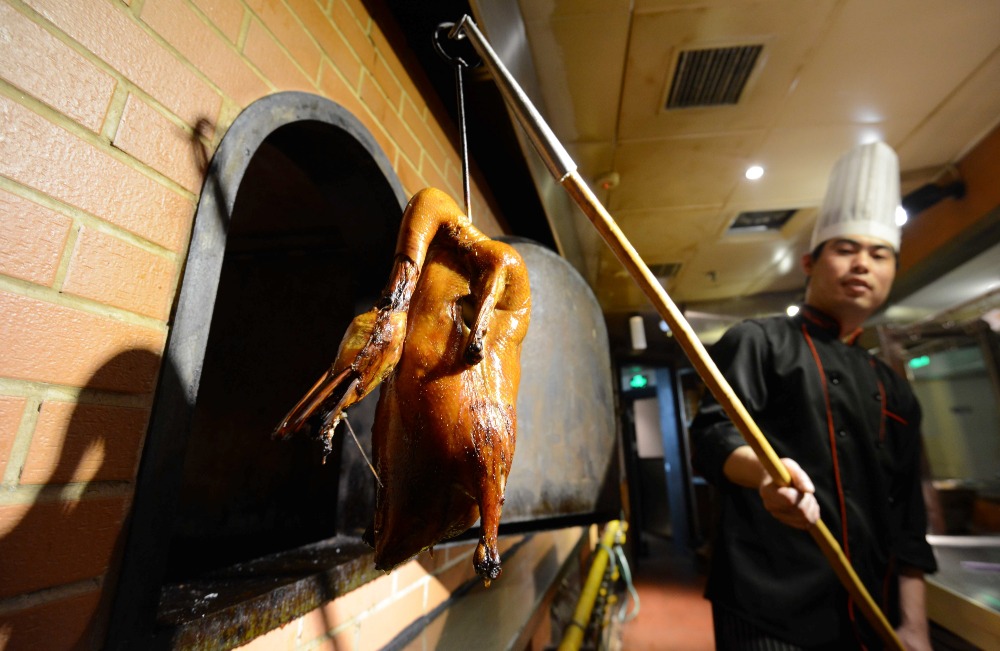
With a history of over 600 years, Bianyifang has passed down the art of closed‑oven roasting through generations, gradually refining its distinctive "three unique techniques": the unique closed‑oven method, the unique skill of selecting ducks and preparing the carcass, and the unique art of roasting and slicing the duck.
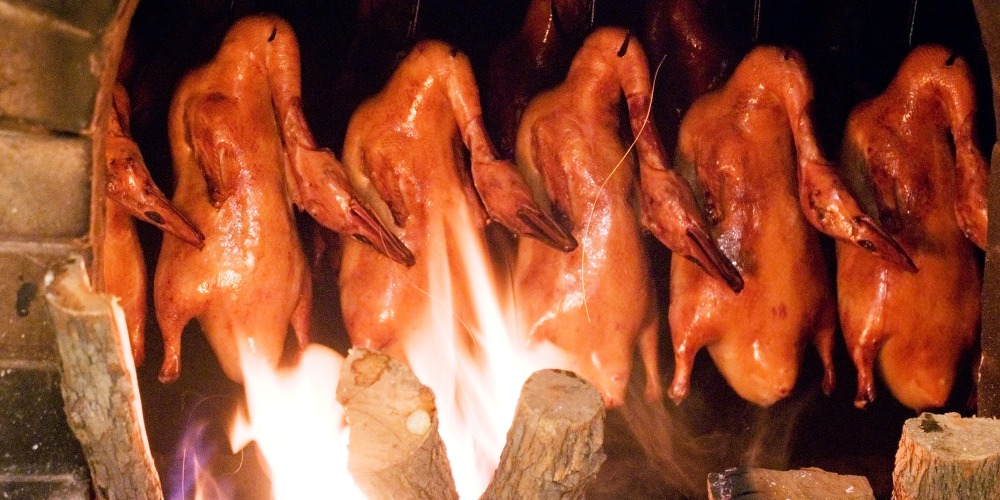
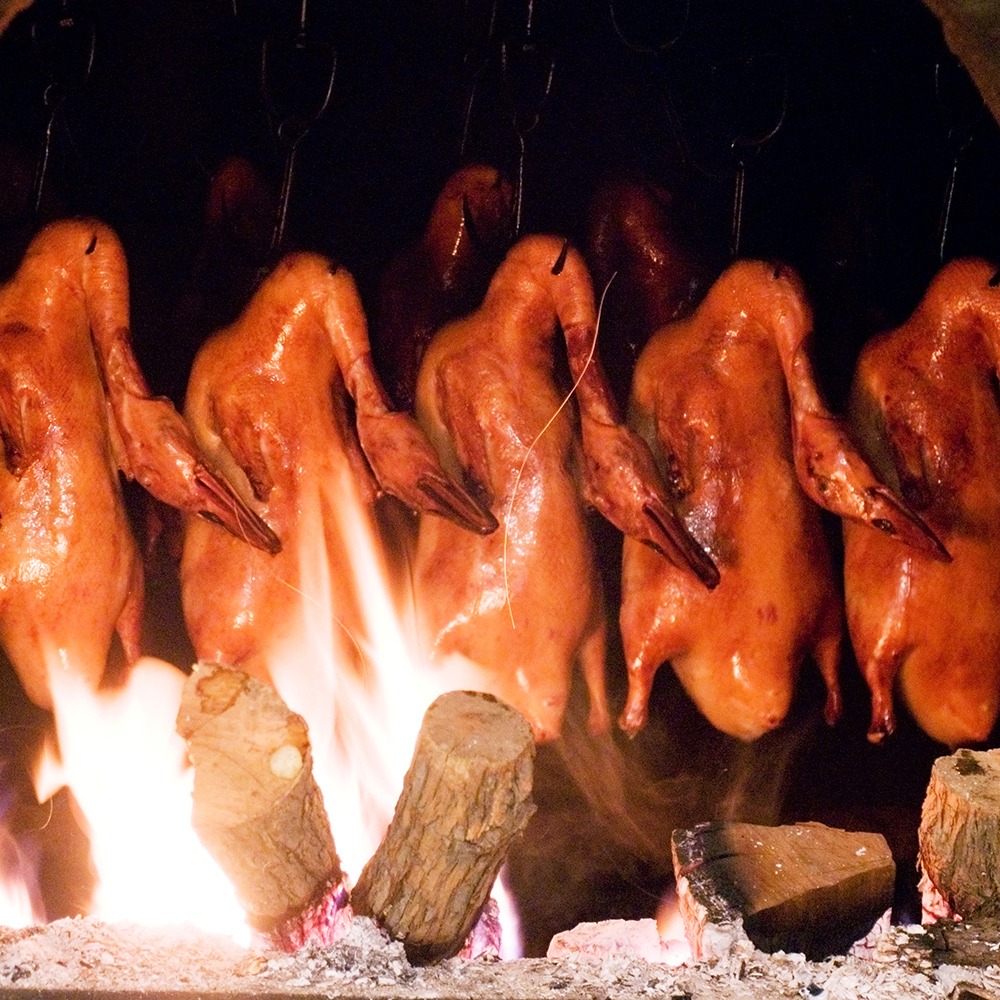
The hanging oven method uses high‑quality fruitwood as fuel, with the oven door left open and the duck roasted over an open flame.
During the process, the hanging duck is continually turned, resulting in tender, succulent meat and a distinctive aromatic flavour.
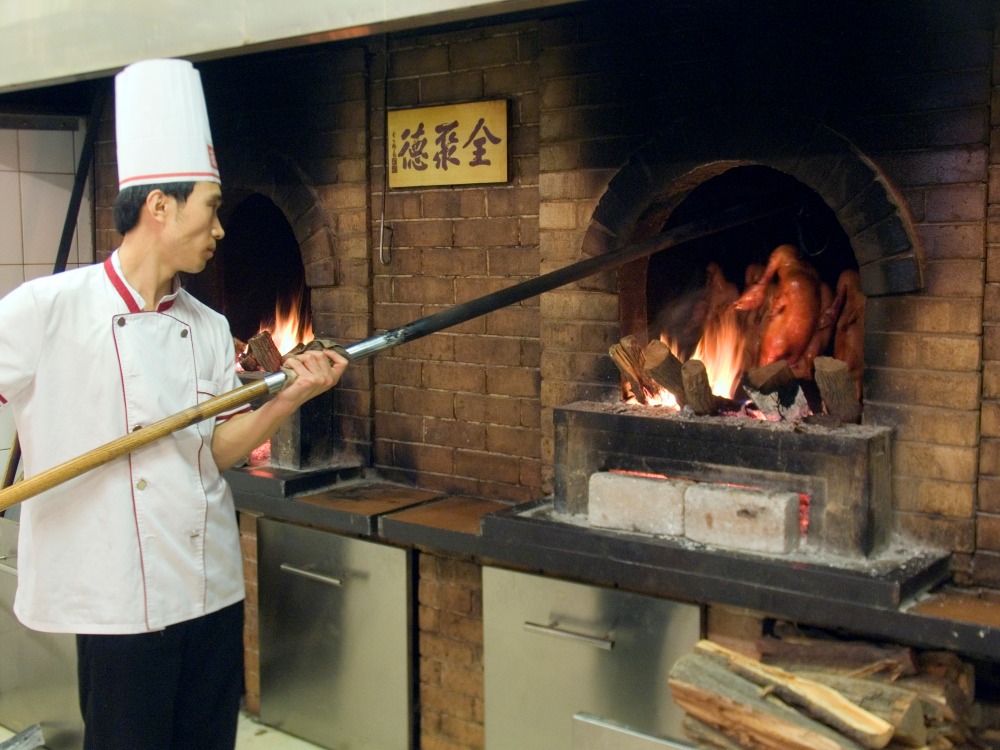
Founded in 1864, Quanjude is renowned for its distinctive hanging oven roast duck, which follows a complete and meticulous craft process.
This includes four major stages — slaughtering and scalding, carcass preparation, roasting, and slicing — comprising a total of 31 detailed steps.
Its exceptional flavour has earned the restaurant nationwide fame and it has been selected on multiple occasions to be served at state banquets.
Beijing introduces "technical specifications for Peking duck"
As times change and competition in the culinary world becomes increasingly fierce, with new-style eateries constantly emerging, time-honoured brands like Quanjude and Bianyifang are also facing difficulties in passing on their traditions and have begun to explore new paths for development.
Since 2000, Quanjude has undertaken multiple innovative reforms, such as opening franchise outlets modelled after foreign fast-food chains to expand its market reach, and experimenting with automated modern production methods—including introducing electric ovens to replace manual roasting.
However, these efforts yielded less than ideal results and even faced scepticism from customers.
Quanjude therefore shifted its approach, seeking breakthroughs in flavour and service.
This included establishing new standards for roast duck quality and monitoring every stage of the production process—at one point rejecting over ten thousand substandard duck carcasses in just six months.
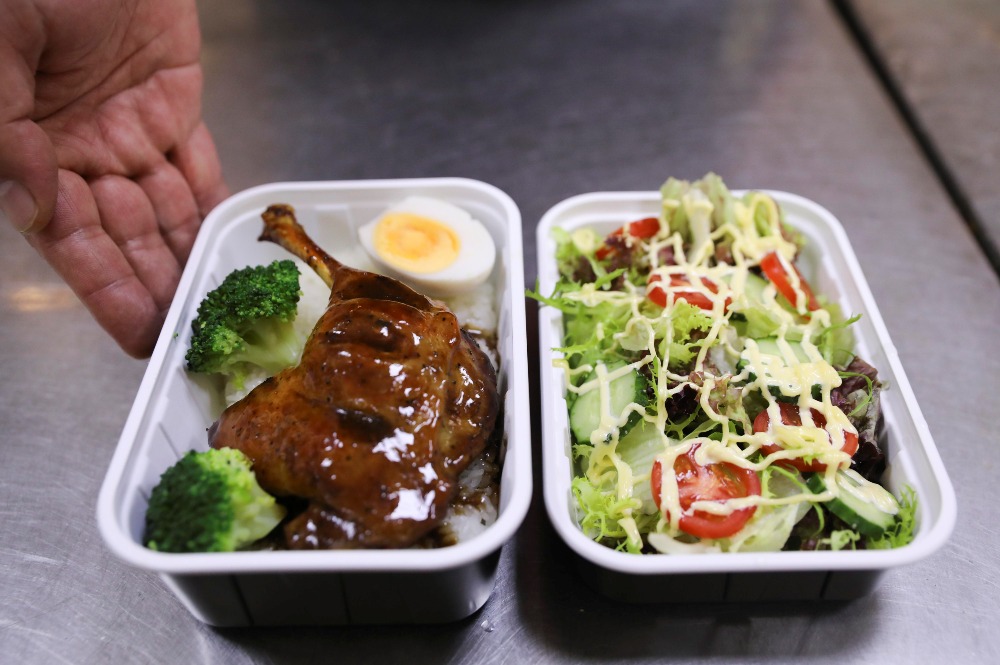
The brand also introduced more accessible services, such as setting up outdoor takeaway stalls at its restaurants, expanding online sales and delivery options, and developing cultural and creative merchandise.

In order to preserve the legacy of its authentic flavour, the Beijing Cuisine Association released the "Peking Duck Technical Specification" in 2019, proposing technical standards for both the hanging oven and closed oven methods.
These include specific details such as roasting duration and ingredient quantities: for example, hanging oven roast duck requires 60 to 70 minutes of roasting, while the closed oven method generally takes 50 to 60 minutes; condiment measurements include 10 grams of white sugar, 120 grams of sweet bean sauce, and 150 grams of cucumber strips.
It is hoped that these explorations and efforts will breathe new vitality into this age-old craft.
Read more: What makes Chinese heritage tofu varieties special?