Published : 2025-11-14
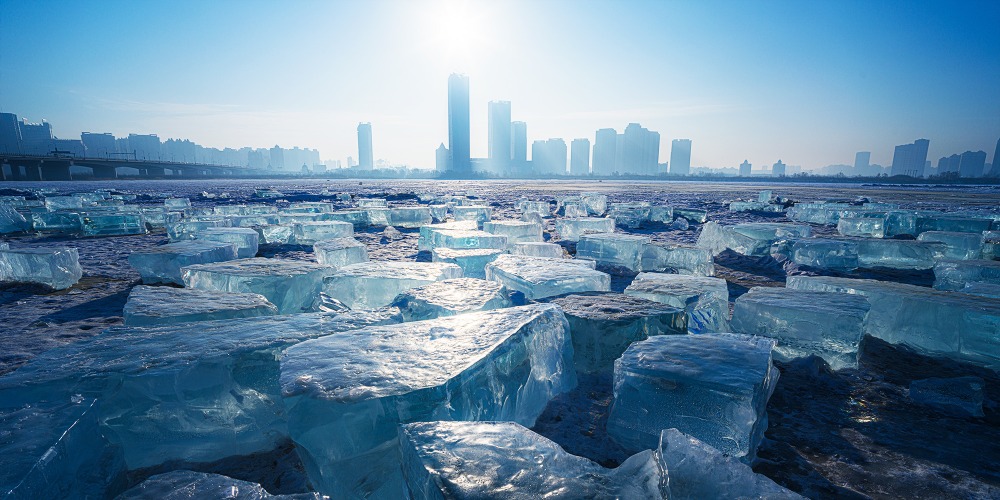
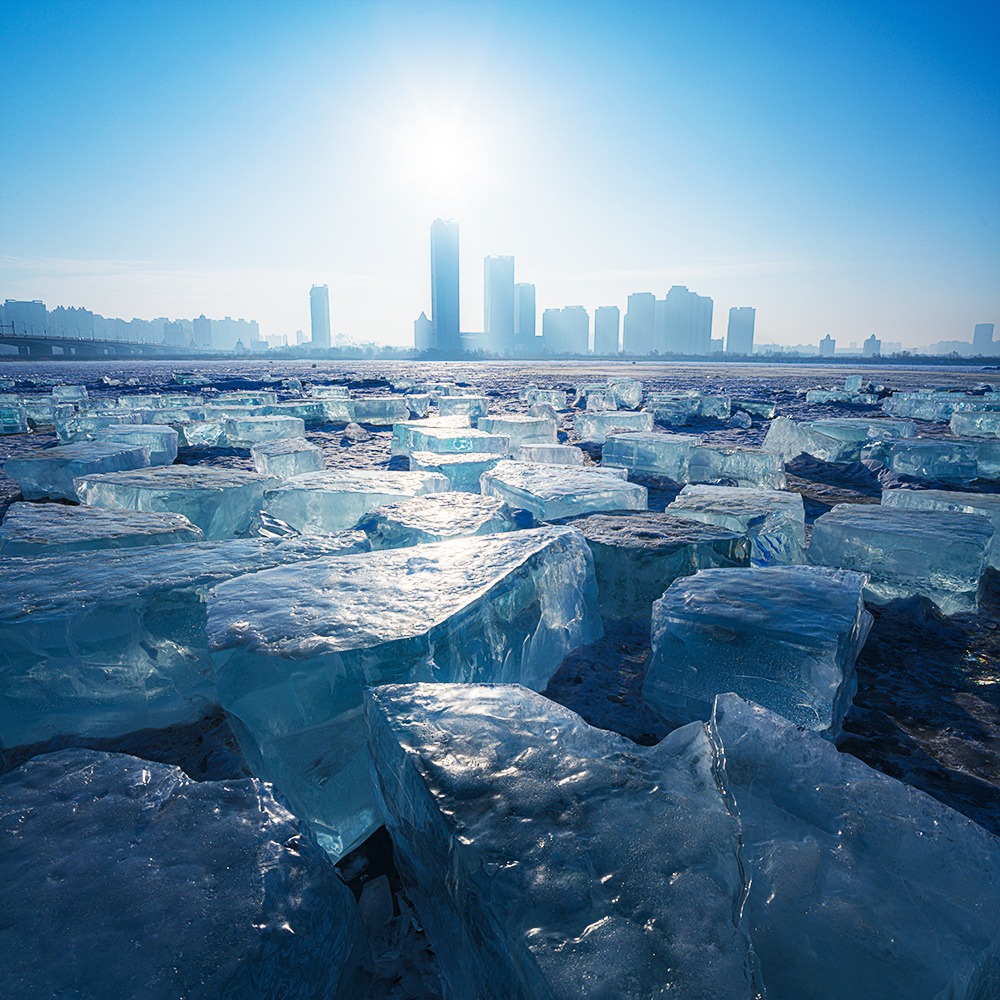
Every December, a mysterious "ceremony" takes place on the frozen Songhua River in northern China—the ice harvesting.
The icy surface is divided into countless grid-like patterns, transformed by ice harvesters' tools into uniformly sized ice blocks, which are then transported to the riverbank.
In an age where mechanised ice production is widespread, what makes this century-old tradition so significant? And what is the ultimate purpose of these thousands of ice blocks?
How thick is the ice on the river for ice-harvesting?
Harbin City in Heilongjiang Province is China's northernmost provincial capital and is also the world-renowned "Ice City".
After December each year, the Songhua River (松花江) that flows through Harbin completely freezes over, forming a three to five-metre-thick layer of ice on the river's surface, and it is time for the "ice harvesting" ceremony to begin.
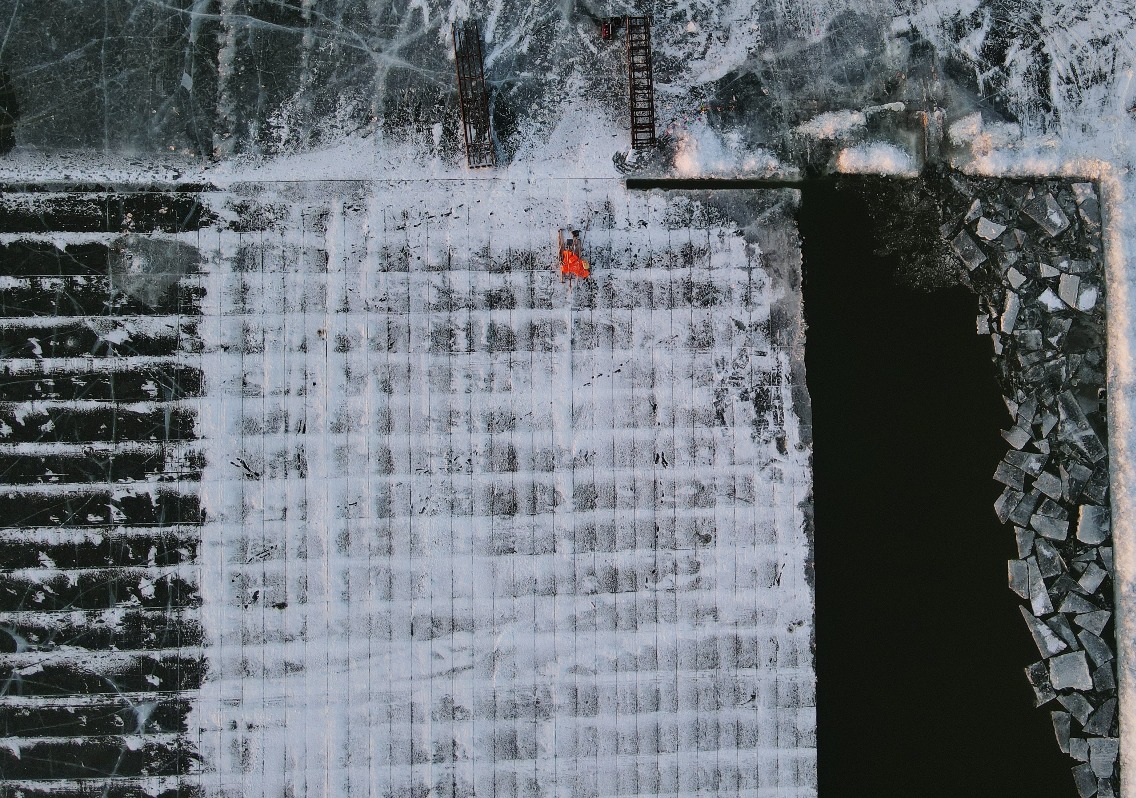
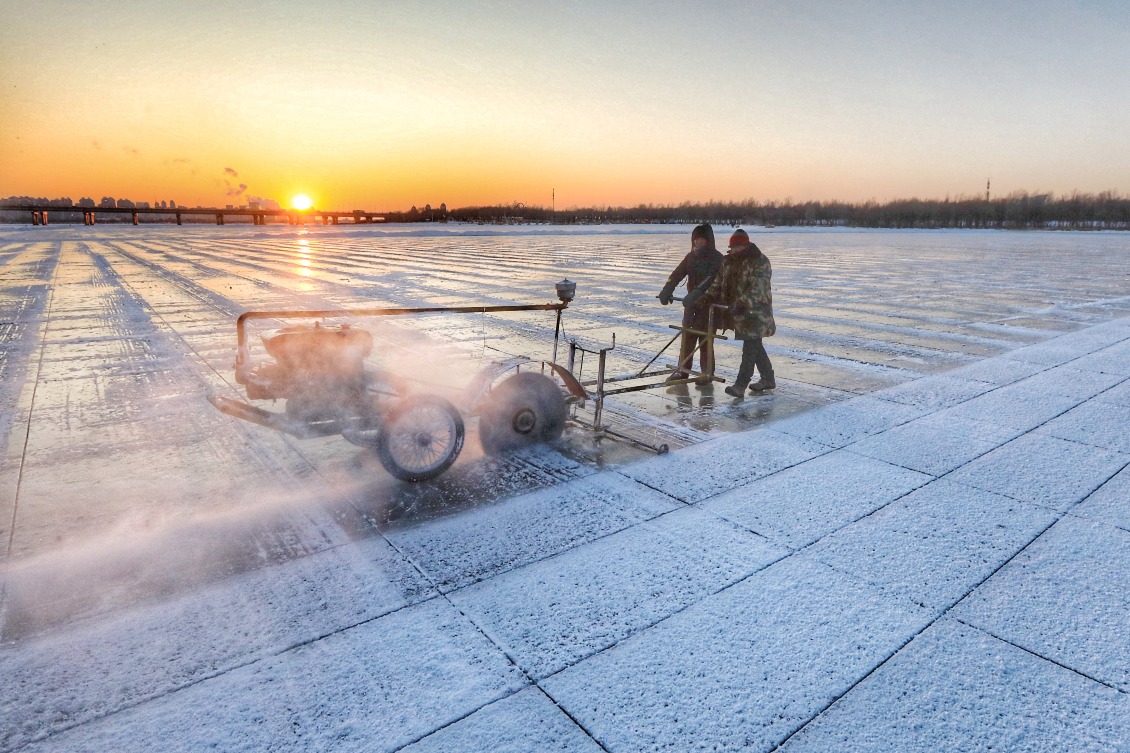
This is China's largest ice harvesting site. Thousands of ice harvesters push electric saw vehicles across the river surface, carving out crisscrossing ice lines. They then use ice chisels to strike the surface, cutting along the lines to extract ice blocks of fixed sizes.
These ice blocks, each weighing over 100 kilograms, mechanically "climb" up to the riverbank and are transported to their destinations by ice trucks.
Harbin means "a place for drying fishing nets" in the Manchu language. Fishing in summer and harvesting ice in winter is a tradition that has been carried on for centuries.
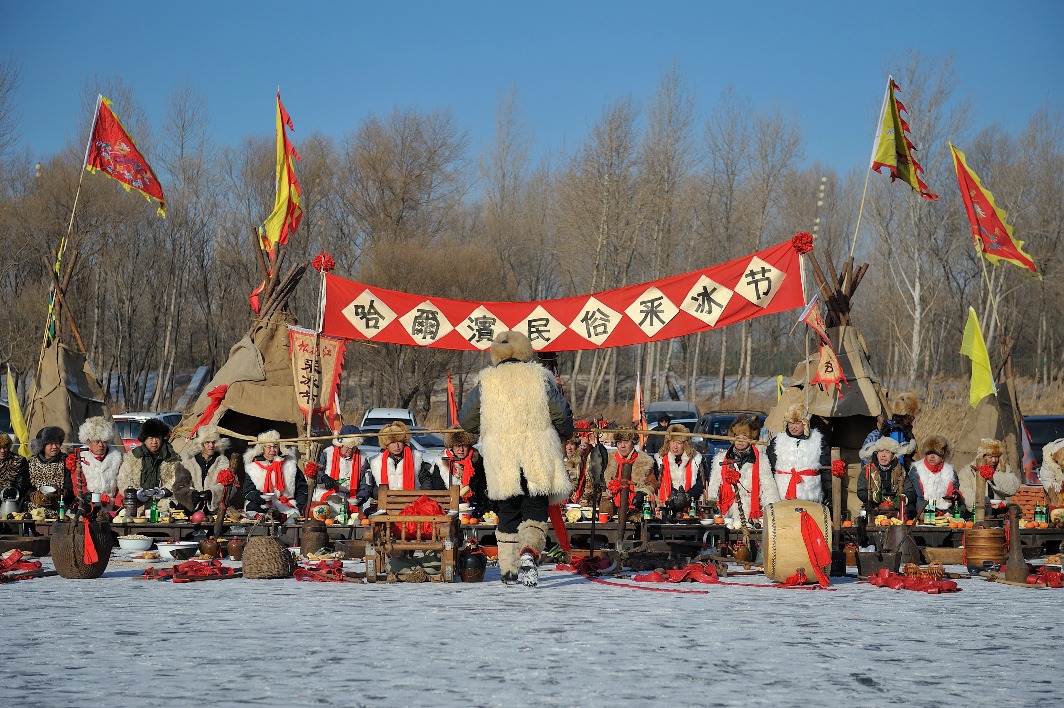
The traditional ice harvesting ceremony includes reciting blessings and drinking a ceremonial liquor before setting out. The first ice block extracted is called the "first ice," symbolising people's hopes and good wishes for life.
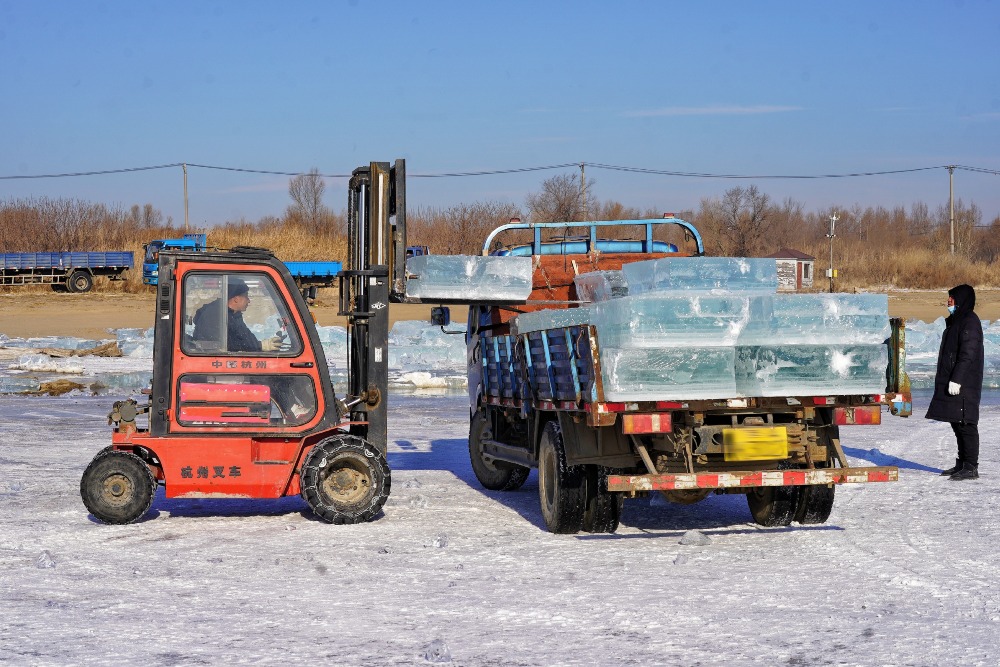
Harvesting ice blocks to build the "Ice and Snow World"
In the past, harvested ice was primarily used as a water reserve or for summer cooling.
Today, the ice blocks are mainly used to create ice sculptures, including the massive "Ice and Snow World" at the annual Harbin International Ice and Snow Festival, which covers an area of hundreds of thousands of square metres.
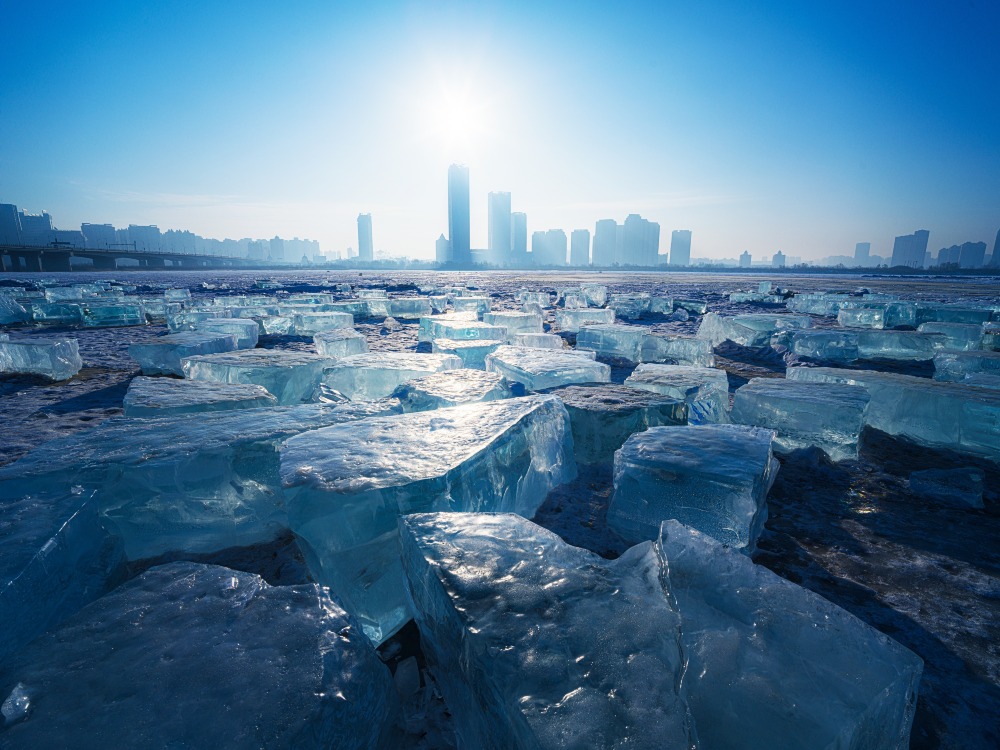
Despite the prevalence of mechanised ice production today, Harbin continues its ancient ice harvesting tradition for two key reasons.
First, creating massive ice sculptures requires vast amounts of ice, and sourcing it locally minimises energy consumption.
Second, the section of the Songhua River where ice is harvested has slow-flowing, clear water, making it ideally suited for constructing ice and snow landscapes.

Most importantly, the ice harvesting ceremony is regarded as an important element of Harbin's ice and snow culture. In recent years, the local area has held an ice harvesting festival, restoring the century-old folk custom of ice harvesting and passing on Chinese ice and snow culture.