Published : 2026-11-02
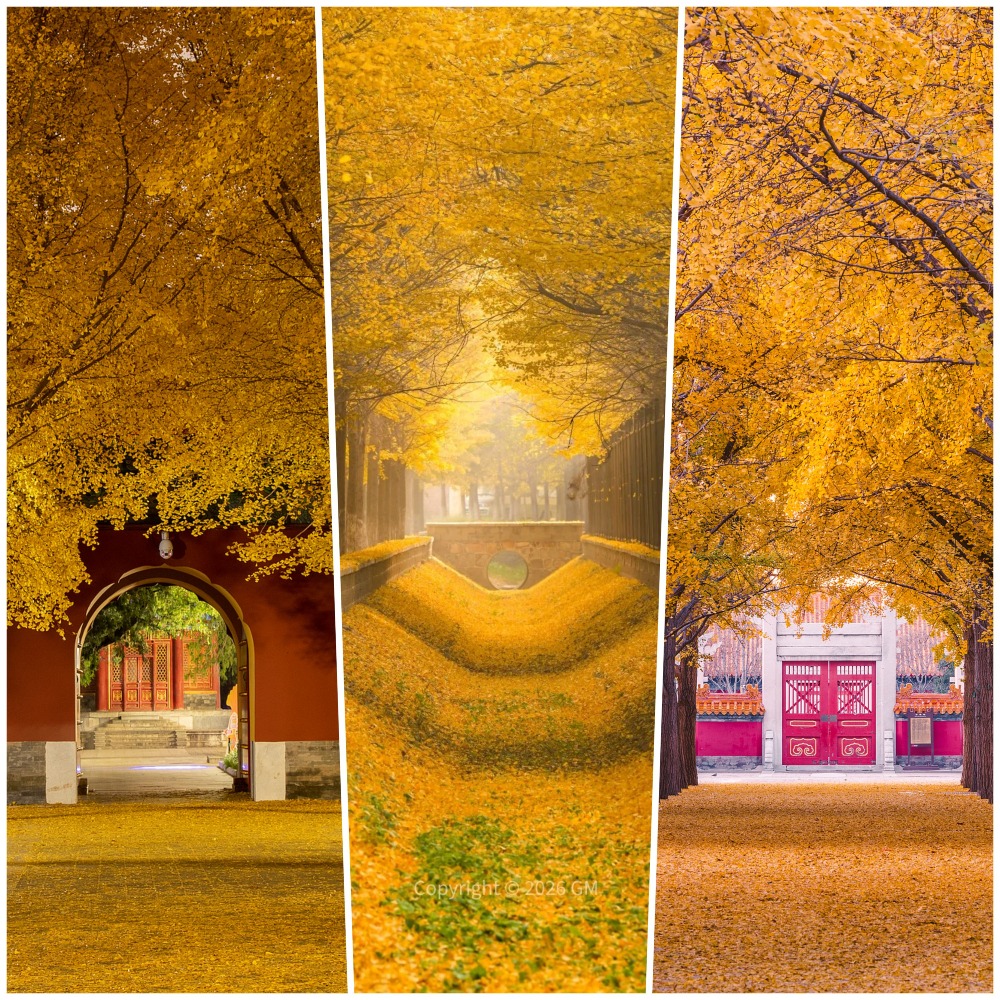
As autumn breezes stir, Beijing's ginkgo trees turn golden. From park avenues and temple gardens to village streets and ancient monasteries, each setting lends the season a distinct charm.
Slow down and explore four beautiful ginkgo spots, savouring autumn in the capital amid fallen leaves and historic architecture.
Ditan Park: A golden stroll through everyday Beijing
Just outside Andingmen in Beijing's Dongcheng district, Ditan Park was established in 1530 during the Ming dynasty.
A counterpart to the Temple of Heaven, its design reflects the traditional belief in a round heaven and a square earth. Once a sacred site where Ming and Qing emperors offered sacrifices to the earth, it is now a park where residents stroll and unwind.
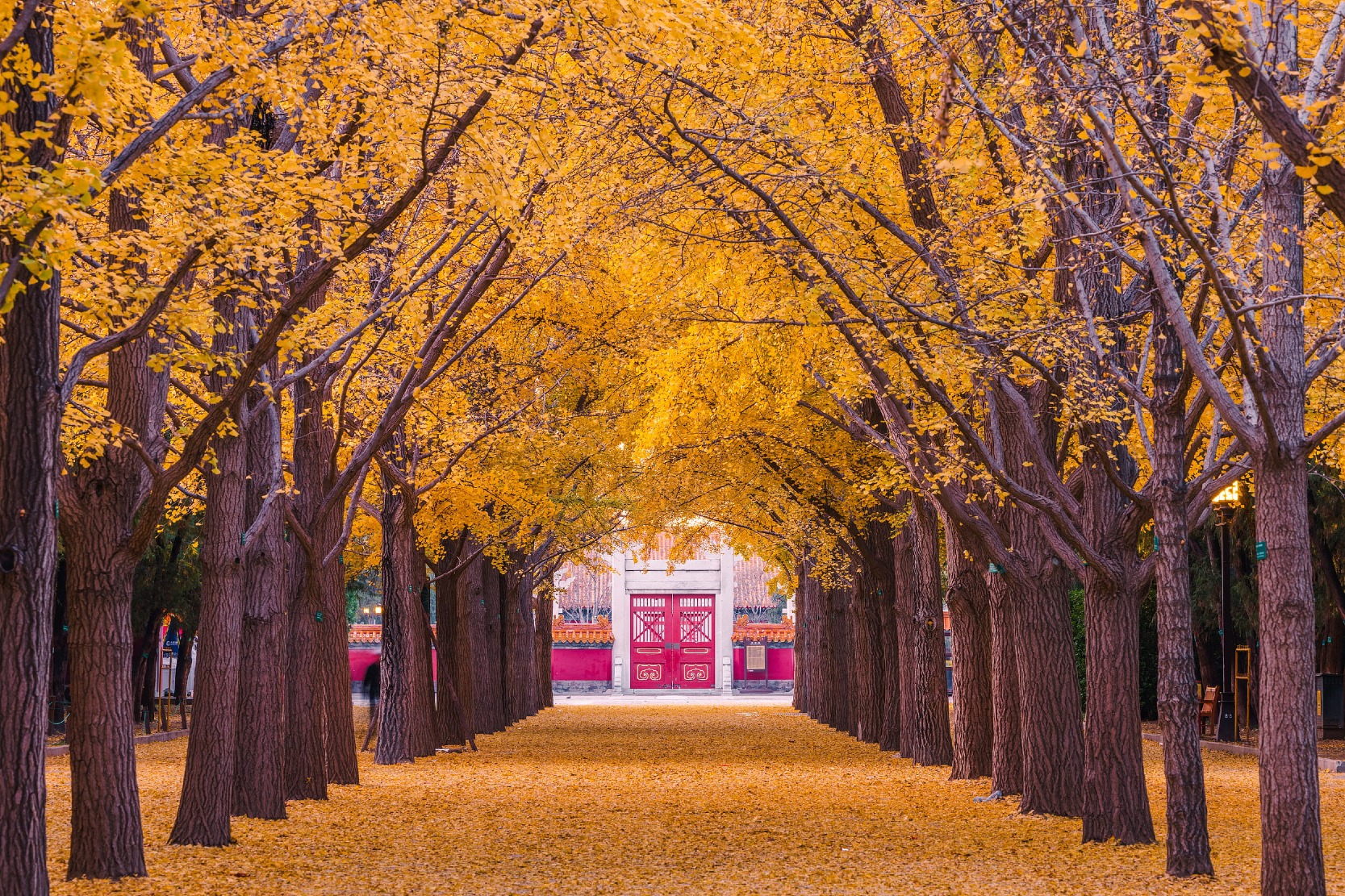
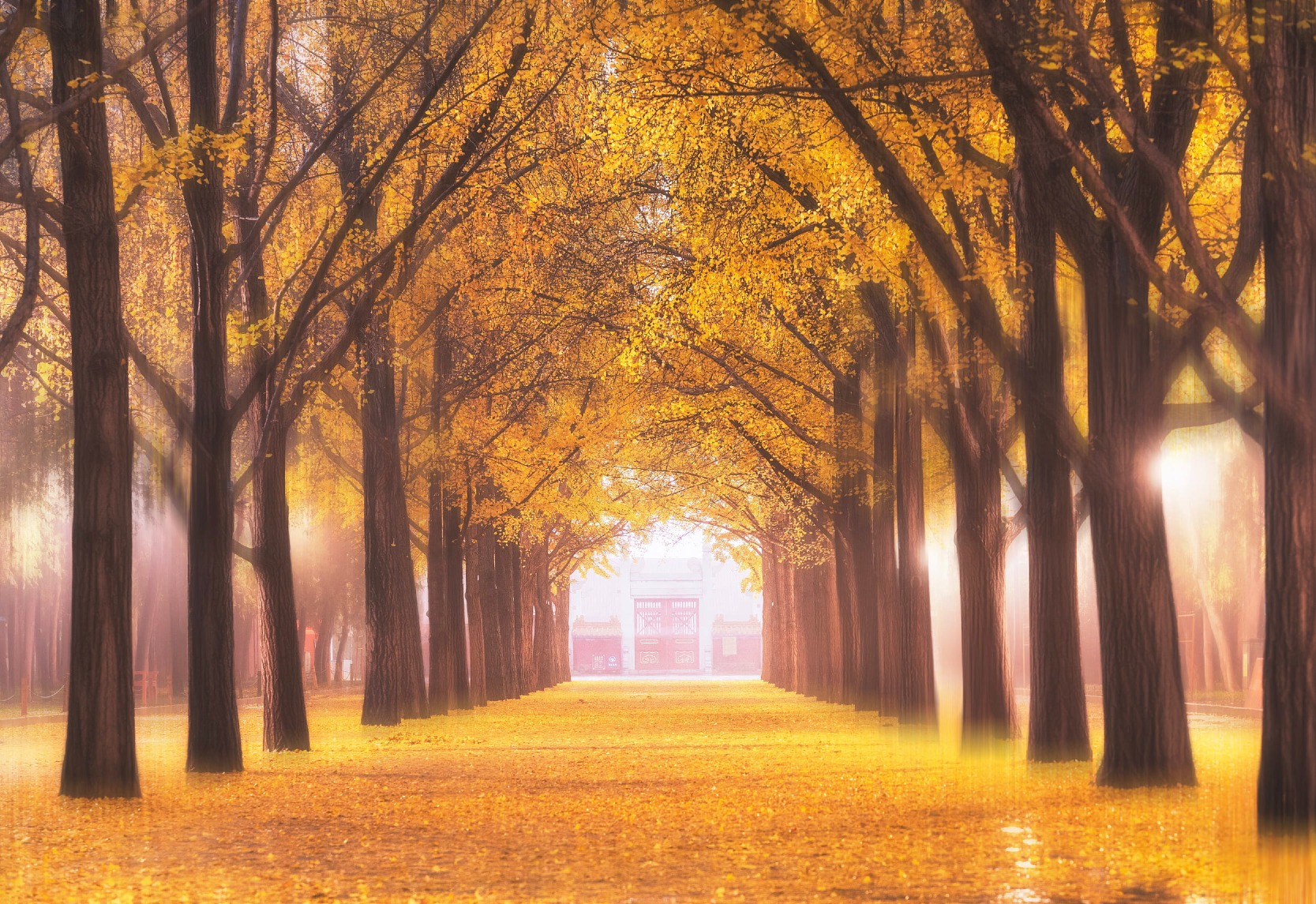
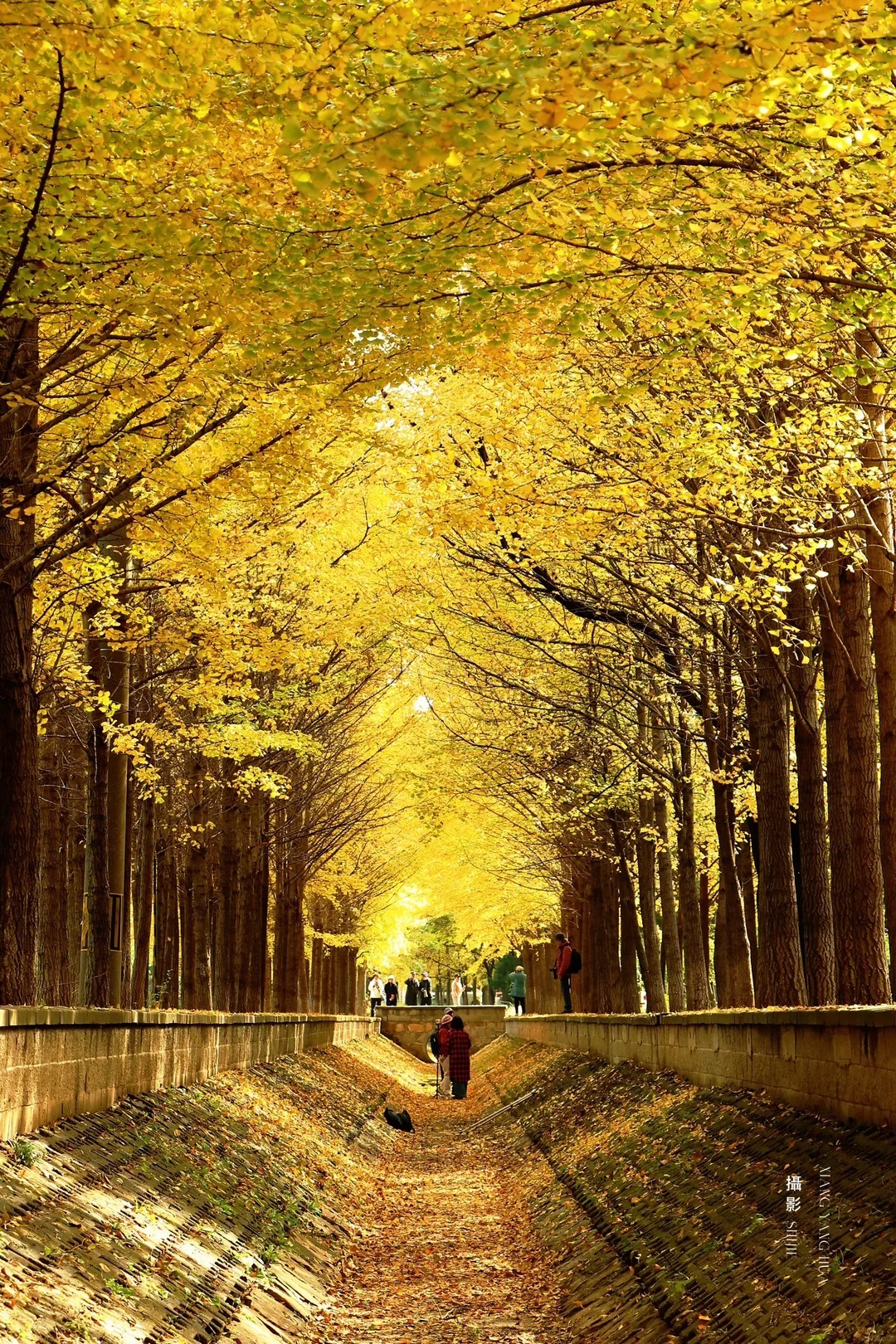
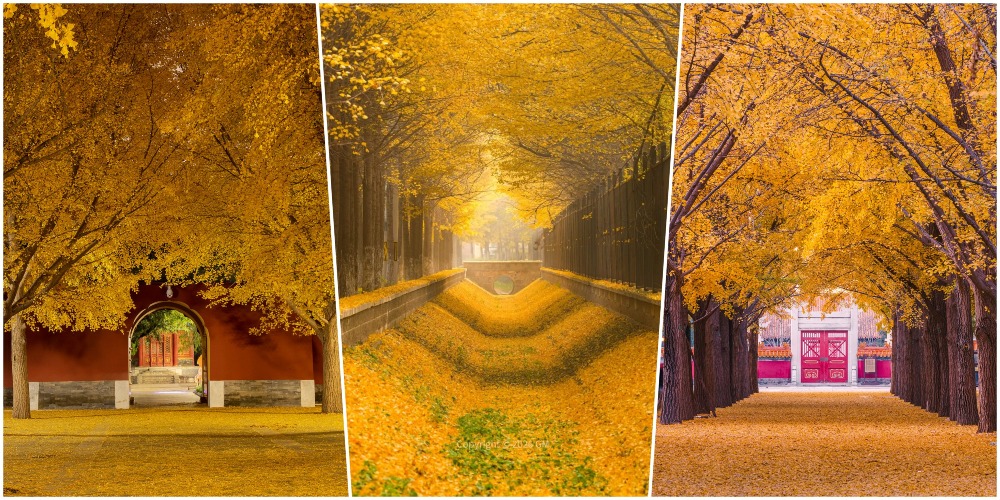
Autumn brings a welcoming, everyday warmth to this once-solemn imperial setting. Its ginkgo avenue is a classic spot for autumn colour: by late autumn, the trees turn golden, their branches weaving a luminous canopy over the path.
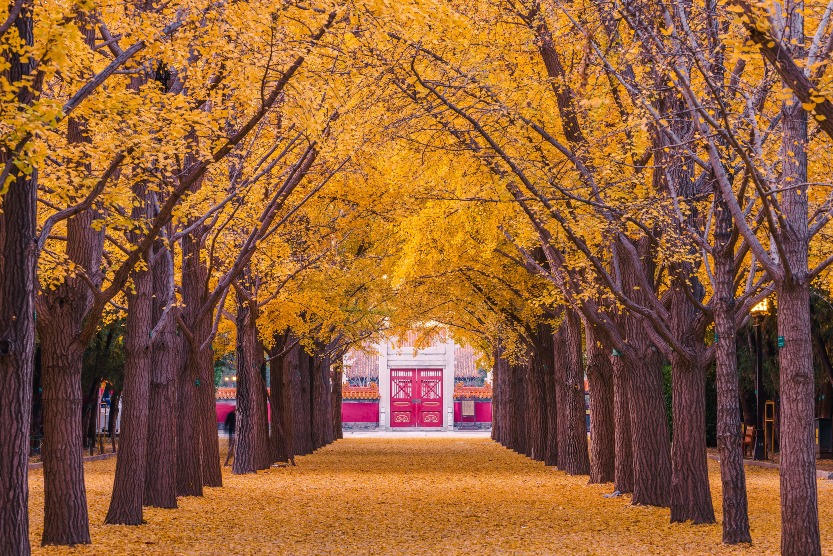
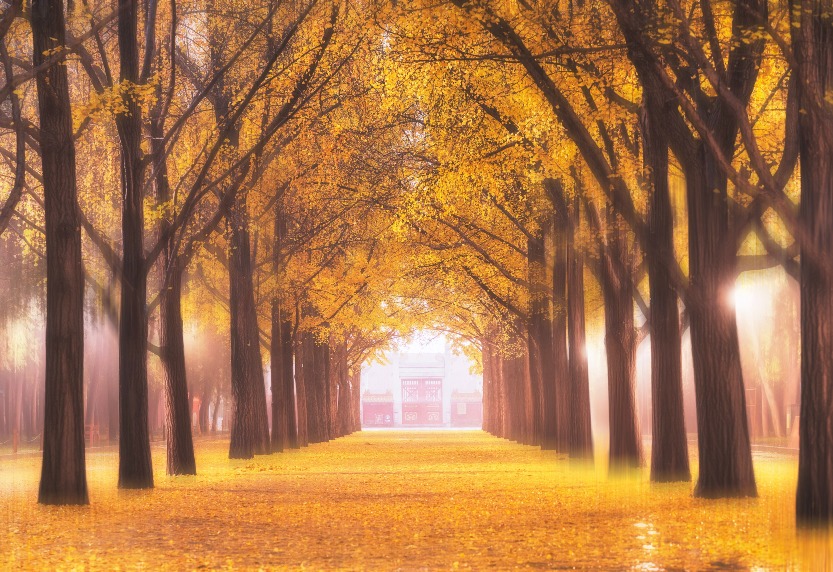
Put your phone away for a moment and look up at the sunlight filtering through the fan-shaped leaves. Then wander along the leaf-strewn paths at your own pace.
A breeze rustles the branches, sending a few golden leaves drifting down—an invitation to pause. Rather than rushing to snap a quick "I was here" photo, linger over a stroll.
Ditan offers more than beautiful ginkgo trees: it is a place to see how an ancient imperial altar fits into modern city life, and to savour the unhurried rhythm of a Beijing autumn.
Zhongshan Park: Ginkgo gold at the Altar of Land and Grain
Just west of Tiananmen, Zhongshan Park is another beautiful spot to enjoy Beijing's ginkgo trees in late autumn.
The park was originally the Altar of Land and Grain, built in 1420, where Ming and Qing emperors honoured the gods of land and grain.
Here, golden ginkgo leaves share the scene with centuries of history, lending the autumn landscape a distinctive imperial character.
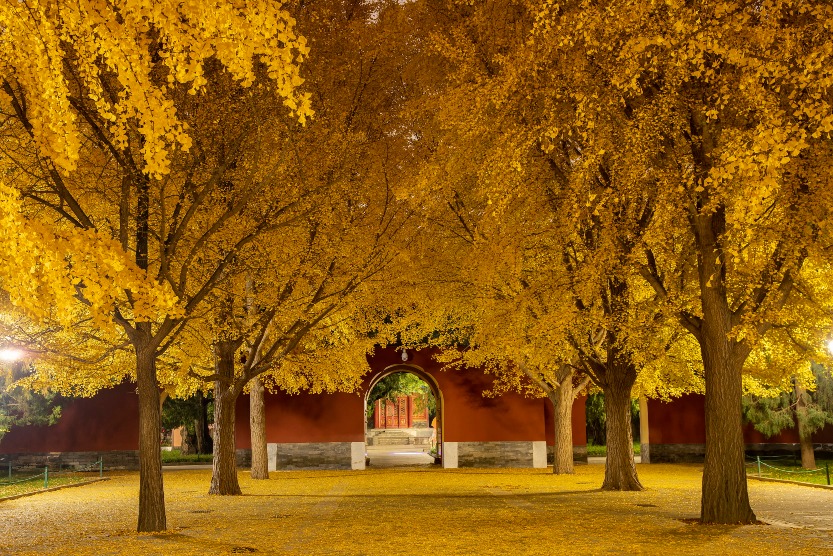
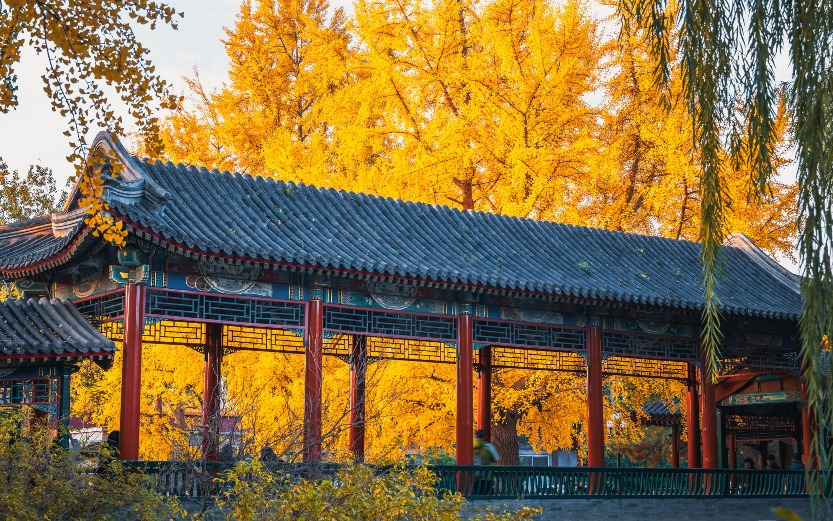
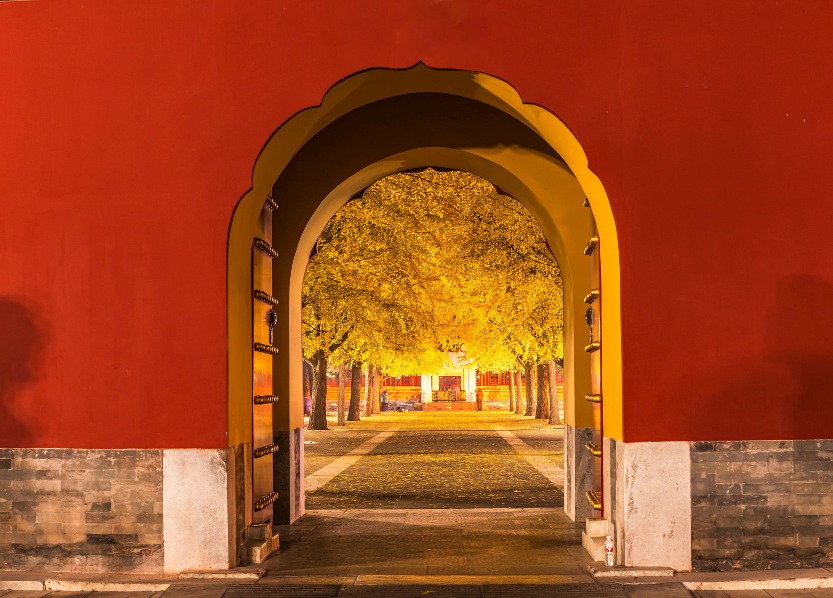
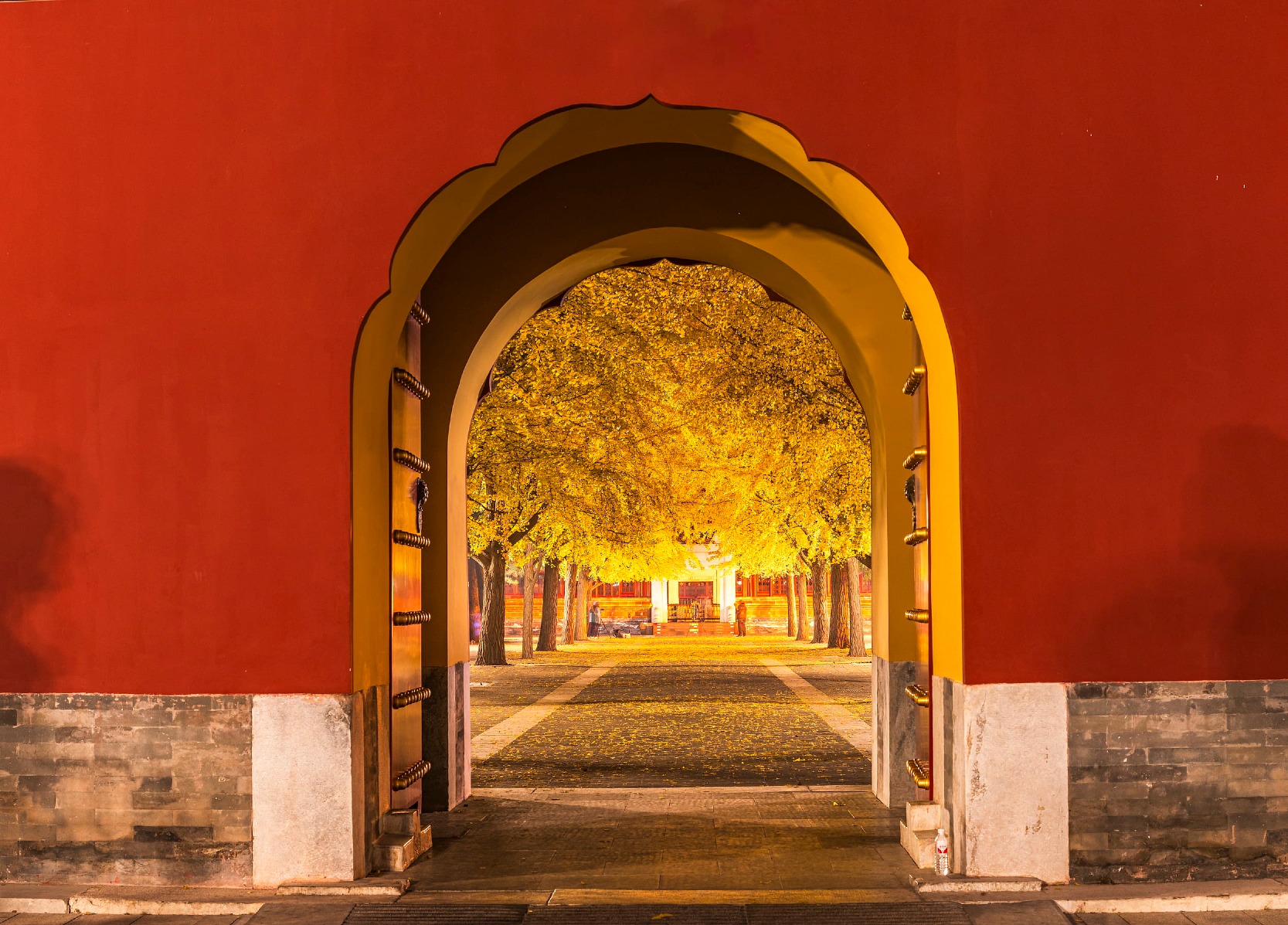
The Ginkgo Avenue south of the Altar of Land and Grain is the most worthwhile spot to linger in Zhongshan Park.
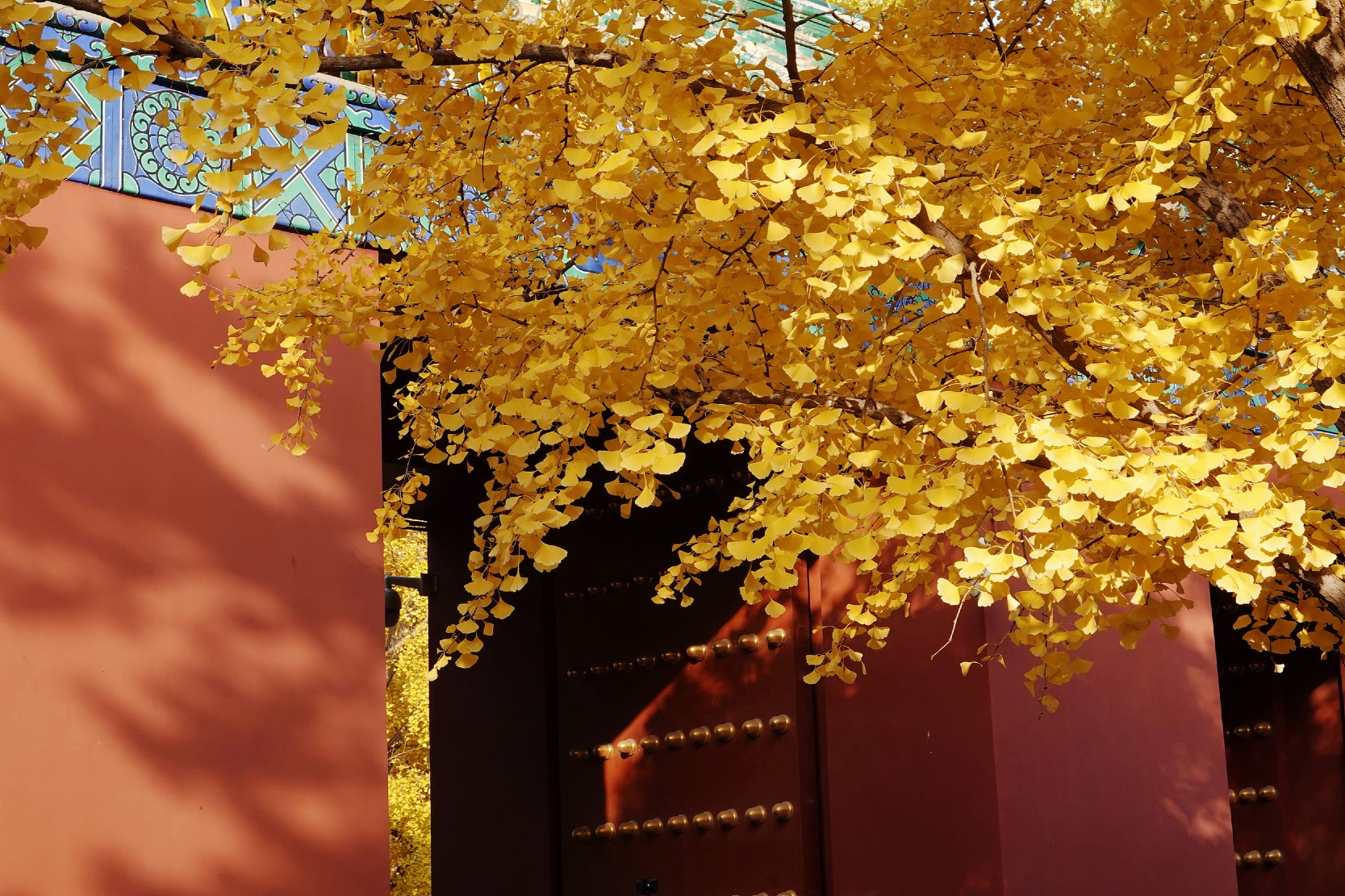
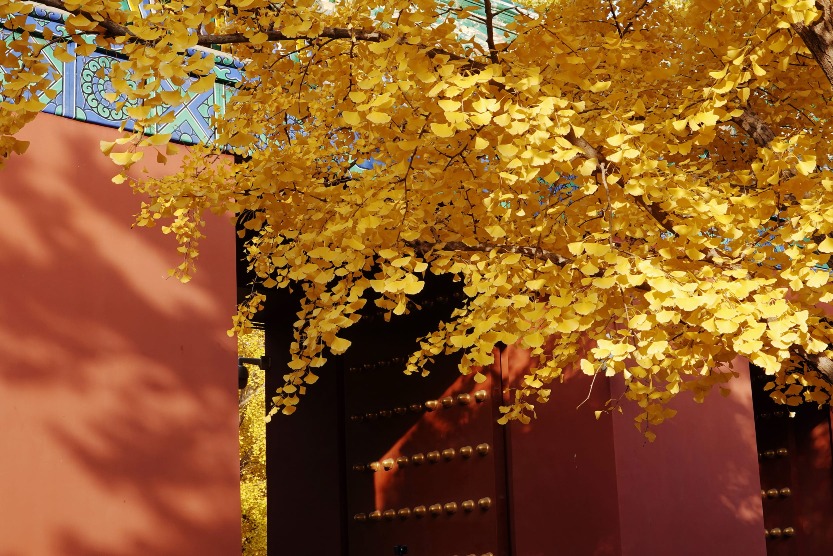
During late autumn, the tall and straight ginkgo trees change into their golden autumn attire, their branches and leaves stretching out in front of the red walls, adding a touch of brightness and softness to the originally solemn altar and temple garden.
Begin with a stroll along the avenue, then shift your perspective to frame the red walls, ginkgo branches and fallen leaves together.
Up close, the fan-shaped leaves reveal their delicate veins; from afar, golden canopies glow against the altar walls. A stretch of red, a few ginkgo branches—that is all it takes to capture the timeless charm of autumn in Beijing.
Baijiatuan Village: Step into the village to find autumn and see the streets dyed golden
For our next stop, let's move away from Beijing's city centre and visit Baijiatuan Village (the Cantonese pronunciation of "疃" is "dú"), located in Wenquan Town, Haidian District, at the foot of the Western Hills.
The highlight for enjoying the ginkgo trees here is hidden in the tree-lined path in front of the Baijiatuan Gas Station.
The gas station was originally a domestic gas supply station, but the road in front has become a captivating sight that makes people stop, thanks to the autumn colours of the ginkgo trees on both sides.
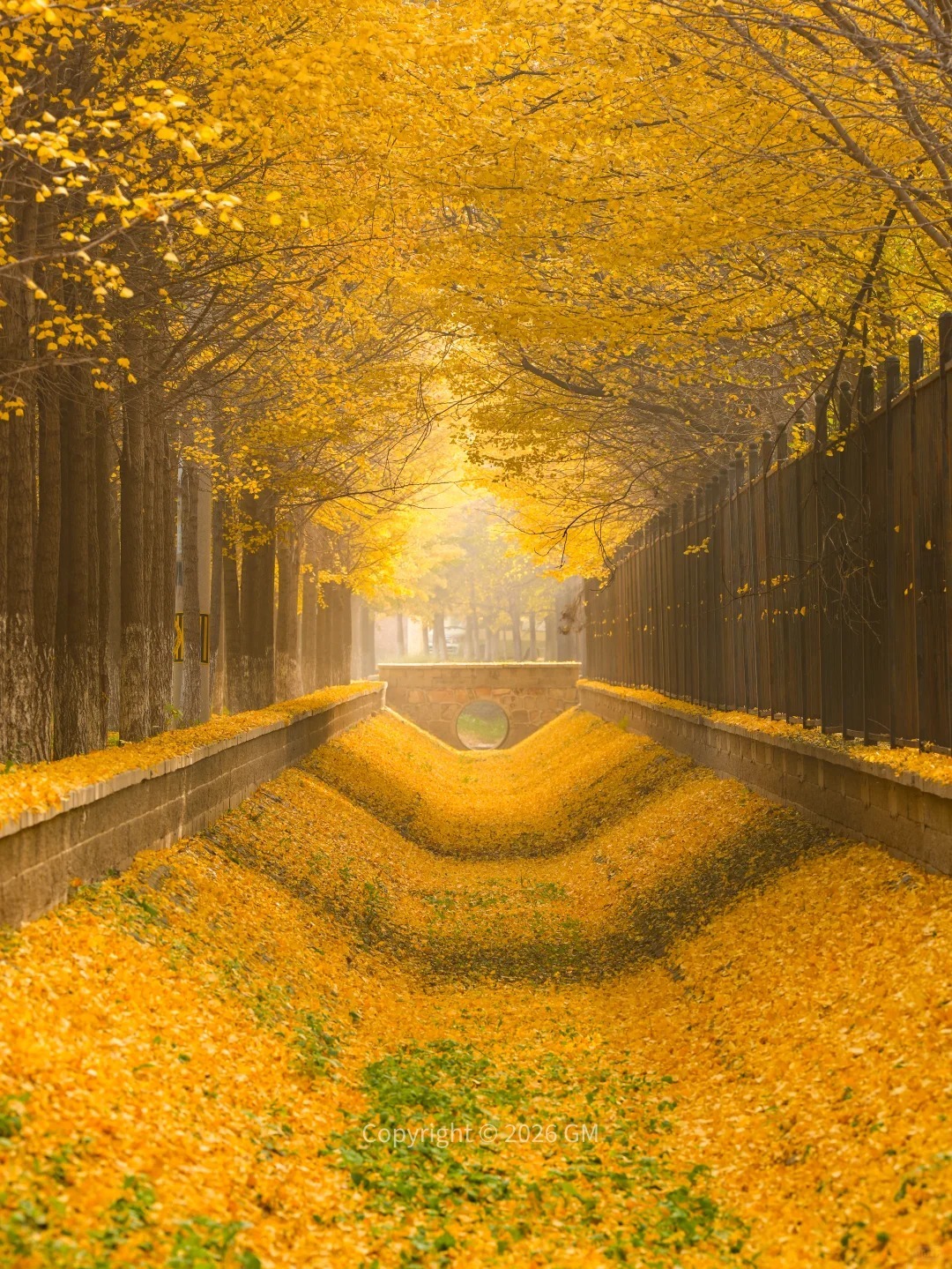
Unlike the wide ginkgo avenues in Ditan Park and Zhongshan Park, the most attractive feature of this path is the scenery of the intertwining ginkgo trees on both sides.
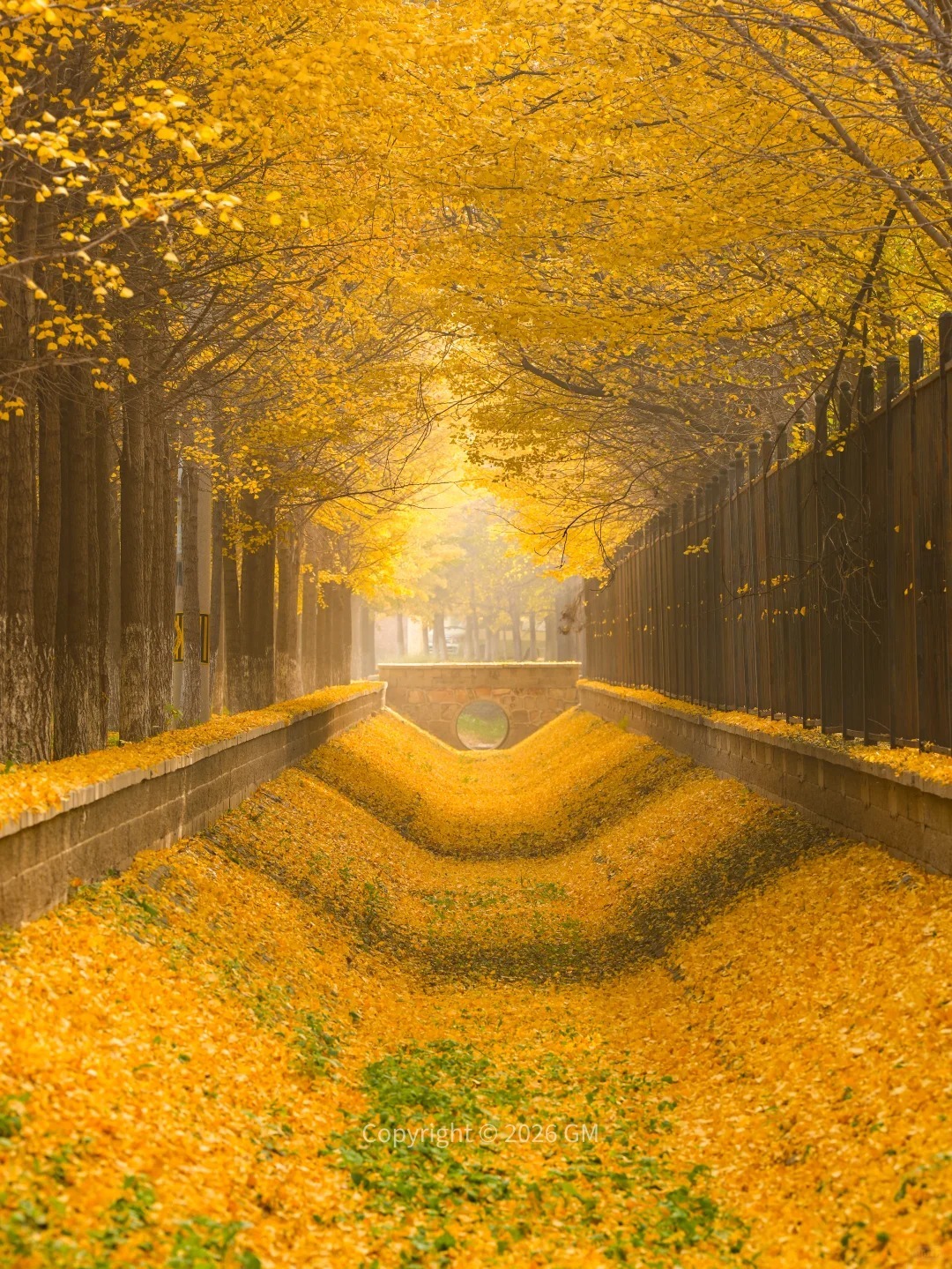
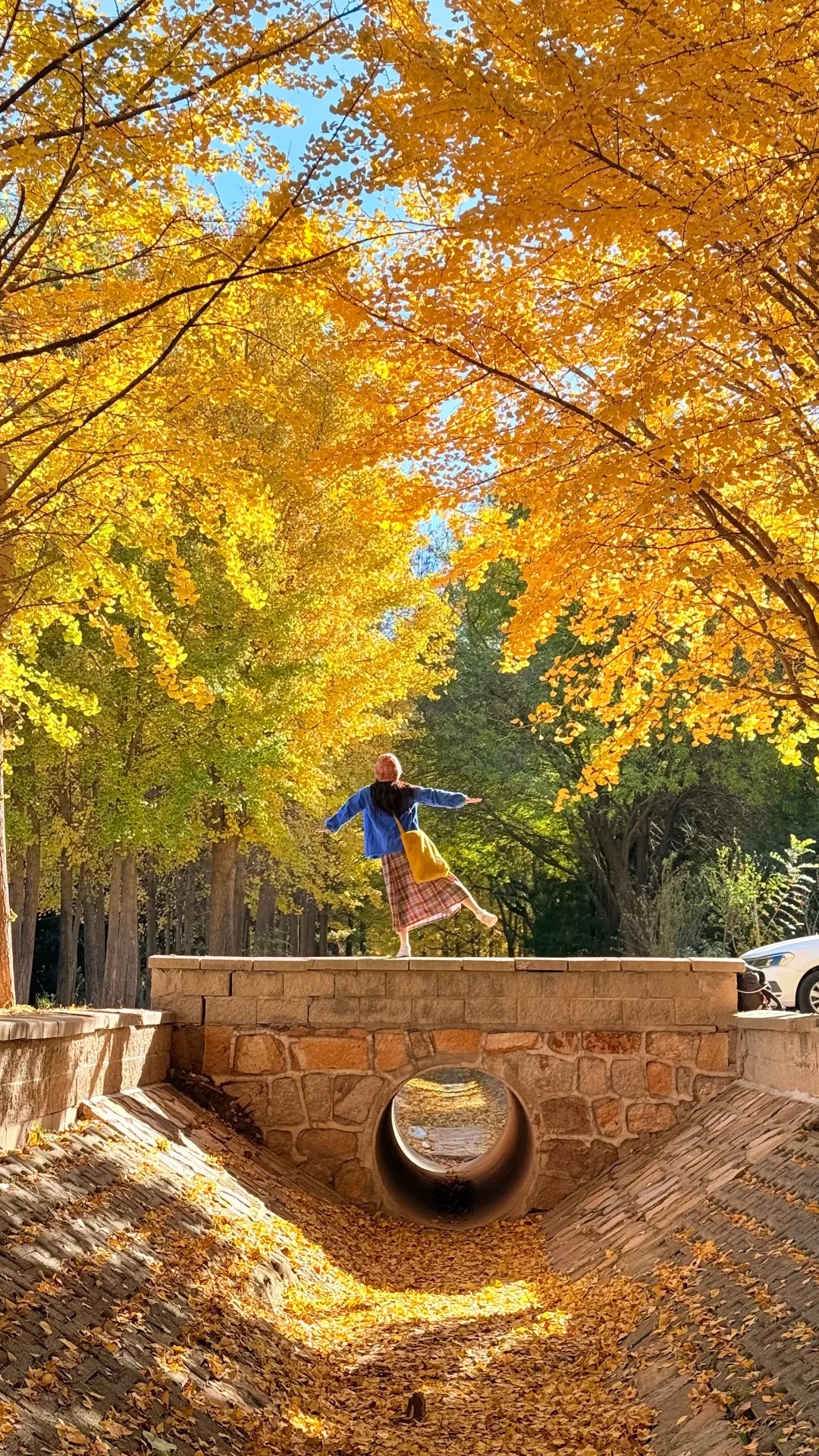
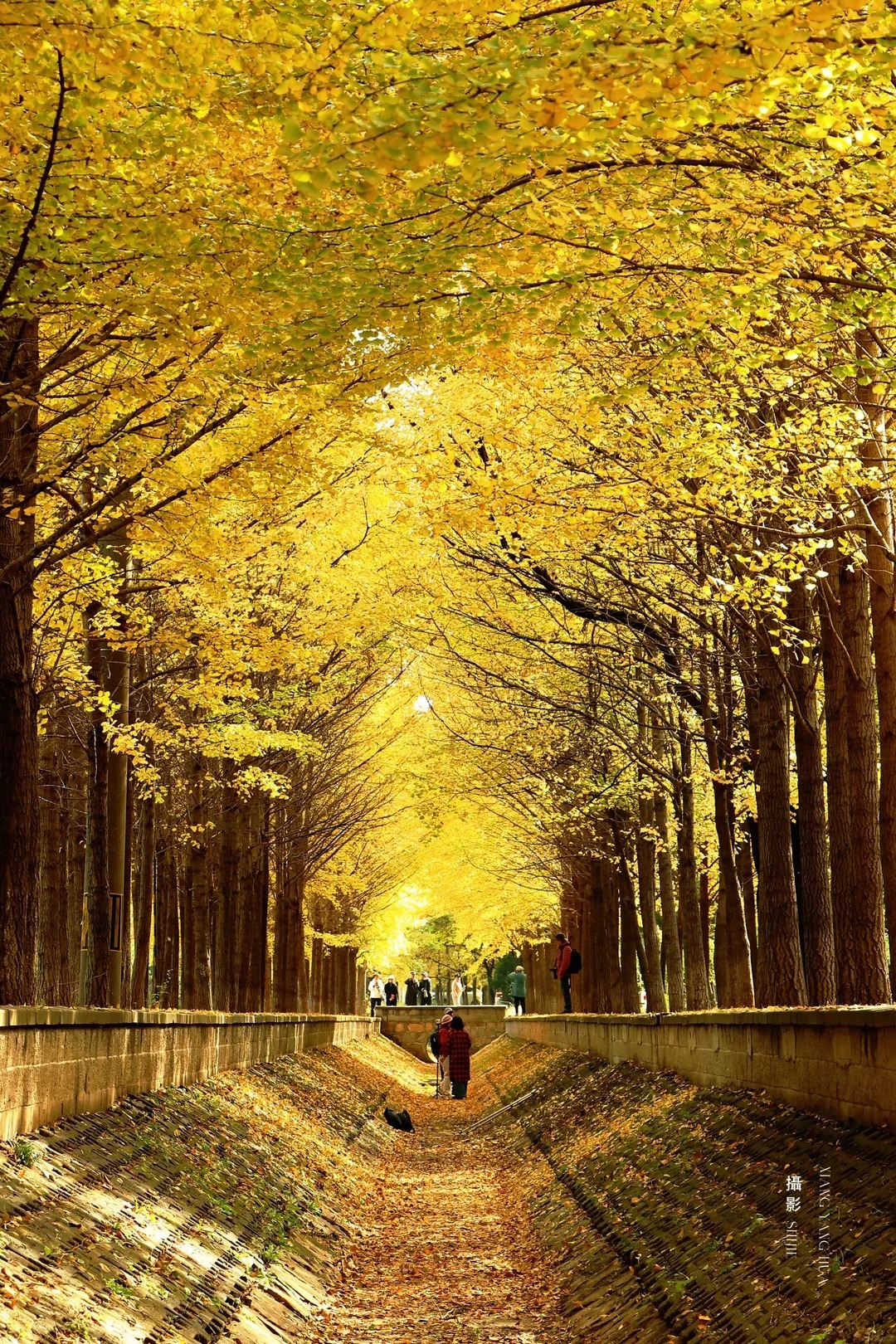
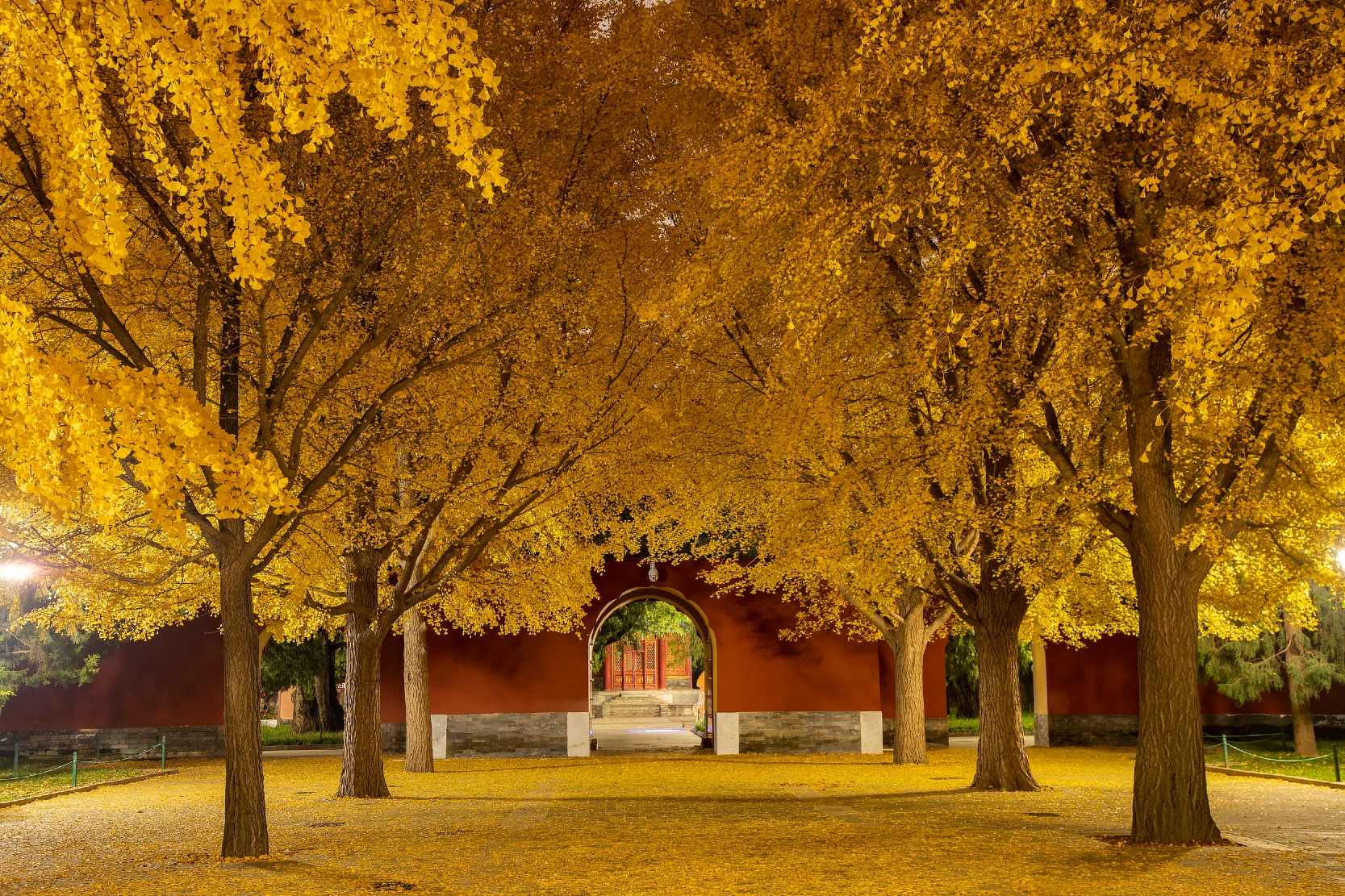
The ginkgo trees of Baijiatuan Village stretch towards the centre of the road, and the golden leaves form a continuous canopy overhead, as if you are walking into a golden corridor.
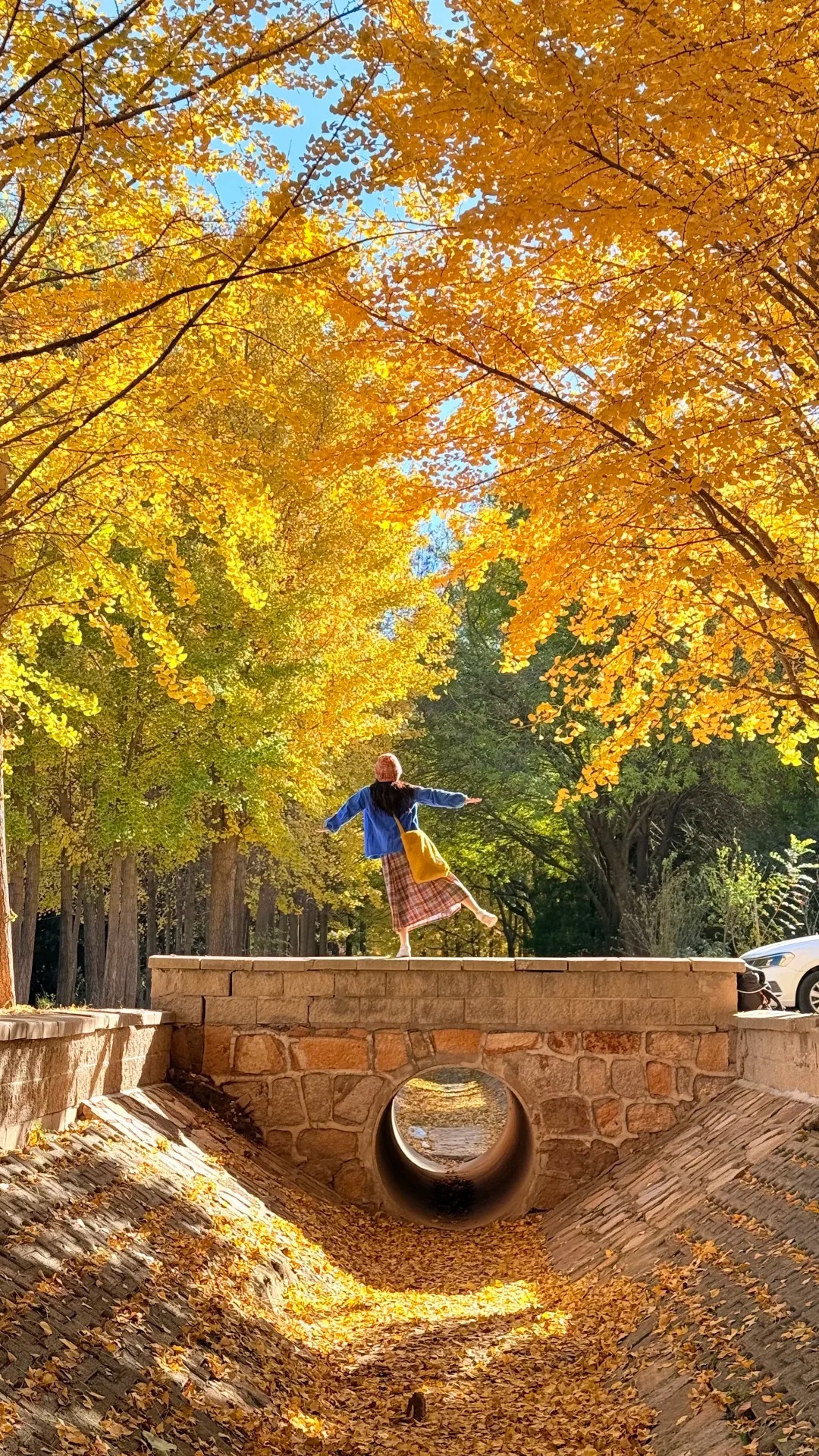
In late autumn, fallen ginkgo leaves cover the path; from the branches above to the ground below, everything is bathed in the warm colours of autumn. A casual shot of a companion's back as they stroll is already a touching autumn scene.
When taking photos, you could frame your shot along the path, using the sense of extension of the road to bring out the layers of the surrounding ginkgo trees.
You can also have your companion walk ahead, capturing their back, to create a picture of someone stepping into the golden corridor.
Here, there are no ancient buildings to serve as a backdrop; the combination of the trees' shapes and the path alone creates a scenic view.
By the way, as the Baijiatuan Village Gas Station is not a tourist attraction, you should also pay attention to the traffic arrangements on site when enjoying the scenery and not enter the operational area.
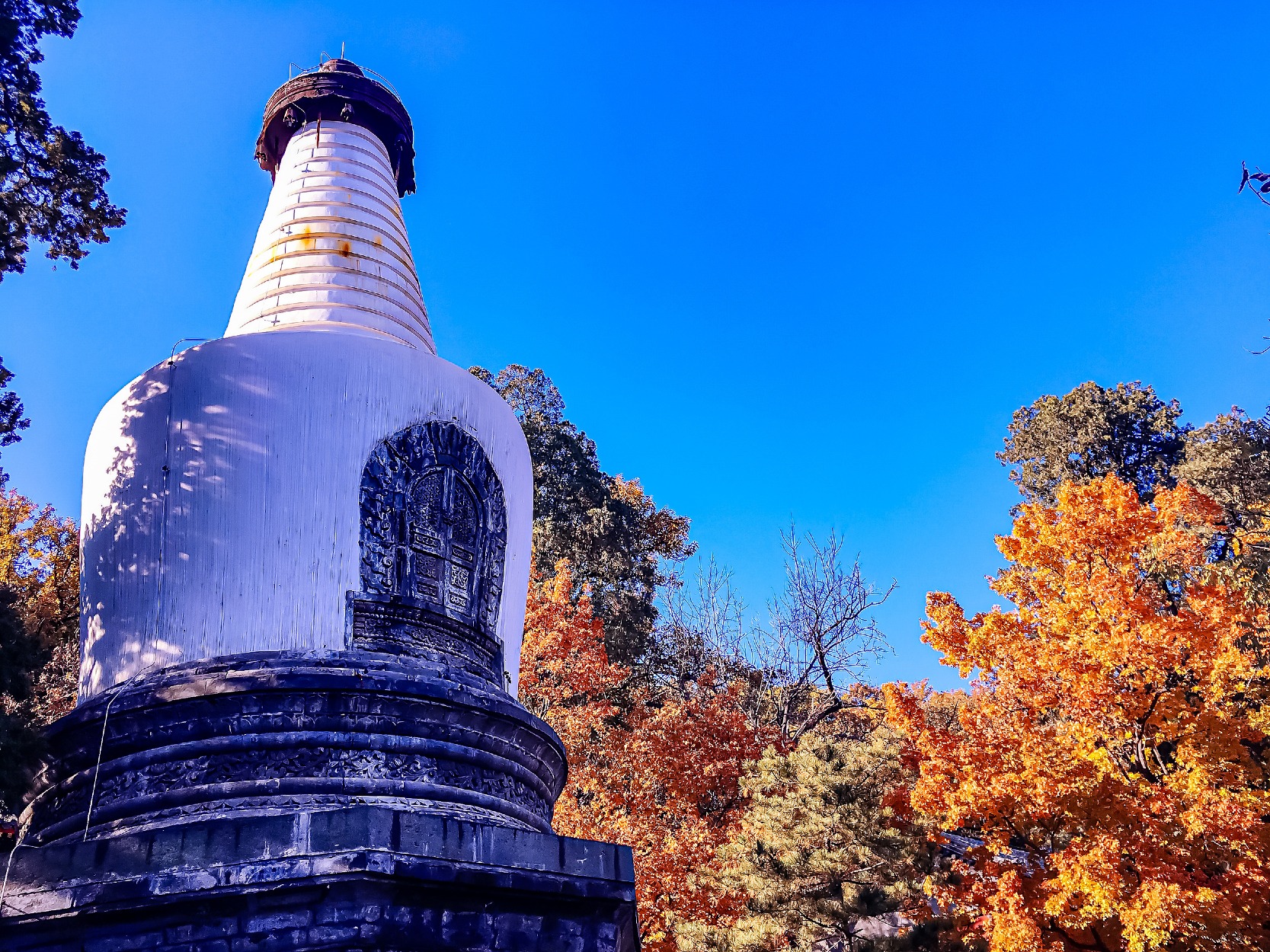
Dajue Temple: A thousand-year-old tree draped in gold
Dajue Temple is located in Sujiatuo Town, Haidian District, Beijing, on the southern foot of Yangtai Mountain.
It is an ancient temple first built in the Liao dynasty, famous for its clear springs, ancient trees, and tranquil environment.
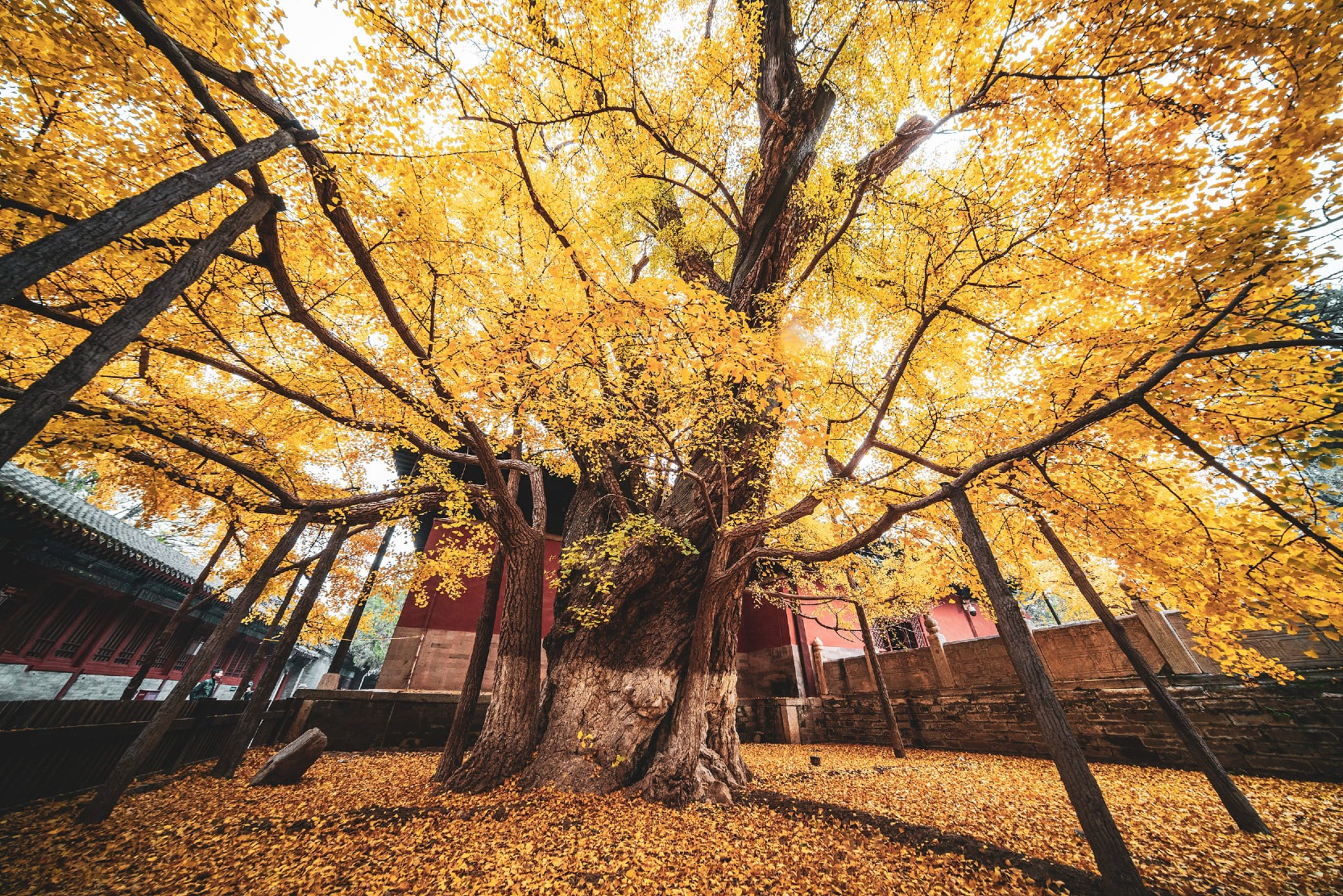
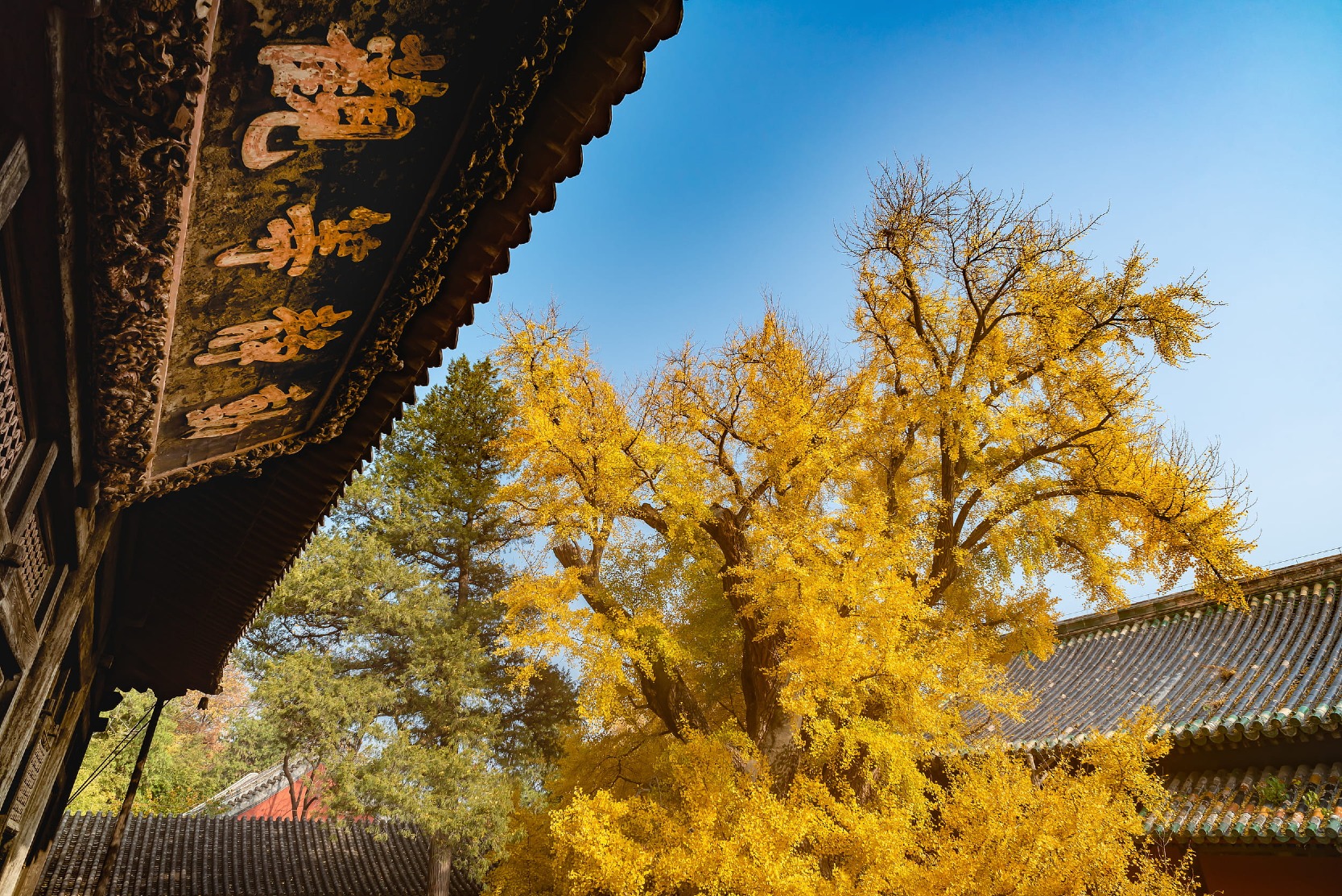
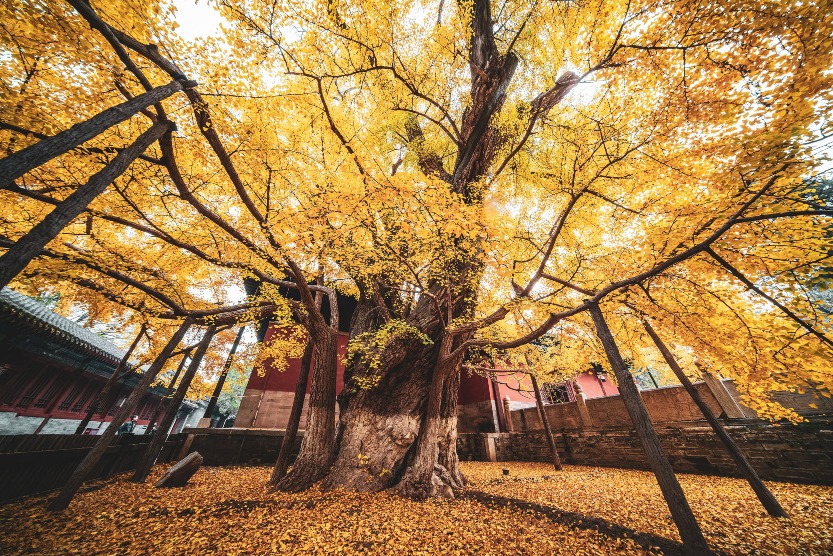
The most worthwhile autumn scene to stop for inside the temple is the two ancient ginkgo trees in front of the Hall of Immeasurable Longevity Buddha.
According to the Beijing Municipal Cultural Heritage Bureau, this pair of ginkgo trees, one female and one male, both date back to the Liao dynasty. They are over a thousand years old, renowned as the crown of the Western Hills' ginkgo trees.
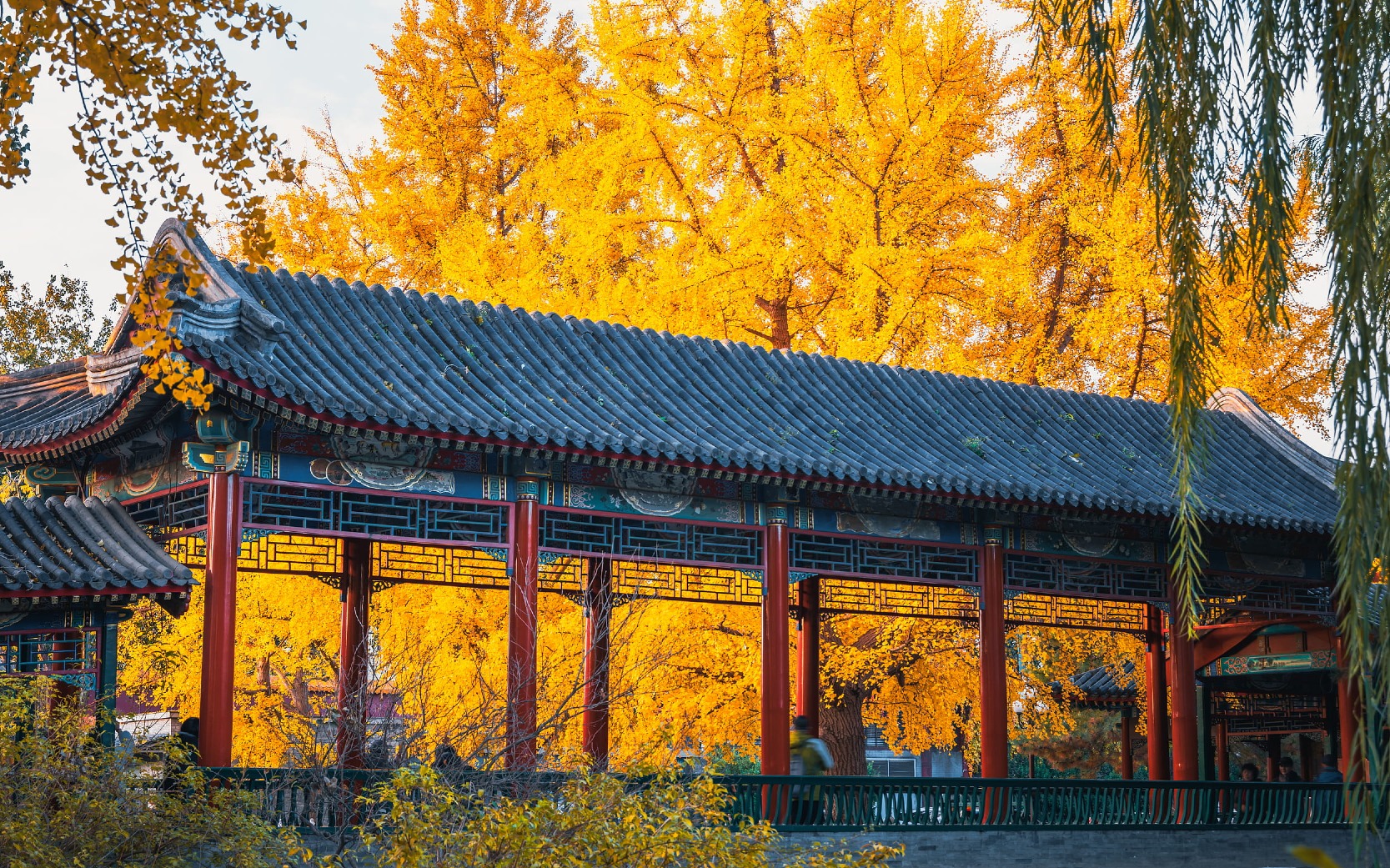
In late autumn, the golden branches and leaves complement the simple, ancient halls. Fallen leaves are scattered across the courtyard, compelling one to stop and admire the posture of the ancient tree that has weathered the years.
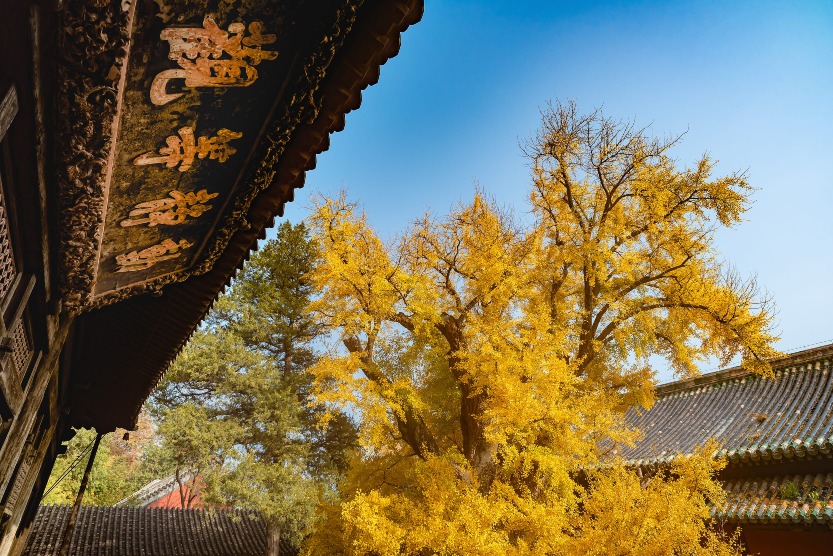
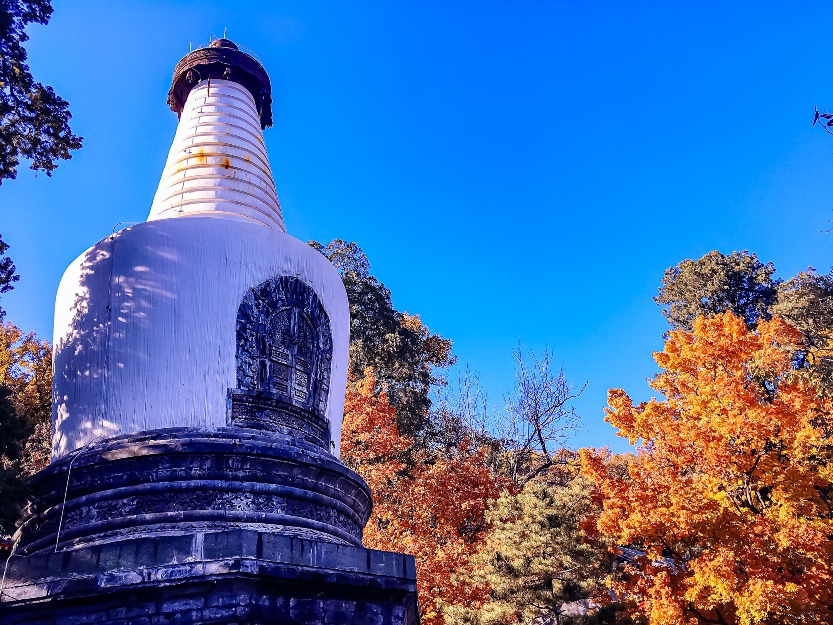
While admiring the ginkgo trees, look up beneath the eaves of Dajue Temple's Hall of Infinite Life. A plaque bearing the Qianlong Emperor's calligraphy reads "Contemplate motion and stillness alike."
He also celebrated the temple's ginkgo in verse: "Its ancient trunk exceeds the span of several people's arms; its flourishing branches cast a deep green shade."
Seen in this light, today's golden canopy offers more than a fleeting autumn spectacle. Leaves stir in the breeze while the ancient tree stands still, linking a thousand years of history with the season unfolding before you.
This autumn, slow down and discover Beijing in gold.
Read more:
The stunning murmurations of Shandong's autumn and winter
4 of China's best places for autumn osmanthus viewing