Published : 2025-12-22
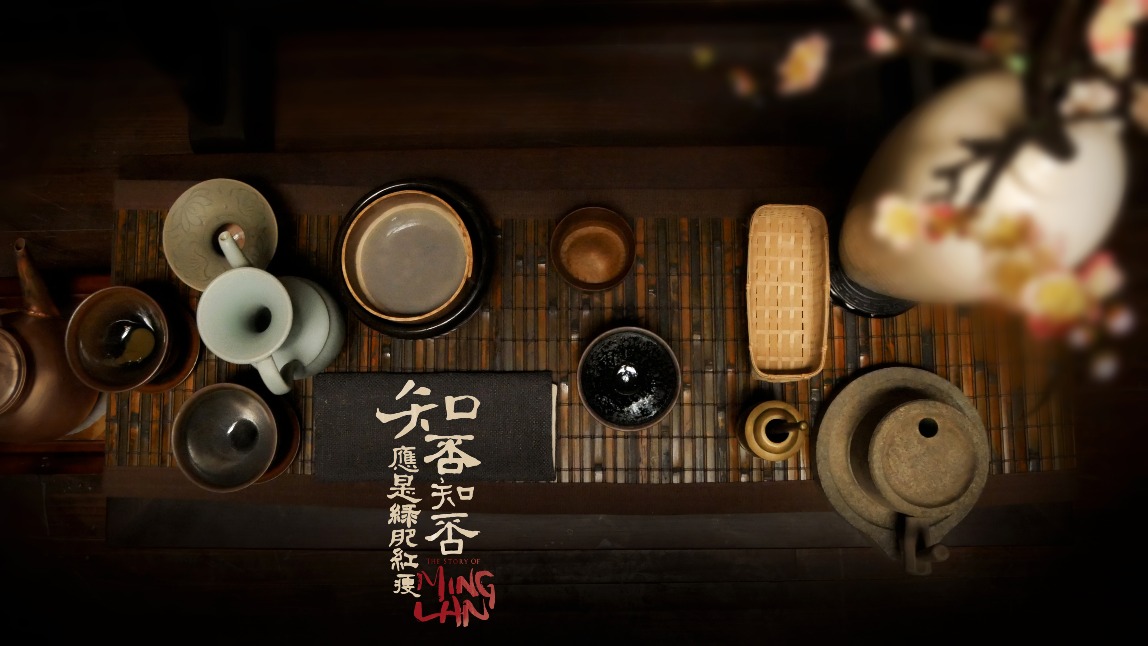
Many today enjoy coffee art, yet a similar tradition flourished in China's Song Dynasty. The drama The Story of Minglan revived interest in "Dian Cha", the period's signature tea method.
This involved whisking hot water into powdered tea to create a thick foam, served in distinctive Jian Zhan bowls. Its advanced form, "Cha Bai Xi", used only tea and water to craft intricate, fleeting patterns on the foam—a remarkable parallel to modern latte art.
This classical Chinese tea culture later profoundly influenced the Japanese matcha ceremony.
The lost art that shaped Japanese Tea Ceremony
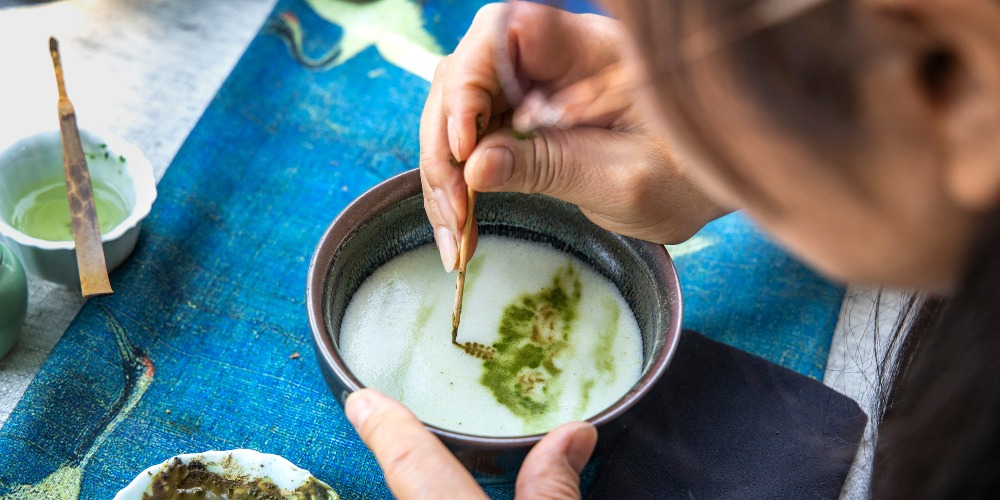
Spooning tea powder into a tea bowl, pouring in boiling water, whisking rapidly with a bamboo tool to create a layer of dense foam on the surface of the tea liquor...
This is not a modern person making coffee, but the popular method of drinking tea in the Song dynasty, "tea-whisking". In the historical drama The Story of Minglan, which is set in the Song dynasty, this special and ancient tea art has attracted attention.
Diancha (點茶), the art of whisking tea, was celebrated as one of the Four Refined Arts of Song Dynasty literati—alongside flower arranging, antiquing, and incense appreciation.
The term "dian" (點) refers to the pouring of hot water. To prepare diancha, a small piece of compressed tea cake was first dried, then ground into fine powder.
The powder was sifted into a tea bowl, followed by a stream of boiling water. Using a bamboo tea whisk (chasen), the mixture was then vigorously whipped—much like beating egg whites—until a thick, velvety froth, known as tanghua (湯花, "soup bloom"), formed on the surface.
The ideal tea froth was prized for its pure white colour, fine texture, and long-lasting stability. The timing, force, and technique of pouring water and whisking all determined the froth's form, density, colour, and durability—making the process highly skill-dependent.
During the Southern Song dynasty, diancha was introduced to Japan, where it profoundly influenced what later evolved into the Japanese tea ceremony. In China, however, the practice gradually faded from popular use.
In 2019, Song-era diancha returned to the global stage in a new form.
At the Sino-German Economic Trade Exchange Dinner during the Belt and Road Forum for International Cooperation, Song Lianke, an inheritor of the intangible cultural heritage of diancha, demonstrated the art.
She presented powdered tea and tea utensils used in diancha to former UN Secretary-General Ban Ki-moon, who praised the tradition for its refinement and ingenuity.
A Chinese cultural heritage akin to coffee latte art
Building upon diancha, Chabaixi (茶百戲) represents an advanced form of the art, also known as "tea division" or "water ink painting."
This technique involves using a tea ewer or spoon to carefully drip water onto the surface of already whisked tea. The flow of water manipulates the froth to create intricate patterns, calligraphy, and even sequential, changing imagery within a single bowl—a mesmerizing effect highly celebrated by Song literati.
While visually reminiscent of modern coffee latte art, Chabaixi has two key distinctions: first, the "painting" is done using only tea and water; second, the designs are dynamic and can transform multiple times.
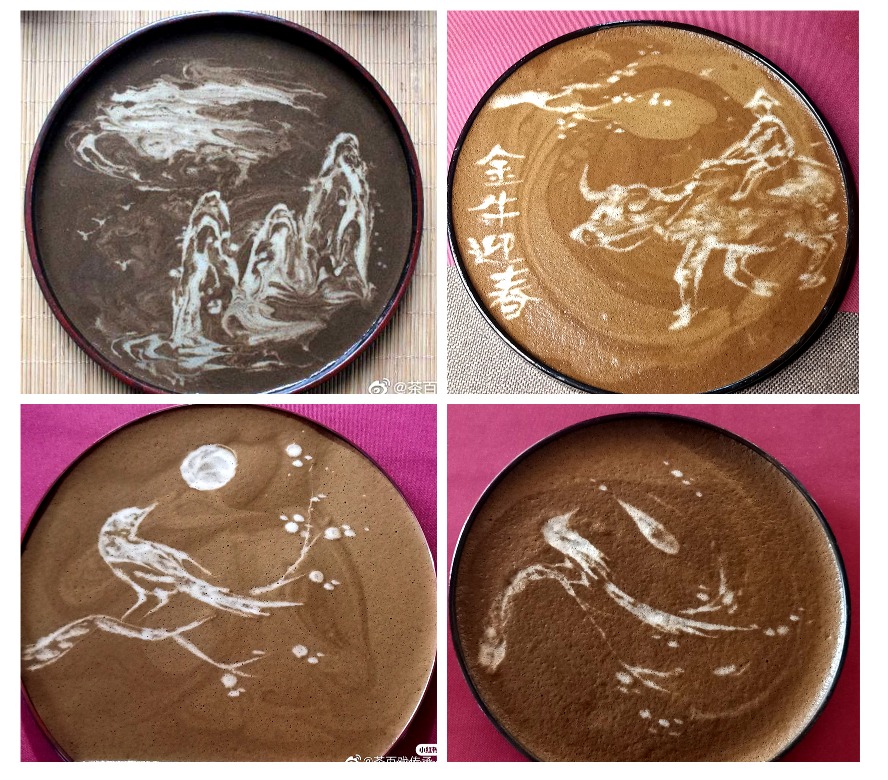
The practice of tea division (分茶) originated in the Tang Dynasty, flourished throughout the Song Dynasty, and was later lost for a period before its gradual revival in the 21st century.
In 2017, it was recognised as part of Fujian Province's Intangible Cultural Heritage.
Considered the perfect companion to diancha is another heritage treasure: Jian Zhan tea bowls, which hold national-level intangible cultural heritage status. In the television drama The Story of Minglan, nearly every main character is shown using one of these distinctive bowls.
Cultural heritage gradually becoming "ancient-style fashion"
This black-glazed tea bowl, produced in Jianyang, Fujian, was a treasured tea vessel during the Song Dynasty.
Its firing demanded exceptionally high temperatures, during which the clay and glaze underwent remarkable transformations in the kiln, producing a variety of glazes and patterns such as "hare's fur," "partridge spotting," "yaobian" (radiant transformation), pure black, and multi-hued effects.
It was famously said that "the kiln receives one colour, but yields ten thousand."
Among these, "yaobian" (曜變) Jian Zhan bowls are exceptionally rare. Their glazes and patterns resemble a starry cosmos, and only one or two might emerge from thousands of firings.
Today, only three known surviving yaobian Jian Zhan bowls exist, all preserved in Japan and regarded as Japanese National Treasures.
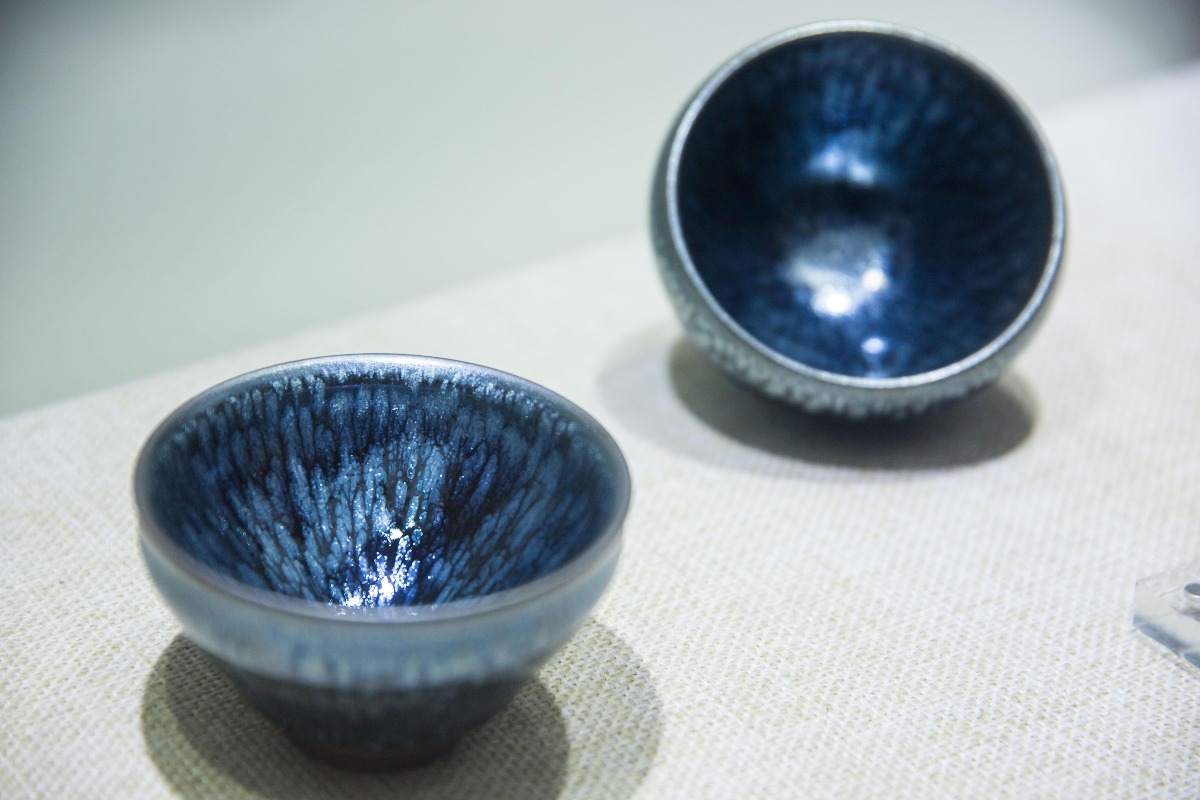
The firing technique for Jian Zhan bowls reached its zenith during the Song Dynasty before being lost for centuries.
It was not until the 1970s that research began in Fujian to revive this ancient craft. After tens of thousands of experiments, the firing technique was fully restored.
Jianyang in Fujian is now recognised as the "Capital of China's Jian Kiln and Jian Zhan." By 2019, the local industry had grown to include over 2,500 enterprises and more than 20,000 practitioners.
Beyond the ubiquitous Jian Zhan shops, a Jian Zhan cultural and creative street and a Jian Zhan-themed town have also taken shape.
Following the hit series The Story of Minglan, the Jian Zhan market has welcomed a wave of new enthusiasts.
Master artisan Gao Mogui told mainland media that previously, most admirers of Jian Zhan were tea ceremony aficionados. After the show aired, many viewers sought them out specifically. "Particularly the 12.5cm diameter ‘hare ‘s-fur’ bowls, identical to those used in the drama, have sold extremely well," he noted.
New product blends incorporating cultural and creative elements, such as Jian Zhan-themed stationery and Jian Zhan-inspired accessories, have also become popular as a form of "heritage-chic."