Published : 2022-01-12
As the saying goes, to see the bridges of the world, look at China.
China not only has numerous record-breaking modern bridges but also ancient Chinese bridges that have stood for thousands of years, showcasing the architectural wisdom of ancient people.
Where is the Chinese city with the most ancient bridges? The answer is Shaoxing, Zhejiang Province, which is the hometown of renowned Chinese writer Lu Xun (魯迅).
Shaoxing: The city with the most complete types of ancient Chinese bridges
Shaoxing (紹興), with a history of 2,500 years, has long been intertwined with water and bridges.
It currently boasts over 700 ancient bridges, making it the city with the highest number and the most complete types of ancient bridges in China.
It is acclaimed as the "Museum of Ancient Chinese Bridges" and the "Venice of the East."
Shaoxing is crisscrossed by waterways and has been described as "small bridges, flowing water, and family houses" since ancient times.
According to statistics, Shaoxing has over 700 ancient Chinese bridges, with more than 10 built before the Song Dynasty (960-1279 AD), over a thousand years ago.

Shaoxing is not only the city with the most ancient Chinese bridges but also the place with the most complete types of ancient bridges.
Wooden bridges, stone beam bridges, stone arch bridges, and even ancient "overpass bridges" can be seen in Shaoxing.
Famous Chinese bridge expert Mao Yisheng once said, "The various forms of our country's traditional ancient stone bridges can almost all be seen in this town (Shaoxing)."
Bazi Bridge, Tieshan Bridge, Jingkou Bridge, and 12 other ancient bridges display high levels of design and construction techniques of ancient Chinese bridge-building art.
They are regarded as representatives of Shaoxing ancient bridges and were listed as a National Key Cultural Relics Protection Unit under the name of "Shaoxing Ancient Bridge Group" in 2013.
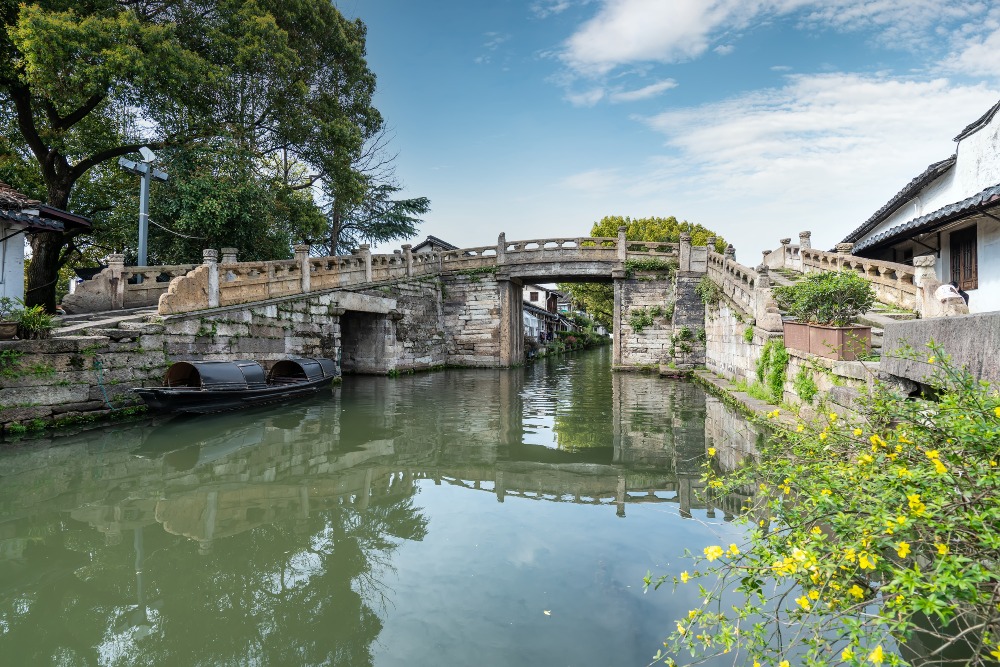
Built during the Song Dynasty, the Bazi Bridge (八字橋), is one of the oldest city bridges still existing in China. It is named for its resemblance to the Chinese character "八" that means "eight".
Spanning three rivers and connecting four streets, its ingenious design solved complex water and land traffic problems and is considered the earliest "overpass bridge" in China.
It consists of intersecting main and auxiliary bridges, with the main bridge being 4 metres high and 3.2 metres wide, connecting multiple surrounding rivers and streets.
Its simple structure ensures the bridge's stability, economises stone materials, and reduces the bridge's weight, which has been crucial to its standing for over 800 years.
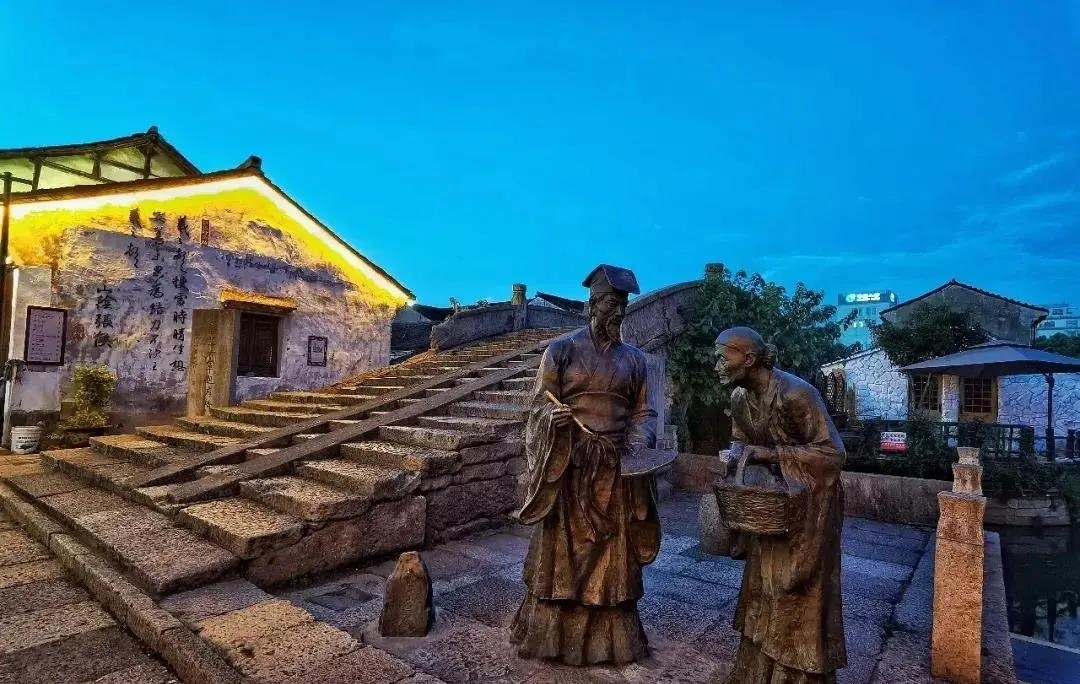
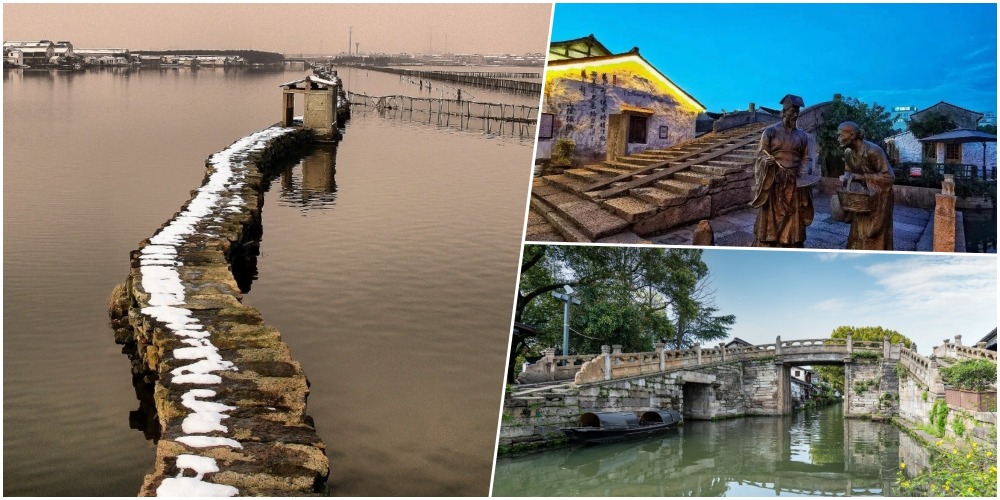
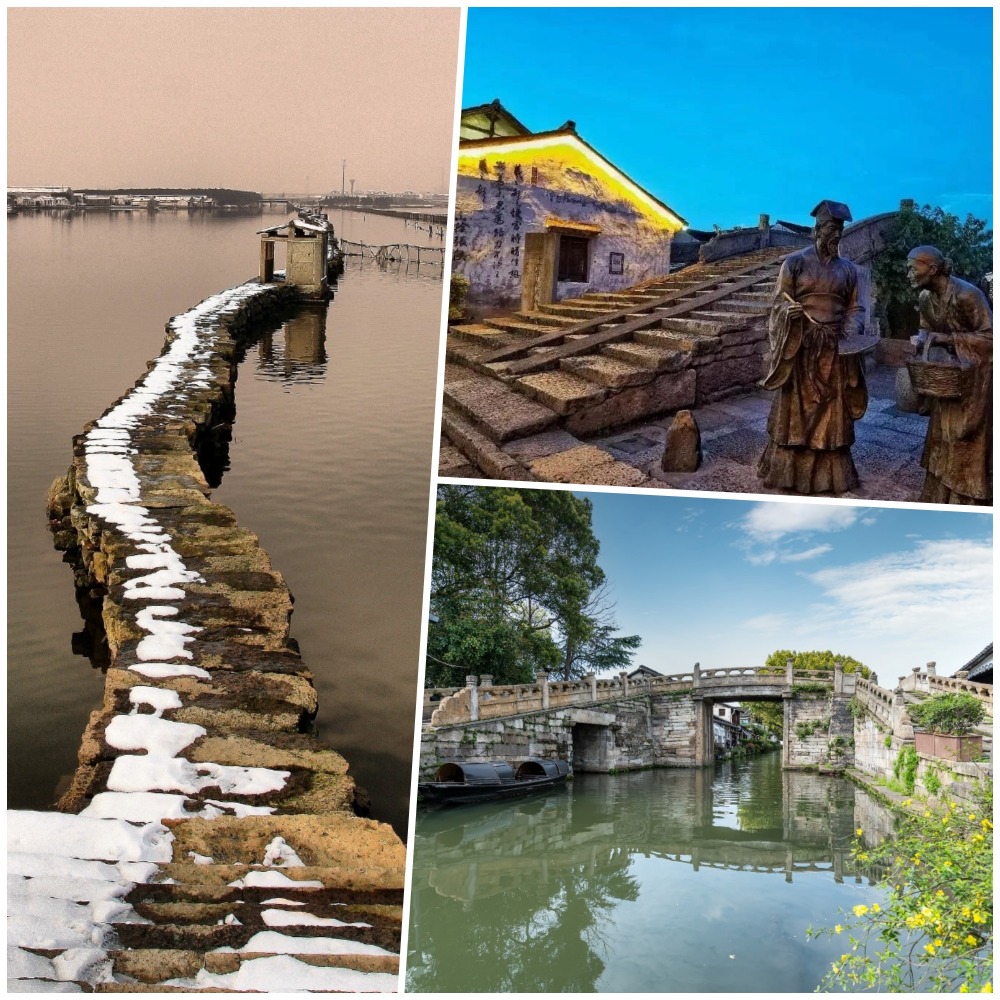
Tishan Bridge (題扇橋), built in the Qing Dynasty (1644-1911 AD), is an ancient bridge with a story, associated with the legend of the "Calligraphy Sage" Wang Xizhi (王羲之).
Wang Xizhi once lived in Jishan, Shaoxing. It is said that one day he encountered an old lady selling fans on the street. Feeling sympathetic for her hard life, he wrote some words on the fans.
Initially, the old lady was angry, but Wang Xizhi told her that she could say the fans were inscribed by him, which would sell for a high price of "hundreds of coins." The old lady followed his advice, and sure enough, everyone scrambled to buy them.
To commemorate Wang Xizhi's good deed, the nearby bridge was named "Tishan Bridge," which means "the bridge of inscribing on the fan".
Additionally, China's only long-span stone beam bridge from the Tang Dynasty (618-907 AD), the Xiandao Bridge (纖道橋), and the only continuous three-arched horseshoe-shaped Jingkou Bridge (涇口橋), are also located in Shaoxing.
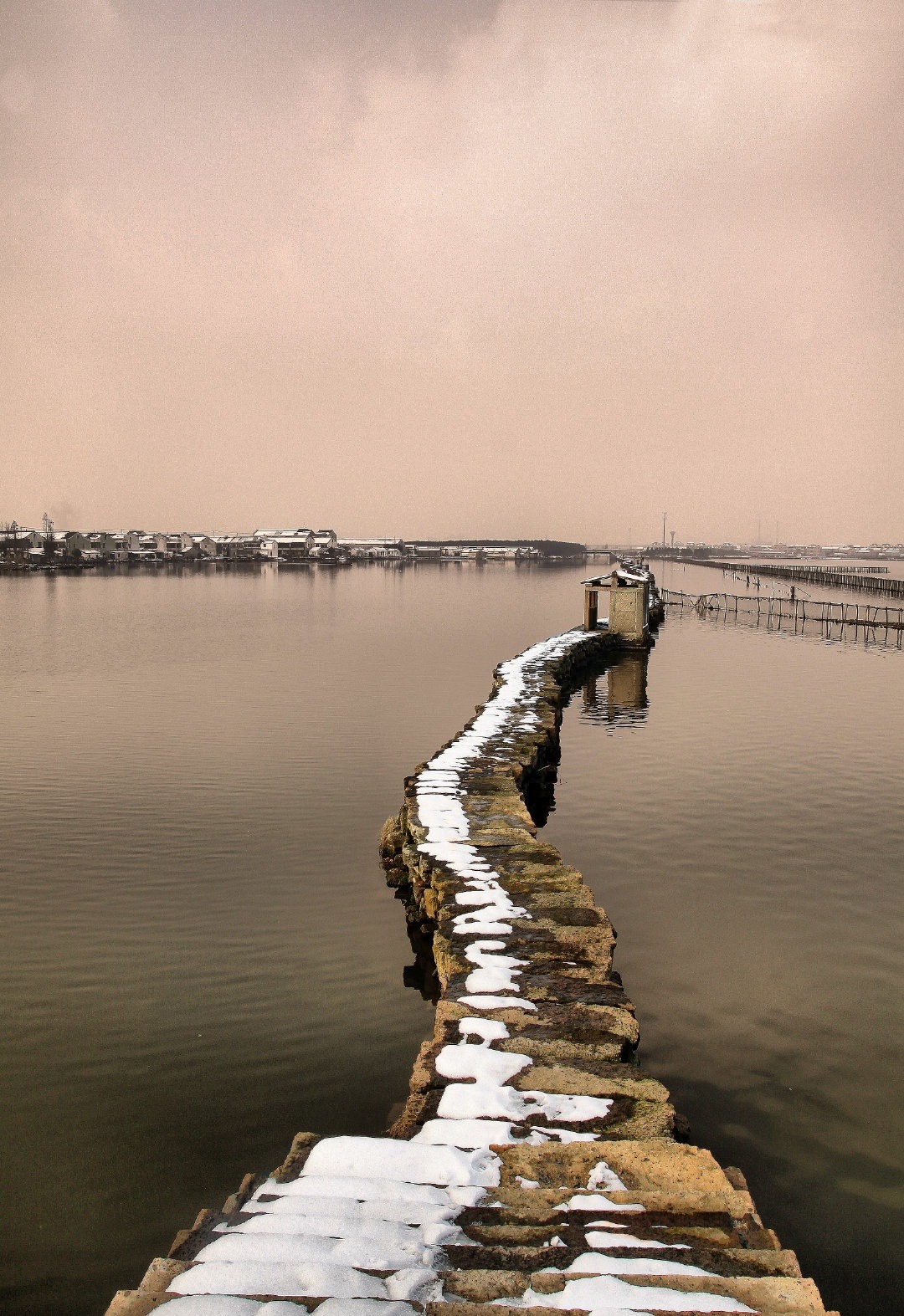
Associated with Shaoxing's water transport history, the old Xiandao (towpath) has a bridge built on it, which is the only remaining extra-long stone pier stone beam bridge in China, regarded as a marvel among ancient Chinese bridges.
Shaoxing: Protect ancient Chinese bridge with new tech
In recent years, the local government has strengthened the protection of these ancient Chinese bridges.
In 2019, the Yuecheng District government of Shaoxing conducted "comprehensive inspections" on the Bazi Bridge and several other ancient bridges in the district, using modern scientific methods to detect diseases, subsidence, and deformation of the bridges.
In 2020, they "trimmed" the ancient bridges, removing vine plants growing on them to prevent damage to the bridge structures and to avoid microbiological corrosion of the bridge surface caused by plant roots.
In just one day, staff cleared more than 600 pounds of vines.
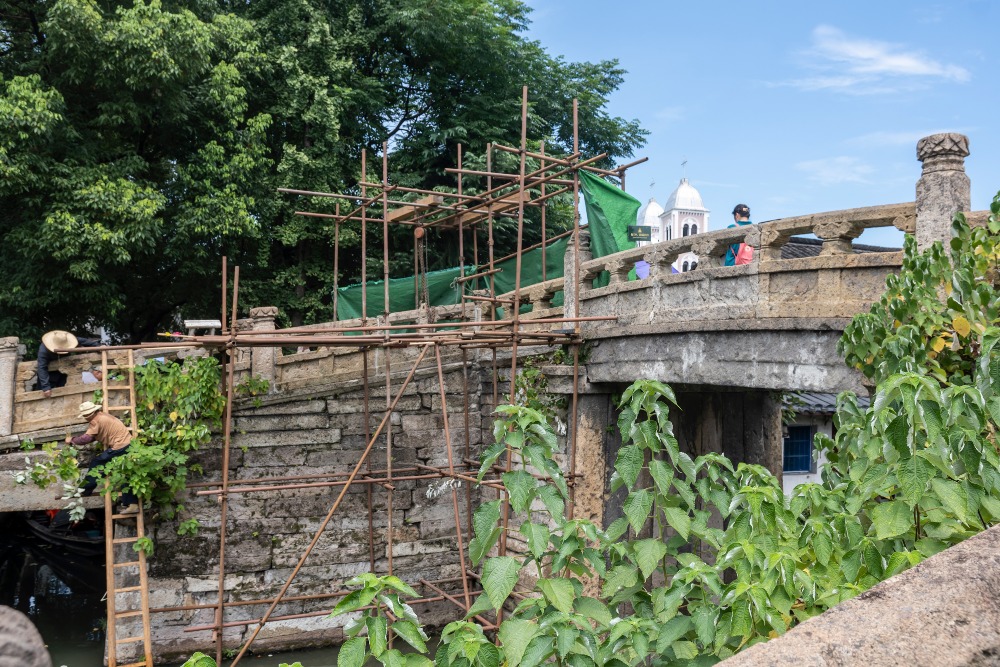
In 2021, Shaoxing released the "Shaoxing Grand Canal World Cultural Heritage Protection Directory," listing nearly 30 ancient Chinese bridges, including the Bazi Bridge and Taiping Bridge, for protection.
They established files for each and formulated conservation plans in the hope that these ancient bridges and the historical culture they carry can be passed down for generations.