Published : 2026-08-07
Whether it is temple hopping in Hangzhou, immersive performances in Henan, the "digital nomad" lifestyle in Yunnan, or Hanfu photography in Xi'an—these seemingly distinct trends are all fine examples of how deep-rooted tourism is breathing new life into cultural heritage.
Our "New Cultural Journeys" series will take you behind the scenes of how these traditions were successfully "rebranded" as cool.
Black Myth: Wukong has brought the ancient architecture in China's Shanxi into the spotlight, introducing a wider audience to this "treasury of above-ground cultural relics".
However, the more precious these historic structures are, the harder they are to truly experience: some are off-limits to climb, details on others are difficult to discern, and even when standing right before them, visitors may not fully grasp their significance.
Today, there is a new way to engage with these ancient marvels. They are no longer just "seen", but can now be truly "understood". How has this been achieved?
Shanxi's ancient architecture|Digital space: Exploring 1000-year old wooden pagoda
Digital technology is solving this problem.
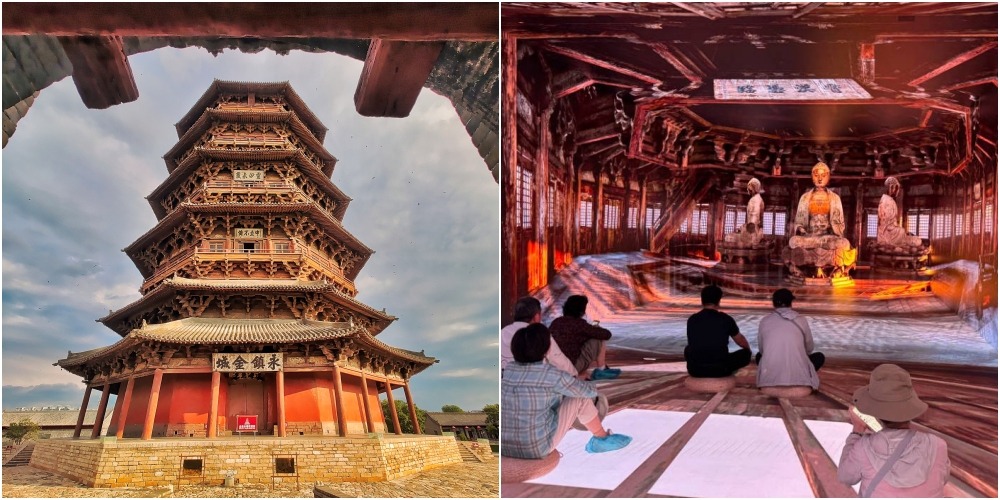
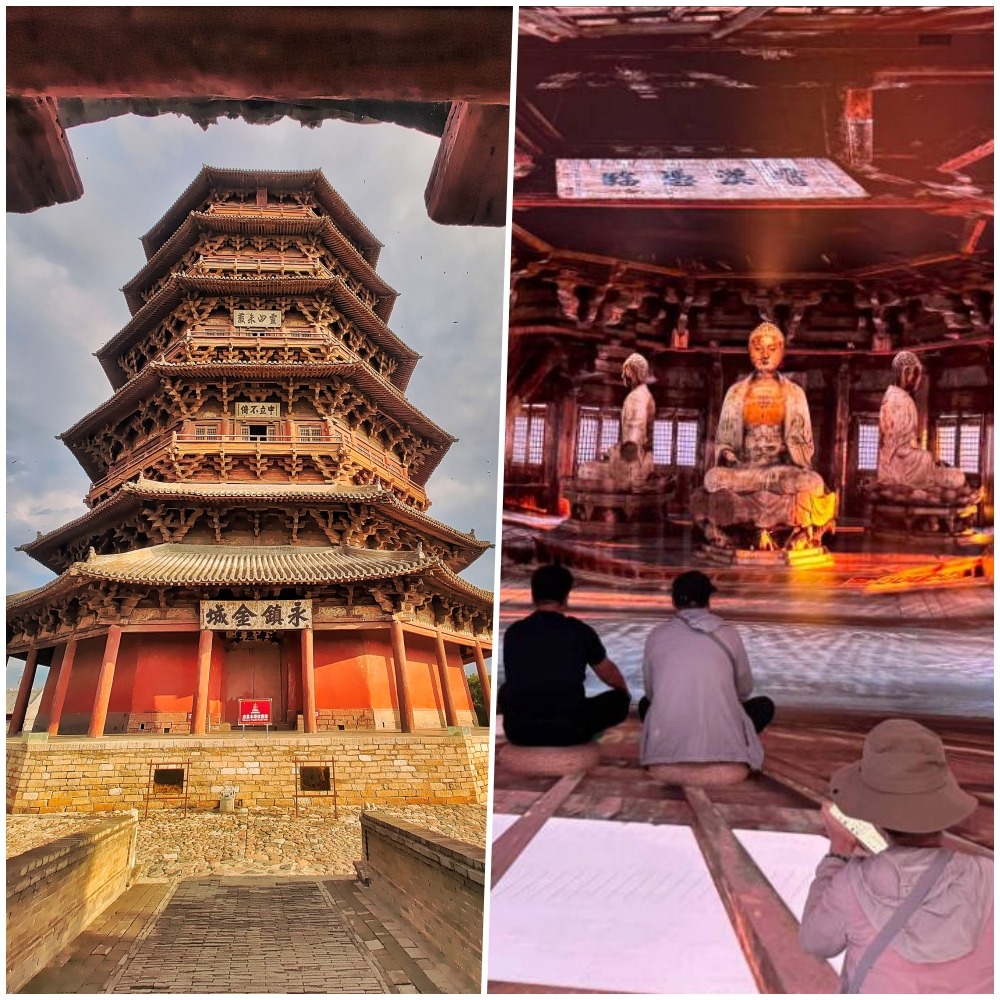
The most intuitive example is the Sakyamuni Pagoda of Fogong Temple (佛宮寺釋迦塔), commonly known as the "Yingxian Wooden Pagoda" (應縣木塔) in China, which means the Wooden Pagoda in Ying County.
Built in 1056, this wooden pagoda from Liao Dynasty (916-1125 AC) stands approximately 67 metres tall, making it the world's tallest and oldest surviving structure made entirely of timber. To protect the cultural relic, however, visitors have long been barred from climbing the tower, making it difficult to explore its internal architecture.
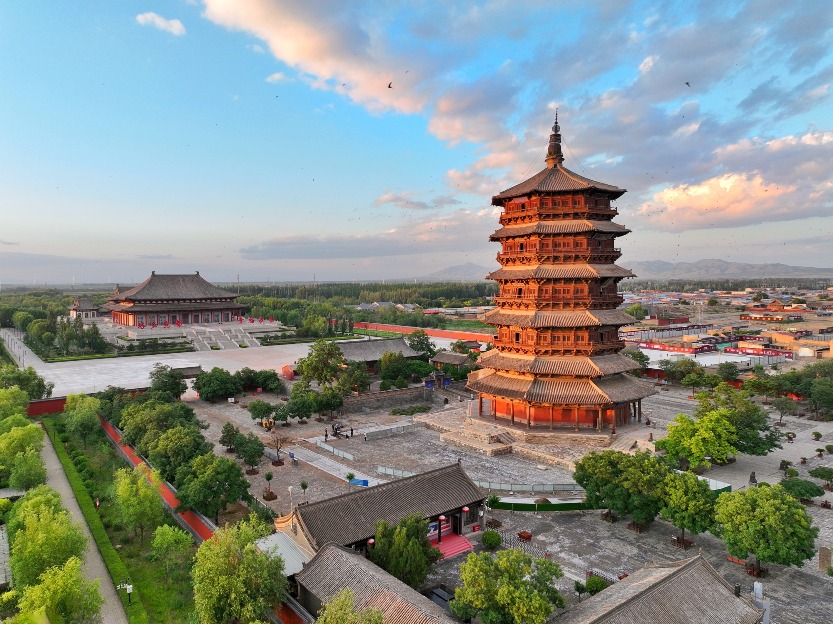
Thus, there is another way to "enter the pagoda".
Through high-precision 3D scanning and modelling, the wooden pagoda has been reconstructed into a "digital twin".
In this virtual version, visitors can walk through the tower layer by layer; the intricate dougong (斗拱) bracket sets, which are structural elements of interlocking wooden brackets, can be dismantled piece by piece for closer inspection; and the painted sculptures perched high above can be zoomed in on for fine detail.
The tower, rendered inaccessible in the physical world, has paradoxically opened up to a far wider audience in the digital realm.
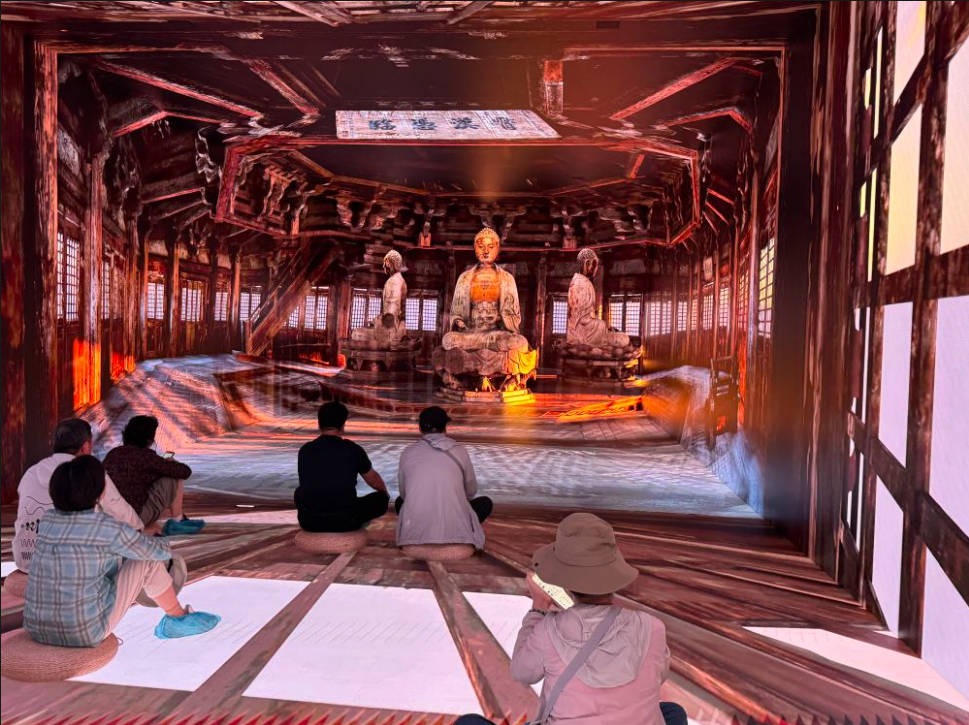
A similar transformation has also taken place at Xiaoxitian (小西天) in Xi County (隰縣).
Inside the Mahavira Hall of Xiaoxitian, there are over 1,000 suspended sculptures from Ming Dynasty (1368 to 1644 AC).
They are layered one on top of the other, resembling a three-dimensional Buddhist kingdom suspended in mid-air. Because there are too many figures and they are positioned too high, many details are simply not visible from the ground.
Digital scanning and VR (Virtual Reality) have changed this.
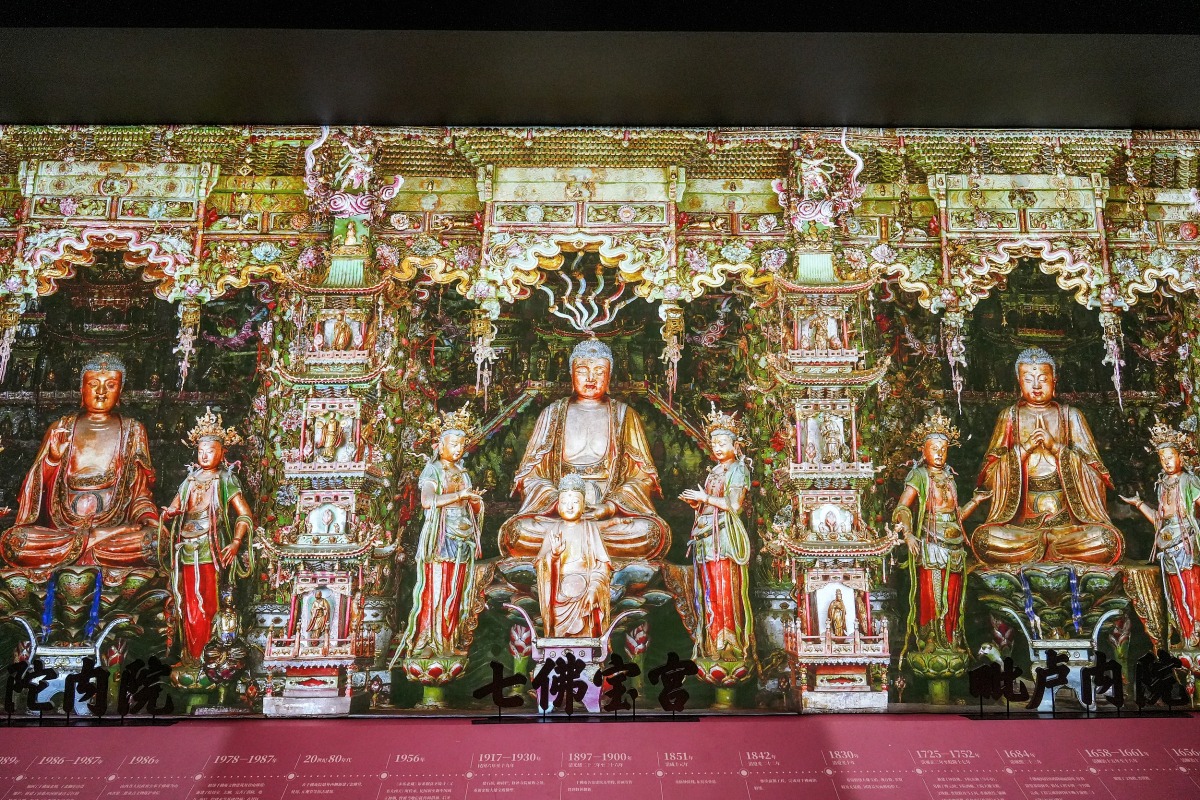
These suspended sculptures are transformed into interactive digital content. After putting on the device, you can "fly" from the ground into mid-air, approach each statue, examine them closely from a different angle, and even see their backs, which are normally not visible.
The ancient architecture has not moved, but the way we view it has changed.
In the past, viewing ancient architecture was often limited by distance, lighting, and opening conditions; now, digital technology allows details that were once invisible to be brought right before our eyes.
Shanxi's ancient architecture|Deconstructing the details to understand stories behind them
However, seeing clearly is just the first step. More importantly, digitisation helps people understand the structure, craftsmanship, and stories of ancient architecture.
Take the previously mentioned dougong for example. Usually, when looking up at the eaves, many people only see a dense cluster of wood. But in a digital model, the dougong can be taken apart piece by piece and then reassembled.
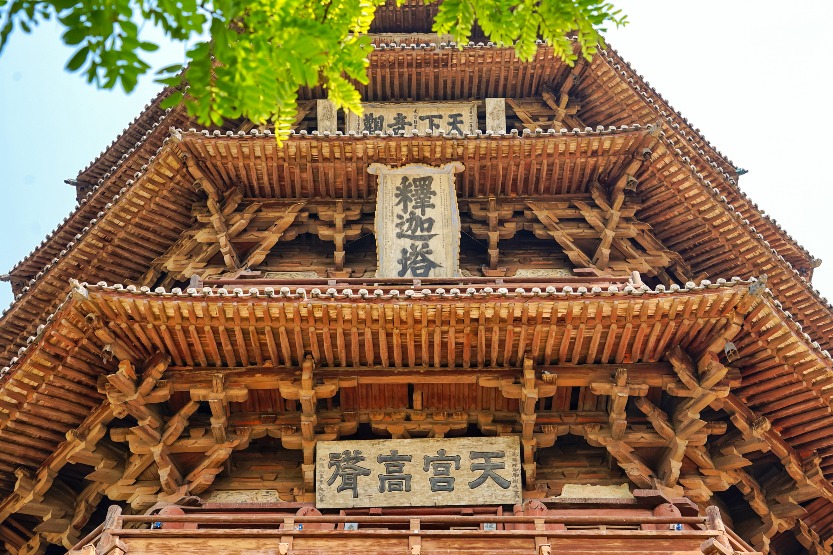
It turns out that dougong are not only beautiful decorations under the eaves but are also responsible for supporting the eaves, transferring the weight of the roof layer by layer to the columns.
Understanding dougong makes it easier to comprehend how the ancients used wood, mortise and tenon joints, and precise designs to build great halls and tall pagodas.
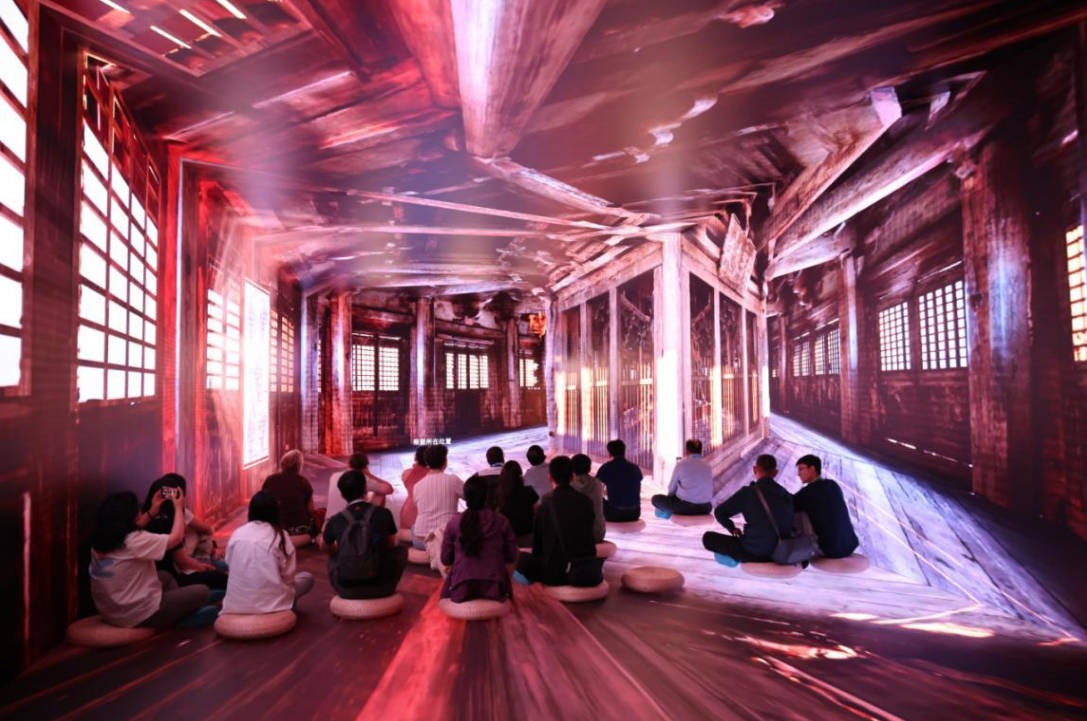
The disassembly of dougong reveals the architectural structure; the unfolding of murals reveals the stories behind them.
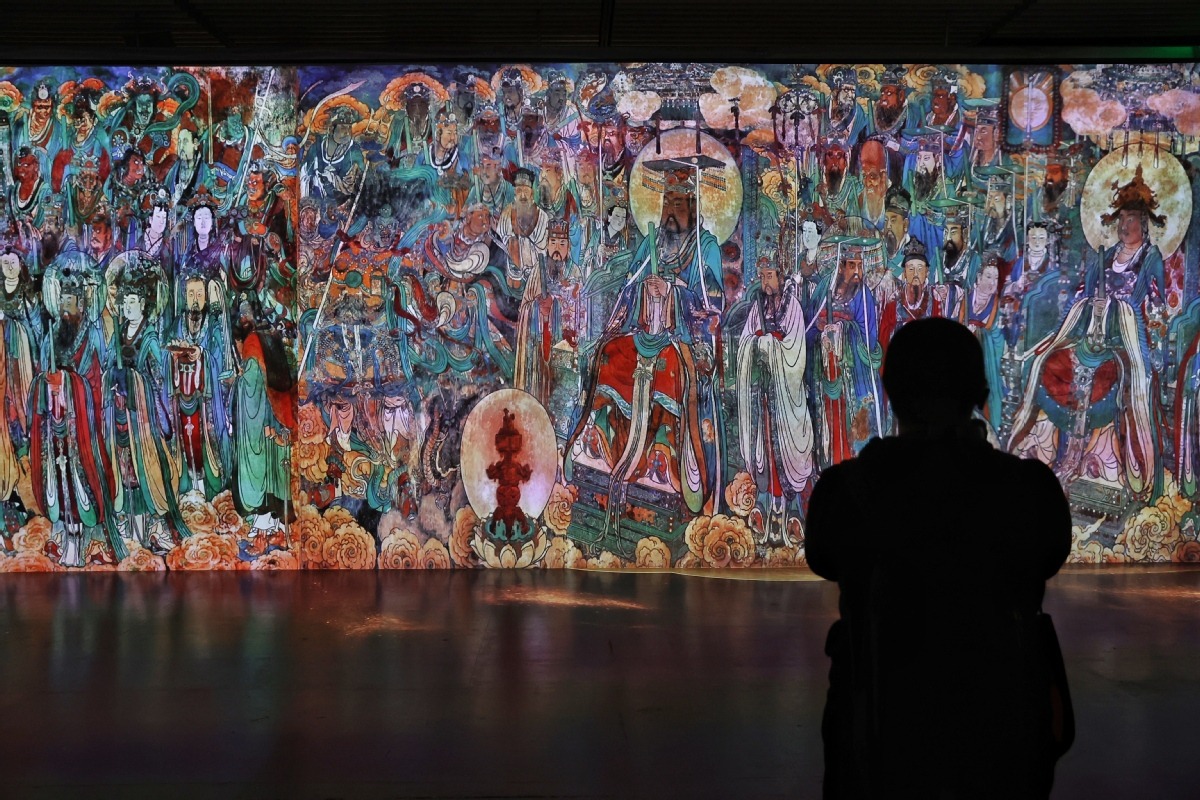
Take the Chaoyuan Tu (《朝元圖》), or Mural of the Celestial Homage, in Yongle Palace (永樂宮) as an example.
This colossal Daoist mural features a vast cast of figures. Standing before it in person, visitors are often struck with awe, yet they might not immediately grasp who the depicted characters are or how they relate to one another.
In the digital exhibition, the mural has been restored by AI, with missing colours filled in and the scene divided into multiple perspectives. You can first get close to the lines and colours of the figures, then follow the arrangement of the figures to gradually understand the hidden religious order within.
A mural is no longer just "very beautiful and magnificent", but a story that can be slowly read.
Shanxi's ancient architecture|Online platform to support cultural preservation
Digitisation also has another layer of meaning: it not only serves the audience but also helps to protect cultural relics.
High-precision digital archives record the current state of buildings and cultural relics, facilitating future monitoring, restoration, and research. Even if the original objects cannot be easily moved, the digital content can still be featured in exhibitions, classrooms, games, and even go abroad.
In recent years, Shanxi has actively driven the digitalisation of its cultural heritage, completing data collection and archiving for at least 145 major historic sites and the collections of over 20 museums.
Platforms such as the Digital Museum of Shanxi Cultural Relics and "Yungang in the Clouds" (運出雲岡) have created a digital gateway for treasures that were previously restricted by geography and limited public access.
The digital restoration of Chaoyuan Tu in Yongle Palace has also been showcased at the UNESCO headquarters in Paris and in places like Australia. While the original artwork remains firmly in place, the culture itself effortlessly crosses oceans and borders.
The implementation of these innovative approaches relies not only on technological advances, but also on sustained support from national and local policies.
At the national level, the 13th Five-Year Plan explicitly proposed strengthening technological support for the protection and utilisation of cultural heritage, encompassing the restoration and preservation of key types such as wooden structures.
Moving into the 14th Five-Year Plan period, the digitalisation of cultural heritage was further elevated to a national strategy. Meanwhile, cultural heritage authorities issued the "Specifications for Digital Data Collection of Ancient Buildings", establishing a clear framework for digital preservation efforts.
Against this backdrop, Shanxi has accelerated its response.
On the one hand, it has engaged public and private sector support through its "Civilisation Guardian Project", establishing specialised research bodies to bolster funding and technical expertise.
On the other, it is driving emergency digitalisation for ancient architecture, painted sculptures, and murals—prioritising the creation of precise digital archives for high-risk, immovable relics.
The ancient structures remain firmly in Shanxi, yet they are reaching ever further. And for the rest of us, there is now a whole new way to draw closer to them.
Read more:
Shanxi: Museum of ancient Chinese architecture
Meeting a thousand years of history in Shanxi's Yuncheng|Slower Escapes
Explore Shanxi with Black Myth: Wukong|Part one