
Published : 2026-04-28
Would it be surprising to know that more and more foreigners are travelling thousands of miles to China not for tourism or business, but to see a doctor, and they are not seeking traditional Eastern Chinese medicine, but Western medicine which originated from the West? Why is China's medical treatment so attractive?
Over 1.28 million international patients
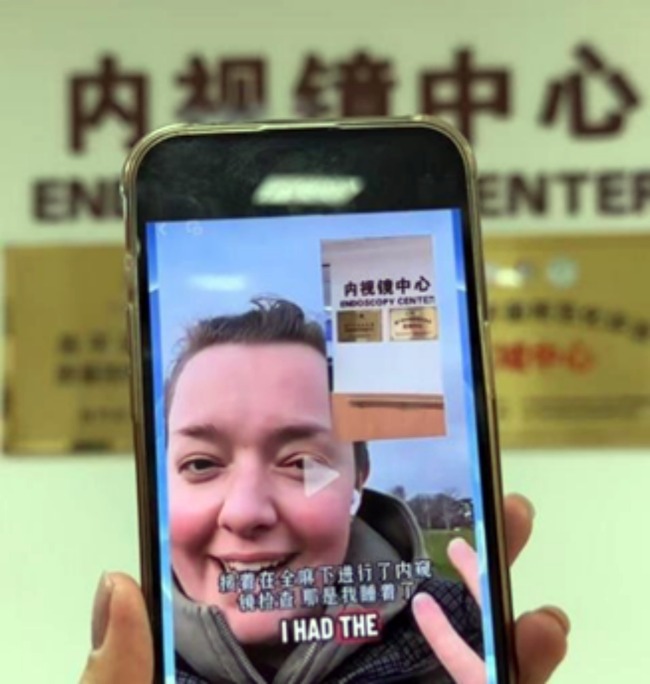
British KOL Amy was plagued by stomach pain for two whole years. Because scheduling a check-up in the UK was a distant prospect, she, having previously lived in China for a short time, flew to China for medical treatment and quickly resolved all her problems.
In early 2026, she shared her experience online, highly praising China's medical services, which instantly sparked discussion among netizens.
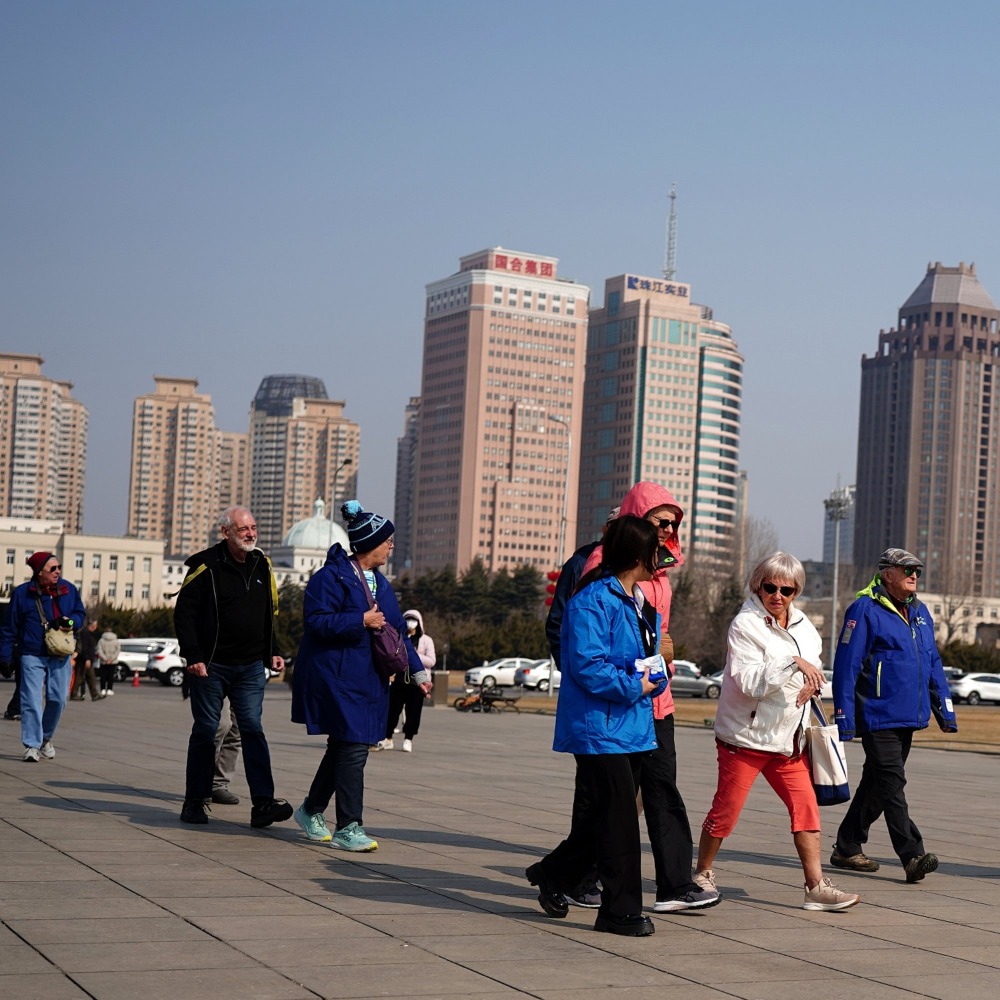
Amy is just one of many foreign patients who have chosen the "China solution". Data from the National Health Commission shows that key domestic hospitals catering to foreigners received 1.28 million international patients in 2025, an increase of 73.6% compared to three years ago.
In fact, in early 2026, seeing a doctor in China had already become a hot topic on foreign social media. It is not difficult to see that a trend of seeking medical treatment in China has already formed.
As the authorities relax visa-free entry for foreigners, it is believed that this trend will continue to grow.
It is not a new thing for foreigners to come to China for medical treatment. In the past, they came from afar to visit the Forbidden City and climb the Great Wall, and receiving traditional Chinese medicine treatments like acupuncture and tuina was at most an incidental activity, which also carried a certain sense of "adventurous exploration".
Now, however, more foreigners are coming specifically for medical treatment, with tourism becoming secondary. The treatments they receive are not limited to traditional Chinese medicine, they also see China's Western medicine doctors, and even focus mainly on Western medicine.
"Speed" stems from China's Efficiency
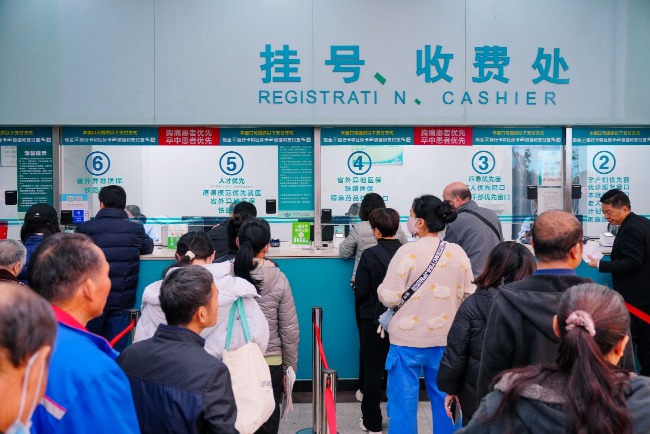
Why do foreigners travel thousands of miles to China to see a doctor? Amy's story can provide part of the answer.
In the UK, Amy's GP had been unable to diagnose what was wrong with her, and when she tried to book an appointment with a specialist, she was told she would have to wait at least three months.
After flying to Beijing, Amy saw a doctor on the same day and had a blood test and an electrocardiogram. Afterwards, during a gastroscopy, the doctor found that Amy had mild oesophagitis and chronic gastritis, and performed a polypectomy at the same time.
A week later, the pathology results showed that it was benign.
By the time the pathology results came out, it was the 13th day since Amy had arrived in Beijing, and the problem that had troubled her for two years was resolved at lightning speed. Everyone knows that waiting is an ordeal for patients, and how precious time is for patients with acute conditions.
Amy's experience was once questioned by some netizens: Did she receive preferential treatment because she was a foreigner, allowing her to get the green light all the way?
However, Amy surely knows that she did not receive any special treatment. The speed came from an efficient and superior healthcare system. In the third decade of the 21st century, people should not doubt China's efficiency.
Group buying keeps drug costs down
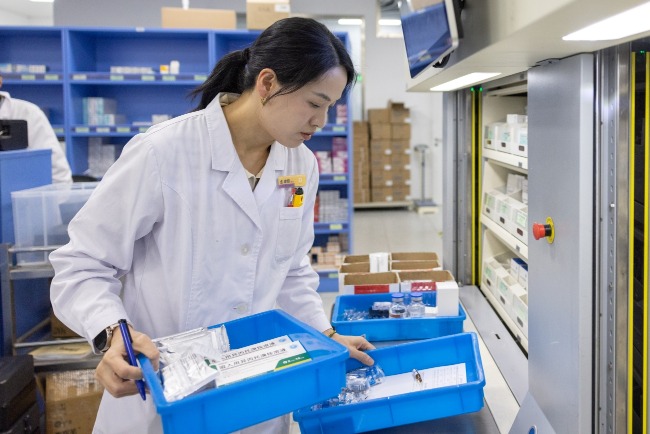
Amy also showed her medical bill from China: She paid for everything herself, and the various tests and treatments added up to about 2,800 RMB.
In a private hospital in the UK, an endoscopy alone costs £3,000 to £5,000, which is equivalent to more than 20,000 to over 40,000 RMB. With such a huge difference in cost, how could foreign patients not be tempted?
There are many others who have shared their personal experiences of China's fast and cheap healthcare online. Some said that in the US, you have to wait three months for an MRI scan, whereas in China, the wait is only half an hour.
A Canadian mentioned that to see a specialist at a public hospital in their home country, they had to book more than 40 days in advance, with a median waiting time for tests of nearly 29 weeks. But in China, the entire process of registration, consultation and collecting medicine was completed in 30 minutes.
An American netizen said a heart bypass surgery costs 130,000 US dollars there, compared to 40,000 US dollars in China, while others mentioned that the price of targeted tumour drugs in China is 1/3 to 1/5 of that in Europe and the US.....
In addition to various medical, surgical and specialist fields, netizens have also posted stories about getting their teeth cleaned for 15 USD and teeth fillings for 20 USD in China.
It's worth noting that most foreign insurance policies do not cover dental care, so teeth cleaning and filling fees are a major expense. These prices have made many foreign netizens shocked.
Why are healthcare prices in China so much lower than in Europe and the US?
Several reasons are often mentioned: lower salaries for Chinese healthcare workers, strict government control over medical fees, and the centralised purchasing system for medical equipment and drugs.
Centralised purchasing, simply put, is using the vast population to "group buy", which significantly reduces costs.
The value of high-density practical experience
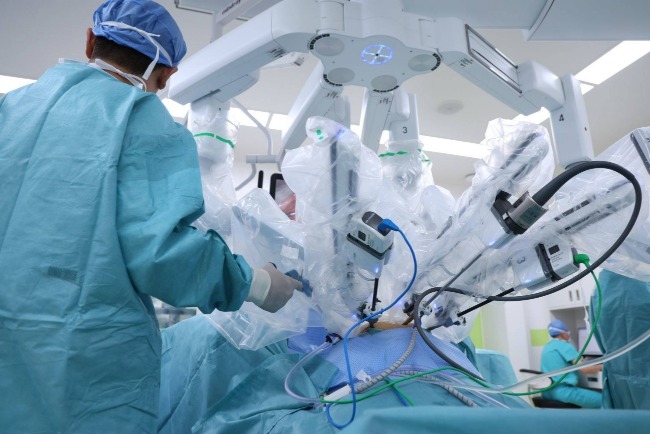
It should be noted that efficiency and cost are only the most direct reasons why foreigners are flocking to China. Another core pillar of Chinese healthcare's appeal is its superb medical technology.
In many areas, such as minimally invasive surgery, cardiac intervention and targeted therapy, China has reached an advanced international level, not to mention Traditional Chinese Medicine.
These achievements are due to the government's emphasis and long-term investment in teaching and scientific research, as well as practical application and the accumulation of extensive experience. The latter, once again, is related to its large population.
The media gives the example of a complex minimally invasive surgery: a top expert in Europe or the US might perform a few dozen cases a year at most, but in China, with its large population and patient base, a team of chief surgeons may perform several hundred cases a year.
It is this high-intensity, high-density practical practice that enables Chinese doctors to diagnose and treat more accurately and respond more quickly, whether dealing with common ailments or difficult surgeries.
So, to sum up, seeking medical treatment in China is fast, cheap, and also good—offering extremely high value for money. It's no wonder that more and more foreigners are coming to China for this reason.
Of course, foreigners coming for medical treatment may encounter some problems, such as international insurance payments, and the very important language communication, and so on.
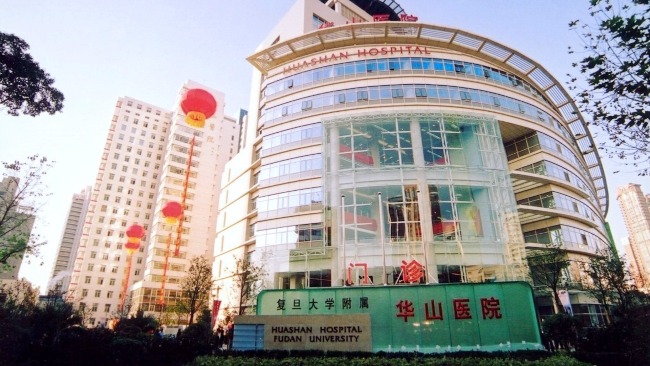
Data shows that in nearly 60 large cities such as Beijing and Shanghai, more than 800 medical institutions have established international medical departments that can provide English services.
However, not all foreigners speak English. For some speakers of minority languages, communication may not be smooth, and it is not even easy to register at a hospital.
Will it dilute medical resources?
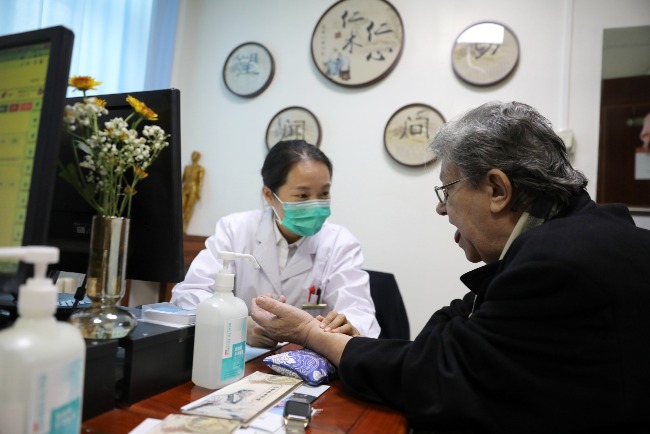
However, as the number of foreigners coming to China for medical treatment increases, services that specialise in providing them with translation and even medical escort services are gradually increasing, and the problem will be solved
Once the problem is solved, it will in turn attract more people to China.
The media predicts that by 2028, the relevant market size will be no less than 20 billion US dollars. Currently, China's share of the international medical market is still low, and there is broad room for development.
It was mentioned earlier that in 2025, there will be 1.28 million foreigners coming to China for medical treatment, while over 3 million will go to Thailand during the same period.
Finally, there is a question that everyone is concerned about: when foreigners come for medical treatment, will it dilute the nation's medical resources?
Experts believe there is no need to worry excessively. Firstly, foreigners pay for their medical treatment entirely out of pocket, and there are no subsidies.
Secondly, policies have stipulated the proportion of international medical services in public hospitals, ensuring the nation's medical resources in terms of total volume.
Besides, even if there are millions of foreigners coming to China for medical treatment, compared to China's billions of outpatient visits and over 300 million hospital admissions annually, the proportion is very low.
Read more: How does Chinese online literature go global?