
Published : 2025-11-06
International dissemination is one of the most prominent characteristics of the development of Chinese online literature, as well as an important reference for "telling China's stories well" and promoting Chinese culture.
So how did it become one of China's widely recognised soft powers?
Chinese online literature The King's Avatar is hugely popular in Japan

With its e-sports theme, The King's Avatar (《全職高手》) is a classic example of Chinese online literature going overseas.
After its serialisation concluded in 2014, The King's Avatar landed in Japan the following year. A local publisher released a Japanese version that became hugely popular, with over 30 million downloads, and the publisher even created a dedicated "Glossary of Terms" section on its website.
In 2017, the English version of The King's Avatar landed on "WebNovel" (起點國際), a platform under the China Literature Group (閱文集團), and its cumulative overseas readership has since surpassed 130 million.
This was also a crucial year for Chinese online literature going overseas. With the support of capital, a large number of works were translated into English and other languages and actively promoted online.
WebNovel, founded in 2017, is one of the earliest platforms engaged in the overseas dissemination of Chinese online literature.
In 2018, it launched an original content function, attracting an increasing number of overseas users to transition from being merely readers to becoming creators, translators, and even co-creators of IP (Intellectual Property).
As of the end of 2024, WebNovel already has approximately 6,800 translated works of Chinese online literature, has nurtured 460,000 overseas writers, and has accumulated nearly 300 million user visits, covering more than 200 countries and regions.
Hou Xiaonan (侯曉楠), CEO and President of China Literature Group, believes that current Chinese online literature has moved from the export of content and business models to a new stage of "global co-creation of IP".
AI translation helps Chinese online literature expand market
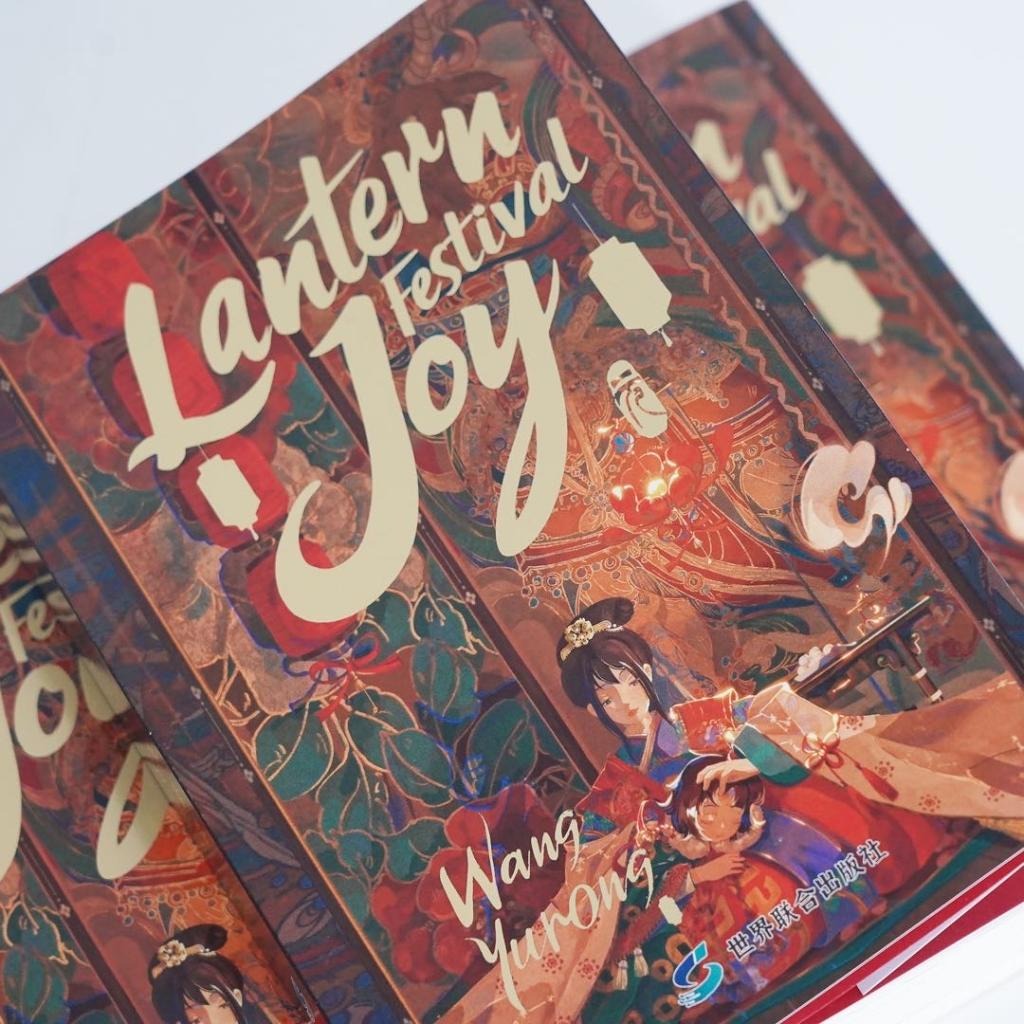
According to the 2024 Report on the Trends of Chinese Online Literature Going Overseas, the revenue of the Chinese online literature industry's overseas market has exceeded 4.3 billion RMB.
In recent years, AI (Artificial Intelligence) has become prevalent, and it has been of great help to the overseas expansion of Chinese online literature. With the assistance of AI, translation quality and efficiency have been greatly improved.
In 2024, WebNovel added over 2,000 AI-translated works for overseas markets, a year-on-year increase of up to 20 times, accounting for one-third of all works exported that year.
More importantly, AI has enabled Chinese online literature to successfully break through language barriers.
According to statistics, in 2024 the number of Chinese online literature works translated into Spanish increased by 227% year-on-year. German, French, and Portuguese translations saw a breakthrough from zero to over a hundred works; and Chinese online literature even has a presence in Africa, with over 400 works translated into Swahili.
AI translation of Chinese online literature: 1,000 characters in 1 second at 1% of the cost

How does AI translation help Chinese online literature go overseas?
The underlying principle is mainly the application of an AI large language model's capabilities in translation, text optimisation, and multi-language comprehension, among others.
Compared to traditional machine translation, AI large language models are faster, have richer vocabularies, and are lower in cost, while also producing text of a higher quality.
In fact, the efficiency of translation is an important factor affecting the experience of overseas users with Chinese web fiction.
A survey has pointed out that over 80% of users consider "stable updates of works and a wide variety of genres" as the primary factor when choosing a platform. AI precisely solves the challenges of low efficiency and high cost associated with traditional machine translation.
According to an industry insider, translating 1,000 characters takes a human one hour, whereas AI only needs one second, with the cost also being reduced to 1% of the original.
When Chinese web fiction is translated into other languages, it facilitates readers of those languages, enabling them to understand and learn about traditional Chinese values and social customs in a more simple and direct way.
Chinese web fiction faces challenges going overseas

Although there have been many successful cases of Chinese web fiction going overseas in recent years, the related mechanisms are not yet fully developed.
On the one hand, the industry lacks an effective mechanism for exporting texts, as well as mature copyright exportation and protection. The "each fighting their own battle" approach has also led to many difficulties in protecting related intellectual property rights overseas.
For example, many Chinese web fiction works can be freely downloaded and read on commercial apps.
On the other hand, from a literary perspective, translation inevitably obscures the merits of the original work or magnifies its flaws. Web fiction often has conventional expressions or content with traditional cultural characteristics, all of which can be distorted or become inaccurate during the translation process.
For readers with no knowledge of Chinese, this can easily cause problems when reading, making it difficult to understand the true meaning of the original work.
Furthermore, the boundaries of web fiction are relatively relaxed, and when there are issues with the content, themes, or values of a work, its dissemination overseas after translation may cause readers to misunderstand Chinese culture.
Using the internet and digital media as its carriers, web fiction is both a new phenomenon that has arisen from the advancement of the internet and a vehicle for Chinese culture to reach the world amidst internet globalisation.
It is one of the "New Three of Culture", allowing the whole world to understand China more deeply and appropriately.
Read more: Black Myth and Genshin Impact help build China's cultural soft power
Read more: Why is "Chinese style" able to go global?