Published : 2025-11-07
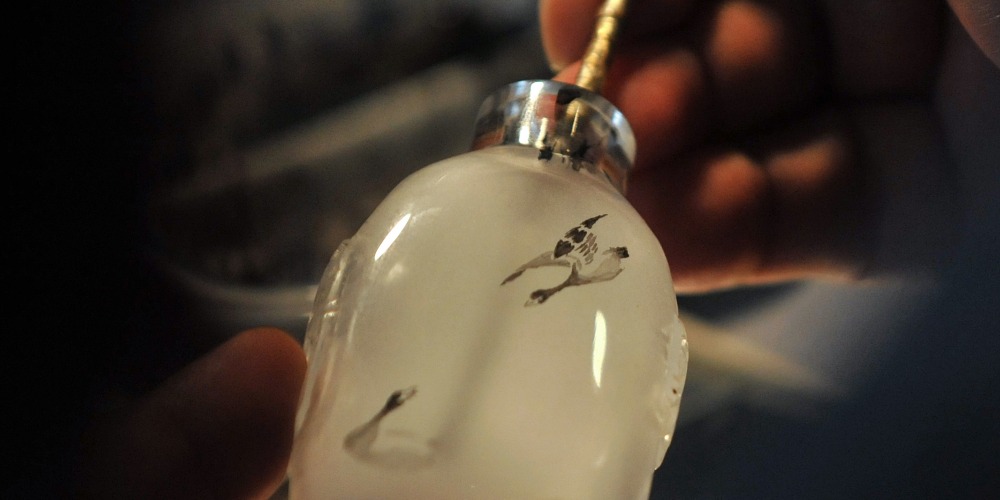
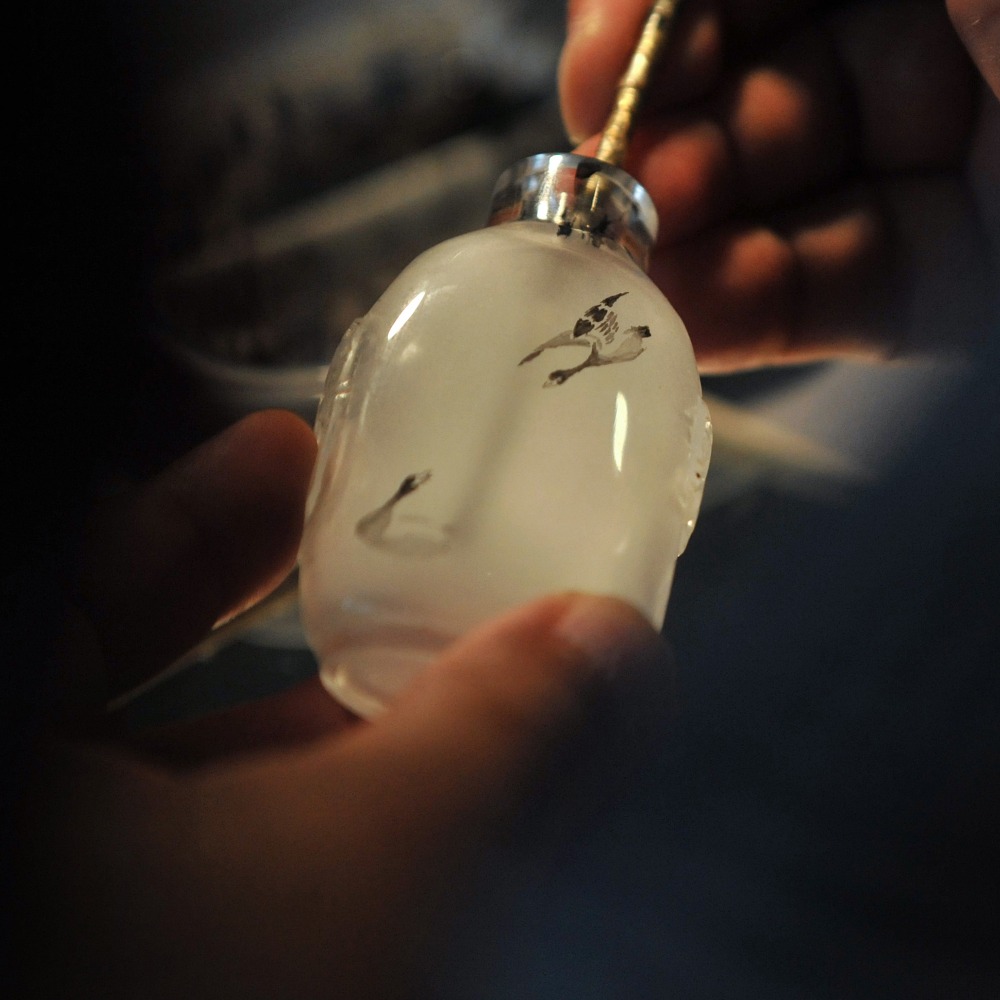
Inside painting, or inner painting, is a unique Chinese calligraphy and painting technique, originally used for decorating snuff bottles, in which exquisite patterns are painted inside tiny bottles, with all-encompassing subjects, hence the saying "a world within a snuff bottle".
Snuff has almost disappeared today, and snuff bottles have transformed from daily necessities into works of art, passed down along with the exceptional skill of inside painting.
What are the 4 major schools of inside painting?
Inside painting (內畫), an art form from the Ming and Qing dynasties used to decorate snuff bottles, captures a universe of themes within a tiny space, reflecting the philosophy of a microcosm containing the macrocosm.
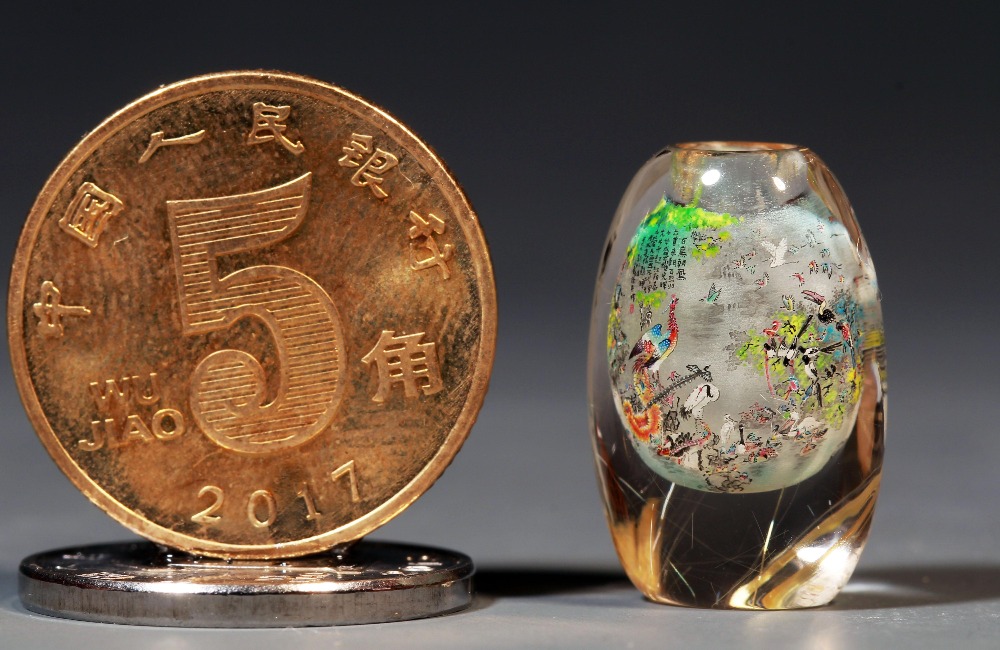
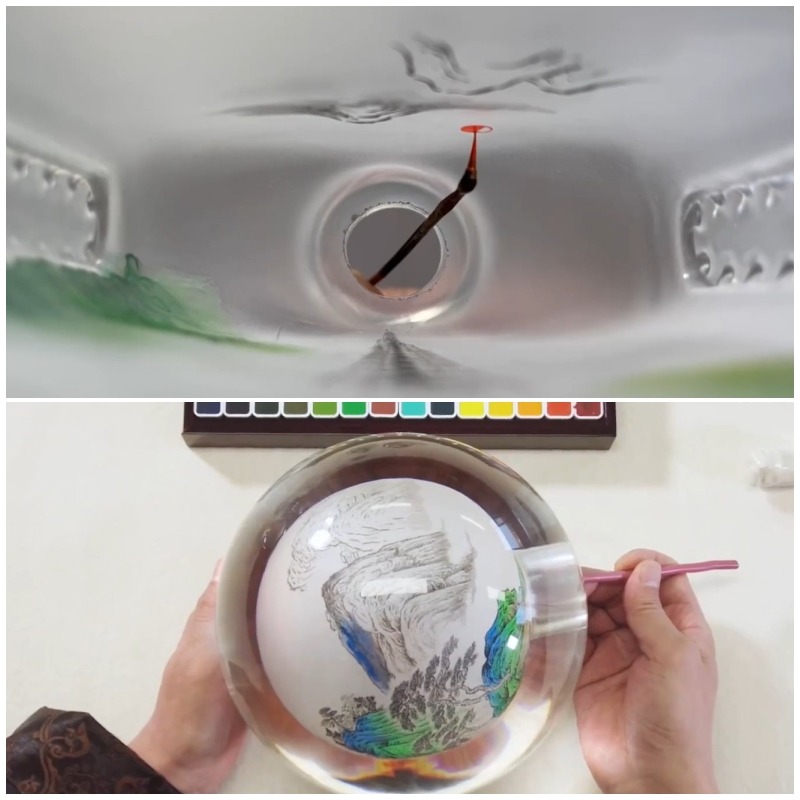
From drafting and outlining to colouring and adding scenery, an inside-painted snuff bottle artwork generally takes several days or even months to create.
Snuff has almost disappeared today, but inside-painted snuff bottles have been passed down to this day as a widely popular handicraft.
The inside paintings of Beijing, Guangdong Province, Shandong Province, and Hengshui in Hebei Province, are known as the four major schools of inside painting due to their different artistic characteristics.
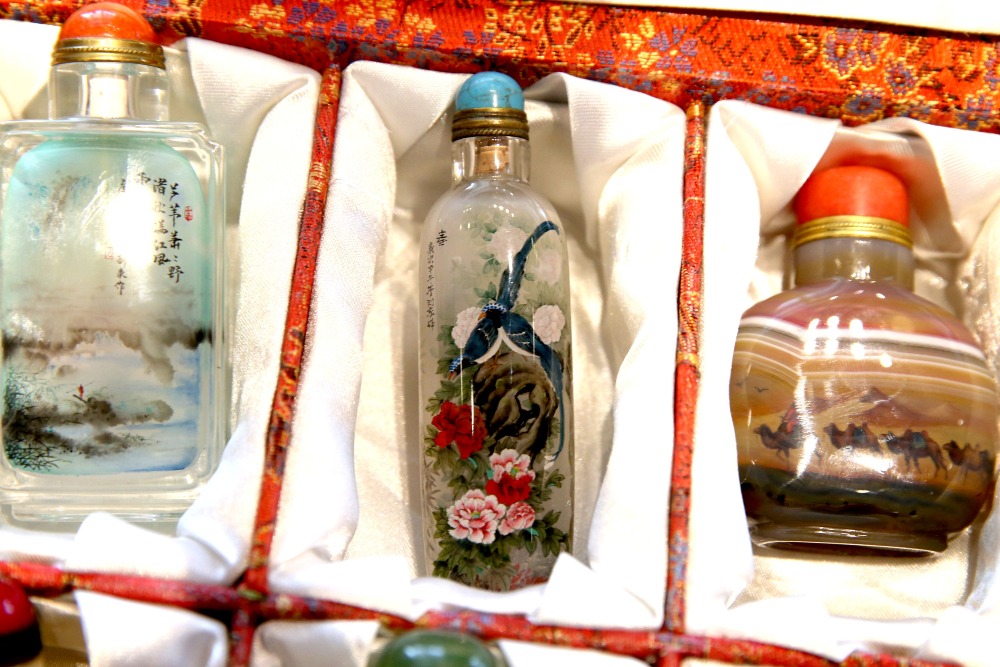
The Beijing School emphasises premium materials and specialises in themes from literature and history.
In contrast, the Guangdong School is celebrated for its delicate lines, rich colours, and diverse themes encompassing landscapes and flora.
Meanwhile, the Hengshui School developed an oil-painting technique that masterfully blends Chinese and Western styles, whereas the Shandong School is defined by its bold and powerful aesthetic.
In 2006, Hengshui inside painting and others were listed as national Intangible Cultural Heritage (ICH).
How has Hengshui's inside painting been successfully industrialised?
Inheritors of inside painting are passing on the craft through schools and workshops.
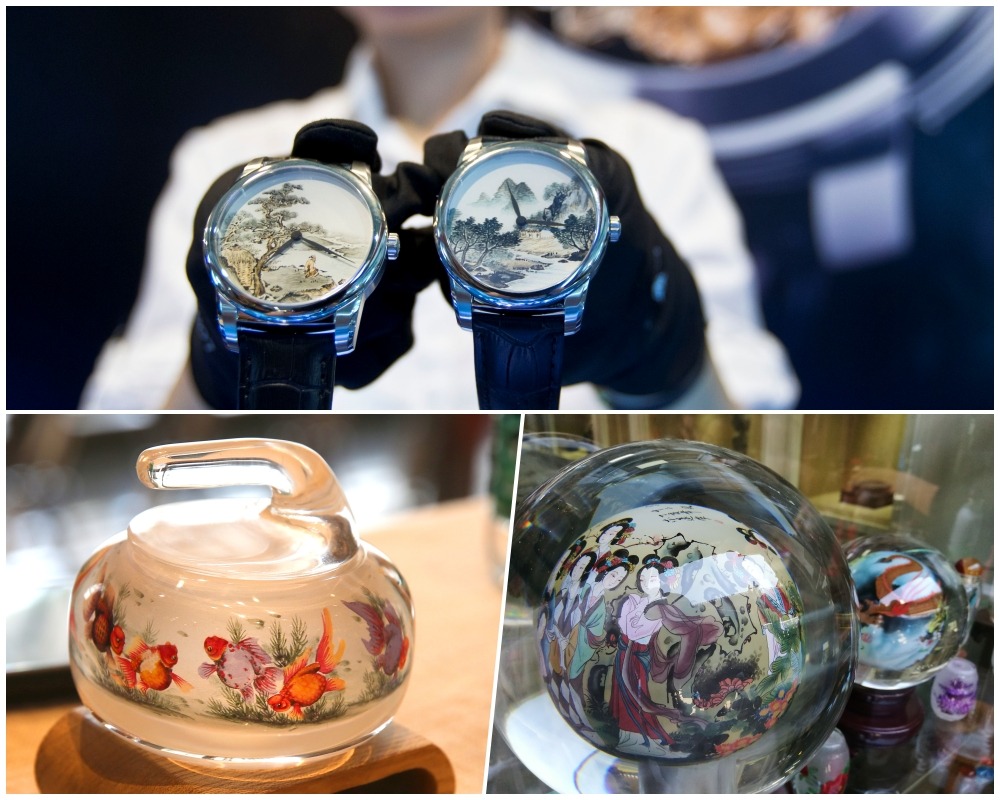
They're also creating museums and new products—from painted watches and crystal art to decorative curio bottles—to reach a wider public. These efforts are breathing new life into the tradition and building a vibrant cultural industry.
As early as the 1990s, the intangible cultural heritage inheritors of Hengshui inside painting, the father and son Wang Xisan (王習三) and Wang Ziyong (王自勇), invested 3 million RMB to establish in Hengshui what was then China's only vocational college for inside painting with nationally recognised qualifications, the "Xisan Arts and Crafts Secondary Specialised School" (中國內畫藝術研究中心).
In 2002, Wang Xisan also jointly established the "China Inside Painting Art Research Centre" with the School of Art of Hebei University of Science and Technology, to cultivate high-level inside painting talent.
In 2002, the Wang father and son built the "Hengshui Inside Painting Art Museum" in Hengshui, which is open to the public for free, hoping that through exhibitions and activities, more people will get to know this ancient art form.
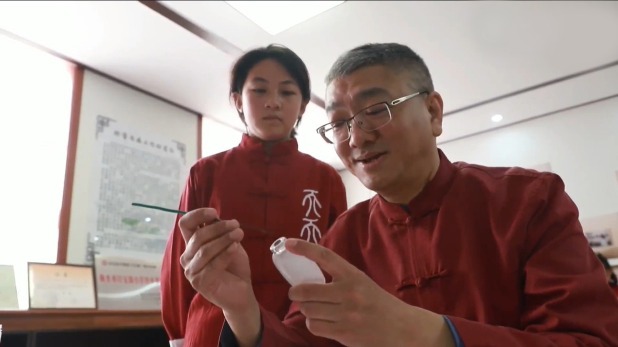
In 2019, the Hengshui Inside-Painting Art Museum established an intangible cultural heritage workshop.
Over the years, it has developed inside-painted crystal balls, inside-painted water glasses, and more than 50 other varieties and over 100 new products, successfully leading Hengshui inside-painting onto the path of industrialisation.
The Hengshui inside-painting intangible cultural heritage workshop was selected as a national "Exemplary Case of an Intangible Cultural Heritage Workshop" in 2022.
There are more than 20 similar inside-painting workshops in Hengshui city.
Today, there are 30,000 to 40,000 practitioners of Hengshui inside-painting. The annual output value exceeds 1 billion RMB, and it has become one of the landmark cultural industries in Hebei Province.
Read more: "Hometown of Rice Cakes in China" located in this millenary ancient town