Published : 2026-09-01
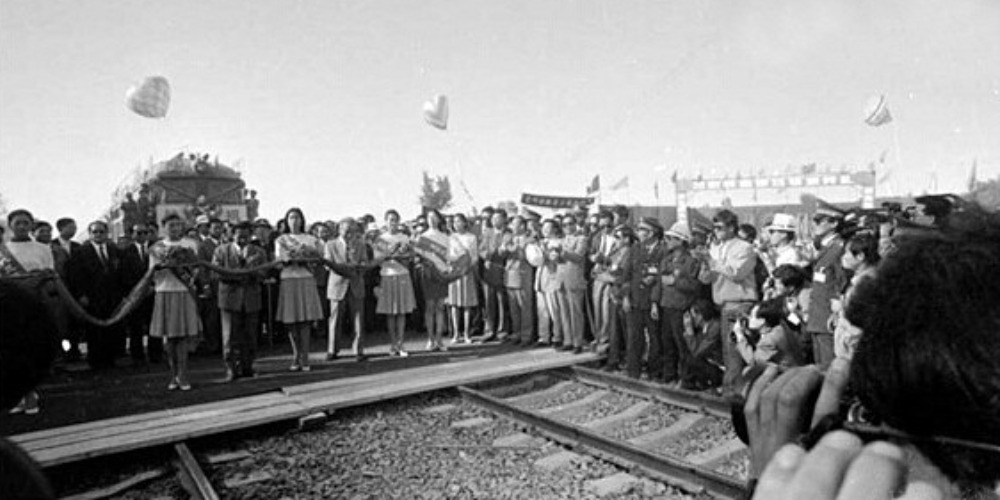
On 1 September, 1996, an orange passenger train bearing the "Beijing West—Shenzhen" direction sign slowly left the platform. This marked the official opening and operation of the highly anticipated Beijing-Kowloon Railway (京九鐵路).
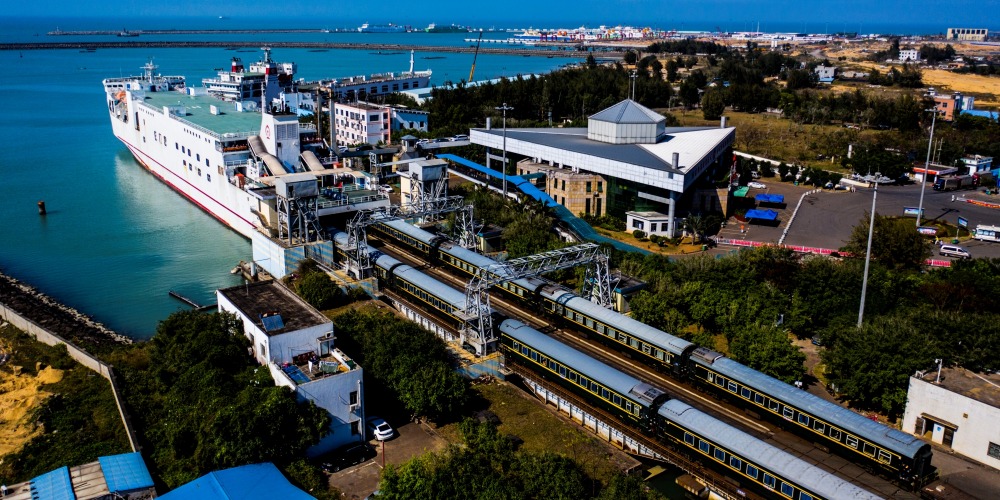
The Beijing-Kowloon Railway starts from the Beijing West Station, crossing 98 cities and counties in nine provinces and municipalities: Beijing, Tianjin, Hebei Province, Shandong Province, Henan Province, Anhui Province, Hubei Province, Jiangxi Province, and Guangdong Province, reaching south to Shenzhen and connecting to Kowloon in Hong Kong.
Including the two connecting lines built simultaneously from Tianjin to Bazhou and from Macheng to Wuhan, it has a total length of 2,553 kilometres.
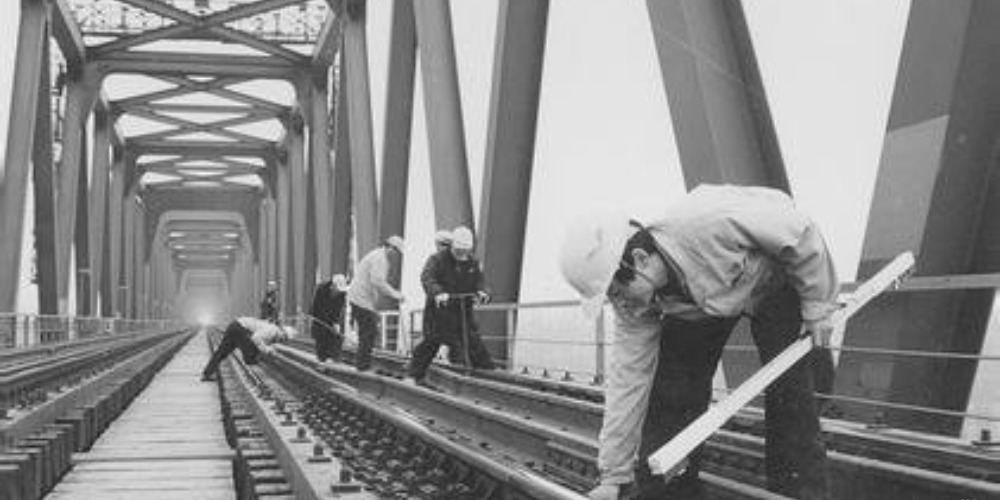
During the construction of the Beijing-Kowloon Railway, the team faced challenges such as difficult engineering, tight schedules, high technical requirements, and complex project management.
After three years of strenuous efforts by the construction team, the pre-station work completed 2.6 billion cubic metres of earth and stone work, excavated 150 tunnels, built 1,110 new bridges, laid 3,616 kilometres of mainline tracks, laid 1,098 kilometres of station tracks, and installed 4,281 sets of turnouts.
Under the collective efforts of the construction team, the entire Beijing-Kowloon Railway was completed on 16 November, 1995, ahead of schedule.
Following this, the project transitioned fully to post-station construction and finishing supporting projects, constructing 202 large and small stations, erecting nearly 4,000 kilometres of power lines, and completing operational facilities for water supply and drainage, vehicles, and engineering use.
This enabled the Beijing-Kowloon Railway to commence full-line operations four months ahead of the original plan.
According to the inspection and evaluation of the Ministry of Railways' preliminary inspection committee at that time, the design and construction quality of the Beijing-Kowloon Railway was rated as excellent.
The opening and operation of the Beijing-Kowloon Railway helps to alleviate the north-south transportation tension, addresses the "bottleneck" problem of the railway, and has significant practical and far-reaching historical implications for adapting to opening up, developing the economy, and accelerating the poverty alleviation and wealth creation of the revolutionary old areas along the line.