Published : 2026-06-30
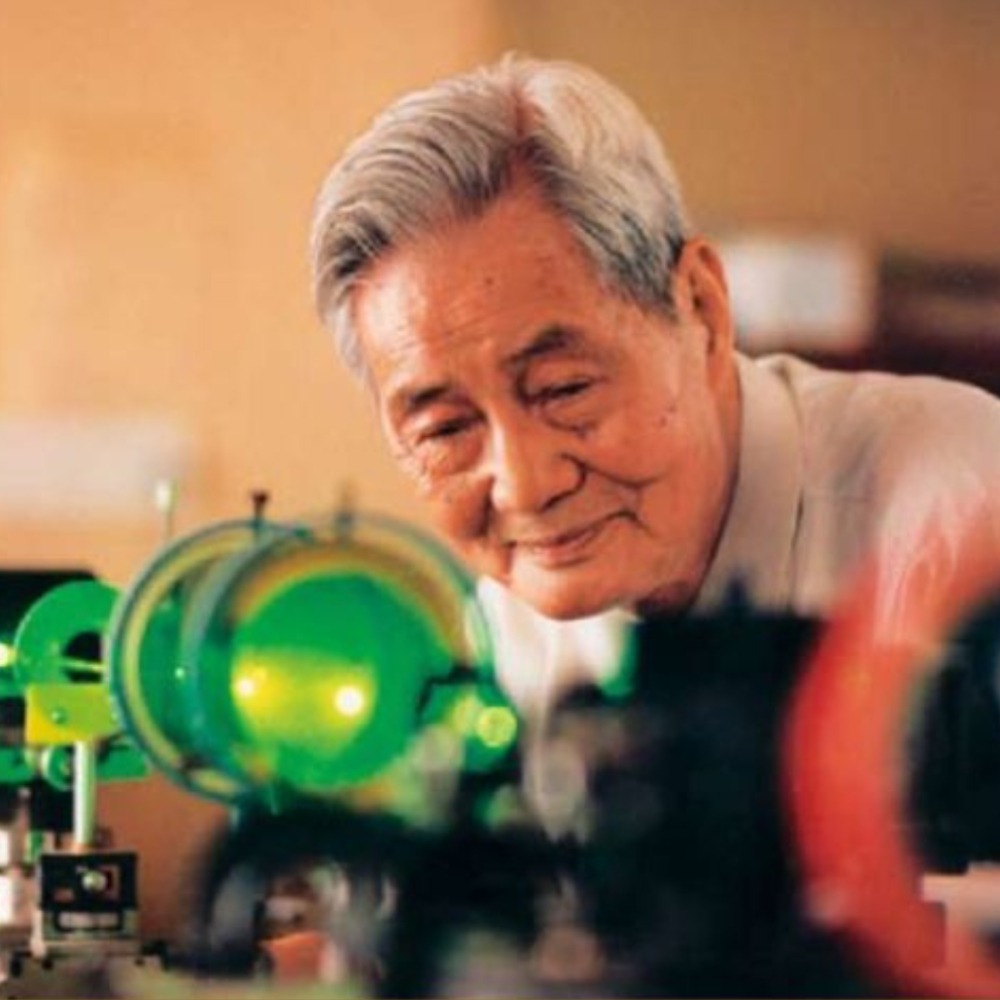
On 30 June, 2011, Ying Chongfu (應崇福), a renowned Chinese physicist, founder of China's ultrasonics research, one of the founders of the Institute of Acoustics of the Chinese Academy of Sciences (CAS), and a senior academician of the CAS, passed away in Beijing at the age of 93.
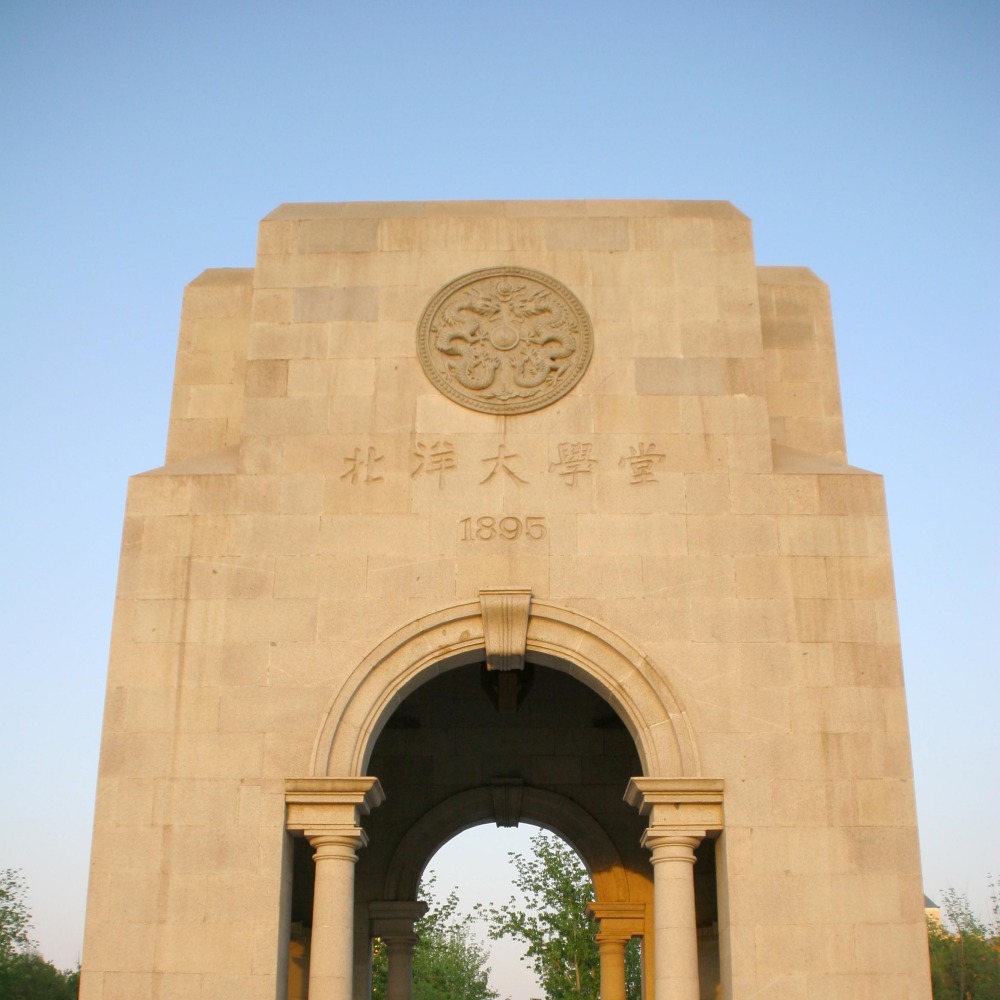
Ying Chongfu was born on 15 June, 1918, in Ningbo, Zhejiang. After graduating with excellent results from Huazhong University in 1940, he was admitted to the graduate school of Tsinghua University at the National Southwest Associated University (NSAU).
After graduating as a postgraduate, Ying consecutively received scholarships to study abroad for three years at Brown University in the United States, where he pursued a Ph.D. in Physics.
After obtaining his Ph.D. in 1951, Ying Chongfu had to stay at Brown University's Metals Physics Laboratory for research work due to restrictions by the U.S. authorities preventing Chinese students from returning to China.
In just three years, Ying completed three highly influential papers, one of which, On Ultrasonic Scattering in Solids, was later published in the American Journal of Applied Physics and became a classic work in the research of solid-state ultrasonic scattering internationally.
In 1955, Ying Chongfu resolutely decided to return to China, despite multiple attempts by a professor in the United States to retain him.
After returning to China, Ying Chongfu dedicated his full efforts to the Chinese scientific enterprise, making outstanding contributions to the establishment and development of China's ultrasonics industry.
With Ying Chongfu's active promotion, China's ultrasonic industry developed rapidly.
By the late 1970s to early 1980s, tens of thousands of engineering and technical personnel were engaged in ultrasound detection and processing; over 20 colleges and universities had set up ultrasound specialties; and major industrial sectors had also established corresponding research organisations.
From 1991 to 1995, Ying Chongfu was responsible for undertaking the key project "Laser Ultrasonics Research" of the National Natural Science Foundation of China, achieving innovative results in the laser ultrasonics research of non-metallic materials. He published several papers of high academic value in international journals such as Ultrasonics. In 1993, Ying Chongfu was elected an academician of the Chinese Academy of Sciences.
In 1996, he received the Science and Technology Achievement Award of the Chinese Mechanical Engineering Society. In March 1999, at over 80 years of age, Ying Chongfu once again took on the key project "Research on the Mechanism of Physical and Chemical Effects of Acoustic Cavitation" of the National Natural Science Foundation of China, and produced a series of important innovative results.
In April 2004, Academician Ying Chongfu organized and convened the 222nd Xiangshan Science Conference, focusing on the research of acoustic cavitation, opening up the field of applied research on acoustic cavitation, and putting forward the concept of "acoustic cavitation engineering." In 2006, he was invited to deliver a plenary report on acoustic cavitation engineering at the National Acoustics Conference.
In 2009, Ying Chongfu's academic paper "Study on the Effect of Liquid Gas Content on Cavitation Using the Brake Tube Method" was published in Science in China Series G. In August 2010, another important breakthrough was made in acoustic cavitation engineering, as Ying Chongfu revealed that not all places with a sound field will necessarily produce cavitation, and also explained why acoustic cavitation cannot enter large containers or act on distant locations.
Ying Chongfu made many contributions to China's scientific enterprise throughout his life. The spirit he advocated has always inspired young scientists to devote themselves to China's ultrasonics industry.